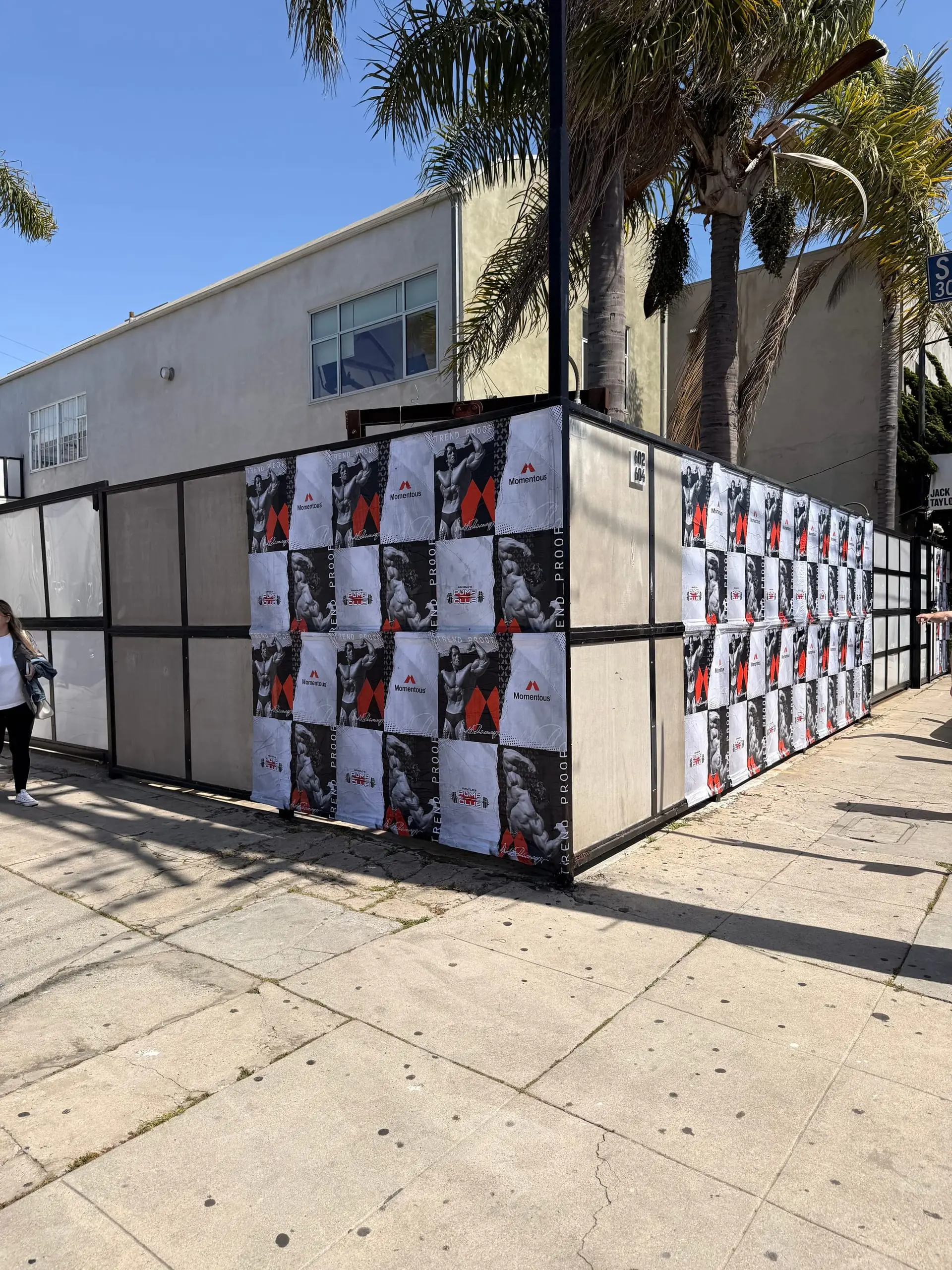
Construction Hoarding Posters.
Construction hoarding poster campaigns in 40 U.S. cities, premium wheatpaste placements on developer-permissioned barriers with photo proof.
We delivered.





















Brand partners include: FIFA World Cup 2026, Palantir, Sézane, G-Shock, Mitchell & Ness, True Religion, Huda Beauty, Yonex, Relevance AI, Momentous, RYZE Coffee, Bloom Effects, Incrediwear, Brooklyn Museum, Sweat FC, HydroJug, Frameline, Alchemy, OneRepublic, Lone Fox, Vaura Pilates.
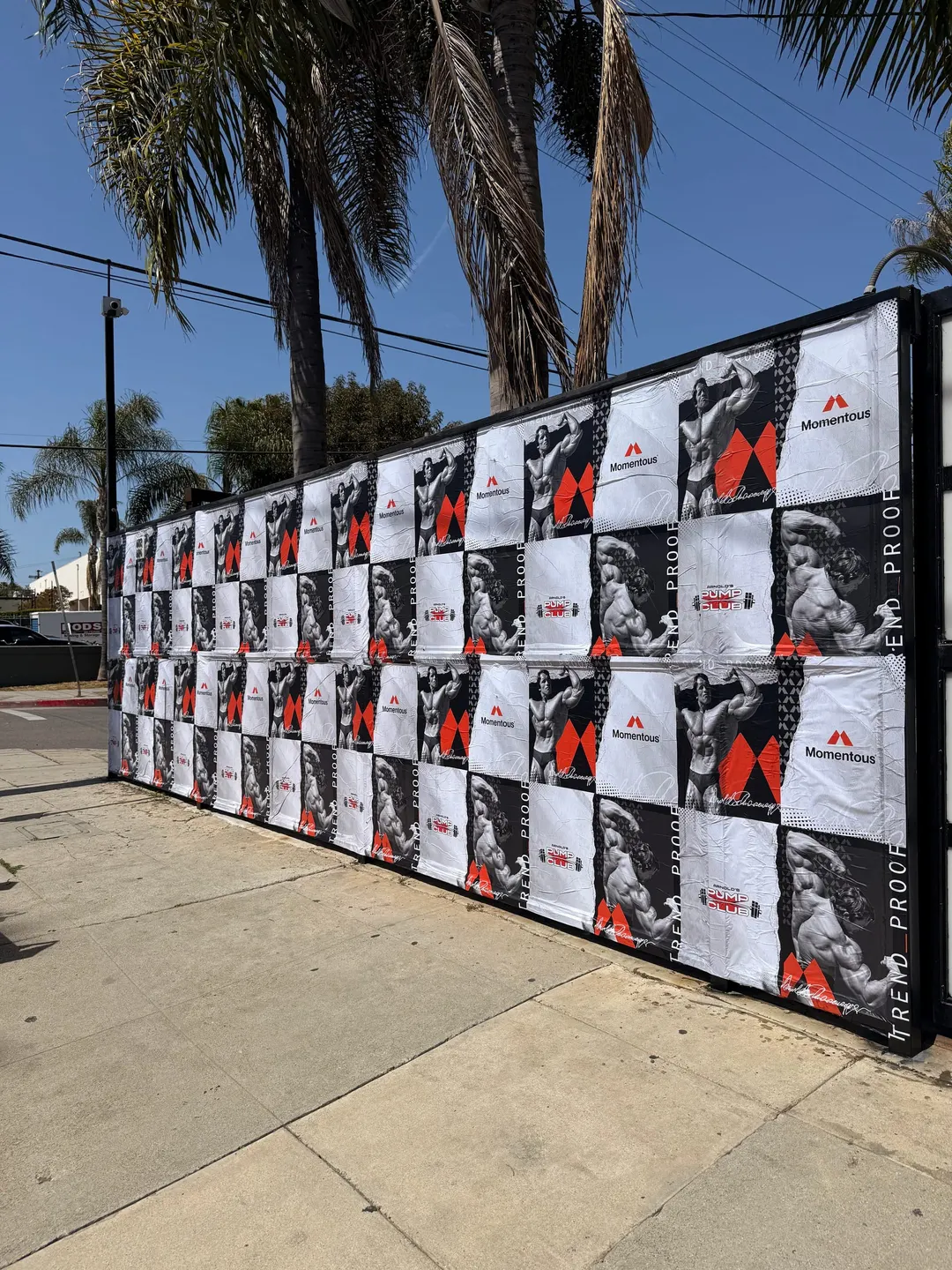
Own the corner
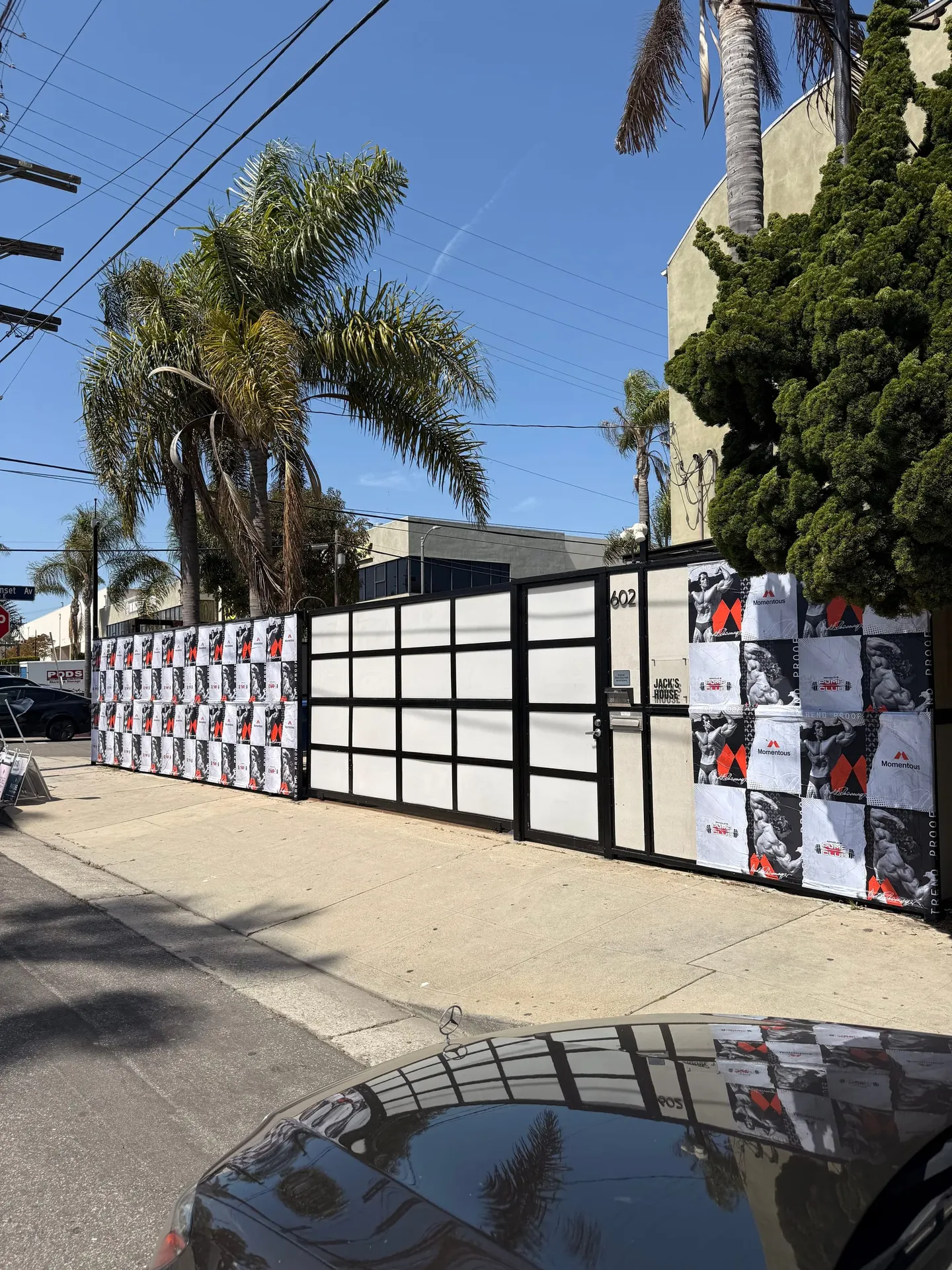
Construction hoarding is the temporary plywood or metal fencing that wraps an active build at street level. We install large-format wheatpaste posters on those barriers with the developer's written permission, on surfaces that are clean, flat, freshly painted, and sized for poster work. A campaign runs as a multi-panel set that reads at full fidelity, carrying the production finish of paid outdoor with the cultural register of street media.
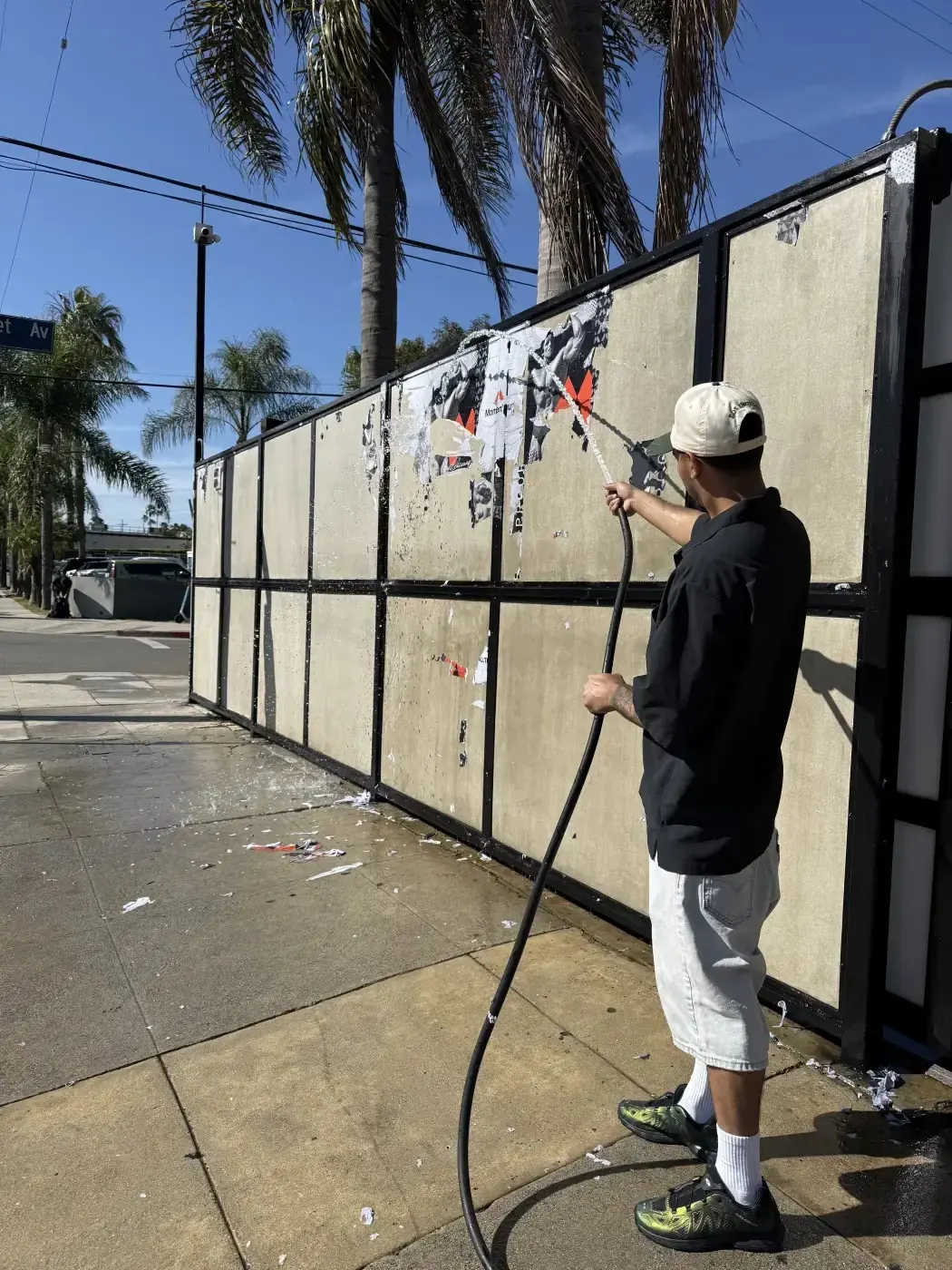
- Panel-by-panel coverage
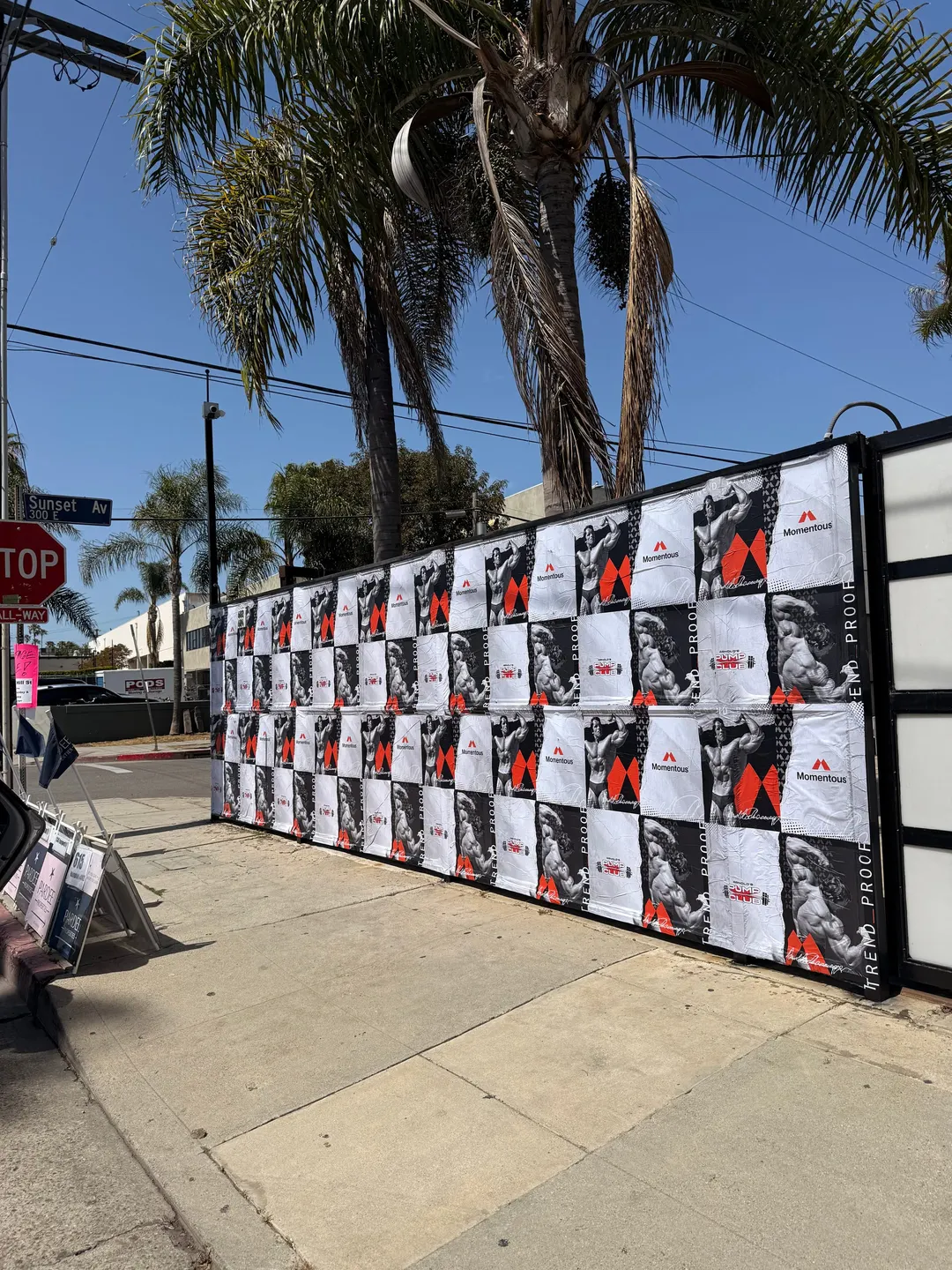
Hoarding is a grid of plywood panels; the creative is sized to it, so the fence line becomes one continuous branded surface instead of scattered sheets.
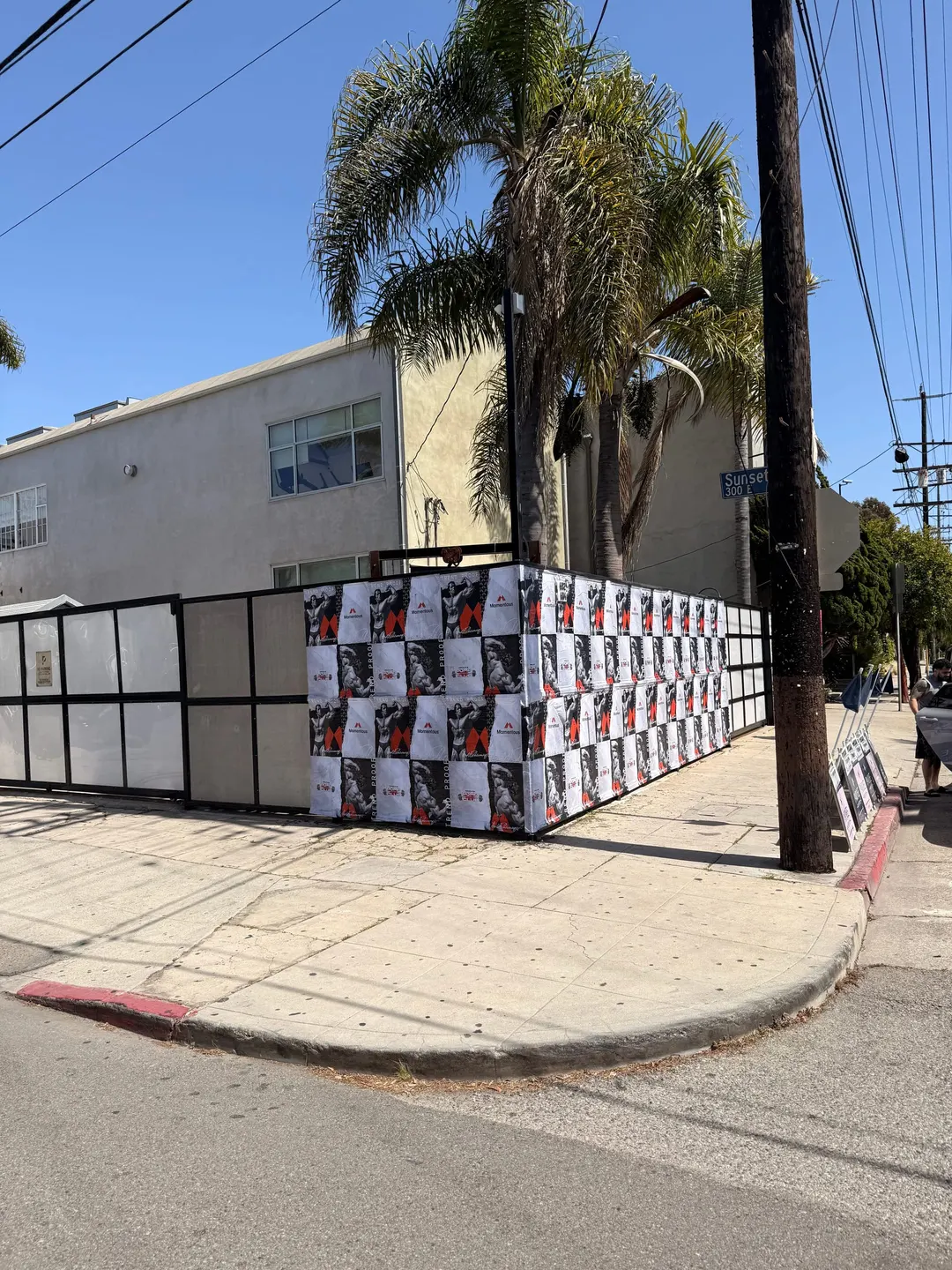
- Corners included
Runs wrap the corner rather than stopping at it, so the takeover reads from both streets and from across the intersection.
- Maintained through the run
The crew returns for upkeep passes. A hoarding that stays clean and flat for weeks is what separates a program from a one-night paste.
Who it's for.
- You are launching a fashion, luxury, or brand-presence campaign where production finish is non-negotiable and the placement needs to photograph like outdoor advertising.
- You want a hoarding panel at a high-traffic intersection that gets the visibility of paid outdoor at a fraction of the cost.
- You need the placement to hold two to six weeks, or run on a quarterly refresh cycle, instead of the one to three weeks standard wheatpaste lasts.
- You are running a multi-format guerrilla program and want a production-finish anchor alongside neighborhood wheatpaste, paste-ups, and scaffold wrap.
Why it works.
- Clean surface
Hoarding panels are flat, rectangular, freshly painted plywood or metal, so the creative reads at full fidelity instead of the rough surfaces standard wheatpaste lives on.
- High-development corners
Hoarding concentrates at the intersections where development is highest, which are the same corners where pedestrian and commercial traffic is highest.
- Longer duration
Placements run two to six weeks routinely, and long-term programs run on quarterly refresh cycles, so the campaign holds the corner instead of getting covered in a week.
- Documented and permissioned
Every install is GPS-stamped with photo proof and runs on a developer or GC authorization, so the surface is confirmed legal and you keep the paperwork for compliance.
We have run this before.
Every placement we install is photographed with GPS coordinates the day it goes up — the full photo record ships with your wrap deck.
500+ documented installs · Zero municipal removals on record · A GPS photo of every placement
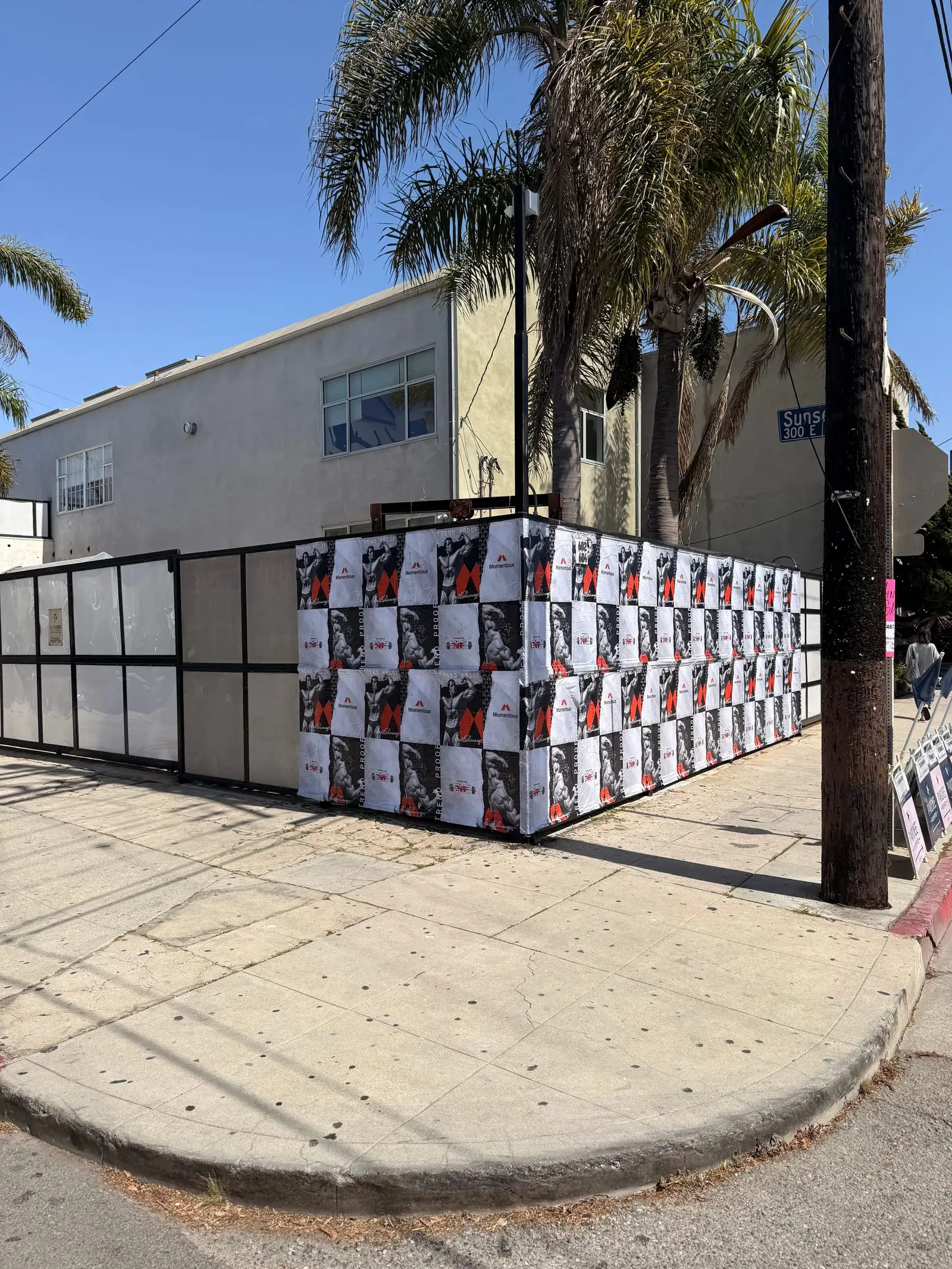
Proof · Printed in-house · Installed by our crew
Hoarding Posters, priced in the open. Proof included.
Floors start at $6,500 with printing and installation included, 7-10 days turnaround. Send the brief; a scoped hoarding posters quote comes back inside 24 hours with a GPS-stamped photo of every placement when the run wraps.
- Quote in under 24 hours
- No discovery call. The brief is the call.
- Printing & Installation under one roof
Brief us · Quote in under 24 hours
Start your hoarding posters campaign.
How it's made.
Permissioned access
Hoarding access is granted per project. The developer or general contractor signs an authorization for the campaign, and we coordinate install windows around active construction. We never install on unpermissioned hoarding.
Print and install in-house
We print the large-format posters and install them ourselves, the same team start to finish. Print-only shops hand off the install. We own both sides.
Scheduled around the build
GC scheduling, weekend or pre-dawn windows, and developer confirmation add days to the timeline so the install never interferes with project work.
Multi-panel runs
A single-site campaign typically runs four to eight large-format panels at one development location, sized to the barrier so the creative fills the surface.
Proof on every site
Each site gets geo-tagged documentation: a wide intersection-context shot, a close finish shot, and a pedestrian-sightline frame, plus per-site panel counts. Refresh photography and time-lapse come with longer programs.
Built to run together.
Chalk Stencils
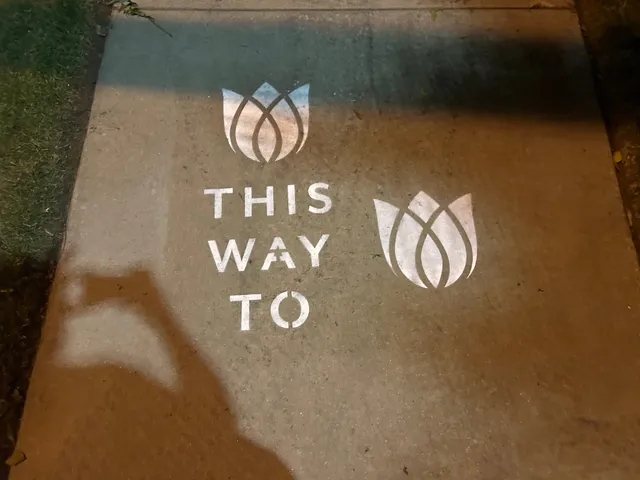
From$2,500Chalk stencil campaigns, washable, permit-light sidewalk stencils that drop in 3 days, ride 1-2 weeks, wash clean. Eco-friendly street visibility.
View discipline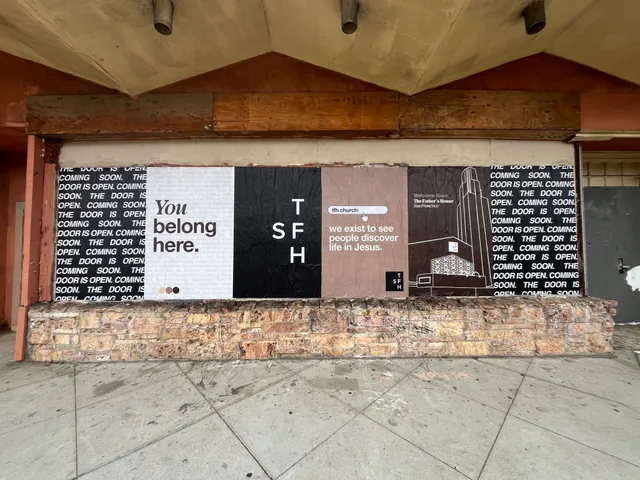
Fence Wraps
From$4,800Printed mesh banners on chain-link construction fencing across 30 US cities. Building-scale brand presence around active development sites with photo proof.
View discipline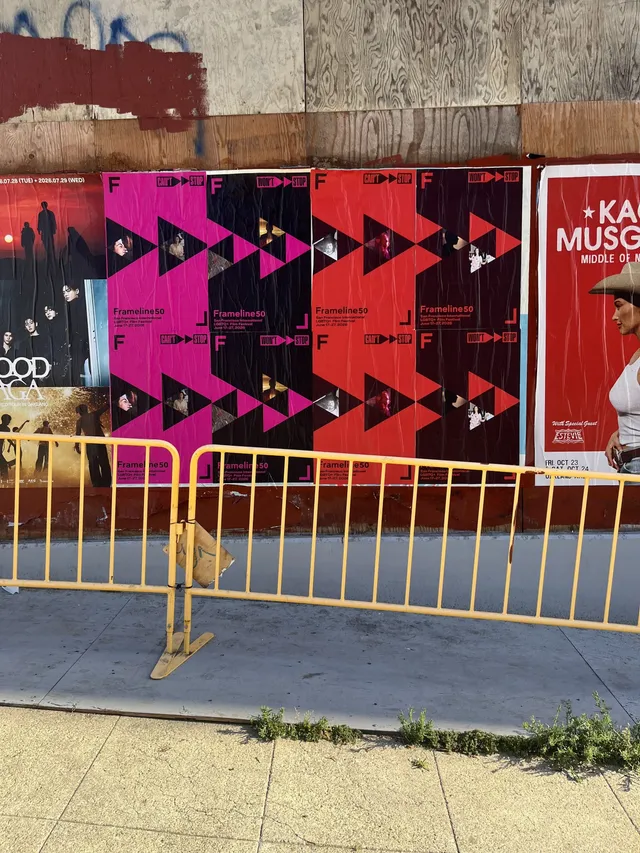
Poster Murals
From$8,000Multi-panel poster murals. Full-wall paste-up installs spanning building sides and scaffold runs. Brand-scale visibility with photo proof in 40 US cities.
View disciplineWhere to go next.
Guides & field notes
Industries that run this
Frequently asked.
Q · 01 What is construction hoarding advertising?
It is installing large-format wheatpaste posters on construction hoarding, the temporary plywood or metal fencing that wraps an active site at street level, with the developer's permission. The format puts premium wheatpaste surfaces in high-foot-traffic neighborhoods, often at the exact intersections where development draws the most pedestrian attention.
Q · 02 How does Beyond Street Media access hoarding surfaces?
We work directly with construction management firms, general contractors, and developers. Access is permissioned per project: the developer or GC signs an authorization, we coordinate install windows around construction activity, and the campaign runs on confirmed legal surfaces. We never install on unpermissioned hoarding.
Q · 03 How much does a hoarding campaign cost?
Pricing starts at $6,500 for a single-site multi-panel run of four to eight large-format posters at one development location. Multi-site and multi-city programs scale from there for sustained presence across high-development corridors. A final quote returns in 24 to 48 hours.
Q · 04 What do I receive at the end of a campaign?
Geo-tagged photo documentation per site (a wide intersection shot, a close finish shot, and a pedestrian-sightline frame), per-site panel counts, and the developer authorization paperwork for compliance. The wrap deck is delivered within seven days of install close, and programs running 90 days or more include time-lapse photography.
Q · 05 How fast can hoarding posters go up?
Seven to ten business days from approved artwork to first install. Hoarding runs longer than standard wheatpaste because the developer-coordination layer adds time: authorization confirmation, GC scheduling around active construction, and weekend or pre-dawn install windows that stay clear of project work.
Q · 06 How does hoarding fit with the rest of a campaign?
It is the production-finish anchor of a multi-format guerrilla program. Clients usually pair it with wheatpaste for neighborhood density, paste-up campaigns for multi-creative narrative, and scaffold wrap for the building-scale companions hoarding sites often sit next to. Because the placement reads like paid media, the documentation also fits inside a brand's regular content calendar.
Run a hoarding posters campaign?
Same crew, your brand.
Markets, window, creative direction. A scoped quote returns in 24-48 hours, print and install included, documented on every placement.