Wheatpaste poster advertising in Charlotte.
Hand-installed wheatpaste posters across NoDa, South End, Uptown, Plaza Midwood, and Dilworth. Per-wall pricing, GPS photo proof on every install.
From $3,500, printing and installation both included. 7-14 days from brief to first wall.
500+ documented installs · a GPS photo of every wall · printed and installed in-house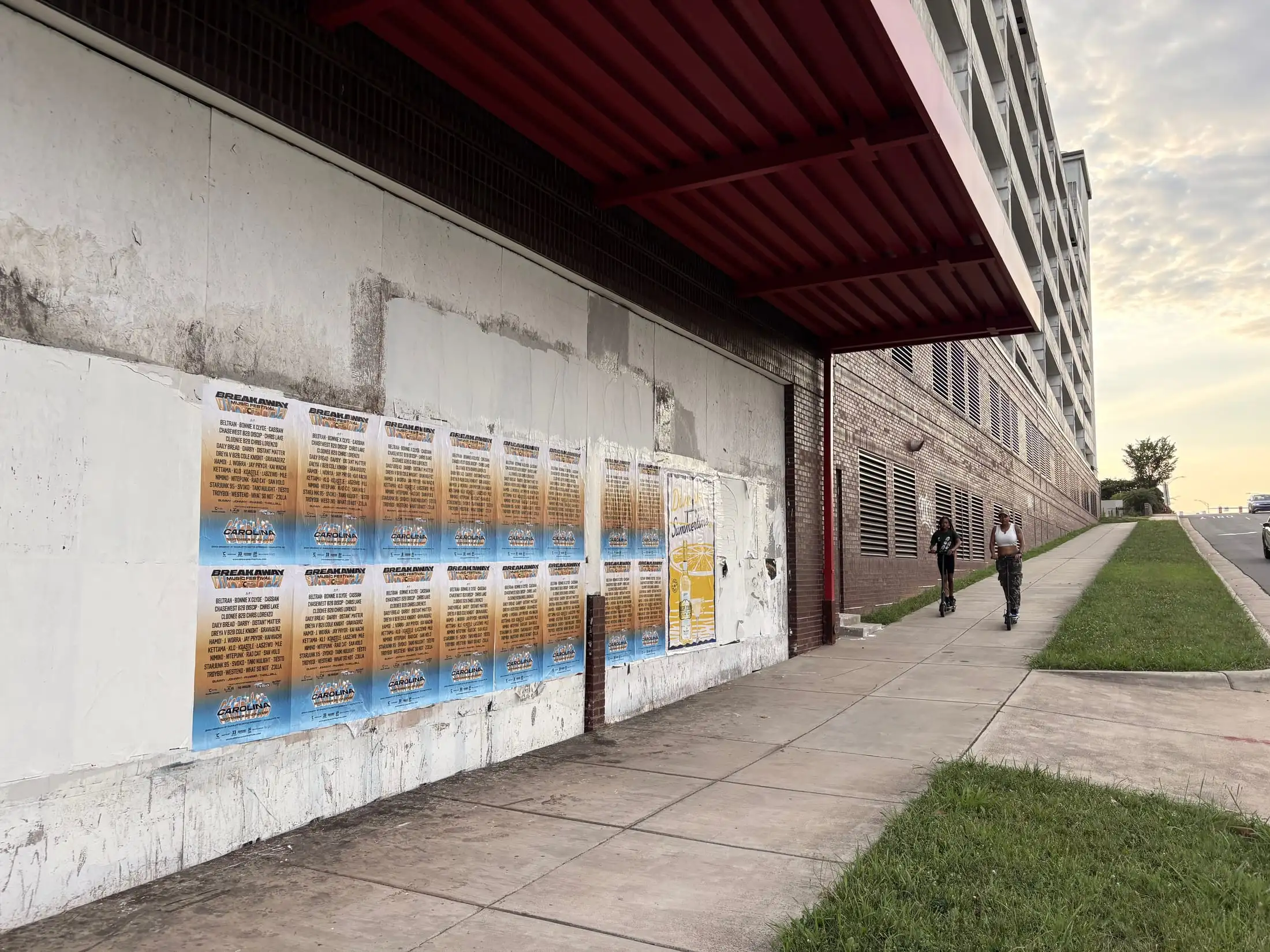
We delivered.



















Brand partners include: FIFA World Cup 2026, Palantir, Sézane, G-Shock, Mitchell & Ness, True Religion, Huda Beauty, Yonex, Relevance AI, Momentous, RYZE Coffee, Bloom Effects, Incrediwear, Brooklyn Museum, Sweat FC, HydroJug, Frameline, Alchemy, OneRepublic, Lone Fox, Vaura Pilates.
We print it, paste it, and prove it.
Print and install under one roof — heavyweight paper hand-pasted at wall scale by a local crew, then a GPS photo of every wall. No broker in the middle.
- Print + install, in-houseOne team, proof to paste — no broker, no markup
- Hand-pasted at wall scaleLocal crews, heavyweight paper — no vinyl, no machines
- A GPS photo of every wallWide · mid · detail, lat-long stamped on every install
- 500+ installs, zero removalsDocumented — the paper trail holds up
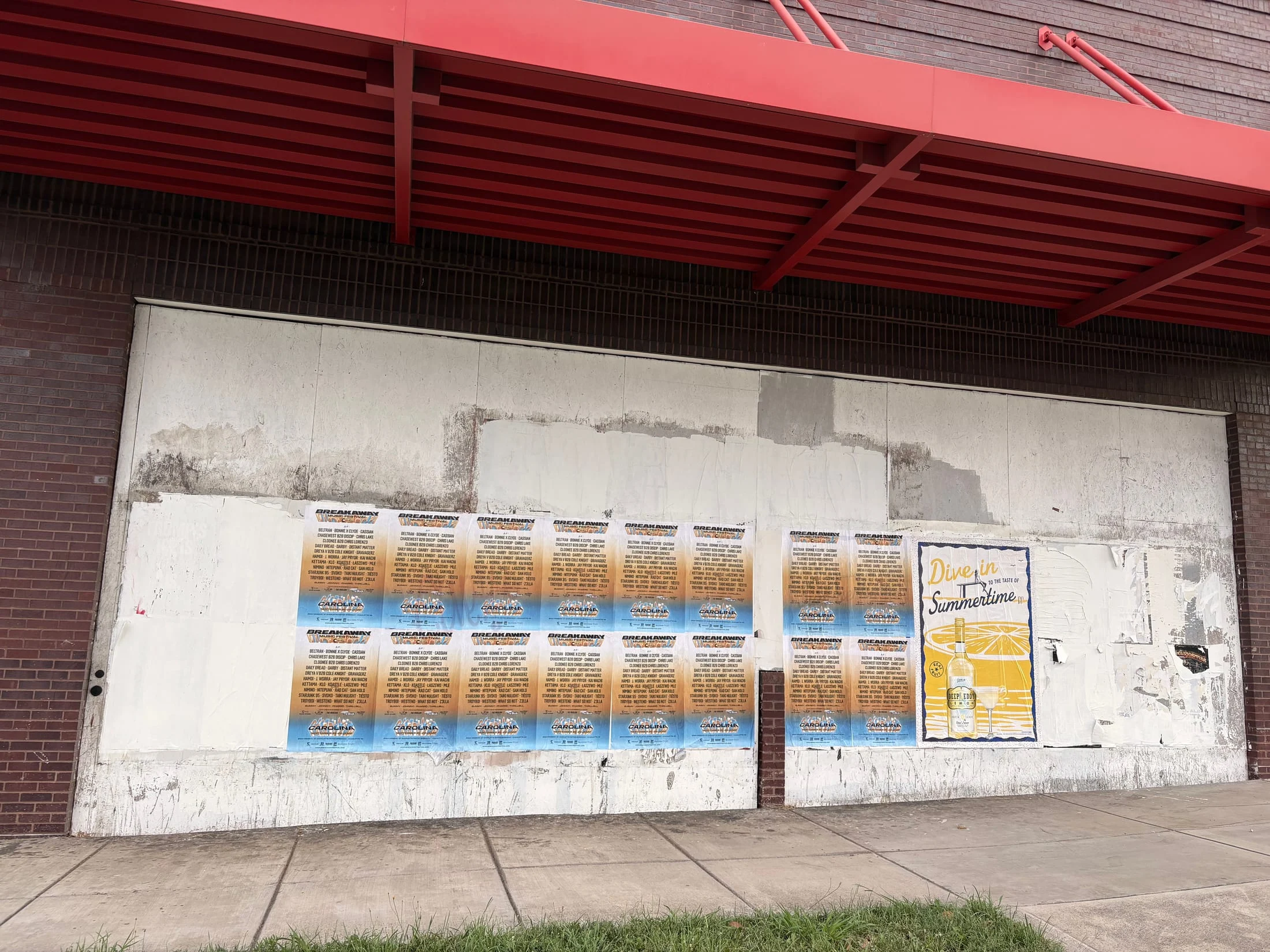
Heavyweight stock, up on the wall.
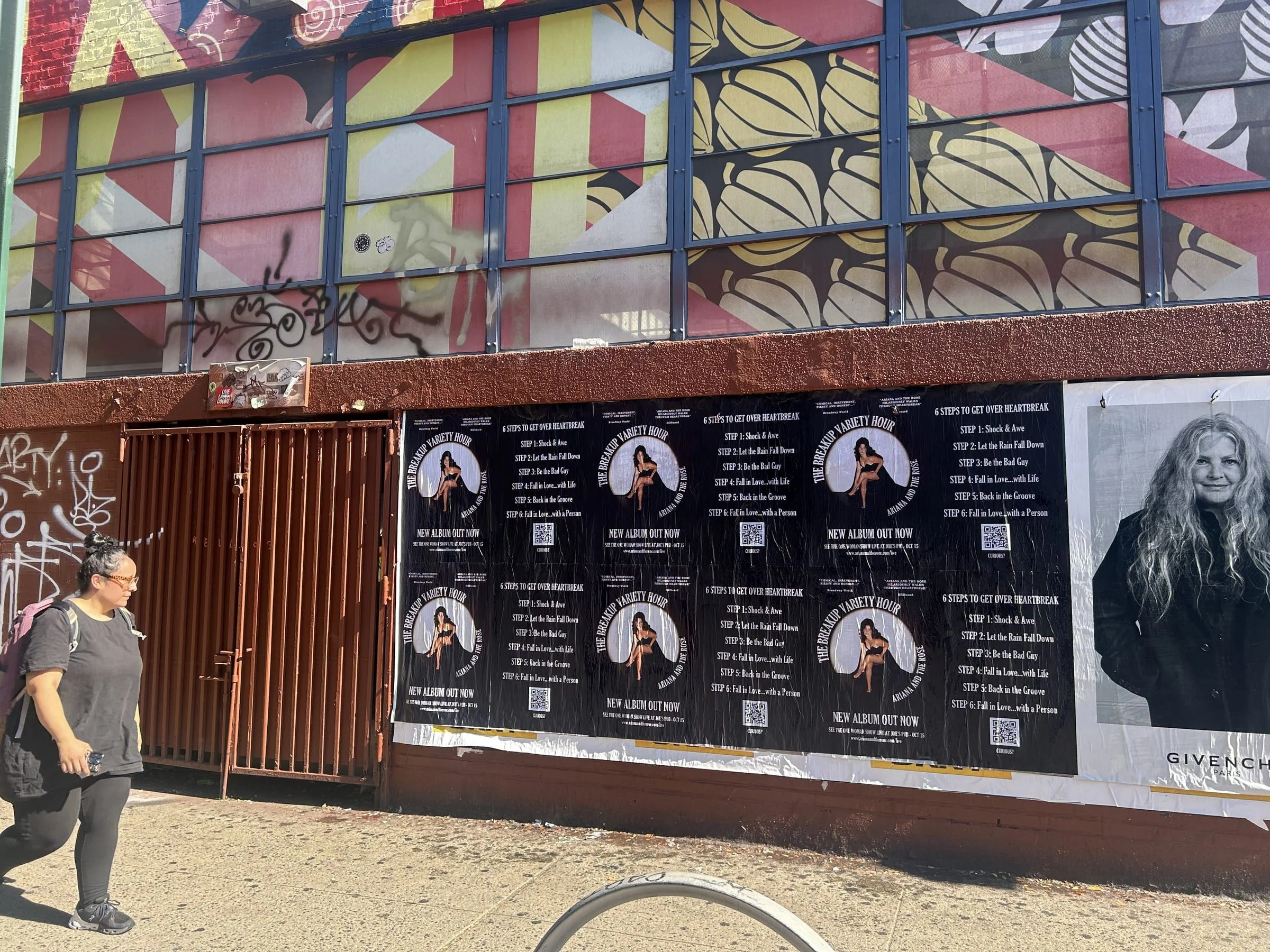
Where the city actually looks.
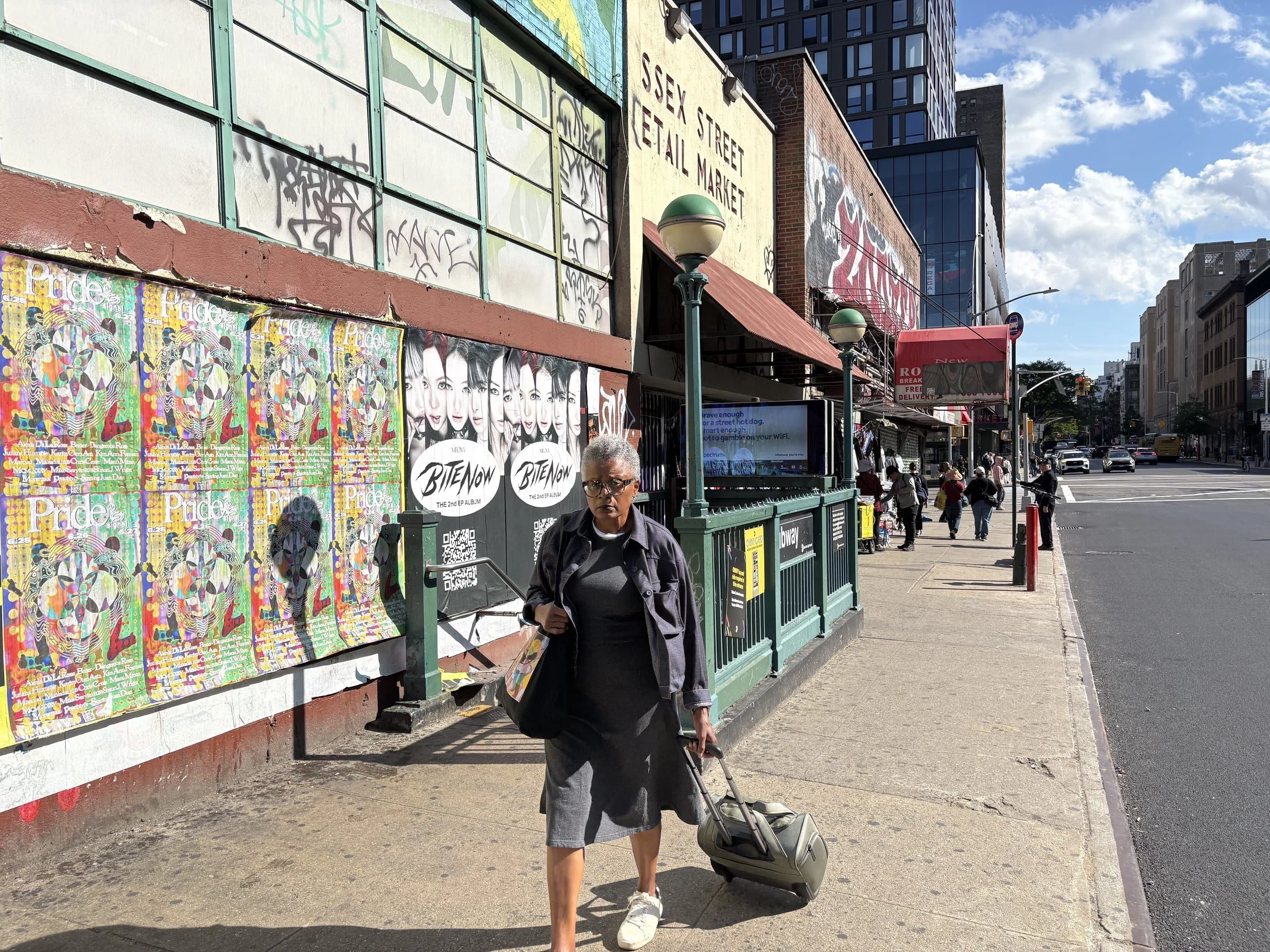
Block after block, Charlotte-wide.
We have already pasted Charlotte. Every number below links to that campaign and its GPS photo set.
500+ documented installs · zero municipal removals on record · a GPS photo of every wall
- From $3,500 Wheatpaste posters 36×48 in sheet · 7-14 days in Charlotte
- From $2,500 Sidewalk stencils Biodegradable chalk · 5-7d lead
- From $3,000 Snipes + stickers Light-pole · utility-box · 5-10d
- From $18,000 Hand-painted murals Brush-painted · building scale
- Rush +80-150% Expedited campaigns 24-72hr brief-to-wall
Charlotte runs on two clocks.
Charlotte runs on two clocks. The banking corridor wakes at 7am for Uptown, where Bank of America, Wells Fargo, and the regional financial-services workforce fill an eight-block core. NoDa stays up late for breweries and gallery walks along North Davidson and 36th Street. Charlotte is the second-largest banking center in the US after New York, so paper in Uptown reaches a corporate-decision audience that B2B and fintech campaigns convert against at a density Atlanta and Nashville cannot match.
That is the Charlotte operator advantage. Not a billboard buy. Not transit. Hand-installed paste-up at eye level on the surfaces your audience already walks past: the densest paste-friendly brick in the city across NoDa's arts-district footprint, roughly thirty active walls, plus the rotating construction hoarding that runs the Blue Line corridor through South End. Pair Uptown with NoDa and a single install push reaches both the corporate-banking and creative-industry audiences. The wall is the campaign. Nothing surrounds it.
Installs ship in 7-14 days from approved creative to first paste-up live. The crew that runs Charlotte covers NoDa, South End, Uptown, Plaza Midwood, and Dilworth on a single dispatch day. Mild Carolina winters mean no seasonal blackout, and summer installs run early-morning so paste locks before the 3pm storm window. First Friday weeks in NoDa book early.
Where the paste holds.
- NoDa Raw brick · brewery walls · gallery storefronts · 14-21 days
North Davidson and 36th Street carry the densest paste-friendly brick in Charlotte, roughly thirty active walls across breweries, galleries, and music venues. Foot traffic peaks evening through late night with weekend amplification around First Friday. The strongest neighborhood in the city for arts, music, and brewery-adjacent briefs.
- South End Construction hoarding · brewery walls · painted commercial · 10-16 days
Construction hoarding, brewery walls, and painted commercial along the Blue Line light-rail corridor. Ongoing development keeps a continuous rotating hoarding inventory for several miles south of Uptown. Weekday lunch and weekend brewery traffic anchor the corridor.
- Uptown Commercial walls · scaffold rotations · 10-16 days
Commercial walls and scaffold rotations across the eight-block financial core. Bank of America, Wells Fargo, and the regional banking workforce concentrate here, with lunch-window foot traffic from 11am to 2pm. The right register for B2B and fintech briefs.
- Plaza Midwood Residential arts walls · retail · 12-18 days
Residential arts walls and retail along Central Avenue. The neighborhood carries residential arts culture, so paper reads as part of the streetscape rather than an interruption. Works for music, arts, and community-rooted briefs.
- Dilworth Residential-affluence frontage · retail · 12-18 days
Residential-affluence frontage and retail on the southern edge of South End. The neighborhood bridges residential spend and the South End corridor. The right register for retail, hospitality, and premium-lifestyle briefs targeting neighborhood wealth.
Six stages. Two-clock discipline.
Brief to refresh audit. Each stage owned by the crew that runs Charlotte. The overlay pre-clear, the property-owner coordination, the storm-window routing logic, all of it is the Charlotte crew's baseline.
- 01
Brief intake + wall count
You hand over creative direction, target neighborhoods (NoDa, South End, Uptown, Plaza Midwood, Dilworth), window, and budget. We hand back a wall count, neighborhood map, and per-wall budget within 48 hours.
- 02
Local scout + overlay pre-clear
The install crew walks North Davidson, 36th Street, and the Blue Line hoarding line. Every candidate wall is pre-cleared against the overlay that governs it: Uptown's commercial overlay, NoDa's arts-district zoning, South End's transit-overlay. Written owner consent secured per wall.
- 03
Print + climate-adjusted paste prep
Print runs in-house on weather-rated stock. Paste batches mixed for the Carolina climate: in summer the mix and the schedule are set to cure before the afternoon thunderstorm line. Materials staged 48 hours before dispatch.
- 04
Dispatch day. Two clocks
Early-morning start so paste locks before the 3pm storm window in summer. NoDa and South End brick first, Uptown before the 11am-to-2pm lunch window so the banking corridor reads fresh paper, Plaza Midwood and Dilworth to close. The full neighborhood set lands on a single dispatch day.
- 05
Photo log + client portal
Three GPS-stamped photos per wall (wide, mid, detail). Field log captures lat/long, timestamp, installer ID. Proof delivered inside 48 hours of install, daily logs while the campaign is live. No invoicing until the photo bundle is signed off.
- 06
Day 14 / 21 / 30 audits + refresh
Audits at day 14, 21, 30. South End hoarding rotates with development, so any wall lost to construction turnover gets swapped on the next dispatch. First Friday weeks in NoDa get an event-weekend check layered on top. Removal photos close the file when the run finishes.
Private property. Written consent. Every wall.
Charlotte's Code Compliance reads paste on a permissioned wall as a property-rights matter, which gives a clean campaign a clean runway. We pull written owner consent on every install. Public infrastructure is never touched.
Every Charlotte paste-up sits on a permitted private surface with written owner consent. We do not run on utility poles, the CATS bus system, LYNX light rail, or municipal right-of-way. Period.
NoDa and Plaza Midwood. Property owners in both neighborhoods run gallery walls and rotating commercial work side by side, so the consent conversation starts from established practice rather than a cold ask. Lead time inside these corridors is the shortest of any Charlotte neighborhood we run.
Overlay rules. The legal framework varies by overlay. Uptown's commercial overlay, NoDa's arts-district zoning, and South End's transit-overlay each carry distinct facade rules, so every candidate wall is pre-cleared against the city code and the neighborhood guideline before paste hits brick. Our compliance file lives at the zip-code level so the legal register matches the exact block.
500+ installs company-wide. Zero removals on record. The written-consent paper trail answers any complaint before it becomes a takedown. The brand is never on the hook for a complaint we routed through.
The Charlotte wheatpaste playbook Operator detail · surfaces, climate, timing
What paste-up advertising actually does in Charlotte
Wheatpaste advertising in Charlotte is hand-installed paste-up poster campaigns adhered to permitted private walls with water-based adhesive. The category also answers to paste-up poster campaigns, wheatpasting, street poster advertising, flyposting, and bill posting. The format converts on the same dynamic everywhere it works: a poster on a wall the right audience walks past, repeatedly, over weeks. In Charlotte the variable is which wall. Pasting NoDa reaches the arts, brewery, and gallery register along North Davidson and 36th Street. South End reaches light-rail density along the Blue Line. Uptown reaches the banking and corporate workforce inside an eight-block core. Plaza Midwood reaches residential arts culture along Central Avenue. Dilworth reaches the residential-affluence frontage that bridges into the southern edge of South End. The same poster, hung on the wrong wall, lands on the wrong audience.
That is the Charlotte operator problem in plain language. The audience is not spread evenly across the metro. It concentrates in specific corridors, and those corridors run on different schedules. Reaching the Uptown banking workforce through paid social is expensive because the targeting overlap with the rest of the country is wide and shallow. Reaching the NoDa brewery-and-gallery crowd through transit or DOOH is expensive because the minimum spend is high and the placements sit highway-adjacent rather than walkable. Paste-up at neighborhood scale solves the geometry. Two well-placed walls in the right corridors do more work than ten walls in the wrong ones.
The two-clock routing logic
Charlotte runs on two clocks. The banking corridor wakes at 7am for Uptown, where Bank of America, Wells Fargo, and the regional financial-services workforce concentrate inside an eight-block core and lunch-window foot traffic runs 11am to 2pm. NoDa stays up late for breweries and gallery walks, with foot traffic peaking evening through late night and weekend amplification around First Friday. Most street media treats a city as one audience on one schedule. Charlotte punishes that assumption.
The route logic is built around the split. Paper aimed at the corporate-decision audience goes up in Uptown so it reads during the morning arrival and the lunch window. Charlotte is the second-largest banking center in the US after New York, so the density is real: B2B and fintech campaigns convert against the Uptown audience in a way Atlanta and Nashville cannot match. Paper aimed at the creative-industry audience goes up in NoDa, where the brick works from evening into late night. Pair the two and a single install push covers both registers. South End sits between them on the Blue Line, where weekday lunch and weekend brewery traffic anchor a corridor of rotating construction hoarding that runs for several miles south of Uptown. Plaza Midwood and Dilworth extend the grid: Central Avenue carries the residential arts audience, and Dilworth bridges residential affluence into the southern edge of South End.
When Charlotte clients book paste-up over other formats
- B2B and fintech launches against the Uptown core. Charlotte concentrates the second-largest banking workforce in the US inside eight walkable blocks. Fintech and financial-services brands paste Uptown so paper reads during the morning arrival and the 11am-to-2pm lunch window, a corporate-decision audience most street formats never touch at this density.
- First Friday in NoDa. Gallery walks compress arts-district foot traffic into a monthly weekend window. Paper goes up in the days before so it is on the wall when the crowd moves through North Davidson and 36th Street.
- Brewery, restaurant, and hospitality openings along the Blue Line. South End’s rotating hoarding sits directly on the walkable catchment around a new opening, and weekday lunch plus weekend brewery traffic anchor the corridor.
- Music, arts, and culture briefs. NoDa’s breweries, galleries, and music venues plus Plaza Midwood’s residential arts walls along Central Avenue give culture-forward campaigns a context where paper reads as part of the neighborhood narrative, not commercial intrusion.
- Brand entry into the Southern market. DTC, fashion, fitness, and hospitality brands opening Carolinas operations use multi-neighborhood paste-up to register presence before paid digital kicks in.
- Retail briefs targeting residential spend. Dilworth’s residential-affluence frontage and Plaza Midwood’s Central Avenue retail put paper in front of neighborhood wealth without a highway billboard between the brand and the audience.
Why the crew runs Charlotte year-round
Most paste-up shops treat Charlotte as a satellite of the bigger Southern markets. The city rewards the opposite read. Mild Carolina winters mean no seasonal blackout, so the work runs twelve months a year without the winter pause that northern markets force. The constraint is summer: afternoon thunderstorms can interrupt cure time, so summer installs run early-morning to lock paste before the 3pm storm window. That is a scheduling discipline, not a limitation, and it is built into every summer route sheet.
The consent work carries the same year-round rhythm. NoDa and Plaza Midwood property owners run gallery walls and rotating commercial work side by side, so the written-consent conversation starts from established practice. South End’s hoarding inventory rotates through ongoing light-rail-corridor development, which means the wall list is re-verified per campaign rather than recycled from the last one. And the legal framework varies by overlay: Uptown’s commercial overlay, NoDa’s arts-district zoning, and South End’s transit-overlay each carry distinct facade rules, so every wall is pre-cleared against the city code and the neighborhood guideline before paste hits brick. Code Compliance reads paste on a permissioned wall as a property-rights matter, which gives a clean campaign a clean runway. None of this scales if it is improvised per campaign.
Surface inventory, by neighborhood
Charlotte’s surface inventory shifts neighborhood by neighborhood. NoDa holds the densest paste-friendly brick in the city: raw brick, brewery walls, and gallery storefronts across a walkable grid on North Davidson and 36th Street, roughly thirty active commercial walls within the arts-district footprint. South End runs on construction hoarding, brewery walls, and painted commercial along the Blue Line, a continuous rotating inventory created by mixed-use development the length of the light-rail corridor. Uptown’s eight-block financial core carries commercial walls and scaffold rotations, surfaces that turn over on the construction calendar rather than the paste calendar. Plaza Midwood contributes residential arts walls and retail frontage along Central Avenue. Dilworth adds residential-affluence frontage and retail on the southern edge of South End.
Standard poster sizes work across all five: 24x36 single-sheet for tactical takeovers, 27x40 for higher-visibility single placements, 36x48 and larger multi-panel builds for hero walls. Pole inventory is off-limits as public infrastructure, along with the CATS bus system, LYNX light rail, and municipal right-of-way, so the format leans on permitted private brick, painted commercial, and hoarding. Interior installs run across NoDa’s breweries, galleries, and music venues for niche cultural reach without exterior permitting overhead.
How the paste behaves on Charlotte walls
The paste chemistry is water-based and tuned to the local climate, and Charlotte’s climate is one of the easier ones on the roster. Mild Carolina winters mean no seasonal blackout, so hold quality stays consistent year-round instead of collapsing into a spring rush. The one seasonal factor that matters is the summer thunderstorm cycle. Afternoon storms can interrupt cure time, so summer installs run early-morning to lock paste before the 3pm storm window. A bond that cures by midday shrugs off the afternoon rain.
Surface behavior varies more than season. Raw brick in NoDa takes paste deep and holds it, the longest natural wall life in the city. Painted commercial and construction hoarding in South End read cleaner at install but turn over faster, because the hoarding itself rotates with development regardless of how well the paste holds. Uptown’s scaffold rotations put a hard ceiling on hold time that has nothing to do with adhesion. Every wall gets three GPS-stamped photos at install (wide, mid, detail), proof lands inside 48 hours, and audits at day 14, 21, and 30 document the survival count instead of assuming it.
Internal cross-links
Paste-up advertising in Charlotte works well in combination with other street formats. See our full guides on paste-up poster campaigns for the long-form poster method, sidewalk stencil advertising for ground-level saturation along North Davidson and the Blue Line, and interior installs for brewery, gallery, and venue reach in NoDa without exterior permitting overhead. For the canonical service overview, see wheatpaste advertising.
Charlotte questions.
The short version. The brief covers the rest.
Q · 01 Is wheatpasting legal in Charlotte?
Yes, with written owner consent on private property, and we secure that paperwork before every install. Public infrastructure (utility poles, CATS bus, LYNX light rail, right-of-way) is never touched. Uptown's commercial overlay, NoDa's arts-district zoning, and South End's transit-overlay each carry distinct facade rules, so we pre-clear walls against the city code and the neighborhood guideline before paste hits brick. Zero removals on record across 500+ installs company-wide.
Q · 02 How much does a Charlotte wheatpaste campaign cost?
Wheatpaste in Charlotte starts at $3,500 per campaign with print and install included. Multi-neighborhood programs across NoDa, South End, Uptown, Plaza Midwood, and Dilworth price up from the published floor. The final number tracks print volume and crew days, not the brand on the poster, and Charlotte trends slightly below coastal Tier-1 markets because NoDa and South End inventory carries a lower per-placement cost than Manhattan or San Francisco. Final quote returns in 24-48 hours.
Q · 03 Which Charlotte neighborhoods get the strongest paste-up coverage?
NoDa, South End, Uptown, Plaza Midwood, and Dilworth. NoDa carries the densest paste-friendly brick in the city, roughly thirty active walls across breweries, galleries, and venues. South End covers Blue Line light-rail density with rotating construction hoarding. Uptown serves the banking and corporate audience inside an eight-block core. Plaza Midwood covers residential arts culture along Central Avenue, and Dilworth bridges residential affluence and the southern edge of South End.
Q · 04 How fast can a Charlotte wheatpaste campaign launch?
Seven to fourteen days from creative lock to first install. Same-week is doable when print files are press-ready and properties are pre-cleared. Mild Carolina winters mean no seasonal blackout, so campaigns run twelve months a year. In summer, installs run early-morning so paste locks before the 3pm thunderstorm window.
Q · 05 Does wheatpaste in Uptown Charlotte work for B2B campaigns?
Yes. Charlotte is the second-largest banking center in the US after New York, and posters in the eight-block Uptown core reach a corporate-decision audience that B2B and fintech campaigns convert well against. Lunch-window foot traffic runs 11am to 2pm. Pair Uptown with NoDa and a single install push reaches both the corporate-banking and creative-industry audiences.
Got a Charlotte wall?
We've got the paste.
Send the brief. NoDa, South End, Uptown, Plaza Midwood, Dilworth. Charlotte paste-up pricing comes back in 48 hours flat, per-wall base as the anchor.