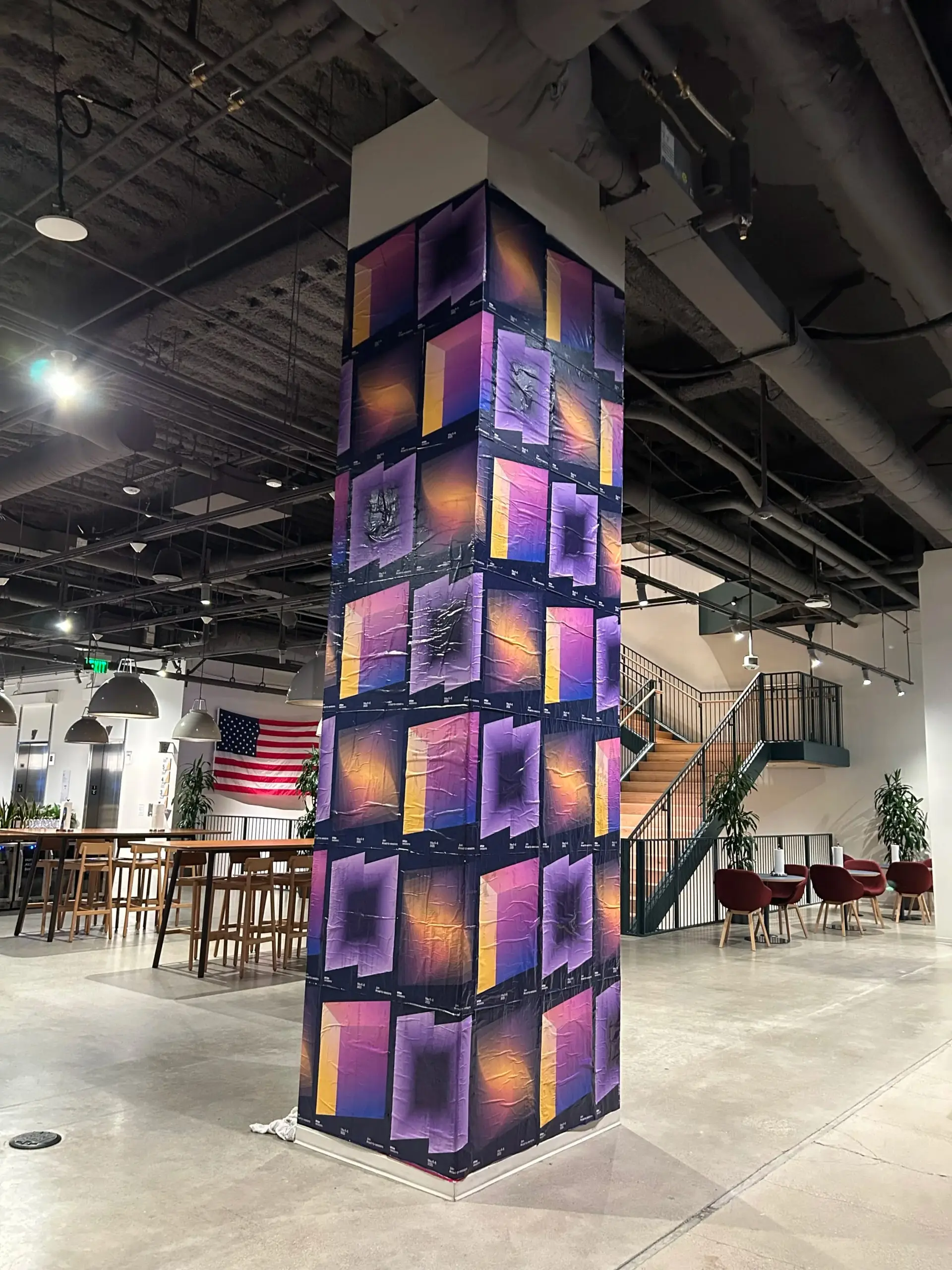
Banking & Fintech.
Guerrilla marketing for banks, credit unions, and BaaS platforms. Street media for branch launches, trust signals, and regulatory-compliant campaigns.
Four tensions only street resolves.
- 01
Banks compete neighborhood-by-neighborhood for deposit growth; new branches and market entries require localized brand awareness that builds trust and signals presence
- 02
Credit unions face commodity positioning against national franchises; street campaigns differentiate on community-first branding and local credibility
- 03
Neobanks and BaaS platforms lack physical presence; guerrilla campaigns create the appearance of infrastructure and seriousness that banking customers expect
- 04
Regulatory creative review (FDIC, OCC, state banking boards, NCUA for credit unions) is more restrictive than most channels; most street agencies do not understand the compliance layer
Is this you?
If two or more match your roadmap, send the date.
- You're opening a branch and need deposit-growth awareness inside the 4 to 8 neighborhoods that drive velocity, not a city-wide reach buy.
- You're a credit union competing against national franchises and need to differentiate on community trust, not branch count.
- You're a neobank or BaaS platform without branches that needs physical presence to read as funded, serious, and here to stay.
- Your creative runs through regulatory review (FDIC, OCC, state banking boards, NCUA) and most street agencies have no idea that layer exists.
- Trust, not features, is your only deposit lever and you need the brand at street scale in the customer's neighborhood to signal stability.
- A single format can't hit branch-launch density and you need wheatpaste, pole stickers, stencils, and interior running at once.
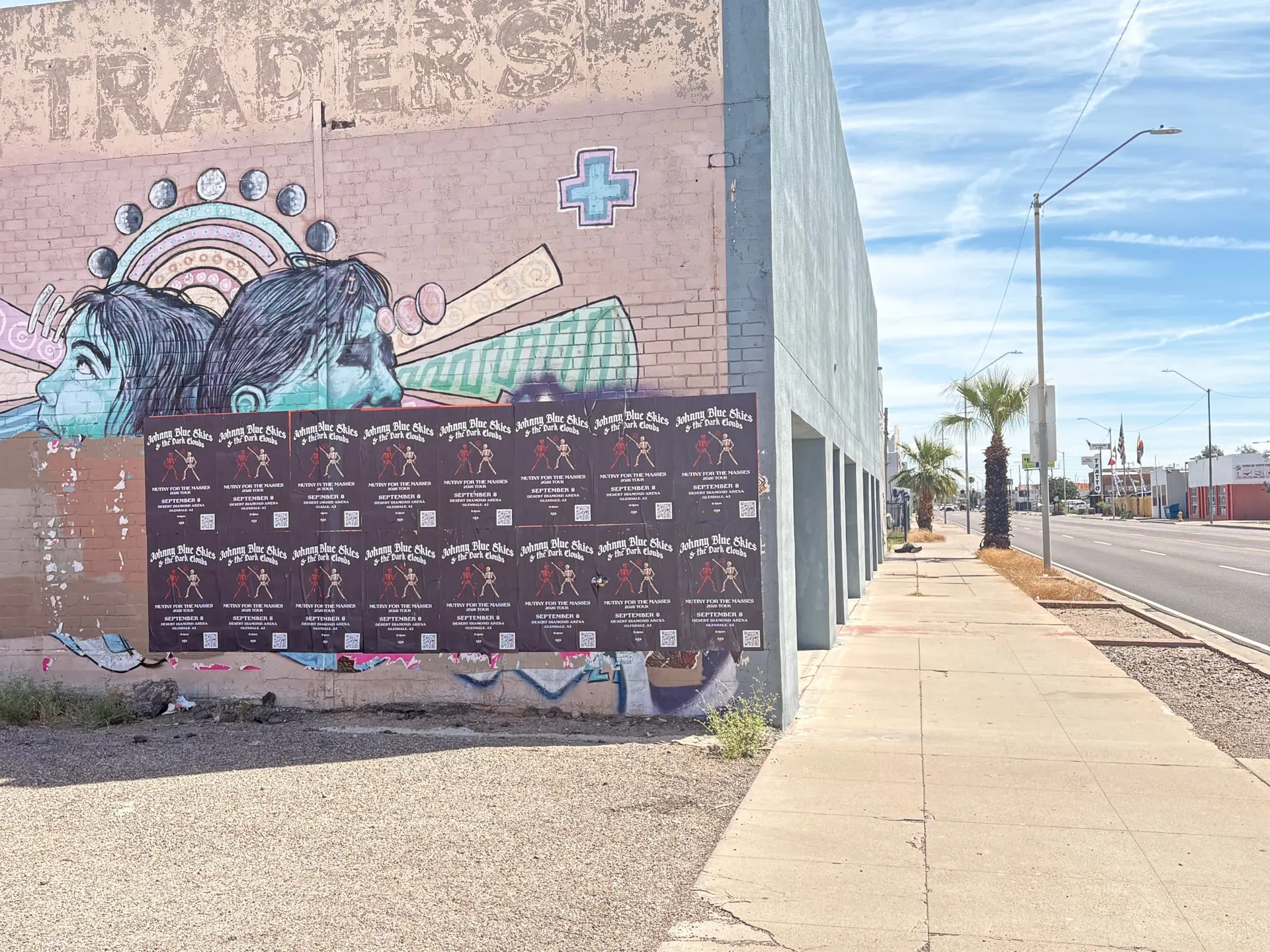
5 disciplines, one playbook.
Wheatpaste
Wheatpasting and wheatpaste advertising campaigns from $3,500 in NYC, LA, SF + 40 US cities. Published floors, 5-7 day lead (Expedited 24-72hr), GPS-tagged photo proof on every install. From $3,500Paste-Up Posters
Paste-up poster campaigns for product launches and neighborhood saturation. From $3,500, 5-7 day lead (Expedited 24-72hr), GPS-tagged photo proof in 40 US cities. From $3,500Pole Stickers
Pole sticker advertising and street pole takeovers in 40 US cities. Legal commercial-pole campaigns with geo-tagged photo proof on every install. From $3,000Bathroom Advertising
Bar and restaurant bathroom advertising in 40 U.S. cities. Mirror clings, stall-door posters, and venue placements with full photo proof on every install. From $3,000Coffee Shop Posters
Coffee shop poster programs in 40 U.S. cities. Counter cards, column wraps, and wall placements in partner cafes with full photo proof on every install. From $3,000Starting floors · print, install, and GPS-stamped photo proof included in every quote. Final number varies by turnaround, size, and location count. Full rate card →
Sample creative directions.
Pre-tested format / neighborhood pairings. Pick a direction at brief intake and we route the surface set inside 24 hours.
- Regional branch opening Wheatpaste, pole stickers, interior, 22 surfaces, 5-week run Williamsburg, Brooklyn
- Credit union membership drive Wheatpaste, pole stickers, stencils, 40+ surfaces per hood, 12 weeks Wicker Park, Logan Square, West Loop, Chicago
- Neobank market entry Multi-format blitz across 3 markets, 8-week window SoMa, Flatiron, Downtown Austin
- BaaS credibility build Wheatpaste plus interior, fintech-density saturation SoMa, Flatiron, Brickell, the Loop
Put it on the wall.

Proof · Printed in-house · Installed by our crew
Street campaigns for Banking & Fintech brands. Proof included.
Send the brief; a scoped quote for your vertical comes back inside 24 hours — formats, neighborhoods, and a GPS-stamped photo of every placement when the run wraps.
- Quote in under 24 hours
- No discovery call. The brief is the call.
- Printing & Installation under one roof
Brief us · Quote in under 24 hours
Start your banking & fintech campaign.
Brand-safe by default.
- Private-property walls only Written owner consent on file for every surface. No public infrastructure, transit, or right-of-way.
- GPS-stamped photos within 48 hours Wide, mid, detail per placement. The proof your team forwards internally.
- FTC + local-code compliant Disclosures and permitting handled per contract. Legal reviews clean.
- Zero municipal removals on record 500+ documented installs, none taken down by a city.
Read the full field notes
Why Banks and Credit Unions Are Moving Street-Side
Banking is the last major consumer service sector that still primarily competes on branch network density and geographic presence. A large national bank spreads awareness through Super Bowl spots and national sponsorship. A regional bank or credit union has a different playbook: they compete neighborhood-by-neighborhood for deposit growth, on the assumption that a customer who lives two miles away is less likely to open an account than a customer who lives two blocks away.
Street media is the format that solves that problem. A guerrilla campaign running two weeks before a new branch opens in a specific neighborhood builds ambient awareness that the bank is arriving, is serious, and is here to stay. A credit union running a sustained street presence across its primary market builds the community-trust signal that differentiates it from national franchises. A neobank running street campaigns at scale in three major metro areas creates the appearance of infrastructure that banking customers expect.
The regulatory layer is more complex than most street agencies understand. FDIC member identification, OCC compliance routing, state banking board pre-approval, NCUA credit-union disclosures. These all require type-setting at legible scale and documented approval before any creative runs. Beyond Street Media has built this compliance pipeline into the operational layer. The result is campaigns that hold up to regulatory audit while delivering the neighborhood-density impact that branch launch and membership-growth programs require.
The Banking Buyer’s Actual Problem
Deposit growth is geographically specific. A bank opening a new branch in Lower East Side cannot reach the deposit-growth target if the campaign runs city-wide. The audience is the households within three miles of the branch. The campaign must run at street-level saturation across the 4-8 neighborhoods that drive deposit velocity. Most media agencies sell reach; banking needs density in a defined geography.
Trust is the only message that moves deposit. A banking customer does not open an account because a commercial is creative or funny. They open an account because the institution reads as stable, accessible, and here to stay. Physical street presence. The brand at scale across multiple surfaces in the customer’s neighborhood. Is the most efficient trust signal a bank can buy. For new entrants and regional institutions, street campaigns are the answer when TV and digital are both too expensive for the reach required.
Credit unions differentiate on community credibility. National banks own scale and ubiquity; credit unions own local roots and member-centric governance. A credit union running street campaigns can emphasize membership eligibility, local decision-making, and community reinvestment. Messages that only land if the campaign is seen in the community. A credit union’s brand message is inherently local; street media is the format that matches that message.
Neobanks and BaaS need physical presence signals. A neobank operating without branches still needs to signal seriousness and infrastructure. A customer considering a neobank is implicitly asking: “Is this real? Will this still exist in five years?” Street presence. The brand at scale in multiple major cities. Answers that question without a single brick-and-mortar location. For BaaS platforms selling white-label infrastructure to banks and fintech partners, street campaigns build B2B credibility while reaching end consumers.
Multi-format saturation is a branch-launch requirement. A single poster or single format cannot generate the neighborhood-level saturation that branch launch requires. Banks need wheatpaste (headline impression), pole stickers (corridor coverage), sidewalk stencils (ground-level presence), and interior placements (dwell time in customer venues) running simultaneously. The operational requirement is a single agency that runs all four formats at density in the target neighborhood. Most street agencies operate one or two formats; banking requires the full kit.
How Beyond Street Media Works With Banking Clients
1. Campaign objective and regulatory intake. Is this a branch opening, membership drive, market entry, or neobank brand-building program? What regulatory bodies need pre-approval (FDIC, OCC, state banking board, NCUA)? What disclosures are required (member identification, Federal Reserve affiliation, state-specific compliance language)? What attribution methodology (foot-traffic to branch, landing-page signups, membership applications)?
2. Audience geography and neighborhood targeting. For branch launches, we map the deposit-growth geography (primary and secondary market rings around the branch location). For membership campaigns, we identify the credit-union-density neighborhoods in the target metros. For neobank campaigns, we select fintech-concentration and high-income professional neighborhoods (SoMa, Flatiron, Back Bay, Capitol Hill, the Loop, Brickell). The saturation target is 8-20 surfaces per neighborhood per week for a 4-6 week campaign window.
3. Compliance creative production. Poster and stencil design proceeds in parallel with regulatory type-setting and pre-approval routing. FDIC member identification is type-set at required size. OCC and state-banking-board language is locked. NCUA credit-union identification is integrated. Creative routes through your regulatory team for pre-approval before production begins. Most banking clients need 5-7 days for regulatory review; we build that into the timeline.
4. Multi-format surface confirmation. We identify surfaces across all four formats in the target neighborhoods: wheatpaste walls (outdoor, high-visibility, 4-8 week hold), pole stickers (utility poles, street furniture, corridor density), sidewalk stencils (ground-level presence, foot-traffic concentration points), and interior placements (banks partner with local coffee shops, casual dining, and retail venues where customers spend dwell time). The density target is simultaneous multi-touch across all formats.
5. Install documentation and regulatory audit trail. Every placement is photographed: wide shot, close shot, compliance-detail shot (showing required disclosures at legible scale). Daily install logs are delivered to your team. The regulatory audit-trail package ties campaign approval to creative approval to placement photography to compliance documentation. The package satisfies internal audit and regulatory retention requirements without modification.
6. Attribution and reporting. For branch-opening campaigns, we track foot traffic and branch account-opening volume during the campaign window against the pre-campaign baseline. For membership-acquisition campaigns, QR codes and campaign URLs route through tracked landing pages. For fintech and BaaS campaigns, we tie placement counts to website traffic and signup attribution.
Real Scenarios: Banking in Action
Regional bank branch opening. A $15B regional bank launches a new branch in a Williamsburg (Brooklyn) neighborhood with high deposit velocity. The campaign runs for 5 weeks: wheatpaste posters at 4 high-traffic intersections (corner of Bedford & North 7th, corner of Bedford & North 3rd, corner of McCarty Park, corner of North 6th & Wythe), pole stickers at 12 utility poles and street-furniture locations between the branch address and the primary foot-traffic corridors, sidewalk stencils outside three coffee shops and one casual-dining venue in the 0.5-mile radius, and interior bathroom-mirror and table-top placements in two partner coffee shops. Every surface carries regulatory FDIC member-identification language type-set at legible scale. Placement count: 22 surfaces over 5 weeks. The goal is ambient awareness in the neighborhood by week 2; foot traffic to the branch opening event in week 5.
Credit union membership growth campaign. A 50,000-member credit union runs a sustained membership-acquisition program across three neighborhoods in a single metro (say, Wicker Park, Logan Square, and West Loop in Chicago). The campaign emphasizes member-centric governance and community reinvestment. Wheatpaste and pole-sticker formats rotate creative every two weeks to maintain novelty. Eligibility messaging is tied to geographic targeting (people who live or work in the neighborhood can join). Sidewalk stencils outside community venues (coffee shops, yoga studios, independent retail) carry QR codes linking to membership-application landing pages. Interior placements in partner venues run for the full quarter. Placement count: 40+ surfaces per neighborhood over 12 weeks. The goal is sustained presence that builds membership awareness and applications without the Super Bowl spend of national banks.
Neobank brand-building campaign. A Series B neobank raises capital and launches in three markets simultaneously (SF, NYC, Austin) to signal seriousness and market presence to both consumers and banking partners. Street campaigns run in fintech-density neighborhoods: SoMa and the Mission (SF), Flatiron and Brooklyn (NYC), Downtown and South Congress (Austin). Creative emphasizes the neobank’s differentiation (speed, developer-first API, or whatever the positioning is) and includes campaign-specific signup URLs. The street presence is the “we are here at scale” signal to both end consumers considering the product and institutional partners considering a white-label relationship. Campaign duration: 8 weeks. Total investment: $80,000-$150,000 depending on surface density and format mix.
Services Banking Clients Use Most
Wheatpaste Advertising. Large-format poster campaigns in target neighborhoods, with regulatory FDIC, OCC, and state-specific disclosures type-set at legible scale and full photo documentation for regulatory audit.
Paste-Up Poster Campaigns. Hand-pasted poster saturation for branch-opening and membership-growth campaigns in high-foot-traffic corridors and retail neighborhoods.
Pole Sticker Advertising. Utility-pole and street-furniture placement for corridor density between branch locations and primary deposit-growth neighborhood targets.
Bar & Restaurant Bathroom Advertising. Dwell-time placements in nightlife, casual dining, and hospitality venues where target-customer foot traffic is concentrated.
Coffee Shop Poster Programs. Monthly poster rotation in independent and chain coffee shops in target neighborhoods, capturing morning commute and work-hour impressions.
Multi-City Guerrilla Tours. Coordinated multi-market campaigns for neobanks and regional-bank expansions, with synchronized format and messaging across 3-10 metro areas.
Neighborhood Saturation Campaigns. Simultaneous multi-format coverage (wheatpaste, pole stickers, stencils, interior) across 1-4 neighborhoods for 4-12 weeks, designed for branch-opening and membership-growth saturation.
Compliance, Regulatory Documentation, and the Banking Layer
Banking campaigns are built around regulatory compliance from intake through placement. Every page of creative production includes regulatory type-setting and pre-approval routing. FDIC member identification, OCC compliance language, state banking board routing, NCUA credit-union identification. All of these are locked before production begins.
The audit trail is the deliverable. At campaign close, the regulatory package includes: (1) the approved creative file (with all regulatory type-setting visible), (2) written pre-approval from your regulatory team, (3) GPS-tagged placement photography (wide, close, and compliance-detail frames), (4) daily install logs, and (5) the wrap deck tying placement to creative to approval. This package satisfies internal audit requirements and regulatory retention without modification.
For multi-state campaigns, state-specific disclosure requirements are flagged at intake. State banking boards, NCUA regional offices, and state-level credit-union associations all have different pre-approval timelines. We integrate that variance into the production schedule. The regulatory layer is not bolted on after; it is built into the operational pipeline.
Got a Branch to Open? We’ve Got the Saturation.
Banks and credit unions compete on presence. A new branch opening in a neighborhood that has never seen your brand needs more than a single ad buy; it needs saturation at multiple formats across a defined geography. Street media is the format that delivers that saturation at the cost of a traditional ad campaign. Beyond Street Media is the agency that runs it with the compliance, documentation, and regulatory rigor that banking regulators require.
Banking & Fintech questions.
The 5 things banking & fintech brands ask before sending a brief. Same-day answers from the desk if yours isn't here.
Q · 01 Can street media be compliant for banks and credit unions?
Yes. Beyond Street Media has executed campaigns where creative carried full FDIC member identification, OCC compliance messaging, state banking board pre-approvals, and NCUA credit-union disclosures at legible scale. Compliance type-setting and regulatory routing are part of the intake process. We work with your in-house regulatory or external counsel to flag disclosure requirements, lock approved creative, and document every placement for regulatory audit trail.
Q · 02 How much does a branch-opening campaign cost?
Entry-level single-neighborhood branch-opening campaigns start at $12,000-$25,000 for 4-6 weeks of wheatpaste, pole stickers, and interior placement density across 8-15 surfaces in a defined neighborhood. Multi-format saturation campaigns across 2-4 neighborhoods for a single branch opening run $40,000-$100,000. Larger banks launching multiple branches simultaneously or credit unions running multi-market membership campaigns scale to $150,000-$500,000+ per quarter for sustained presence across 5-10 markets.
Q · 03 What cities work best for bank and credit union branch launches?
Branch openings succeed in neighborhood-density targets: metro areas with 100k+ population density per neighborhood cluster, where foot traffic is concentrated and competitors are not already occupying the same saturation space. East Coast examples include Williamsburg (Brooklyn), Flatiron (Manhattan), Shaw (DC), Back Bay (Boston), and the Pennsylvania Avenue corridor. West Coast examples include SoMa (San Francisco), Silver Lake (Los Angeles), and Capitol Hill (Seattle). Midwest examples include Wicker Park (Chicago), Northeast Minneapolis, and Warehouse District (Minneapolis). The brand reads as 'we are here, we are real, banking happens in this neighborhood' when the street presence arrives 2-4 weeks before branch opening.
Q · 04 Can street media support a deposit-growth or membership-acquisition campaign?
Yes. Street campaigns build top-of-funnel awareness that drives foot traffic to branches or landing pages. QR codes and campaign-specific URLs are standard on poster and stencil creative. For deposit-growth campaigns, street media is particularly effective because it builds ambient trust; a customer seeing the brand at street scale in their neighborhood creates a low-risk impression that the institution is stable and local. For credit unions, the membership-acquisition read is even stronger because the campaign can emphasize eligibility, local governance, and community membership benefits.
Q · 05 How does in-house printing affect a branch-launch timeline?
It removes the variable that breaks banking timelines. We print posters in-house, so once your regulatory team clears the FDIC and OCC type-setting, production starts the same day instead of queueing behind a commercial printer. That matters because compliance review already takes 5 to 7 days. Owning the print step keeps a single-neighborhood branch-opening campaign on a 4-to-6 week schedule even when the disclosure language gets a late edit. Production details live at poster-printing.
We delivered.



















Brand partners include: FIFA World Cup 2026, Palantir, Sézane, G-Shock, Mitchell & Ness, True Religion, Huda Beauty, Yonex, Relevance AI, Momentous, RYZE Coffee, Bloom Effects, Incrediwear, Brooklyn Museum, Sweat FC, HydroJug, Frameline, Alchemy, OneRepublic, Lone Fox, Vaura Pilates.
Got a banking & fintech launch?
Inquire now.
Send the Banking & Fintech brief: markets, window, creative direction. Vertical-specific quote back in 48 hours.