Wheatpaste is the original outdoor advertising medium. Paper, paste, a wall, a brush. Today it’s also a permitted, documented, GPS-stamped marketing channel. Brand managers buy it because the photo proof reads as cultural credibility, the price beats programmatic display, and the wall stays up for 7 to 30 days depending on the corridor. Beyond Street Media has shipped 500-plus documented installs across all 50 states. Zero municipal removals on record. Sézane bought it for Soho retail traffic. Palantir bought it for tech-recruit visibility. FIFA bought it for World Cup 2026. This guide covers what wheatpasting is, who buys it, how a campaign ships, what it costs, where it’s legal, and when it’s the right channel for the brief.
01. What wheatpasting is
Wheatpasting is the practice of adhering large-format paper posters to walls using a water-based adhesive made of wheat flour and water. The paste is brushed onto the wall, the poster is laid into the wet paste, and a second coat is brushed over the top. The medium dries in under an hour. The wall is the campaign.
The format predates digital advertising by a century. Concert promoters, political organizers, and theater companies used flour paste and broadsides through the 19th and 20th centuries. Street artists rebuilt the practice in the 1980s and 1990s. Shepard Fairey’s Obey Giant campaign trained a generation of designers to read paste-up as a cultural marker. By the 2010s, fashion houses, tech companies, music labels, and cultural institutions had moved the format from outsider tactic to mainstream channel.
The contemporary standard is permitted. Wheatpasting on private surfaces with documented owner consent is legal in all 50 states. Wheatpasting on public infrastructure is illegal everywhere. The distinction is the surface and the consent, not the medium. Beyond Street Media operates exclusively in the permitted lane. The full 50-state legal breakdown lives at the Wheatpaste Laws by State guide.
A standard sheet is 24x36 or 27x40 inches printed on outdoor-grade paper. Multi-panel builds scale to building-side dimensions, 40x60 feet or larger. The paste itself is biodegradable, water-soluble, and removable without surface damage. The poster decays over 7 to 30 days depending on weather and corridor traffic. The campaign window is the wall’s lifecycle.
The format combines three properties no other channel matches simultaneously. Hyperlocal precision at neighborhood scale. Physical permanence measured in days, not seconds. Photo documentation that becomes earned social content. A wall in Williamsburg reaches a completely different audience than a wall in SoMa. The same brand, two corridors, two cultural posts.
02. Who buys wheatpasting
The buyer is a brand manager, creative director, or marketing lead at a brand that needs cultural credibility a programmatic buy can’t deliver. Budget range starts at the $3,500 published wheatpaste floor and scales to $30,000-plus per week for multi-city programs. The decision-maker self-selects by deal size: brand managers approve up to $10,000, marketing directors approve to $30,000, VP marketing or CMO approves beyond that.
Four segments buy the format most often.
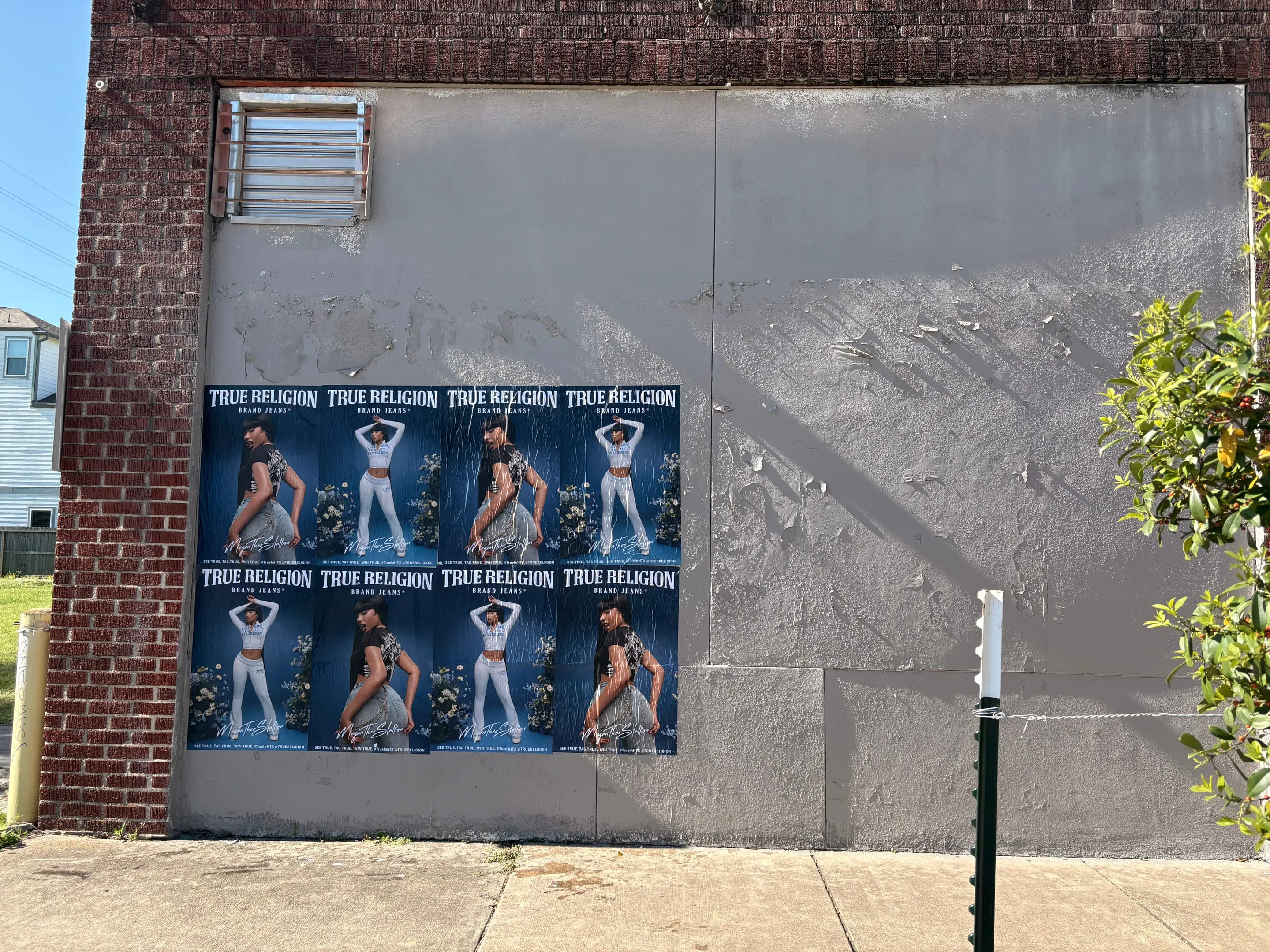
Fashion brands. Sézane ran wheatpaste across NYC and LA for store-opening and seasonal collection moments. True Religion ran a Houston activation for the brand revival cycle. Huda Beauty ran NYC paste-ups for a product launch. The fashion buyer wants the photo set for press, the cultural read on the corridor, and the proof of credibility in design-forward neighborhoods like Williamsburg, Silver Lake, Wynwood, and the Mission. See the fashion and apparel audience hub for the full pattern.
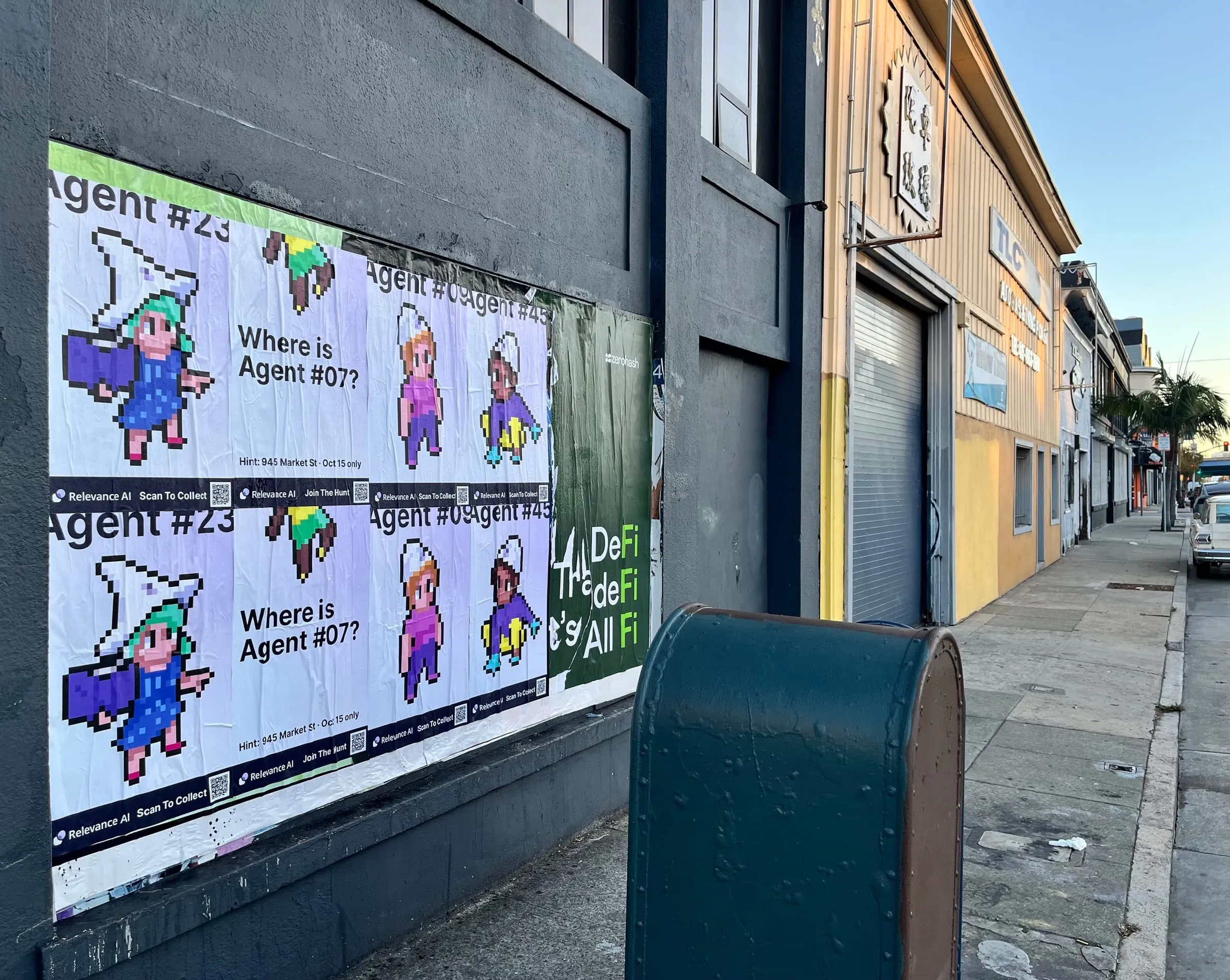
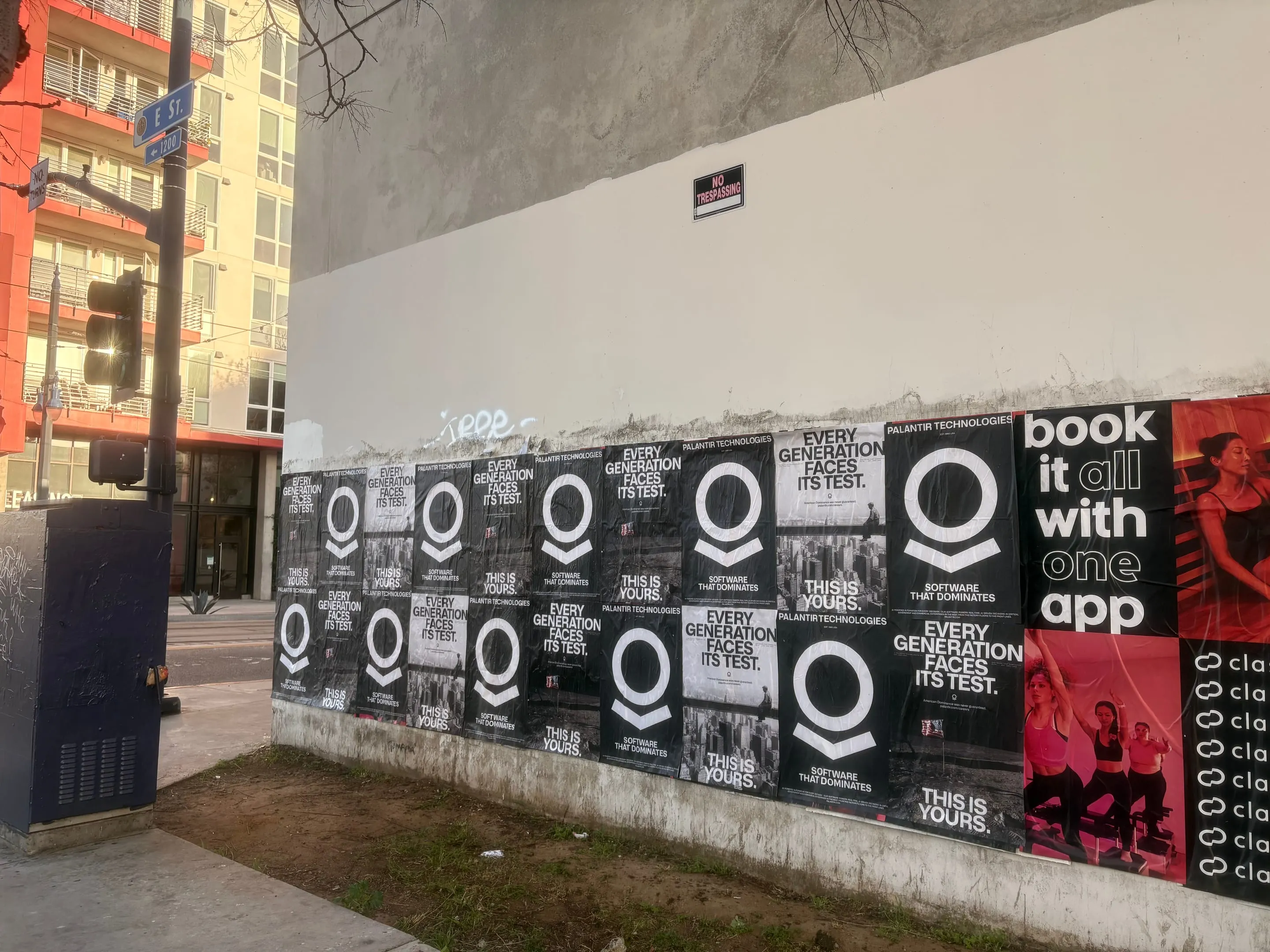
Tech and SaaS launches. Palantir ran a multi-city wheatpaste tour spanning recruit-dense markets. Relevance AI ran SoMa-saturation paste for the agents-and-meatballs character launch. Stripe ran Convergence in SF. The tech buyer wants signal density inside developer and operator corridors that paid social can’t price-match. Full pattern at the tech and SaaS audience page.
Music labels and tours. OneRepublic ran Artificial Paradise in NYC as a tour and album launch. The format scales for festival press windows, album drops, and tour announcements where the goal is cultural co-sign in music-press neighborhoods. The music and labels audience hub covers the playbook.
Cultural institutions. Brooklyn Museum ran multi-exhibit paste-up across the Mugler, Spike Lee, and Pablo-Matic moments. The museum buyer wants attendance lift, press cycles, and audience legitimacy in the borough. See cultural institutions for the playbook.
The pattern across segments is the same. The brand needs to show up in the neighborhood where the audience already lives, with photo evidence the campaign happened. Wheatpaste delivers that better than display, billboard, or transit because it occupies the physical pedestrian space the audience walks. The walking audience is the product.
03. How a wheatpaste campaign works
Every Beyond Street Media wheatpaste campaign follows seven steps from brief to wrap. The timeline is 5 to 7 days for single-market runs and 14 to 21 days for multi-city tours. Same-day and 48-hour rush available in NYC and LA.
Step 1. Brief intake. The client sends city, neighborhood preference, install window, sheet count or budget ceiling, and creative status. Quote returns inside four business hours with line-item print, crew, documentation, and compliance costs.
Step 2. Surface scout. The field team identifies legal posting surfaces in the target neighborhoods. The scout produces a candidate map of walls, storefronts, construction hoardings, scaffolds, and BID-cleared corridors. Foot-traffic counts and adjacency to design landmarks factor in. The scout filters out public-infrastructure surfaces that fall outside the permitted lane.
Step 3. Owner consent. Property owners, leaseholders, GCs, or BID-authorized programs sign written authorization before paste lands. The consent specifies the surface, the install window, and the removal terms. The paper trail lives in the campaign file. This step is the legal armature. Skip it and the install becomes a sanitation ticket waiting to happen.
Step 4. Print production. Outdoor-grade paper, soy-based ink, and a press run sized to placement count plus a healthy overage. Standard sizes 24x36 and 27x40 inches. Custom multi-panel builds for scaffold wraps and building-side installs. Print ships to the local hub for crew pickup.
Step 5. Install dispatch. Two-person crews execute install windows during early-morning or overnight hours when foot traffic is light and corridor access is open. Crews carry paste, brushes, ladders, and the vehicle. Tier-1 metros have permanent crew. Tier-2 metros dispatch crew with travel and lodging on a 3 to 5 day window.
Step 6. Photo documentation. Three GPS-stamped photos per wall. Wide shot for corridor context. Mid shot for the poster in environment. Detail shot for print quality. Photos upload to the campaign file daily during the install window. Every poster gets photographed. Every poster.
Step 7. Wrap delivery. Inside 48 hours of campaign completion, the client receives a final wrap deck: placement count by neighborhood, install dates, duration installed, geo-tagged install map, full image archive, and a social-ready edited image set. Compliance documentation included.
The end-state is a documented proof set the brand team can use for press, social amplification, internal reporting, and the next quarterly review. The wall happened. Here are the photos. Here are the GPS coords. Here is the consent paper trail. Permitted. Paper trail. Period.
04. Where wheatpasting works best
Wheatpaste rewards density. The format performs in corridors where pedestrians walk slow, design literacy runs high, and earned-media photo amplification compounds. Tier-1 metros deliver the highest cost-per-walker efficiency. Tier-2 metros work when the brief targets a specific cultural pocket.
New York City. Soho, Williamsburg, the Lower East Side, Bushwick, Tribeca. The most photographed paste-up corridors in the country. Sézane, Huda Beauty, RYZE Coffee, OneRepublic, and Brooklyn Museum have all shipped here. Full coverage at the NYC market hub.
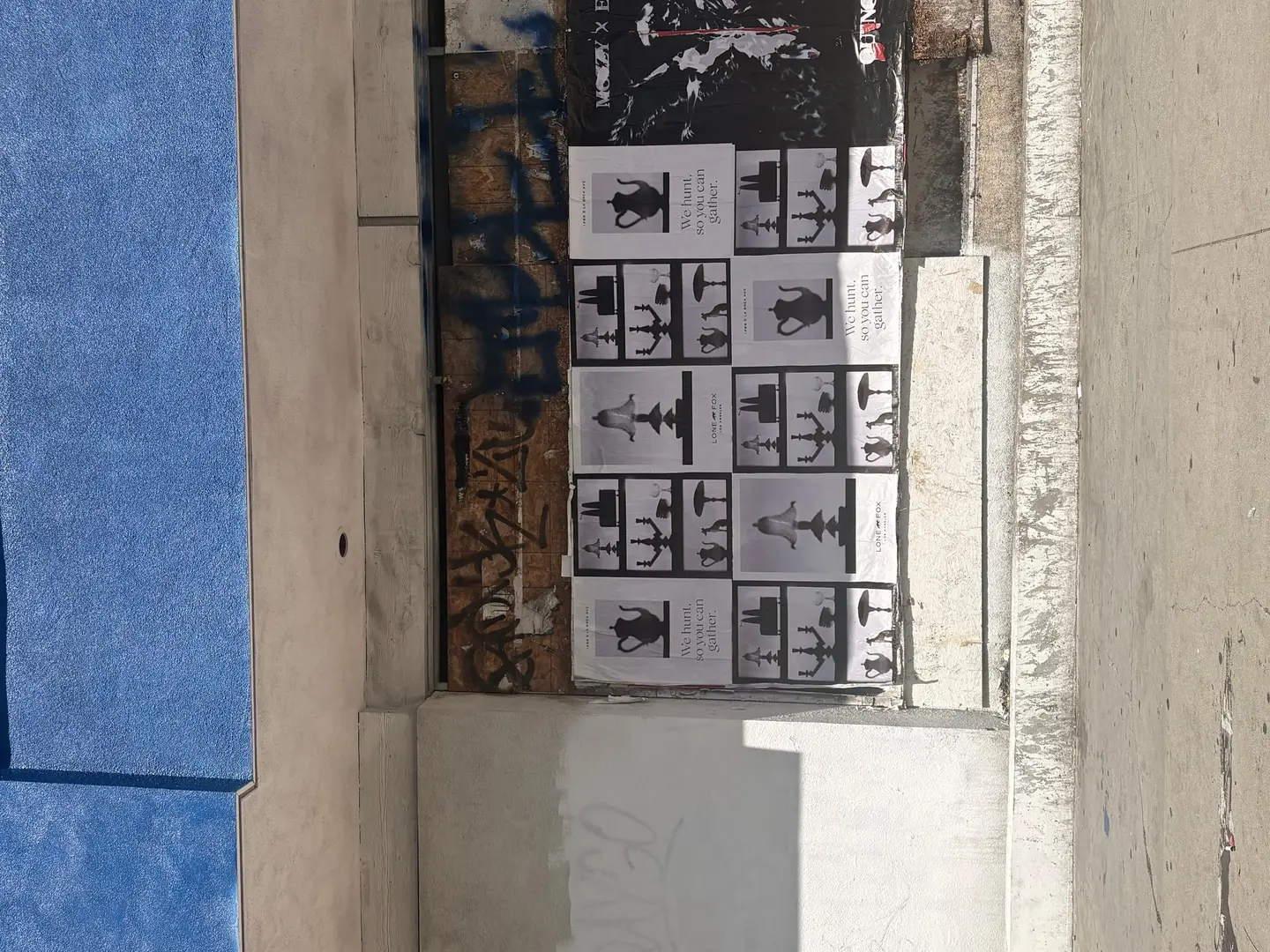
Los Angeles. Silver Lake, Echo Park, Arts District, DTLA, Highland Park. The design and entertainment buyer’s primary corridor. Lone Fox and Momentous have shipped here. Coverage at LA market hub.
Miami. Wynwood, Brickell, Design District, Little Havana. The Wynwood BID overlay is the cleanest legal pathway in the country for hand-painted murals and large-format paste-ups. South Florida Chariots has shipped here. Full read at the Miami market hub and Miami wheatpaste service page.
Chicago. Wicker Park, Logan Square, Pilsen, West Loop. GC-authorized construction hoardings in the Loop and River North are a primary paste-up surface. The Chicago market hub has the corridor breakdown.
San Francisco. SoMa, Mission, Hayes Valley. Tech-launch density unmatched in the country. Relevance AI, Stripe, and the Relevance AI agents-and-meatballs activation have shipped here. SF market hub.
Austin, Atlanta, Nashville. Tier-1 cultural markets with active corridors in East Austin, Old Fourth Ward, and East Nashville. Music, film, and lifestyle brands route here. Austin, Atlanta, and Nashville hubs have the neighborhood maps.
Tier-2 metros (Portland, Seattle, Boston, Philadelphia, DC, Denver, Houston, Dallas, Minneapolis, Orlando) carry active crews and ship on standard timelines. Tier-3 markets across the remaining states route through crew dispatch on a 5 to 10 day window. The full coverage map lists every state and market.
The corridor wins on three properties. High pedestrian density. Design-literate audience. Walls that read as cultural credibility, not transit clutter. SoHo and Wynwood beat highway billboards in those properties by a wide margin. The wall is the campaign because the walking audience is the product.
05. Wheatpaste pricing
Beyond Street Media publishes per-discipline floors. No discovery-call gatekeeping. No “contact for pricing.” The full rate card lives at the pricing page.
Wheatpaste posters. Starting at $3,500. Paste-up on permitted walls, scaffolds, hoardings. Most common BSM discipline.
Sidewalk stencils. Starting at $2,500. Chalk or biodegradable medium on permitted sidewalk corners. Permit class varies by city.
Snipes + stickers. Starting at $3,000. Light-pole, utility-box, news-box small-format takeover. Cheapest path to neighborhood saturation.
Floor graphics. Starting at $4,000. 24×24 vinyl decals on sidewalk + indoor partner surfaces.
Hand-painted murals. Starting at $18,000. 8×12 to 40×24 ft. 30-90 day window minimum.
Building-side paste-up mural. Starting at $30,000. 40x60 feet or larger. Multi-panel construction. 14 to 21 day install window.
Expedited Campaigns. Premium typically doubles the standard rate (+80% to +150%+), quoted case-by-case based on urgency, scope, and city. Same-day extremes price at the upper end. 24-to-72 hour brief-to-documented-install. Anchor case: True Religion x Megan Thee Stallion (Houston, March 2024) shipped 36 hours signing-to-install. Full detail at /services/expedited-campaigns/.
What sits inside the price: print production, crew dispatch, install labor, property-owner consent documentation, GPS-stamped photo proof on every placement, daily install logs, and the final wrap deck. What sits outside the price: city-specific permit fees (pass through at cost, no markup), specialty paper stocks beyond outdoor-grade (pass through at cost), and same-day creative revisions after print release.
Final quote returns inside 24 to 48 hours of brief intake. Range varies by turnaround, size, location count, and combined service mix.
Comparison to programmatic display: a neighborhood wheatpaste run in a tier-1 metro delivers 14 to 21 days of pedestrian visibility across named neighborhoods. A comparable programmatic CPM run targeting the same geo-demographic at any meaningful frequency runs $15,000 to $35,000 per month with a 30-second attention window per impression. The cost-per-walker on a corridor wheatpaste install runs cents on the dollar against the cost-per-attention on display. The wall stays. The display doesn’t.
Forward reference: the campaign cost breakdown walks through the line items for buyers building internal budget memos. Send the brief at /contact/ for a custom quote in 24 to 48 hours.
06. Legality and permits
The legal framework is the moat. Wheatpaste advertising is legal in all 50 states when the poster lives on a private surface with documented property-owner consent. Los Angeles writes that rule in plain language: LAMC 28.03 bars affixing any hand-bill or sign to a building, wall, or private property without the consent of the owner, agent, or occupant. Get the consent and the same act is lawful. It is illegal in every state when posted on public infrastructure: utility poles, traffic signs, mailboxes, government buildings, transit property. NYC Administrative Code 10-119 names those surfaces one at a time: lamppost, bus shelter, mail box, traffic sign, hydrant, parking meter. The medium is not the issue. The surface and the consent are.
Beyond Street Media runs every install in one of three permitted lanes.
Lane 1: Private property with written owner consent. The dominant pathway. A property owner, leaseholder, or authorized agent signs a consent form before paste lands. The consent specifies the surface, the install window, and the removal terms. The paper trail lives in the campaign file.
Lane 2: GC-authorized construction hoardings. General contractors control hoardings during the build cycle. A signed GC authorization covers the hoarding panels. One of the cleanest legal pathways for large-format paste-ups. A meaningful share of BSM volume in NYC, Chicago, and Miami runs through GC-authorized hoardings.
Lane 3: BID-cleared corridors. Business Improvement Districts run sanctioned signage programs. Wynwood BID (Miami), Times Square Alliance (NYC), Downtown LA Alliance, Yerba Buena (SF), and West Town BID (Chicago) all run member-business signage programs paste-up campaigns can route through.
The receipts: 500-plus documented installs. Zero municipal removals on record. The campaigns that get pulled by sanitation are the ones that skipped the consent step. BSM does not skip it. Every brief gets a permit-status review before crew dispatch. Every install gets a photo log that the consent file is matched against.
What separates BSM from rogue posters: the consent file, the photo proof, the named property owner, and the city-specific compliance map. The rogue paster gets a sanitation ticket and an angry property owner. The permitted paster gets the wall, the photos, and the renewal next quarter. The two practices share the brush. They do not share the outcome.
The dollar figure is a city number, not a state number. State statutes generally set the offense class and leave the amount to the sentencing range: California, for one, grades unauthorized posting on public property a misdemeanor under Penal Code § 556 without naming a per-poster figure. The cities publish the schedules. NYC writes the ticket under Admin Code 10-119 and sets the number in Admin Code 10-121: $75 to $150 for a first offense and $150 to $250 for each one after inside twelve months, plus the city’s removal cost. Los Angeles cites under LAMC 28.04, where the administrative penalty runs up to $100 for a first violation in a calendar year, up to $250 for a second, and $500 for a third. The 50-state guide at the Wheatpaste Laws by State page maps every statute, every fine schedule, and every permitted-surface pathway state by state. Nothing in this guide is legal advice. The framework, however, holds: private surface, documented consent, paper trail, zero removals.
07. Documentation and photo proof
The documentation is the deliverable. The wall happened, here are the photos, here are the GPS coords, here is the consent paper trail. Brand teams reporting up to legal and comms need the proof set. BSM ships it on every campaign.
The photo standard is three shots per wall. Wide shot for corridor context (the wall in the neighborhood, the foot traffic, the adjacent storefronts). Mid shot for the poster in its environment (the install reading at typical pedestrian distance). Detail shot for print quality (the paper, the paste edges, the print fidelity). Every poster gets all three. No exceptions.
GPS stamps on every photo where the device supports it. The metadata travels with the image file. Brand teams can verify the install happened where the consent specifies it should happen. Legal teams can map the photo set against the consent paper trail. The proof is the proof.
Daily install logs ship while the campaign is live. The client sees progress in real time. Wall counts, neighborhood breakdowns, photo batches, and any operator notes (covered walls, surface failures, weather delays) all flow into the campaign portal during the install window. The 4-hour delivery SLA on photo bundles means no client waits a week to know what shipped.
The final wrap deck delivers inside 48 hours of campaign completion. Placement count by neighborhood. Install dates. Duration installed. Geo-tagged install map. Full image archive. Social-ready edited image set. Compliance documentation. The deck reads as both proof of execution and as a press-ready asset pack the brand team can use for earned media, social amplification, and internal reporting.
This is what “documentation-first” means in practice. Most agencies bury documentation as a line item. BSM leads with it. The reason brand managers buy wheatpaste from BSM repeatedly is the same reason they buy it the first time: the photos, the GPS, the consent, the wrap. The full documentation pattern is detailed at the GPS documentation insights piece.
08. Wheatpaste vs alternatives
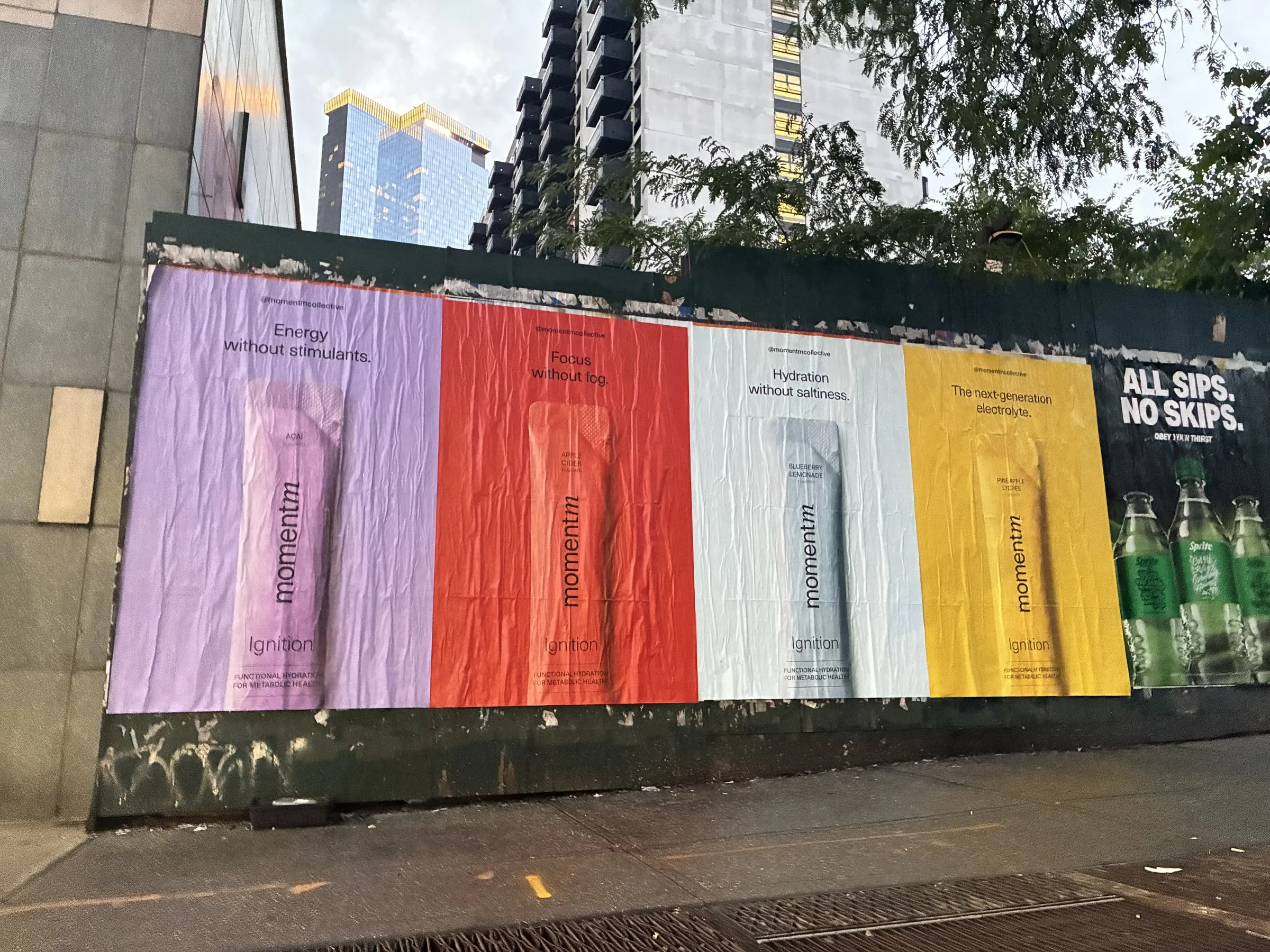
Honest comparison. Each format wins on different properties. The right format follows the brief.
Wheatpaste vs paid social. Different proof, different audience, different cost curve. Paid social delivers reach across a broad geo at any CPM. Wheatpaste delivers concentrated foot-traffic visibility in named corridors with photo evidence the campaign happened. The brand manager picks paid social for top-of-funnel reach at scale. The brand manager picks wheatpaste for cultural credibility in design-forward neighborhoods that paid social can’t price-match. Both can run together. The full ROI comparison lives at the wheatpaste vs paid social piece.
Wheatpaste vs OOH billboards. Wheatpaste owns neighborhood density at a fraction of the billboard rate. A tier-1 metro wheatpaste campaign starts at $3,500 and runs 14 to 21 days. The equivalent classic OOH billboard starts at $25,000 to $40,000 per month for a single high-traffic location with no neighborhood granularity. Billboards reach drivers across a wider radius. Wheatpaste reaches walkers in tighter corridors. The choice is the audience. For brands where the audience walks Williamsburg or SoMa, the walker beats the driver on cost-per-attention. Range varies by turnaround, size, location count, and combined service mix. Final quote returns inside 24 to 48 hours.
Wheatpaste vs hand-painted murals. Wheatpaste is the 7 to 30 day variant of the same craft tradition. Hand-painted murals are the 30 to 90-plus day permanent variant. Murals cost more (from $18,000, building-side from $30,000) and last longer. Paste-ups cost less and refresh more often. Multi-format campaigns combine both: a mural anchors a flagship corridor, paste-ups saturate the surrounding neighborhood. The Brooklyn Museum multi-exhibit campaign ran exactly this pattern.
Wheatpaste vs Wild Posting®. Wheatpaste is the BSM-shipped category. Wild Posting® is Dash Two’s trademarked brand name for the same craft tradition. Both formats use the same paste, the same paper, the same wall. The differences live in vendor selection, pricing transparency, and documentation depth. BSM publishes per-discipline pricing floors; Dash Two gates pricing behind discovery calls. BSM emits FAQ schema on every service page; Dash Two holds the trademark and a longer domain history. Brand managers evaluating both should compare on documentation standard, geographic coverage, and pricing transparency for the specific brief. The detailed comparison sits at BSM vs Wildposting.
Wheatpaste vs transit and bus shelter advertising. Transit advertising runs through media-buying agencies with markups and reach metrics. Wheatpaste runs direct with the operator. The transit buyer wants impressions counted by transit-authority data. The wheatpaste buyer wants photo evidence of the corridor activation. Different sales cycles, different procurement paths, different deliverables.
Pick the format that matches the brief. The honest answer is wheatpaste is not the answer for every brief. It is the answer when the audience walks the corridor and the brand needs the photo proof to claim the cultural moment.
09. Common wheatpaste myths
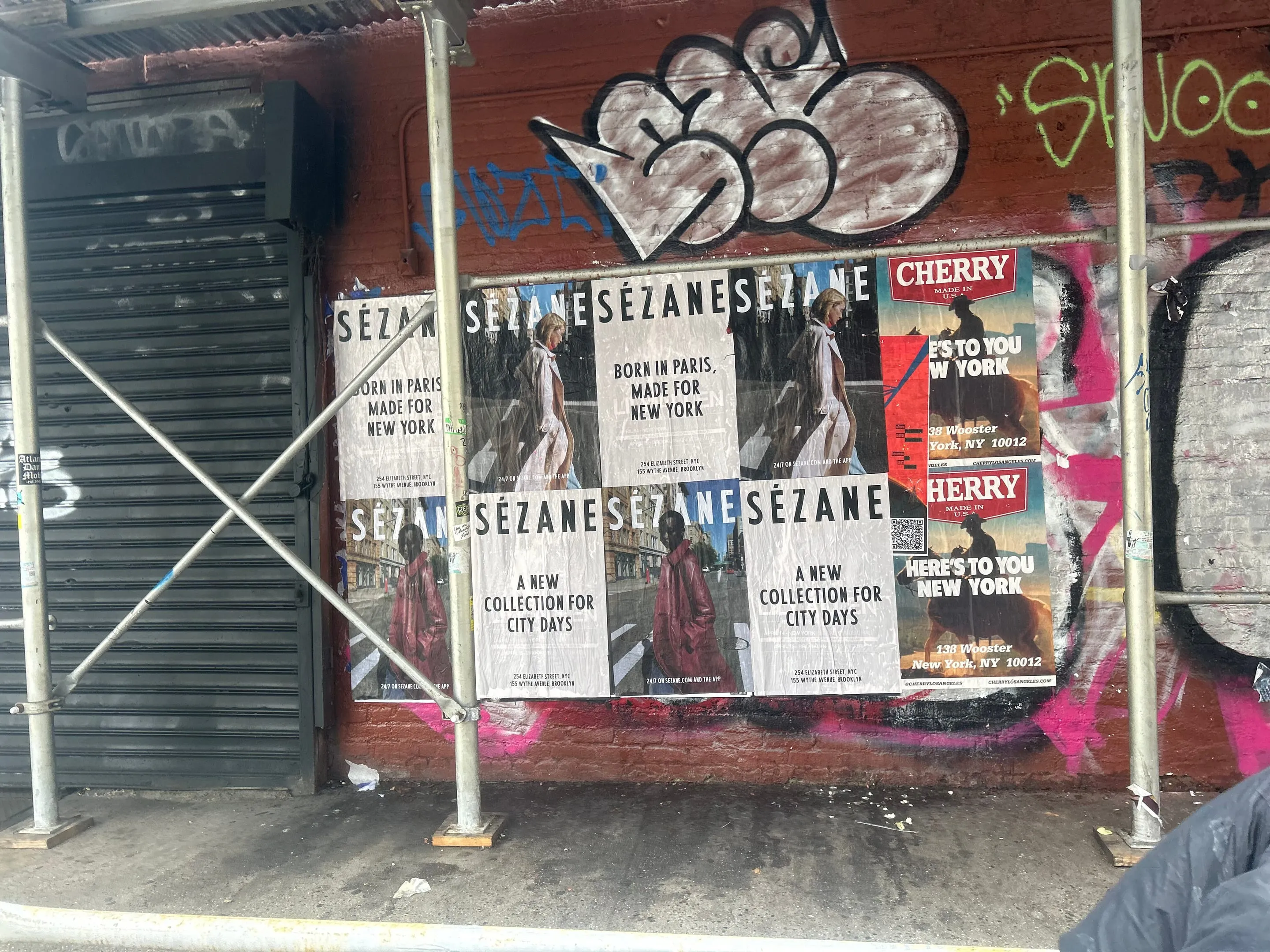
Five myths that show up on intake calls. Each gets a receipt-grade answer.
“Isn’t wheatpasting illegal?” Legal in all 50 states on private surfaces with documented owner consent. Illegal everywhere on public infrastructure. The medium is not the issue. The surface and the consent are. BSM has shipped 500-plus documented installs. Zero municipal removals on record. The 50-state legal guide breaks it down statute by statute.
“Doesn’t wheatpaste look cheap?” It depends on the print, the paste, and the corridor. Outdoor-grade paper with soy-based ink installed cleanly on a Williamsburg storefront reads as designer-grade. A bad print on a bad wall reads as flyer trash. The Sézane, Palantir, FIFA, and Brooklyn Museum case studies show the high end of execution. The case-study archive at the work hub has the photos.
“Doesn’t it ruin the wall?” Flour paste is biodegradable and water-soluble, which is why it comes off a sound surface with water rather than solvent. It sits in the same water-based adhesive family paper conservators work with: the Northeast Document Conservation Center describes wheat starch paste as a reversible, non-staining adhesive and notes that water-based starch repairs come off in a water bath or with local moisture. The paste rinses off with water. Property owners who sign consent for one campaign frequently re-up for the next quarter because the surface stays intact. Removal SLA terms get written into the consent on long-window installs.
“Won’t the city pull it down?” On public infrastructure, yes, immediately. On private surfaces with documented owner consent, no. Consent removes the unauthorized-posting exposure that drives sanitation removals. Local sign and zoning rules still sit on top of the consent, which is why every brief gets a permit-status review before dispatch. The 500-plus / zero-removals receipt is the answer. The campaigns that get pulled are the ones that skipped the consent step.
“Doesn’t paid digital work better for ROI?” Different ROI metrics, different audience captures. Paid digital wins on click-through and trackable conversion in the funnel. Wheatpaste wins on cultural credibility, earned-media photo amplification, and the corridor presence that paid digital can’t price-match in design-literate neighborhoods. Brand managers buy both because they perform different jobs. The wheatpaste vs paid social comparison breaks it down.
The myths share an origin: a generation of brand managers learned about paste-up from rogue posters who skipped the consent step. The permitted-and-documented standard is a different operation. Same brush. Different outcome.
10. When to use BSM for wheatpaste
BSM is the right vendor when the brief looks like this.
The brand manager controls a campaign budget that clears the $3,500 floor and needs the photos, the GPS, and the wrap deck for internal reporting. The audience walks design-literate corridors in tier-1 metros (NYC, LA, Miami, SF, Chicago, Austin, Atlanta, Nashville) or named pockets in tier-2 metros. The brand wants the cultural moment documented, not just the impressions counted. The procurement path runs direct with the operator, not through a media-buying agency layered with markups.
BSM is not the right vendor when the brief looks like this. The buyer needs a sub-floor single-block local activation (handled directly by independent installers, no agency layer needed). The brief requires transit, billboard, or programmatic OOH (different procurement path entirely). The buyer wants “creative integration” with art direction and identity work (BSM executes on the client’s creative; we do not design it).
The yes pattern: brand managers at DTC, fashion, music, tech, fitness, CPG, and cultural-institution accounts buying campaigns in tier-1 metros with budgets that clear the $3,500 floor and brief windows that allow 5 to 7 days from approved creative to first wall. The agency-white-label version applies for creative directors at boutique agencies needing OOH execution under their brand, files, and portal.
National reach without a “near me” footprint. BSM ranks for [service] + [city] across all 50 states because the service is nationwide-by-design. The Brooklyn HQ and New York operations base ship crew dispatch across the country. The 40-named-metro coverage is the operational core. The process page walks the full operator workflow. The about page covers the team and operating standards. Briefs land at info@beyondstreetmedia.com or the contact page.
Premium agency operators, not artists. The brand managers who buy from BSM want the documentation, the consent paper trail, and the published-floor pricing transparency. They don’t want the discovery call, the RFP gate, or the “creative integration” pitch. The format is the deliverable. The deliverable is the proof.
FAQ
Standard intake questions. The full FAQ schema lives in this page’s metadata for AI-search citation. The answers below mirror the operational reality of a BSM wheatpaste campaign in 2026.
What is wheatpaste advertising? Large-format paper posters adhered to walls using a water-based flour-and-water paste. Permitted, documented, GPS-stamped. A guerrilla marketing format that grew out of street art and now runs as a mainstream outdoor channel for brands.
How much does it cost? Per-discipline floors: wheatpaste posters from $3,500, sidewalk stencils from $2,500, snipes and stickers from $3,000, floor graphics from $4,000. Hand-painted murals from $18,000. Building-side murals from $30,000. Expedited Campaigns typically double the standard rate (+80% to +150%+). Range varies by turnaround, size, location count, and combined service mix. Final quote returns inside 24 to 48 hours. Full rate card at /pricing/. Send the brief at /contact/ for a custom quote in 24 to 48 hours.
How fast does it ship? 5 to 7 days from approved creative to first wall in standard single-market campaigns. Expedited Campaigns ship in 24 to 72 hours. Multi-city tours dispatch on a 14 to 21 day route.
What cities? All 50 states reachable. Active crews in 40 named metros. Tier-1: NYC, LA, SF, Chicago, Miami, Atlanta, Boston, DC, Seattle, Austin, Dallas, Houston, Denver, Nashville, Philadelphia, Portland, Minneapolis, Orlando. Full map at /coverage/.
Is it legal? Yes on private surfaces with documented owner consent. Illegal on public infrastructure in every state. 500-plus installs, zero municipal removals on record. State-by-state breakdown at /insights/wheatpaste-laws-by-state/.
What about photo proof? Three GPS-stamped photos per wall: wide, mid, detail. Daily install logs. 48-hour wrap deck. Documentation is the deliverable. The full GPS workflow is at /insights/gps-photo-proof-vs-estimated-reach/.
How long does a wall last? 7 to 30 days typical visibility. Tier-1 corridor walls average 14 to 21 days. Construction hoardings 8 to 12 weeks. Scaffold wraps run the duration of the scaffold.
Multi-city campaigns? Yes. $15,000 to $35,000-plus per week range for coordinated multi-market programs. 14 to 21 day route. Larger campaigns earn a better effective rate because crew cost amortizes. Combined production runs across markets cut overhead. Range varies by turnaround, size, location count, and combined service mix. Final quote returns inside 24 to 48 hours.
Lead capture and reporting? Daily install logs while the campaign runs. 48-hour wrap deck after completion. Geo-tagged install map. Full image archive. Social-ready edited image set. Compliance documentation included.
Format combinations? Wheatpaste plus pole stickers, sidewalk stencils, scaffold wraps, hand-painted murals, and interior installs. The Palantir multi-city campaign ran wheatpaste plus pole stickers across 5 metros. Mixed-format campaigns price as a package.
Contract terms? Quotes are written against the published range and locked at signing. Final number returned inside 24 to 48 hours of brief intake. No change orders for surface failures, weather re-prints, or crew over-runs on the install window. Only city-specific permit fees (pass through at cost) and explicit scope changes you authorize in writing can move the number.
Refresh policy? Daily install logs flag covered walls. 30-day refresh included in base price on paste-up campaigns. Hand-painted murals carry a 6-month touch-up guarantee. Refresh terms get written into the quote, not assumed.
Exclusivity? Single-brand neighborhood exclusivity available on a per-quote basis for 14 to 30 day windows in tier-1 metros. Send the city, neighborhood, and window. Confirmation inside 24 to 48 hours.
Brief us
Got a wall? We’ve got the paste. Send the city, the format, the dates, the creative status, and the budget ceiling to info@beyondstreetmedia.com or the contact page. Quote and permit-status review back inside 24 to 48 hours.
For deeper context: the wheatpaste advertising service page, the 50-state legal guide, the campaign cost breakdown, the Expedited Campaigns service page, the coverage map, or the sister pillar at The Complete Guide to Guerrilla Marketing. The work archive at /work/ has every case study. The receipts are the marketing.