Tech & SaaS.
Wheatpaste, stencil, and pop-up campaigns for tech and SaaS launches. IRL brand presence in SoMa, Silicon Alley, Austin, and dev-conference cities.
Four tensions only street resolves.
- 01
B2B paid spend reaches the right audience but doesn't build lasting brand recall. Your performance channels are saturated and your CAC floor is rising
- 02
SaaS demos and free trials don't convert without brand familiarity. Enterprise buyers need IRL proof that a brand is funded, real, and here to stay
- 03
Conference-driven city sequencing requires synchronized launch presence. Dreamforce in SF, AWS re:Invent in Vegas, RSA in SF, Collision in Toronto demand week-of activation across multiple markets
- 04
Tech audiences concentrate in specific neighborhoods (SoMa, Silicon Alley in NYC, Kendall in Boston, East Austin, Pearl District Portland) that broadcast media cannot target with precision
Is this you?
If two or more match your roadmap, send the date.
- You're spending on B2B paid but it doesn't build lasting brand recall, and your CAC floor keeps rising.
- Your demos and free trials stall because enterprise buyers need IRL proof the brand is funded, real, and here to stay.
- You're sequencing a launch around a conference. Dreamforce, AWS re:Invent, RSA, Collision. And need week-of presence across markets.
- Your audience clusters in SoMa, Silicon Alley, Kendall, or East Austin. Neighborhoods broadcast media can't target with precision.
- You're competing against vendors with bigger budgets and need a credibility signal performance media can't deliver.
- Your dev audience lives near coworking, coffee shops, and transit corridors that paid digital can't claim.
5 disciplines, one playbook.
Wheatpaste
Wheatpasting and wheatpaste advertising campaigns from $3,500 in NYC, LA, SF + 40 US cities. Published floors, 5-7 day lead (Expedited 24-72hr), GPS-tagged photo proof on every install. From $3,500Paste-Up Posters
Paste-up poster campaigns for product launches and neighborhood saturation. From $3,500, 5-7 day lead (Expedited 24-72hr), GPS-tagged photo proof in 40 US cities. From $3,500Pole Stickers
Pole sticker advertising and street pole takeovers in 40 US cities. Legal commercial-pole campaigns with geo-tagged photo proof on every install. From $3,000Coffee Shop Posters
Coffee shop poster programs in 40 U.S. cities. Counter cards, column wraps, and wall placements in partner cafes with full photo proof on every install. From $3,000Multi-City Tours
Multi-city guerrilla marketing tours. Coordinated wheatpaste, stencil, and interior install rollouts across 6 to 30 US cities in one sequence. From $25,000Starting floors · print, install, and GPS-stamped photo proof included in every quote. Final number varies by turnaround, size, and location count. Full rate card →
Sample creative directions.
Pre-tested format / neighborhood pairings. Pick a direction at brief intake and we route the surface set inside 24 hours.
- Cloud-infra launch announce Wheatpaste, 16 placements SoMa, Howard & 5th, Mission & 12th
- B2B data-startup corridor Pole sticker density Chelsea, Flatiron
- SaaS demo wayfinding Sidewalk stencils + QR Flatiron, Williamsburg
- Defense-tech saturation Wheatpaste, large-format B&W North Park, East Village, San Diego
- Series B interior program Coffee-shop + coworking column wraps, 4-week run SoMa, Seaport, the Domain
The neighborhoods, not the metros.
We install where the audience already moves. Named corridors per market, permitted and photo-documented.
SoMa · Mission District · Castro · Hayes Valley · Tenderloin · North Beach
Chinatown · Kakaʻako · Downtown · Waikiki · Ala Moana · Kaimuki / Kapahulu
Gaslamp Quarter · East Village · North Park · Bankers Hill · Cortez Hill · Hillcrest
Put it on the wall.
We have run this for tech & saas.
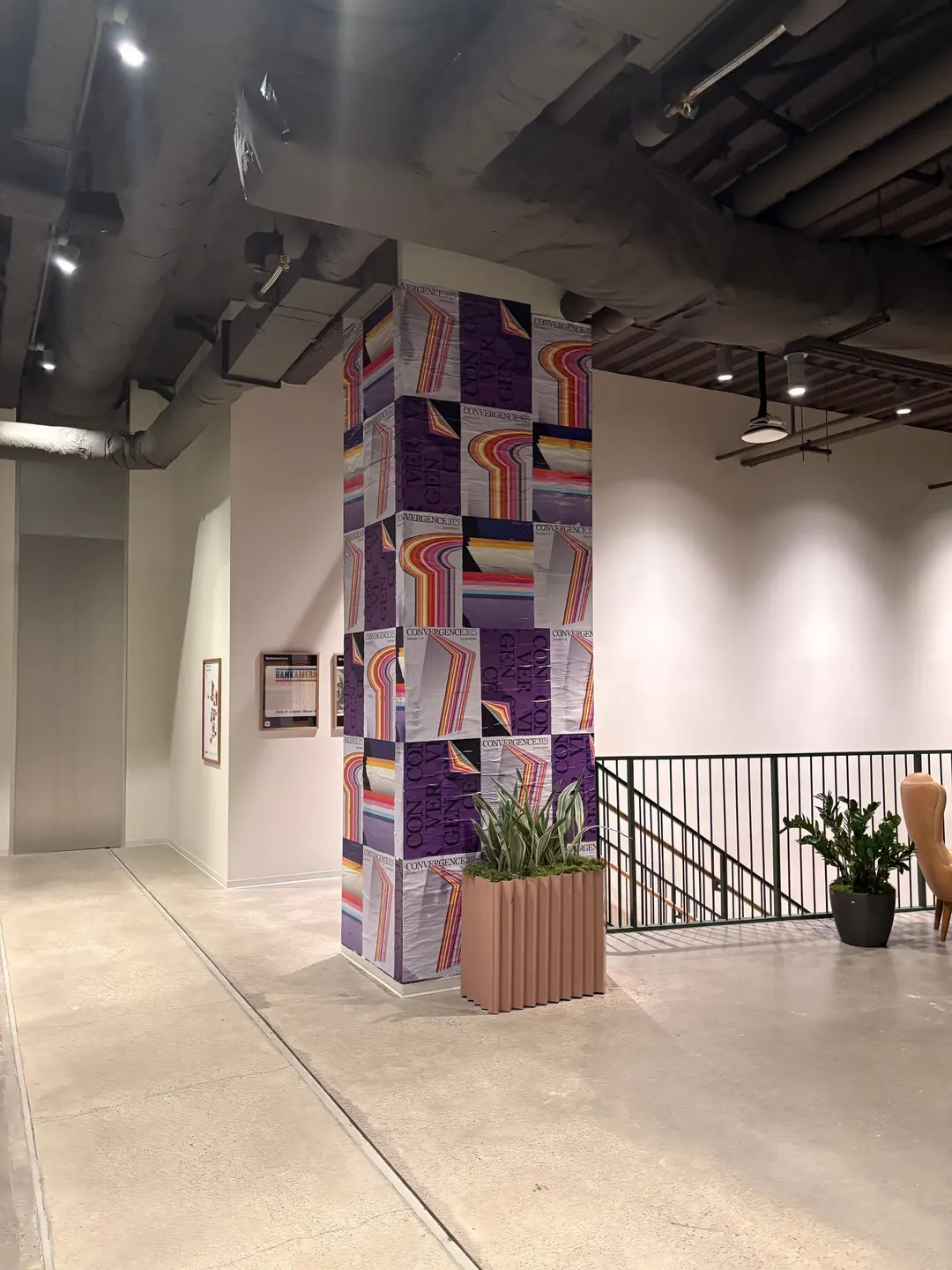

Proof · Printed in-house · Installed by our crew
Street campaigns for Tech & SaaS brands. Proof included.
Send the brief; a scoped quote for your vertical comes back inside 24 hours — formats, neighborhoods, and a GPS-stamped photo of every placement when the run wraps.
- Quote in under 24 hours
- No discovery call. The brief is the call.
- Printing & Installation under one roof
Brief us · Quote in under 24 hours
Start your tech & saas campaign.
Brand-safe by default.
- Private-property walls only Written owner consent on file for every surface. No public infrastructure, transit, or right-of-way.
- GPS-stamped photos within 48 hours Wide, mid, detail per placement. The proof your team forwards internally.
- FTC + local-code compliant Disclosures and permitting handled per contract. Legal reviews clean.
- Zero municipal removals on record 500+ documented installs, none taken down by a city.
Read the full field notes
Why Street Campaigns Work for Tech and SaaS Brands
Tech and SaaS companies face a B2B marketing paradox: paid digital channels reach the right audience at the exact moment they’re searching for solutions, but they don’t build brand recall. Your performance ads compete against hundreds of other SaaS vendors for the same keywords. Your CTR is falling. Your CAC floor is rising. By the time the enterprise buyer sits down to evaluate, they’ve seen forty different vendor ads, and none of them stuck.
Street media solves a different part of the funnel. It builds brand awareness in the physical spaces where your buyer actually lives and works. An engineer walking through SoMa on the way to the office sees a wheatpaste poster for an AI infrastructure platform on the corner of Howard and 5th. That’s the moment the brand registers, not in a LinkedIn feed. An enterprise CTO commuting through Flatiron sees a pole sticker on the utility box outside a coffee shop they visit three times a week. The physical repetition builds recall that no banner impression can match.
For tech companies launching new products, entering new markets, or competing against larger vendors with bigger digital budgets, street campaigns provide a credibility signal that performance media cannot. A startup that runs a multi-wall campaign across three major cities during their product launch reads as funded, serious, and here to stay. That physical proof of investment is the trust signal enterprise buyers need before they’ll sit through a demo.
What We Run for Tech and SaaS Brands
Wheatpaste Advertising. Large-format poster campaigns across tech-density neighborhoods. The headline format for product launches and brand-awareness pushes. Deploy across SoMa in SF, Chelsea and Flatiron in NYC, Kendall in Boston, or East Austin to reach your core audience on foot.
Pole Sticker Advertising. Corridor-density placement on utility boxes and street furniture between major intersections. Reinforces the wheatpaste message with frequency and extends reach into secondary neighborhoods. Ideal for dev-audience density in high-foot-traffic areas.
Paste-Up Poster Campaigns. Hand-pasted poster installation in specific locations. Useful for test markets and high-impact corner placements where we need precise surface control and creative flexibility.
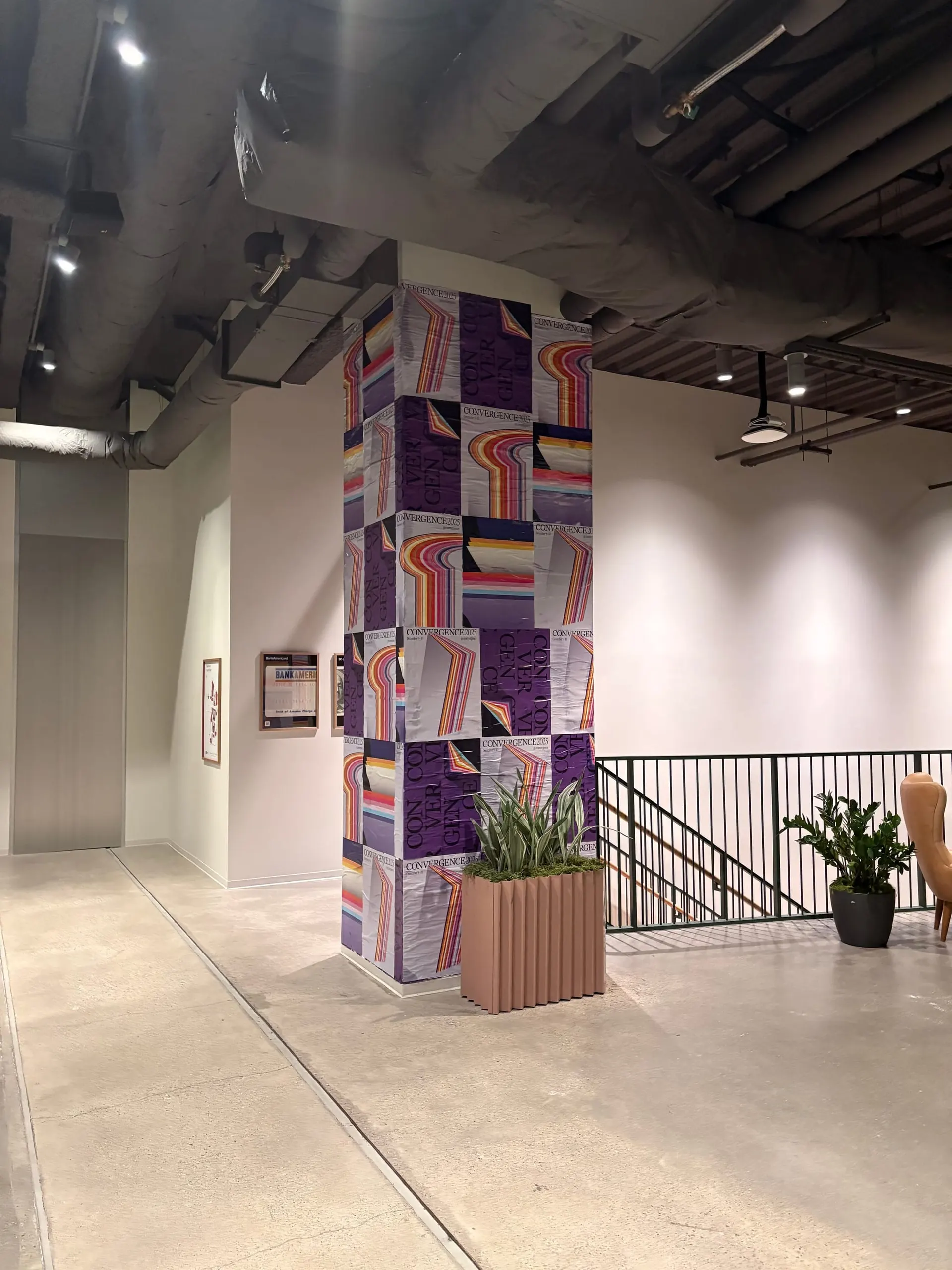
Coffee Shop Poster Programs. Interior placements in coffee shops and coworking spaces where tech audiences spend dwell time. Rotates creative monthly; builds brand familiarity with repeated exposure in the spaces where your audience works.
Multi-City Guerrilla Tours. Coordinated campaign rollout across five or more cities within a defined window. Synchronizes install timing across SF, NYC, Boston, Austin, and others so your brand presence appears simultaneous across major tech hubs. Particularly valuable for conference-week launches or coordinated product rollouts.
Product Launch Street Blitz. Compressed-timeline, high-density installation across a single market or multiple markets over 1-2 weeks. Built for rapid product launches, funding announcements, or time-sensitive market entry. Emphasizes speed and neighborhood saturation.
Neighborhood Saturation Campaigns. Multi-format blitz across a single neighborhood using wheatpaste, pole stickers, and stencils in coordinated rotation. Creates the perception of market dominance in the core audience neighborhood.
Compliance + Brand-Safety Notes
Tech and SaaS campaigns operate in a lower-regulation environment than financial services or pharma, but several operational notes apply. First, surface permits and BID restrictions vary by city. SoMa has different rules than Mission District, and NYC Chelsea differs significantly from Flatiron. Beyond Street Media confirms permit requirements and surface eligibility at intake, factoring lead time into the campaign schedule. Second, conference-week timing demands precision: some convention centers restrict immediate-vicinity advertising during event weeks, and local real-estate owners may impose moratoriums on new installations. We coordinate timing with venue restrictions to ensure compliance. Third, enterprise-brand stakeholder approval workflows can be complex. A B2B SaaS company may require review from marketing, legal, and investor-relations teams. We build approval routing into the production schedule so creative locks with consensus. Fourth, multi-city campaigns require state-by-state consistency review. If you’re running the same creative across five states, we confirm messaging compliance with state advertising laws (primarily around claims, disclosures, and contact information legibility).
Past Tech Work
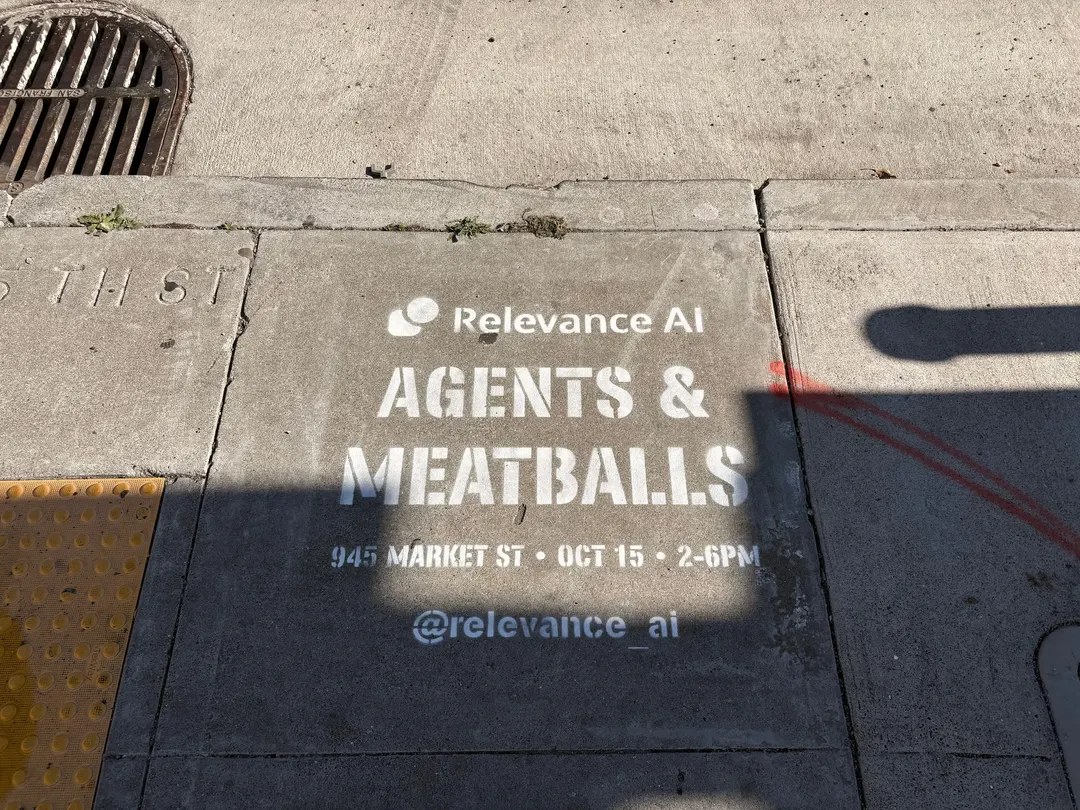
Relevance AI. San Francisco. A pixel-art wheatpaste blitz supporting the launch of Relevance AI’s agent-marketplace product. The campaign featured the “Agent #23” character across SoMa and the Mission, targeting founders and engineers on their commute to tech offices. The multi-neighborhood approach created neighborhood saturation while maintaining creative consistency. Sixteen placements over a three-week window.
Relevance AI. Agent Marketplace Extended Campaign. A follow-on multi-format activation adding pole stickers for corridor density and interior coffee-shop installs for dwell-time brand building across SoMa, the Mission, and Hayes Valley. The extended campaign layered frequency and touch points, extending the brand visibility window beyond the initial wheatpaste blitz.
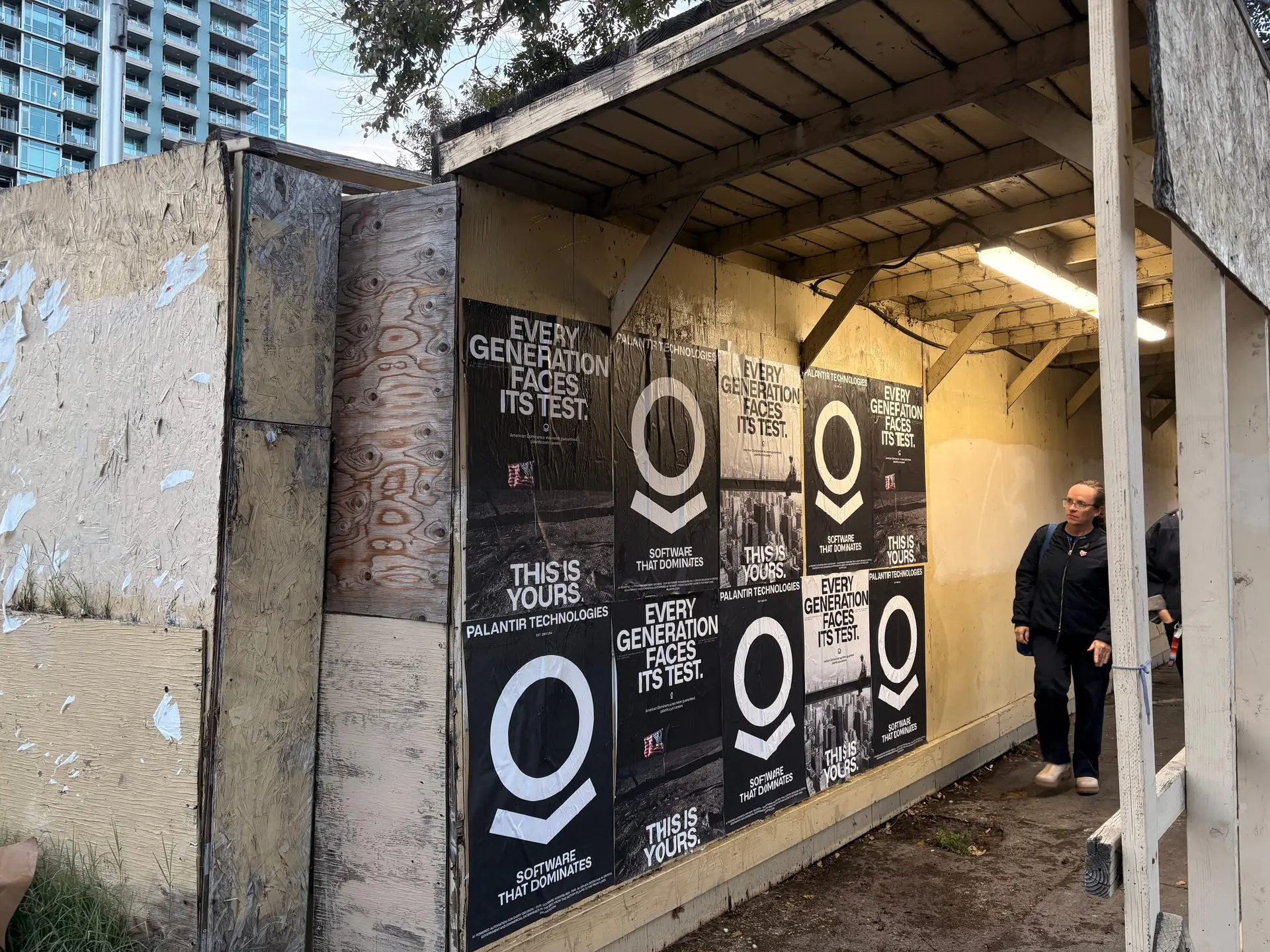
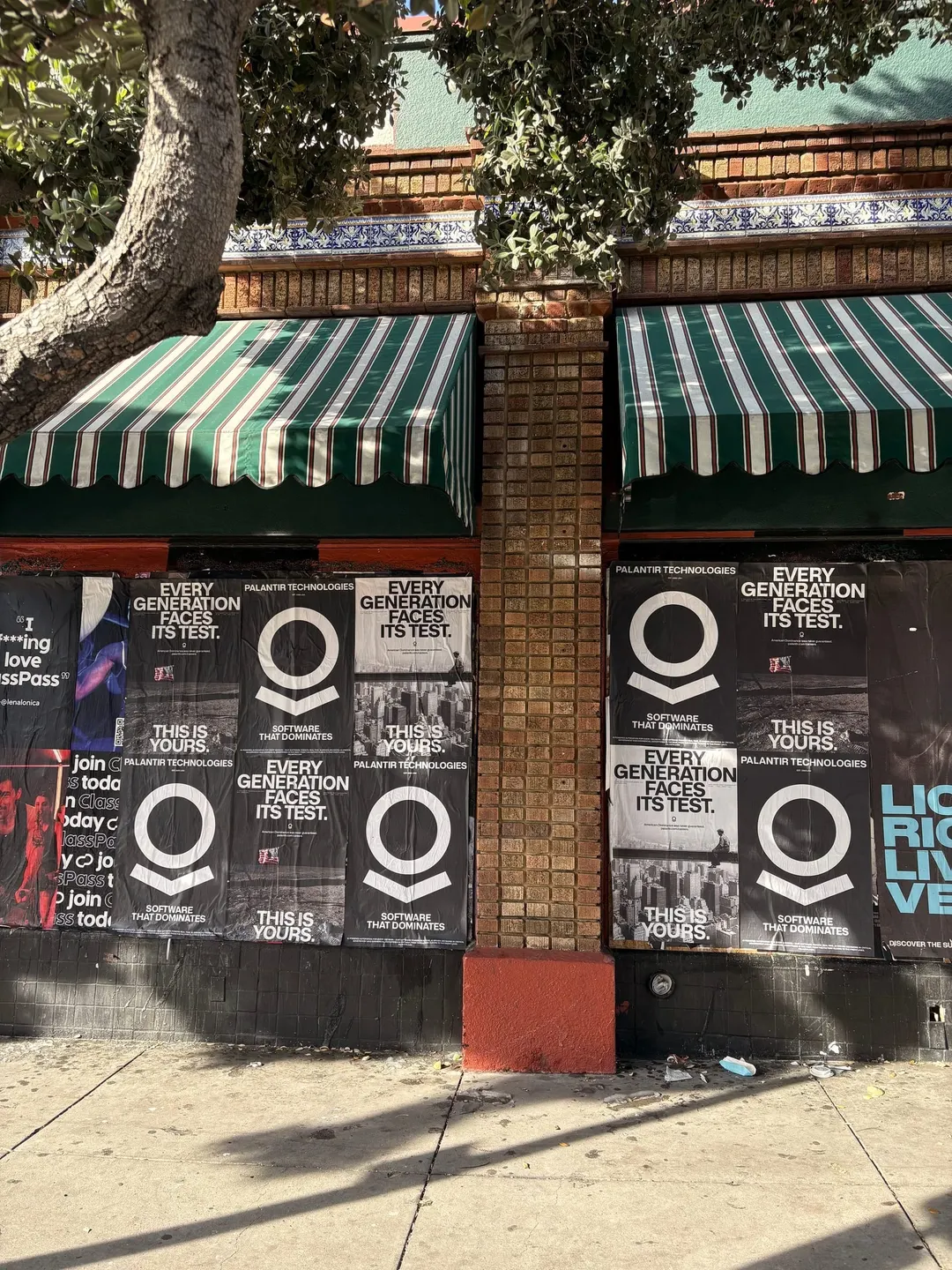
Palantir Technologies. San Diego. A twenty-nine-installation wheatpaste campaign across North Park and East Village featuring the “Every Generation Faces Its Test / This Is Yours” messaging. The campaign targeted enterprise technology and government-sector audiences in a secondary tech market, demonstrating how B2B tech creative scales geographically.
Palantir Technologies. Honolulu. An extension of the San Diego campaign into an emerging tech market, the Honolulu deployment featured six large-scale wheatpaste installations with the same black-and-white aesthetic. The campaign illustrated how core creative concepts travel across geographically diverse markets while maintaining brand consistency.
For detailed case studies on each campaign, see the Relevance AI campaign page and Palantir multi-city campaign page.
Cities We Activate for Tech Brands
Tech companies and SaaS platforms need presence in the neighborhoods where engineers, founders, and decision-makers are densest. Beyond Street Media operates wheatpaste, pole sticker, and interior install campaigns in the following tech-density markets:
San Francisco: SoMa, Mission District, Hayes Valley, Castro, North Beach. The core tech-audience neighborhoods. SoMa is the primary target for enterprise software, infrastructure, and AI companies. The Mission reaches earlier-stage founders and growth-focused teams. Hayes Valley captures design and creative-adjacent tech audiences. Campaign windows accommodate the rapid build cycles of SF-based startups and the frequent conference attendance that defines the market.
New York City: Chelsea, Flatiron, Lower East Side, Williamsburg, Astoria. Separated by function and density. Flatiron and Chelsea are the B2B tech heartland. CTO and VP-Engineering neighborhoods, finance-tech and enterprise-software audiences. Williamsburg reaches earlier-stage founders and VC-backed teams. Lower East Side and Astoria extend reach into secondary tech communities. The five-borough strategy lets you target by buyer seniority and company stage.
Boston: Kendall Square (Cambridge), Back Bay, Seaport, Beacon Hill. The biotech, hardtech, and enterprise-software cluster. Kendall is the headquarters neighborhood for MIT-adjacent companies and deep-tech research labs. Back Bay and Beacon Hill reach established financial-tech and enterprise vendors. Seaport has become the modern startup central, capturing post-accelerator funding and growth-stage companies.
Austin: East Austin, Domain, South Congress, Downtown. The secondary tech cluster with growing VC activity and infrastructure companies. East Austin is the creative-startup neighborhood. Domain is the corporate tech park where major cloud and infrastructure companies locate. South Congress captures DTC and design-adjacent tech. Downtown reaches the traditional business and financial-tech audiences.
Seattle: Capitol Hill, Belltown, Pioneer Square, SoDo. The Amazon-influenced tech neighborhood plus the independent startup cluster. Capitol Hill is the cultural and early-stage founder neighborhood. Belltown is downtown corporate tech. Pioneer Square and SoDo capture creative tech and gaming audiences. Seattle campaigns often align with tech conference season (AWS, Seafair).
Los Angeles: Venice, Santa Monica, Silver Lake, Hollywood. Silicon Beach and entertainment-tech. Venice and Santa Monica are the hub for fintech, healthtech, and media companies attracted by the coastal location and entertainment-industry adjacency. Silver Lake reaches design-first startups and creative technologists. Hollywood captures entertainment and streaming-adjacent tech.
Denver: RiNo, LoDo, Capitol Hill. The emerging mountain-west tech hub. RiNo (River North) is the primary startup neighborhood with lower real estate costs than coastal cities. LoDo is the established downtown financial-tech cluster. Denver campaigns are particularly effective for companies entering the region for the first time.
Portland: Pearl District, Southeast Division, Northeast. The independent-minded tech community. Pearl District is the primary startup neighborhood with strong design and product-focused companies. Southeast Division reaches the creative-adjacent tech audience. Portland campaigns work well for companies with values-alignment messaging (privacy-first, open-source, sustainability).
Miami: Wynwood, Brickell, Edgewater, Little Havana. The emerging fintech and LatAm-focused tech cluster. Wynwood is the creative startup neighborhood. Brickell is the financial-services and fintech hub with major banking presence. Edgewater is growing as a secondary tech neighborhood. Miami campaigns are increasingly effective for fintech companies expanding into Latin American markets.
Got a Tech Audience in Mind? We’ve Got the Walls.
Tech and SaaS companies are learning what successful startups have known for years: the best brand-building channels are the ones your competitors have already abandoned. Digital channels are auction-based, cost-driven, and audience-skeptical. Street media is immediate, owned, and credible. Beyond Street Media runs tech campaigns with the operational precision and geographic targeting that B2B marketing demands. Neighborhood specificity, rapid-iteration capability, attribution integration, and multi-city coordination on compressed timelines.
If you’re launching a product, entering a new market, or competing against vendors with bigger digital budgets, let’s talk about how to build brand presence where it counts: where your audience actually walks.
Tech & SaaS questions.
The 5 things tech & saas brands ask before sending a brief. Same-day answers from the desk if yours isn't here.
Q · 01 How does street marketing support B2B SaaS brand lift and enterprise-buyer trust?
B2B buyers. CTOs, VPs of Engineering, founders evaluating infrastructure platforms. Live and work in specific neighborhoods. A wheatpaste campaign running across SoMa, Flatiron, or Kendall delivers brand recall in the exact physical spaces where they move daily. Enterprise buyers perceive street presence as a trust signal: if the startup is funded enough to run a wall campaign across three cities, it's serious enough to evaluate. Street media is particularly valuable for SaaS launches competing against established vendors with bigger budgets. The physical presence equalizes the perception gap that digital advertising cannot close.
Q · 02 How does street media fit into a conference-week product launch?
Conference-driven campaigns require synchronized, city-specific activation during the event window. A product launch coinciding with Dreamforce in San Francisco needs posters up across SoMa and the Mission the week before the conference opens. So attendees see the brand on the street, not just in the convention center. Similarly, AWS re:Invent in Vegas demands neighborhood saturation in the tech quarter; RSA in San Francisco demands SoMa density. Beyond Street Media coordinates multi-city install teams to lock installation windows within 48 hours of your conference start date. The street presence becomes a proof point during the event: attendees recognize the brand because they saw it on the walk from the hotel to the venue.
Q · 03 What budget range should a tech startup expect for a launch campaign across 2-3 markets?
A two-to-three market tech launch campaign typically breaks down as follows: single-market wheatpaste blitz (SoMa-only or Flatiron-only) runs $12,000-$25,000. Multi-market blitz (SF + NYC + Boston) with wheatpaste as the headline format and pole stickers for corridor density costs $65,000-$150,000 for a 3-4 week window. If you add interior installs in coffee shops and coworking spaces for dwell-time brand building, add $15,000-$40,000 per market. Enterprise-scale multi-quarter programs with monthly creative rotation across 5+ cities run $250,000-$500,000+ per quarter. Product-launch-day timing often needs Expedited Campaigns. 24-72hr brief-to-wall at +15 to 200-plus percent over standard. Final quote returns in 24-48 hours.
Q · 04 What's the difference between reaching developers and reaching C-suite buyers in the same market?
Neighborhood strategy changes the buyer profile. SoMa and the Mission in SF reach early-stage engineers, founders, and engineering leaders. Younger demographic, long working hours, high foot traffic through coffee shops and transit. Flatiron and Chelsea in NYC reach enterprise CTOs, VP-Engineering roles at established SaaS companies, and financial-tech decision-makers. Slightly older, structured work hours, specific commute corridors. The creative register changes too: developer audiences respond to product-focused, technical messaging; C-suite audiences respond to trust signals and scalability narratives. Beyond Street Media coordinates creative and placement strategy to match the buyer profile in each neighborhood.
Q · 05 Can street campaigns be measured against digital attribution?
Yes. When QR codes, campaign-specific URLs, and UTM tracking are built into the poster and stencil creative from the start. We route QR redirects through tracked landing pages integrated with your marketing analytics stack. For larger programs, a dedicated short-domain redirect (e.g., tech-launch.yourcompany.com) lets you measure street-attributed signups separately from your digital channels. The key advantage: street media traffic is human-verified (no bots) and hyper-local (you know the neighborhood where each user came from). Attribution tends to be stronger and more credible than programmatic digital because there is physical proof of the placement.
We delivered.



















Brand partners include: FIFA World Cup 2026, Palantir, Sézane, G-Shock, Mitchell & Ness, True Religion, Huda Beauty, Yonex, Relevance AI, Momentous, RYZE Coffee, Bloom Effects, Incrediwear, Brooklyn Museum, Sweat FC, HydroJug, Frameline, Alchemy, OneRepublic, Lone Fox, Vaura Pilates.
Got a tech & saas launch?
Inquire now.
Send the Tech & SaaS brief: markets, window, creative direction. Vertical-specific quote back in 48 hours.