Wheatpaste poster advertising in San Antonio.
Hand-installed paste-up posters across Southtown, the Pearl, St. Mary's Strip, Downtown, and the Broadway corridor. Per-wall pricing, GPS photo proof on every install.
From $3,500, printing and installation both included. 5-7 days from brief to first wall.
500+ documented installs · a GPS photo of every wall · printed and installed in-house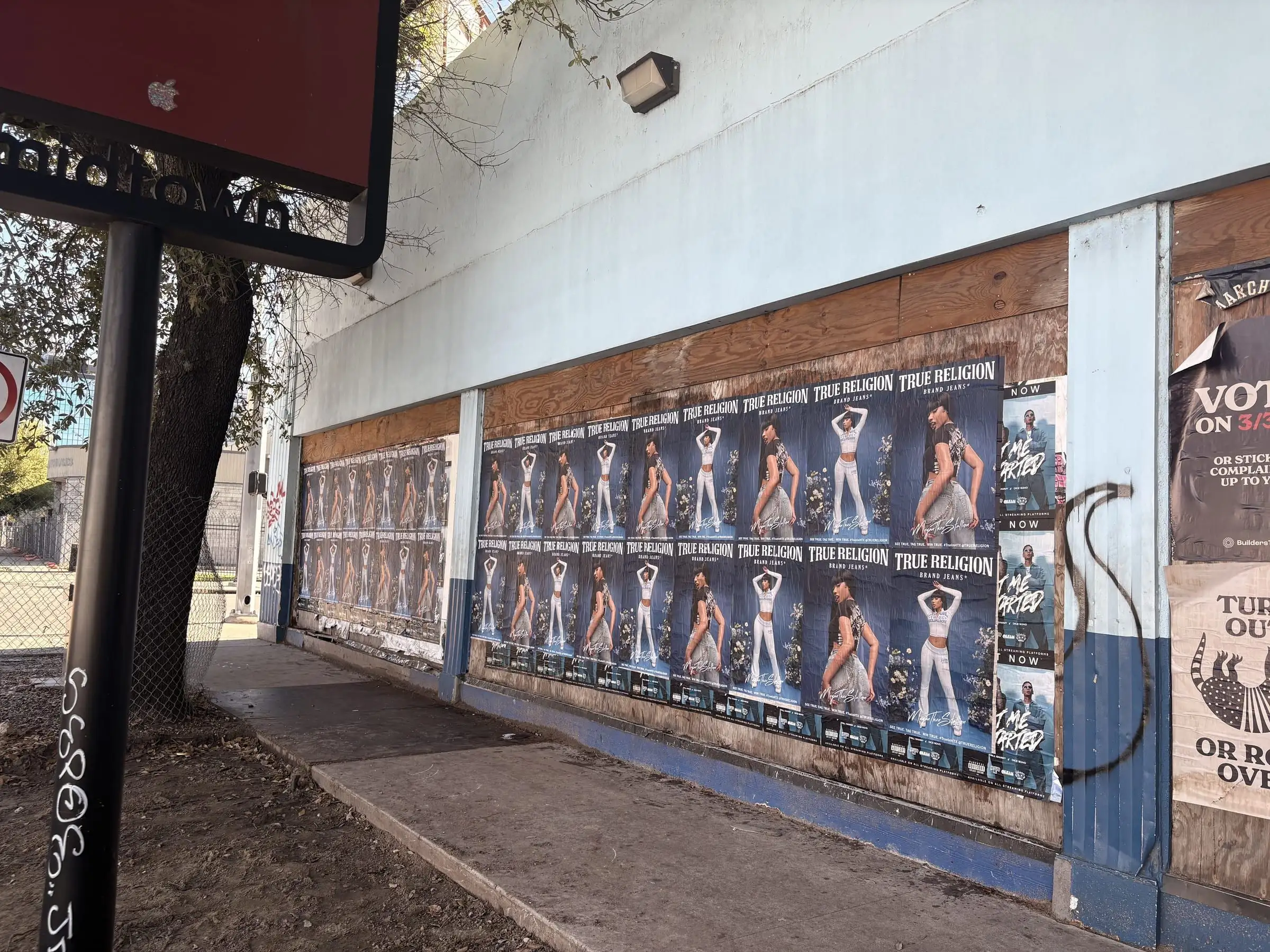
We delivered.




















Brand partners include: FIFA World Cup 2026, Palantir, Sézane, G-Shock, Mitchell & Ness, True Religion, Huda Beauty, Yonex, Relevance AI, Momentous, RYZE Coffee, Bloom Effects, Incrediwear, Brooklyn Museum, Sweat FC, HydroJug, Frameline, Alchemy, OneRepublic, Lone Fox, Vaura Pilates.
We print it, paste it, and prove it.
Print and install under one roof — heavyweight paper hand-pasted at wall scale by a local crew, then a GPS photo of every wall. No broker in the middle.
- Print + install, in-houseOne team, proof to paste — no broker, no markup
- Hand-pasted at wall scaleLocal crews, heavyweight paper — no vinyl, no machines
- A GPS photo of every wallWide · mid · detail, lat-long stamped on every install
- 500+ installs, zero removalsDocumented — the paper trail holds up
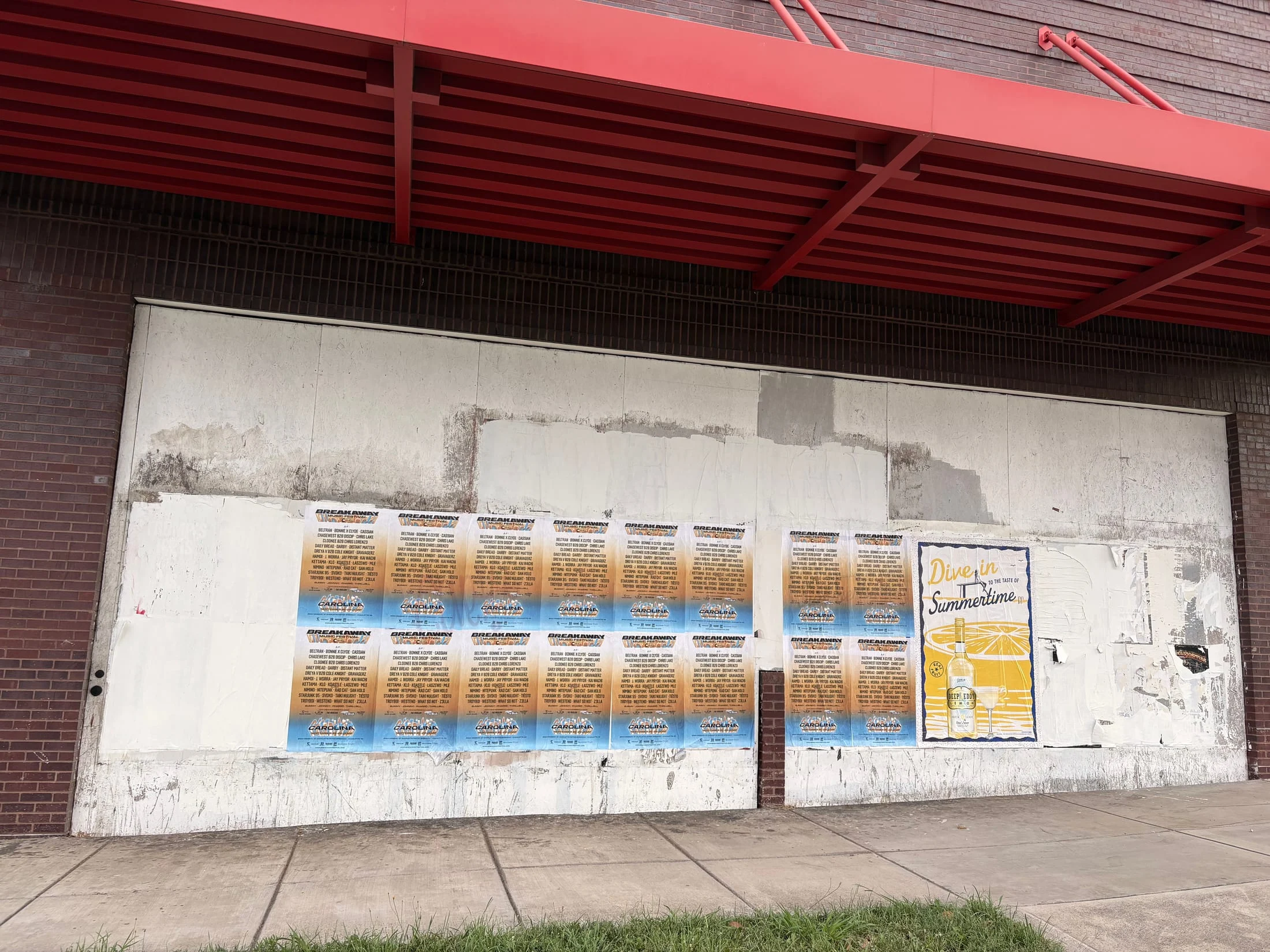
Heavyweight stock, up on the wall.
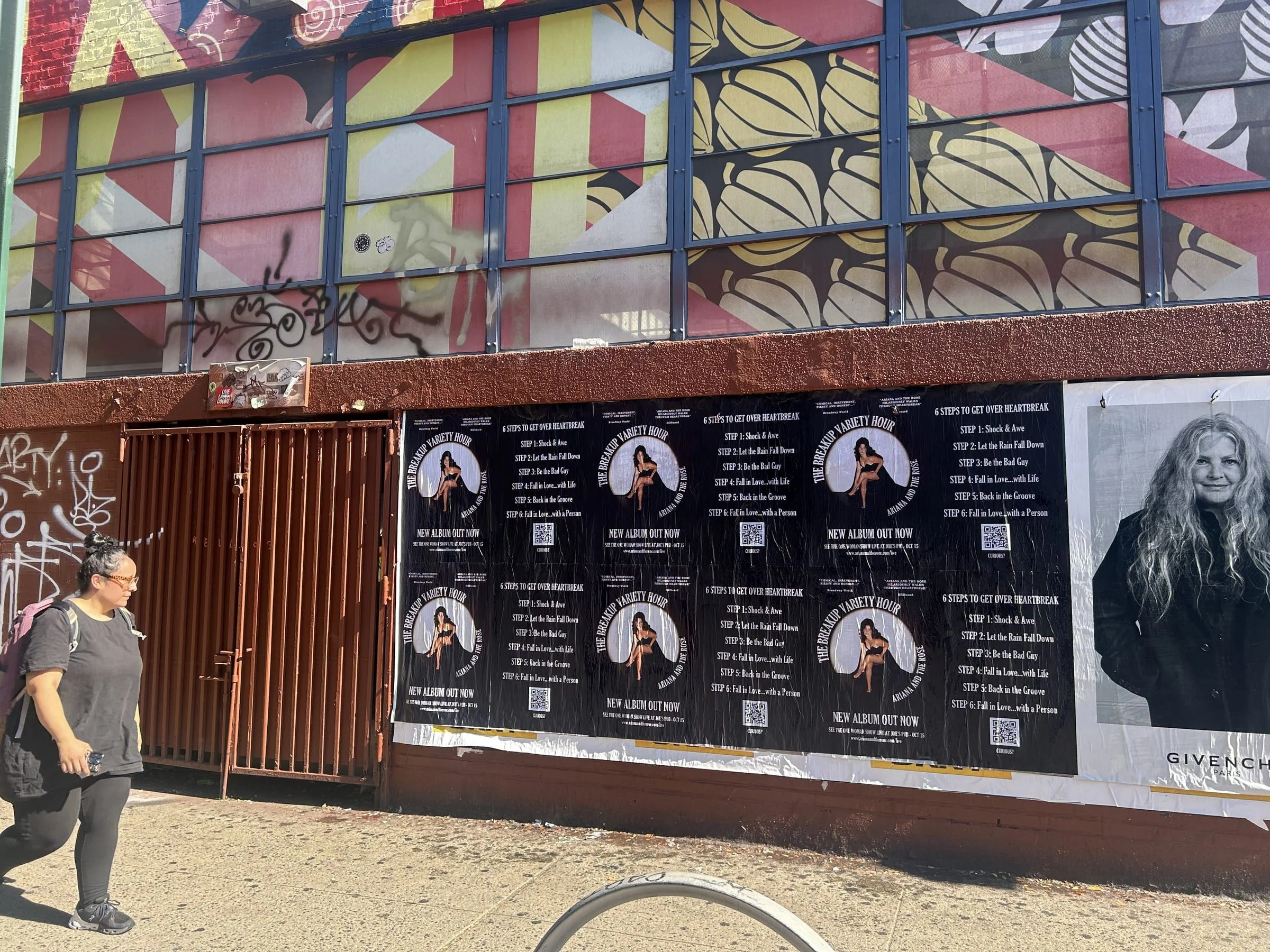
Where the city actually looks.
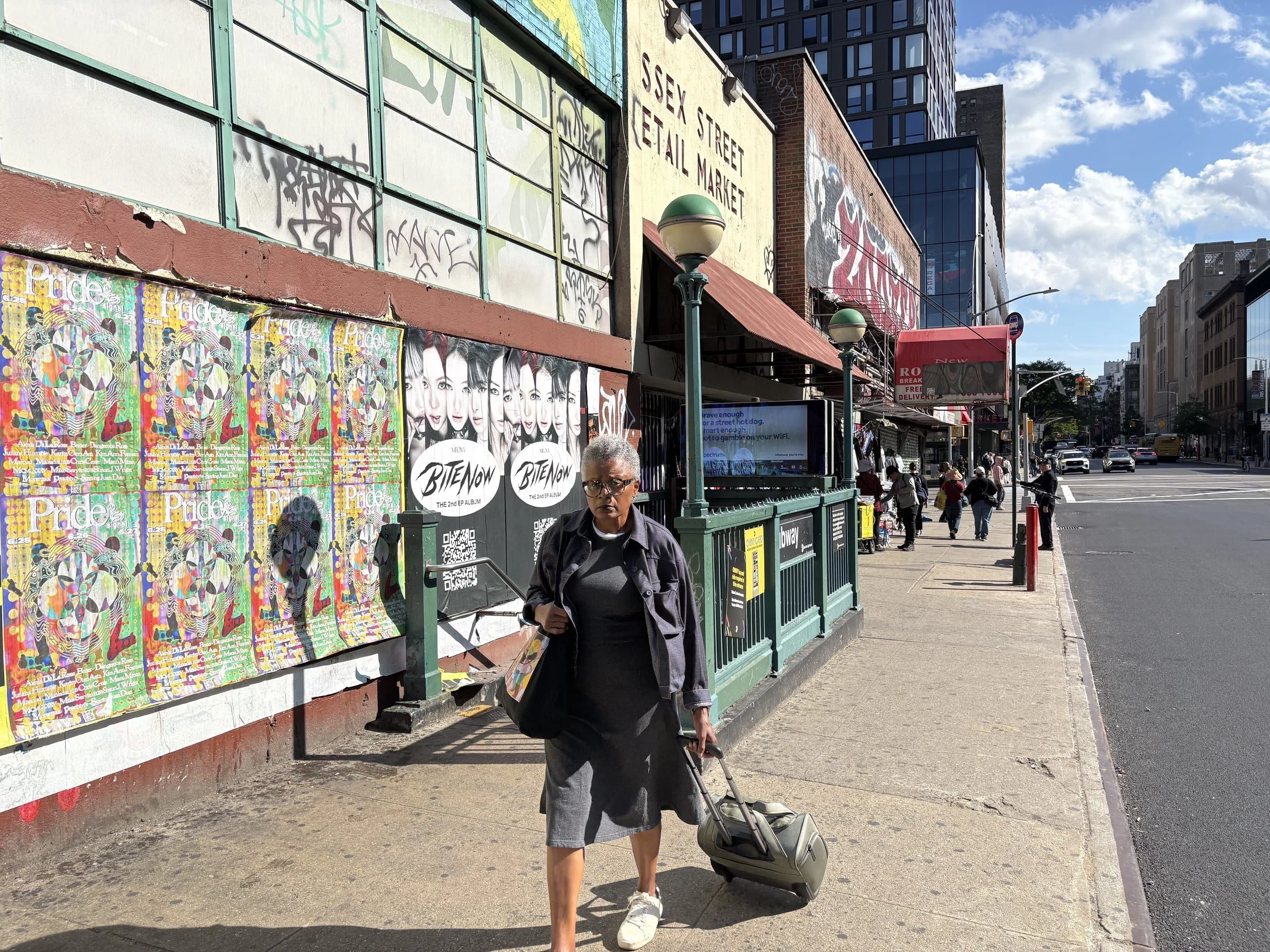
Block after block, San Antonio-wide.
Brands run wheatpaste with us because it moves people — Sézane for Soho retail traffic, Palantir for recruiting, FIFA for the World Cup.
- 500posters · RYZE Coffee, NYC · 21-day hold
- 550posters · Frameline, SF · 30-day hold
- 300posters · True Religion, Houston · 42-day hold
500+ documented installs · zero municipal removals on record · a GPS photo of every wall
- From $3,500 Wheatpaste posters 36×48 in sheet · 5-7 days in San Antonio
- From $2,500 Sidewalk stencils Biodegradable chalk · 5-7d lead
- From $3,000 Snipes + stickers Light-pole · utility-box · 5-10d
- From $18,000 Hand-painted murals Brush-painted · building scale
- Rush +80-150% Expedited campaigns 24-72hr brief-to-wall
Southtown holds the walls.
South Alamo and South Flores carry a dense cluster of paste-friendly walls inside a few walkable blocks: Blue Star warehouse frontage, gallery storefronts, and painted commercial fronts. First Friday runs the neighborhood on visual art every month, the property owners trade in creative work, and new paper reads as part of the block rather than noise dropped on top of it. That is the Southtown wall advantage.
Not a billboard buy. Not VIA transit. Hand-installed paste-up at eye level on the surfaces your audience already walks past on the way to a gallery, a show, or the River Walk. The wall is the campaign. Nothing surrounds it.
Installs ship in 5-7 days from approved creative to first paste-up live. The crew that runs San Antonio covers Southtown, the Pearl, St. Mary's Strip, Downtown, the Broadway corridor, and the Deco District on a single dispatch day. Fiesta-week and Rodeo windows book weeks out.
Seven neighborhoods. Seven registers.
- Southtown / King William warehouse + gallery storefront · 14-22 days
South Alamo and South Flores commercial frontage, the Blue Star Arts Complex warehouse walls, and gallery storefronts. First Friday turns the neighborhood over on visual art every month. The densest paste-friendly cluster in the city and the most active arts register. King William's protected Victorian residential core stays off the list; placements run the Southtown commercial frontage outside it.
- Pearl District brewery brick + stucco · 12-20 days
The restored Pearl brewery campus and the food-and-hospitality blocks around Grayson and Avenue B. Upscale all-week foot traffic, the weekend farmers market, and the Hotel Emma side of the campus. Strongest paste-up neighborhood for premium retail, spirits, food, and hospitality briefs. Much of the core campus is privately managed, so placements coordinate directly with property management.
- St. Mary's Strip bar + music frontage · 12-18 days
North St. Mary's between downtown and Tobin Hill. Bar and live-music frontage that runs late into the night, with San Antonio College foot traffic feeding the corridor. The right register for beverage, music, and lifestyle briefs targeting the going-out crowd.
- Downtown scaffold + commercial · 10-16 days
Convention and tourist core around the Henry B. González Convention Center. Commercial walls, construction scaffold, and hotel-district frontage. Reaches convention crowds and the corporate audience. Best for B2B launches and product reveals timed to convention weeks. We stay off the River Walk public zones, the Alamo grounds, and city right-of-way: placements run private commercial walls only.
- Broadway corridor commercial + retail podium · 12-20 days
Broadway from downtown through Midtown toward the Pearl and Brackenridge Park. Museum-district frontage past the San Antonio Museum of Art and the Witte, newer apartment-retail podiums, and older commercial walls. Reaches the culture audience, Trinity University traffic, and the growing resident segment. Works for cultural, food-and-beverage, and resident-facing launches.
- Deco District painted storefront + stucco · 12-18 days
Fredericksburg Road's Art Deco commercial strip around the Woodlawn Theatre, west of downtown. Painted storefront and stucco frontage on independent, largely Latino-owned businesses. Works for local launches, community-rooted brand work, and food-and-beverage reaching the resident segment off the tourist track.
- Government Hill storefront + small commercial · 12-18 days
Residential-arts neighborhood next to the Pearl and Fort Sam Houston. Independent storefront and small commercial frontage with an emerging coffee-and-gallery register. The neighborhood for community-rooted local brand work that wants distance from the downtown tourist read. Wall inventory is thinner here and sits on private storefront frontage.
Six stages. Southtown discipline.
Brief to refresh audit. Each stage owned by an operator on the crew that runs San Antonio. The heat-and-humidity paste timing, the wall scouting, the Fiesta routing logic, all of it is the San Antonio baseline.
- 01
Brief intake + wall count
Send us creative, the neighborhoods in play (Southtown, the Pearl, St. Mary's Strip, etc.), your dates, and budget. Within 48 hours you have a wall count, a neighborhood map, and a per-wall budget.
- 02
Local scout + consent-first wall sourcing
City captain walks the South Alamo and South Flores run and the requested neighborhoods. Walls sourced fresh across the Pearl, St. Mary's Strip, and the Broadway corridor with written owner consent pulled before anything is optioned. Every surface is verified outside the King William protected core before it goes on the list. Option 1.4x final wall count for weather and event swaps.
- 03
Print + heat-and-humidity paste prep
Print runs on UV-stable stock rated for Texas sun. Paste batches are mixed for high South Texas humidity so paper sets clean even when evaporation runs slow, and summer surfaces get a wipe-down before paste. Spring and fall thunderstorm-season installs are timed ahead of the wet line. Materials staged 48 hours before dispatch.
- 04
Dispatch day. Southtown first
Pre-dawn on South Alamo and South Flores (June through September crews work before surface temps push past 95°F). The Pearl mid-morning for the walkable retail and market window. Downtown for the convention corridor. St. Mary's Strip, Broadway, and the Deco District to close. 30-40 walls in a single day with two crews. 60+ during Fiesta week.
- 05
Photo log + client portal
Three GPS-stamped photos per wall (wide, mid, detail). Field-log app captures lat/long, timestamp, installer ID. Portal updates within 4 hours of install. No invoicing until the photo bundle is signed off.
- 06
Day 14 / 21 / 30 audits + refresh
Texas sun, summer heat, and thunderstorm-season wet shorten wall life on exposed faces. Audits at day 14, 21, 30. Any wall that loses surface gets refreshed on the next dispatch. Fiesta, Rodeo, and Spurs walls get an event-day check layered on top.
Private property. Written consent. Period.
Texas treats paste-up on a permissioned wall as a property-rights matter. We pull written consent on every install. Public infrastructure is never touched.
Every San Antonio paste-up sits on a permitted private surface with written owner consent. We do not run on VIA transit, utility poles, traffic signs, or municipal right-of-way. Period.
Southtown arts register. First Friday and the Blue Star galleries mean Southtown owners actively support visual work. Many paste-friendly walls have gallery or venue principals who keep access open campaign to campaign. Lead time inside Southtown is the fastest in the market.
King William historic district. King William carries a historic-overlay designation, and its protected Victorian residential facades are off the table. We install only on Southtown commercial frontage outside the protected boundary and verify the overlay line block by block before paper ships.
Downtown and River Walk review. The convention and tourist core sits under downtown historic and design review in places, and the River Walk itself is public. We keep to private commercial and hotel-district walls, coordinate with storefront owners, and stay off the Alamo grounds and city right-of-way. These placements need the tightest property coordination and book earliest.
500+ documented installs. Zero municipal removals on record. The paper trail holds up in any takedown dispute. The brand is never on the hook for a complaint we routed through.
The San Antonio wheatpaste playbook Operator detail · surfaces, climate, timing
What paste-up advertising actually does in San Antonio
Wheatpaste advertising in San Antonio is hand-installed paste-up poster campaigns adhered to private walls with water-based adhesive. The category also goes by paste-up poster campaigns, street poster advertising, flyposting, and bill posting. The format converts on the same dynamic everywhere it works: a poster on a wall the right audience walks past, repeatedly, over weeks. In San Antonio the variable is which wall. Pasting Southtown reaches the arts-and-First-Friday register. The Pearl reaches the affluent food-and-hospitality crowd. St. Mary’s Strip reaches the nightlife audience. Downtown reaches the convention and corporate crowd. The Broadway corridor reaches the museum-district culture audience and Midtown residents. The Deco District reaches the community segment off the tourist track. The same poster, hung on the wrong wall, lands on the wrong audience.
That is the San Antonio operator problem in plain language. This is a large, low-density metro that sprawls well past Loop 1604, and the audience worth reaching is not spread evenly across all of it. It sits in a handful of walkable corridors inside the urban core. Reaching those people through paid social is expensive because the targeting bleeds across a metro of well over a million residents and the overlap with people who will never walk Southtown is wide and wasteful. Reaching them through DOOH or transit is expensive because the minimum spend is high and the inventory skews highway-adjacent rather than street-level. Paste-up at neighborhood scale solves the geometry. Two well-placed walls on South Alamo do more work than ten billboards strung along the interstates.
Tourism splits the city in two. Downtown and the River Walk run on visitor and convention traffic: high volume, low repeat, a crowd that turns over daily. A poster there works whoever walked past today. Southtown, the Pearl, Broadway, and the Deco District run on the opposite pattern, the same residents and workers passing the same wall on a commute or a weekend loop, week after week. That repeat exposure is what paste-up is built for. So the brief decides the wall. A launch that needs convention eyeballs goes Downtown. A brand that needs a neighborhood to learn its name goes Southtown and Broadway and stays up for the full run. San Antonio hands you both inside a few miles.
When San Antonio clients book paste-up over other formats
- Fiesta San Antonio (eleven days, late April). The single biggest window in the calendar. NIOSA, the Battle of Flowers Parade, and the Fiesta Flambeau night parade pull a citywide crowd into Downtown, the River Walk corridor, Southtown, and Broadway. Brands run a 30-to-45-day pre-Fiesta install window so paper is on the wall when the audience lands.
- Stock Show and Rodeo (February). Roughly eighteen days of events pull a regional crowd through the East Side venues and downtown. Consumer, food, and lifestyle brands paste in the weeks leading in.
- Spurs season (October through April). Home games shift downtown and East Houston Street foot traffic on either side of tip-off. Time the install to a homestand and the wall works a captive crowd.
- First Friday (monthly, Southtown and Blue Star). The art walk turns the neighborhood over every month, not just once a year. Fashion, apparel, music, and culture briefs ride the recurring foot traffic.
- Fall arts season (Luminaria, Muertos Fest). The Luminaria contemporary arts festival and San Antonio’s Día de los Muertos programming pull a cultural audience into Hemisfair, downtown, and Southtown across late October and November.
- The food calendar (Culinaria and the year-round scene). San Antonio is a UNESCO Creative City of Gastronomy, and the food-and-beverage event calendar stays busy through spring and fall. The Pearl and Southtown carry those briefs to a walking audience that already comes for the restaurants.
- Brand entry into the South Texas market. DTC, fashion, fitness, and hospitality brands launching Texas operations use multi-neighborhood paste-up to register presence before paid digital kicks in.
- Hospitality and retail openings on the Pearl, Southtown, and St. Mary’s. The one-mile catchment around a new bar, restaurant, hotel, or shop drives the spend, and the paper goes up in the two to three weeks before the doors open.
Why the crew runs San Antonio around the calendar
Most paste-up shops treat San Antonio as a Fiesta-only market, or as an Austin day-trip they bolt on at the end of a route. Both misread how the corridors behave. South Texas heat and humidity are hard on adhesive through the long summer. The downtown and King William blocks carry historic and design review. The calendar bunches around Fiesta, the Rodeo, and Spurs season, which compress install demand into a handful of weeks. None of those constraints disappear if you ignore them. They leak into the campaign and produce thin proof and short holds.
The crew that runs San Antonio builds those constraints into the install plan. The paste batch is mixed for high humidity so paper still sets clean when the air holds moisture and evaporation runs slow, which is a different chemistry problem than Austin’s dry heat an hour up I-35. June-through-September dispatch starts pre-dawn so paper locks before surface temps push past 95°F in the afternoon. Spring and fall thunderstorm season gets install windows timed ahead of the wet line, because a heavy South Texas downpour on green paste undoes a wall. The route logic stages South Alamo and South Flores first because Southtown absorbs the most paper density and holds the fastest owner access. The Fiesta, Rodeo, and Spurs calendar is built into the booking system, which is why event-week walls book weeks out. None of this scales if it is improvised per campaign.
Off-season is where that discipline earns out. The Fiesta-only shops go quiet through the long summer, but the resident corridors never stop: First Friday runs every month, the Pearl market draws every weekend, and Spurs season carries downtown foot traffic from October on. Winters are mild here, hard freezes rare, so the paste window stays open close to year-round. The one real constraint is the summer heat-and-humidity band, and that gets handled in the batch, not by sitting out the season. Historic and design review is the other year-round factor. The downtown core and King William both carry it, and the fix is lead time and clean paperwork, not speed. That is why those blocks get scoped first and the consent file gets checked against the overlay boundary before a crew rolls.
Surface mix, by neighborhood
San Antonio leans more toward stucco and painted masonry than the aged porous brick you find in an older Northeastern city, so the paste plan gets built per corridor instead of assumed. Southtown and the Blue Star complex are the exception and the prize: old warehouse and brewery brick next to gallery storefronts, the friendliest wall stock in the city for paste. The Pearl runs restored brewery brick and stucco with a modern edge. St. Mary’s Strip is older bar and music frontage. Downtown is scaffold-heavy convention blocks mixed with commercial and hotel-district walls, and Broadway sets newer apartment-retail podiums against older commercial frontage through the museum district. The Deco District brings painted Art Deco storefront and stucco along Fredericksburg Road, and Government Hill adds small independent storefront frontage.
The historic stock is where we get picky. King William’s Victorian residential facades and the protected frontages inside the downtown and River Walk review area are handsome walls, and they are exactly the ones we skip. Paper goes on commercial frontage outside those boundaries: stucco, painted masonry, warehouse brick that holds a poster and pulls clean at end of run. Checking that line block by block is part of the scout. A wall that reads well but sits inside a protected boundary is not a wall we will use.
Standard poster sizes work across the city: 24x36 single-sheet for tactical takeovers, 27x40 for higher-visibility single placements, 36x48 sheets and 48x72 multi-panel builds for hero walls. Scaffold wraps run in Downtown and Pearl build cycles. Construction hoarding works Downtown and along the Broadway podium builds for eight-to-twelve-week visibility windows. Interior installs run across Southtown galleries, Pearl venues, and St. Mary’s bars for niche cultural reach without facade-review overhead. Pole inventory is intentionally off the menu because San Antonio poles are public right-of-way; small-format coverage runs on private storefront frontage with owner consent instead.
What the wrap deck includes
Every San Antonio campaign closes with a documentation pack that holds up in any operator review. The pre-install site map shows confirmed walls with neighborhood context, foot-traffic notes, and property-owner approval status. Daily install logs ship photo batches and GPS logs while paper is still going up. The final wrap deck breaks placement count by neighborhood, install dates, duration, geo-tagged install map, and the full image archive. The press-ready 12-image asset pack saves the licensing back-and-forth when a wall picks up Instagram or publication traction during Fiesta or a First Friday. Compliance documentation closes the loop: property-owner permissions, historic and design review notes by zip code, and any disclaimers if the work was political or cause-related.
Internal cross-links
Paste-up advertising in San Antonio works well in combination with other Texas street formats. For the canonical service overview, see wheatpaste advertising. See our full guides on paste-up poster campaigns for the large-format Southtown hero builds, snipe poster campaigns for tactical small-format runs on Pearl and Downtown frontage, sidewalk stencil advertising for ground-level saturation around the South Alamo and St. Mary’s corridors, and interior installs for permit-free cultural reach inside Southtown galleries and Pearl venues. For pricing, see the pricing page, and to brief a campaign, head to contact. For the broader San Antonio coverage hub, see San Antonio street advertising.
San Antonio questions.
The short version. The brief covers the rest.
Q · 01 Is wheatpaste advertising legal in San Antonio?
It is legal on private walls once the owner's signature is on file, and that paperwork happens before paste. We keep off public infrastructure: VIA transit, utility poles, traffic signs, or municipal right-of-way. Texas treats paste-up on a permissioned wall as a property-rights matter. King William's historic-overlay designation puts its protected residential facades off the table, and parts of the downtown and River Walk core sit under historic and design review, so we install on pre-cleared private commercial walls and verify each boundary block by block. Zero municipal removals on record across 500+ documented installs.
Q · 02 How much does a wheatpaste campaign cost in San Antonio?
Wheatpaste in San Antonio starts at $3,500 per campaign with print and install included. Multi-neighborhood programs across Southtown, the Pearl, St. Mary's Strip, Downtown, and Broadway price up from the published floor. The final number depends on turnaround, size, location count, and combined service mix, and it tracks print volume and crew days, not the brand on the poster. Fiesta week carries roughly a 25% premium on compressed install windows. Final quote returns in 24-48 hours. Full rate card is on our pricing page. No RFP gatekeeping.
Q · 03 Which San Antonio neighborhoods do you cover for paste-up campaigns?
Southtown and King William, the Pearl, St. Mary's Strip, Downtown, the Broadway corridor, the Deco District, and Government Hill. Southtown carries the highest density of paste-friendly walls along South Alamo and South Flores, plus the Blue Star warehouse frontage. The Pearl holds the affluent food-and-hospitality crowd around Grayson and Avenue B. St. Mary's Strip covers nightlife and live music. Downtown concentrates convention and corporate reach, and Broadway runs the museum district and resident segment. Each corridor has distinct property-owner relationships and surface specs on file.
Q · 04 How fast can a San Antonio campaign launch?
Five to fourteen days from creative lock to first wall, with most programs landing in 5-7. Same-week is doable when print files are press-ready and walls are already cleared. Southtown property coordination is fast because the arts corridor keeps gallery and venue owners open to visual work. Fiesta, Rodeo, and River Walk-adjacent timing needs 30 to 45 days of advance booking because event-week property coordination and review clearance tighten dramatically.
Q · 05 Does Fiesta timing change campaign performance?
Significantly. Fiesta San Antonio runs eleven days in late April and is one of the largest festivals in the country, drawing a widely cited 3.5 million attendees into Downtown, the River Walk corridor, Southtown, and Broadway. NIOSA, the Battle of Flowers Parade, and the Fiesta Flambeau night parade concentrate the crowd into a handful of days. Paper timed to the run picks up earned social pickup at a level no other San Antonio moment delivers. The Stock Show and Rodeo (about eighteen days in February) and Spurs home games (October through April) shift downtown and East Houston Street foot traffic on their own cadence. Plan installs 30 to 45 days out for Fiesta.
Got a San Antonio wall?
We've got the paste.
Send the brief. Southtown, the Pearl, St. Mary's Strip, Downtown, Broadway. San Antonio paste-up numbers return inside 48 hours, built on the published per-wall base.