Events & Festivals.
Street media for festivals, conferences, and live events, neighborhood saturation for multi-city tours, venue-adjacent activations, and ticket windows.
Four tensions only street resolves.
- 01
Event-marketing windows are compressed, your ticket-sales countdown is real-time, and venue-controlled ad inventory in the immediate area means you must own the surrounding neighborhood instead
- 02
Multi-city festival tours (Bonnaroo, Coachella, Outside Lands, Lollapalooza) require coordinated street saturation across different markets simultaneously, traditional media buying is too slow
- 03
Conference sponsorships are wasted on attendees who already bought their pass, reaching the decision-maker who has not yet committed requires presence outside the convention center, not inside
- 04
Festival ticketing-platform launches (Eventbrite, Ticketmaster ticket-drops, live-release campaigns) need street-level buzz in core cities to drive immediate traffic spikes
Is this you?
If two or more match your roadmap, send the date.
- You're racing a ticket-sales countdown and venue-controlled ad inventory means you have to own the surrounding neighborhood instead.
- You're running a multi-city festival tour that needs coordinated street saturation across markets at once, faster than traditional media buying.
- Your conference sponsorship is wasted on attendees who already bought in. You need presence outside the convention center, not inside.
- You're launching a ticketing platform and need street-level buzz in core cities to drive immediate traffic spikes.
- Billboards and transit near the venue are price-gated by the promoter. Street media works around that friction.
- Your sponsor budget is locked into a booth inside the venue. Exterior neighborhood presence reads more credible than an in-venue takeover.
5 disciplines, one playbook.
Wheatpaste
Wheatpasting and wheatpaste advertising campaigns from $3,500 in NYC, LA, SF + 40 US cities. Published floors, 5-7 day lead (Expedited 24-72hr), GPS-tagged photo proof on every install. From $3,500Pole Stickers
Pole sticker advertising and street pole takeovers in 40 US cities. Legal commercial-pole campaigns with geo-tagged photo proof on every install. From $3,000Paste-Up Posters
Paste-up poster campaigns for product launches and neighborhood saturation. From $3,500, 5-7 day lead (Expedited 24-72hr), GPS-tagged photo proof in 40 US cities. From $3,500Poster Murals
Multi-panel poster murals. Full-wall paste-up installs spanning building sides and scaffold runs. Brand-scale visibility with photo proof in 40 US cities. From $8,000Saturation Campaigns
Neighborhood saturation campaigns. Multi-format wheatpaste, stencil, and pole-sticker takeovers that own a 10-block radius for 4 to 8 weeks. From $12,000Starting floors · print, install, and GPS-stamped photo proof included in every quote. Final number varies by turnaround, size, and location count. Full rate card →
Sample creative directions.
Pre-tested format / neighborhood pairings. Pick a direction at brief intake and we route the surface set inside 24 hours.
- Multi-city festival tour Wheatpaste, staggered weekly per market Williamsburg, Echo Park, Mission
- Conference sponsor activation Pole stickers, one-week pre-event West Loop, River North, Chicago
- Ticketing-platform launch Wheatpaste + sidewalk stencils SoMa, Financial District, Arts District
- Booth-exterior halo Interior wraps + exterior wheatpaste Venue plus surrounding neighborhoods
- VIP-presale amplification Limited-window wheatpaste, 3 weeks out Upper West Side, Bel Air, Pacific Heights
The neighborhoods, not the metros.
We install where the audience already moves. Named corridors per market, permitted and photo-documented.
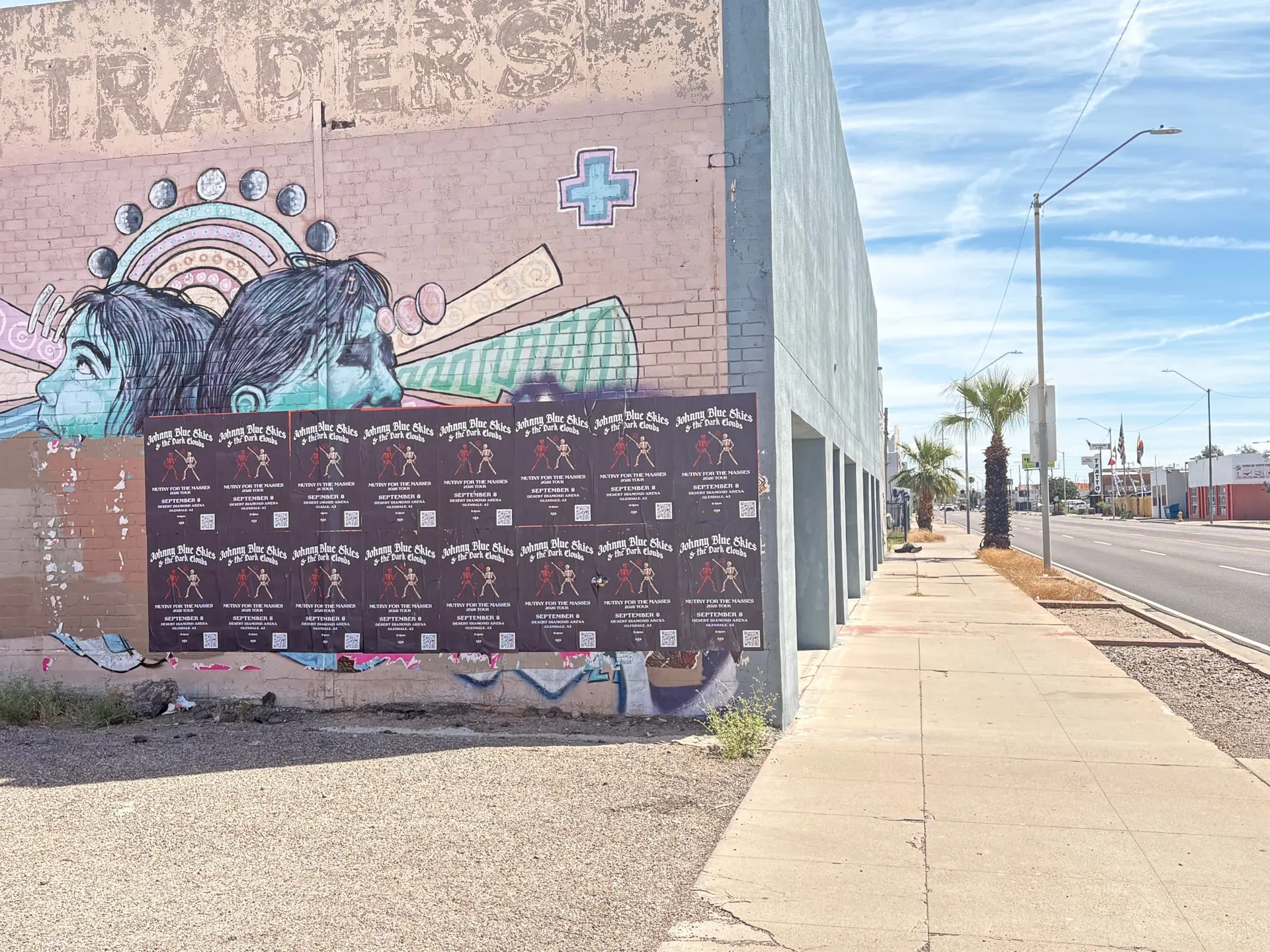
Roosevelt Row · Downtown Phoenix · Midtown · Tempe · Scottsdale Old Town
Hell's Kitchen · SoHo · Williamsburg · Bushwick · Lower East Side · Tribeca
Balboa Peninsula · Corona del Mar · Fashion Island · Newport Heights · Balboa Island · Lido Isle
SoMa · Mission District · Castro · Hayes Valley · Tenderloin · North Beach
Capitol Hill · Pioneer Square · South Lake Union · Belltown · Ballard · Fremont
Put it on the wall.
We have run this for events & festivals.
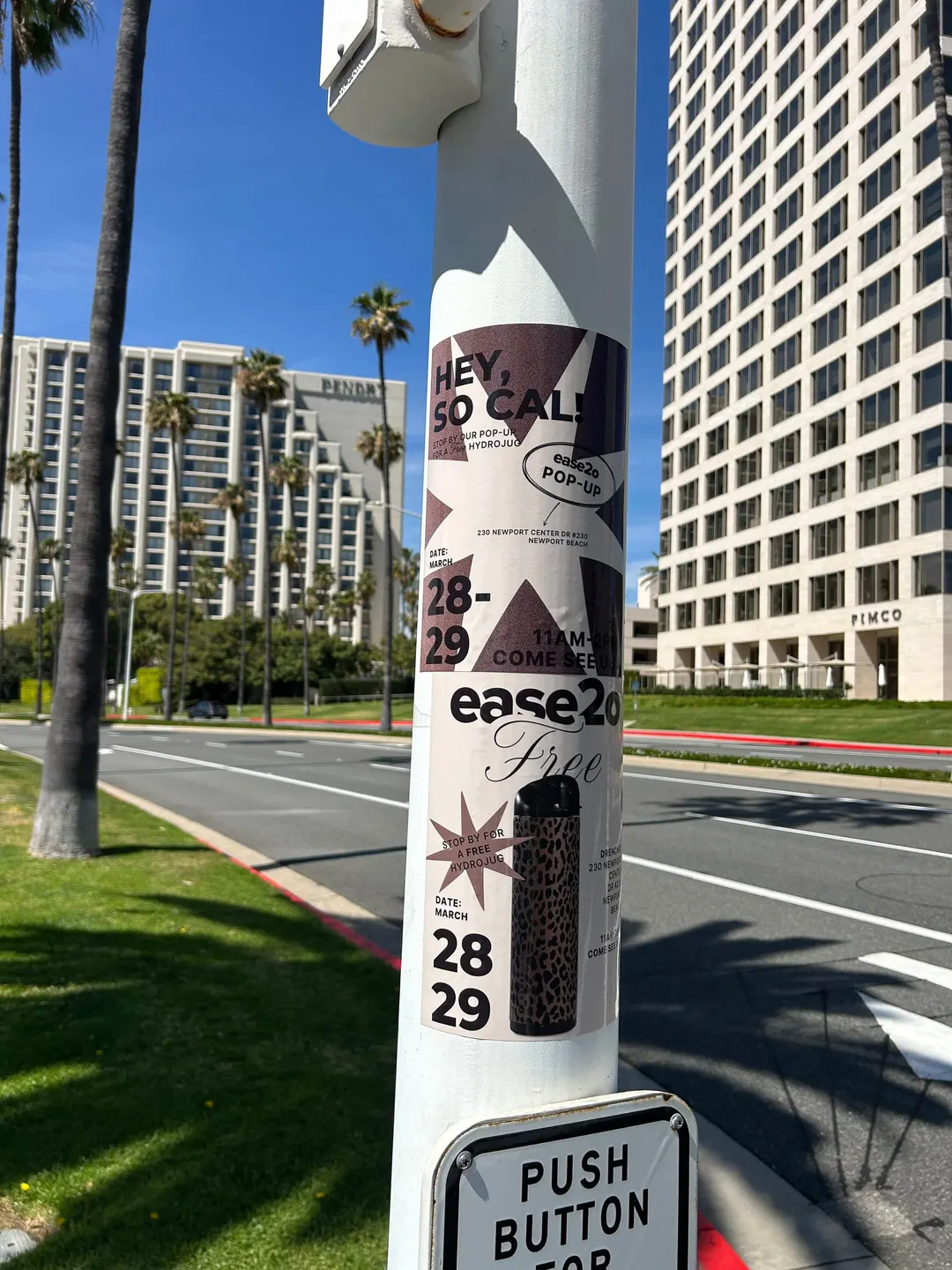
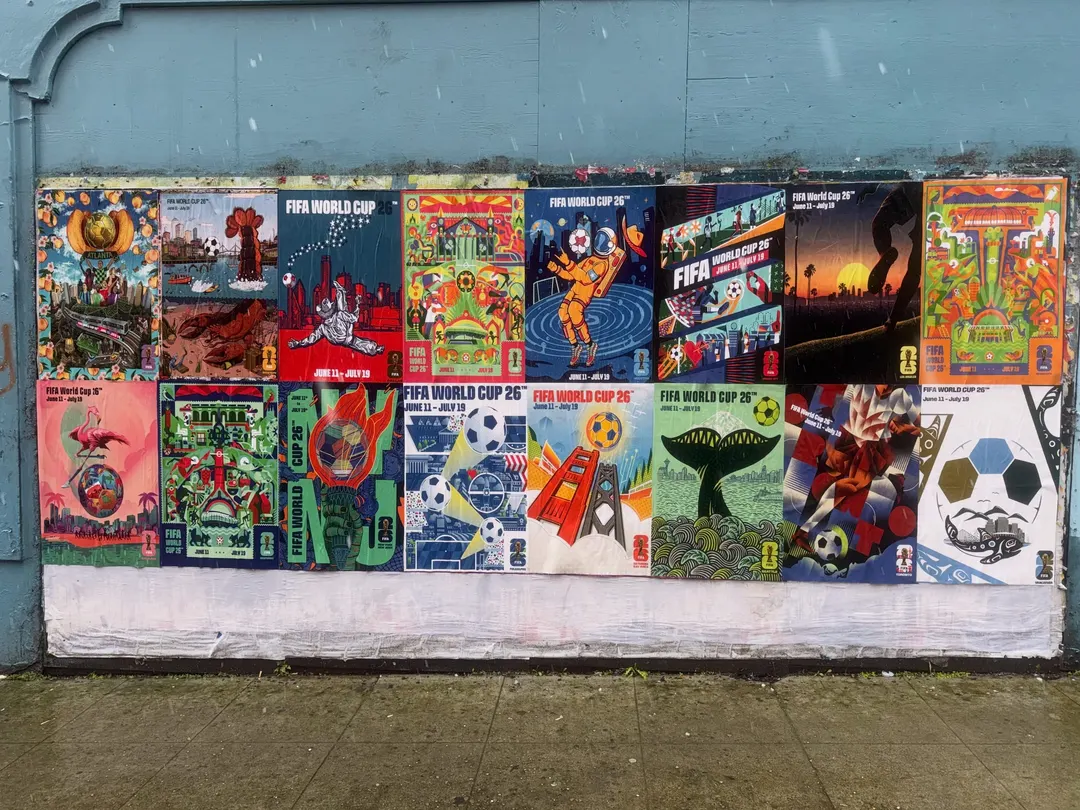
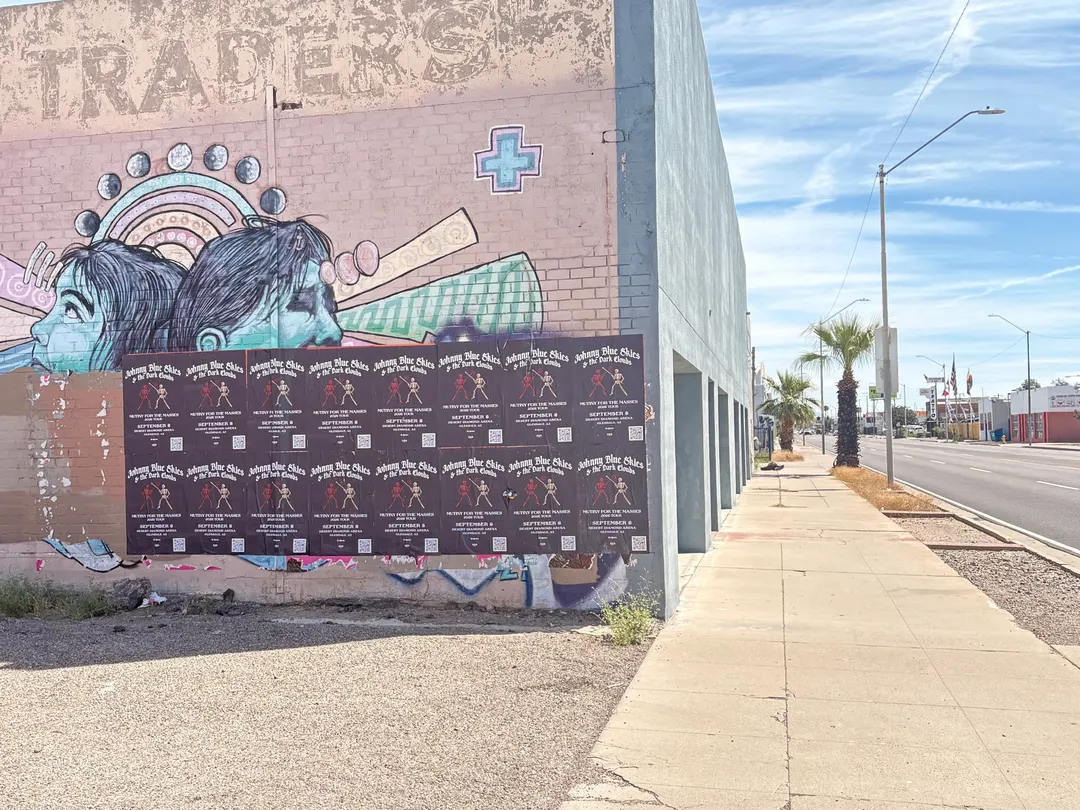

Proof · Printed in-house · Installed by our crew
Street campaigns for Events & Festivals brands. Proof included.
Send the brief; a scoped quote for your vertical comes back inside 24 hours — formats, neighborhoods, and a GPS-stamped photo of every placement when the run wraps.
- Quote in under 24 hours
- No discovery call. The brief is the call.
- Printing & Installation under one roof
Brief us · Quote in under 24 hours
Start your events & festivals campaign.
Brand-safe by default.
- Private-property walls only Written owner consent on file for every surface. No public infrastructure, transit, or right-of-way.
- GPS-stamped photos within 48 hours Wide, mid, detail per placement. The proof your team forwards internally.
- FTC + local-code compliant Disclosures and permitting handled per contract. Legal reviews clean.
- Zero municipal removals on record 500+ documented installs, none taken down by a city.
Read the full field notes
Why Events and Festivals Are Moving to Street Media
Event marketing has spent a decade locked inside the ticketing-platform stack. Facebook events, email blasts, influencer partnerships, and paid-social countdown creatives. The problem is real: Meta ad saturation is at an all-time high, CPMs spike in the weeks leading up to the event (when you need them most), and the format has zero credibility signal. A Facebook ad says “there is an event”; a wheatpaste corner in Williamsburg says “this event is funded, real, and coming to my city.”
Street media solves the core event-marketing problem: reaching the decision-maker in the window before they commit, and building buzz that feels organic instead of auctioned. For festivals with multi-city draw (Coachella, Bonnaroo, Outside Lands), street media works as a tour-following campaign that coordinates across markets. For conferences, street media activates outside the convention center, reaching the sponsor’s target buyer before they are inside the attendee list. For ticketing-platform launches, street media drives immediate traffic spikes in the three weeks before the platform goes live. For venue-sponsors and festival brand-activations, exterior neighborhood presence creates more credibility than in-venue takeovers.
Beyond Street Media runs event campaigns as a real media buy, with production timelines that match the event-week countdown. Most agencies take 6-8 weeks to produce a street campaign. We can move from brief approval to install in 5-7 days, which is built for event windows that compress the planning timeline.
What Event Marketers Actually Need
Ticket-sales impact in compressed windows. A festival’s ticket-sales curve is a hockey stick, low initial slope, then a spike in the final 4-6 weeks before the event. Street campaigns target that spike window, running installation 3-4 weeks pre-event when the decision-maker is still on the fence. The cost is lower than the equivalent paid-social spend, the reach is in the exact neighborhoods where the audience lives, and there is zero algorithmic decay (unlike paid ads, which get cheaper CPMs from the platform as the event gets closer, in a race to the bottom).
Multi-city saturation for festival tours. A festival that plays six cities in eight weeks requires coordinated street presence across all markets simultaneously. The infrastructure to do this, production timing, asset versioning, installation crews in each city, placement coordination, is expensive for traditional media. Street media is designed for this: we stage production so that each market gets 4-6 weeks of installation window, campaigns launch simultaneously, and the tour message stays consistent across all markets while the neighborhood detail stays local.
Presence outside the venue barrier. Convention centers, festival grounds, and event venues control the immediate-area ad inventory. That inventory is either unavailable or sold at premium rates by the promoter. Street media operates in the surrounding neighborhoods, where the audience is already walking, parking, and taking coffee. For sponsors whose booth is inside the venue, exterior street presence creates a halo effect, brand presence outside the venue reads as more credible than booth presence inside because it looks earned, not purchased.
Credibility through physical presence. A brand that shows up at street scale in three cities leading up to the event reads as funded, serious, and major. A Facebook event page or an email blast does not carry that signal. For events building early audience commitment (presale windows, VIP tiers, inaugural festivals), the street campaign is the trust signal that says “this event is real.”
How Beyond Street Media Runs Event and Festival Campaigns
1. Brief intake and event-window analysis. Campaign objective (ticket sales, presale activation, sponsor brand presence, ticketing-platform launch), target audience, ticket-sales timeline, event date, venues/neighborhoods, multi-city scope if applicable, attribution methodology (campaign URL, QR code, UTM).
2. Event-compressed production timeline. Standard campaigns take 6-8 weeks. Event campaigns run 5-7 days from brief approval to asset-ready. This is built into our operational stack, we maintain event-campaign templates, pre-approved color palettes, and vendor networks in key cities so that we can move fast without sacrificing quality.
3. Multi-city coordination (if applicable). For festival tours spanning 3+ cities, we stagger production and installation so that campaigns launch simultaneously but production is parallelized. Each market’s crew is briefed on the unified messaging while executing local neighborhood detail. This keeps the tour coherent while respecting market-specific logistics.
4. Neighborhood targeting aligned to audience density. We map neighborhood selection against the audience profile. For a music festival, we target neighborhoods where the festival’s historic attendee pool lives (verified by ticket-purchase history + Spotify listening geography). For a conference, we target business-district neighborhoods where the sponsor’s decision-maker works. For a ticketing-platform launch, we target early-adopter neighborhoods.
5. Install with event-week timing. Installation runs 3-4 weeks pre-event, with daily placement confirmation. The campaign hits max presence 10-14 days before the event, then sustains through the event week. For multi-city tours, each market follows the same timing discipline relative to its local event date.
6. Rapid reporting and attribution. Campaign URLs and QR codes are tracked in real-time. We report daily traffic spikes to your ticketing platform and measure attributed conversions. The wrap deck ties placement to traffic and traffic to attributed ticket sales.
How Event Campaigns Get Built
Festival tour activation. A touring music festival playing six markets over eight weeks staggers wheatpaste and pole stickers across Los Angeles, San Francisco, Austin, Denver, New York, and Chicago, each market lighting up three to four weeks ahead of its own date. Every install carries a market-specific campaign URL, so the ticketing platform reads each city’s street spend on its own line rather than as one national blur. Format mix is large-format paper on the headline corridors and pole density on the routes between transit and nightlife. Placement count: 30 to 60 surfaces per market, sequenced so no market goes live before its on-sale.
Conference sponsor activation. A tech conference in Chicago gives a sponsor brand a concentrated pole-sticker corridor through the West Loop, venue-adjacent, running the four weeks before the doors open. The point is priming: attendees walk that corridor between hotel, venue, and dinner, so the brand is familiar before anyone reaches the booth. Creative stays short enough to read at walking pace and carries the booth number. Placement count: 40 to 80 poles along two to three approach routes.
VIP-presale targeting. A festival with a VIP tier runs a narrow wheatpaste campaign in high-income residential and retail corridors three weeks ahead of the presale window, rather than buying the whole metro. The buy is geography as a targeting filter: fewer surfaces, chosen for who walks them. Presale codes go on the creative so the ticketing platform can separate presale redemptions by corridor. Placement count: 10 to 20 surfaces per metro.
Services Event and Festival Clients Use Most
Wheatpaste Advertising, large-format headline posters in high-foot-traffic festival neighborhoods, running 3-4 weeks pre-event for ticket-sales impact.
Pole Sticker Advertising, corridor-density reinforcement between key festival-adjacent intersections, building saturation for awareness and traffic drive.
Paste-Up Poster Campaigns, rapid-deployment poster installs in secondary corridors, extending reach with lower production overhead.
Multi-Panel Poster Murals, large-format mural variants for high-visibility intersections, creating landmark-scale festival presence.
Neighborhood Saturation Campaigns, multi-format programs across festival-adjacent neighborhoods, combining wheatpaste, pole stickers, and stencils for maximum saturation during the event-week countdown.
Multi-City Guerrilla Tours, coordinated campaigns across 3-8 markets simultaneously, staggered for festival tours and conference circuits.
Product Launch Street Blitz, for ticketing-platform and presale launches, rapid-deployment street saturation in key early-adopter cities.
Compliance, Timing, and the Event-Marketing Advantage
Event campaigns close with compressed reporting, we deliver placement confirmation, traffic attribution, and ticket-conversion measurement within 48 hours of the event. The wrap deck ties each install location to its traffic impact, so you can see which neighborhoods and formats drove the highest ticket-sales velocity. For multi-city tours, we report market-by-market so you can compare effectiveness across geographies.
Timing is the operational advantage. Because we can move from brief to install in 5-7 days, you can run event campaigns opportunistically, responding to ticket-sales velocity dips, early-access window openings, or presale launches in real-time. Traditional media requires 6-8 week lead times. We are built for the compressed event window.
Got an Event to Promote? We’ve Got the Neighborhood.
Event marketing is breaking free from the platform stack. Street media is the format that reaches the decision-maker before they are in your ticketing system, builds buzz that feels earned instead of auctioned, and delivers proof of presence in the cities that matter. Beyond Street Media is the agency that runs it on the event-marketing timeline, fast, coordinated, and measured.
Events & Festivals questions.
The 5 things events & festivals brands ask before sending a brief. Same-day answers from the desk if yours isn't here.
Q · 01 How do you handle venue-adjacent restrictions?
Venue-control restrictions are common, the promoter, municipality, or property owner may restrict or price-gate signage immediately adjacent to the event space. Street media works in the surrounding neighborhood instead. For example: a convention center in downtown Portland may restrict exterior signage within 500 feet. We shift the campaign two blocks out, into the neighborhoods where the decision-maker walks, parks, and takes coffee. The setback is not a penalty, it is actually stronger, because the presence is distributed across more foot-traffic vectors and reads as organic to the neighborhood, not sponsored by the venue.
Q · 02 What is the budget for a festival or event campaign?
Single-market event campaigns (one city, 2-4 weeks) run $6,000-$18,000 depending on format mix (wheatpaste-only is lower; wheatpaste + pole stickers + stencils is higher). Multi-city festival tours typically run $45,000-$150,000 across 3-5 markets with 4-8 weeks of coordinated presence. Sponsorship-activation packages (in-venue plus exterior neighborhood saturation) run $25,000-$75,000 depending on venue size and neighborhood corridor length. Event-week blitz (compressed 1-2 week window, concentrated install density) sits at $15,000-$40,000 per market. Surprise-drop and last-minute event activations often need Expedited Campaigns. 24-72hr brief-to-wall at +15 to 200-plus percent over standard. Final quote returns in 24-48 hours.
Q · 03 Can street media reach the right audience for a festival or conference?
Yes, with neighborhood precision that broadcast media cannot replicate. Festival audiences are not uniformly distributed. Coachella attendees live in LA, San Francisco, and coastal metros. Bonnaroo attendees drive from Tennessee, Atlanta, and Midwest metros. Lollapalooza attendees are Chicago residents and Great Lakes road-trippers. Street media targets at neighborhood density in the cities where the audience actually lives, works, and walks, not in the festival city only. For conferences, the sponsor activation hits outside the convention center, where the pre-conference decision-maker is still evaluating attendance. The neighborhoods with the highest walk-through density of your target audience are where we place.
Q · 04 How does street media work for events with real-time ticket-sales deadlines?
Event-marketing windows are compressed, and the constraint is real-time conversion. Beyond Street Media runs event campaigns with a compressed production timeline, we can move from brief-approval to install within 5-7 days, which is built for the event-week countdown. For multi-city festival tours, we coordinate installations across markets so that street presence goes live in each city 2-4 weeks before the event, creating a sustained ticket-sales tailwind. The advantage over digital: no platform saturation, no declining CPMs as the event date approaches, and a credibility signal ('this event is real and happening') that paid social cannot match.
Q · 05 How do you move from brief to wall fast enough for an event window?
We print posters in-house at poster-printing, which is how we hold a 5-to-7 day brief-to-install timeline when most agencies take 6 to 8 weeks. Owning the print step means a ticket-sales velocity dip or a presale date that lands early can trigger a same-week response instead of a vendor wait. For surprise drops or last-minute activations, Expedited Campaigns compress that to 24 to 72 hours at a rush rate.
We delivered.















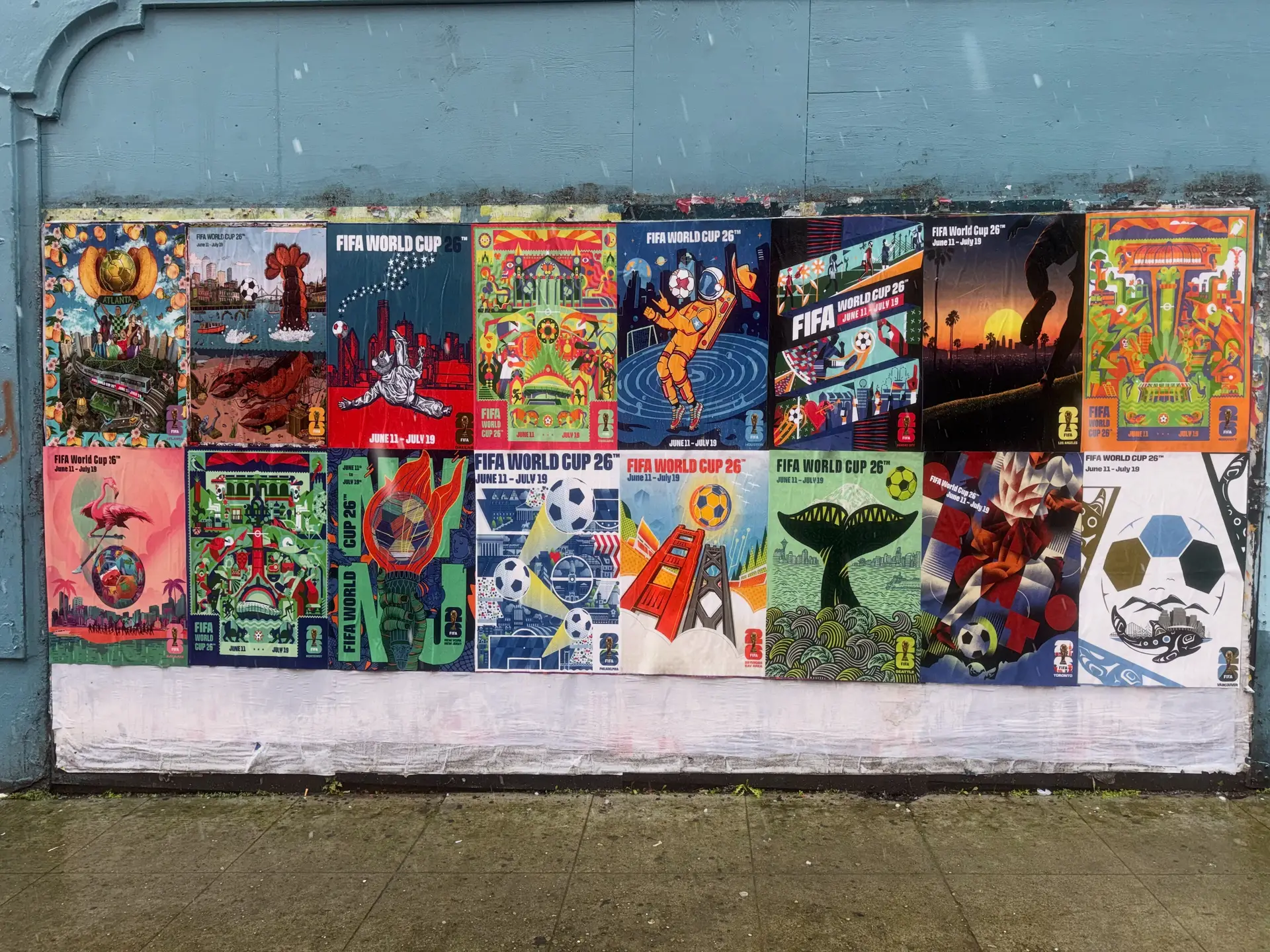
Brand partners include: FIFA World Cup 2026, Palantir, Sézane, G-Shock, Mitchell & Ness, True Religion, Huda Beauty, Yonex, Relevance AI, Momentous, RYZE Coffee, Bloom Effects, Incrediwear, Brooklyn Museum, Sweat FC, HydroJug, Frameline, Alchemy, OneRepublic, Lone Fox, Vaura Pilates.
Got a events & festivals launch?
Inquire now.
Send the Events & Festivals brief: markets, window, creative direction. Vertical-specific quote back in 48 hours.