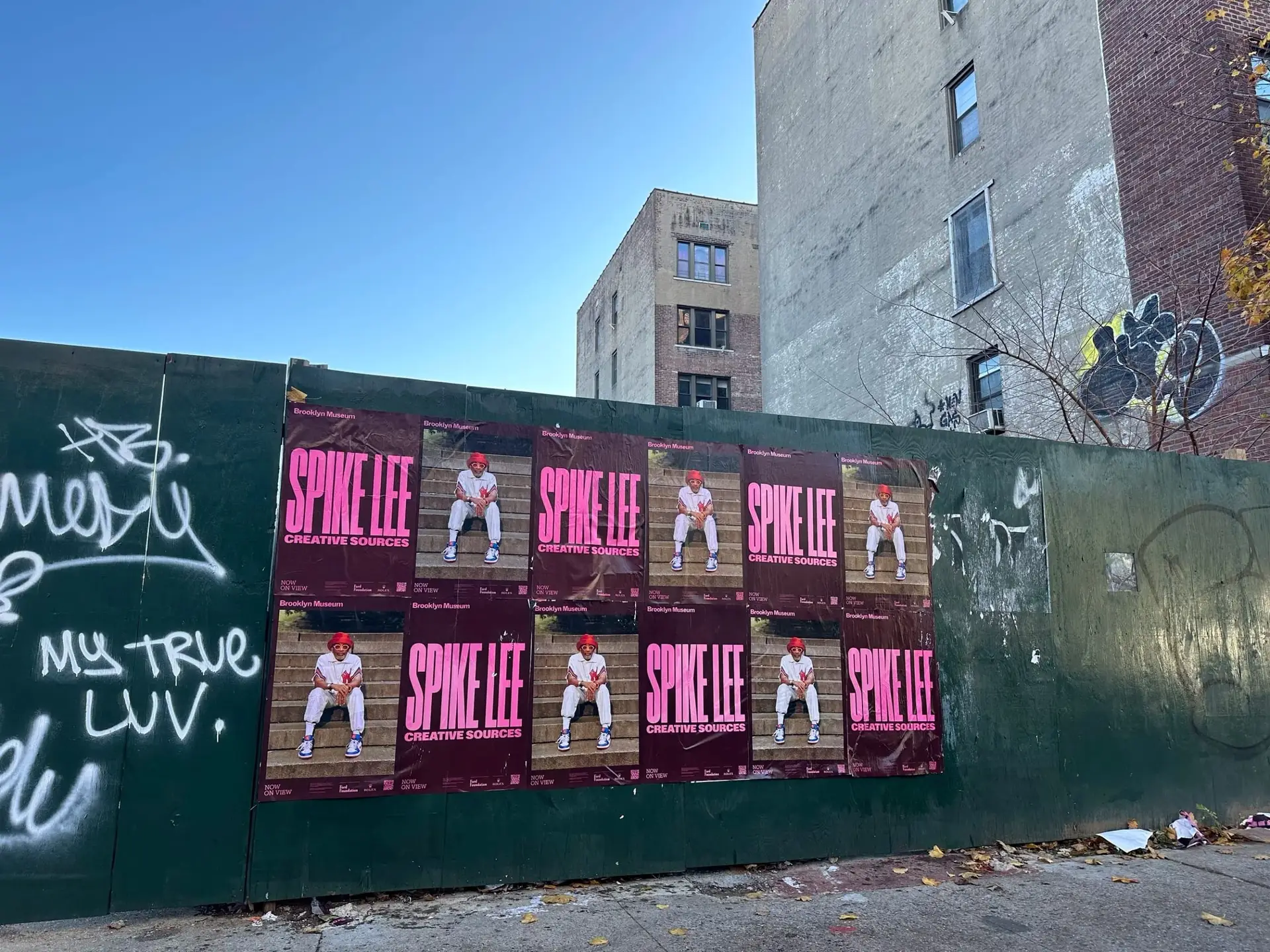
Film, TV & Streaming.
Wheatpaste, mural, and pop-up campaigns for film studios, TV networks, and streamers, release-week saturation in LA, NYC, and festival cities.
Four tensions only street resolves.
- 01
Film release windows are fixed and unmovable, your campaign has one week to build cultural momentum before box-office weekends land, which means street saturation must be planned and placed in advance
- 02
Festival circuits (Sundance, SXSW, TIFF, Tribeca) drive city sequencing, a campaign needs to move from festival hub to release markets within days, requiring pre-positioned crews and venue locks across multiple cities simultaneously
- 03
Streaming platforms lack the cultural-moment credibility that theatrical releases earn from street presence, a Netflix drop or HBO launch needs street media to signal "this is a cultural event, not just an algorithmic recommendation"
- 04
Talent and cast photo-ops are part of the launch asset library, and street installations serve as the backdrop for press photography that drives social pickup during opening week
Is this you?
If two or more match your roadmap, send the date.
- You're launching on a fixed date (a theatrical opening, a festival premiere, a streaming drop) that the marketing has to surge into, not ramp toward.
- Your release moves festival to market in days. Sundance to LA, Tribeca to theatrical. You need pre-positioned crews and locked walls across cities at once.
- Your streaming launch needs cultural-event credibility an algorithmic recommendation can't manufacture.
- Talent and cast photo-ops are part of the launch asset library and the installation is the press backdrop opening week.
- You're running award-season FYC and need voter-neighborhood geography in LA, NYC, and SF, not demographic targeting.
- You're an indie or A24-style distributor that needs neighborhood-level cultural density to make the film belong.
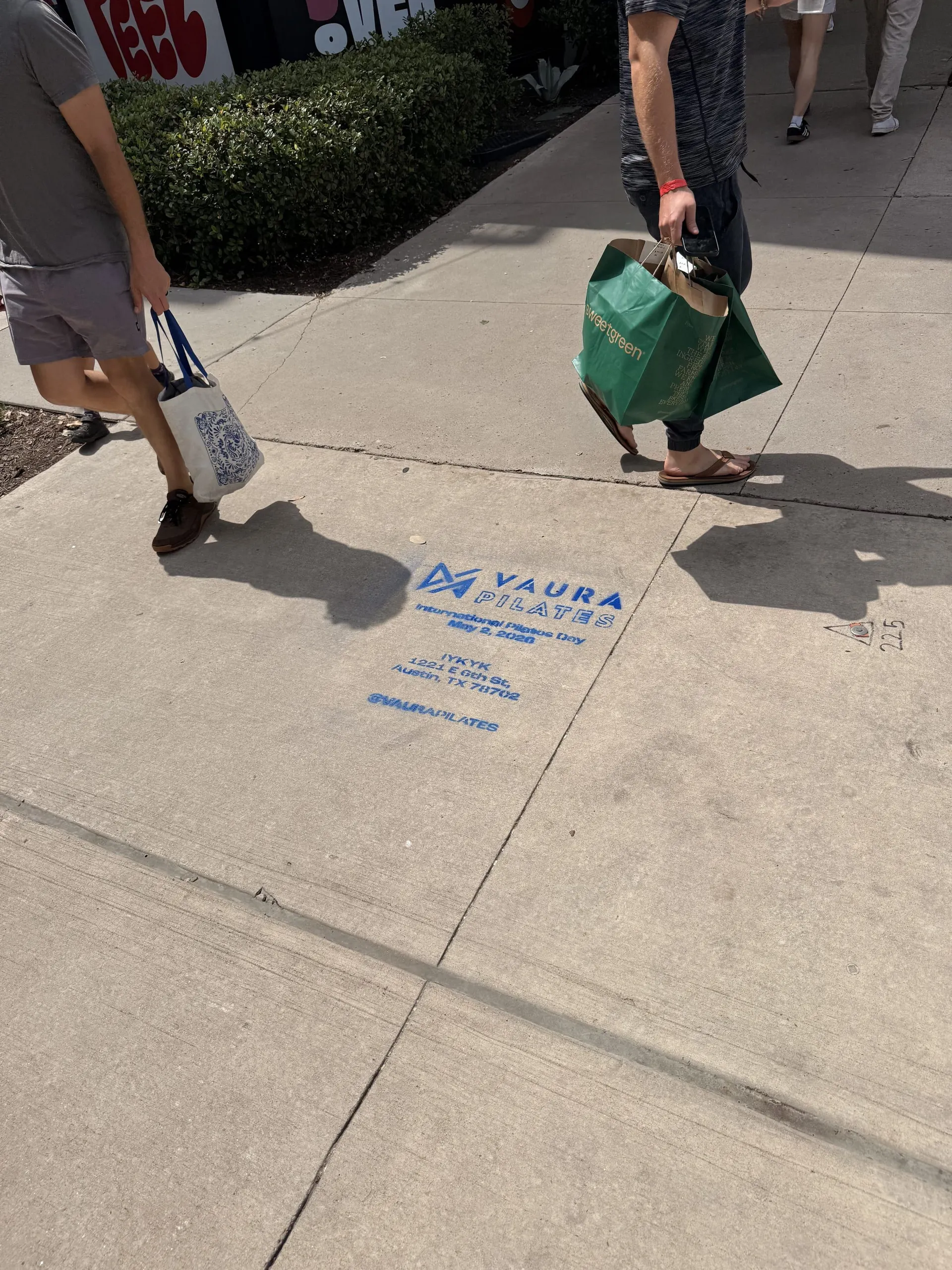
5 disciplines, one playbook.
Wheatpaste
Wheatpasting and wheatpaste advertising campaigns from $3,500 in NYC, LA, SF + 40 US cities. Published floors, 5-7 day lead (Expedited 24-72hr), GPS-tagged photo proof on every install. From $3,500Paste-Up Posters
Paste-up poster campaigns for product launches and neighborhood saturation. From $3,500, 5-7 day lead (Expedited 24-72hr), GPS-tagged photo proof in 40 US cities. From $3,500Poster Murals
Multi-panel poster murals. Full-wall paste-up installs spanning building sides and scaffold runs. Brand-scale visibility with photo proof in 40 US cities. From $8,000Painted Murals
Hand-painted murals from $18K, building-side from $30K. Wynwood, Bushwick, Arts District + 9 cities. Skilled muralists, 6-month touch-up guarantee. From $18,000Multi-City Tours
Multi-city guerrilla marketing tours. Coordinated wheatpaste, stencil, and interior install rollouts across 6 to 30 US cities in one sequence. From $25,000Starting floors · print, install, and GPS-stamped photo proof included in every quote. Final number varies by turnaround, size, and location count. Full rate card →
Sample creative directions.
Pre-tested format / neighborhood pairings. Pick a direction at brief intake and we route the surface set inside 24 hours.
- LA theatrical release Wheatpaste, 18-24 walls, 2-week run Echo Park, Silver Lake, Los Feliz
- Tribeca festival mural Hand-painted 40×60, festival week + 3 weeks Bushwick, NYC
- SXSW opening saturation Wheatpaste + pole stickers, 50-75 placements East Austin, 6th St, South Congress
- Award-season FYC Wheatpaste + pole stickers, 12-week rotation Voter blocks in LA, NYC, SF
- Streaming prestige launch Wheatpaste + stickers + stencils, 60-70 placements Williamsburg, Bushwick, NYC
Put it on the wall.

Proof · Printed in-house · Installed by our crew
Street campaigns for Film, TV & Streaming brands. Proof included.
Send the brief; a scoped quote for your vertical comes back inside 24 hours — formats, neighborhoods, and a GPS-stamped photo of every placement when the run wraps.
- Quote in under 24 hours
- No discovery call. The brief is the call.
- Printing & Installation under one roof
Brief us · Quote in under 24 hours
Start your film, tv & streaming campaign.
Brand-safe by default.
- Private-property walls only Written owner consent on file for every surface. No public infrastructure, transit, or right-of-way.
- GPS-stamped photos within 48 hours Wide, mid, detail per placement. The proof your team forwards internally.
- FTC + local-code compliant Disclosures and permitting handled per contract. Legal reviews clean.
- Zero municipal removals on record 500+ documented installs, none taken down by a city.
Read the full field notes
Why Street Campaigns Work for Film and Streaming Brands
Film studios, TV networks, and streaming platforms operate on release calendars. A theatrical release has a fixed opening weekend, everything the studio builds (press junkets, trailer drops, talent promo schedules) converges on that seven-day window. A streaming platform launch hits a specific date. A film festival premiere happens on a specific day. The marketing has to align with that cadence, which means street campaigns cannot be algorithmic or always-on. They have to be timed, saturated, and cultural.
Street media solves the two problems that digital channels do not. First, it builds cultural momentum in a specific city during the press cycle, a wheatpaste installation in Echo Park that goes up the week before opening weekend becomes the backdrop for press photography, TikTok coverage, and neighborhood buzz. Digital cannot do that because the digital spend lands at scale over weeks; street media is the week-of saturation that proves the film is culturally present in that city. Second, it reaches the audience in the moments when they are most receptive, walking through the neighborhood where the film is set, passing theaters, browsing independent bookstores. That is not an algorithmic moment. That is a cultural moment.
For streaming platforms, street media solves the “algorithmic invisibility” problem. Netflix and HBO have infinite content; no single show breaks through via algorithmic recommendation alone. A prestige series with critical acclaim needs a cultural signal that tells the audience “this exists, it is good, it matters.” Street media in the neighborhoods where that audience lives delivers that signal. For theaters, it is the opening-weekend rush. For streamers, it is the launch-week press cycle and the shared-watch moment that drives water-cooler conversation.
What Film, TV, and Streaming Brands Actually Need
Release-week saturation in the exact city where the audience will watch. A wheatpaste blitz across Bushwick, Williamsburg, and the Lower East Side in NYC for a prestige drama landing on Criterion Channel runs for 10 days before the launch date, reaches the critical audience that reads Letterboxd and Criterion’s editorial, and creates the visual backdrop for every press interview during opening week. For a theatrical release, the same logic applies: if the film is opening in LA, the audience is in Echo Park, Silver Lake, and Los Feliz. That is where the wall space matters.
Festival-week visibility and press-photo assets. Film festivals are concentrated press events, every major outlet sends critics and photographers to Sundance, SXSW, Tribeca, TIFF. A street installation at the festival creates a venue that has not been photographed ten thousand times already. Press photographers want to use real street installations because they are authentic, they are location-specific, and they tell the story of the film’s cultural presence. A mural in Park City during Sundance becomes the lead image for the festival wrap-up story. An installation in Toronto during TIFF becomes the backdrop for the international indie-film coverage that drives awards season conversations.
Talent activation and cast photo-op positioning. Street installations are designed as photo stages for talent appearances during opening week. The wall is selected for Instagrammable framing, film-specific key art clarity, and neighborhood identity. When the star appears at the wall for the press call, the photograph tells the story: “this actor, this film, this neighborhood.” That is the asset that scales.
Award-season targeting and voter concentration. Academy voters, BAFTA voters, and industry voters for guilds all live in specific neighborhoods in LA, NYC, and SF. An FYC campaign that targets Hancock Park in LA, Park Slope in Brooklyn, and Pacific Heights in SF reaches the exact voter pool that decides awards. Geography is the only targeting lever available to street media, and for awards season, geography is the targeting lever that matters most.
Streaming launch credibility against algorithmic oversaturation. A limited-edition theatrical release or an HBO prestige series launch needs to signal “this is an event,” not “this is content.” Street media is the format that signals events, because it requires physical commitment, geographic coordination, and the visible proof that the brand invested enough to be culturally present. For streamers fighting algorithmic visibility, street campaigns are the credibility signal that broadcast and performance digital cannot deliver.
What We Run for Film, TV, and Streaming Brands
Wheatpaste Advertising, large-format poster campaigns in release-market neighborhoods, installing 7-14 days before opening weekend or launch date, designed as press-photo assets and awareness drivers.
Paste-Up Poster Campaigns, neighborhood-density poster placement outside independent cinemas, bookstores, coffee shops, and cultural venues, reaching the niche audience for prestige and indie releases.
Multi-Panel Poster Murals, large-scale multi-image installations using poster sections to create cohesive visual narratives across building sides, optimal for prestige limited releases and awards-season FYC campaigns.
Hand-Painted Murals, bespoke painted installations designed as press-photo backdrops during festival weeks and opening-weekend talent appearances, creating location-specific imagery that scales socially.
Multi-City Guerrilla Tours, coordinated festival-to-theatrical campaigns that move street saturation from festival hub (Sundance, SXSW, Tribeca, TIFF) to theatrical release markets, with unified creative and synchronized install schedules across 2-5 cities.
Product Launch Street Blitz, concentrated 7-14 day saturation campaigns for streaming platform launches, limited theatrical releases, or prestige TV series premieres, using all formats in high-density neighborhoods.
Neighborhood Saturation Campaigns, multi-format programs sustained across 2-4 week windows in high-traffic release-market neighborhoods, combining wheatpaste, pole stickers, and sidewalk stencils for share-of-voice impact during opening windows.
Compliance & Brand-Safety Notes
Film advertising on street media faces minimal regulatory restrictions at the federal level. However, several state and local rules apply:
MPAA rating disclosure. MPAA ratings (G, PG, PG-13, R, NC-17) do not require disclosure on street media the way they do on broadcast and trailers. However, some regions (particularly California) have local advertising standards that recommend rating visibility on materials visible to audiences under 13. We recommend coordinating with the studio’s legal team on rating disclosure, most studios elect to include the rating type-set small at the poster footer for brand compliance, even though it is not legally required for street media.
Festival advertising restrictions. Some festivals (Sundance, SXSW) have local restrictions on festival advertising in the festival hub city, typically limiting the size or quantity of advertisements within a one-block radius of festival venues. These restrictions vary by festival and year. We confirm local rules with the festival organizing committee and city during intake and design campaigns to comply with venue-specific limits.
BID and neighborhood advertising caps. Major cities often use Business Improvement Districts (BIDs) that cap the density of poster advertising in specific neighborhoods. NYC Bushwick has limits; Los Angeles Arts District has limits. We audit BID regulations during the brief stage and ensure campaign density stays within caps.
Talent likeness and rights. If the campaign features talent photography or imagery derived from film trailers, we confirm all image rights are cleared through the studio’s copyright and talent-licensing team. Talent images on street media constitute “out-of-home advertising” and typically require explicit talent-image licensing beyond the standard press-release package. We document rights confirmation in the campaign brief and route approvals through the studio before production.
Theater exclusion zones. Some theatrical chains (AMC, Regal, Cinemark) have policies restricting advertisements on certain blocks immediately adjacent to their locations. We confirm theater-exclusion policies with the studio’s theatrical booker and design campaigns to avoid restricted zones.
Real Campaigns: Film and TV in Action
Frameline San Francisco. Beyond Street Media executed a wheatpaste poster campaign supporting the Frameline LGBTQ film festival in San Francisco. The campaign installed wheatpaste posters in the Mission District, the Castro, and Hayes Valley during the festival week, reaching the event’s core audience in neighborhoods with high LGBTQ cultural density. The installation became a press-photo asset for festival coverage and drove awareness among the festival’s target community.
For prestige and indie film campaigns, the playbook is consistent: install 7-14 days before the cultural moment (opening weekend, festival premiere, streamer launch), concentrate saturation in the audience neighborhood, design the installation as a press-photo asset, and track both direct-attribution metrics (QR click-through, ticket sales) and brand metrics (press photography, social mentions, fan engagement).
Cities We Activate for Film and TV Campaigns
Los Angeles: Hollywood, Echo Park, Silver Lake, Los Feliz, DTLA, Arts District. LA is the theatrical release hub, every major studio film lands in LA first, typically with opening-weekend saturation 7-14 days before the Friday release. Neighborhoods concentrate around major cineplexes (Hollywood, DTLA) and cultural-audience neighborhoods (Echo Park, Silver Lake, Los Feliz for indie and prestige titles; Arts District for alternative cinema). Award-season FYC campaigns target Hancock Park and Pacific Palisades for Academy voter reach.
New York City: Tribeca, Bushwick, Lower East Side, Williamsburg, Brooklyn Heights, Upper West Side. NYC is the festival and limited-release hub. Tribeca premieres, festivals, and prestige limited releases typically install street campaigns in Tribeca (for Tribeca Film Festival), Bushwick and Williamsburg (for indie audiences), Lower East Side (for film-culture foot traffic), and Brooklyn Heights / Upper West Side (for awards-season voter targeting). Streaming prestige launches concentrate in the literary-audience neighborhoods: Williamsburg, Park Slope, the Upper West Side.
San Francisco: Mission District, the Castro, Hayes Valley, Pacific Heights. San Francisco is the prestige-indie hub and the LGBTQ film festival center (Frameline). Street campaigns concentrate in the Mission District and Castro for festival activation, Hayes Valley for critical-audience density, and Pacific Heights for awards-season voter targeting. The Bay Area is also a key market for awards consideration and critical press.
Austin, Texas: East Austin, South Congress, Downtown. Austin is the SXSW hub, film selections for SXSW install street campaigns during festival week (early March) in East Austin, South Congress, and Downtown. East Austin is the primary audience neighborhood for indie and international-film audiences at SXSW.
Toronto, Ontario: Downtown, The Distillery District, King West. Toronto is the TIFF hub and a major theatrical release market. Street campaigns during TIFF (September) concentrate Downtown and in the Festival grounds; theatrical releases install in arts-district neighborhoods (King West, the Distillery District).
Park City, Utah: Main Street, Park Avenue, Sundance Village. Park City is the Sundance Film Festival hub (late January). Street campaigns during the festival run on Main Street and Park Avenue, reaching festival attendees and press corps. Post-Sundance selections then rotate to LA or NYC for theatrical release, extending the campaign across markets and press cycles.
Atlanta, Georgia: Midtown, Old Fourth Ward, Ponce City. Atlanta is a production hub and a growing theatrical release market. Indie and prestige releases in Atlanta install in Midtown and Old Fourth Ward, where the critical and cultural audiences concentrate.
Miami, Florida: Wynwood, Brickell, Design District. Miami is a growing film and festival market with several major international film events. Street campaigns concentrate in Wynwood (arts and culture hub) and Brickell (for urban audience concentration) during festival and release windows.
Got a Story to Tell? We’ve Got the Wall.
Film studios, TV networks, and streaming platforms move at the speed of release calendars. Marketing campaigns have to compress into narrow windows, opening weekend, festival week, launch day. Street media is the only channel that can surge to full saturation during those precise moments and deliver the cultural credibility that algorithmic channels cannot. Beyond Street Media has run campaigns for theatrical releases, festival premieres, streaming launches, and award-season FYC targeting. We understand release calendars, festival sequencing, talent coordination, and the geographic targeting that wins awards and drives opening-weekend performance.
Film, TV & Streaming questions.
The 5 things film, tv & streaming brands ask before sending a brief. Same-day answers from the desk if yours isn't here.
Q · 01 What's the compliance picture for film and TV advertising on street media?
Theatrical releases in most US cities face no specific compliance restrictions beyond general wheatpaste/stencil legality. However, some venues and neighborhoods have local film advertising rules: Los Angeles (within the Hollywood area) has some venue-specific restrictions near theaters; certain NYC neighborhoods have BID (Business Improvement District) limits on poster campaigns. MPAA ratings (PG, PG-13, R, NC-17) do not require disclosure on street media the way they do on trailers and broadcast spots, but we recommend coordinating with the studio's legal team on regional variations. Streaming platform campaigns face no federal compliance restrictions but may face city-level BID restrictions in the same way any wheatpaste or mural campaign does. Festival campaigns follow local city rules for the festival hub (Park City for Sundance uses standard Utah public-property rules; Austin for SXSW uses standard Texas rules).
Q · 02 What's the typical budget for a film or TV street campaign?
Single-market releases (LA or NYC only, wheatpaste + pole stickers for 7-14 days) run $12,000-$35,000. Multi-market theatrical releases or prestige festival launches (2-4 cities, wheatpaste + murals + pole stickers, 14-21 day runs) sit at $60,000-$200,000. Award-season FYC campaigns targeting Academy-voter neighborhoods across LA, NYC, and SF run $80,000-$250,000 for a sustained 8-12 week campaign. Streaming platform launches with neighborhood saturation in 1-2 cities sit at $15,000-$40,000 for a 7-14 day push. Multi-city guerrilla tours (festival + theatrical + festival hub rotation) scale past $250,000 and coordinate with our multi-city tour program. Premiere-week and surprise-drop campaigns often need Expedited Campaigns. 24-72hr brief-to-wall at +15 to 200-plus percent over standard. Final quote returns in 24-48 hours.
Q · 03 How far in advance should a film release street campaign launch?
Theatrical releases typically install street media 7-14 days before opening weekend to build awareness and press visibility. Festival campaigns follow the festival calendar: Sundance installs happen one week before the festival opens (late January) with refreshes through opening weekend. SXSW campaigns in Austin install in early March. Tribeca campaigns in NYC install one week before the festival premiere. Streaming platform launches can install 3-7 days before the streaming date, though prestige launches often mirror theatrical timing (7-14 days) to build cultural momentum. The key constraint is that street media works for awareness and credibility signaling, the timing needs to overlap with press activity, trailer drops, and talent promotion schedules.
Q · 04 How do you handle talent photo-ops and press use of street installations?
Street installations are designed as press-photo assets from the brief stage, wall selection prioritizes press-friendly backgrounds, key art clarity for close photography, and landmark visibility (the installation should photograph recognizably in that specific city). During opening week and festival week, talent appearances and press photoshoots at installations are coordinated with our placement team. We hold key wall locations available for 48 hours around major press events, and we document every talent moment with photographer on-site. The press photography that happens at the installation is part of the campaign deliverable, we track press pickups and social mentions tied to the installation location and photograph those wins into the campaign wrap.
Q · 05 How do you move a campaign from a festival hub to the release markets?
We pre-position crews and lock walls across cities before the festival opens, so the campaign rotates from Park City or Austin into LA and NYC within days of the premiere. Posters print in-house on coordinated runs so the festival creative and the theatrical creative stay consistent across markets. A Sundance selection can run Main Street during the festival, then install in Echo Park and Bushwick 6 to 8 weeks later for the theatrical open, with synchronized timing tied to each market's release date and press cycle.
We delivered.













Brand partners include: FIFA World Cup 2026, Palantir, Sézane, G-Shock, Mitchell & Ness, True Religion, Huda Beauty, Yonex, Relevance AI, Momentous, RYZE Coffee, Bloom Effects, Incrediwear, Brooklyn Museum, Sweat FC, HydroJug, Frameline, Alchemy, OneRepublic, Lone Fox, Vaura Pilates.
Got a film, tv & streaming launch?
Inquire now.
Send the Film, TV & Streaming brief: markets, window, creative direction. Vertical-specific quote back in 48 hours.