Hiring a guerrilla marketing agency is straightforward if you know what to ask. Most brands don’t. They hire based on portfolio aesthetics or word-of-mouth, then get burned when the agency delivers blurry proof photos, vague ‘estimated reach’ numbers, or installs without permits.
This guide walks you through the seven vetting steps, gives you 10 RFP questions to ask, and flags eight red signs that signal an agency is not operating clean.
The operating principle: a professional agency is transparent on cost, method, proof, and timeline. If they’re vague on any of those, they’re either inexperienced or they have something to hide.
Step 1: Scope Clarity
Before vetting an agency, define what you’re actually buying.
Questions you need to answer first:
- What cities are you targeting? (One city or multi-city?)
- What neighborhoods within those cities?
- What audience are you reaching? (Fashion consumers, music fans, nonprofit staff, etc.)
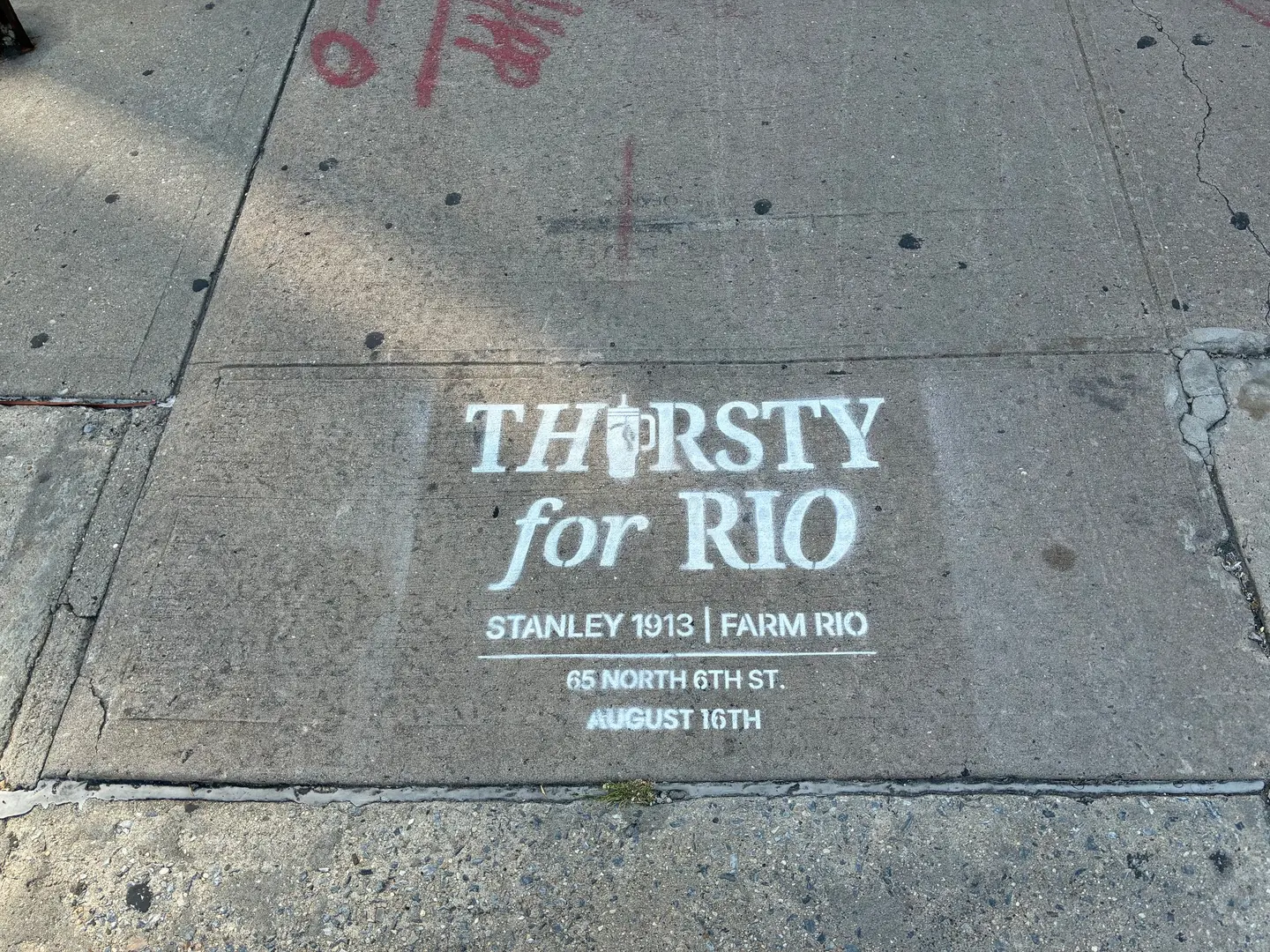
- What format? (Wheatpaste, stencil, pole sticker, mural, interior install, or a blend?)
- What’s your primary goal? (Brand awareness, direct response, press pickup, foot traffic to retail?)
- What’s your budget?
- What’s your timeline? (When do you need the campaign live?)
- What’s your trackable endpoint? (Promo code, QR link, retail location, event?)
Once you’ve answered those, you’re ready to brief an agency. An agency should ask you these same questions before they quote.
Red flag during scoping: An agency that pitches “a comprehensive brand activation” without asking what cities, what foot traffic, what audience, or what success looks like. That’s a sign they have a template they’re forcing onto your project instead of tailoring to your actual need.
Step 2: Proof Standards
How does the agency document installs?
The right answer: “Every install is GPS-tagged, photographed at baseline (before), post-install (immediately after), and in-context (showing the wall and foot traffic). All photos are timestamped. Within 48 hours of completion, you get a proof deck with GPS coordinates, timestamps, and photos. If a placement is removed or painted over before the campaign ends, we document the removal date and take a final photo.”
What to ask:
- “Do you GPS-tag every placement?”
- “What does proof look like? Can I see photos from a recent campaign?”
- “How quickly do I get the proof deck after installation?”
- “What happens if a wall gets painted over mid-campaign?”
Red flags:
- “We estimate reach at 500,000 people.” (Unverifiable. Ask for foot-stops or social pickup instead.)
- “We document via photos.” (Too vague. Ask for GPS coords and timestamps.)
- “Proof is available at the end of the campaign.” (Should be within 48 hours of install, not after 6 weeks.)
- “Our crews handle documentation.” (Who are the crews? Are they trained? What format is the documentation?)
The proof package you should receive:
- 1 pre-install baseline photo per placement (clean wall, clear lighting, GPS coords)
- 1 post-install photo per placement (creative visible, legible, GPS coords, timestamp)
- 1 in-context photo per placement (showing foot traffic if possible, same GPS coords)
- A spreadsheet with all GPS coordinates, timestamps, and placement status (active, removed, painted over)
- A final wrap report (placement count, average lifespan, social media pickup, any press mentions)
If an agency can’t deliver this level of documentation, do not hire them.
Step 3: Permit Handling
Does the agency file permits where required? Do they get property owner consent in writing?
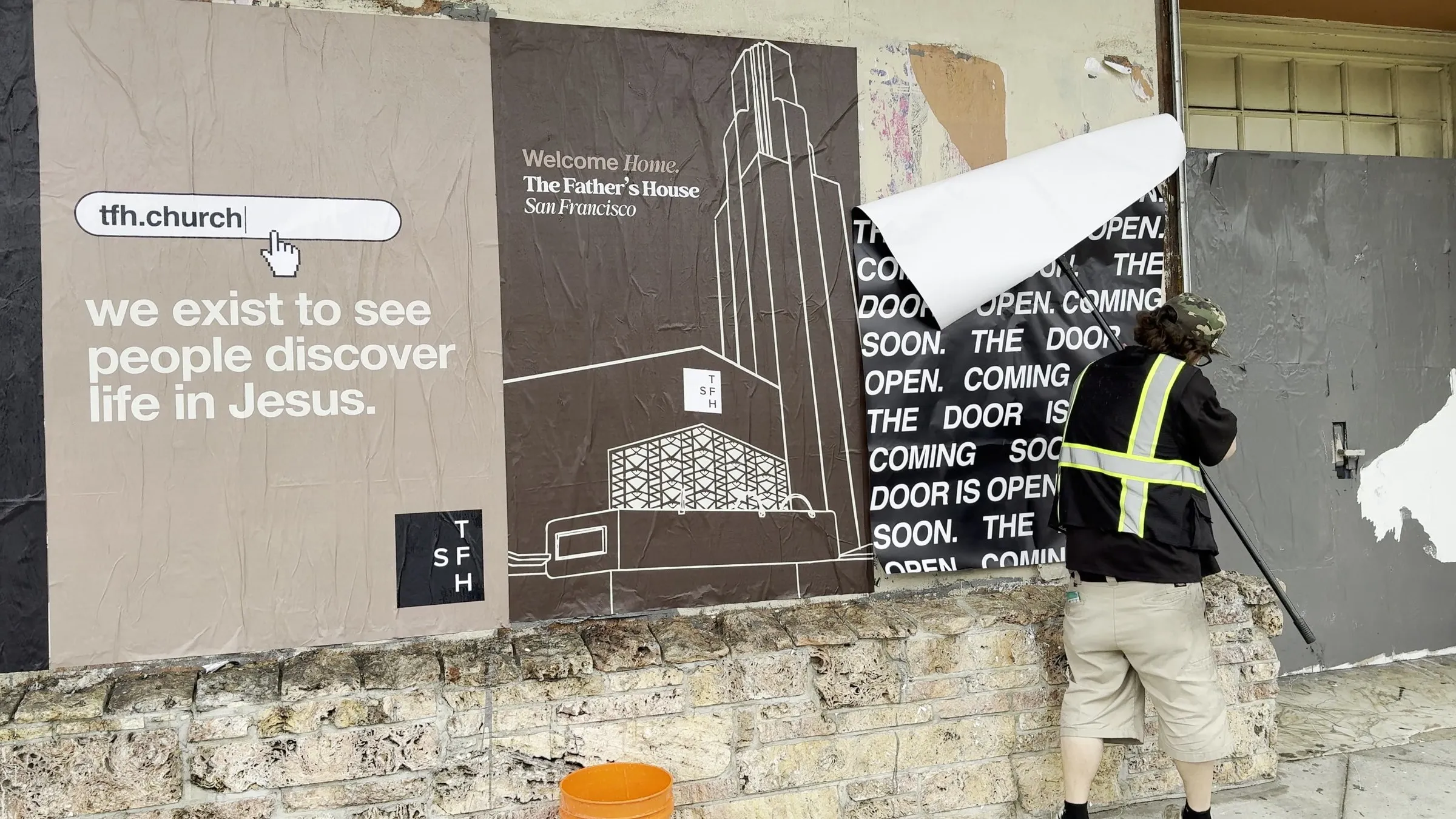
The right answer: “For wheatpaste and stencil campaigns, we get written property owner consent from the building owner. For murals, we file city permits. For interior installs, we coordinate with the venue. We carry liability insurance ($2 million general liability) and document all permission in writing. If a city requires a permit, we file it and pass the cost to the client as a line item.”
What to ask:
- “How do you handle property owner permission? Do you get written consent?”
- “Do you file permits where required by the city?”
- “Do you carry liability insurance? What’s the coverage?”
- “If a placement gets flagged by the city, what happens?”
Red flags:
- “We don’t need permits. Permits slow things down.”
- “We work with local crews who handle compliance.” (Vague. Who? Are they named? Trained?)
- “Permits aren’t necessary in most neighborhoods.” (Wrong. All private property needs owner consent. In New York, posting on the property of another person without the right to do so is a violation under the state penal law.)
- “We keep crew relationships confidential for security.” (That’s code for “we’re not vetting our installers.”)
What insurance should they carry:
- General liability: $1-2 million minimum. That is the same floor Los Angeles sets for non-residential permit applicants: a minimum of $1 million with a $2 million aggregate, with the City of Los Angeles named as certificate holder and as additional insured on the certificate.
- Errors and omissions: $1 million
- Property coverage if they’re renting equipment
Ask for a certificate of insurance naming you as an additional insured. If they refuse, do not hire them.
Step 4: Pricing Transparency
Does the agency publish per-unit cost and explain how they calculate total cost?
The right answer: “Wheatpaste campaigns in NYC start at $3,500. That includes design refinement, print (18x24 or 27x40), wheat paste material, installation labor, property owner fee if applicable, and documentation. Range varies by turnaround, size, location count, and combined service mix. Final quote returns inside 24 to 48 hours. Here’s the itemized quote: [breakdown]. Travel, permits, and rush fees are separate line items.”
What to ask:
- “What’s the per-unit cost for wheatpaste? For stencil? For pole stickers?”
- “What’s included in that price?”
- “Are travel costs included or separate?”
- “What’s the cost of a 30-wall campaign in [your city]?”
- “Can you provide an itemized quote before I sign?”
Red flags:
- “Pricing depends. Send us an RFP.” (Consultant-speak. You’re buying poster installations, not a consulting engagement.)
- “We can’t disclose pricing.” (That means they’re overcharging or don’t know their own cost.)
- “Estimated cost is a rough per-wall number, but could be higher depending on conditions.” (Vague. What conditions? Get specifics.)
- “Our minimum is $50,000.” (That’s fine if you’re doing a big multi-city campaign, but they should be transparent about minimums upfront.)
What a good quote should include:
- A published starting floor by discipline (e.g., wheatpaste from $3,500)
- Cost breakdown (design, print, paste, labor, documentation)
- Total cost for your campaign
- Itemized line items (materials, labor, travel, permits)
- Payment schedule (e.g., 50 percent deposit, 50 percent on completion)
- What’s included and what’s not (e.g., “Rush design is a separate line item”)
Step 5: Timeline Reality
What’s the real lead time from brief to first install?
The right answer: “From signed brief to first install on the wall: 3-4 weeks minimum. Breakdown: scouting (1 week), design refinement (1 week), production (3-5 days), installation (2-3 days). For multi-city campaigns, add 1-2 weeks. For campaigns requiring permits, add 2-8 weeks.”
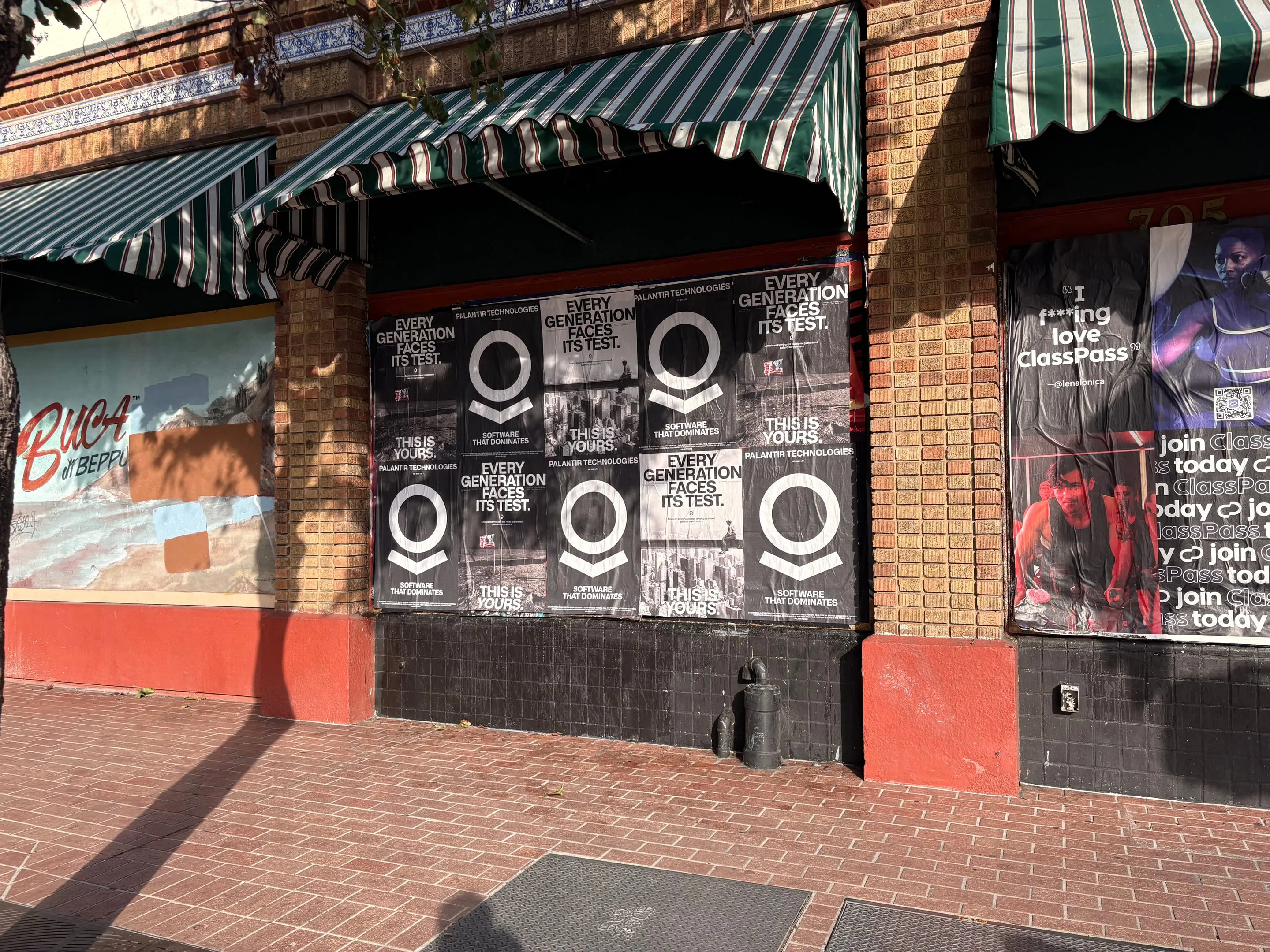
Permits are the part of the schedule an agency cannot compress. Los Angeles requires a new mural on private property to be registered with the Department of Cultural Affairs under Administrative Code Section 22.119, and the applicant has to send notice of the application to the neighborhood council with jurisdiction over the site at least 45 days before the department registers the mural. Any agency quoting you a two-week mural has not read the ordinance.
What to ask:
- “What’s the minimum lead time from brief to first install?”
- “How long does scouting take?”
- “How long does production take?”
- “Can you accelerate it? What’s the rush cost?”
- “When can I expect proof photos after installation?”
Red flags:
- “We can launch in one week.” (Only if it’s a pre-scouted, pre-designed campaign. Ask if that’s what you’re getting. Usually, it’s not.)
- “Timeline depends.” (It doesn’t. Scouting is 1 week, production is 1 week, install is 2-5 days. That’s fixed.)
- “We’ll start scouting while you finalize the brief.” (Reasonable, but get it in writing that they’re scouting at risk if you cancel.)
- “Proof photos come at the end of the campaign.” (They should come within 48 hours of install, not 6 weeks later.)
Timeline you should expect:
- Week 1: Scouting (wall identification, foot-traffic assessment, property owner outreach)
- Week 2: Design refinement (3-5 design iterations, approval, creative finalization)
- Week 2-3: Production (print, paste prep, stencil production if applicable)
- Week 3: Installation (2-5 days depending on wall count and city)
- Within 48 hours of install: First proof photos and GPS data
- Week 6-8: Final wrap report (after campaign ends or is documented as removed)
Step 6: Deliverables Checklist
What do you actually get at the end of the campaign?
The right answer: “You get a proof deck within 48 hours of install completion (GPS-tagged photos, timestamps, placements map). At the end of the campaign lifespan or removal, you get a wrap report: placement count, average lifespan, foot-stops if documented, social media pickup (hashtag volume, earned impressions), press mentions, and any attributed traffic from a promo code or QR link. You also get high-res creative files for your records.”
What to ask for:
- “What’s in the proof deck?”
- “When do I get the proof deck?”
- “What’s in the final wrap report?”
- “Do you provide social media tracking?”
- “Do you provide press monitoring?”
- “Can I use the photos for my own marketing?”
What should be included:
Proof Deck (within 48 hours of install):
- Pre-install baseline photo for each placement
- Post-install photo for each placement (creative visible and legible)
- In-context photo for each placement (showing wall and foot traffic if possible)
- Spreadsheet: GPS coordinates, address, timestamp, installation time
- Placements map (all locations pinned on a map or listed by neighborhood)
Wrap Report (after campaign ends):
- Placement count (total walls/stickers/posters installed)
- Average lifespan (how long each placement stayed up before removal or weathering)
- Foot-stops (if documented in photos, estimated number of people who engaged with the creative)
- Social media pickup (hashtag volume, organic mentions, estimated impressions, sample posts)
- Press mentions (count and links to coverage)
- Attribution (if promo code or QR used, redemption count and attributed revenue)
- Campaign impact summary (1-page overview for your leadership team)
Creative Files:
- High-res artwork (print-ready files)
- Design files if you want to reuse the creative
- Brand-safe usage guidelines (so you know how to credit the campaign)
Red flags:
- “Proof is available at the end of the campaign.” (It should be within 48 hours of install.)
- “We don’t provide social media tracking.” (You should have it. Even if organic social is low, you need the count.)
- “We estimate reach.” (Don’t accept estimates. Demand actual metrics: foot-stops, social volume, press mentions.)
- “We don’t measure ROI.” (You should be able to calculate it from the data they provide.)
Step 7: Contract Terms
What does the legal agreement say?
Core sections a contract should have:
Scope:
- Number of placements
- Format (wheatpaste, stencil, etc.)
- Cities and neighborhoods
- Campaign duration
- Install start date and target completion date
Cost:
- Total cost
- What’s included (design, print, labor, documentation)
- What’s not included (permits, rush fees, travel above X miles)
- Payment schedule (e.g., 50% deposit, 50% on completion)
Deliverables:
- Proof deck (GPS photos, timestamps)
- Wrap report (placements, lifespan, metrics)
- Timeline for delivery
Cancellation: “If Client cancels before all placements are installed, Client pays for: scouting completed, design completed, any production/materials purchased, and installations completed to date. Remaining balance is refunded or credited.”
Termination for Cause: “If Agency misses 3 or more placements, fails to provide proof within 72 hours of install, or violates legal compliance (e.g., installs without property owner consent), Client may terminate and withhold payment for incomplete work. Agency has 10 business days to remediate.”
IP (Intellectual Property): “Client owns all creative and messaging. Agency retains the right to use final campaign work in case studies, portfolio materials, and award submissions, with credit to Client.”
Liability & Indemnification: “Agency indemnifies Client against property damage, permit violations, and defacement claims arising from Agency’s installations. Client indemnifies Agency against defamation, trademark infringement, or IP violations in Client’s messaging.”
Confidentiality: “Both parties keep campaign details confidential until Client authorizes public release.”
Red flags:
- “No cancellation allowed, full payment due regardless.” (No. You need an out.)
- “We own the creative.” (No. You’re paying for it, so the contract should assign it to you in writing. Under 17 U.S.C. 204(a), a transfer of copyright is not valid unless it is signed and in writing, so payment alone does not move ownership.)
- “Agency is not liable for any damages.” (No. They need to carry insurance and take responsibility for their work.)
- “If wall is removed, Client is responsible.” (No. The agency should expect removal and have a removal protocol in the brief.)
- “We’ll email updates weekly.” (Good, but get it in writing. And demand photo proof, not just email summaries.)
What you should not accept:
- One-sided liability (all risk on you, none on them)
- No IP ownership (you should own what you’re paying for)
- Vague cancellation terms (get specific: “Client pays for completed work + scouting; remaining balance refunded”)
- No warranty (at minimum, they should warrant that all placements will be installed as agreed)
10 RFP Questions to Ask
Send these questions to any agency you’re considering. Their answers tell you whether they’re operating clean.
-
Scope & Proof “Can you show me GPS-tagged photos and timestamps from a campaign you executed in [target city] in the last 6 months? What does your proof package include?”
-
Cost Breakdown “What’s the per-unit cost for [wheatpaste/stencil/pole sticker] in [target city]? What’s included in that price? Itemize the cost breakdown for a 30-wall campaign.”
-
Lead Time “What’s your minimum lead time from signed brief to first install? Provide a timeline: scouting, design, production, installation, proof delivery.”
-
Crew & Team “Who are your installation crews? Are they employees or contractors? How are they trained? Can you provide their names?”
-
Permits & Compliance “How do you handle property owner consent? Do you get written agreements? For campaigns requiring permits, how do you file and what’s the cost?”
-
Timeline for Proof “When do I get proof photos after installation? Baseline photos? Can I track installs in real-time or do I wait until completion?”
-
Cancellation & Liability “What’s your cancellation policy? If I cancel before completion, what do I pay for? What’s your liability insurance? Am I named as an insured?”
-
Deliverables “What’s in the final wrap report? Do you provide social media tracking and press monitoring? Can I use the photos for my marketing?”
-
Social Media & Press “Do you track social media pickup (hashtags, mentions, impressions)? Do you monitor press coverage? How many hours do you allocate to press outreach?”
-
References “Can you provide 3 client references from campaigns in the last 12 months? Ideally, in [target city] and using [target format]?”
Eight Red Flags: When to Walk Away
If an agency exhibits any of these, do not hire them.
Red Flag 1: Estimated Reach Numbers “We estimate 500,000 impressions from a 30-wall campaign.”
This number is unverifiable and likely inflated. How did they calculate it? Foot traffic counts? Social media extrapolation? It’s BS. Ask instead: “How many organic social media posts do you typically get? How many press mentions? Can you show me actual metrics from a recent campaign?”
Red Flag 2: No Published Pricing “Pricing is confidential. You’ll need to submit an RFP and we’ll quote.”
Consultant-speak. You’re buying poster installations, not a six-month engagement. Cost should be straightforward: published starting floors by discipline (wheatpaste from $3,500, sidewalk stencils from $2,500, murals from $18,000), with the final number returned inside 24 to 48 hours. If they won’t publish pricing, they’re either overcharging or inexperienced.
Red Flag 3: Anonymous Crews “We partner with local crews who keep their names confidential for security.”
Crews should be named and trained. Anonymity is a red flag for either: a) they’re not actually managing quality, or b) they have something to hide (unpermitted work, no insurance, unprofessional conduct). A professional agency has named crews with training credentials.
Red Flag 4: Vague Permitting “Permits slow things down, so we skip them in most cases.”
That’s not efficiency; that’s risk. They’re either cutting corners or they don’t understand local law. A clean agency files permits where required and gets written property owner consent. If they’re “skipping permits,” you’re liable if the city fines them or a property owner sues. New York City’s posting law, Administrative Code Section 10-119, spells out why: it creates a rebuttable presumption that whoever’s name, phone number, or other identifying information appears on an illegally posted sign is the person who put it there. The name on the poster is yours, not the crew’s.
Red Flag 5: No Documentation “Proof is available at the end of the campaign, or we’ll email you updates weekly.”
Weak. You need photo proof within 48 hours of install, not 6 weeks later. Email updates are not proof. You need timestamped, GPS-tagged photos showing every wall, before and after. If they’re vague on documentation, they’re either sloppy or they’re not installing what they promised.
Red Flag 6: Non-Binding Timeline “Timeline depends on circumstances. We’ll let you know as we go.”
No. Timeline is fixed: scouting 1 week, design 1 week, production 1 week, install 2-5 days. If they can’t commit to a timeline, they’re either disorganized or they’re juggling multiple campaigns and not prioritizing yours. Get a timeline in writing.
Red Flag 7: No Cancellation Clause “If you sign, you’re committed. No cancellation allowed.”
No. Get a cancellation clause. If things go wrong, you need an out. A clause should say: “If cancelled before completion, Client pays for completed work + scouting + design + materials purchased. Remaining balance is refunded.”
Red Flag 8: Unwilling to Discuss Liability “We don’t discuss liability or insurance in initial conversations.”
That’s a red flag they don’t have insurance or they’re underinsured. A professional agency proactively provides a certificate of insurance naming you as an additional insured. If they dodge the question, walk away.
What to Demand from BSM: The Hiring Criteria
When you hire BSM, here’s what you get:
Transparent pricing. No estimates. Per-unit cost for each format, itemized quote for your campaign.
GPS proof. Every placement GPS-tagged, photographed (pre/post/context), timestamped. Proof deck within 48 hours of install.
Named crews. You know who’s installing your campaign. Not “local partners”, named, trained installers.
City knowledge. We live in the markets we serve. We know the neighborhoods, the foot traffic, the enforcement patterns, and the property owners.
Clean compliance. Written property owner agreements on all private walls. City permits filed where required. Liability insurance with you as an insured.
Honest timeline. 3-4 weeks minimum from brief to first install. No magic two-week campaigns.
Accountable deliverables. Proof deck within 48 hours. Wrap report after campaign ends. Social and press metrics tracked. Actual numbers, not estimates.
Cancellable contract. Terminate before completion and pay only for work completed.
The right agency is transparent on cost, proof, and timeline. They ask you questions before they pitch. They show recent work with GPS-tagged documentation. They have named crews and written compliance. They carry insurance and sign a clear contract.
If an agency checks all those boxes, hire them. If they hedge or get vague on any of them, keep looking.
Send a brief: city, format, budget, timeline. We’ll deliver a quote, scouting plan, and references within 48 hours. No templates. No fluff. Just direct.