Healthcare & Pharma.
Street advertising for hospitals, pharma DTC, telehealth, and biotech brands. Regulatory-compliant outdoor with FDA-aware claim review on every install.
Four tensions only street resolves.
- 01
Every medical claim in creative requires FDA substantiation and review before install, FDA regulations apply to all promotional healthcare language, not just labels, and claims-review cycles delay production timelines by 2-4 weeks
- 02
DTC pharma campaigns require fair-balance disclosure on creative, if you name a benefit, you must include risk/side-effect language at legible scale, a compliance burden most street agencies have never navigated
- 03
Hospital system brand campaigns target community recall and local trust, street presence in high-traffic neighborhoods signals institutional strength, but placement must avoid medical-sensitive locations and comply with hospital-affiliation disclosure rules
- 04
Telehealth platform launches need IRL credibility signals that compete with established medical incumbents, brand visibility at neighborhood scale reads as legitimate medical infrastructure, something digital-only cannot deliver
Is this you?
If two or more match your roadmap, send the date.
- Every medical claim needs FDA substantiation and a 2-4 week claims-review cycle before a single wall goes up.
- Your DTC pharma creative needs fair-balance disclosure at legible scale, a compliance burden most street agencies have never navigated.
- You're a hospital system competing on community trust and need neighborhood presence that signals institutional strength without hitting medical-sensitive locations.
- You're a telehealth platform fighting established incumbents and need IRL credibility that digital-only cannot deliver.
- You're pre-IPO biotech building investor awareness with a capital-markets audience that moves through finance-district neighborhoods.
- You're rolling out across states where telehealth and licensure rules create geography-specific regulatory friction.
5 disciplines, one playbook.
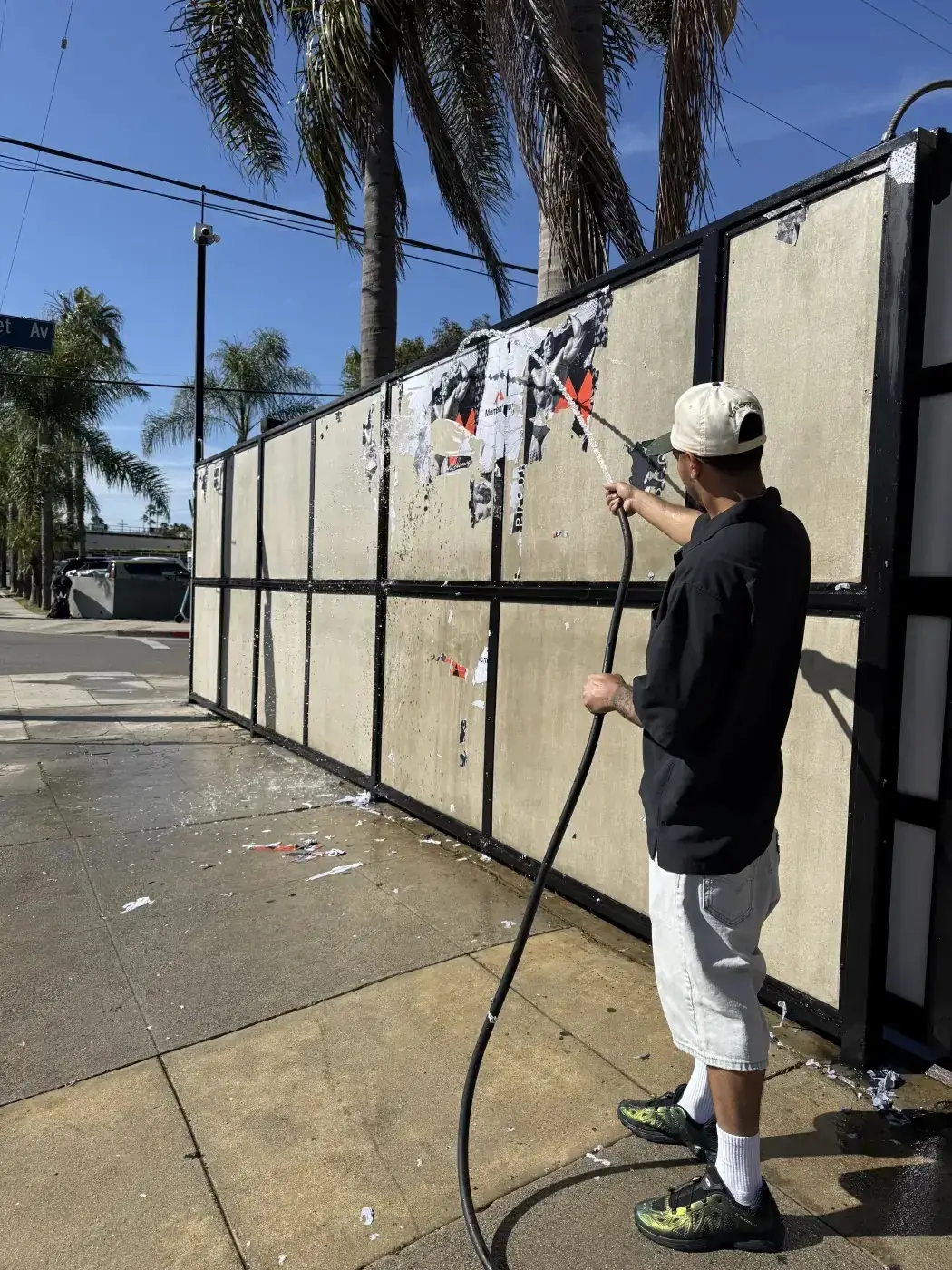
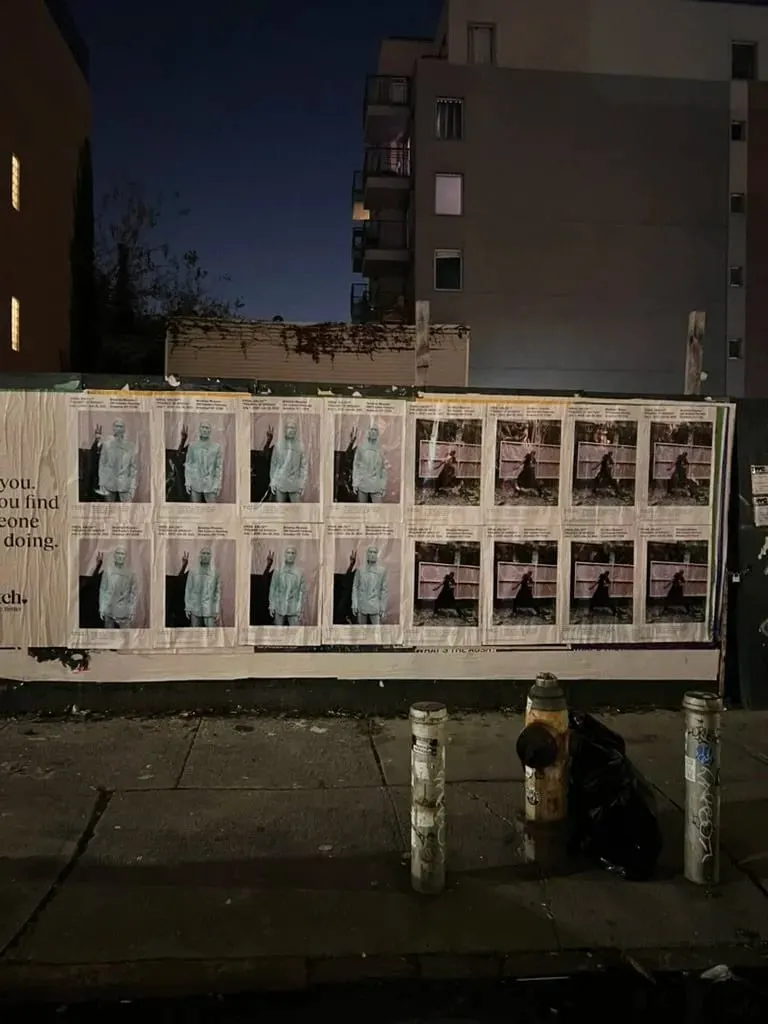
Wheatpaste
Wheatpasting and wheatpaste advertising campaigns from $3,500 in NYC, LA, SF + 40 US cities. Published floors, 5-7 day lead (Expedited 24-72hr), GPS-tagged photo proof on every install. From $3,500Paste-Up Posters
Paste-up poster campaigns for product launches and neighborhood saturation. From $3,500, 5-7 day lead (Expedited 24-72hr), GPS-tagged photo proof in 40 US cities. From $3,500Poster Murals
Multi-panel poster murals. Full-wall paste-up installs spanning building sides and scaffold runs. Brand-scale visibility with photo proof in 40 US cities. From $8,000Coffee Shop Posters
Coffee shop poster programs in 40 U.S. cities. Counter cards, column wraps, and wall placements in partner cafes with full photo proof on every install. From $3,000Custom Poster Installs
Custom poster installs in 40 U.S. cities. Your design printed in-house and installed on the surface you choose, from interior walls to full street-level frontage, with photo proof on every placement. From $5,000Starting floors · print, install, and GPS-stamped photo proof included in every quote. Final number varies by turnaround, size, and location count. Full rate card →
Sample creative directions.
Pre-tested format / neighborhood pairings. Pick a direction at brief intake and we route the surface set inside 24 hours.
- Hospital urgent-care launch Wheatpaste + pole stickers, 6-8 weeks 3-5 high-traffic neighborhood corridors
- DTC pharma indication launch Wheatpaste, benefit + risk panels Target-patient-density neighborhoods
- Telehealth platform launch Wheatpaste + interior installs SoMa, Flatiron, Silver Lake, Venice
- Biotech investor awareness Wheatpaste, mission + stage copy Financial and innovation districts
- Multi-state telehealth rollout Geo-specific creative matrix per state California, Texas, New York
Put it on the wall.

Proof · Printed in-house · Installed by our crew
Street campaigns for Healthcare & Pharma brands. Proof included.
Send the brief; a scoped quote for your vertical comes back inside 24 hours — formats, neighborhoods, and a GPS-stamped photo of every placement when the run wraps.
- Quote in under 24 hours
- No discovery call. The brief is the call.
- Printing & Installation under one roof
Brief us · Quote in under 24 hours
Start your healthcare & pharma campaign.
Brand-safe by default.
- Private-property walls only Written owner consent on file for every surface. No public infrastructure, transit, or right-of-way.
- GPS-stamped photos within 48 hours Wide, mid, detail per placement. The proof your team forwards internally.
- FTC + local-code compliant Disclosures and permitting handled per contract. Legal reviews clean.
- Zero municipal removals on record 500+ documented installs, none taken down by a city.
Read the full field notes
Why Healthcare Brands Are Moving Street-Side
Healthcare advertising has spent decades locked in two channels: direct-to-consumer pharma (DTC TV spots with 30-second fair-balance disclaimers) and institutional hospital brands (regional sponsorship, community-event logos, limited physical presence). Both face rising friction. DTC TV CPMs are climbing as linear viewership collapses. Hospital brands compete on brand loyalty in markets saturated with competing health systems, and digital healthcare advertising is losing impact as audiences develop ad blindness.
Street media solves a specific problem. It builds awareness at neighborhood scale, signals institutional legitimacy and physical investment (hospitals, telehealth platforms, biotech companies are here, in the city, at scale), and delivers credibility that no banner ad or pre-roll can match. For hospital systems competing on community trust, telehealth platforms fighting established medical incumbents, DTC pharma brands supporting new indication launches, and biotech companies building investor awareness, street presence reads as real infrastructure.
Beyond Street Media runs healthcare campaigns with FDA medical-claim compliance built into the operational layer, fair-balance disclosure type-set at legibility spec, state-by-state telehealth regulation mapped upfront, and audit-trail documentation that satisfies healthcare compliance teams. The format is the same wheatpaste, stencil, and interior install we run for every vertical, but the regulatory intake and approval routing are built for the complexity that healthcare demands.
What Healthcare Brands Actually Need
FDA compliance without campaign delays. Every medical claim in creative must be substantiated and pre-approved, but the approval cycle does not have to kill timeline. Beyond Street Media integrates claims-review into the creative phase: you provide the claims, we flag regulatory triggers, your compliance team pre-approves creative before production starts. Most healthcare clients need 2-4 weeks for legal review; we account for that at brief. Once creative locks, it is locked, no mid-campaign changes.
Fair-balance disclosure at legible scale. DTC pharma creative must balance benefit claims with risk language. Street posters have enough real-estate to present both without truncation, benefits headline, risks footnote, side-effects panel, all at readable scale. The format actually solves a problem that digital cramped-screen ads cannot: both the benefit and the fair-balance language can coexist and be comprehensible. That clarity is regulatory strength and competitive advantage.
Community trust signals for hospitals and telehealth. A hospital system with wheatpaste presence across multiple neighborhoods in the city signals institutional strength and local commitment. A telehealth platform with street presence in SoMa and Flatiron reads as legitimate medical infrastructure, not a fly-by-night digital-only startup. The physical install is the trust signal, it says “we invested enough to own this wall.”
Biotech investor awareness without investor pitches. Pre-IPO biotech companies building brand awareness need to reach institutional investors, company employees, and the venture community. A wheatpaste presence in the Financial District or SoMa creates a parallel awareness channel, the investor who sees the biotech brand on the street internalizes that the company is real, funded, and growing. That awareness does not come from LinkedIn ads or the venture-capital press cycle.
State-by-state regulatory navigation. Telehealth platforms, medical-device companies, and health-insurance brands all face state-specific regulation. Campaigns targeting multi-state rollouts require geo-specific creative and compliance matrices. Beyond Street Media maps state-level regulatory triggers at intake, builds creative variation into production, and documents state assignment in the install log so compliance and regulatory teams can audit by geography.
How Beyond Street Media Works With Healthcare Clients
1. Claims and compliance intake. Campaign objective (brand awareness, new indication, clinical-trial recruitment, platform launch), target audience geography, list of promotional claims, regulatory triggers (FDA, state-level telehealth rules, SEC for pre-IPO biotech, state medical-board affiliation requirements). We flag every claim that requires substantiation, every disclosure that must appear on creative, and every state-specific rule that varies across markets.
2. Creative production with compliance type-setting. Design and copywriting proceed in parallel with claims-review and disclosure type-setting. We work with your compliance, medical-legal, and regulatory teams to lock every claim, confirm every required disclosure language, and agree on legibility specifications (6pt, 8pt, or larger depending on poster scale and visibility distance). The pre-approval routing is built into the production timeline.
3. Surface and venue confirmation. We map placements against audience neighborhoods and regulatory constraints. For hospital systems: high-traffic neighborhoods where community awareness is priority, with placement avoidance around sensitive medical facilities if required. For telehealth platforms: professional-class neighborhoods with high adoption density. For DTC pharma: neighborhoods where the target patient demographic concentrates. For biotech: finance-district and innovation-district neighborhoods where investor and employee foot traffic is highest.
4. Install with compliance documentation. Every placement is photographed at install, wide shot, close shot, and compliance detail showing all required disclosure language at legible scale. Daily logs go to your team. GPS timestamp and placement ID link each install to the approved creative lockfile, creating an audit trail that satisfies healthcare compliance review.
5. Audit retention and regulatory reporting. The campaign closes with a retention package: signed creative lockfiles, claims-substantiation matrix, compliance-disclosure annotations, install log with GPS and timestamp, placement photographs showing all compliance language, and state-assignment documentation (for multi-state campaigns). This package satisfies internal compliance review, regulatory pre-approval, and post-campaign audit requirements at most healthcare organizations.
Real Healthcare Verticals: Where Beyond Street Media Operates
Hospital System Brand Campaigns. A health system launching a new urgent-care clinic or specialty center in an urban neighborhood runs a 6-8 week wheatpaste and pole-sticker blitz across three to five high-traffic corridors. The campaign builds community awareness of the new service, signals institutional investment in the neighborhood, and drives foot traffic to the new clinic from residents who walk those streets daily. The creative carries the hospital’s brand, the clinic address, and any required health-system affiliation disclosures.
DTC Pharma Indication Launches. A pharma brand launching a new indication for an existing drug runs a targeted campaign in neighborhoods where the target patient demographic concentrates (age-specific, geographic, socioeconomic filters). Creative leads with the new indication headline, carries the benefit-claim and risk-disclosure panels side-by-side at legible scale, and directs traffic to a patient-education landing page. Compliance review adds 3-4 weeks; we account for that at brief.
Telehealth Platform Launches. A new telehealth platform targeting professional and early-adopter audiences runs campaigns across San Francisco, New York, and Los Angeles in high-adoption neighborhoods (SoMa, Flatiron, Silver Lake, Venice Beach). Creative emphasizes convenience, licensed-provider credential, and state-specific service availability (varying by geography per state-licensing rules). Interior installs in coworking spaces and coffee shops create dwell-time brand environment in the exact venues where telehealth users congregate.
Biotech Investor Awareness. A pre-IPO biotech company building institutional investor awareness runs a wheatpaste presence in financial-district and innovation-district neighborhoods across NYC and the Bay Area. The creative emphasizes the company mission and stage (Series C, seed-stage, pre-revenue, etc.) without medical claims that would trigger FDA requirements. The install signals investor-class credibility and founder confidence, the fact that the company allocated budget to wall presence reads as evidence of runway and seriousness.
Services Healthcare Brands Use Most
Wheatpaste Advertising. Large-format poster campaigns in healthcare-audience neighborhoods, with medical claims, fair-balance disclosures, and compliance documentation all type-set to specification.
Paste-Up Poster Campaigns. Street poster placement across neighborhoods for maximum reach and compliance-document delivery on every install.
Multi-Panel Poster Murals. Extended mural-scale campaigns for hospital systems and telehealth platforms requiring neighborhood-dominant presence.
Coffee-Shop Poster Programs. Interior placement in high-density patient and professional audience venues, ideal for telehealth and wellness-brand dwell-time awareness.
Custom Poster Installs. Column wraps and poster placement inside medical-adjacent venues (gyms, co-working, corporate wellness programs) for repeated-exposure credibility.
Multi-City Guerrilla Tours. Coordinated campaigns across five to ten major metros for hospital systems, telehealth platforms, and biotech companies building national awareness.
Compliance and Regulatory Rigor, The Operational Layer
Compliance is not an add-on, it is the operational foundation. Every healthcare campaign closes with audit documentation: approved creative lockfile (signed by compliance), claims-substantiation matrix (every claim mapped to evidence and approved disclosure), placement log with GPS and timestamp, and installation photography showing compliance language at legible scale.
For DTC pharma, the package satisfies FDA substantiation-review requirements. For hospital systems, it confirms brand-use compliance and community-engagement documentation. For telehealth platforms, it proves state-by-state regulatory compliance across markets. For biotech, it documents investor-aware brand-building activity for regulatory filings.
Multi-state campaigns require state-specific creative matrices and compliance annotations per state. The production timeline accounts for state-by-state regulatory variation. We flag every geographic regulatory difference at intake and build it into the production plan.
Got a Healthcare Campaign? We’ve Got the Compliance.
Healthcare brands are priced out of the media options that once worked. TV is fragmenting. Digital health advertising hits audience-fatigue. Street media is the format that builds credibility and presence at scale, and Beyond Street Media is the agency that runs it with the FDA compliance, fair-balance rigor, and audit-trail documentation that healthcare demands.
Healthcare & Pharma questions.
The 5 things healthcare & pharma brands ask before sending a brief. Same-day answers from the desk if yours isn't here.
Q · 01 Can street advertising handle FDA medical-claim compliance?
Yes, with proper intake and timeline management. Every healthcare campaign begins with a claims-review phase: you provide a list of promotional claims, Beyond Street Media flags regulatory triggers (indication, off-label risk, benefit-only language, etc.), and your compliance or medical-legal team pre-approves creative before production. The entire process adds 2-4 weeks to timeline, which we account for at brief. Once creative is locked, it cannot change on-the-fly mid-install. The approval cycle is not optional, it is the operational foundation of healthcare campaigns.
Q · 02 How does DTC pharma fair-balance disclosure work on a street poster?
DTC pharma creative must balance benefit claims with risk language and side-effect callouts at legible scale. We type-set benefits in the headline and risk/disclosure language in the footer or secondary panel at the required legibility spec (typically 6-8pt at print scale, larger at post-install visibility distance). The poster format actually favors fair-balance disclosure because the wall real-estate allows both to coexist without truncation. Digital ads cannot match that clarity.
Q · 03 What does a healthcare street campaign cost?
Hospital-system neighborhood awareness across three to five corridors runs $20,000 to $50,000 for a six-to-eight-week blitz. Telehealth multi-state launches with geo-specific creative variants land at $60,000 to $150,000 across three markets, since each state variation adds production cost. DTC pharma campaigns carry the highest floor because fair-balance type-setting and FDA review extend the timeline. Biotech investor-awareness placements in one finance district run $15,000 to $40,000. The compliance phase, not the install, drives the timeline and the price.
Q · 04 What is the timeline for a healthcare campaign from brief to install?
Standard timeline: 2 weeks brief-to-creative, 2-4 weeks compliance review (medical-legal team, regulatory, potentially FDA for DTC pharma), 1-2 weeks production lock, 1 week install. Total: 6-9 weeks. DTC pharma campaigns with FDA substantiation requirements may extend to 10-12 weeks. Hospital system campaigns without FDA trigger typically run 6-7 weeks. We front-load the compliance phase at intake so surprises do not happen mid-timeline.
Q · 05 How does Beyond Street Media document compliance for healthcare audits?
Every healthcare campaign closes with an audit-retention package: approved creative lockfile (signed off by compliance), annotated compliance matrix (every claim mapped to approved disclosure language), placement log with GPS and timestamp, and installation photography showing all compliance language at legible scale. Hospital systems and biotech companies integrate this package into their brand-use and regulatory-compliance files. For DTC pharma, the package satisfies internal pre-approval and post-campaign substantiation review requirements.
We delivered.
















Brand partners include: FIFA World Cup 2026, Palantir, Sézane, G-Shock, Mitchell & Ness, True Religion, Huda Beauty, Yonex, Relevance AI, Momentous, RYZE Coffee, Bloom Effects, Incrediwear, Brooklyn Museum, Sweat FC, HydroJug, Frameline, Alchemy, OneRepublic, Lone Fox, Vaura Pilates.
Got a healthcare & pharma launch?
Inquire now.
Send the Healthcare & Pharma brief: markets, window, creative direction. Vertical-specific quote back in 48 hours.