Wheatpaste poster advertising in New York City.
Hand-installed paste-up posters across SoHo, Williamsburg, Bushwick, the Lower East Side, Tribeca, and Bed-Stuy. Per-wall pricing, GPS photo proof on every install.
From $3,500, printing and installation both included. 5-7 days from brief to first wall.
500+ documented installs · a GPS photo of every wall · printed and installed in-house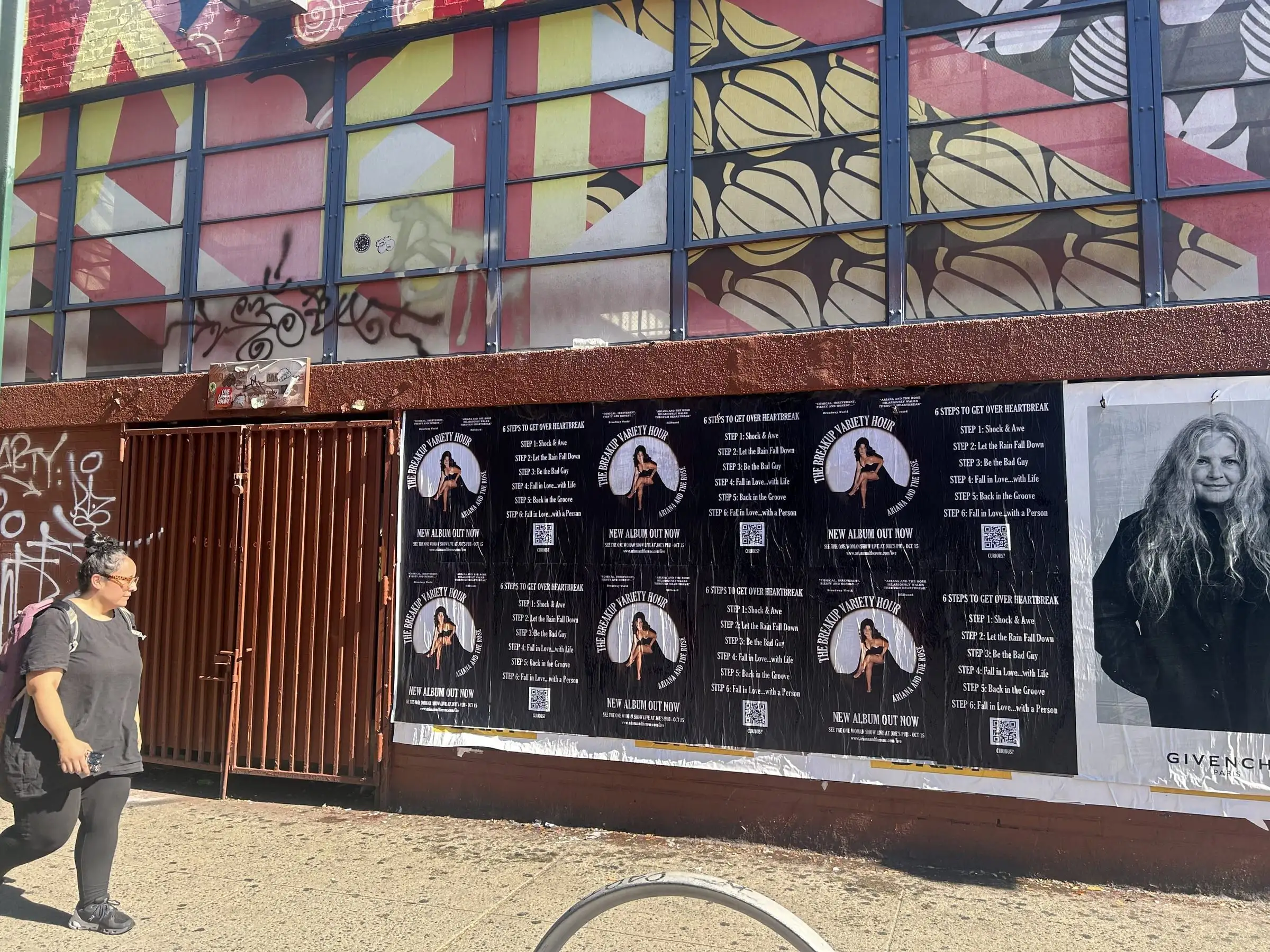
We delivered.




















Brand partners include: FIFA World Cup 2026, Palantir, Sézane, G-Shock, Mitchell & Ness, True Religion, Huda Beauty, Yonex, Relevance AI, Momentous, RYZE Coffee, Bloom Effects, Incrediwear, Brooklyn Museum, Sweat FC, HydroJug, Frameline, Alchemy, OneRepublic, Lone Fox, Vaura Pilates.
We print it, paste it, and prove it.
Print and install under one roof — heavyweight paper hand-pasted at wall scale by a local crew, then a GPS photo of every wall. No broker in the middle.
- Print + install, in-houseOne team, proof to paste — no broker, no markup
- Hand-pasted at wall scaleLocal crews, heavyweight paper — no vinyl, no machines
- A GPS photo of every wallWide · mid · detail, lat-long stamped on every install
- 500+ installs, zero removalsDocumented — the paper trail holds up
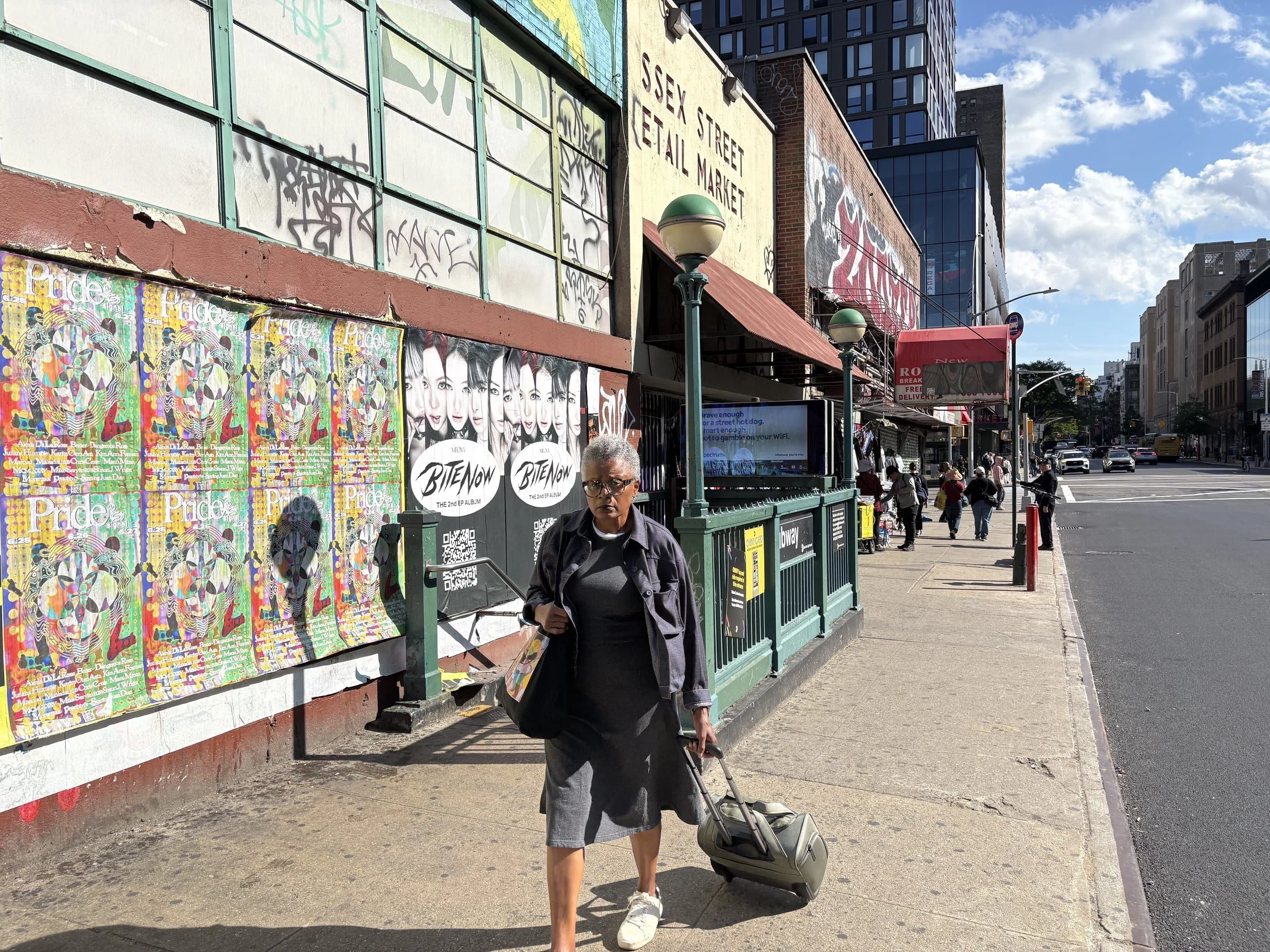
Heavyweight stock, up on the wall.
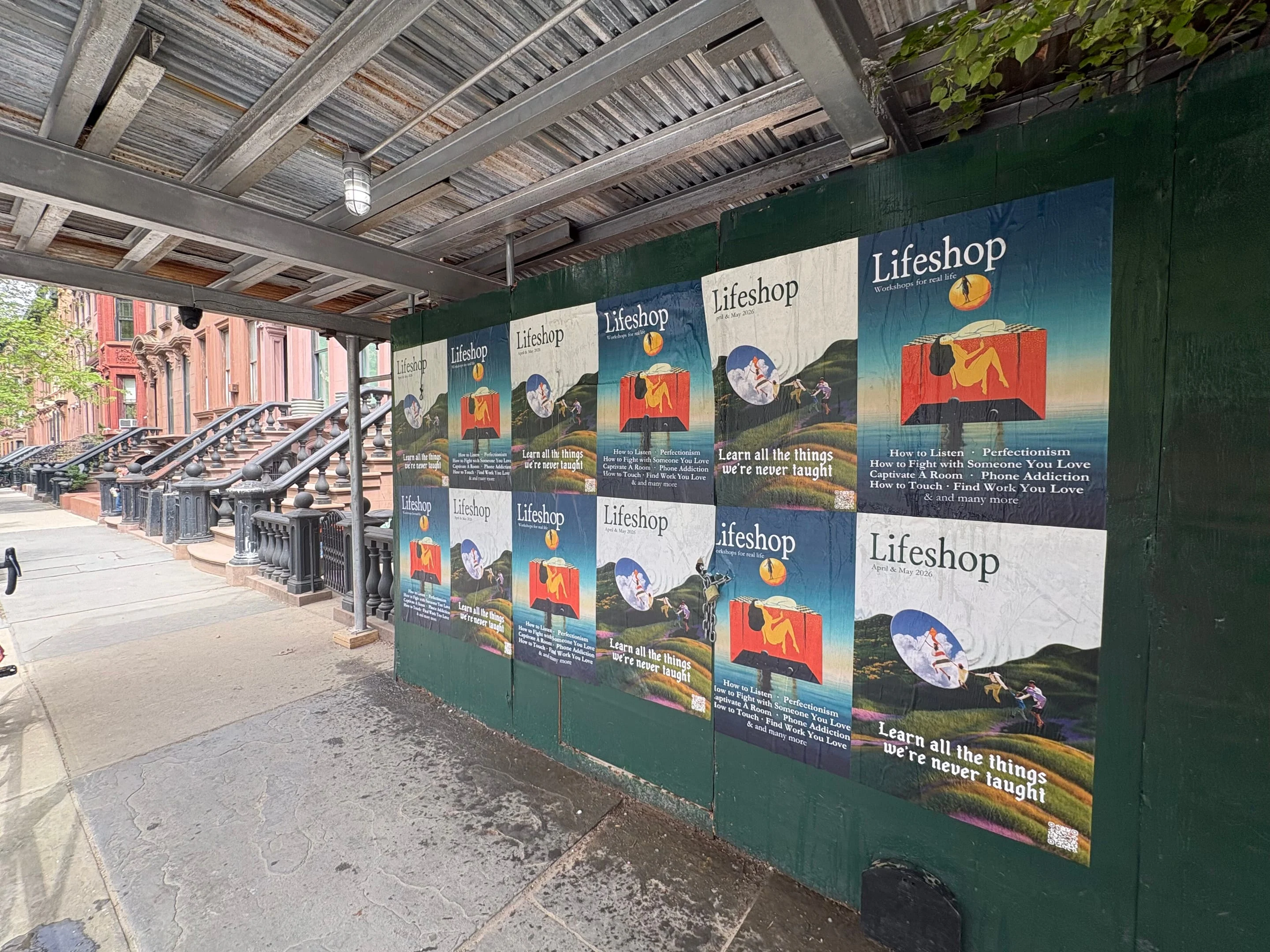
Where the city actually looks.
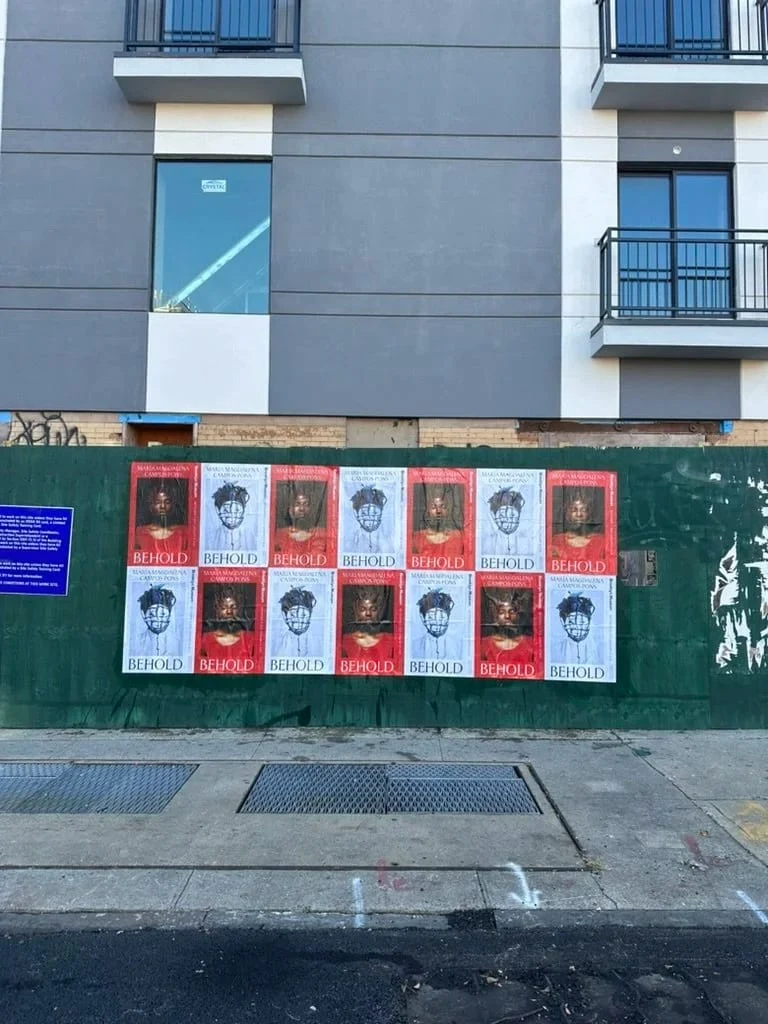
Block after block, New York City-wide.
We have already pasted New York City. Every number below links to that campaign and its GPS photo set.
- 100 placements · Ariana and the Rose, New York City
- 100 placements · Lifeshop, New York City · 30-day hold
- 100 placements · Signal, New York City
500+ documented installs · zero municipal removals on record · a GPS photo of every wall
- From $3,500 Wheatpaste posters 36×48 in sheet · 5-7 days in New York City
- From $2,500 Sidewalk stencils Biodegradable chalk · 5-7d lead
- From $3,000 Snipes + stickers Light-pole · utility-box · 5-10d
- From $18,000 Hand-painted murals Brush-painted · building scale
- Rush +80-150% Expedited campaigns 24-72hr brief-to-wall
SoHo scaffold holds the paper.
Broadway, Wooster, Greene, and Spring carry year-round scaffold corridors that wrap whole blocks in paste-friendly plywood and mesh. Owners run construction cycles back to back, the audience expects street poster work, and the surface refreshes itself every few months. New paper reads as part of the block, not noise dropped on top of it.
That is the New York City operator advantage. Not a billboard buy. Not transit. Hand-installed paste-up at eye level on the surfaces your audience already walks past during NYFW, the US Open, and the Saturday gallery hop. The wall is the campaign. Nothing surrounds it.
Installs ship in 5-7 days from approved creative to first paste-up live. Our crew runs SoHo, Williamsburg, Bushwick, the Lower East Side, Tribeca, and Bed-Stuy on a single dispatch day. NYFW and US Open windows book weeks out.
Eight corridors. Eight registers.
- SoHo scaffold plywood + brick · 14-21 days
Broadway, Wooster, Greene, Spring. Year-round scaffold plywood and mesh, cast-iron brick frontage. Tourist and creative foot traffic. The most reliable paste surface in Manhattan because the scaffold never fully clears.
- Williamsburg storefront + street walls · 12-18 days
Bedford Avenue, Wythe, the L-train corridor. Storefront roll-downs and street walls. Early-adopter audience that peaks evening through late night. The fastest neighborhood in the city for social pickup off a single wall.
- Bushwick raw brick · 14-21 days
Knickerbocker, Wyckoff, Flushing Avenue. Raw brick where street art meets commercial frontage. Gallery and venue density. Paper here gets photographed within hours of going up.
- Lower East Side narrow street-level walls · 10-16 days
Ludlow, Orchard, Stanton. Narrow street-level walls where density does the work. Nightlife, music, and beverage launches over-index. Tight blocks mean a small placement count reads as saturation.
- Tribeca scaffold + architectural · 12-18 days
Construction scaffold corridors. Fewer placements, architectural integrity preferred by owners. Reaches a high-income downtown resident and creative-industry register. Best for premium single-neighborhood focus.
- Bed-Stuy brick + community walls · 12-20 days
Central Brooklyn community corridors. Brick and community walls. Cultural orgs and grassroots clients alongside brand work. The right neighborhood for community-rooted creative that wants distance from the Manhattan commercial register.
- Crown Heights raw brick · 12-20 days
Central Brooklyn raw brick. Extends central Brooklyn coverage past Bed-Stuy. Residential-commercial mix that pairs well with Bed-Stuy on a single Brooklyn dispatch leg.
- Chelsea scaffold + gallery walls · 12-18 days
Gallery corridors with scaffold and gallery-adjacent walls. Manhattan corporate-and-gallery core. Works for fashion, art, and design briefs that want a downtown-Manhattan address without the SoHo tourist mix.
Six stages. SoHo discipline.
Brief to refresh audit. Each stage is owned end to end by the install crew working New York City. The freeze-rated paste, the BID routing, the scaffold-cycle timing. all of it is the baseline here, not an improvisation per campaign.
- 01
Brief intake + wall count
Send creative direction, the neighborhoods you want (SoHo, Williamsburg, Bushwick, etc.), your window, and budget. You get back a wall count, a neighborhood map, and a per-wall budget, with the first pass scoped in 48 hours.
- 02
Local scout + BID map
The install crew walks the SoHo scaffold corridor and the requested neighborhoods. Walls scouted against the Business Improvement District map so installs route around corridors that need 48-hour outreach. Option 1.4x final wall count for scaffold-cycle and weather swaps.
- 03
Print + freeze-rated paste prep
Print runs on weather-rated stock. Paste batches mixed for the Northeast climate so they cure in cold and hold through winter installs with a one-day buffer. Materials staged 48 hours before dispatch.
- 04
Dispatch day. SoHo first
6am SoHo scaffold corridor. Tribeca and Chelsea mid-morning. Lower East Side into early afternoon. Williamsburg and Bushwick across the bridge to close the Brooklyn leg, with Bed-Stuy and Crown Heights layered in. 30-40 walls in a single day with two crews.
- 05
Photo log + client portal
Three GPS-stamped photos per wall (wide, mid, detail). Field-log app captures lat/long, timestamp, installer ID. Portal updates within 4 hours of install. No invoicing until photo bundle is signed off.
- 06
Day 14 / 21 / 30 audits + refresh
Winter freeze-thaw and summer thunderstorms shorten wall life on exposed surfaces. Audits at day 14, 21, 30. Any wall that loses surface gets refreshed on the next dispatch. Event-window walls get an extra check timed to the crowd.
Private property. Written consent. Period.
New York City treats paste-up on a permissioned wall as a property-rights matter. We pull written consent on every install. Public infrastructure is never touched.
Every New York City paste-up sits on a permitted private surface with written owner consent. We do not run on subway property, lampposts, traffic signs, hydrants, trees, or municipal right-of-way. Period.
Private property with permission. New York City allows wheatpaste on private property when the owner consents. City-enforced removal typically runs 30 to 60 days on commercial paste, so a permissioned wall outlives its install window. Posting on street fixtures or on private property without consent is what the city penalizes, and we route around both by working only permissioned commercial walls, scaffold panels, and construction hoarding.
Business Improvement Districts. Williamsburg, SoHo, the Lower East Side, Times Square, and the Garment District run BID programs. Some corridors are paste-friendly with owner consent. Some need 48-hour outreach along their primary commercial frontage. We track the BID map and route installs around the corridors that need pre-coordination. In NYC the BID map is the campaign map.
Historic-district overlays. SoHo, the Lower East Side, Tribeca, and parts of Brooklyn carry facade rules under historic-district overlays. We track those overlays and keep paste on surfaces the owner controls, which on a scaffold corridor is the plywood and mesh, not the protected facade behind it.
500+ documented installs. Zero municipal removals on record. Our paper trail holds up in any takedown dispute. The brand is never on the hook for a complaint we routed through.
The New York City wheatpaste playbook Operator detail · surfaces, climate, timing
What paste-up advertising actually does in New York City
Wheatpaste advertising in New York City is hand-installed paste-up poster campaigns adhered to private walls with water-based adhesive. The category also goes by paste-up poster campaigns, street poster advertising, flyposting, and bill posting. New York is the original paste-up market, a medium people already know how to read. The format converts on the same dynamic everywhere it works: a poster on a wall that the right audience walks past, repeatedly, over weeks. In New York City the variable is which wall. Pasting SoHo reaches a tourist and creative register. Williamsburg reaches the early-adopter audience that decides what becomes cool. Bushwick reaches the gallery-and-venue crowd. The Lower East Side reaches nightlife, music, and beverage. The same poster, hung on the wrong wall, lands on the wrong audience.
That is the New York City operator problem in plain language. The audience isn’t dispersed across five boroughs evenly. They cluster in specific corridors. Reaching them through paid social is expensive because the targeting overlap with the rest of the country is small. Reaching them through transit or DOOH is expensive because the minimum spend is high and most placements are highway-adjacent or in stations rather than on the walkable blocks where decisions get made. Paste-up at neighborhood scale solves the geometry. A single well-placed Williamsburg wall carries more weight than a Times Square digital impression, because the audience that sets the trend is on the sidewalk, not driving past at 45mph.
Why scaffold is the NYC paste advantage
New York City has a surface no other market has at this density: scaffold. SoHo, Tribeca, and Chelsea run construction and facade cycles back to back, which wraps whole blocks in plywood sheds and mesh netting for months at a stretch. That plywood is the most reliable paste surface in Manhattan. It is owner-controlled, it sits at eye level, and it refreshes itself every few months as one cycle ends and the next begins. While a Bushwick brick wall is exposed to weather and wear, a SoHo scaffold panel is partly covered and holds paper longer. We treat the scaffold map as live inventory and route around it.
Scaffold also changes the permitting math. On a protected facade inside a historic-district overlay, the wall itself is off-limits. The plywood the contractor erected in front of it is not the facade, and the owner or contractor controls it. That distinction is why a SoHo paste-up campaign can book and launch inside a week even on a block where the building behind the shed is landmarked.
When New York City clients book paste-up over other formats
- NYFW (February and September). Fashion Week reshapes SoHo, the Lower East Side, and the gallery corridors with a global audience of buyers, editors, and brand managers. Apparel and beauty brands paste in the two weeks leading up so paper is on the wall when the schedule starts.
- US Open (late summer) and the NYC Marathon. Each compresses foot traffic into a defined window. Same playbook, timed to the crowd rather than the calendar’s quiet weeks.
- NYCC (October) and the UN General Assembly (September). Both tighten crew availability and concentrate specific audiences. Plan installs ahead so the route is locked before the city fills up.
- Brand entry into the NYC market. DTC, fashion, fitness, and beverage brands launching here use multi-borough paste-up to register presence before paid digital kicks in.
- Cultural moments. gallery shows, venue openings, music drops. Strongest in Bushwick, Williamsburg, and the Lower East Side, where paper-on-wall reads as part of the neighborhood narrative, not commercial intrusion.
Climate, hold times, and paste chemistry
New York City runs year-round, but the climate splits the paste calendar in two. Winter is the hard season for adhesive: standard mainland paste can fail to set below freezing, so we mix a freeze-rated formulation that cures in the cold and holds through freeze-thaw cycles, with a one-day buffer built into the schedule so paper is not racing a storm front. Summer flips the problem. Afternoon thunderstorms push heavy installs to the early-morning window so the paste locks before the rain line moves through.
Hold times track surface exposure more than calendar. Covered scaffold plywood in SoHo and Tribeca holds 14 to 21 days because it is partly sheltered. Open raw brick in Bushwick and Crown Heights weathers faster on exposed faces. Narrow street-level walls in the Lower East Side fall in the middle, protected by the tight building geometry that also makes a small placement count read as saturation. We audit at day 14, 21, and 30 and refresh any wall that loses surface on the next dispatch.
What the wrap deck includes
Every New York City campaign closes with a documentation pack that holds up in any operator review. The pre-install site map shows confirmed walls with neighborhood context, foot-traffic notes, BID-corridor status, and property-owner approval. Daily install logs ship photo batches and GPS logs while paper is still going up. The final wrap deck breaks placement count by neighborhood, install dates, duration, a geo-tagged install map, and the full image archive. A press-ready image asset pack saves the licensing back-and-forth when a wall picks up Instagram or publication traction during NYFW or US Open weeks. Compliance documentation closes the loop: property-owner permissions, BID and historic-overlay notes, and any disclaimers if the work was political or cause-related.
Internal cross-links
Paste-up advertising in New York City works well in combination with other street formats. For the canonical service overview, see wheatpaste advertising. See also our guides on paste-up poster campaigns for the format breakdown, scaffold wrap advertising for large-format takeovers on the SoHo and Tribeca scaffold corridors, and construction hoarding posters for long-dwell coverage on active build sites. For the broader New York City coverage hub, see New York City street advertising.
New York City questions.
The short version. The brief covers the rest.
Q · 01 Is wheatpaste advertising legal in New York City?
Yes, on private walls with the owner's written consent secured first. Public infrastructure is a hard no: lampposts, traffic signs, hydrants, trees, subway property, and other street fixtures are off-limits. New York City penalizes posting on those city surfaces, so permitted work stays on commercial walls, scaffold panels, and construction hoarding the owner controls. City-enforced removal on commercial paste typically runs 30 to 60 days. Zero municipal removals on record across 500+ documented installs.
Q · 02 How much does a wheatpaste campaign cost in New York City?
Wheatpaste in New York City starts at $3,500 per campaign with print and install included. Multi-borough programs across SoHo, Williamsburg, Bushwick, the Lower East Side, Tribeca, and Bed-Stuy price up from the published floor. The final number depends on turnaround, size, location count, and combined service mix, and it tracks print volume and crew days, not the brand on the poster. NYFW and US Open weeks carry a premium on compressed install windows. Final quote returns in 24-48 hours. Full rate card is on our pricing page.
Q · 03 Which New York City neighborhoods do you cover for paste-up campaigns?
SoHo, Williamsburg, Bushwick, the Lower East Side, Tribeca, and Bed-Stuy are the core install zones, with Crown Heights, Chelsea, Astoria, and Midtown extending coverage when the brief demands it. SoHo runs scaffold walls on Broadway, Wooster, Greene, and Spring year-round. Williamsburg runs storefronts and street walls along Bedford. Bushwick offers raw-brick integration on Knickerbocker and Wyckoff. The Lower East Side packs narrow street-level walls on Ludlow, Orchard, and Stanton. Each neighborhood has distinct property-owner relationships and surface specs on file.
Q · 04 How fast can a New York City campaign launch?
Five to seven days from creative lock to first wall. We dispatch to New York City year-round, so same-week is doable when print files are press-ready. SoHo scaffold access needs property coordination but is usually secured within 48 hours. NYFW (February and September) and US Open timing need more advance booking because those windows tighten crew availability and the best walls book weeks out.
Q · 05 What proof do I get back from a New York City campaign?
Three GPS-stamped photos per wall: wide, mid, detail. Delivered as a download bundle and inside your client portal within 4 hours of install night. GPS install log with one row per wall (neighborhood, lat/long, install date, surface, installer ID). 30-day audit memo with survival count and refresh log. Press-ready image asset pack curated for earned media when a wall picks up social or publication traction. Event-window campaigns include a separate reach note timed to the crowd.
Got a New York City wall?
We've got the paste.
Send the brief. SoHo, Williamsburg, Bushwick, Lower East Side, Tribeca, Bed-Stuy. New York City paste-up quote is back within 48 hours, priced against the per-wall base above.