Sidewalk Stencil Advertising.
Sidewalk stencil campaigns from $2,500 in 40 US cities. Chalk-safe, removable, permitted-only. Expedited 24-72hr available. GPS-tagged photo proof.
We delivered.




















Brand partners include: FIFA World Cup 2026, Palantir, Sézane, G-Shock, Mitchell & Ness, True Religion, Huda Beauty, Yonex, Relevance AI, Momentous, RYZE Coffee, Bloom Effects, Incrediwear, Brooklyn Museum, Sweat FC, HydroJug, Frameline, Alchemy, OneRepublic, Lone Fox, Vaura Pilates.
Advertising at foot level
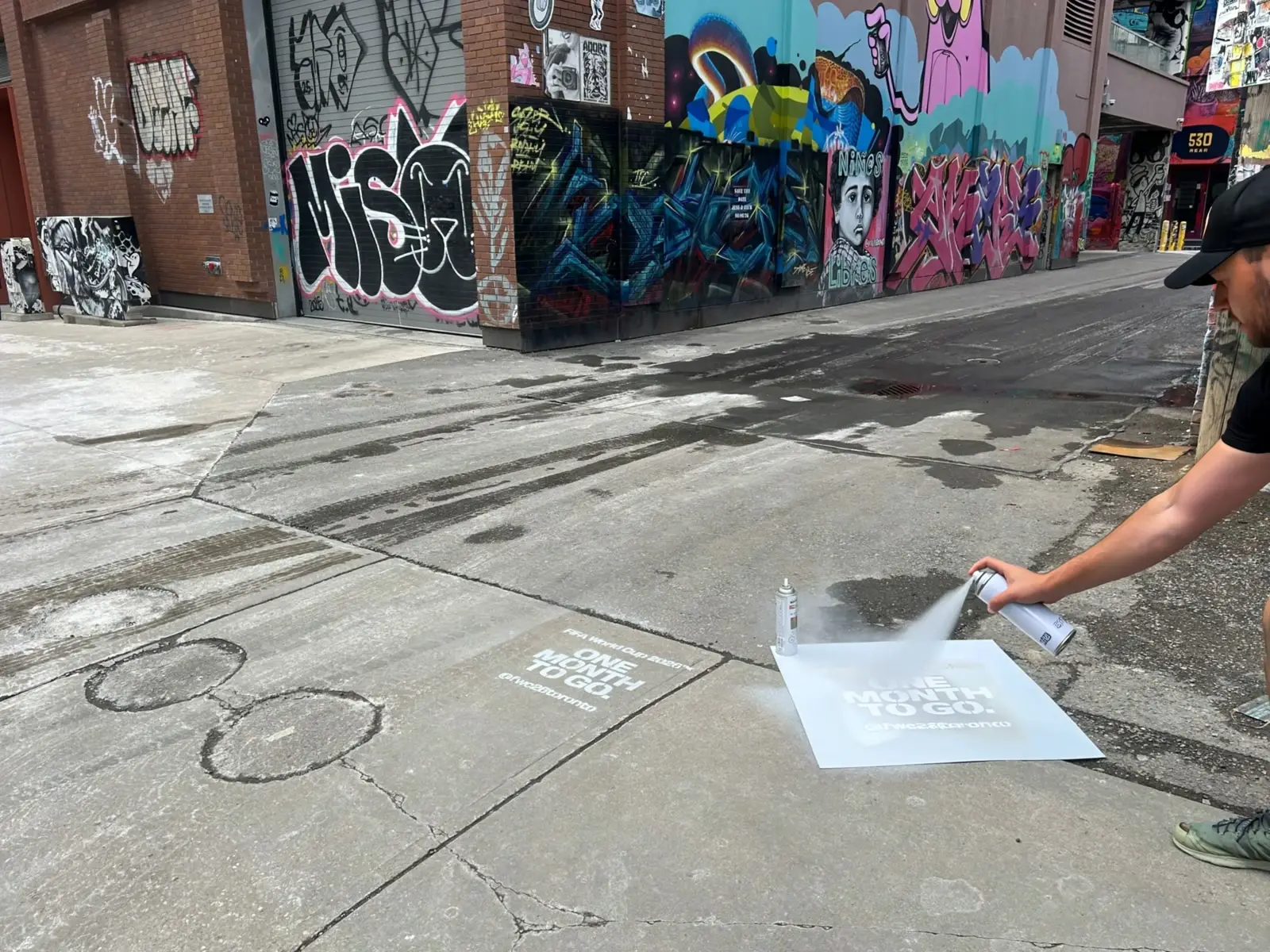
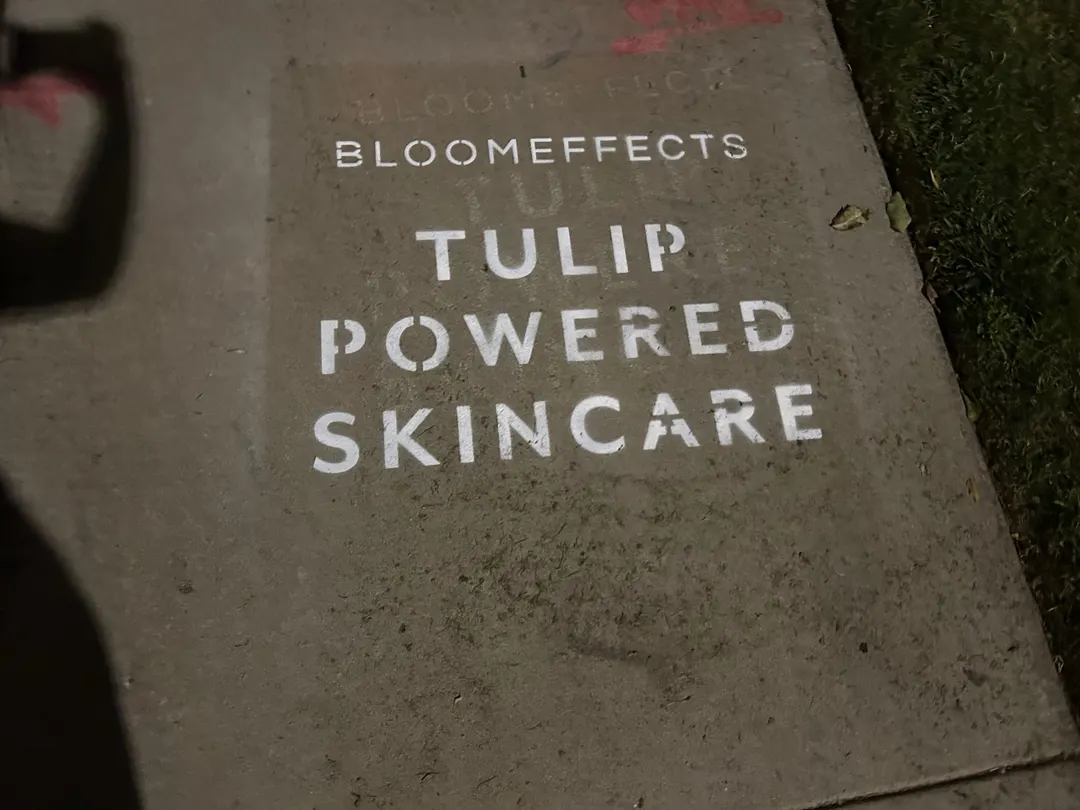
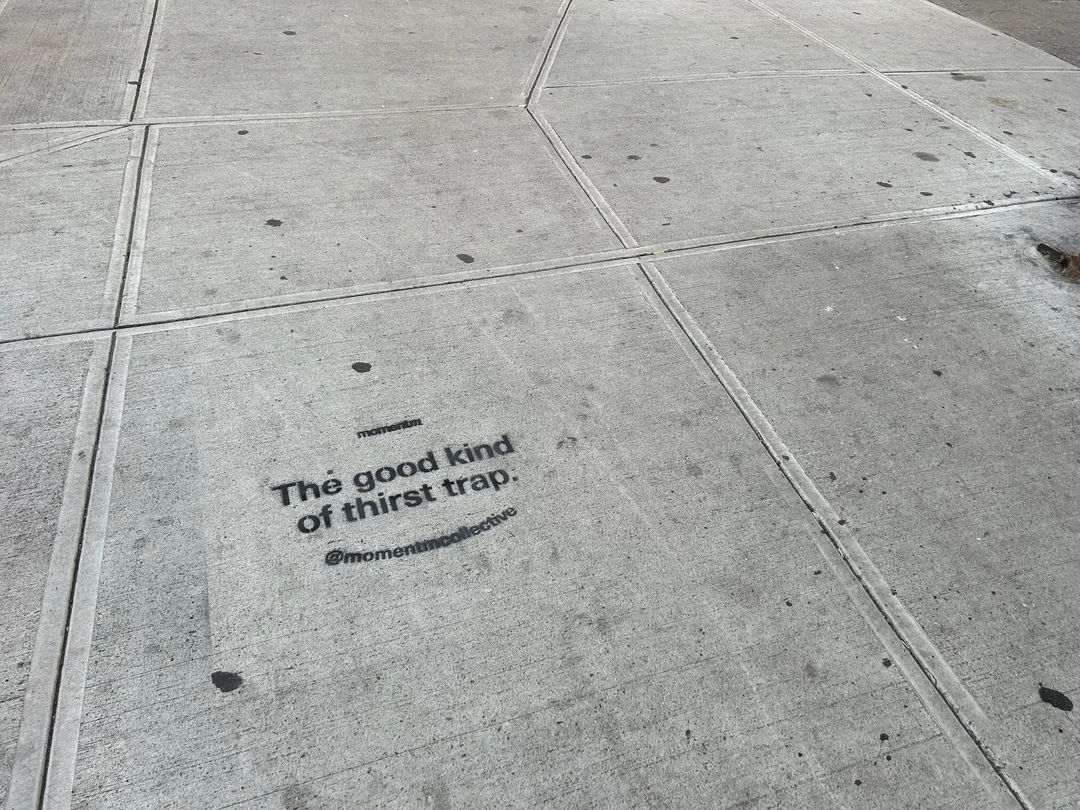
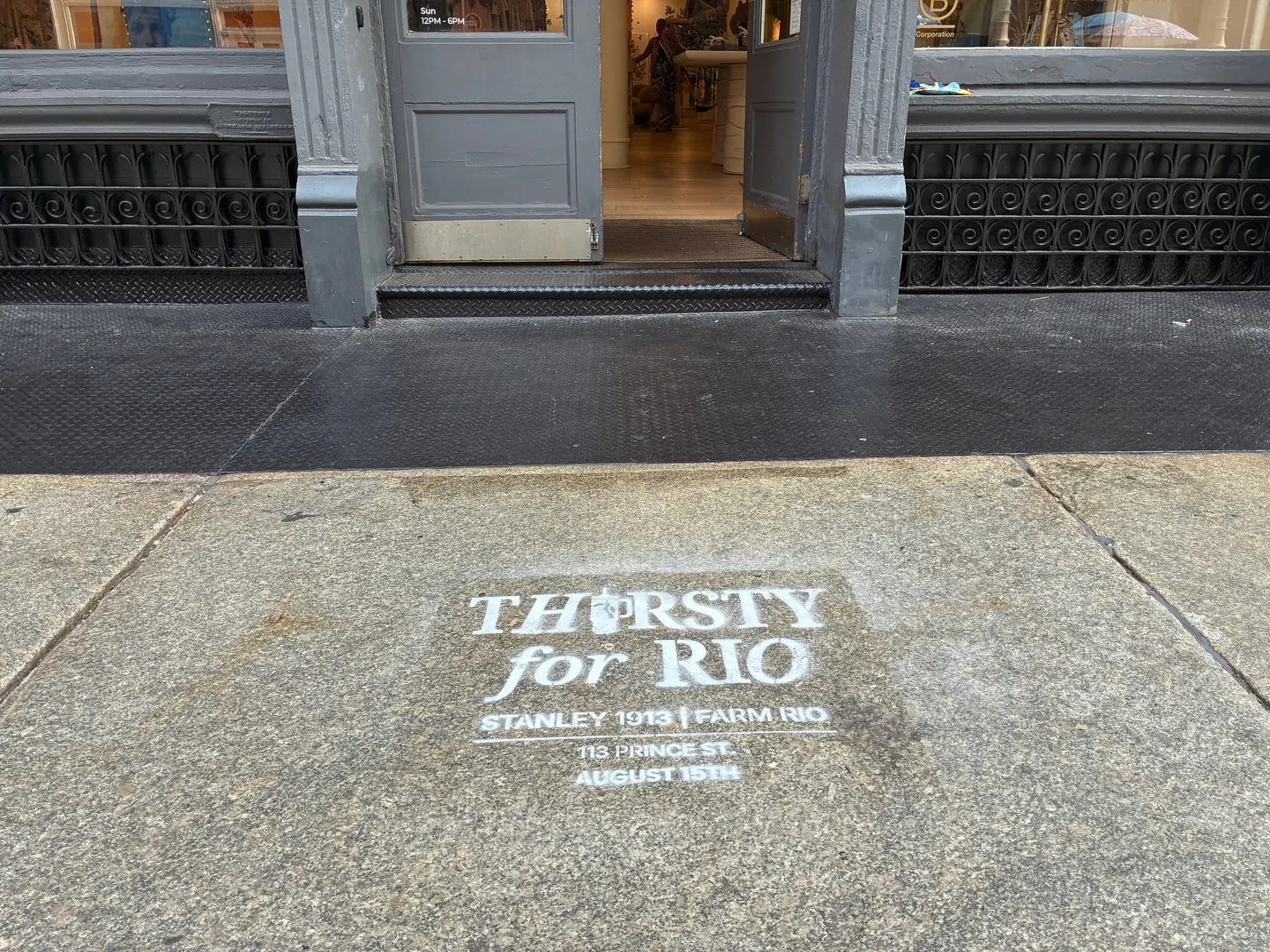
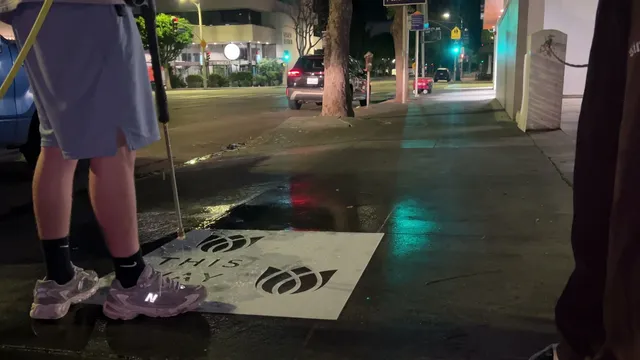
Sidewalk stencil advertising puts a brand mark, message, or QR code on permitted sidewalks and plazas, at the spot where a walking pedestrian is already looking down. The image is cut into a stencil and applied with washable chalk, biodegradable spray, or a reverse-stencil clean-tag technique that pressure-washes the mark into a grimy sidewalk. Each placement runs along the corridor people walk every day, photographed on site and logged. Buyers search for it as stencil advertising, chalk stencils, sidewalk stencils or clean tagging; it is one craft, and campaigns start at $2,500 with printing and installation included.
- Cut template, crisp edge
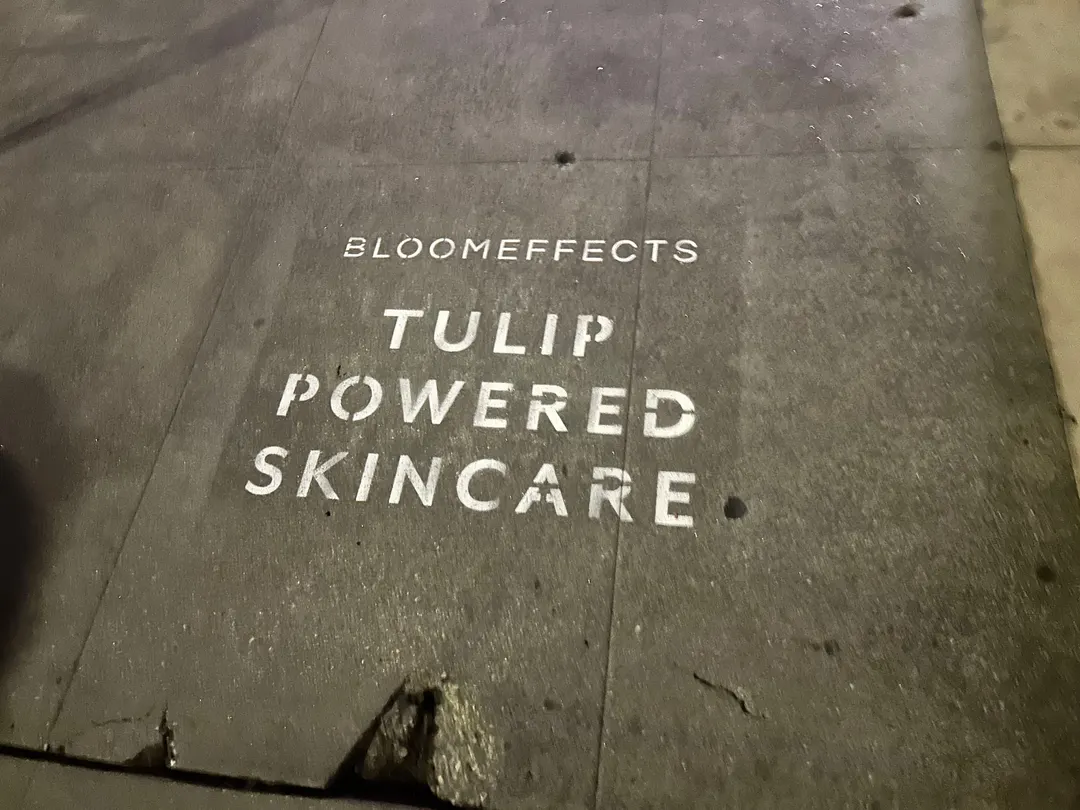
The design is cut as a physical stencil and applied on site, giving clean lines and legible type at ground level instead of a blurry tag.
- Placed at decision points
Stencils land where feet slow down: crosswalks, storefront approaches, subway exits. The pavement is the one medium nobody blocks or scrolls past.
- Directional trails
A series of repeated marks can lead foot traffic block-by-block to a door, the "this way to" pattern that turns pavement into wayfinding.
Who it's for.
- You want street presence below the cost of a full wall program, in a format that works for one neighborhood or a national run.
- You are launching a beverage, fitness, app, direct-to-consumer, healthcare, or education campaign and want a mark on the ground the audience already walks.
- You run a political or advocacy program and need chalk that reads as civic, with a clean visibility window timed to a vote or event date that leaves nothing behind.
- You already run walls and want the corridor between them covered with ground-level wayfinding.
Why it works.
- Lands in the downward glance
People look at the ground to judge the curb and dodge a puddle, and couriers and delivery walkers scan it almost constantly. A stencil at a venue door or curb cut reads without asking for attention.
- No skip, no block
A mark on the sidewalk has no scroll-past, no skip button, and no ad-block. It reads as part of the block instead of mounted above it.
- Medium sets the window
Chalk, biodegradable spray, and reverse-stencil clean tags each hold for a different length of time, so the medium gets matched to the campaign window instead of guessed at.
- It photographs on arrival
A trail of marks from a subway exit to a venue door works as ground-level wayfinding, and arriving attendees photograph the trail.
We have run this before.
954 documented placements for Relevance AI, Avvoka and FIFA World Cup 2026 are on file — every one photographed with GPS coordinates the day it went up.
500+ documented installs · Zero municipal removals on record · A GPS photo of every placement
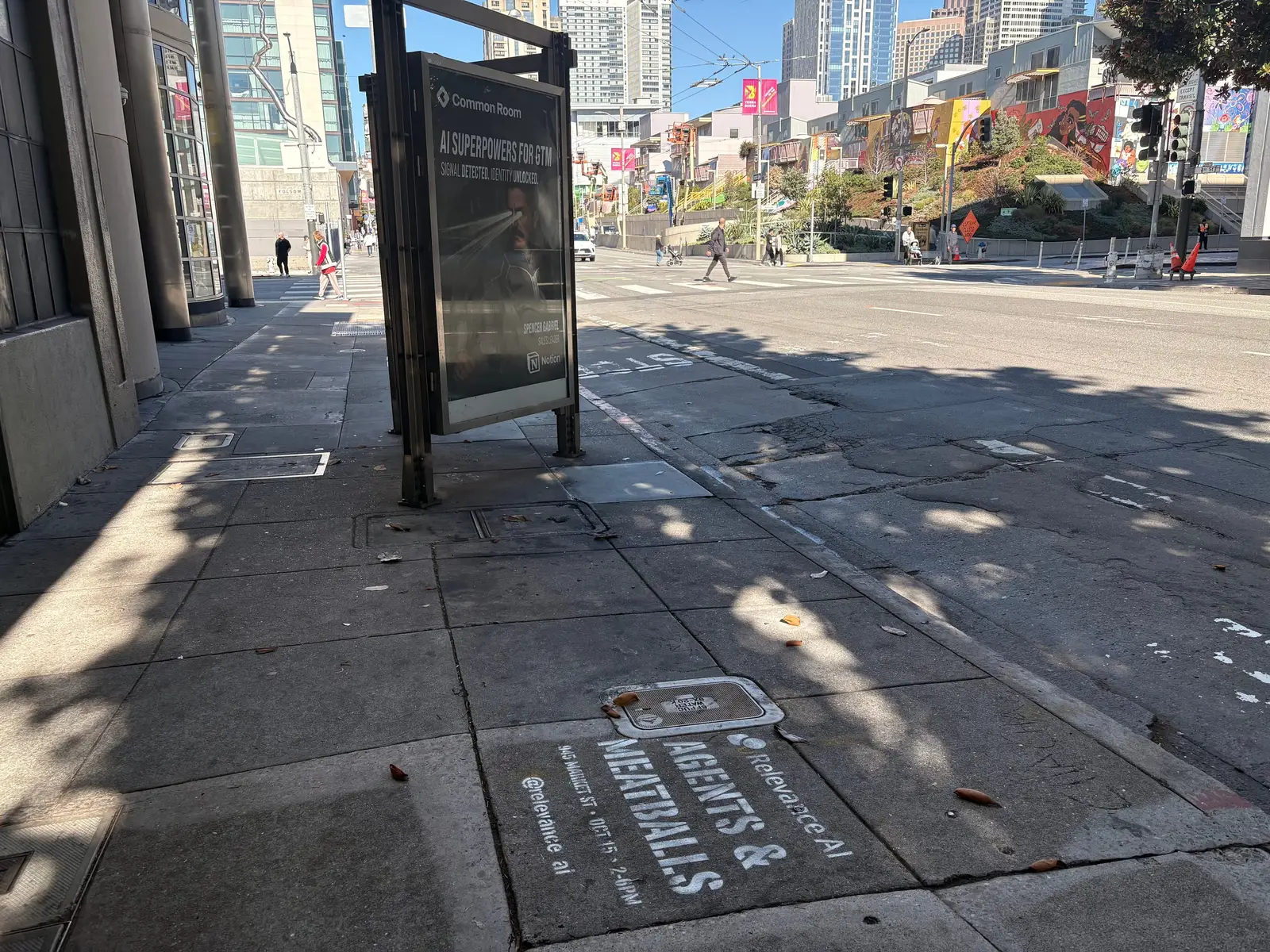
Proof · Printed in-house · Installed by our crew
Sidewalk Stencils, priced in the open. Proof included.
Floors start at $2,500 with printing and installation included, 3-5 days turnaround. Send the brief; a scoped sidewalk stencils quote comes back inside 24 hours with a GPS-stamped photo of every placement when the run wraps.
- Quote in under 24 hours
- No discovery call. The brief is the call.
- Printing & Installation under one roof
Brief us · Quote in under 24 hours
Start your sidewalk stencils campaign.
How it's made.
Medium picked against the law
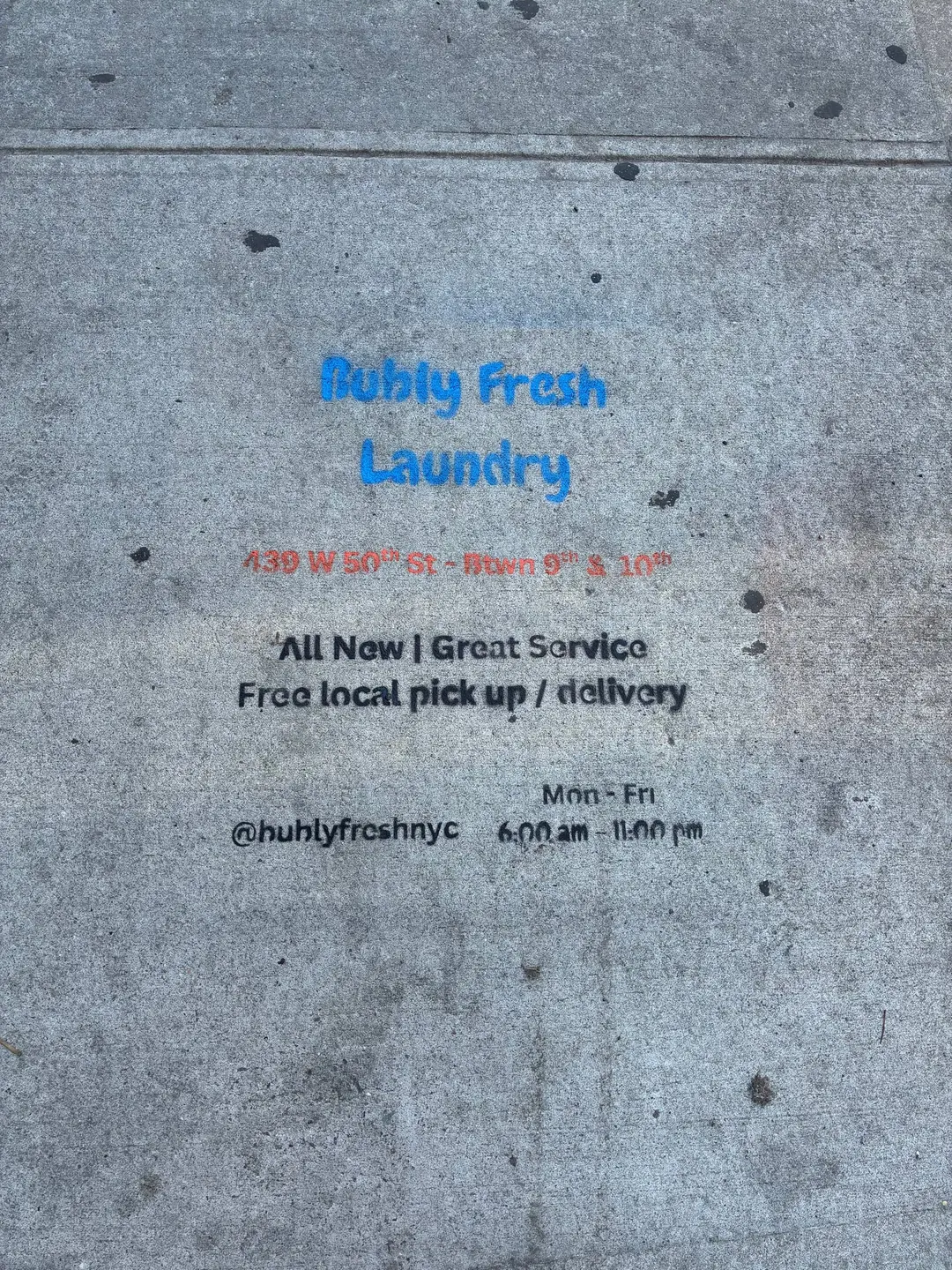
Washable chalk is exempt from graffiti and defacement codes in most cities because it rinses off and leaves no residue, abrasion, or cleanup cost. Oil-based or permanent paint on a public sidewalk is treated as graffiti effectively everywhere, so BSM does not run it on public ground.
Consented private frontage
Work runs in washable and removable mediums on public-facing private sidewalks with documented owner consent. A city-by-city compliance read keeps every placement on legal ground, the same framework behind zero municipal removals on record.
Three mediums, three windows
Washable chalk holds 2 to 7 days and rinses clean. Biodegradable spray holds 10 to 30 days and breaks down under UV. A reverse-stencil clean tag holds 2 to 6 weeks, fading as the surface re-soils around it. Mixed-medium runs are routine, with the route walk finalizing the choice per placement.
Route walk targets the eye-down corridor
Placements go where pedestrians already look at the ground: curb cuts and crossings, the entry apron at a door, the approach to a transit stop, the queue line outside a club or drop.
Surface confirmed before paint is bought
Flat poured concrete is the standard for even absorption and crisp edges, and smooth pavers and smooth-finished asphalt work in cooler months. Rough aggregate, weathered brick, oil-stained loading approaches, and fresh asphalt get excluded on the walk, and surface confirmation comes back in the placement map.
Printed and installed in-house
BSM prints and installs across 40 metros, all 50 states, and Canada, so the crew on the sidewalk is the same operation that cut the stencil.
Where we stencil.
Built to run together.
Reverse Stencils
From$3,500Reverse stencil clean-tag advertising. Pressure-washed logo on dirty concrete. No ink, no paint deposited. 40 US cities. Geo-tagged photo proof.
View discipline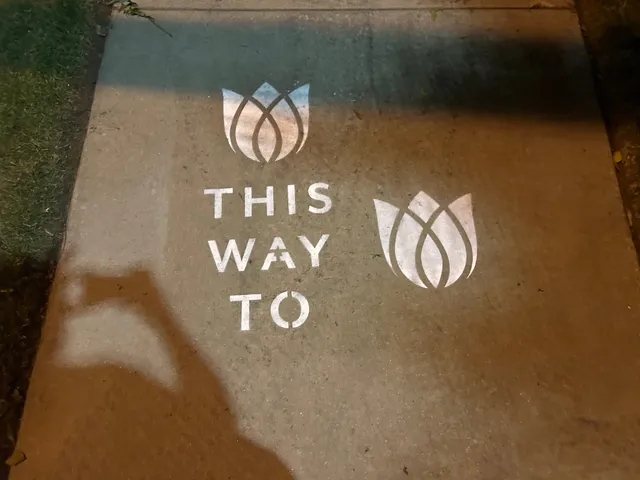
Chalk Stencils
From$2,500Chalk stencil campaigns, washable, permit-light sidewalk stencils that drop in 3 days, ride 1-2 weeks, wash clean. Eco-friendly street visibility.
View discipline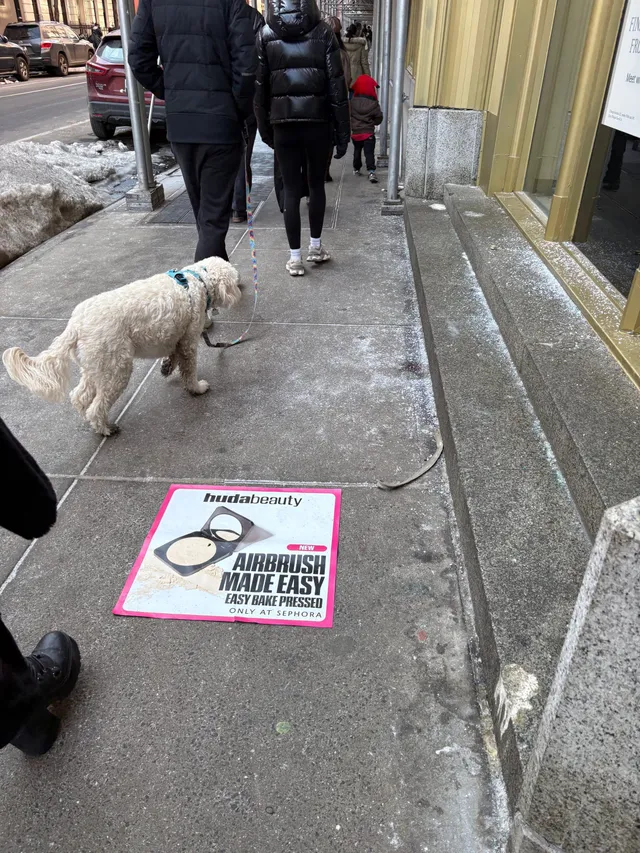
Sidewalk Decals
From$4,000Vinyl sidewalk decals and indoor floor graphics across 35 US cities. Slip-resistant, weatherproof, full-color print, 2-8 week installs with photo proof.
View disciplineWhere to go next.
Guides & field notes
Industries that run this
Frequently asked.
Q · 01 How much does stencil advertising cost?
Sidewalk stencil campaigns start at $2,500, printing and installation included. What moves a quote above the floor is placement count, how many corridors the run covers, and the medium: washable chalk, biodegradable spray, or a reverse-stencil clean tag. A scoped number comes back inside 24 hours of a brief.
Q · 02 What is sidewalk stencil advertising?
It is a ground-level format where a brand mark, message, or QR code is cut into a stencil and applied to the sidewalk using chalk paint, removable paint, biodegradable spray, or a reverse-stencil clean-tag technique. The result sits at the eye-line of a downward-glancing pedestrian.
Q · 03 Is sidewalk stencil advertising legal?
It depends on the city, the medium, and the surface. Washable chalk is exempt from graffiti and defacement codes in most metros because it leaves no permanence or damage, while permanent or oil-based paint on a public sidewalk is treated as graffiti and is not a format BSM runs on public ground. Work runs in washable and removable mediums on public-facing private sidewalks with documented owner consent, backed by a city-by-city compliance read.
Q · 04 How long does a sidewalk stencil last?
Washable chalk holds 2 to 7 days depending on rain, foot traffic, and surface porosity. Biodegradable spray holds 10 to 30 days. A reverse-stencil clean tag holds 2 to 6 weeks, since the mark is the absence of grime and it fades as the surface re-soils. A sheltered, grimy corridor holds it longer than a rained-on, regularly scrubbed sidewalk.
Q · 05 What is the reverse-stencil clean tag?
No pigment is added at all. A stencil is laid on a grimy sidewalk and the open area is pressure-washed, so the mark is clean concrete showing through the surrounding dirt. It is legal in any market because nothing was applied, which makes it the call for graffiti-strict jurisdictions and BID corridors that restrict painted mediums.
Q · 06 How much does a sidewalk stencil campaign cost?
Campaigns start at $2,500. Medium choice and stencil complexity move the final number. Standard turnaround is 3 to 5 days, and expedited 24 to 72 hour turnarounds are quoted case by case at a higher rate. Pricing is published with no RFP gate on the pricing page.
Q · 07 Do you photograph every stencil?
Yes. Every stencil is photographed on placement: a wide frame for context, a close frame for the finish, and a third frame for foot-traffic interaction where it adds something. Daily install logs reach your team while crews are still in the field, and the close-out delivers GPS-tagged photos, a placement map, and counts by neighborhood.
Run a sidewalk stencils campaign?
Same crew, your brand.
Markets, window, creative direction. A scoped quote returns in 24-48 hours, print and install included, documented on every placement.