CPG / DTC Brands.
Wheatpaste, stencil, and interior install campaigns for CPG and DTC brands. Neighborhood saturation that builds brand presence beyond paid digital.
Four tensions only street resolves.
- 01
Digital ad spend has plateaued; CAC curves have flipped upward across Meta, Google, and every channel competing for the same CPG buyer audience
- 02
Channel saturation makes top-of-funnel brand awareness expensive. You need a format that doesn't auction against every competitor buying the same impression
- 03
Brand-awareness lift is hard to attribute in a performance-marketing mindset, but retail distribution conversations ("we're in your neighborhood") need proof of presence
- 04
Organic social pickup is a real metric for CPG launches. People photograph street campaigns and amplify the brand without paid media buying you distribution
Is this you?
If two or more match your roadmap, send the date.
- Your digital CAC has broken and top-of-funnel awareness costs three times what it did, across every channel buying the same buyer.
- Your retail conversations need proof of presence, not proof of spend. Buyers want to see your brand in the neighborhood where their store sits.
- You want organic social pickup without paying for distribution. People photograph a distinctive install and amplify it for free.
- Your launch window is tight and you need a format that executes in weeks, not quarters, and proves out before broader spend.
- You want to reach the buyer at the moment-of-decision, in the coffee shop, grocery, or gym, not just during passive scroll.
- You're a regulated CPG brand (alcohol, supplements, health claims) that needs compliance routing built into production.
5 disciplines, one playbook.
Wheatpaste
Wheatpasting and wheatpaste advertising campaigns from $3,500 in NYC, LA, SF + 40 US cities. Published floors, 5-7 day lead (Expedited 24-72hr), GPS-tagged photo proof on every install. From $3,500Paste-Up Posters
Paste-up poster campaigns for product launches and neighborhood saturation. From $3,500, 5-7 day lead (Expedited 24-72hr), GPS-tagged photo proof in 40 US cities. From $3,500Sidewalk Stencils
Sidewalk stencil campaigns from $2,500 in 40 US cities. Chalk-safe, removable, permitted-only. Expedited 24-72hr available. GPS-tagged photo proof. From $2,500Custom Poster Installs
Custom poster installs in 40 U.S. cities. Your design printed in-house and installed on the surface you choose, from interior walls to full street-level frontage, with photo proof on every placement. From $5,000Bathroom Advertising
Bar and restaurant bathroom advertising in 40 U.S. cities. Mirror clings, stall-door posters, and venue placements with full photo proof on every install. From $3,000Starting floors · print, install, and GPS-stamped photo proof included in every quote. Final number varies by turnaround, size, and location count. Full rate card →
Sample creative directions.
Pre-tested format / neighborhood pairings. Pick a direction at brief intake and we route the surface set inside 24 hours.
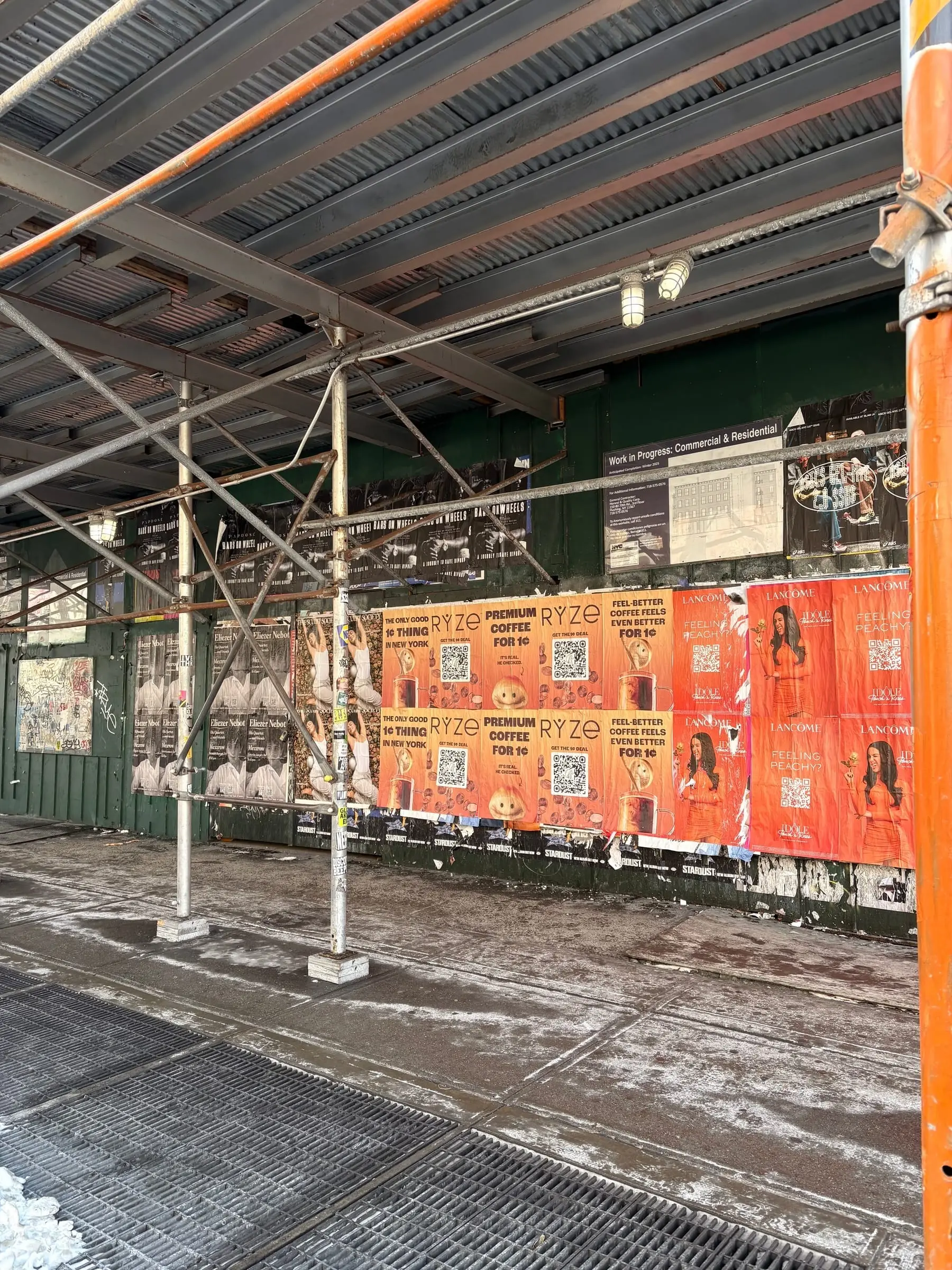
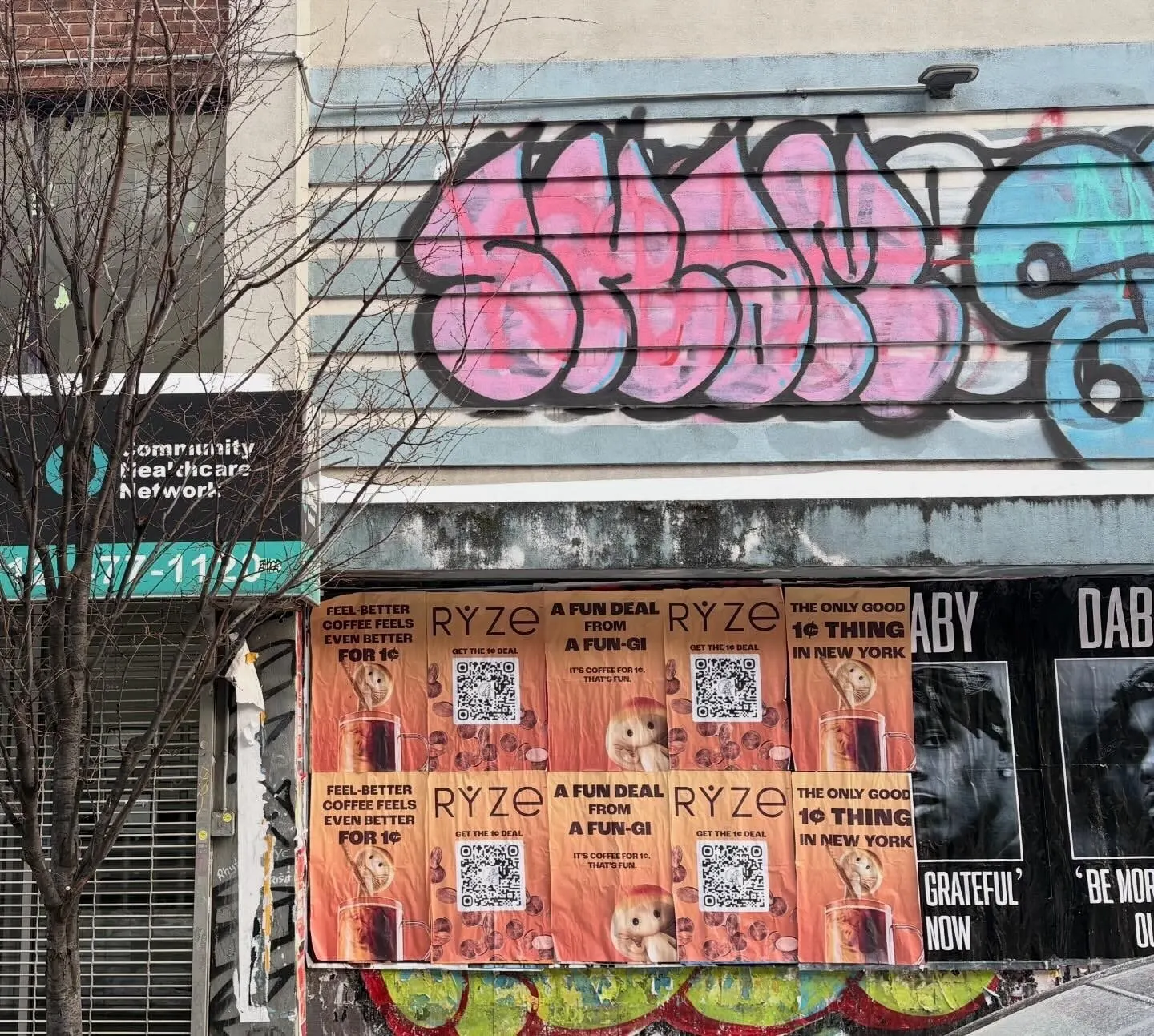
- RYZE launch saturation Wheatpaste, 25 placements, 2-week run Bushwick, Lower East Side
- Beauty retail reminders Sidewalk stencils, 8-week refresh Flatiron, SoHo, Brooklyn
- Supplement fitness blitz Wheatpaste, weekly placements Silver Lake, Echo Park, LA
- Skincare press tie-in Sidewalk stencils + QR landing pages SoHo, Williamsburg
The neighborhoods, not the metros.
We install where the audience already moves. Named corridors per market, permitted and photo-documented.
Hell's Kitchen · SoHo · Williamsburg · Bushwick · Lower East Side · Tribeca
Downtown LA · Arts District · Silver Lake · Echo Park · Venice · Santa Monica
Balboa Peninsula · Corona del Mar · Fashion Island · Newport Heights · Balboa Island · Lido Isle
Put it on the wall.
We have run this for cpg / dtc brands.

Proof · Printed in-house · Installed by our crew
Street campaigns for CPG / DTC Brands brands. Proof included.
Send the brief; a scoped quote for your vertical comes back inside 24 hours — formats, neighborhoods, and a GPS-stamped photo of every placement when the run wraps.
- Quote in under 24 hours
- No discovery call. The brief is the call.
- Printing & Installation under one roof
Brief us · Quote in under 24 hours
Start your cpg / dtc brands campaign.
Brand-safe by default.
- Private-property walls only Written owner consent on file for every surface. No public infrastructure, transit, or right-of-way.
- GPS-stamped photos within 48 hours Wide, mid, detail per placement. The proof your team forwards internally.
- FTC + local-code compliant Disclosures and permitting handled per contract. Legal reviews clean.
- Zero municipal removals on record 500+ documented installs, none taken down by a city.
Read the full field notes
Why Guerrilla Marketing Works for CPG and DTC Brands
Your digital ad spend curve has broken. Five years ago, a CPG brand could build awareness via Facebook and YouTube at a reasonable CPM. Now the same impression costs three times as much, across every channel that sells to the same audience. You are locked in an auction against every competitor buying top-of-funnel awareness. The performance channels. Search, programmatic. Have solved attribution so well that they have priced it. Brand-awareness budgets are shrinking. Launch cycles are tightening. Retail buyers are asking for proof of presence, not just proof of spend.
Street marketing solves a specific problem in that environment. It builds neighborhood-level awareness at a CPM that digital cannot match, in the exact zones where your retail partners do business and where your buyer actually walks. For CPG brands, that proof of presence. “we are in your neighborhood, at scale, right now”. Is the credential that moves retail conversations from “maybe” to “when do we stock.” For DTC, it is simpler: organic social. One visually distinctive wheatpaste or stencil can generate 5,000-20,000 earned impressions, zero paid amplification.
Beyond Street Media runs CPG and DTC campaigns with a specific playbook: neighborhood saturation in weeks, not months; venue coordination so interior installs hit at decision-moments; and social-monitoring that tracks organic pickup so you know what is working before you commit to bigger spend.
How a CPG Launch Phases Across Four to Six Weeks
The CPG playbook is a sequence, and each week of it does a different job. Run the phases out of order and the retail conversation lands before there is proof to show.
Weeks minus-5 to minus-1, build. Design, compliance routing, and production. Regulated copy moves first because TTB and FDA review add days, not the install. For a supplement brand, the claim substantiation locks here so the wheatpaste advertising run prints with the language counsel approved.
Week 1, saturate. The highest-density foot-traffic neighborhoods go live with wheatpaste for impression scale and pole stickers for corridor coverage. Campaign URLs and QR codes go live the same day so organic-social discovery has somewhere to land. A RYZE-style run hits 25-plus placements across Bushwick and the Lower East Side in this window.
Weeks 2-3, peak. Interior placement adds the moment-of-decision layer. Posters and rotation panels go into the coffee shops, grocery lobbies, and gyms where the buyer makes the call. This is when retail conversations happen and organic social compounds, so the press deck ships now, with photo proof and a live placement count behind it.
Week 4, phase down. Frequency drops, the social-monitoring dashboard closes out the 30-day pickup numbers, and the wrap deck goes to the retail buyer. The campaign ends with a document, not a vague impression estimate.
What We Run for CPG and DTC Brands
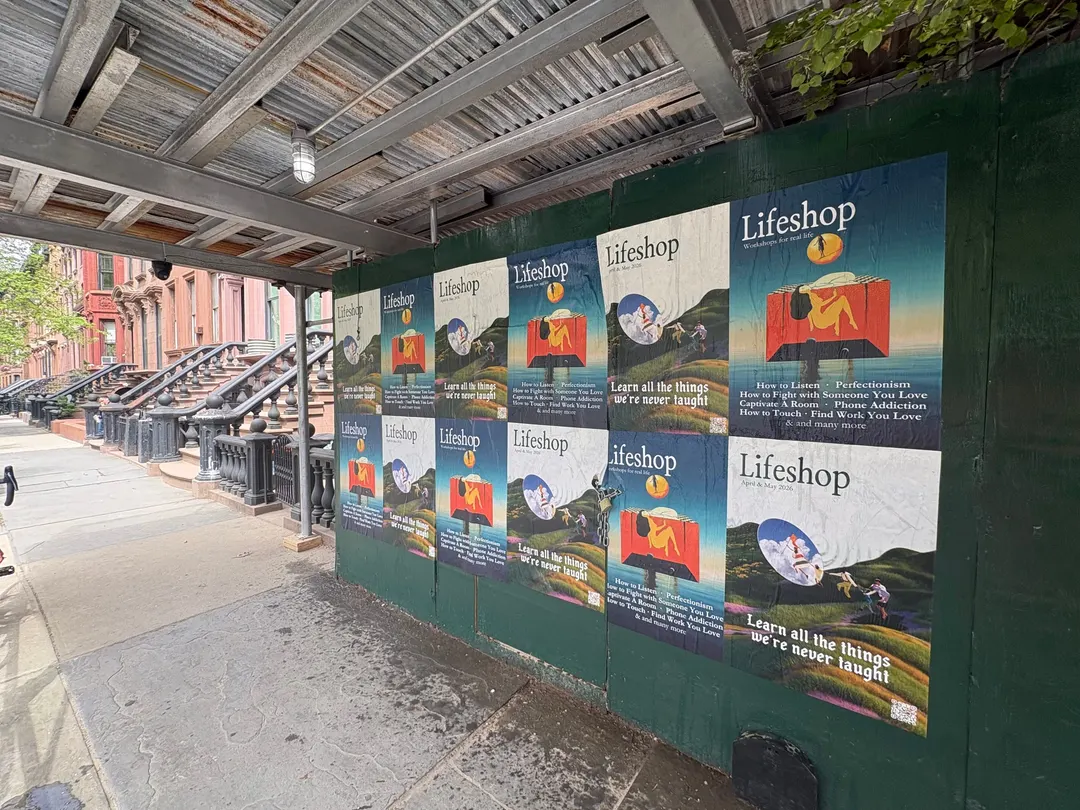
Wheatpaste Advertising. Large-format posters in high-traffic CPG-audience neighborhoods (SoHo, Bushwick, Silver Lake, Echo Park, Lower East Side). Entry point for CPG launches seeking impression scale and retail-buyer credibility. 40-80 placements over 2-4 weeks is the standard playbook.
Paste-Up Poster Campaigns. Hand-pasted poster networks across construction hoardings, utility walls, and building faces. CPG brands use paste-up for extended presence in target neighborhoods without the rapid-removal pressure of wheatpaste.
Sidewalk Stencil Advertising. On-pavement brand marks outside retail, coffee, and high-foot-traffic CPG venues. Stencils drive foot traffic into store discovery moments and support DTC website traffic via QR codes. Refresh cycles: 8-week intervals.
Custom Poster Installs. Coffee-shop posters, retail-window displays, gym and fitness-venue placements, and bar/restaurant takeovers. CPG brands use interior placement to hit the buyer at the moment-of-decision: while they are ordering coffee, checking out, or waiting.
Bar Restaurant Bathroom Advertising. High-dwell CPG placements in hospitality venues. Beverage brands and beauty brands use bathroom mirror placements and stall posters for captured-audience frequency and brand recall.
Coffee Shop Poster Programs. Recurring quarterly poster placements in coffee shops across target neighborhoods. CPG food and beverage brands use coffee placements to reach morning-commute audiences and drive retail awareness.
Product Launch Street Blitz. Full-service launch program combining wheatpaste, stencil, interior install, and social-monitoring coordination. Purpose-built for CPG and DTC product launches with tight timelines.
Real Work in the CPG and DTC Vertical
RYZE Coffee. New York City. A wheatpaste campaign supporting the launch of RYZE mushroom coffee, with 25 placements across Bushwick, the Lower East Side, and adjacent neighborhoods over a two-week window. The campaign ran parallel to paid-social launch and generated significant organic-social amplification, with retail conversations accelerating during week 2. Placement density created the credibility signal that RYZE needed for wholesale conversations with major US retailers.
Huda Beauty. New York City. A sidewalk stencil activation in Flatiron, SoHo, and Brooklyn, targeting high-foot-traffic retail neighborhoods. Stencil placements appeared outside Sephora locations and beauty-category retailers, creating in-neighborhood brand reminders at point-of-decision moments. Quarterly refresh sustained the presence across a 12-week program.
Bloom Effects. New York City. A sidewalk stencil campaign for tulip-powered skincare, coordinated with press launch and DTC email send. The campaign used QR codes to drive foot-traffic discovery directly to product landing pages. Stencil installs were photographed and shared by beauty influencers, generating organic social pickup aligned with the launch window.
Momentous. Los Angeles. A wheatpaste blitz across Silver Lake and Echo Park, targeting the fitness and performance-supplement buyer audience. The campaign ran alongside paid-social spend and generated retail awareness conversations with supplement retailers across Southern California.
These campaigns share a common structure: neighborhood-density saturation that builds impression scale, interior placement that hits at moment-of-decision, and social-monitoring that tracks organic pickup so you know what is actually working. The execution is weeks, not quarters. The proof is real. The credibility is immediate.
We Print the Posters In-House
A CPG launch holds its 4-to-5 week timeline because we print on our own presses through poster printing. Owning the print step matters most when regulated copy is in the mix. A late substantiation edit on a supplement claim or a TTB tweak on alcohol language reprints same-day instead of restarting a vendor queue.
It also keeps the economics flat on the test-market-then-expand model most CPG brands run. When a winning creative scales from one city to five, the per-poster cost does not jump, and the brand color reproduces identically across every market and every coffee-shop poster program rotation. One proof, one press, consistent output from the first Bushwick run to the fifth-market expansion.
Measuring a CPG and DTC Campaign
The point of a street campaign is a number the buyer trusts. Three measures carry the weight.
Organic-social pickup is the DTC headline metric. A daily dashboard tracks branded-hashtag mentions, geo-tagged posts inside the campaign zones, and earned-media references for 30 days. One visually distinctive install can generate 5,000-20,000 earned impressions at zero paid amplification, and most campaigns hit 20-50 percent organic social reach by day 10.
The wrap deck is the retail credential. A 25-to-80 placement run comes back as GPS-logged placement counts, a neighborhood map, install photography, and the 30-day social numbers. That package reads to a Whole Foods or Sephora buyer as documented consumer awareness in the exact market their stores sit in. RYZE used this to accelerate wholesale conversations during week 2 of a Lower East Side run.
Interior foot traffic ties the moment-of-decision layer to the shelf. Foot-traffic surveys at high-value venues and retail-buyer feedback read whether the coffee-shop and grocery-lobby placements moved the buyer at the point of purchase, not just the point of scroll.
Compliance + Brand-Safety Notes
CPG and DTC brands span a regulated spectrum. Here is how we handle each category:
Alcohol brands operate under TTB (Alcohol and Tobacco Tax and Trade Bureau) approval requirements. Labels cannot make health claims. Age-of-purchase references need specific language. We flag these constraints at intake, route creative through TTB guidance, and allow 2-5 extra days for approval timelines. Every install is documented with the approved creative visible in the placement photo for audit retention.
Supplement and health-claim brands require FDA/FTC substantiation. Any claim on a poster (e.g., “improves energy,” “supports immune health”) must be defensible and substantiated. We work within your brand-compliance files to ensure poster language matches your substantiation. Copy review happens before production. This typically adds 3-5 days to the production timeline.
Retail co-marketing campaigns may require approval from your retail partner (e.g., Sephora, Whole Foods, Target). Partner approval workflows are built into the intake brief so timelines are clear upfront. Most retail partners approve in 3-5 days if copy and visual identity are locked.
Age-gated categories (alcohol, premium-only DTC brands) can run street campaigns without gating. The format is OOH, not digital. But creative language is flagged and approved in the same way as for other regulated media.
Cities We Activate for CPG and DTC Brands
CPG and DTC campaigns concentrate in cities with high retail density, affluent consumer walkability, and strong organic-social amplification patterns. These are the neighborhoods where your buyer lives, shops, and takes coffee:
New York City. SoHo, Lower East Side, Williamsburg, Bushwick, Flatiron, Brooklyn Heights, Park Slope, Astoria, Chelsea. CPG brands use NYC for launch momentum and retail conversation credibility.
Los Angeles. Silver Lake, Echo Park, Venice Beach, Highland Park, West Hollywood, Melrose, Arts District, downtown LA. DTC and supplement brands target LA for lifestyle-audience density and social-media amplification.
San Francisco. SoMa, the Mission, the Castro, Hayes Valley, North Beach. CPG and DTC brands use SF for early-adopter audience targeting and organic-social reach.
Chicago. Wicker Park, Logan Square, West Loop, Pilsen, Wrigleyville. CPG retail conversations concentrate in Chicago. A major distribution hub.
Austin. South Congress, East Austin, Downtown, Rainey Street. DTC brands and supplement companies target Austin for young, health-conscious consumer density.
Miami. Wynwood, Brickell, Design District, Little Havana, South Beach. Beauty and lifestyle CPG brands use Miami for year-round foot traffic and social-media density.
Boston. Back Bay, Cambridge, Beacon Hill, Newbury Street, Seaport. CPG and premium DTC brands target Boston for affluent consumer reach.
CPG / DTC Brands questions.
The 5 things cpg / dtc brands brands ask before sending a brief. Same-day answers from the desk if yours isn't here.
Q · 01 What's the typical CPG product launch street campaign playbook?
CPG launches typically run a neighborhood-saturation model: 40-80 placements across 2-4 core neighborhoods over 2-4 weeks. Month 1 hits the highest-density foot-traffic zones with wheatpaste for impression scale and pole stickers for corridor saturation. Week 2-3 adds interior installs in coffee shops, grocery stores, and retail partner venues where your buyer makes the decision. The campaign peaks at weeks 2-3 (when retail conversations happen and organic social picks up), then phases down over week 4. Total timeline: 4-6 weeks from brief to completion.
Q · 02 What's the typical budget for a CPG or DTC brand street campaign?
Campaigns start from the published per-discipline floors: wheatpaste posters from $3,500, sidewalk stencils from $2,500. Single-market neighborhood-saturation campaigns land in the $8,000-$18,000 range. Multi-city campaigns (3-5 cities, same saturation model) run $35,000-$90,000. Interior venue programs and national multi-market programs with sustained refresh and paid-social amplification scale into the six figures. Most CPG clients run a test market first, then expand based on retail conversation and organic-social lift. Range varies by turnaround, size, location count, and combined service mix. Final quote returns in 24 to 48 hours.
Q · 03 What lead time do CPG product launches need for a street campaign?
Standard lead time is 4-5 weeks from brief to installation: 1 week for design, approval, and production scheduling; 1 week for venue confirmation and permitting (where required); 2 weeks for poster/stencil production; 1 week for install execution. If your press cycle is fixed, we can compress to 3 weeks with parallel approvals, but creative iteration tends to slip timelines. Retail co-marketing approval (if your campaign needs retailer sign-off) adds 1 additional week. Plan 5 weeks for comfort; flag us if you have a hard 3-week constraint and we'll advise on what compresses and what doesn't.
Q · 04 How do you handle creative approval for regulated CPG brands (alcohol, supplements, health claims)?
Regulated categories (alcohol, dietary supplements, health products, pet food) require pre-approval routing and claim substantiation. We flag compliance needs at intake. Alcohol brands need TTB approval timelines built in, supplement brands need FDA substantiation for any health language, pet-food brands need AAFCO claims verified. Creative is routed through your legal/compliance team before production, and every install is documented with compliance-cleared creative visible in the placement photo. For alcohol, we source TTB-approved messaging templates and build approval time into the production schedule (typically adds 2-5 days). For supplements, we work within your substantiation files to ensure every claim on-poster is backed by FTC/FDA guidance.
Q · 05 How do you tie a street campaign to a retail buyer conversation?
We build the proof package the buyer wants to see. A 25-to-80 placement run across a neighborhood like Bushwick or Silver Lake comes back as a wrap deck: GPS-logged placement count, neighborhood map, install photography, and the 30-day organic-social pickup numbers. That package reads to a Whole Foods or Sephora buyer as documented consumer awareness in the exact market their stores sit in. RYZE used this to accelerate wholesale conversations during week 2 of a Lower East Side run. It is brand presence you can put on a slide, not just a spend line.
We delivered.



















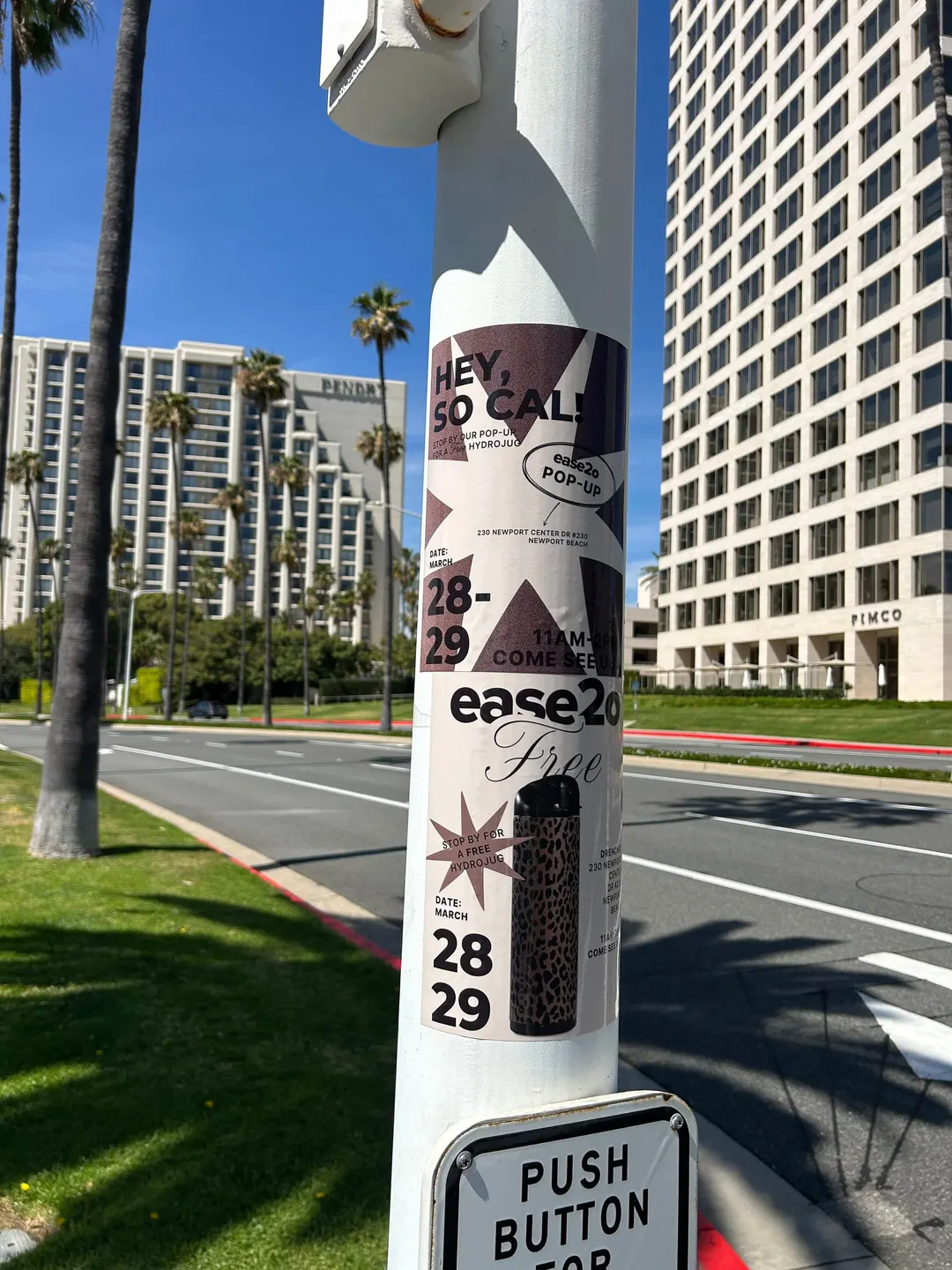
Brand partners include: FIFA World Cup 2026, Palantir, Sézane, G-Shock, Mitchell & Ness, True Religion, Huda Beauty, Yonex, Relevance AI, Momentous, RYZE Coffee, Bloom Effects, Incrediwear, Brooklyn Museum, Sweat FC, HydroJug, Frameline, Alchemy, OneRepublic, Lone Fox, Vaura Pilates.
Got a cpg / dtc brands launch?
Inquire now.
Send the CPG / DTC Brands brief: markets, window, creative direction. Vertical-specific quote back in 48 hours.