FIFA World Cup 2026: Host City Tour
Wheatpaste in Pioneer Square, sidewalk stencils through downtown Toronto. Two host cities, one creative system, every hit GPS-tagged.
- Placements154
- Cities2
- Duration14d
- Documented21install photos on file
Make the host cities feel claimed.
FIFA World Cup 2026 host-city guerrilla campaign. Wheatpaste in Seattle, sidewalk stencils in Toronto. 154 documented placements across two cities.
A host-city poster series.
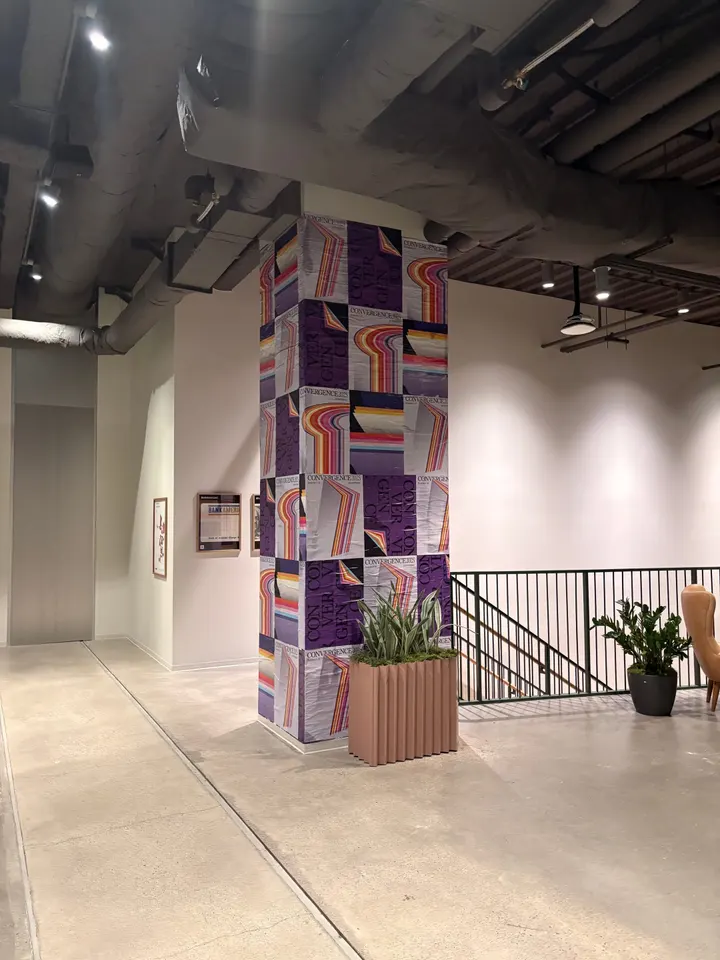
One creative system, illustrated per city, named after the cities themselves. Two lines of copy: THE WORLD ARRIVES. And SO CLOSE YOU CAN TASTE IT.
The FIFA World Cup 2026 is the first 48-team tournament. Matches run across the United States, Canada, and Mexico in June and July, split between three countries, twelve host stadiums, millions of international arrivals moving through specific corridors. That geography is the entire brief. Print the tournament into the cities where visitors land before kickoff. Reach them while they're already moving toward the stadium and already calibrated to the event, ready to pass the message on to whoever walks past the wall.
Print the tournament onto the cities hosting it. Seattle and Toronto drew the assignment. Two cities with two different surface ecologies, and one message repeated across both.
The execution.
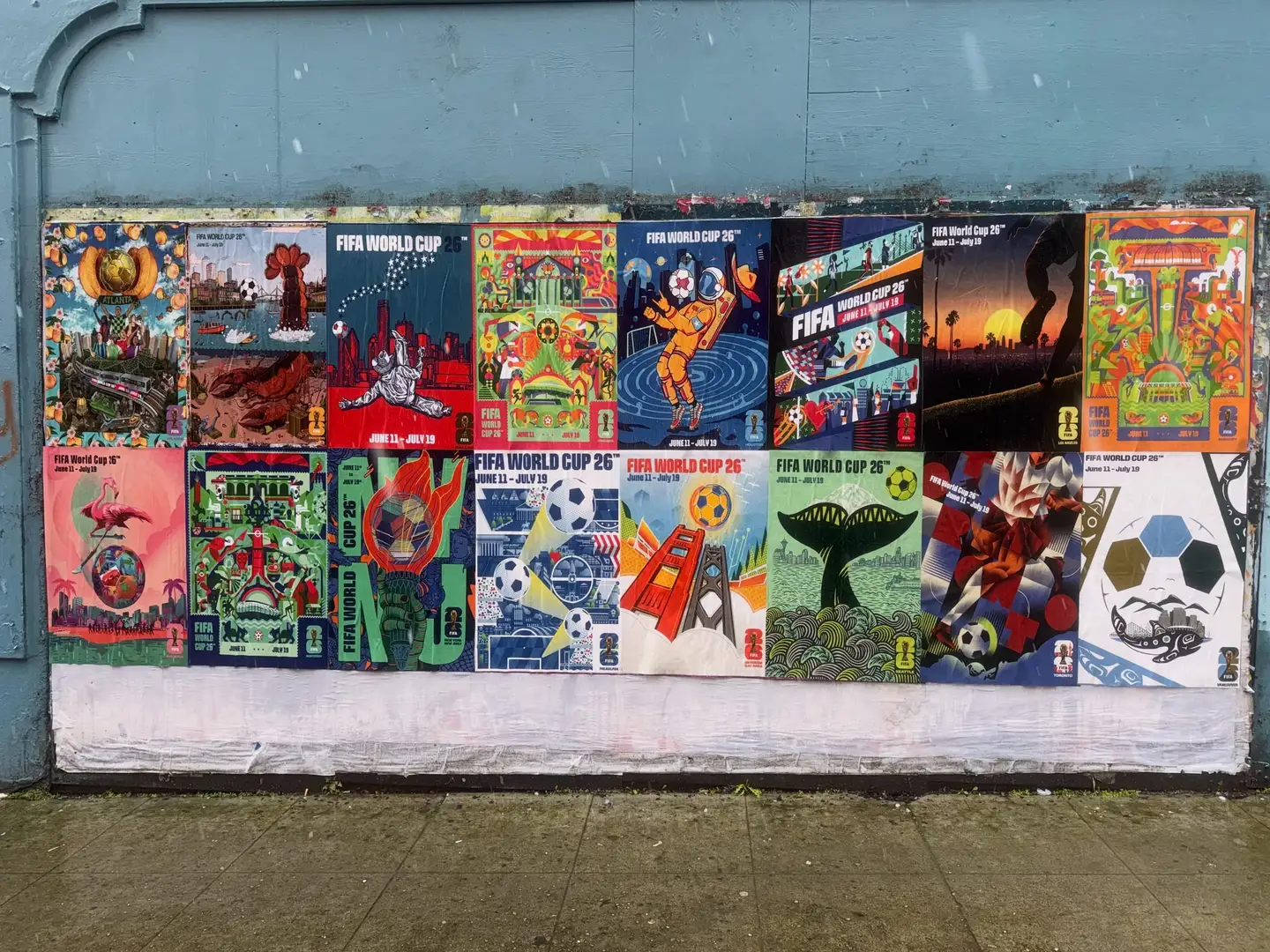
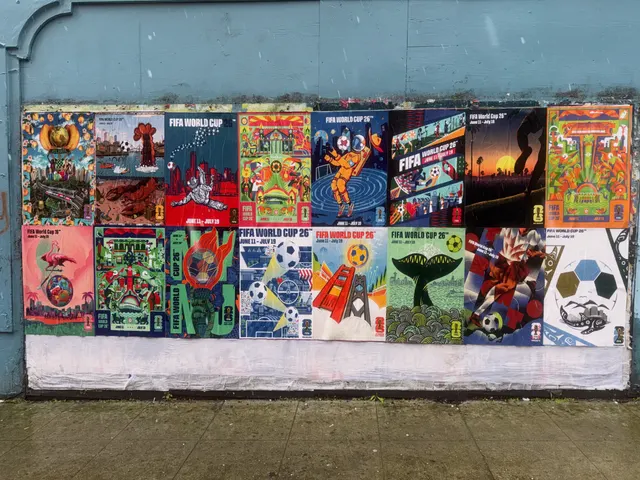
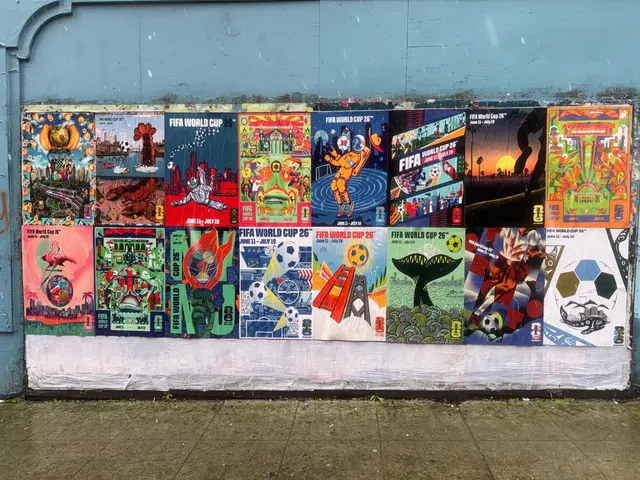
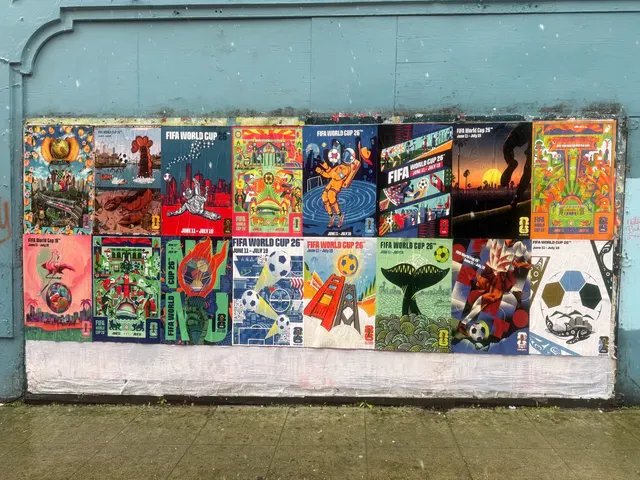
Pioneer Square surfaces come with history: brick walls decades old, already carrying overlapping poster runs and accumulated paste layers. The texture absorbs work, and the weathering reads as proof of traffic rather than as decay.
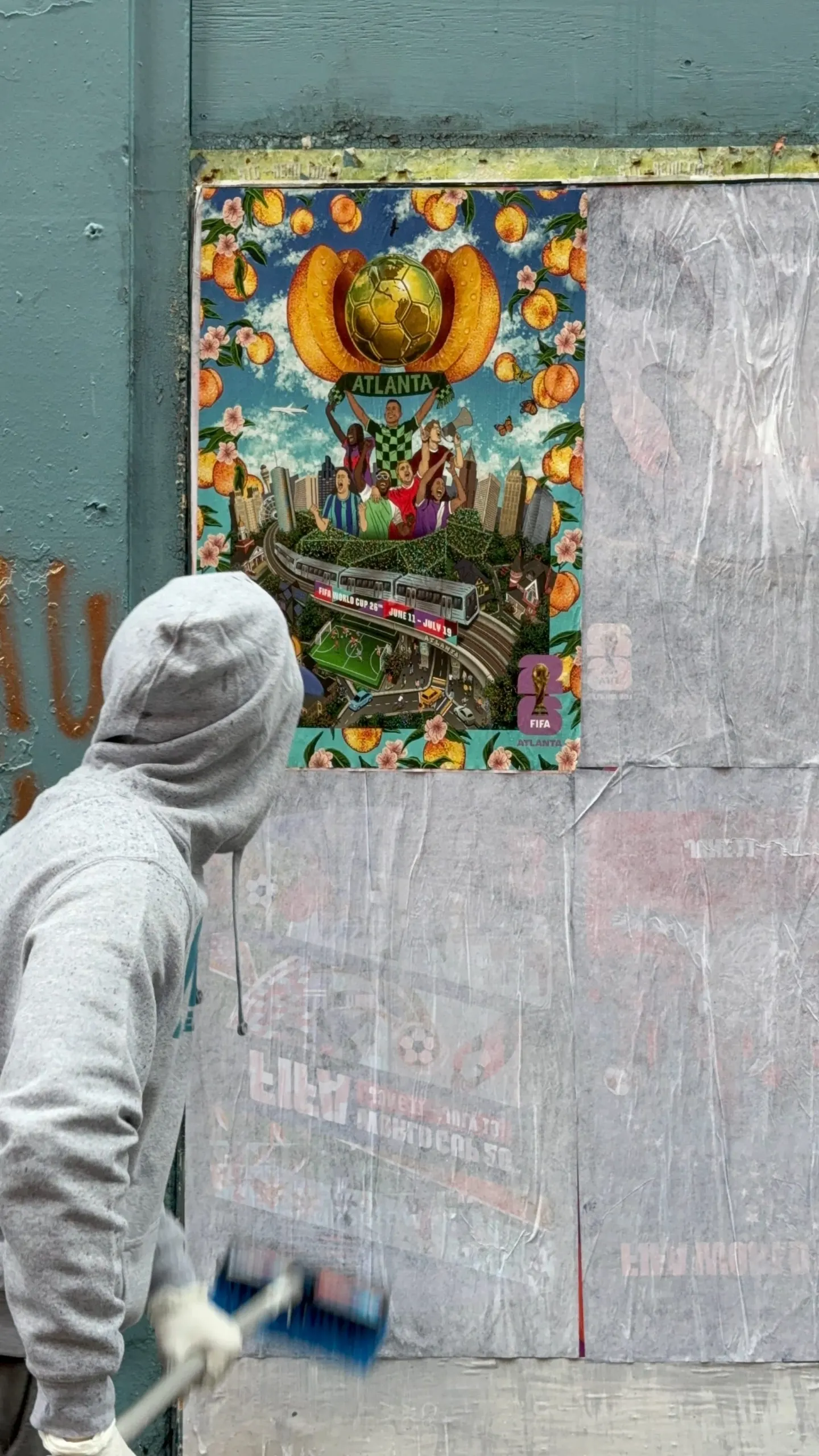
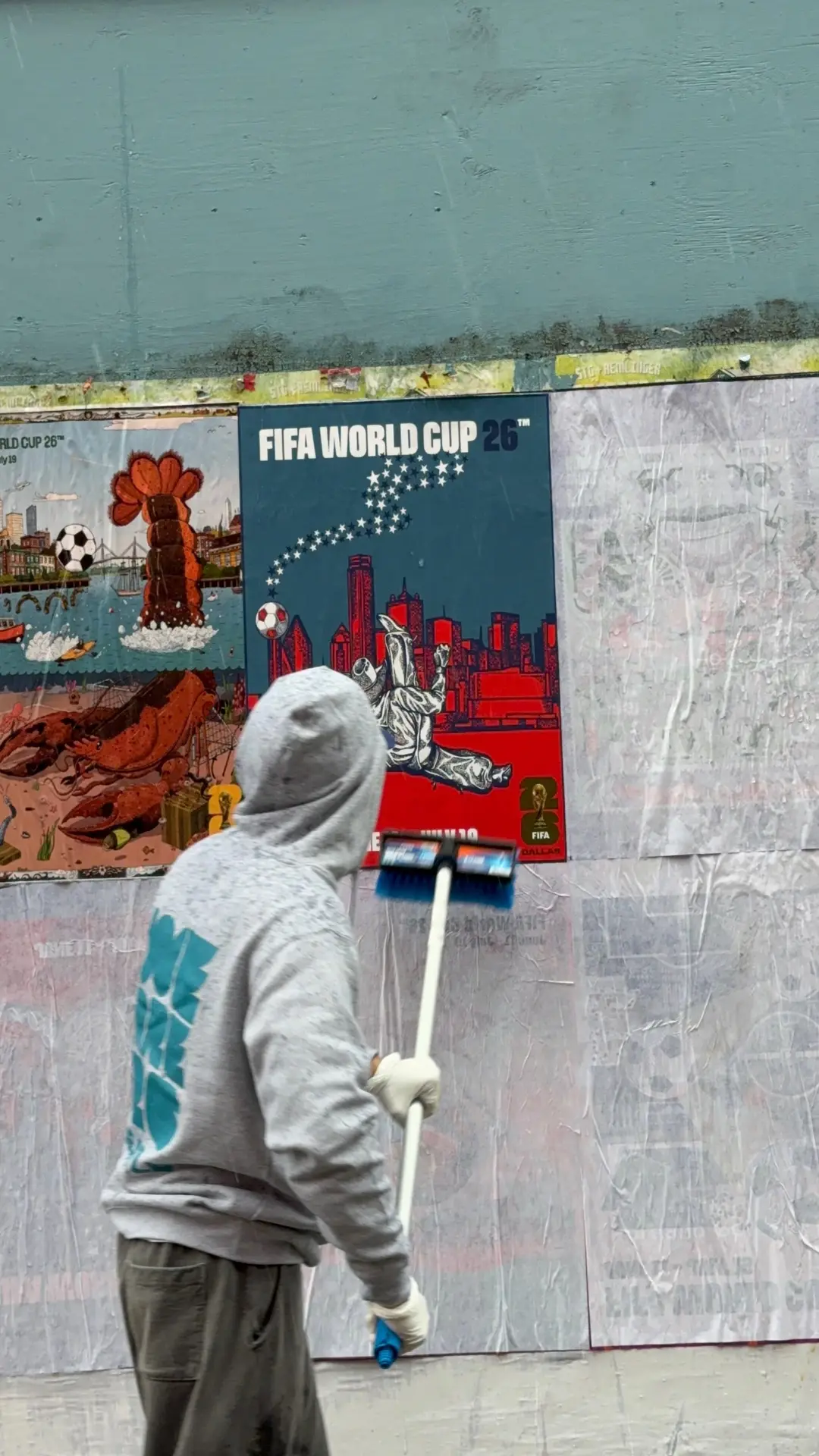
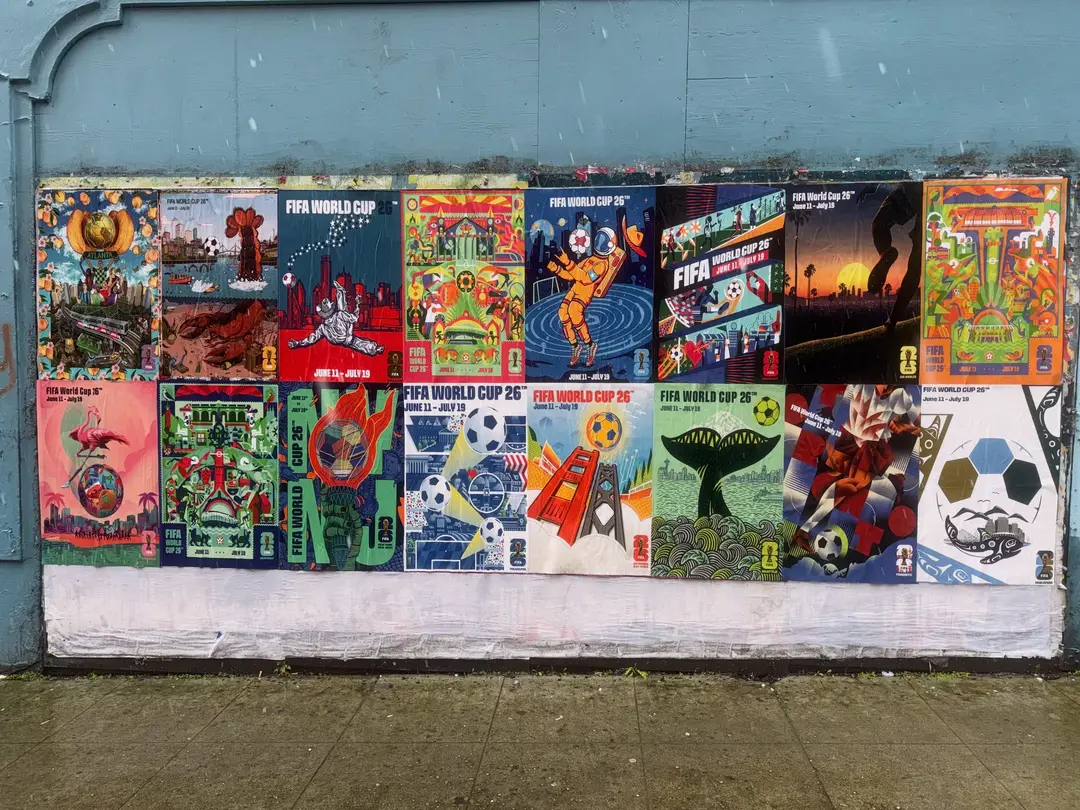
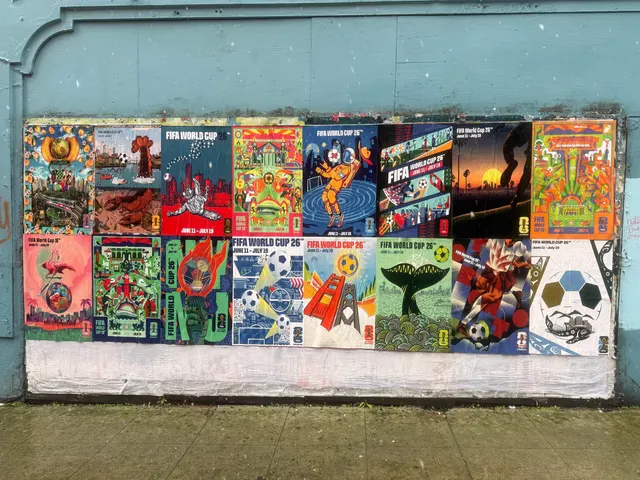
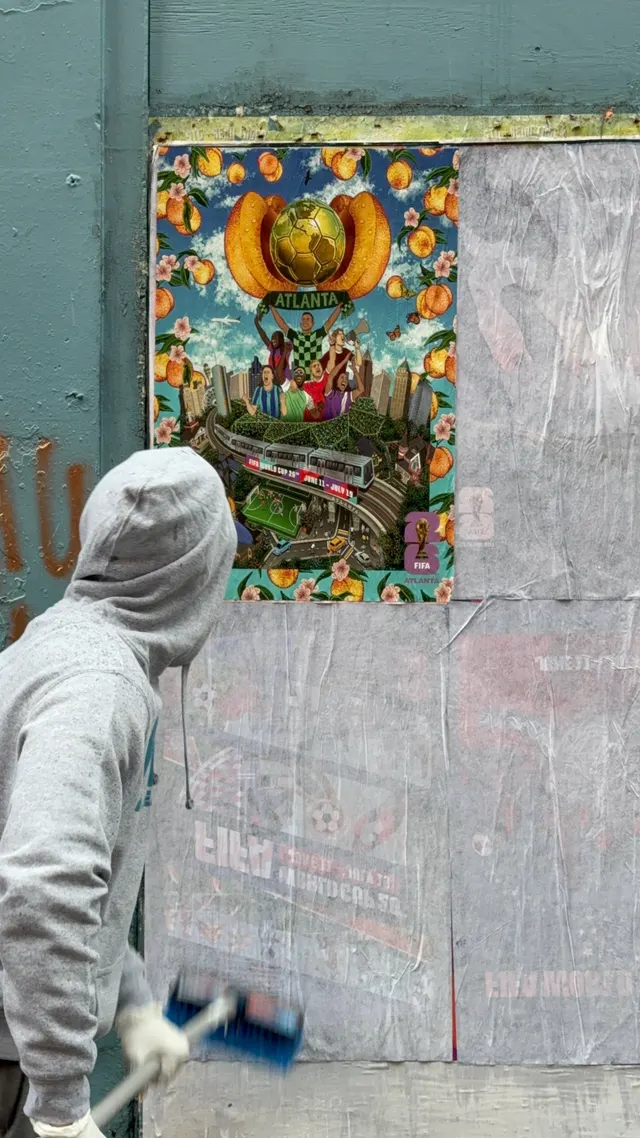
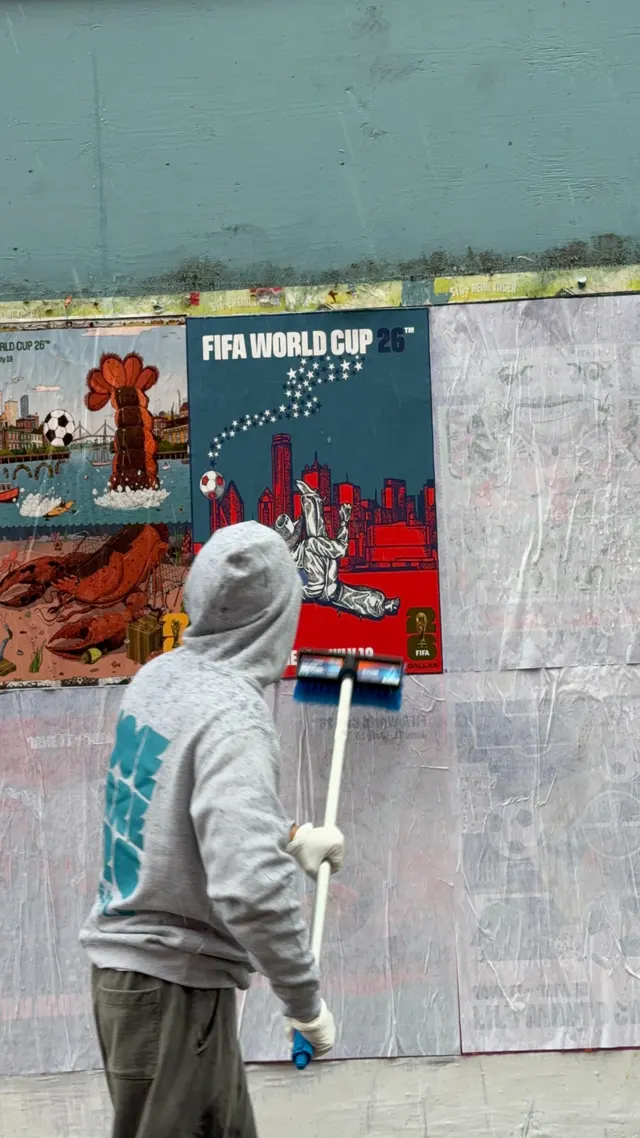
The FIFA series went up on walls that had seen campaigns before. The creative system worked per city: Seattle got a different illustrated panel than Toronto. One panel showed the Seattle host-city identity. The Atlanta panel, peaches and skyline, landed next to the Seattle panel on the same wall, one surface holding two cities, the host roster stacked like a manifest. A visitor walking through Pioneer Square sees Seattle, then Atlanta, and registers the scale of the tournament all at once. An installer worked the walls in a Still Wet hoodie. Every panel photographed in daylight, geometry locked in, no shadow blur on the creative.
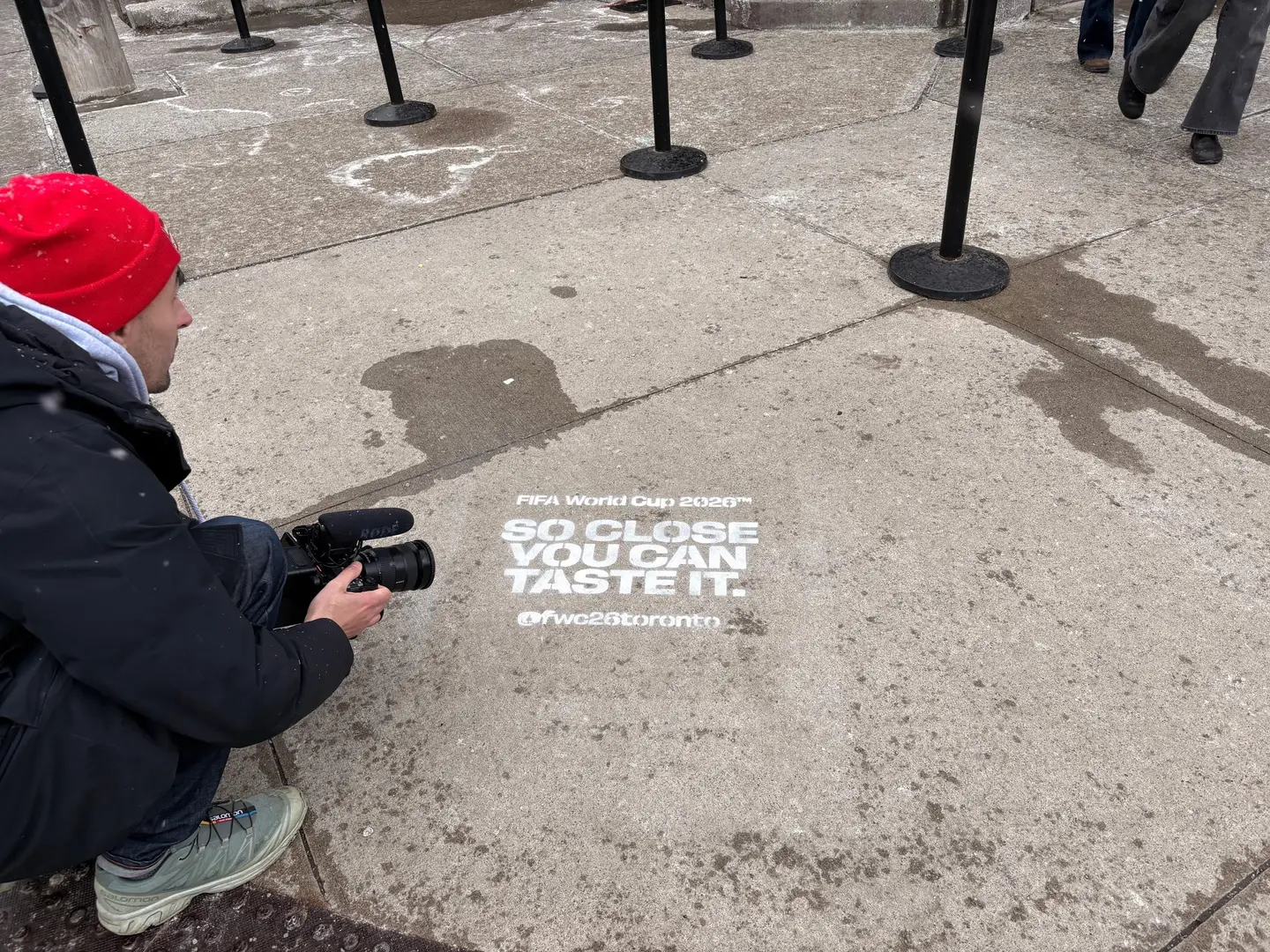
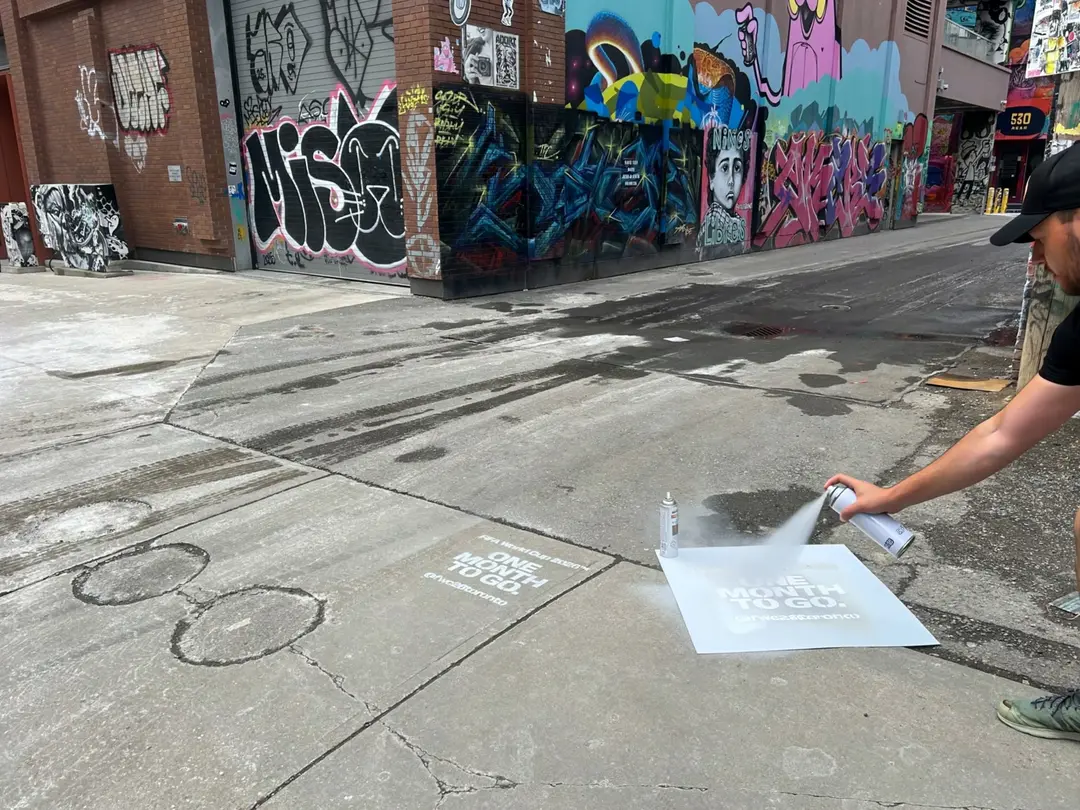
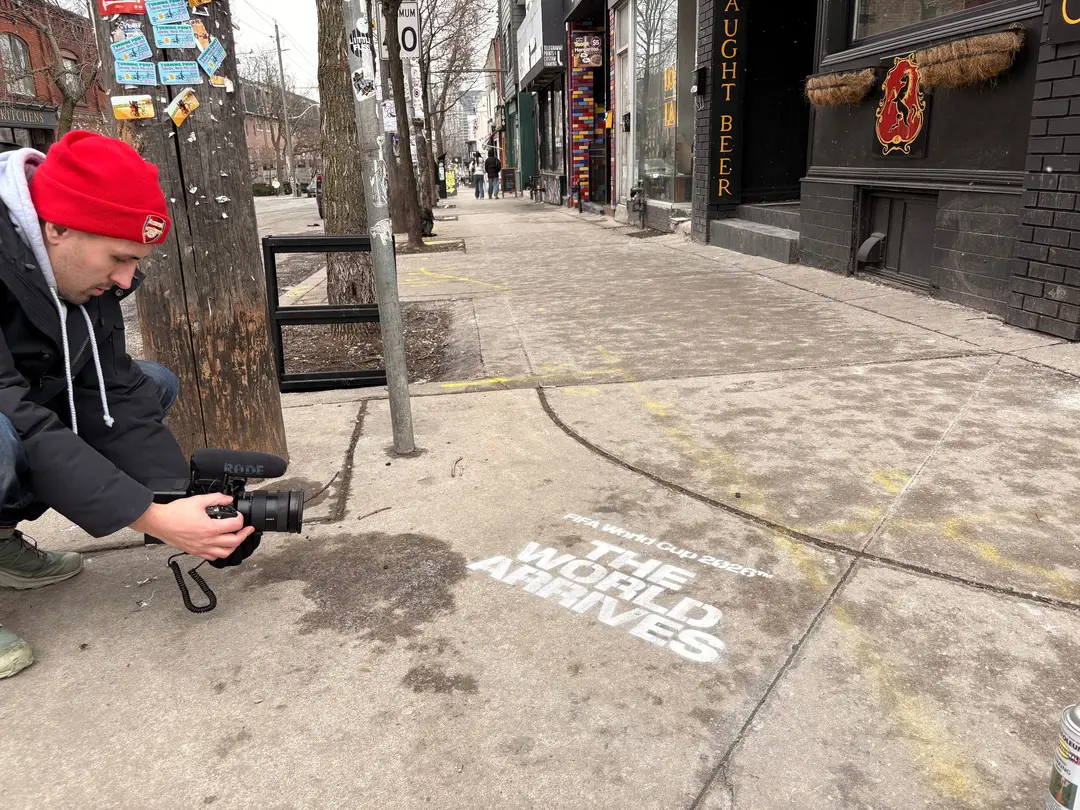
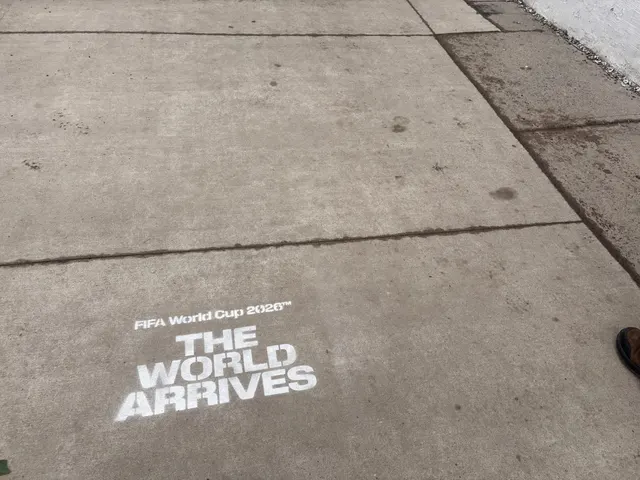
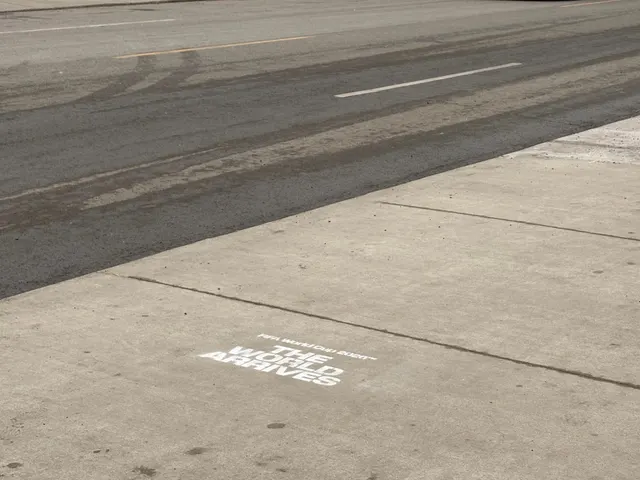
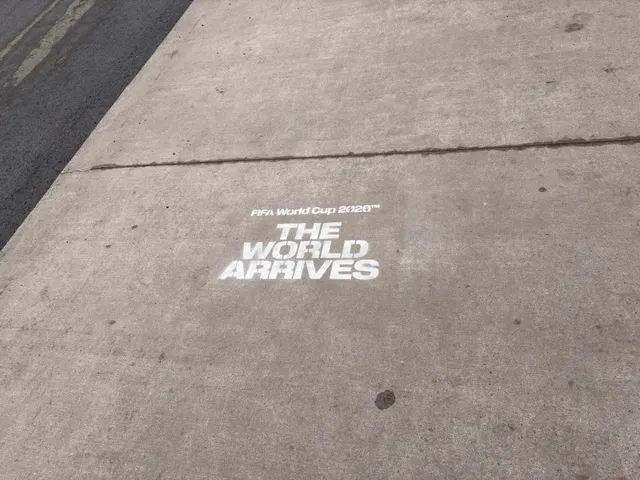
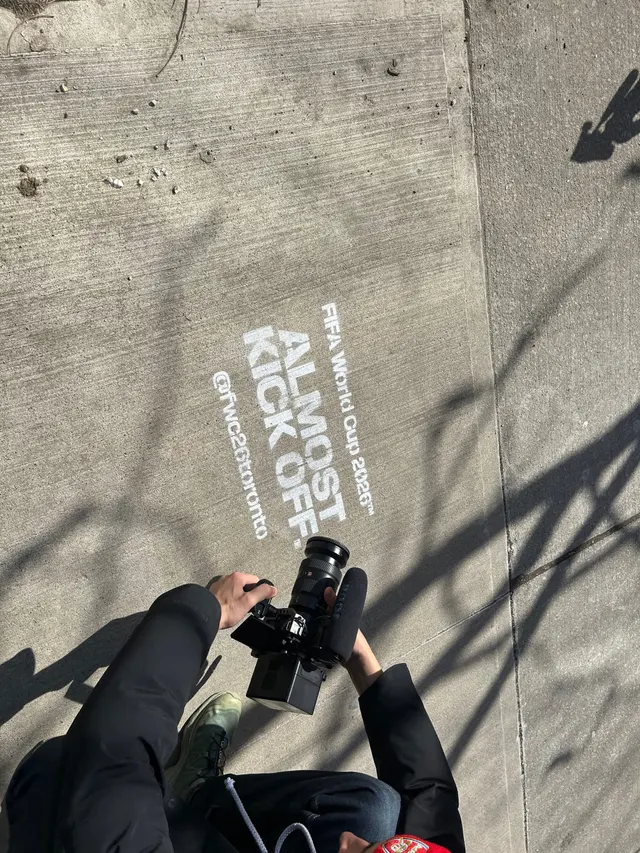
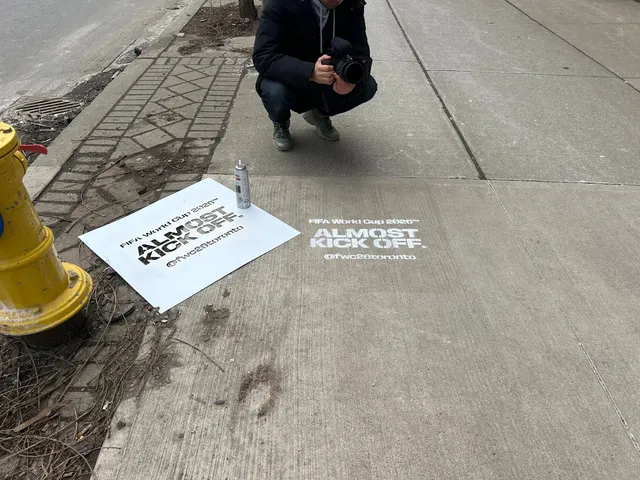
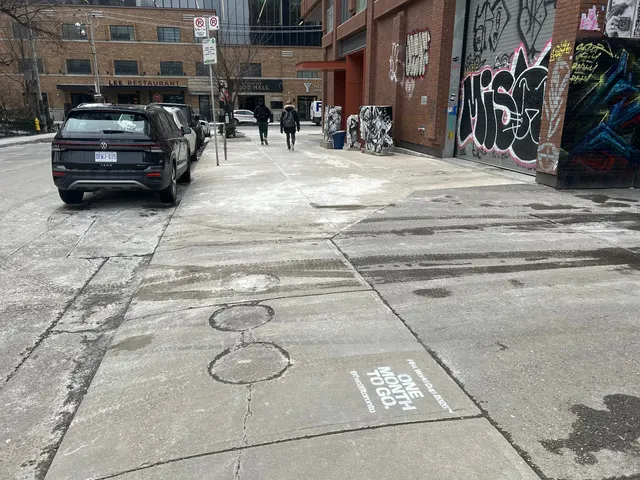
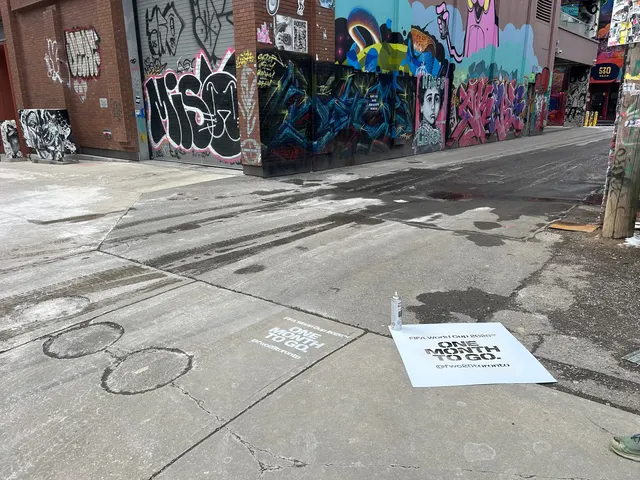
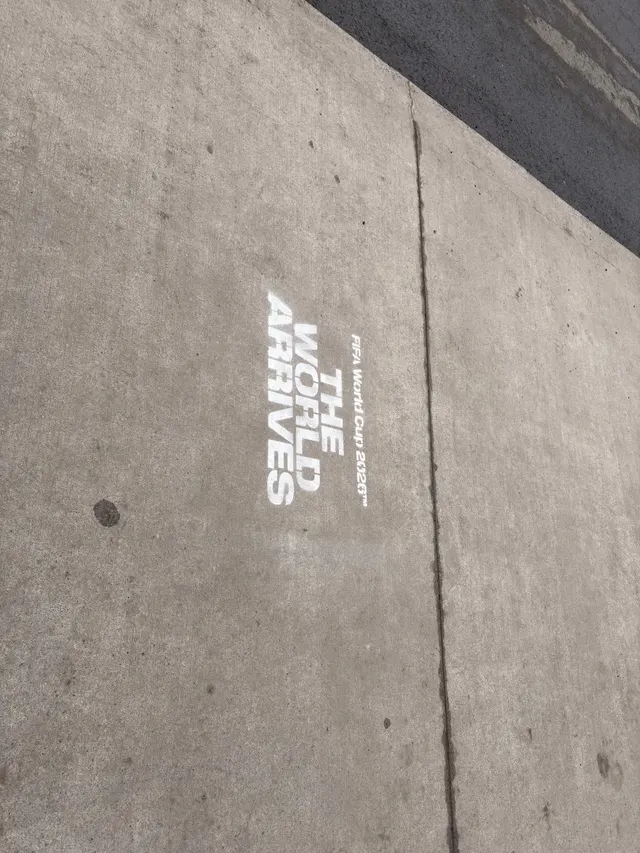
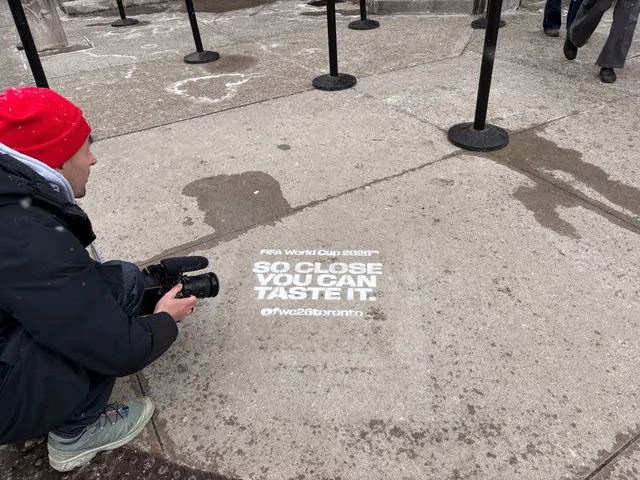
Toronto ran sidewalk stencils. 30 placements through the downtown core, concentrated around the foot-traffic feeds toward BMO Field where Toronto hosts its matches. Stencils pull a different read than paste. They sit at eye drop. A pedestrian catches them at the crosswalk, at a building entry, at the moment when the eyes move down from the storefronts to the pavement. THE WORLD ARRIVES on concrete, 30 times, GPS-tagged on the way out.
The two formats serve the two cities' surface ecologies. Seattle's brick walls invite vertical reads and overlapping composition. Toronto's downtown sidewalk grid captures momentum at ground level. Same message, different deployment: the pedestrian in Seattle learns the tournament from a wall, and the one in Toronto learns it from the pavement.
Inside the install.
Each city ran on a parallel 24-48-hour install schedule. Crews on the ground in each market, not flown in for a photo op. The installer in the Still Wet hoodie spent two days in Seattle. A separate crew ran the Toronto stencil work across dawn and early-morning hours when sidewalk foot traffic ran lowest and the paint could cure properly.
Documentation happened real-time. Every wall photographed after install. GPS coordinates logged for all 124 Seattle surfaces. Every Toronto stencil placement mapped, timestamped, and marked with coordinates before the crew moved to the next block. The photograph is the proof, with no time lag and no approximation. A client looking at the photo sees not just the work but the geography it occupied. The GPS coordinates prove it existed in that specific place on that specific day.
Weather became the variable. Wheatpaste in Seattle requires 24-48 hours of dry conditions for the adhesive to cure properly. Sidewalk stencils in Toronto depend on light rain to set the paint, too dry and the stencil edges blur on application; too wet and the paint pools. The crews worked in parallel with local weather services. Both cities got the full fourteen-day window. Both cities installed within their required material timeline.
Photo documentation marked each install moment, with no filter and no creative angle for the camera. Just the panel on the wall, the stencil on the concrete, the wall in daylight.
Wheatpaste is weatherproof on the timeline that matters.
Two to three days of install per city gets paste to cure-complete. Sidewalk stencils in chalk-safe paint hold for ten to twenty-one days depending on foot traffic and weather, enough runway to bleed into the tournament's opening matches.
The install is the start. What holds afterward is the city itself.
The host-roster logic proved sharper than expected. The Atlanta panel next to the Seattle panel on the same wall created a moment of recognition. A viewer in Seattle sees the local host city, then sees another one, then starts counting: if two host cities share this wall, the footprint behind the tournament has to be enormous. The wall becomes a proof of scale.
Two formats across two cities created an architectural proof that Beyond Street Media understands context. Seattle's street culture reads walls. Toronto's downtown foot traffic reads concrete. Using wheatpaste in one city and stencils in the other is deployment matched to surface rather than variation for its own sake, and it shows the work was thought through instead of templated.
Crews on the ground in each market meant install timing stayed tight. Nobody waited on traveling personnel, and no time went to logistical friction. The fourteen-day window wasn't padding, it was real-time, and both cities used it fully.
GPS tagging added the final layer of proof. Every wall has coordinates. A client downloads a file with 154 locations, 154 dates, 154 photographs. It is verifiable rather than estimated, with no reach figures or calculated impressions in it. Actual surfaces in actual places on actual dates.
What stays.
Pioneer Square keeps the wall. The brick that held the FIFA series and the Atlanta companion will hold them for months. Toronto keeps the sidewalks. The stencil marks will wear down by foot traffic and weather, exactly as designed. That lifecycle is part of the work.
Whoever points a camera at Pioneer Square in the next six months picks up the campaign. Any visitor to Toronto's downtown core in July or August will cross the meridians where the stencils marked THE WORLD ARRIVES. The campaign keeps running after Beyond Street Media leaves. The walls stay up. The stencils wear down on the tournament schedule, not on ours.
Common questions.
Yes. Beyond Street Media works 40 named US metros with all 50 states and Canada reachable, and this run used crews already in Seattle and Toronto rather than flying one team between them. Both cities installed on a parallel 24 to 48 hour schedule inside the same fourteen-day window, and both fed a single documentation set.
Why wheatpaste in Seattle and sidewalk stencils in Toronto?
The surface decides the format. Pioneer Square is old brick already carrying layered poster runs, so a 24 by 36 sheet sits into that texture and reads vertically from across the street. Toronto's downtown core moves people across a dense sidewalk grid, where a stencil catches the eye at pavement level. The chalk-safe paint holds ten to twenty-one days there, enough runway to reach the opening matches.
Why does a Seattle wall carry an Atlanta panel?
The creative was illustrated per host city, and the panels stacked on the same brick like a manifest. A visitor in Pioneer Square reads the Seattle panel and the Atlanta panel on one surface, then starts counting how many host cities there must be. The wall becomes a proof of scale, which is harder to do with a single line of copy.
What comes back to the client after a run across two cities?
One file with 154 locations, 154 dates and 154 photographs in it. Every Seattle wall was photographed after install with coordinates logged, and every Toronto stencil was mapped and timestamped before the crew moved to the next block. Nothing in the record is an impression estimate. Each line is a surface you can paste into a map and go stand in front of.
---
Toronto documentation pending final client confirmation. Photo set complete and in-house.
15 additional installs.
Run a wheatpaste advertising campaign?
Same crew, your brand.
The same operator network that shipped FIFA World Cup 2026's campaign is on call for yours. Brief us with city, dates, and creative. Quote back in 4 hours.
Run a campaign like FIFA World Cup 2026's?
Get a quote