Hotels & Hospitality.
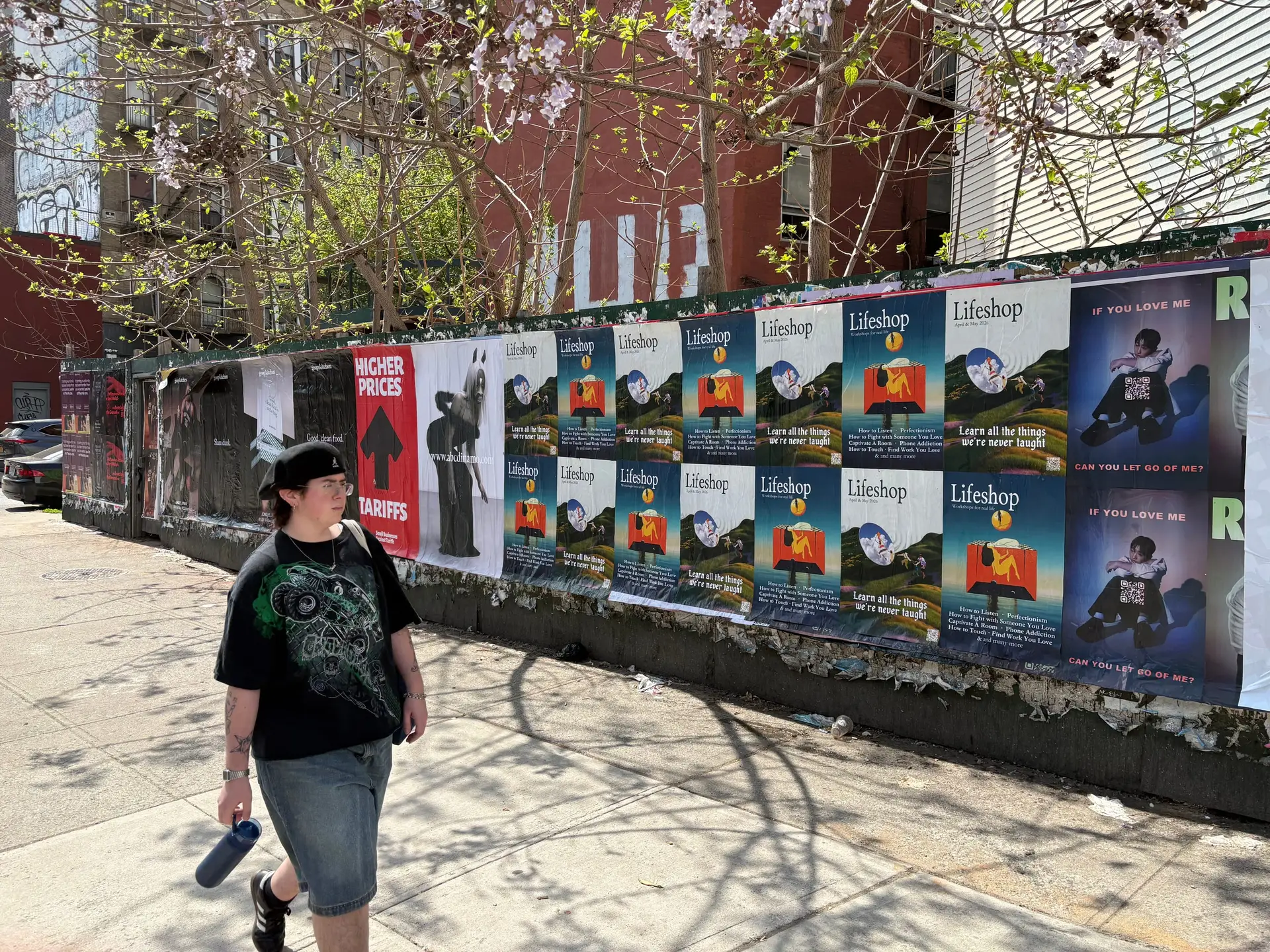
Wheatpaste, mural, and pop-up campaigns for hotels, resorts, and hospitality groups. Destination saturation in tourist and traveler corridors.
Four tensions only street resolves.
- 01
Hotel openings need IRL launch presence in destination corridors. Booking.com and Expedia do not introduce a brand to the neighborhood the property actually sits in
- 02
OTA-only marketing surrenders brand equity to the marketplace; the guest remembers Booking, not the hotel, and direct-booking conversion stays stuck at single digits
- 03
Traveler audience targeting is geographic-specific in a way most channels cannot match. Wynwood foot traffic is a different audience than Brickell foot traffic, and the booking intent is different
- 04
Seasonal-campaign timing pins hospitality marketing to narrow Q4 holiday and summer-peak windows where every digital ad auction is at its annual cost ceiling
Is this you?
If two or more match your roadmap, send the date.
- You're opening a hotel and need IRL presence in the destination corridor the property sits in, not just a Booking.com listing.
- OTA-only marketing is bleeding your brand equity and direct-booking conversion is stuck in single digits.
- Your traveler audience targets by neighborhood, where Wynwood foot traffic carries different booking intent than Brickell.
- Your campaigns pin to narrow Q4 and summer peaks where every digital ad auction is at its annual cost ceiling.
- Your restaurant, bar, and spa programs need their own street presence because the F&B audience is not the room-night audience.
- Your tourist corridor sits inside a BID or tourism-board approval layer that broad-strokes street agencies have never navigated.
5 disciplines, one playbook.
Wheatpaste
Wheatpasting and wheatpaste advertising campaigns from $3,500 in NYC, LA, SF + 40 US cities. Published floors, 5-7 day lead (Expedited 24-72hr), GPS-tagged photo proof on every install. From $3,500Paste-Up Posters
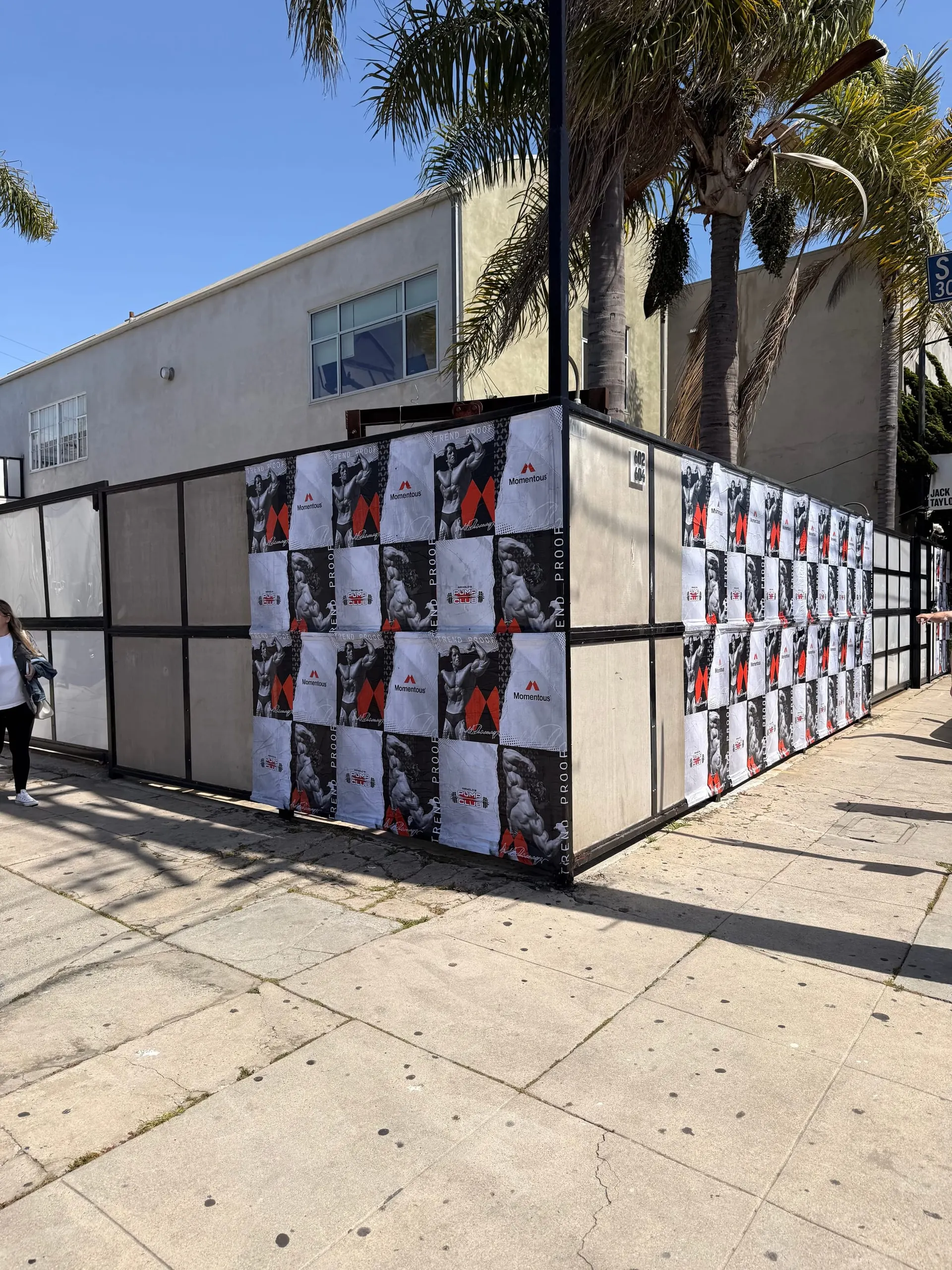
Paste-up poster campaigns for product launches and neighborhood saturation. From $3,500, 5-7 day lead (Expedited 24-72hr), GPS-tagged photo proof in 40 US cities. From $3,500Poster Murals
Multi-panel poster murals. Full-wall paste-up installs spanning building sides and scaffold runs. Brand-scale visibility with photo proof in 40 US cities. From $8,000Bathroom Advertising
Bar and restaurant bathroom advertising in 40 U.S. cities. Mirror clings, stall-door posters, and venue placements with full photo proof on every install. From $3,000Coffee Shop Posters
Coffee shop poster programs in 40 U.S. cities. Counter cards, column wraps, and wall placements in partner cafes with full photo proof on every install. From $3,000Starting floors · print, install, and GPS-stamped photo proof included in every quote. Final number varies by turnaround, size, and location count. Full rate card →
Sample creative directions.
Pre-tested format / neighborhood pairings. Pick a direction at brief intake and we route the surface set inside 24 hours.
- Boutique-hotel opening Three-poster wheatpaste plus pole stickers, 4-week pre-open Tribeca, SoHo, Lower East Side
- Resort-group launch Wheatpaste blitz plus feature murals, 8-week run, per-hood cuts Wynwood, Brickell, South Beach
- Hospitality F&B tie-in Pole stickers, bar-bathroom posters, street wheatpaste Lower Broadway, Nashville
- Destination-historic property Wheatpaste plus coffee-shop poster programs French Quarter, Magazine St, Marigny
- Resort seasonal peak Wheatpaste plus interior, BID-approved, 4-week pre-season Aspen Village
Put it on the wall.

Proof · Printed in-house · Installed by our crew
Street campaigns for Hotels & Hospitality brands. Proof included.
Send the brief; a scoped quote for your vertical comes back inside 24 hours — formats, neighborhoods, and a GPS-stamped photo of every placement when the run wraps.
- Quote in under 24 hours
- No discovery call. The brief is the call.
- Printing & Installation under one roof
Brief us · Quote in under 24 hours
Start your hotels & hospitality campaign.
Brand-safe by default.
- Private-property walls only Written owner consent on file for every surface. No public infrastructure, transit, or right-of-way.
- GPS-stamped photos within 48 hours Wide, mid, detail per placement. The proof your team forwards internally.
- FTC + local-code compliant Disclosures and permitting handled per contract. Legal reviews clean.
- Zero municipal removals on record 500+ documented installs, none taken down by a city.
Read the full field notes
The street is the campaign. For a hotel brand, that means the four blocks around the property. The corridor a traveler walks before they remember to book a room. Are the most valuable advertising surface in the city. Wheatpaste, mural, and interior-install programs put the brand on those blocks at the moment booking intent forms.
Why street campaigns work for hospitality brands
OTA-only marketing is a slow surrender of brand equity. Booking.com and Expedia do the search-funnel work, the traveler arrives at the room-night decision inside the marketplace, and the property pays a 15-to-25 percent commission for a guest who will remember the OTA, not the hotel. Direct-booking conversion is the financial moat for every hospitality brand, and the moat is built on brand awareness in the destination corridor. The neighborhood where the traveler is walking, eating, and forming the impression that becomes the booking decision two months later. Street campaigns sit exactly inside that decision window. A traveler walking Lincoln Road in South Beach who sees a hotel brand four times in an afternoon is researching the property by name on the way back to the rental, not searching “South Beach hotel” on Booking.
The traveler audience makes location decisions at the neighborhood level, and digital channels target at the city level at best. A Miami traveler is not a uniform target; the South Beach traveler is making leisure-stay decisions, the Brickell traveler is making business-stay decisions, and the Wynwood traveler is making design-conscious-discovery decisions. These three audiences book different properties, at different price points, for different reasons. Programmatic display cannot reach them with the precision that a wheatpaste poster on the corner of NW 2nd Avenue and 22nd Street in Wynwood can. Street media targets at the neighborhood resolution that the booking decision actually requires.
Brand presence at street scale is also the credibility signal that an emerging boutique brand cannot buy through any other channel. A new property running coordinated wheatpaste across SoHo, Tribeca, and the Lower East Side reads to the New York traveler as a fixture, not a launch. Funded, here to stay, and worth the room-night premium over the OTA-discounted comp set. For resort groups expanding into a new market, the street campaign is the visible declaration that the brand has arrived; for boutique-hotel openings, it is the first impression the neighborhood forms of the property, and it sticks.
What we run for hotels and hospitality groups
Wheatpaste Advertising. Large-format poster campaigns in destination and traveler corridors, used for boutique-hotel openings, resort-group launches, and seasonal-peak destination saturation.
Paste-Up Poster Campaigns. Sustained corridor presence across multiple weeks for opening saturation, with refresh cycles built into the timeline for properties that need a continuous brand environment in the four blocks around the door.
Multi-Panel Poster Murals. Feature-scale wheatpaste mural work for destination-market openings where the property’s design story justifies a single-wall hero placement that travelers photograph and post.
Bar & Restaurant Bathroom Advertising. Interior placements inside hotel-adjacent F&B venues for hotel-restaurant promotion and direct-booking calls to action where the audience is already out for the evening.
Coffee Shop Poster Programs. Dwell-time placements inside coffee shops in business-traveler corridors like Brickell, Midtown, and SoMa, where business-stay decisions form over a morning espresso.
Custom Poster Installs. Column wraps, mirror placements, and table-top programs inside fitness studios, wellness venues, and coworking spaces for hotel-spa, hotel-fitness, and hotel-meeting promotion.
Multi-City Guerrilla Tours. Coordinated rollouts across three to five destination markets for resort groups and hospitality brands with multi-property portfolios, timed to seasonal peaks per market.
Compliance + brand-safety notes
Destination tourism boards and BIDs in tourist corridors add an approval layer to hospitality creative that high-volume street agencies have never navigated. South Beach, the French Quarter, Lower Broadway, and the Vegas Strip all carry corridor-specific creative review processes through the local BID or destination marketing organization. We pre-clear hospitality creative with the relevant board for high-restriction corridors and build the 5-to-10-day approval cycle into the production timeline at intake.
Hotel-restaurant and hotel-bar cross-brand exclusivity is a recurring brand-safety question. When a hotel-restaurant promotion runs in bar and restaurant bathroom placements inside neighboring venues, those venues often carry their own brand exclusivity rules with category-competitive properties. We confirm placement with the host venue against the hotel’s category and route conflicts through the property’s brand team before install. The same holds for hotel-spa programs running in fitness and wellness venues. Category exclusivity confirmation is built into the placement workflow.
Alcohol-related creative for rooftop bars, hotel restaurants, and resort beach clubs carries TTB and state-by-state alcohol-advertising review requirements that depend on the creative claim. Health and wellness claims for hotel-spa programs carry similar scrutiny depending on what the creative claims about the spa or fitness offering. We flag claim-bearing creative at intake, route through client legal or external counsel for pre-approval, and document the approval in the wrap-deck audit trail. The compliance work is built into the operational layer for hospitality clients, not bolted on after.
For multi-city resort tours, state-specific advertising laws and city-specific BID restrictions vary across markets. Nashville’s Lower Broadway has a different posting framework than the Miami Design District, and the French Quarter has its own historic-district preservation rules that affect surface selection. We map the per-market compliance landscape into the campaign plan at the city-selection stage so the timeline and the creative production align with the operational reality on the ground.
Past hospitality work
Hospitality is a vertical Beyond Street Media continues to expand in. The current public case-study roster does not yet include named hospitality clients. A function of NDA-bound work and ongoing portfolio expansion rather than a lack of capability. The operational kit that runs for fashion launches, beauty activations, and brand openings transfers directly to hospitality, with the addition of the BID approval layer and the OTA-attribution methodology described above. Brand directors and resort-group marketing leads evaluating Beyond Street Media for a hospitality program can request a private brief with execution detail from comparable launch programs in the relevant destination corridor.
Cities we activate for hospitality brands
Hospitality clusters around a defined set of destination and business-traveler markets. Beyond Street Media runs hospitality programs in the cities where the audience density, surface inventory, and BID approval landscape support a serious campaign.
- guerrilla marketing in Miami. South Beach for destination saturation, Brickell for business-stay corridors, Wynwood for design-conscious discovery, and the Design District for boutique-property launches. The flagship hospitality market for resort and boutique work in the Southeast.
- guerrilla marketing in New York City. Tribeca, the Lower East Side, SoHo, and Williamsburg for boutique-hotel openings; Midtown and Chelsea for business-traveler property work; Brooklyn corridors for design-property launches targeting the discovery audience.
- Los Angeles, CA. West Hollywood, Hollywood, and Venice for entertainment-adjacent hotel work; the Arts District for design-property launches; Beverly Hills-adjacent corridors for luxury hospitality programs.
- Las Vegas, NV. The Strip and Fremont Street for destination saturation; the Arts District (18b) for boutique-property launches; the resort-group market that operates at a scale most other US cities do not match.
- New Orleans, LA. The French Quarter for destination-historic boutique work, Magazine Street and the Bywater for cultural-traveler audience cuts, and the Marigny for emerging-property launches.
- Nashville, TN. Lower Broadway for music-corridor hotel programs, East Nashville for design-conscious boutique work, and the Gulch for business-stay and meeting-property campaigns.
- Charleston, SC. The historic core for destination-historic boutique launches, with creative tuned to the cultural-traveler audience that books Charleston as a long-weekend destination.
- San Francisco, CA. SoMa for business-traveler hotel programs, North Beach for boutique-property launches, and Hayes Valley for design-conscious hospitality work tied to the city’s restaurant scene.
Got a property opening? We’ve got the corridor. Hospitality brands building presence in destination markets work with operators who understand the neighborhood, the BID approval cycle, and the OTA-attribution math. Not poets selling abstract brand work. Beyond Street Media runs hospitality campaigns as a serious media buy with documentation, compliance, and the operational rigor the category requires.
Hotels & Hospitality questions.
The 5 things hotels & hospitality brands ask before sending a brief. Same-day answers from the desk if yours isn't here.
Q · 01 What does a hotel-opening saturation playbook look like?
A hotel-opening saturation campaign concentrates wheatpaste, pole stickers, and interior installs inside a 6-to-12-block radius of the property in the four weeks leading into the opening, then sustains a corridor presence through the first 90 days. The goal is to make the property feel like an established neighborhood fixture from day one. For a Tribeca opening, that means SoHo, Tribeca, and the Lower East Side blanketed with editorial-style poster work tied to the property's design story; for a South Beach opening, that means Wynwood and the Design District feeding the destination corridor with creative the traveler sees three or four times across a single afternoon.
Q · 02 How do street campaigns convert OTA traffic to direct booking?
OTA-erosion is the financial moat for every hotel brand. Street campaigns route the traveler to a campaign-specific direct-booking URL. Usually a short domain or QR code that lands on a property-direct booking page tagged for street-attribution measurement. The price differential between the OTA rate and the direct rate (no commission, often 12-to-18 percent) is the conversion lever; the street campaign is the awareness moment that puts the direct URL in the traveler's head before they hit Booking.com. We document install placement and tie attribution to the campaign URL through the wrap deck so the direct-booking lift can be measured against the spend.
Q · 03 What budget should a boutique hotel or resort group plan for a guerrilla launch?
Single-market boutique-hotel opening campaigns start at $12,000 to $20,000 for a four-week wheatpaste and pole sticker push in the property's home corridor. Multi-format opening programs across two to three neighborhoods sit at $40,000 to $90,000 for an eight-to-twelve-week saturation cycle. Resort-group multi-city tours coordinated across three to five destination markets scale from $150,000 to $350,000 per quarter for sustained presence with seasonal creative rotation. Hospitality-restaurant tie-in programs add $8,000 to $25,000 per market for the F&B audience cut.
Q · 04 How do you handle tourism-board approval and BID restrictions in tourist corridors?
Destination tourism boards and Business Improvement Districts in tourist corridors add an approval layer that broad-strokes street agencies skip. We pre-clear creative with the relevant BID for high-restriction corridors. South Beach, the French Quarter, Lower Broadway, the Vegas Strip, and route hotel-restaurant and hotel-spa creative through the property's brand-safety review for cross-program exclusivity. Approval cycles add 5 to 10 days to the production schedule; we build that into the timeline at intake.
Q · 05 How do you prove a campaign drove room nights for a board or asset manager?
Three layers. The campaign-specific direct-booking URL or QR code ties street awareness to bookings tagged for attribution, so the direct-rate lift over the OTA comp set is measurable against the spend. The wrap deck carries GPS-stamped placement photos per corridor and daily install logs, which gives an asset manager proof the campaign ran where it was contracted. For openings, we baseline the booking pace before install and compare it through the opening window. Hospitality groups present that package directly in quarterly asset reviews.
We delivered.

















Brand partners include: FIFA World Cup 2026, Palantir, Sézane, G-Shock, Mitchell & Ness, True Religion, Huda Beauty, Yonex, Relevance AI, Momentous, RYZE Coffee, Bloom Effects, Incrediwear, Brooklyn Museum, Sweat FC, HydroJug, Frameline, Alchemy, OneRepublic, Lone Fox, Vaura Pilates.
Got a hotels & hospitality launch?
Inquire now.
Send the Hotels & Hospitality brief: markets, window, creative direction. Vertical-specific quote back in 48 hours.