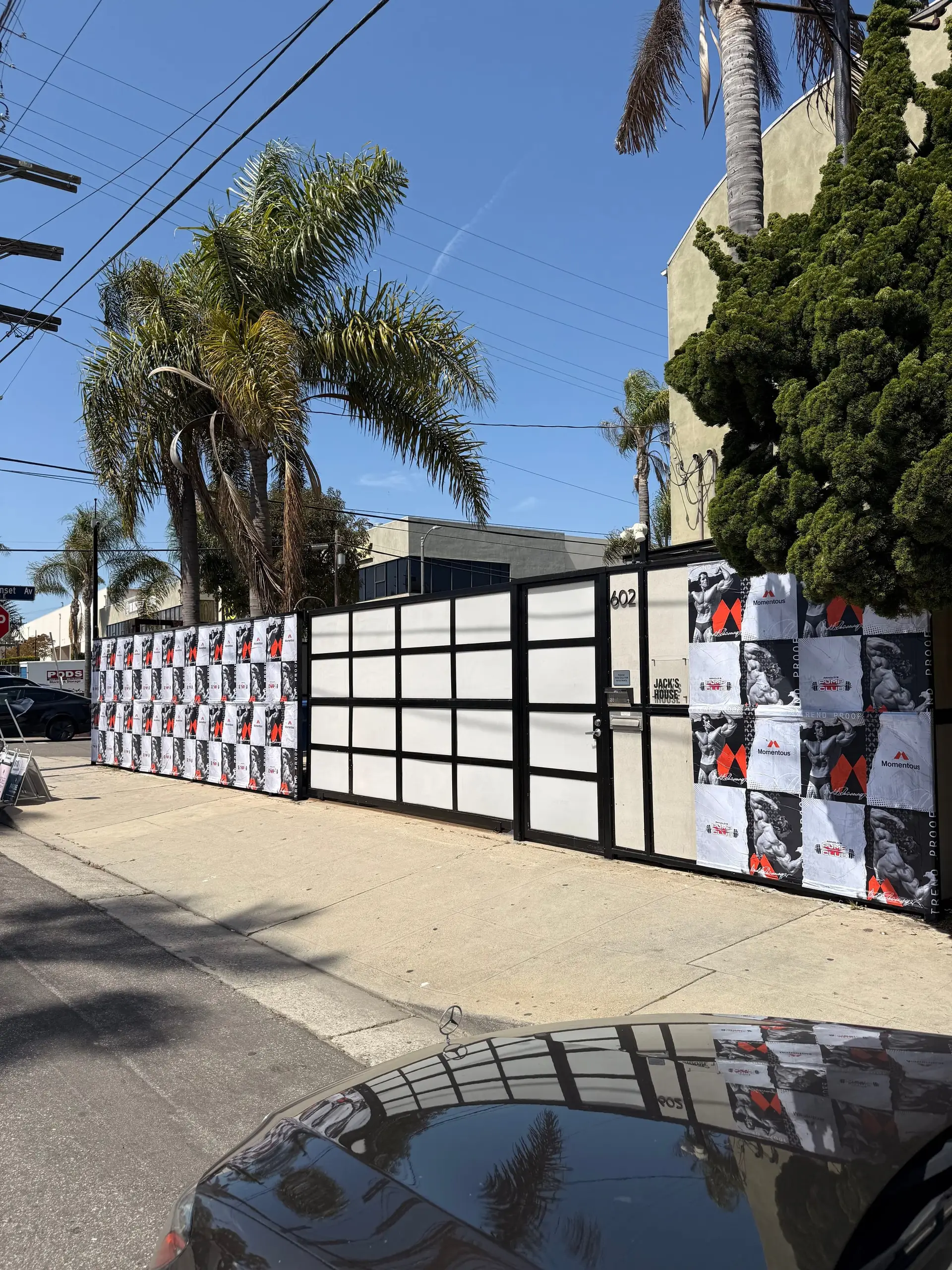
Residential Real Estate.
Wheatpaste, scaffold-wrap, and window installs for residential developers, brokerages, and prop-tech. Turning construction sites into sales tools.
Four tensions only street resolves.
- 01
Condo and multifamily developers face 8-18 month sales cycles where every neighborhood impression counts. Digital alone cannot saturate a building's six-block radius the way street media can
- 02
Residential brokerages compete for buyer attention in the same zip codes their agents work; repeat impression in target neighborhoods drives brand recall and open-house foot traffic that no Meta campaign can measure
- 03
Prop-tech apps need IRL credibility to convert high-intent users. A real estate platform that shows up at street scale in your neighborhood reads as funded, serious, and worth installing
- 04
Construction sites are underutilized brand surfaces; a building under development has 8-12 months of visibility where every passerby is a potential buyer, tenant, or investor
Is this you?
If two or more match your roadmap, send the date.
- You're launching a condo or multifamily building into an 8 to 18 month sales cycle and need to saturate a 6-block radius, not a metro.
- You're a brokerage competing for buyers in the exact zip codes your agents work, and need repeat impression no Meta campaign can measure.
- You're a prop-tech app that needs IRL credibility to read as funded and serious to high-intent users.
- Your construction site sits idle as a brand surface for 8 to 12 months while every passerby is a potential buyer, tenant, or investor.
- Your audience lives in a 6-block radius but DTC digital forces you to bid on impressions miles from the property.
- You're fighting adjacent developers for the same digital inventory at rising CPMs in shared corridors.
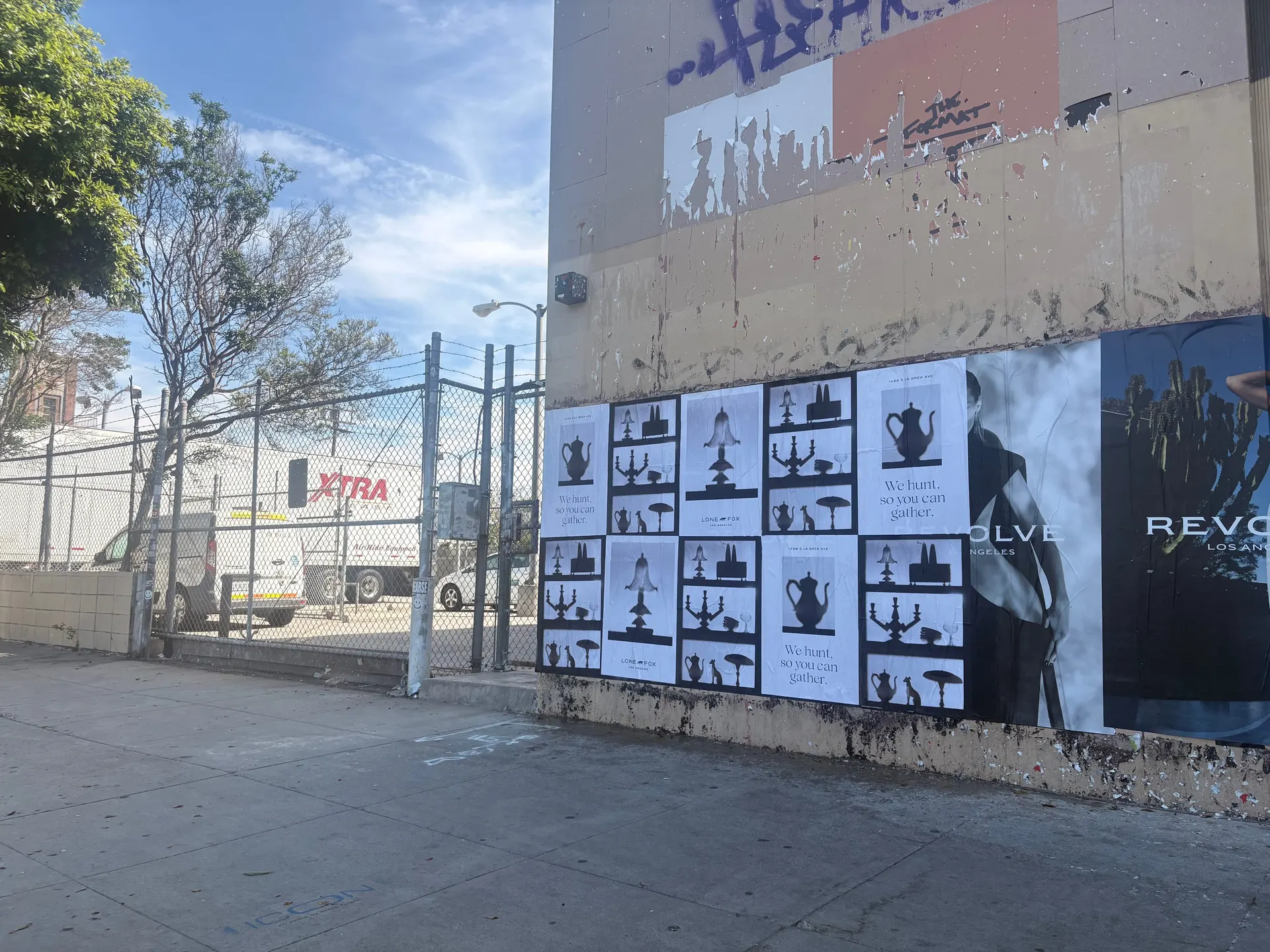
5 disciplines, one playbook.
Wheatpaste
Wheatpasting and wheatpaste advertising campaigns from $3,500 in NYC, LA, SF + 40 US cities. Published floors, 5-7 day lead (Expedited 24-72hr), GPS-tagged photo proof on every install. From $3,500Paste-Up Posters
Paste-up poster campaigns for product launches and neighborhood saturation. From $3,500, 5-7 day lead (Expedited 24-72hr), GPS-tagged photo proof in 40 US cities. From $3,500Scaffold Wraps
Scaffold wrap advertising in 40 US cities. Building-scale guerrilla campaigns on permissioned scaffolding with months of dwell time and photo proof. From $12,000Hoarding Posters
Construction hoarding poster campaigns in 40 U.S. cities, premium wheatpaste placements on developer-permissioned barriers with photo proof. From $6,500Poster Murals
Multi-panel poster murals. Full-wall paste-up installs spanning building sides and scaffold runs. Brand-scale visibility with photo proof in 40 US cities. From $8,000Starting floors · print, install, and GPS-stamped photo proof included in every quote. Final number varies by turnaround, size, and location count. Full rate card →
Sample creative directions.
Pre-tested format / neighborhood pairings. Pick a direction at brief intake and we route the surface set inside 24 hours.
- Condo launch Wheatpaste, pole stickers, scaffold wrap, 180 placements, 14-month build Williamsburg, Brooklyn
- Brokerage brand build Wheatpaste plus interior, quarterly refresh, 2-year run Mission Dolores, Hayes Valley, San Francisco
- Prop-tech app launch Wheatpaste, pole stickers, stencils plus QR, 12-week run Silver Lake, Echo Park, DTLA
- Mixed-use pre-lease Construction hoarding plus interior, 14-month wrap Shaw, U Street, H Street, DC
- Multifamily pre-sale Wheatpaste, pole stickers, scaffold wrap, interior, 6 months East Austin
Put it on the wall.

Proof · Printed in-house · Installed by our crew
Street campaigns for Residential Real Estate brands. Proof included.
Send the brief; a scoped quote for your vertical comes back inside 24 hours — formats, neighborhoods, and a GPS-stamped photo of every placement when the run wraps.
- Quote in under 24 hours
- No discovery call. The brief is the call.
- Printing & Installation under one roof
Brief us · Quote in under 24 hours
Start your residential real estate campaign.
Brand-safe by default.
- Private-property walls only Written owner consent on file for every surface. No public infrastructure, transit, or right-of-way.
- GPS-stamped photos within 48 hours Wide, mid, detail per placement. The proof your team forwards internally.
- FTC + local-code compliant Disclosures and permitting handled per contract. Legal reviews clean.
- Zero municipal removals on record 500+ documented installs, none taken down by a city.
Read the full field notes
Why Street Media Works for Residential Real Estate
Residential real estate marketing faces a precise constraint that digital cannot solve: the building is not a metro, it is a neighborhood. A condo developer in Williamsburg is not trying to reach “Brooklyn buyers”. They are trying to reach “North 6th Street people within six blocks.” A brokerage that wants to build brand presence in San Francisco is not trying to reach “SF tech workers”. They are trying to reach the same 800 neighbors and commuters walking through the Mission every single day.
This is where street media becomes a media buy that digital cannot replicate. A developer can run a $50,000 wheatpaste and pole sticker campaign that saturates a single 6-block corridor with 500+ impressions per day for 90 days. A brokerage can run quarterly creative cycles that keep the brand present in the exact neighborhoods where its agents operate. A prop-tech app can show up at street scale in major markets and signal “we are real, we are funded, we are here.” None of these work on Meta at this density, at this cost, in this specificity.
Street media also captures what construction-period brand opportunities reveal: a building under development is a brand surface for 8-12 months. Scaffold wraps, hoarding posters, and architectural installations turn the site itself into a sales funnel. Every passerby becomes a potential buyer or tenant. This is the only format that amortizes a brand investment across a full sales cycle.
The math is plain. A Williamsburg condo wrapping its North 6th Street scaffold for a 14-month build pays once for a surface that works 425 days. A Meta campaign with the same budget stops the day the spend stops. The wrap is still selling units when the last digital dollar is gone. That is why scaffold-wrap advertising is the strongest line on most development media plans. The surface already exists, the audience already walks past it, and the only question is whether it carries renderings or a chain-link fence.
Timing the Campaign to the Sales Cycle
Residential real estate runs on phases, and the street campaign maps to each one. Get the phasing wrong and you spend leasing-push budget during a period when there are no units to sell.
Pre-sale, months minus-6 to minus-3. Coming-soon messaging on hoarding and a light wheatpaste presence in the six-block radius. The job is name recognition and sales-office wayfinding, not pricing. A Shaw mixed-use project runs hoarding renderings and a “leasing spring 2027” line while the foundation goes in.
Leasing push, the 8-to-12-week peak. Highest frequency, full corridor saturation, pricing and unit-availability live. This is when wheatpaste density across North 6th and Bedford, pole stickers on the commute spine, and the scaffold wrap all hit at once. The audience that has watched the building rise for a year now sees a price and a number to call.
Absorption, ongoing. Frequency drops, messaging shifts to remaining inventory. Penthouse-left, two-beds-from messaging keeps the corridor warm without paying for peak density. The scaffold wrap stays up, already paid for through the construction window.
Brokerages run a different clock. With no opening weekend, the campaign is a quarterly rhythm. A Sotheby’s-tier office building Mission Dolores and Hayes Valley recognition refreshes creative four times a year so the brand reads as the neighborhood’s default name in every season a buyer might start looking. New multifamily and condo stock follows the same logic in Williamsburg and Long Island City, where scaffold wraps carry the full construction window on North 6th Street and the LIC waterfront, and mixed-use pre-lease in Shaw, DC runs renderings on hoarding facing the 7th Street commute.
What We Run for Residential Real Estate and Prop-Tech
Wheatpaste Advertising. Large-format poster campaigns in development corridors and target-neighborhood saturation pushes for brokerages and prop-tech launches.
Paste-Up Poster Campaigns. Hand-pasted poster series for flexible creative rotation and multi-neighborhood coverage during leasing cycles.
Scaffold Wrap Advertising. Construction-period brand installations that turn the building site into a sales surface for 8-12+ months.
Construction Hoarding Posters. Architectural renderings, leasing information, and brand messaging on construction barriers, visible to 10,000+ daily passersby per site.
Multi-Panel Poster Murals. Large-format photographic or painted installations in high-foot-traffic neighborhood zones for brand impact.
Retail Window Poster Installs. Pop-up window placements in neighborhood retail and coffee shops, paired with QR code lead capture for prop-tech apps.
Neighborhood Saturation Campaigns. Multi-format programs combining wheatpaste, pole stickers, and interior installs across target corridors for sustained impression and share-of-voice.
Compliance, Permitting, and Brand Safety
Fair housing and RESPA compliance. Every real estate creative brief gets pre-approval for fair-housing compliance and RESPA (Real Estate Settlement Procedures Act) requirements. We avoid steering language, exclude discriminatory neighborhood signaling, and flag false pricing or availability claims. In-house counsel or external real estate compliance partners review copy before any production starts. This is not a legal add-on. It is built into the creative intake process.
Condo developer disclosure rules. Depending on state, condo developers must disclose budget, building timelines, and common-area fees on leasing collateral. These disclosures are type-set into poster footer or hoarding in compliance with state attorney general guidance. We coordinate with the developer’s legal team to lock the disclosure language at intake.
BID and neighborhood restrictions. Major commercial corridors and residential-development zones have Business Improvement Districts (BIDs) that restrict or prohibit certain formats (wheatpaste in some cases) and prefer others (murals, interior installs, scaffold wraps). We review local BID guidelines at intake and pivot creative formats if needed. Scaffold wraps and construction hoarding are typically neutral or preferred.
Scaffold-wrap and construction permitting. Scaffold wraps require coordination with the development’s general contractor and city building department. Lead times vary by city (NYC is 3-4 weeks, LA is 2-3 weeks). Beyond Street Media coordinates the full permitting chain: design, city approval, production, and installation. This is factored into production timeline.
Environmental and zoning overlays. Certain neighborhoods have historic-preservation overlay districts or environmental zones that restrict signage. We flag these at intake and work with the client’s land-use counsel to confirm feasibility before committing budget.
Past Residential Real Estate Work
Beyond Street Media’s campaign archive does not yet include a named residential developer or brokerage case study published in full. However, the service foundation is proven: scaffold-wrap installation across extended construction windows, neighborhood-saturation wheatpaste and pole campaigns, interior installs in neighborhood anchor venues, and construction hoarding with multi-panel messaging. These services are anchored in past work for other verticals.
For real estate clients evaluating Beyond Street Media:
- Scaffold wraps and construction hoarding are proven through the full 8-12 month execution windows required by development timelines.
- Neighborhood saturation campaigns are documented through multi-city wheatpaste and pole programs.
- Interior installs in retail and hospitality venues are established through coffee-shop and coworking placements.
- Compliance documentation is standard practice for finance clients navigating FDIC, SEC, and FINRA requirements. The operational rigor transfers directly to real estate fair-housing pre-approval.
Real estate is a natural vertical extension for Beyond Street Media. The neighborhood-saturation playbook, construction-surface expertise, and compliance-aware operational layer are all in place.
We Print the Wraps and Hoarding In-House
A 14-month construction window does not forgive a slow print vendor. We print scaffold-wrap stock, hoarding panels, and wheatpaste runs on our own presses through poster printing. That controls two things on a long campaign.
Color stays true across the whole build. The architectural rendering on the hoarding has to match the rendering in the sales deck and on the website. One proof, one press, one color profile, so the brand reads as one campaign across every surface a buyer sees.
Single panels reprint same-day. Pricing changes. Unit availability shifts. When the leasing message moves mid-cycle, we reprint the affected panel without restarting a third-party queue, so the corridor never carries a stale price. The fair-housing and RESPA disclosure type prints exactly as your counsel approved it.
Measuring a Hyper-Local Campaign
Real estate buyers ask for proof. A street campaign returns a measurable package, not a vague impression count.
Cost per qualified impression beats metro digital. Because the audience sits in a six-block radius, every impression lands on someone inside the buying geography. A 90-day wheatpaste-and-pole corridor saturation delivers 500-plus daily impressions per placement to people who walk past the actual building. Digital bids on reach miles from the property. The corridor number is small and qualified.
Sales-office foot traffic and call volume tie to install dates. QR codes and campaign URLs on stencils and posters route to a leasing landing page, so call and tour-booking lift can be read against the install window. A prop-tech app sees the same signal in install and signup UTMs, with street placement reading as the funded credential that moves a high-intent user from saved-listing to downloaded-app.
The wrap deck closes the loop with investors and partners. GPS-logged placement counts, a corridor map, and dated install photography document the campaign for the development’s capital partners and the GC. The surface that sold the units also proves that it ran.
Cities We Activate for Residential Real Estate Brands
Northeast: New York City (Williamsburg, Bushwick, Long Island City, Lower East Side, Tribeca, East Village, Chelsea, Bed-Stuy); Boston (Back Bay, Seaport, Cambridge, South End); Washington DC (Shaw, H Street, Penn Quarter, Capitol Hill, Georgetown); Philadelphia (Fishtown, Northern Liberties, Old City, Rittenhouse).
Mid-Atlantic + Southeast: Baltimore (Fells Point, Canton); Atlanta (Old Fourth Ward, Little Five Points, East Atlanta, Midtown, Buckhead); Miami (Brickell, Edgewater, Wynwood, Design District, Little Havana); Nashville (East Nashville, Gulch, 12 South).
Midwest: Chicago (West Loop, Bucktown, Logan Square, Wicker Park, River North); Milwaukee (Bay View, East Side); Minneapolis (Northeast, Uptown, Warehouse District).
Southwest + South: Austin (East Austin, South Congress, Downtown, Domain); Dallas (Deep Ellum, Bishop Arts, Uptown); Houston (Montrose, Midtown, EaDo, Heights); Denver (RiNo, LoDo, Capitol Hill).
West Coast: Los Angeles (DTLA, Silver Lake, Echo Park, Venice, Highland Park, Arts District); San Francisco (Mission District, SoMa, Hayes Valley, North Beach); Seattle (Capitol Hill, Fremont, Belltown, Pioneer Square); San Diego (North Park, East Village, Little Italy, Gaslamp).
These neighborhoods are hubs for residential construction, brokerage presence, and high-intent buyer/renter foot traffic. Beyond Street Media runs neighborhood-saturation campaigns in any of these markets and coordinates scaffold-wrap and construction-hoarding permits with local development teams.
Ready to turn your construction site into a sales surface? Get a Quote or Book a Strategy Call with our real estate team.
Residential Real Estate questions.
The 5 things residential real estate brands ask before sending a brief. Same-day answers from the desk if yours isn't here.
Q · 01 Are there fair-housing and RESPA compliance issues with real estate street creative?
Yes. Real estate marketing must avoid steering, discrimination, and false claims. Every creative brief needs pre-approval for fair-housing compliance. Beyond Street Media works with in-house counsel or external compliance partners to vet: property description accuracy, pricing claims (no bait-and-switch), neighborhood language (no exclusionary signaling), and lead-capture mechanisms (consent and privacy). For developer and brokerage campaigns, the compliance layer is built into intake, not bolted on after.
Q · 02 What does a developer or brokerage campaign cost across a full sales cycle?
A single 6-block condo-corridor saturation (wheatpaste plus pole stickers) runs roughly $50,000 for a 90-day leasing push. Scaffold wraps and hoarding are priced by surface and stay up the full 8-to-18-month construction window, amortizing across the entire sales cycle. Brokerage brand programs with quarterly creative refreshes run as sustained annual retainers. Prop-tech multi-market launches scale by city. Because the audience sits in a 6-block radius, cost per qualified impression undercuts metro-wide digital, where you bid on reach miles from the property.
Q · 03 How does street media help a condo developer reach buyers in 8-18 month sales cycles?
Construction sites are long-term brand surfaces. A building under development has 8-12 months of visibility where every neighbor, commuter, and passerby is a potential buyer, tenant, or investor. Beyond Street Media saturates that corridor with wheatpaste, pole stickers, and scaffold wraps timed to the leasing push phase. The campaign starts during pre-sales (brand awareness, sales office location), peaks at opening (leasing push, pricing, unit availability), and sustains through absorption. This is neighborhood density that digital cannot match because the audience does not live in a 5-mile radius. They live in a 6-block radius.
Q · 04 What does construction hoarding and scaffold wrap add to a residential real estate campaign?
The building itself is the advertisement. During the 8-12+ month construction window, the site is visible to tens of thousands of daily passersby. Beyond Street Media wraps hoarding and scaffolding with leasing information, architectural renderings, and brand messaging. This is not a temporary print. It is a 52-week outdoor asset that turns the construction site into a sales funnel. Scaffold wraps in particular reach eye level every single day: neighbors, commuters, and site visitors all see the property messaging. For a $200M+ development, this surface is too valuable to waste.
Q · 05 How long does a developer typically run a street campaign around a construction site?
The campaign lifecycle tracks the construction and sales phases. Pre-lease phase (4-6 months): brand awareness, sales office location, coming-soon messaging. Light creative load. Leasing push (8-12 weeks): peak intensity, highest frequency, pricing and unit-availability focus. Absorption phase (ongoing): sustain presence as units sell, adjust messaging to remaining inventory. Scaffold wraps and hoarding stay for the full construction window (8-18 months). Wheatpaste and pole campaigns refresh quarterly. Total campaign cost reflects the extended timeline, but the audience saturation in a 6-block radius is unmatched.
We delivered.




















Brand partners include: FIFA World Cup 2026, Palantir, Sézane, G-Shock, Mitchell & Ness, True Religion, Huda Beauty, Yonex, Relevance AI, Momentous, RYZE Coffee, Bloom Effects, Incrediwear, Brooklyn Museum, Sweat FC, HydroJug, Frameline, Alchemy, OneRepublic, Lone Fox, Vaura Pilates.
Got a residential real estate launch?
Inquire now.
Send the Residential Real Estate brief: markets, window, creative direction. Vertical-specific quote back in 48 hours.