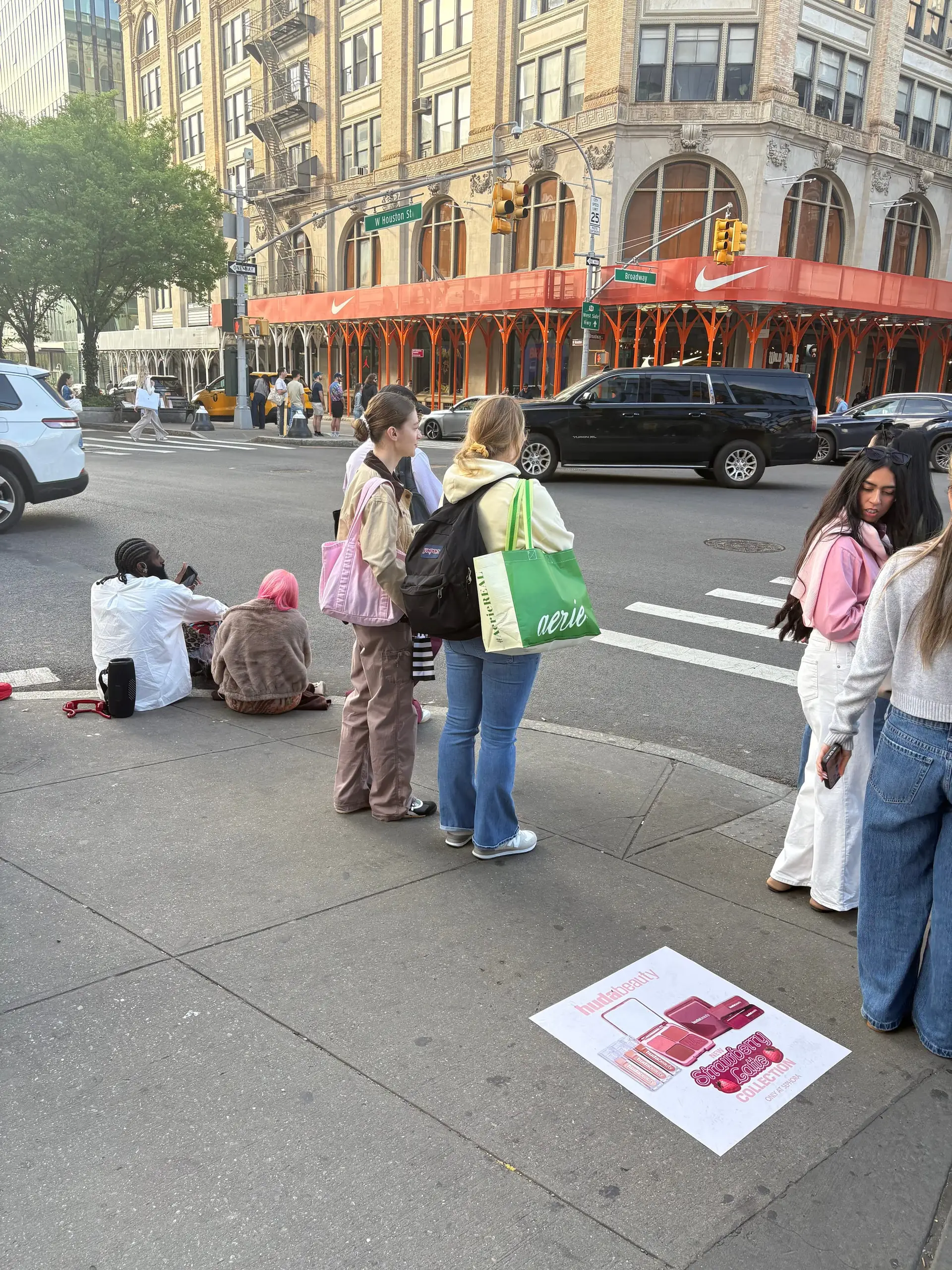
Retail & E-Commerce.
Street campaigns for retail flagship launches, DTC e-commerce brand IRL credibility, marketplace sellers scaling up, and holiday-window retail activations.
Four tensions only street resolves.
- 01
Flagship retail openings in major metro areas require street wraparound to announce arrival to the neighborhood and signal presence to buyers considering distribution; digital-only reach doesn't carry the same physical-scale proof
- 02
E-commerce DTC brands entering retail distribution (wholesale, department-store placement, marketplace-to-retail transition) need IRL credibility to persuade retailers that the brand has cultural presence and consumer awareness beyond direct-to-consumer channels
- 03
Marketplace sellers scaling from Etsy, Shopify, and third-party platforms to physical retail need brand awareness at street scale to justify premium distribution partnerships and anchor independent retailers' product mix decisions
- 04
Holiday-window retail peaks (Q4) demand compressed-timeline activations that build foot traffic during the critical selling season, but most agencies cannot coordinate single-neighborhood saturation at 48-hour notice
Is this you?
If two or more match your roadmap, send the date.
- You're opening a flagship and need street wraparound to announce arrival to the neighborhood and signal presence to buyers considering distribution.
- You're a DTC brand entering retail and need IRL credibility to prove cultural presence beyond direct-to-consumer channels.
- You're a marketplace seller scaling to physical retail and need street-scale awareness to justify premium distribution partnerships.
- You're hitting a Q4 holiday peak and need a compressed-timeline activation that builds foot traffic during the critical selling season.
- You're differentiating against national chains and need neighborhood-level positioning that speaks to local retail culture.
- You're running a 30-90 day pop-up and need street-level awareness that converts foot traffic directly at the venue door.
5 disciplines, one playbook.
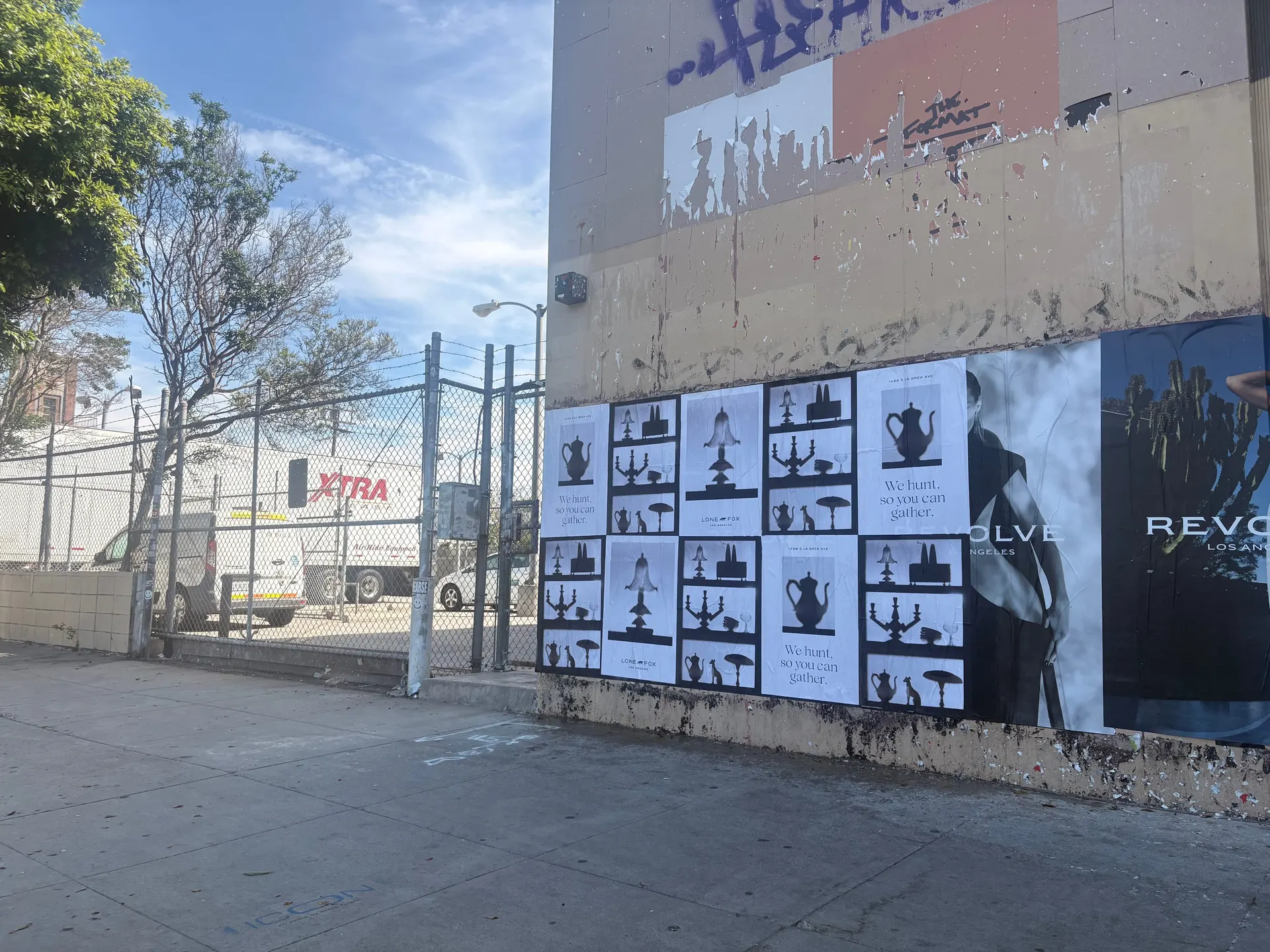
Wheatpaste
Wheatpasting and wheatpaste advertising campaigns from $3,500 in NYC, LA, SF + 40 US cities. Published floors, 5-7 day lead (Expedited 24-72hr), GPS-tagged photo proof on every install. From $3,500Paste-Up Posters
Paste-up poster campaigns for product launches and neighborhood saturation. From $3,500, 5-7 day lead (Expedited 24-72hr), GPS-tagged photo proof in 40 US cities. From $3,500Scaffold Wraps
Scaffold wrap advertising in 40 US cities. Building-scale guerrilla campaigns on permissioned scaffolding with months of dwell time and photo proof. From $12,000Retail Window Installs
Retail window poster installs in 40 U.S. cities. Storefront window posters and dressing-room placements in partner retail with full photo proof on every install. From $3,000Column Wraps
Column wrap installs. Tension-fabric and single-piece vinyl on interior pillars across pop-ups, retail, gyms, and event spaces in 35 US cities. From $5,500Starting floors · print, install, and GPS-stamped photo proof included in every quote. Final number varies by turnaround, size, and location count. Full rate card →
Sample creative directions.
Pre-tested format / neighborhood pairings. Pick a direction at brief intake and we route the surface set inside 24 hours.
- Flagship arrival Wheatpaste + column wraps, pre-opening SoHo, Wooster St, NYC
- Pop-up discovery corridor Wheatpaste 12-panel + stencil QR, 60-day run Silver Lake, Sunset Blvd, LA
- Retail-distribution launch Wheatpaste, high-foot-traffic walls Houston Midtown
- Pop-up wayfinding Sidewalk stencils, neon-green SoHo, 117 Wooster St, NYC
- Holiday multi-city peak Wheatpaste + stencil + interior, 8-week run SoHo, Silver Lake, West Loop
The neighborhoods, not the metros.
We install where the audience already moves. Named corridors per market, permitted and photo-documented.
Hell's Kitchen · SoHo · Williamsburg · Bushwick · Lower East Side · Tribeca
Downtown LA · Arts District · Silver Lake · Echo Park · Venice · Santa Monica
Montrose · EaDo · Heights · Midtown · Downtown · Museum District
Wynwood · Design District · Brickell · South Beach · Little Havana · Downtown
Capitol Hill · Pioneer Square · South Lake Union · Belltown · Ballard · Fremont
Put it on the wall.
We have run this for retail & e-commerce.
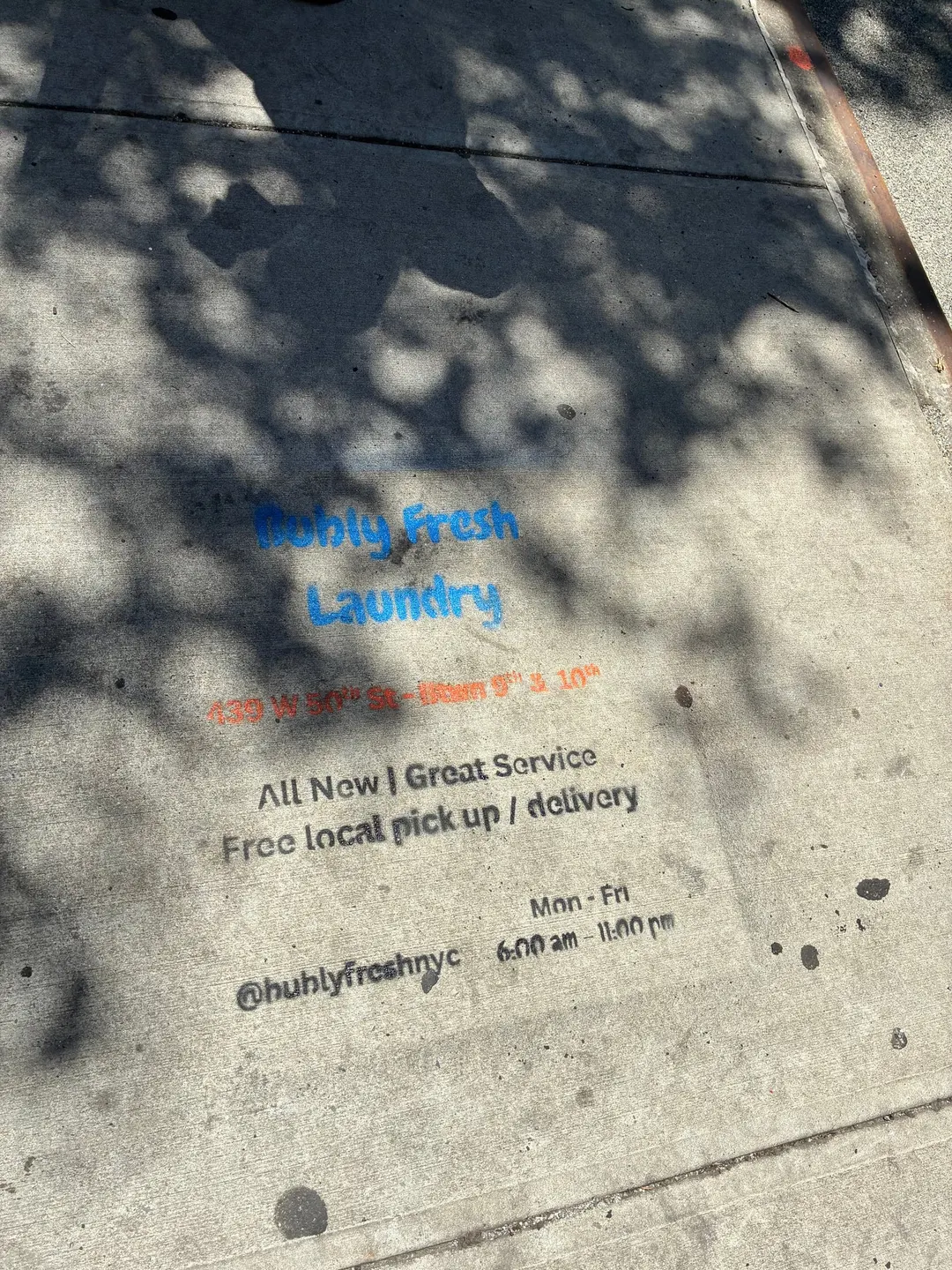

Proof · Printed in-house · Installed by our crew
Street campaigns for Retail & E-Commerce brands. Proof included.
Send the brief; a scoped quote for your vertical comes back inside 24 hours — formats, neighborhoods, and a GPS-stamped photo of every placement when the run wraps.
- Quote in under 24 hours
- No discovery call. The brief is the call.
- Printing & Installation under one roof
Brief us · Quote in under 24 hours
Start your retail & e-commerce campaign.
Brand-safe by default.
- Private-property walls only Written owner consent on file for every surface. No public infrastructure, transit, or right-of-way.
- GPS-stamped photos within 48 hours Wide, mid, detail per placement. The proof your team forwards internally.
- FTC + local-code compliant Disclosures and permitting handled per contract. Legal reviews clean.
- Zero municipal removals on record 500+ documented installs, none taken down by a city.
Read the full field notes
Why Retail & E-Commerce Brands Move Street-Side
Retail is experiencing a dual squeeze. E-commerce has fragmented the shopping landscape: consumers browse online across dozens of channels (Amazon, Etsy, Shopify, specialty marketplaces) before they ever consider visiting a physical store. Traditional mass-market advertising. Broadcast TV, national print, programmatic digital. Reaches everyone at once but proves expensive and imprecise for neighborhood-level retail presence. Meanwhile, independent retail is rebounding: boutique fitness studios, design-forward home-goods shops, specialty apparel retailers, and pop-up experiences are proliferating in tier-1 metros. These stores need foot traffic that digital alone cannot deliver.
Street media solves that problem. It builds awareness at the exact neighborhoods where retail customers live, shop, and browse. It converts digital awareness into physical foot traffic. And for e-commerce DTC brands scaling into retail distribution, it provides the cultural proof that independent retailers and major department-store buyers need to justify shelf space.
For retail flagships, the street campaign announces arrival to the neighborhood and signals credibility to the surrounding foot-traffic base. For pop-ups, street media drives qualified foot traffic during the limited time window when the venue is open. For e-commerce DTC brands entering distribution, the street presence becomes part of the wholesale pitch: your brand has visible cultural presence in our target markets. Will you carry us?
Beyond Street Media runs retail campaigns at neighborhood precision: flagship-opening multi-week plans, holiday-peak seasonal saturation, pop-up 30-90 day compressed timelines, and multi-city expansion coordination that staggers openings across major metros while maintaining a unified brand narrative.
What Retail & E-Commerce Brands Actually Need
Neighborhood-level foot-traffic conversion. A wheatpaste on a high-foot-traffic retail corridor is a directional signal that turns awareness into foot traffic. Sidewalk stencils with a store location and QR code create a walk-to-address conversion path. For retail locations with foot-traffic tracking, campaigns show 30-60% foot-traffic lift during active windows. For e-commerce brands, the outdoor awareness builds confidence that independent retailers can rely on to justify shelf space.
Pre-opening presence and arrival signals. A flagship opening typically runs pre-opening street presence (2-3 weeks before the store opens) that signals neighborhood arrival and builds anticipation. The wheatpaste series, scaffold wraps (if applicable), and interior retail-partner installs create multiple touchpoints that prepare the local audience for opening day. The result: opening-day foot traffic is significantly higher than it would be for a retail opening that relies on paid digital alone.
Cultural proof for retail-distribution conversations. E-commerce DTC brands scaling into wholesale distribution need to show retail partners that the brand has cultural presence and consumer awareness. A street campaign in a major retail metro becomes part of the pitch: “Here’s proof our brand has presence in SoHo, LA, and Chicago. We’re ready to be carried at scale.” That proof accelerates the distribution conversation and justifies higher shelf positions and larger initial orders.
Holiday-peak seasonal saturation. Q4 retail peaks demand street presence that captures gift-buyer traffic during the critical shopping season (November-December). Retail campaigns during this window run 8-10 weeks with creative rotations every 3-4 weeks. The street presence during Black Friday and holiday season directly converts to retail sales: foot traffic + retail atmosphere + product discovery = conversion.
Pop-up window time compression. Pop-ups that run 30-90 days need to generate maximum foot traffic in minimal time. Pre-opening street presence (1-2 weeks before) builds anticipation. Opening-week saturation (7-10 days) drives qualified foot traffic during the highest-conversion window. Sustained presence through the run maintains visibility. Wind-down during the final 5-7 days softens the closing and captures last-minute traffic. The entire program delivers within 2 weeks of pop-up launch-date confirmation.
Multi-city expansion coordination. National retail brands opening 5-10 flagships across major metros need campaigns that feel localized in each market but unified in brand voice. Beyond Street Media pre-scouts surfaces and retail partners 4-6 weeks in advance, then staggers install windows so each neighborhood receives 2 weeks of pre-opening street presence before that market’s store opens. The result: cohesive national expansion with neighborhood-level precision.
What We Run for Retail & E-Commerce Brands
Wheatpaste Advertising. Large-format poster campaigns across retail-density neighborhoods with rapid turnaround for flagship openings and seasonal peaks.
Paste-Up Poster Campaigns. Secondary corridor poster density extending flagship and seasonal campaigns across retail storefronts and high-foot-traffic areas.
Scaffold Wrap Advertising. Facade coverage during retail-store construction pre-opening, transforming barricaded storefronts into building-scale brand presence visible from multiple blocks.
Retail Window Poster Installs. Window takeovers and point-of-sale poster programs at flagship locations and adjacent retail partnerships that extend brand presence into shopping environments.
Column Wrap Installs. Interior retail-partner and flagship location column wraps creating sustained brand presence in high-dwell venues (boutique gyms, coffee shops, independent retailers).
Product Launch Street Blitz. Coordinated multi-format programs across wheatpaste, pole stickers, and stencils deployed in flagship locations during launch windows.
Neighborhood Saturation Campaigns. Sustained multi-format presence (wheatpaste + pole stickers + stencils) across retail corridors for 4-12 weeks supporting flagship openings, seasonal peaks, and pop-up retail windows.
Holiday Retail, Pop-Up, and Expansion Timelines
Flagship opening campaigns run 4-8 weeks total: pre-opening presence (2-3 weeks while store is under construction), opening-week saturation (5-7 days maximum intensity), sustained presence (2-4 weeks building momentum), and wind-down. The entire program coordinates wheatpaste, scaffold wraps (if applicable), and retail-partner interior installs.
Holiday retail peaks span 8-10 weeks (late September through early January) with creative rotations every 3-4 weeks. Intensity peaks during Black Friday and holiday season (November-December). Budget per market is typically 40-50% higher than non-holiday campaigns because foot-traffic opportunity is compressed and conversion windows are limited.
Pop-up retail campaigns compress 30-90 day availability into a 3-4 week operational plan: pre-opening (1-2 weeks), opening-week saturation (7-10 days), sustained presence through the run, wind-down (5-7 days final). Program delivers within 2 weeks of pop-up launch date confirmation.
Multi-city expansions stagger opening dates across major metros 1-2 weeks apart, with 2 weeks of pre-opening street presence preceding each market’s store opening. National campaigns across 5-10 flagship locations require 4-6 weeks of pre-scouting and surface confirmation, then coordinated install windows across all markets within 3-5 days of each other.
Compliance & Brand-Safety Notes
Retail-location exclusivity. For retail partnerships (interior installs, column wraps, window placements), we commit competitor-brand exclusivity: if your brand is running a retail-partner campaign in a specific venue, we will not simultaneously install a competing retailer’s posters in the same location during the same campaign window. That venue exclusivity is built into the intake brief and confirmed with retail partners at contract.
Property-owner approval on retail storefronts. Scaffold wraps, window installations, and storefront exterior placements require written property-owner and (if applicable) landlord consent. For retail tenants, approval typically comes from retail management or property owner. Beyond Street Media handles all approval routing; your team does not manage landlord relationships. For owned storefronts, we work directly with your facilities team.
Foot-traffic measurement. Retail locations with door counters, WiFi analytics, or foot-traffic API integrations can track foot-traffic lift during campaign windows. Beyond Street Media recommends baseline foot-traffic counting 2-3 weeks before campaign launch so campaign-period lift can be measured against historical non-campaign periods. For e-commerce brands, QR-code landing pages and campaign-specific URLs track store-to-online conversion.
Holiday-season permit requirements. Q4 holiday campaigns may require additional permits or venue approvals in some markets (NYC BID restrictions, LA construction-season windows, Chicago permit density limits). These are flagged at intake and built into the campaign timeline. Most holiday campaigns require 6-8 weeks of planning to secure necessary permits and pre-position crews.
Past Retail & E-Commerce Work
Beyond Street Media has executed campaigns for Sézane (fashion flagship), Lone Fox (home goods pop-up), True Religion (retail distribution expansion), and Yonex (limited-time pop-up retail). The playbook combines wheatpaste headline placements in retail-density neighborhoods with secondary formats (pole stickers, stencils, interior installs) to build neighborhood saturation and drive foot-traffic conversion.
Sézane. Fifteen placements over 35 days across two coasts, one creative system: Tribeca scaffolding in New York, nine walls on Sunset Boulevard from West Hollywood into Silver Lake. A small count placed where the brand’s shoppers already walk, rather than metro-wide reach.
Lone Fox. A Silver Lake pop-up activation on a high-traffic retail corridor, with stencil wayfinding pointing at the door for the length of the pop-up window.
True Religion. Three hundred wheatpaste posters over 42 days across the Montrose and Midtown corridors, a single-city saturation buy built to make the neighborhood feel covered ahead of retail distribution.
Yonex. Sixty placements over 49 days across New York, Seattle, and Miami, including six sidewalk stencils ringing 117 Wooster Street as a discovery funnel toward the SoHo pop-up.
We publish placement counts, install windows, and a photograph of every wall. Foot-traffic lift, sales lift, and attribution belong to the client’s own analytics, and we report them only from the client’s numbers, never from ours.
Cities We Activate for Retail & E-Commerce Campaigns
Retail campaigns concentrate in tier-1 metro neighborhoods where high-income shoppers live, work, and browse for retail experiences. Primary markets:
New York City. SoHo, Tribeca, Flatiron, Lower East Side, Williamsburg, Bushwick. SoHo and Tribeca are the global retail and fashion capitals. Flatiron captures upscale shopping and office-worker foot traffic. Williamsburg and Bushwick host independent retail and design-forward boutiques.
Los Angeles. Silver Lake, Melrose, Fairfax, Arts District, Abbot Kinney (Venice), Sunset Boulevard retail corridor, Larchmont Village. Silver Lake is the lifestyle-brand retail center. Melrose and Fairfax host independent fashion and streetwear boutiques. Arts District captures design-forward retail. Sunset Boulevard retail corridor reaches tourists and shopping audiences.
San Francisco. SoMa, Hayes Valley, Mission District, Castro, Haight-Ashbury. Hayes Valley is the design-retail center. SoMa and Mission host independent design and lifestyle retailers. Castro and Haight are established shopping neighborhoods.
Chicago. River North, West Loop, Wicker Park, Logan Square, Wrighleyville. River North is the luxury retail district. West Loop hosts independent retail and design boutiques. Wicker Park and Logan Square capture independent shopper bases and design-forward retail.
Miami. Design District, Wynwood, Brickell, South Beach, Coconut Grove, Little Havana. Design District is the luxury retail and design center. Wynwood hosts artist-driven retail and pop-up experiences. South Beach captures tourist and high-income shopper foot traffic.
Other tier-1 markets. Boston (Newbury Street, Back Bay), Washington DC (Georgetown, H Street, Shaw), Seattle (Capitol Hill, Pike Place, Pioneer Square), Atlanta (Ponce City Market, Little Five Points), Austin (South Congress, Downtown, East Austin), Philadelphia (Rittenhouse, Fishtown, Northern Liberties), Dallas (Highland Park, Deep Ellum), Denver (RiNo, Cherry Creek).
Got a storefront? We’ve got the neighborhood reach.
Retail requires foot traffic. Foot traffic requires neighborhood awareness. Street media is the format that builds awareness where retail customers live, shop, and browse. And converts that awareness directly into foot traffic at your door.
Retail & E-Commerce questions.
The 5 things retail & e-commerce brands ask before sending a brief. Same-day answers from the desk if yours isn't here.
Q · 01 How does street media help e-commerce brands move into physical retail?
Street campaigns build the brand awareness and cultural proof that independent and major retailers need to justify shelf space. When an e-commerce DTC brand shows up at street scale in NYC, LA, and Chicago with wheatpaste and neighborhood saturation, it signals to retail buyers that the brand has consumer awareness and cultural presence beyond direct-to-consumer channels. That visibility justifies the retail shelf position. The street campaign becomes part of the distribution conversation: 'Our brand has presence in these neighborhoods. Here's the proof. Will you carry us?' Retail partners see cultural proof before they see the wholesale pitch.
Q · 02 Can street media drive foot traffic to a retail location?
Yes. That's the core retail play. A well-sited wheatpaste on a high-foot-traffic corridor is a directional signal. Sidewalk stencils with the store location and QR code create a walk-to-address conversion path. Interior retail-partner installs in neighboring shops create brand touchpoints that drive people to the flagship location. For pop-up retail, the combination of external wheatpaste + QR-stencil wayfinding + interior partner installs creates a multi-touch awareness-to-foot-traffic conversion funnel. The measurement is street-to-store: foot traffic counts at the store entrance during campaign windows show measurable lift versus non-campaign periods.
Q · 03 What does a retail flagship or pop-up campaign cost?
A single-market flagship opening (pre-opening wheatpaste plus opening-week saturation across one retail neighborhood) runs $20,000 to $50,000 for the 4-to-8 week program. A 60-day pop-up with wheatpaste, QR-stencil wayfinding, and interior partner installs lands at $15,000 to $40,000. Holiday-peak campaigns run 40 to 50 percent higher per market because the shopping window compresses and foot-traffic intensity rises. Multi-city expansions across 5 to 10 flagships scale by market with shared creative. Final quote returns in 24 to 48 hours and varies by neighborhood count and format mix.
Q · 04 What's the timeline for a retail flagship opening campaign?
Flagship openings typically run a 4-8 week campaign window: 2-3 weeks of pre-opening street presence (while the store is under construction, signaling arrival to the neighborhood), opening-week saturation (maximum foot-traffic conversion during the first 5-7 days), and 2-4 weeks of sustained presence (building momentum and word-of-mouth). The entire program coordinates wheatpaste headline placements, scaffold wraps (if applicable), retail partner interior installs, and neighborhood stencil saturation. Most flagships kick off with a 48-hour intensive install window to hit the pre-opening construction phase, then sustain with weekly refreshes.
Q · 05 Can street campaigns measure retail foot traffic or sales lift?
Yes. For retail locations with digital foot-traffic tracking (door counters, WiFi analytics, or foot-traffic API integrations), we baseline foot-traffic counts 2-3 weeks before the campaign launches, then track daily foot-traffic during the campaign window. A typical retail street campaign shows 30-60% foot-traffic lift during active campaign weeks. For e-commerce or online-attributed sales, QR codes and campaign-specific landing pages track store-to-online conversion. For in-store sales, retail partners with POS integration can track campaign-period sales lift by comparing campaign weeks against non-campaign historical baselines. The attribution methodology is confirmed at intake so tracking is built into the campaign from launch.
We delivered.



















Brand partners include: FIFA World Cup 2026, Palantir, Sézane, G-Shock, Mitchell & Ness, True Religion, Huda Beauty, Yonex, Relevance AI, Momentous, RYZE Coffee, Bloom Effects, Incrediwear, Brooklyn Museum, Sweat FC, HydroJug, Frameline, Alchemy, OneRepublic, Lone Fox, Vaura Pilates.
Got a retail & e-commerce launch?
Inquire now.
Send the Retail & E-Commerce brief: markets, window, creative direction. Vertical-specific quote back in 48 hours.