Cultural Institutions.
Wheatpaste, stencil, and mural campaigns for museums, galleries, performing arts, and cultural nonprofits, exhibition-window timed, district built.
Four tensions only street resolves.
- 01
Exhibition windows are timed and unmovable, a six-week run cannot wait for digital ad approval cycles, and a missed opening weekend is a wasted institutional press budget
- 02
Gallery openings need cultural-cluster neighborhood reach (Wynwood, Bushwick, Mission, Echo Park), programmatic display cannot target on aesthetic affinity at sidewalk density
- 03
Performing-arts subscription seasons (symphony, ballet, theater) need awareness pulses that build through the season, not a single launch burst, most agencies cannot run a 22-week sustained presence
- 04
Library and archive brand awareness for community programs requires neighborhood-level visibility in the exact catchment zones their cardholders live in, not metro-wide impression buys
Is this you?
If two or more match your roadmap, send the date.
- Your exhibition window is timed and unmovable and a missed opening weekend wastes the institutional press budget.
- Your gallery opening needs cultural-cluster reach in Wynwood, Bushwick, the Mission, or Echo Park, where programmatic can't target on aesthetic affinity.
- Your subscription season needs a sustained pulse, not a single launch burst, and most agencies can't run 22 weeks of presence.
- Your library or archive program needs catchment-zone visibility where cardholders actually live, not metro-wide impressions.
- Your campaign runs campus and the surrounding corridor and needs different permits for The Drag or Westwood than a campus-only buy.
- You report to a board, a funder, or a granting agency and without a wrap deck the campaign can't be re-funded.
5 disciplines, one playbook.
Wheatpaste
Wheatpasting and wheatpaste advertising campaigns from $3,500 in NYC, LA, SF + 40 US cities. Published floors, 5-7 day lead (Expedited 24-72hr), GPS-tagged photo proof on every install. From $3,500Paste-Up Posters
Paste-up poster campaigns for product launches and neighborhood saturation. From $3,500, 5-7 day lead (Expedited 24-72hr), GPS-tagged photo proof in 40 US cities. From $3,500Poster Murals
Multi-panel poster murals. Full-wall paste-up installs spanning building sides and scaffold runs. Brand-scale visibility with photo proof in 40 US cities. From $8,000Painted Murals
Hand-painted murals from $18K, building-side from $30K. Wynwood, Bushwick, Arts District + 9 cities. Skilled muralists, 6-month touch-up guarantee. From $18,000Sidewalk Stencils
Sidewalk stencil campaigns from $2,500 in 40 US cities. Chalk-safe, removable, permitted-only. Expedited 24-72hr available. GPS-tagged photo proof. From $2,500Starting floors · print, install, and GPS-stamped photo proof included in every quote. Final number varies by turnaround, size, and location count. Full rate card →
Sample creative directions.
Pre-tested format / neighborhood pairings. Pick a direction at brief intake and we route the surface set inside 24 hours.
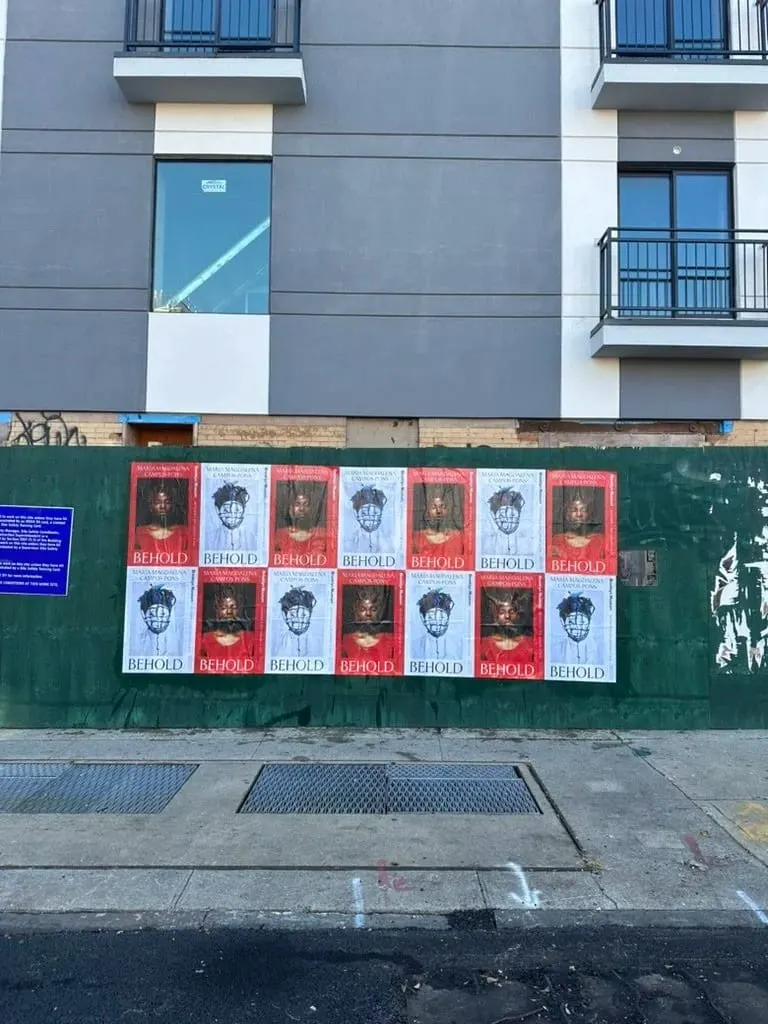
- Museum exhibition opening Six-panel poster mural, install 2 weeks before opening Bushwick, NYC
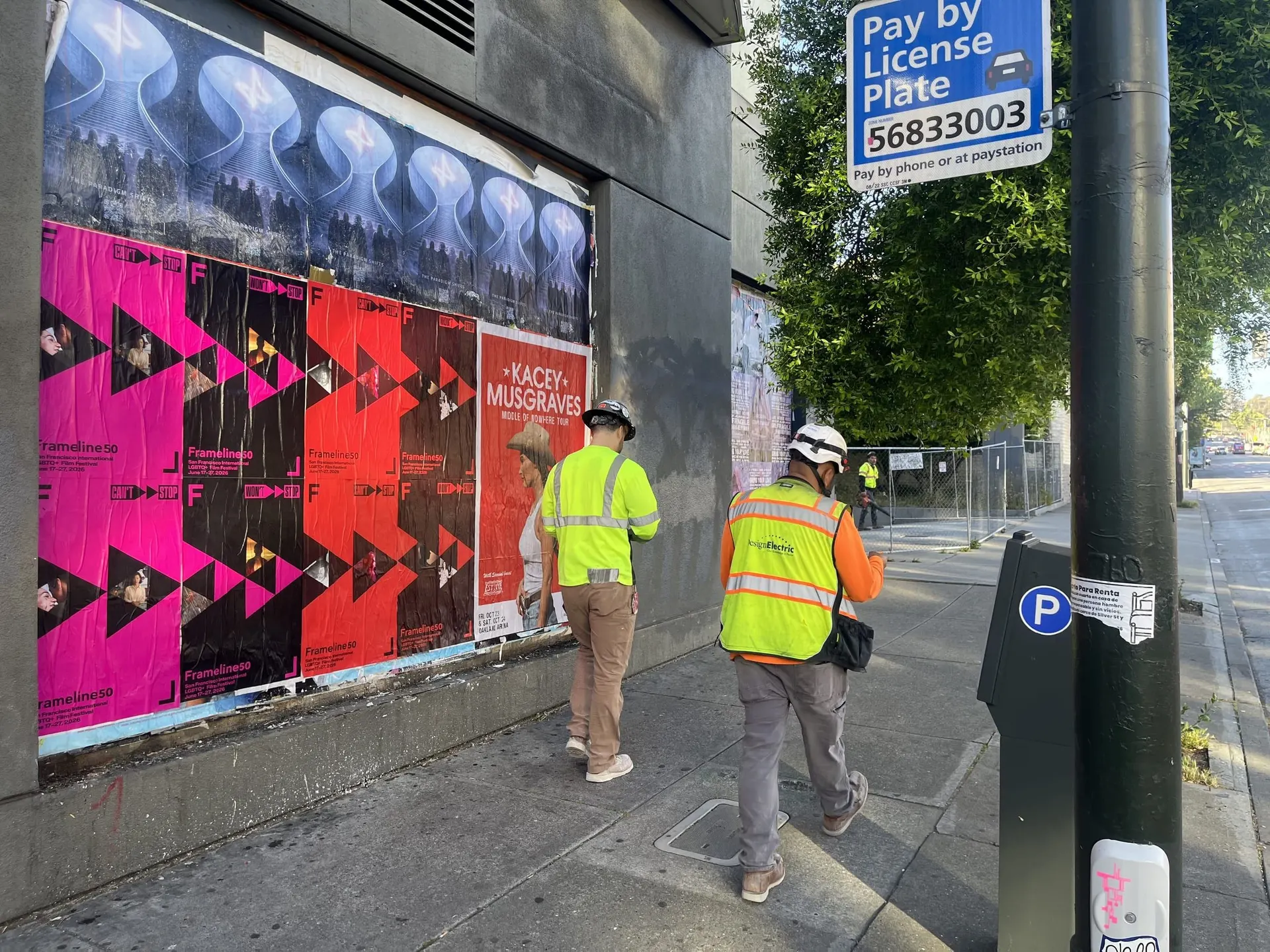
- Film festival blitz Three-poster wheatpaste series, 4-week pre-opening run The Castro, Mission, Hayes Valley, SF
- Cultural campaign routing Chalk-safe sidewalk stencils plus QR Echo Park, Highland Park, Boyle Heights
- Ballet anniversary season Hand-painted mural plus wheatpaste blitz Wynwood, Brickell, Design District, Miami
- Symphony subscription season Interior install program, 22-week run Cultural districts in NYC, SF, Chicago
The neighborhoods, not the metros.
We install where the audience already moves. Named corridors per market, permitted and photo-documented.
Hell's Kitchen · SoHo · Williamsburg · Bushwick · Lower East Side · Tribeca
SoMa · Mission District · Castro · Hayes Valley · Tenderloin · North Beach
Downtown LA · Arts District · Silver Lake · Echo Park · Venice · Santa Monica
Put it on the wall.
We have run this for cultural institutions.
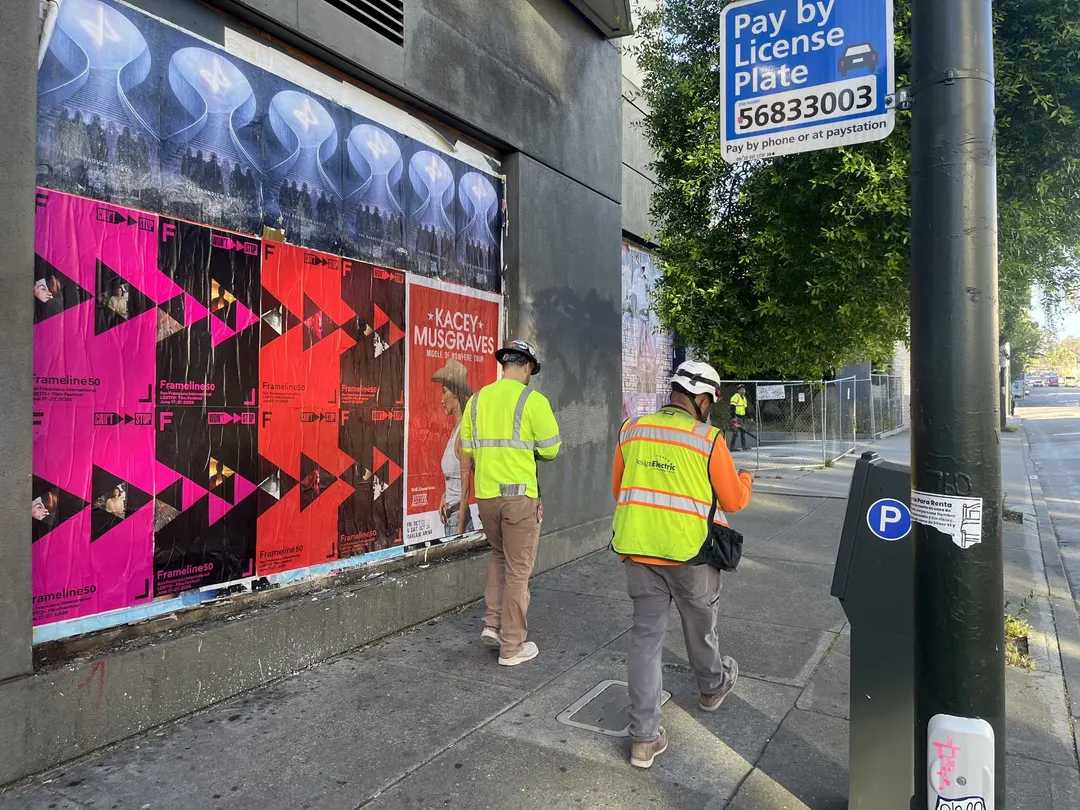

Proof · Printed in-house · Installed by our crew
Street campaigns for Cultural Institutions brands. Proof included.
Send the brief; a scoped quote for your vertical comes back inside 24 hours — formats, neighborhoods, and a GPS-stamped photo of every placement when the run wraps.
- Quote in under 24 hours
- No discovery call. The brief is the call.
- Printing & Installation under one roof
Brief us · Quote in under 24 hours
Start your cultural institutions campaign.
Brand-safe by default.
- Private-property walls only Written owner consent on file for every surface. No public infrastructure, transit, or right-of-way.
- GPS-stamped photos within 48 hours Wide, mid, detail per placement. The proof your team forwards internally.
- FTC + local-code compliant Disclosures and permitting handled per contract. Legal reviews clean.
- Zero municipal removals on record 500+ documented installs, none taken down by a city.
Read the full field notes
Why Cultural Institutions Are Moving Street-Side
Cultural marketing has spent two decades inside the same toolkit: a paid social run for the opening weekend, a programmatic display campaign in the metro, a press push to the regional alt-weeklies, and a paid-placement buy if the budget allows. Three of those four channels are getting harder. Programmatic display has cratered as an awareness channel for cultural buyers, the audience is too narrow to reach efficiently in an auction designed for 35M-impression campaigns. Paid social is locked into the same creator and lifestyle feeds that already saturate the same audience. Alt-weekly press has thinned as the publications themselves have thinned.
The exhibition window does not flex. The opening weekend is the budget anchor for the entire institutional press push. The subscription season starts when the symphony season starts, not when the digital agency finishes A/B testing. Every week of awareness lost before opening night is a week of ticket revenue and member conversion that the institution will not get back.
Street media solves a specific problem inside that landscape. It builds neighborhood-density impression in the exact cultural-district neighborhoods where your audience lives, walks, and chooses what to do this weekend, at a CPM the digital channels cannot match, on a timeline that snaps to the exhibition window, with photo documentation that holds up to grant-reporting and board review. For museums, galleries, performing-arts companies, libraries, archives, and university cultural programs fighting against the attention compression of the algorithmic feed, the wall is the channel outside the auction.
Beyond Street Media runs cultural-institution campaigns as a serious media buy. The format is the same wheatpaste, paste-up poster, mural, sidewalk stencil, and interior install kit we run for every other audience, but the operational layer is built around the exhibition calendar, the cultural-district neighborhood map, the nonprofit funder-reporting standard, and the credit-line attribution rigor that institutional creative requires.
Why Guerrilla Works for Cultural Institutions
The opening-weekend anchor is unmovable, and street media is the channel that respects it. A wheatpaste blitz can lock production on Day 1 and have posters on walls by Day 10, fast enough to bracket an opening weekend with a four-week awareness lead. Programmatic media buys cannot match that turnaround when the creative needs institutional approval. The street campaign installs against your calendar, not the platform’s.
Cultural-district neighborhoods cluster the audience at a density no digital channel can target. Bushwick, Wynwood, the Mission, Echo Park, Highland Park, Wicker Park, Fishtown, Capitol Hill, the Castro, the Lower East Side, these are the neighborhoods where the cultural-buyer audience lives, walks to dinner, and decides what gallery to visit on Saturday. A wheatpaste corridor across an 18-block radius in any one of these neighborhoods costs less than one week of upper-funnel paid social and lands in front of the exact audience your institution programs for. The targeting is physically claimed, not auctioned.
Photo documentation reads as proof to a board, a funder, and a granting agency. Cultural institutions report to boards, foundations, state arts councils, the NEA, and individual donors who fund specific campaigns. A wrap deck with GPS-tagged install photographs, neighborhood-level placement counts, and foot-traffic density estimates per corridor is the standard documentation format for grant-renewal narrative. Beyond Street Media builds that deck into every campaign, it is part of the deliverable, not an upsell. The proof closes the loop between the grant and the program.
What We Run for Cultural Institution Brands
Wheatpaste Advertising, large-format poster campaigns on cultural-district building walls, scaffold panels, and construction hoardings. The headline impression for an exhibition opening, a film festival launch, or a season-opener.
Paste-Up Poster Campaigns, coordinated paste-up poster runs across multiple cultural-district corridors. The format for sustained awareness through a long exhibition run or a multi-week festival window.
Multi-Panel Poster Murals, large-scale poster murals on long sidewalls, used for headline exhibition launches and anniversary-season programs. The institution gets a wall-scale visual that doubles as photographic content for press and social amplification.
Hand-Painted Murals, commissioned mural work for cultural anniversaries, season launches, and headline programs. Lasting institutional brand presence in cultural-district corridors.
Sidewalk Stencil Advertising, ground-level wayfinding and program awareness at high-foot-traffic cultural-district intersections, outside cinemas, gallery foyers, and theater lobbies. Strong for festival routing and public-programming arcs.
Multi-City Guerrilla Tours, coordinated multi-market campaigns for touring exhibitions, regional festival circuits, and traveling performing-arts productions. One campaign, multiple cities, unified documentation track.
Custom Poster Installs, column wraps, lobby placements, and dwell-time installs in cultural-district coffee shops, cinemas, restaurants, coworking spaces, and partner cultural venues for sustained season-long awareness.
Compliance, Documentation, and the Operational Layer
Cultural institutions report to multiple stakeholders. The board wants the headline impression numbers. The foundation funder wants the grant-narrative wrap deck. The NEA or state arts council wants the documentation format that satisfies their reporting template. The development team wants the photo asset library for donor cultivation.
Beyond Street Media builds documentation into every cultural campaign as a first-class deliverable. The wrap deck includes GPS-tagged photographs of every install (wide shot, close shot, and a third frame for credit-line confirmation), a neighborhood-by-neighborhood placement map, install dates and duration, placement counts by surface type, and foot-traffic density estimates per corridor. The deck is structured to satisfy NEA, state arts council, and most private-foundation reporting formats without modification.
For multi-city campaigns serving touring exhibitions or regional festival circuits, documentation is delivered per market with a unified summary across cities. The institution’s grants team gets the per-city detail; the institutional marketing team gets the unified narrative.
Credit-line attribution is type-set into every cultural placement at the institution’s required legibility specification. Artist name, title, year, courtesy line, and any required institutional logo lockup are produced to the institution’s style guide. The placement carries the same attribution standard as the printed catalog.
Past Work for Cultural-Adjacent Audiences
The cultural-institution audience overlaps significantly with the nonprofit advocacy, brand activation, and community-organizing work Beyond Street Media has run for clients across multiple cities. A handful of the relevant past campaigns:
- Nonprofits of NY, coalition-grade wheatpaste series across Manhattan and Brooklyn, with the same documentation rigor cultural institutions require for grant reporting.
- Bloom Effects. NYC, neighborhood-density brand activation in a cultural-cluster Manhattan neighborhood, illustrating the corridor saturation playbook that translates directly to gallery-opening and museum-launch programs.
- Lone Fox. Los Angeles. Echo Park / Highland Park lifestyle brand campaign in the same cultural-district corridors that cultural institutions buy.
For institutions running their first street campaign, the playbook combines wheatpaste headline placement in two or three cultural-district neighborhoods, a sidewalk stencil layer for ground-level wayfinding, and an interior install program for sustained dwell-time presence through the exhibition window. The same operational kit scales up to multi-city festival tours and headline season launches.
Cities We Activate for Cultural Institutions
Cultural-institution campaigns concentrate in the cities and neighborhoods where the cultural-cluster audience lives:
- New York. SoHo, the Lower East Side, Williamsburg, Bushwick, Bed-Stuy, Crown Heights, Chelsea, Tribeca for gallery openings and museum exhibitions; the Lincoln Center corridor and the West Village for performing-arts seasons.
- Los Angeles. Echo Park, Highland Park, Silver Lake, the Arts District, Fairfax, Hollywood for gallery openings, museum exhibitions, and film-festival pulses; Westwood and Mid-Wilshire for university museum and major-institution work.
- San Francisco, the Mission, the Castro, SoMa, Hayes Valley for film festival, gallery, and cultural-org campaigns; civic-center corridors for performing-arts season launches.
- Chicago. Wicker Park, Logan Square, Pilsen, the West Loop, River North for cultural-district saturation; the Loop for performing-arts and museum-mile programs.
- Miami. Wynwood, the Design District, Little Havana, Edgewater for gallery and contemporary-art programs; Brickell for performing-arts season launches.
- Philadelphia. Fishtown, Northern Liberties, Old City, Rittenhouse for gallery and museum work; the corridor around University City for university cultural programs.
- Boston / Cambridge. Newbury Street, the South End, Cambridge, Allston for cultural and university-museum work; the Seaport for performing-arts and major-institution programs.
- Washington DC. Shaw, U Street, Adams Morgan, H Street for gallery and performing-arts work; the corridors around the Smithsonian campus and the Kennedy Center for major-institution programs.
- Austin. East Austin, South Congress, The Drag for cultural-org and university museum campaigns.
- Seattle. Capitol Hill, Pioneer Square, Fremont for gallery and cultural-org work.
- Portland, the Pearl District, Alberta Arts District, Hawthorne for gallery and performing-arts work.
Got an Exhibition Window? We’ve Got the Wall.
Cultural institutions are getting compressed by every channel that used to carry their awareness budget. The press is thinner, the algorithm is narrower, the auction CPMs are higher, and the exhibition window does not move. Street media is the format that solves the gap, and Beyond Street Media is the agency that runs it with the documentation, attribution, and operational rigor that institutions and their funders demand.
Cultural Institutions questions.
The 5 things cultural institutions brands ask before sending a brief. Same-day answers from the desk if yours isn't here.
Q · 01 How fast can a museum campaign launch ahead of an exhibition opening?
Production-to-install runs 10-14 days for a wheatpaste blitz across one cultural-district neighborhood, and 14-21 days for a multi-city campaign across three to five markets. If your institution locks creative on Day 1 (logo, dates, venue, exhibition copy), printing starts immediately and installs spread across the back half of the timeline. The exhibition window is unmovable, we build the schedule backward from your opening date and protect that anchor.
Q · 02 What's the typical budget for a cultural-institution street campaign?
Single-market gallery-opening campaigns start around $6,000-$12,000 for a wheatpaste plus pole sticker push across one cultural-district neighborhood. Mid-tier museum exhibition campaigns across two or three markets sit at $25,000-$80,000 for a four-to-six week run. Major institutional programs, multi-city film festival activations, headline exhibition tours, regional theater season launches, run $100,000 to $300,000 across the season. Nonprofit-rate pricing applies on top of these tiers when the institution qualifies.
Q · 03 Are there reduced rates for nonprofit cultural institutions and 501(c)(3) arts organizations?
Yes. Verified 501(c)(3) cultural orgs (museums, galleries, performing-arts companies, film festivals, libraries, archives) qualify for a nonprofit rate on multi-service bundles. Verification is a Form 990 or IRS determination letter. Foundations funding multi-org cultural coalitions get coalition-volume pricing for coordinated multi-city deployments. We have run nonprofit-rate work for cultural institutions before, the rate exists because the work is mission-aligned, not because the production cost differs.
Q · 04 What documentation do funders, boards, and granting agencies require for a cultural campaign?
Cultural funders typically require: GPS-tagged photographs of every placement, neighborhood-by-neighborhood install map, placement counts by surface type, install dates and duration, foot-traffic density estimates per neighborhood, and an itemized invoice tied to project milestones. Beyond Street Media delivers all of this as a wrap deck after every campaign. Nonprofit cultural orgs and university museums use the deck for board reporting, grant-renewal narrative, and donor cultivation. The deck is built to satisfy NEA, state arts council, and most private-foundation reporting formats without modification.
Q · 05 How do you support a performing-arts subscription season across a 20+ week window?
Subscription seasons run through programmatic refresh cycles. We design the campaign as a sequenced series: a season-launch wheatpaste blitz in Week 1, a mid-season refresh tied to your headline production, an interior install program (cultural-district coffee shops, cinemas, restaurants) that runs the full season, and a closing pulse for renewal-window awareness. The interior installs carry the dwell-time impressions; the wheatpaste pulses carry the news.
We delivered.













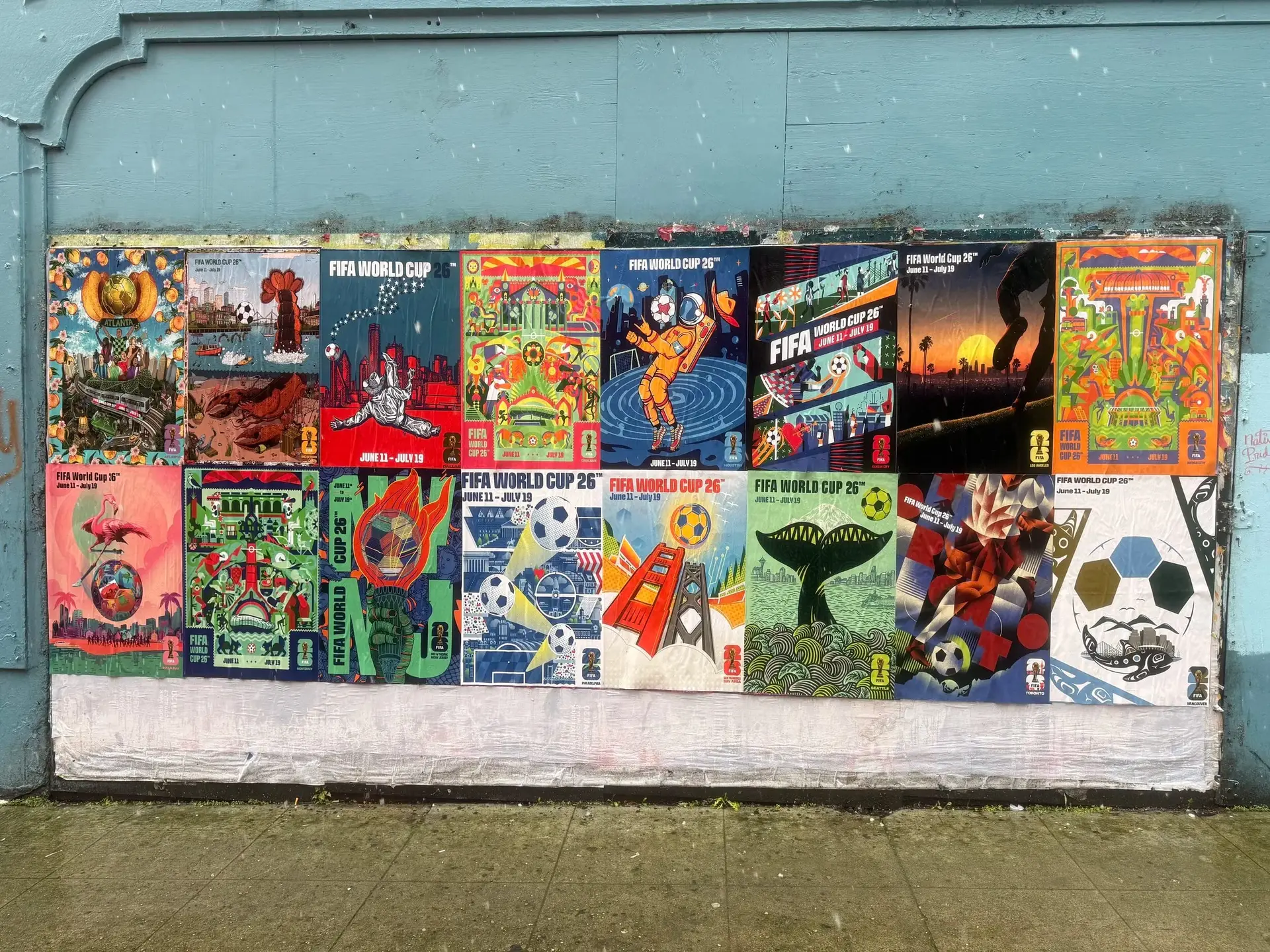
Brand partners include: FIFA World Cup 2026, Palantir, Sézane, G-Shock, Mitchell & Ness, True Religion, Huda Beauty, Yonex, Relevance AI, Momentous, RYZE Coffee, Bloom Effects, Incrediwear, Brooklyn Museum, Sweat FC, HydroJug, Frameline, Alchemy, OneRepublic, Lone Fox, Vaura Pilates.
Got a cultural institutions launch?
Inquire now.
Send the Cultural Institutions brief: markets, window, creative direction. Vertical-specific quote back in 48 hours.