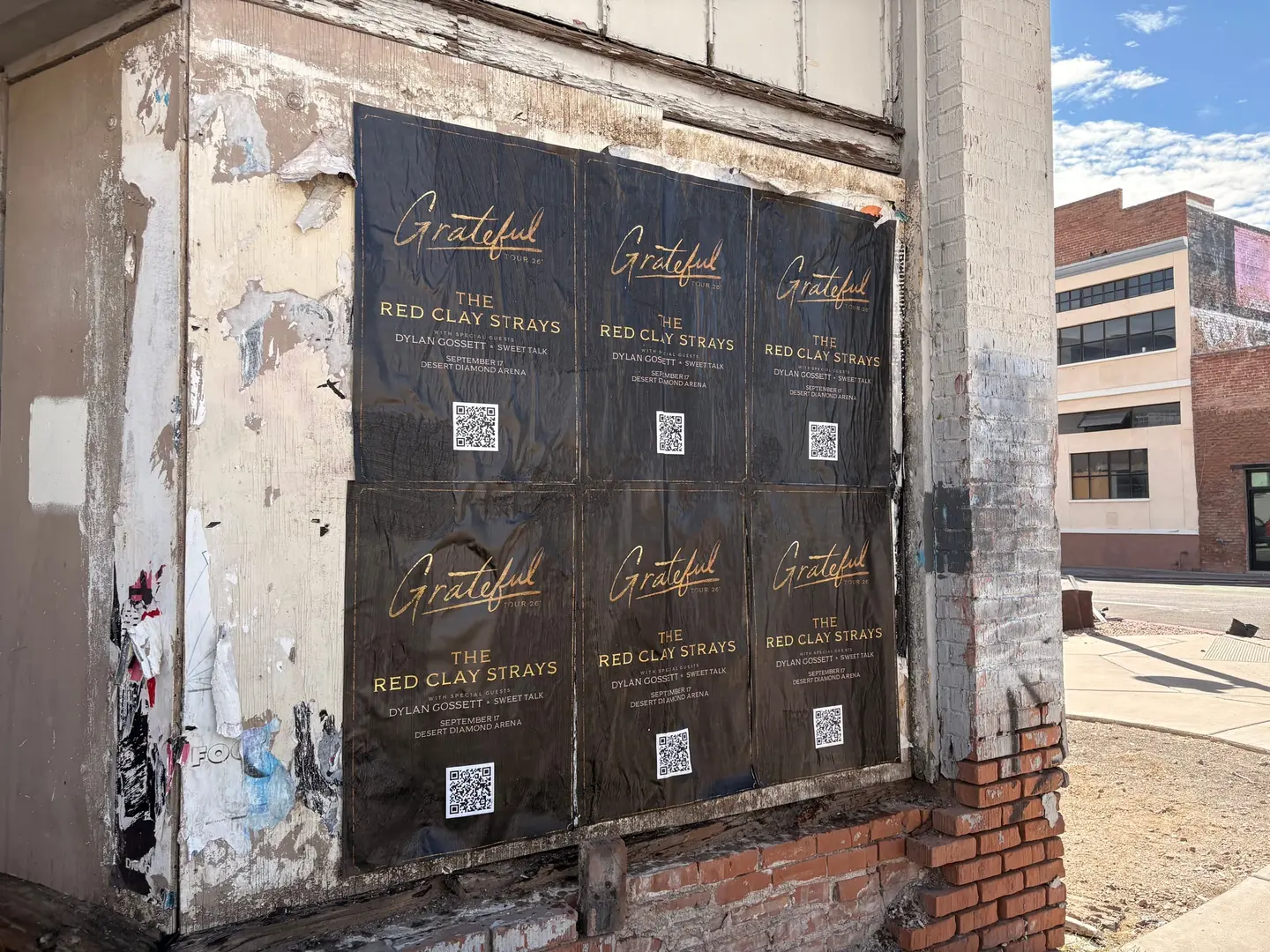
Sidewalk stenciling in Los Angeles is legal, if you do it right.
The constraint is not the medium (chalk vs paint) or the format (stencil vs paste). The constraint is property. You can stencil any wall, any sidewalk, any surface in LA as long as the person or entity that owns it says yes. Miss that permission, and you’re violating LA Municipal Code 49.84.3, the city’s graffiti prohibition. Get it, and you’re running a lawful campaign.
This playbook walks through the actual legal frame for sidewalk stenciling in Los Angeles: what the code says, the private-property-vs-right-of-way distinction, why chalk and paint operate in different enforcement worlds, what property owner consent looks like, how BIDs streamline the process, and the penalty math for noncompliance. It explains why the legal work is where BSM builds the edge.
LA Municipal Code 49.84.3: The Graffiti Statute
The operative law is LAMC 49.84.3, inside Article 14 of Chapter IV. It reads:
“It is unlawful for any person to write, paint, spray, chalk, etch, or otherwise apply graffiti on public or privately owned buildings, signs, walls, permanent or temporary structures, places, or other surfaces located on public or privately owned property within the City.”
Read the list again. Chalk sits in the statute by name, between spray and etch. There is no temporary-medium carve-out in the text, so anyone selling you a chalk campaign on the theory that chalk is not covered has not read the section.
The word doing the real work is in the definitions. LAMC 49.84.2 defines graffiti as “any form of unauthorized inscription, word, figure or design” affixed to a surface. Unauthorized is the hinge. An authorized mark is not graffiti, and if it is not graffiti there is no violation to enforce. That one word is the entire legal basis for a consent-first campaign.
One correction worth making, because the opposite gets repeated constantly: a violation of 49.84.3(A) is not a misdemeanor. Subsection (A)(1) states that it “shall be subject to enforcement only through civil action, administrative fine, or nuisance abatement lien.” The criminal exposure comes from state law instead, covered in the penalty section below.
The law applies to all surfaces (private property, public right-of-way, fences, etc.). The gate is consent. With it, you’re legal. Without it, you’re not.
Private property owners can give consent. The city (which owns right-of-way) cannot, unless you apply for a permit from the LA Department of Public Works or the Planning Department. That path is slow and rare (most permits are for fixed signage, not temporary campaigns). Guerrilla campaigns operate on private property with owner consent.
Private Property vs Right-of-Way: The Legal Distinction
A wall is either owned by a private entity (a business, a property management company, a homeowner) or by the city.
Private property:
A commercial storefront, an alley wall, a residential building, a parking structure, a billboard frame, these are owned by individuals or businesses. The property owner can grant you permission to install a stencil campaign. That permission is consent. Write it down (an email is sufficient, but a signed letter is stronger), and you’re operating legally.
Example: A boutique on Melrose Avenue owns the storefront and the wall next to it. The owner agrees to a chalk-stencil campaign. You get written permission, stencil the wall, and photograph the install. You’re compliant.
Right-of-way:
The sidewalk in front of that boutique is likely city-owned (though the property owner may maintain it). The alley behind it is city-owned. The utility box on the street is city infrastructure. Installing on right-of-way without a city permit is illegal, regardless of chalk or paint, regardless of consent from nearby property owners.
To legally install on right-of-way, you need a permit from:
- LA Department of Public Works (for sidewalk improvements or temporary installations)
- Los Angeles Department of Planning (for public-facing artwork)
- The BID (if the district has delegated enforcement authority)
These paths are slow (4-8 weeks) and designed for permanent or semi-permanent installations (murals, public art projects, safety improvements). A 2-week stencil campaign does not fit the permit timeline.
The blurry line:
In commercial districts, private property and right-of-way sometimes overlap. A storefront’s apron (the area between the building and the public sidewalk) may belong to the property owner or the city, depending on the lot configuration. The safest move: ask the property owner and ask the BID coordinator. If both confirm the wall is private property, you proceed with owner consent. If either flags it as right-of-way, you pursue a permit or move to a different wall.
Chalk Stencils vs Paint: Material and Enforcement
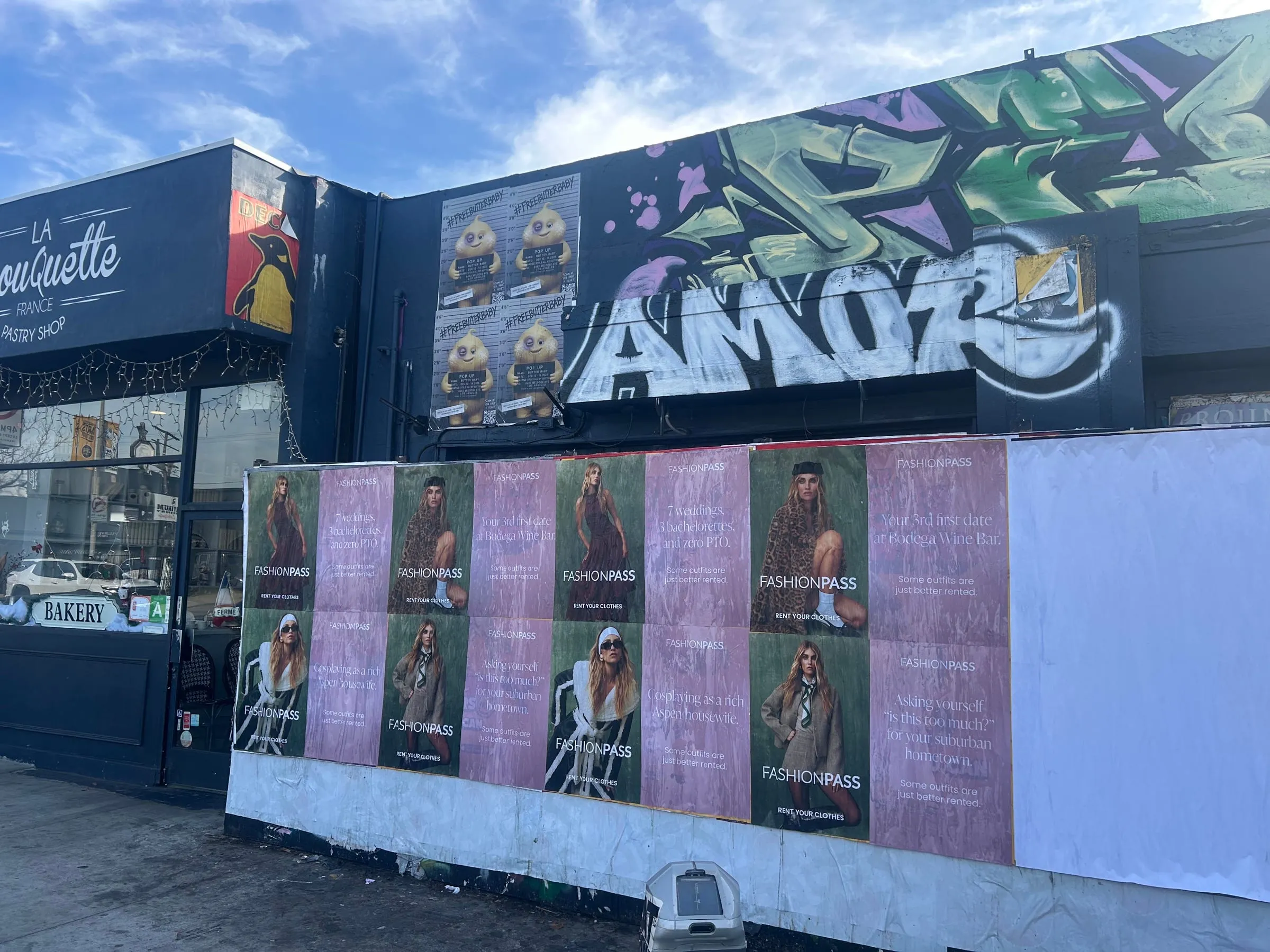
The law does not distinguish. 49.84.3 names chalk and paint in the same breath. But enforcement does.
A chalk-mix stencil (calcium carbonate suspended in water) washes off in 7-21 days. A spray-paint or acrylic-based stencil persists for months or years. The same statute applies to both. The same consent requirements apply. But the enforcement posture differs.
An LA city officer or property owner encountering a chalk stencil understands it will self-remove in weeks. The urgency to escalate is lower. An officer finding a permanent paint tag escalates immediately (violation is more visible, more persistent, more damaging to the surface). A property owner discovering paint on their wall calls the city; discovering chalk is less urgent.
BSM uses chalk formulations for most stencil campaigns (lower enforcement risk, faster completion, easier cleanup if a campaign needs to come down early). Paint-based stencils we reserve for walls where durability is the goal and the client accepts the visibility risk.
The legal compliance is identical: property owner consent is required for either. The operational risk profile differs.
Property Owner Consent: The Form and the Process
Consent should be in writing. The form should include:
- Property address (exact street address, suite number if applicable)
- Description of the surface (e.g., “North-facing wall, storefront apron”)
- Installation dates (e.g., “May 26-28, 2026”)
- Campaign duration (e.g., “visual presence through June 15, 2026; chalk washes off naturally by July 1”)
- Medium and format (e.g., “water-based chalk stencil, 18” x 24” logo, two color”)
- Indemnification (usually: your company indemnifies the owner against claims, and the owner indemnifies you against trespass claims)
- Removal responsibility (usually: chalk stencils are left to weather; removal can be done by property owner if needed before the natural wash-off window)
The property owner signs and dates. Email confirmation is sufficient for legal defensibility. A printed letter signed in person is stronger.
Timeline: sending the form to collecting a signature usually takes 24-72 hours. Property owners who understand chalk washes off are fast signers. Owners concerned about permanent paint or liability take longer to review.
BSM templates these forms. Standard property owner consent turnaround is 48 hours.
BID Coordination: Streamlining Multi-Wall Campaigns
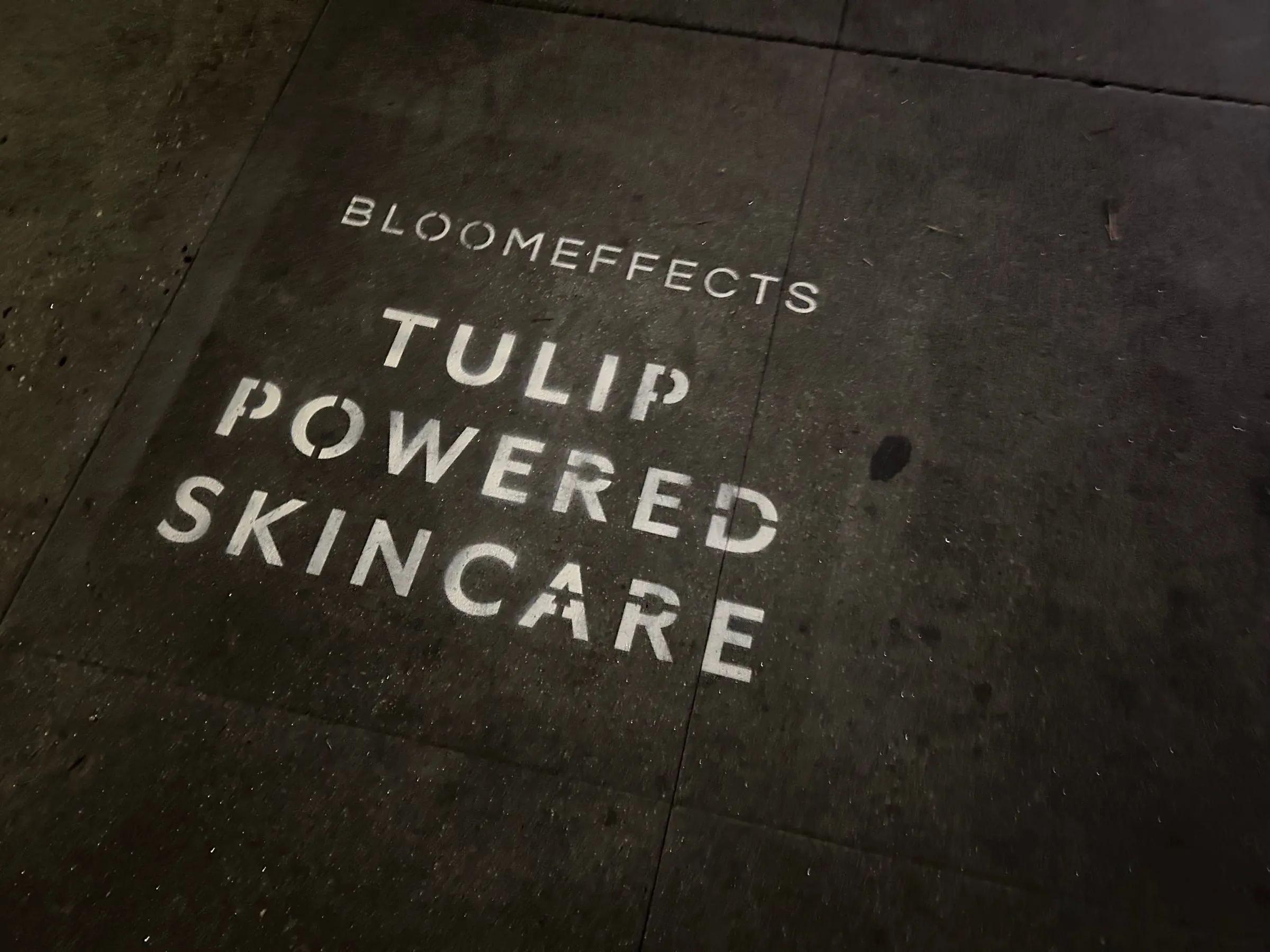
Los Angeles has 43 Business Improvement Districts, 38 property-based and five merchant-based by the count of the Office of the City Clerk, which administers the program. Each BID manages a sub-region and often coordinates with property owners and the city on streetscape improvements and marketing.
Major BID zones relevant for stencil campaigns:
- Hollywood BID (Hollywood Boulevard corridor)
- Downtown LA BID (financial district)
- Venice Beach BID (beachfront retail corridor)
- Silver Lake BID (echo Park/Silver Lake overlap)
- Arts District BID (east LA, arts-focused)
- Westwood BID (Westwood Village)
A BID coordinator is a staff member who manages beautification, signage, and sometimes advertising. They know:
- Which walls are available (property owner friendly)
- Which properties are off-limits (historic, protected, litigious owners)
- The local enforcement posture (some BIDs are permissive; some flag everything)
- How to fast-track consent from multiple property owners at once
For a 20-wall chalk-stencil campaign across a BID zone, BSM contacts the BID coordinator early. The coordinator gives advising (which walls to target, which owners to avoid), and sometimes provides warm introductions to property owners. This shortens the consent process from 10-14 days to 7-10 days.
Working with the BID (rather than around it) also signals to the city that the campaign is coordinated, not rogue. If an enforcement officer encounters the stencils, the BID coordinator can vouch that the property owners consented and the campaign is sanctioned locally.
Cost: BIDs sometimes charge a coordination fee ($250-$500 for a multi-wall campaign introduction). Worth the investment for faster permitting.
Penalty Math: What You Save by Going Legal
Running an illegal campaign (no consent, no coordination) carries four types of risk:
Criminal liability: Not from the municipal code, which routes 49.84.3 to civil and administrative remedies. The criminal charge is state law. California Penal Code 594 makes it vandalism to deface real or personal property “not his or her own,” and where the amount of defacement is less than $400 it is punishable by up to one year in county jail, a fine of up to $1,000, or both. Note the statutory phrase: not his or her own. Owner consent is what keeps a campaign outside the section to begin with. In practice, enforcement for chalk stencils is light (low visibility, self-removing). Enforcement for permanent paint is heavier. Risk is real; prosecution is rare for minor stencil campaigns. But the liability exists.
Civil liability: The property owner can sue you for damages: removal cost, repainting cost, surface restoration, lost business (if the wall is a storefront). Chalk removal costs are lower ($200-$500 per wall, pressure washing). Paint removal costs are higher ($1,000-$2,500 per wall, may require repainting). For a 20-wall campaign, civil damages could run $4,000-$50,000 depending on medium and surface condition.
City remediation: The city can issue a 30-day notice-to-remove. If you or the property owner don’t comply, the city removes the marks and bills the responsible party. City removal costs run $300-$600 per wall (vendor rates). For a 20-wall campaign, city bills could be $6,000-$12,000. Plus it’s slow: removing stencils is lower priority than removing gang tags.
City fines and civil penalties: Separate from anything the property owner recovers. LAMC 49.84.12 lets the City Attorney bring a civil action for a penalty of up to $1,000 per violation, and it counts each day of conduct and each separate property as its own violation. On a 20-wall campaign that arithmetic compounds fast. LAMC 49.84.10 adds administrative fines on a fixed schedule: $250 for a first offense, $500 for a second, $1,000 for a third or any after that.
The math for legal compliance:
Property owner consent costs: $0-$500 per campaign (BID coordination optional). Consent saves you from civil liability (the owner authorized it), eliminates criminal risk (you have written permission), and prevents city remediation orders (the property owner approved it and is not complaining).
For a 20-wall campaign, legal compliance costs $0. Noncompliance risk is $10,000+. The math is unambiguous.
The 10-Day Campaign Timeline
A compliant sidewalk-stencil campaign in LA runs on this timeline:
Days 1-2: Scout and property identification
Identify 15-25 candidate walls (alley walls, storefront sides, visible-but-secondary surfaces). Confirm property ownership via public records, signage, or local knowledge. Reach out to a BID coordinator if the walls are in a BID zone (optional but recommended for multi-wall campaigns).
Days 3-4: Consent outreach
Send property owner consent letters to 20-25 owners in parallel. Include the campaign concept, chalk-stencil format, installation window (2-3 days), and wash-off timeline (7-21 days depending on weather).
Days 5-6: Consent collection
Property owners review and sign. BID coordinator may facilitate warm introductions. Expected response rate: 60-80% (some owners don’t respond or decline). Target is 15 signed consents.
Days 7-8: Stencil design and production
Create vector artwork for the campaign (client logo, tagline, color scheme). Produce aluminum or plastic stencils (laser-cut). Turnaround: 2-3 days from design-approved artwork. Prepare chalk-mix spray (if custom formulation; off-the-shelf chalk spray is immediately available).
Days 9-10: Installation
Deploy a 2-3 person crew to 15 consented properties over 1-2 days. Typical install rate: 6-8 walls per day (15 minutes per wall including setup and repositioning). Photograph wide/mid/detail at each location.
Day 10 onward: Documentation
Deliver install photos to client. Schedule wash-off documentation at 7-day and 21-day marks (same GPS coordinates, same angle, proving the chalk dissolved).
Total legal timeline: 10 days from scout to install. Add 2-4 weeks for documentation completion.
This timeline assumes consent turnaround is fast (48-72 hours) and stencil production is standard (2-3 days). For rush campaigns or difficult-to-contact property owners, add 3-5 days.
FAQ
Q: Can we install on public sidewalks without a permit if we get the storefront owner’s consent?
A: No. The storefront owner may own the building, but they do not own the public sidewalk in front of it. The sidewalk is city right-of-way. You need a city permit to install on right-of-way, regardless of the storefront owner’s consent. Many stencil campaigns target alley walls and storefront sides (private property) specifically to avoid the right-of-way permit path.
Q: Is a text message from the property owner enough for consent?
A: Legally, yes. An email or text confirming consent is enforceable. A signed letter is stronger if enforcement or litigation arises. We collect signed letters or detailed emails that explicitly name the property address, dates, and campaign format. Vague permission (“yeah, go ahead”) is weaker than explicit (“yes, chalk stencil on the north wall of 345 Melrose Ave, May 26-June 15, 2026”).
Q: If chalk stenciling is supposed to wash off in 7-21 days, do we need consent if it’s temporary?
A: Yes. The law does not recognize a temporary exception. “Temporary” is not a legal status under LAMC 49.84.3, which lists chalk as a covered medium. Consent from the property owner is the only valid legal basis, regardless of how long the mark persists.
Q: What if the property owner says yes, then changes their mind and asks us to remove it mid-campaign?
A: We remove it or facilitate removal within 24 hours. The property owner’s consent is revocable. If they withdraw consent, the marks become trespass. Fast removal signals good faith and prevents escalation to law enforcement.
Q: Do business improvement districts have authority to grant consent?
A: No. The BID coordinator can facilitate introductions to property owners and advise on which walls are campaign-friendly, but the BID cannot grant consent on behalf of the owner. You still need written consent from the property owner themselves.
Q: Can we install chalk stencils on our own storefront or company property without written consent?
A: Yes. You own the property and can install on it. No consent needed. But if your storefront is in a historic district or has a landlord (you’re renting), check with the landlord and with the city’s Office of Historic Resources or local landmarks commission. Some districts have additional restrictions on wall modifications.
Q: What’s the difference between a chalk stencil and a painted stencil from an enforcement perspective?
A: Paint persists, chalk doesn’t. An enforcement officer or property owner encountering chalk knows it will self-remove in weeks and is less urgent to escalate. Paint is treated as permanent vandalism and escalated faster. Legally, both require consent. Operationally, chalk carries lower enforcement risk.
Q: If we hire a contractor to install and they install without consent, are we liable?
A: Yes. You’re liable for the contractor’s actions if you hired them knowingly to execute an illegal campaign. The contractor is also liable. Both can be prosecuted. Always confirm with contractors that all properties are consented-to before they install. Some contractors operate illegally; do not use them.
Send us a campaign brief if you’re ready to move forward. Campaign concept, target neighborhood (or BID zone), number of walls, budget window. We’ll scout properties, coordinate with the BID coordinator, collect consent, produce stencils, and execute in 10 days. Photo proof shipped at install and again at wash-off. Sidewalk stencil campaigns start at $2,500. Range varies by turnaround, size, location count, and combined service mix. Final quote returns inside 24 to 48 hours.