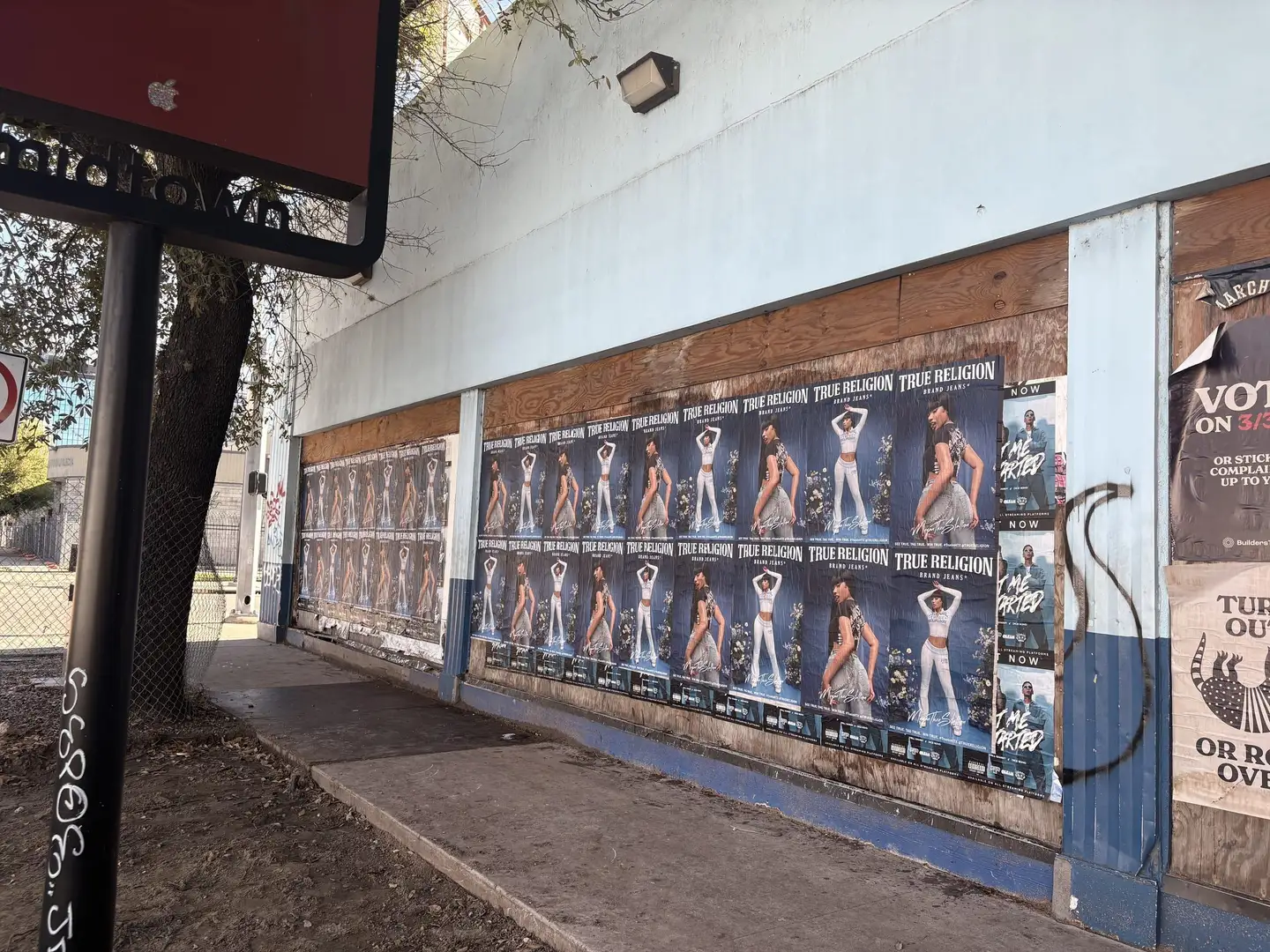
True Religion Wheatpaste Blitz Houston
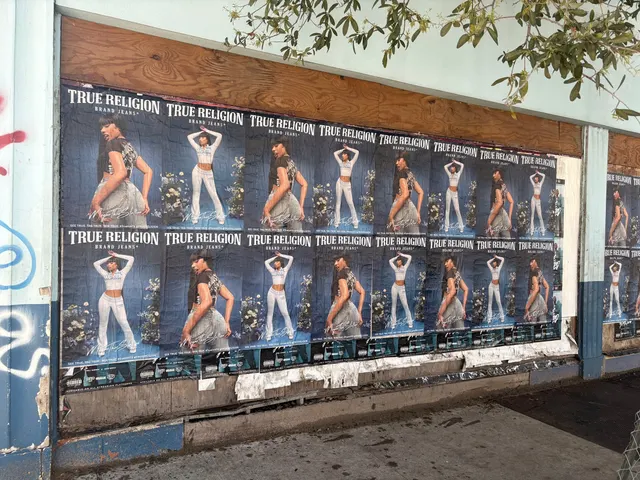
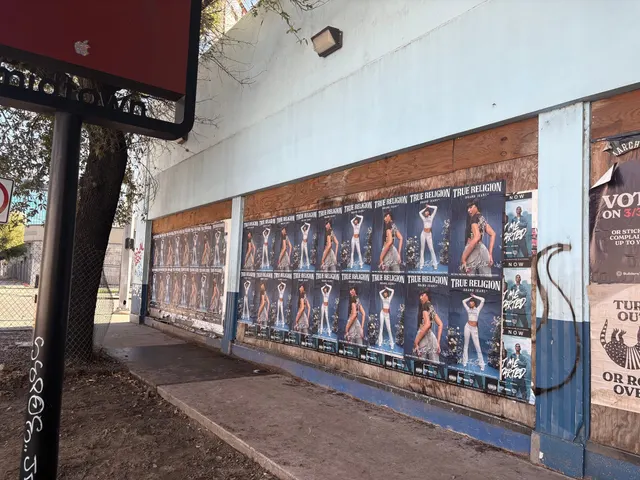
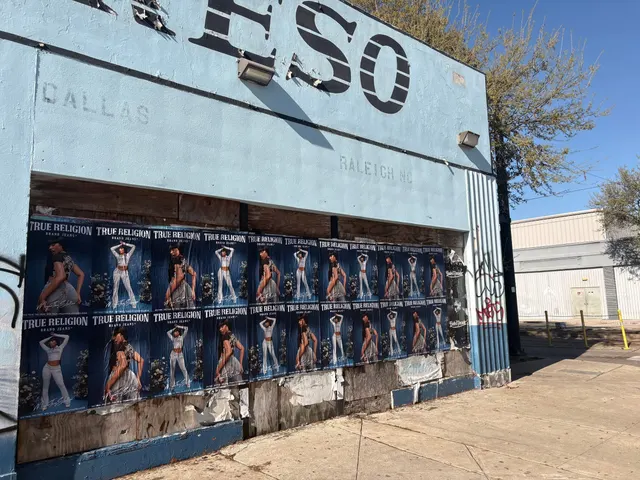
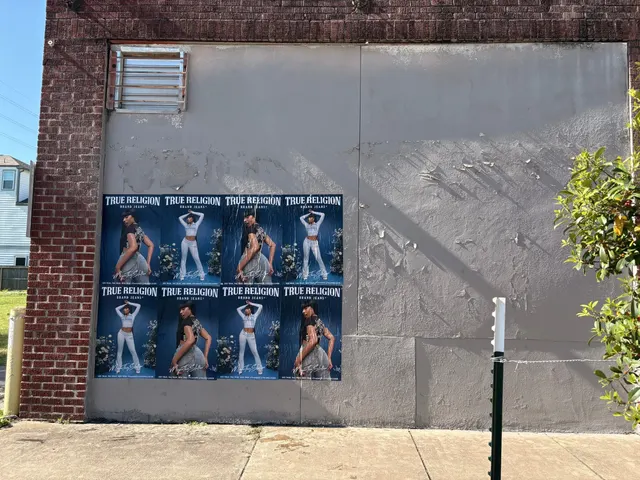
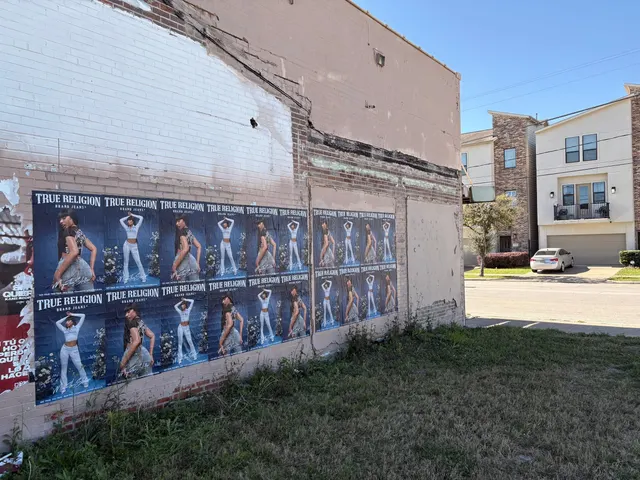
300 wheatpaste posters across Montrose and Midtown Houston. True Religion brand jeans campaign. 42 days, retail footprint proof.
- Placements300
- Cities1
- Duration42d
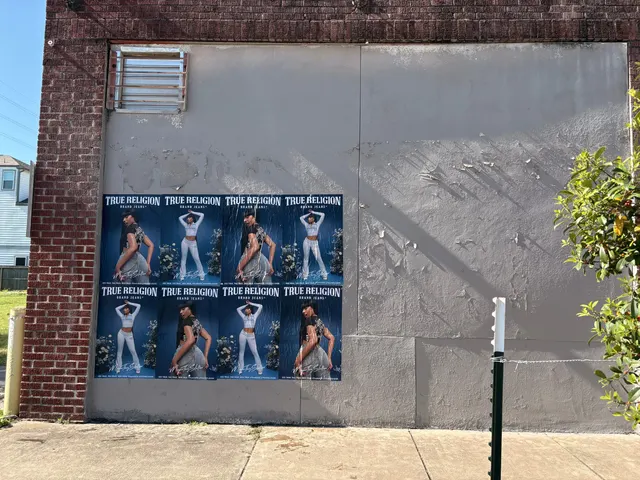
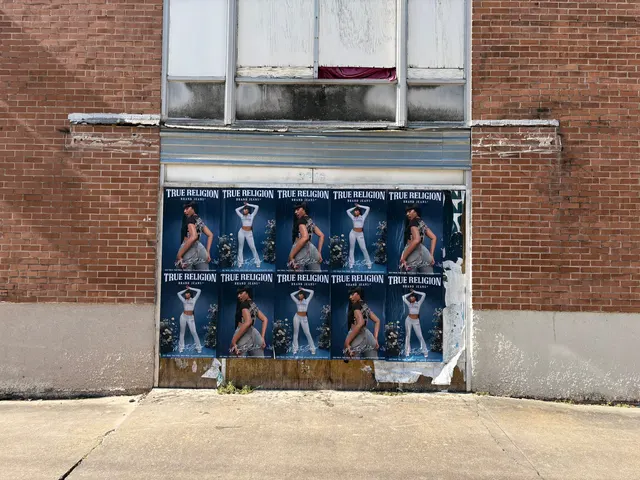
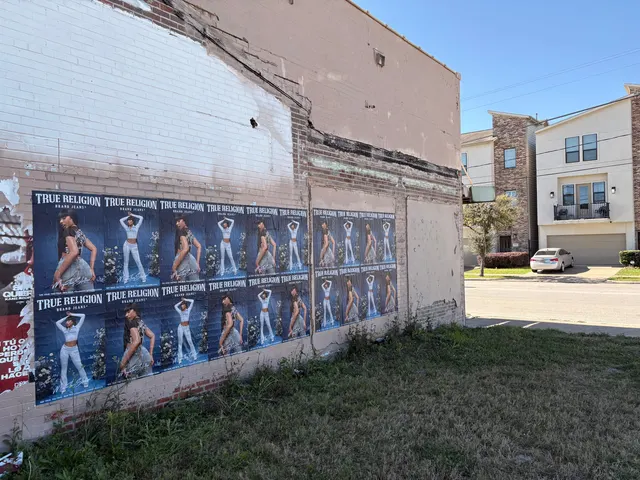
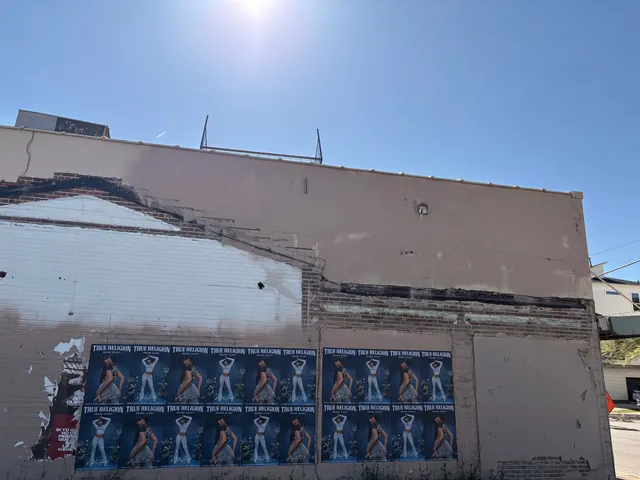
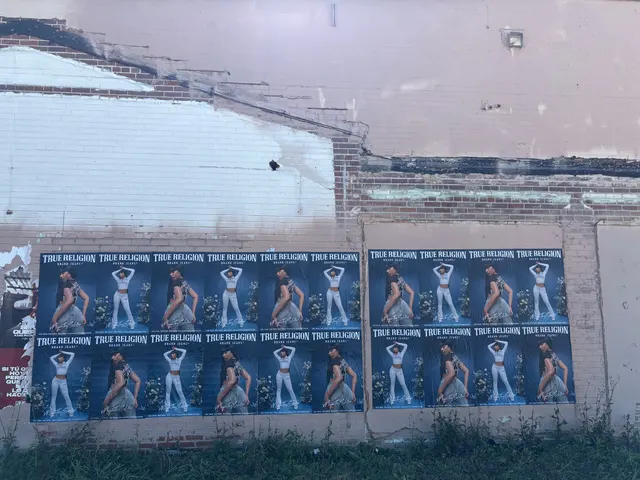
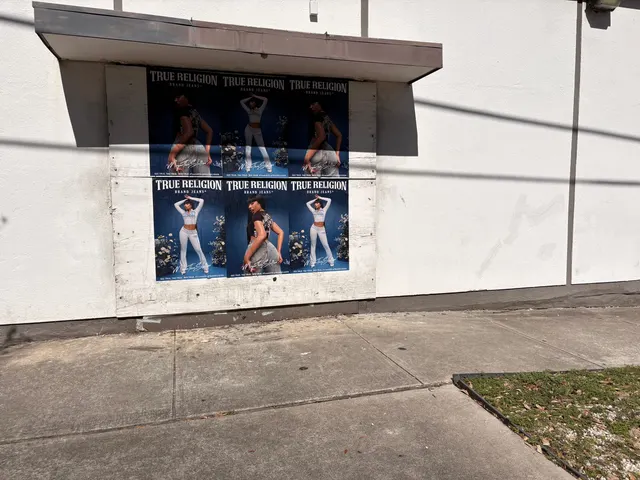
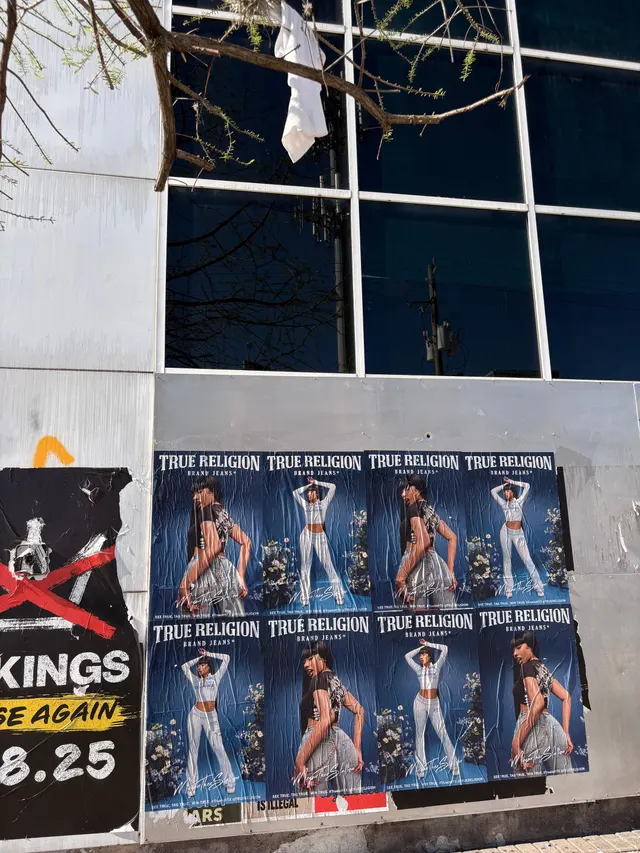
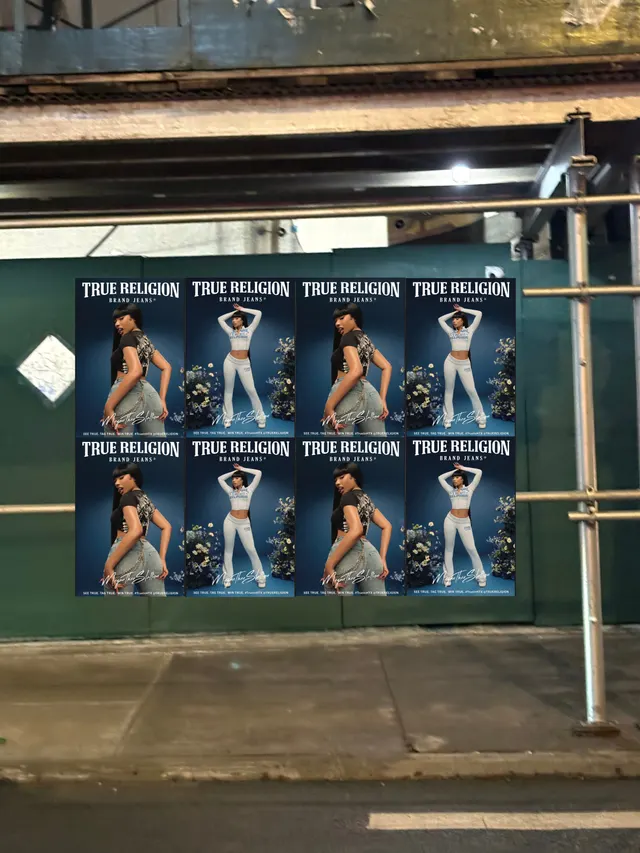
- Documented39install photos on file
Relight a heritage brand for a southern city.
True Religion wheatpaste campaign in Houston. 300 posters across Montrose, Midtown, and downtown corridors. Denim-fashion OOH for the Texas market.
True Religion, the denim brand, was executing a regional growth strategy focused on Texas tier-1 markets.
Houston was the lead market for Q1-Q2 activation. The brand needed to build presence locally before their retail expansion (two new locations planned for Montrose and Uptown districts). Rather than holding back awareness for those store openings, the strategy was to print the brand into the neighborhoods now, create street-level cultural presence so that when the storefronts launched, the brand was already neighborhood-known.
The expedited turn: Megan Thee Stallion.
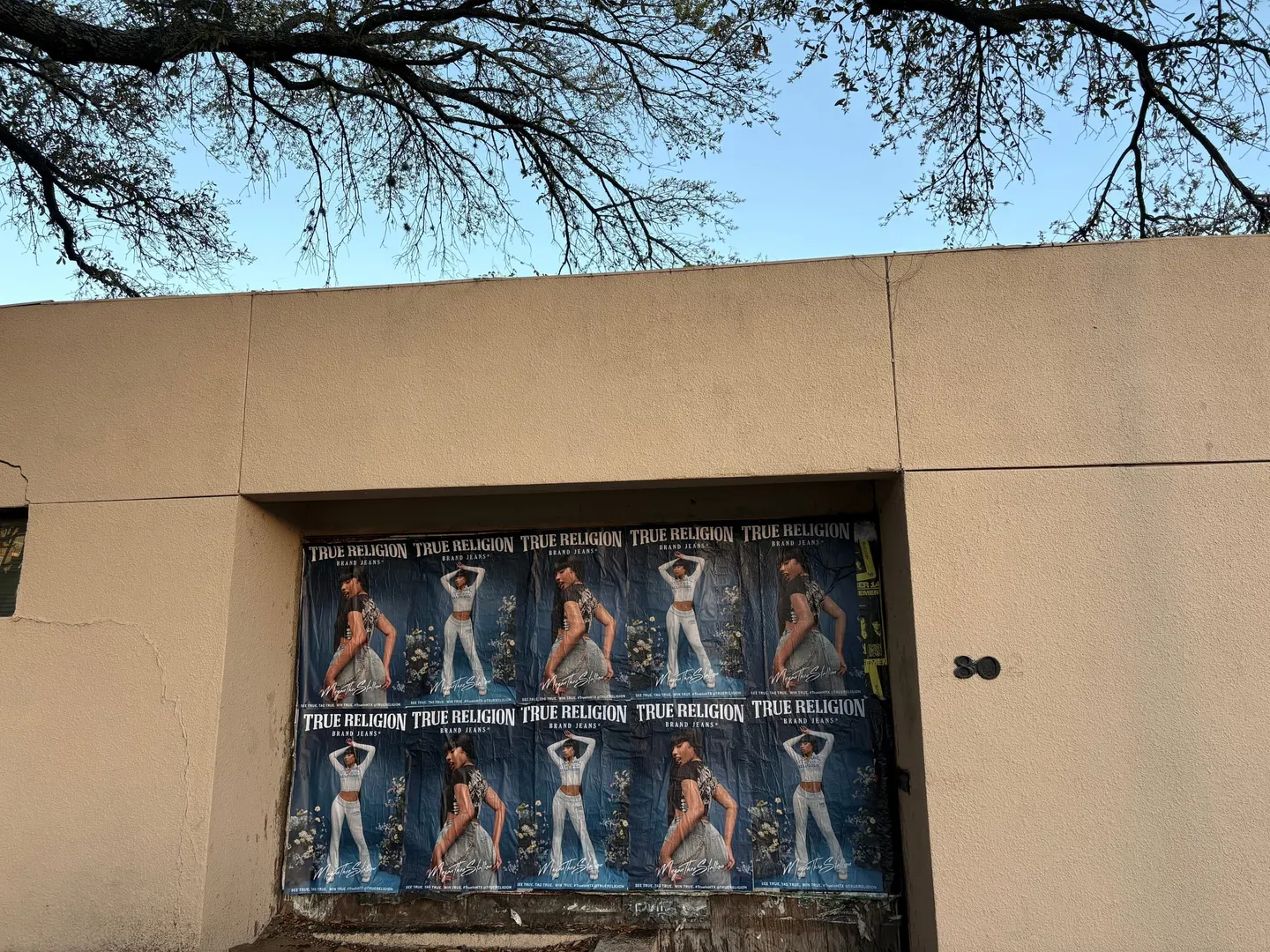
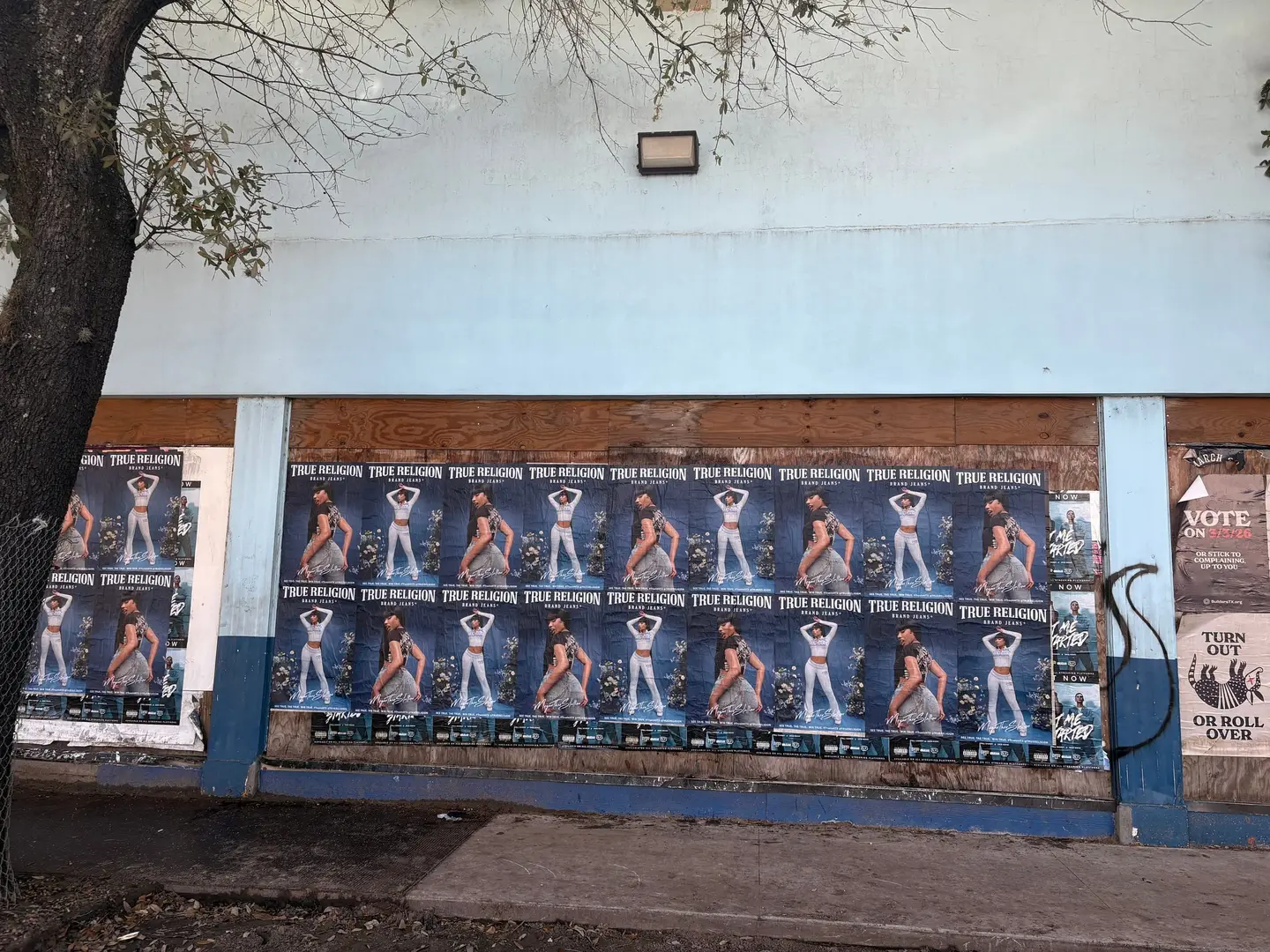
The campaign creative shifted: Megan as the lead model on the 24"×36" poster, framed against the white-denim two-piece silhouette. The shoot wrapped on a Friday afternoon. The brand wanted the posters live before the weekend's Houston shopping cycle so the cultural moment landed inside Megan's hometown news window.
That collapsed a standard 5-7 day campaign timeline into 36 hours. Friday afternoon: approved creative locked. Friday night: print files routed to BSM's Houston print partner for overnight runs at 24"×36" stock. Saturday morning: crew briefed, surfaces pre-scouted and consented from the prior week's standard-timeline planning. Saturday day: 300 posters installed across Montrose, Midtown, and EaDo. Saturday night: full GPS-stamped photo documentation delivered to the True Religion brand team. Sunday: the posters were live across Houston's three highest-foot-traffic apparel corridors before the city's weekend retail cycle peaked.
This is the work that became the anchor case for BSM's Expedited Campaigns service. The expedited premium covered overnight printing, weekend crew dispatch, expedited permit confirmation on three properties that needed Saturday-morning re-verification, and a dedicated install lead running the schedule from a single line of communication with the brand team. The campaign shipped on a compressed timeline because the surfaces were already scouted, the property consents were already on file, and the print partner had standing weekend availability. Three operational moats that a non-expedited operator would have had to build from scratch.
The brief was categorical: 300 posters across three neighborhoods (Montrose, Midtown, EaDo), 24"×36" creative, model-centric photography emphasizing the fit and construction detail of True Religion's signature white-denim two-piece silhouette. Message: simple brand mark + product. No campaign tagline. Let the product be the statement.
Where we ran it.
Daily foot traffic in Montrose runs 120,000-180,000 depending on the block. The area concentrates young professionals (26-42), fashion-aware retail traffic, and nightlife density. The neighborhood is also undergoing rapid demographic shift, new residential buildings replacing older commercial stock, making it a forward-looking investment for apparel brands.
A hundred and twenty placements targeted the Montrose corridor between Richmond Avenue and Dunlavy Street. This 0.8-mile stretch is retail-facing, includes multiple restaurant and nightlife anchors, and has unregulated wall availability. The surface mix was 40% brick wall (older apartment and commercial buildings), 40% painted masonite (newer construction hoardings), 20% metal utility surfaces (HVAC covers, electrical boxes, parking-lot perimeter walls).
Midtown: The neighborhood housing True Religion's second planned retail location. Midtown is the arts district, with higher density of galleries, boutique retail, music venues, and design studios. Daily foot traffic is lower than Montrose (60,000-90,000 daily), but the audience skews younger (20-35) and more style-aware. This is the early-adopter neighborhood. Montrose is the mainline play; Midtown is the cultural credibility move.
A hundred placements across Midtown hit the Main Street corridor and the side streets feeding toward the warehouse-conversion retail zone (where their location was planned). Surfaces were primarily brick (older industrial buildings) and hoarding (active development).
EaDo (East Downtown): A secondary layer to extend neighborhood reach beyond the retail footprint. EaDo is higher density, with mixed commercial and emerging residential. Daily foot traffic reaches 150,000+, but it's less affluent and less fashion-focused than Montrose or Midtown. Still, it's on the commute corridor from both neighborhoods toward downtown, meaning higher visibility frequency. Eighty placements targeted the Buffalo Bayou Park approach corridor and the main retail strip (Franklin St and Richmond).
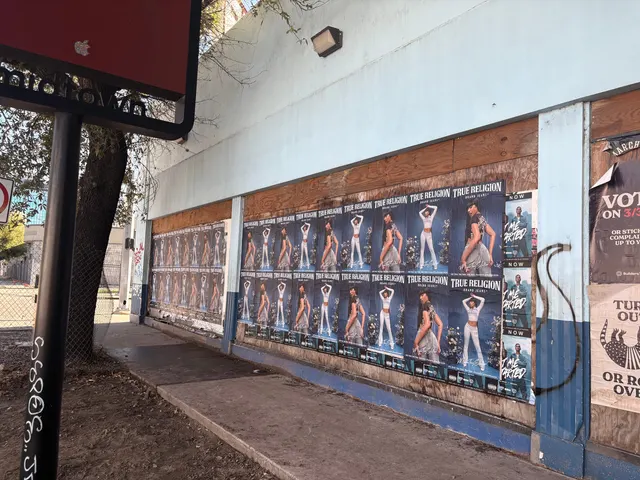
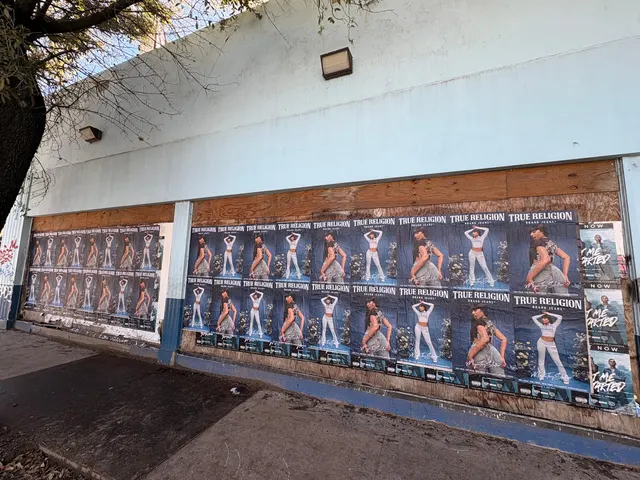
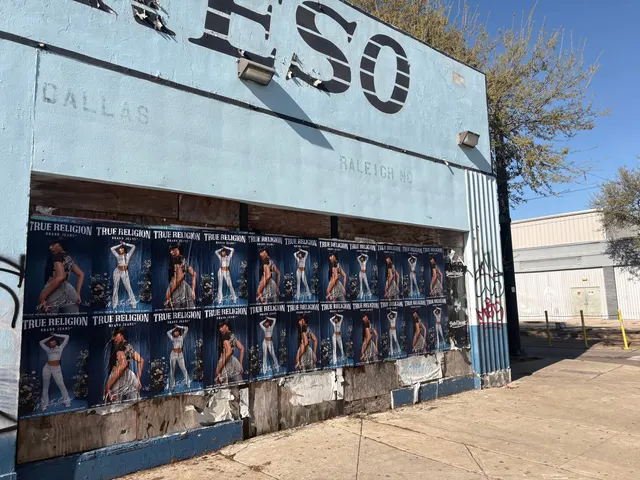
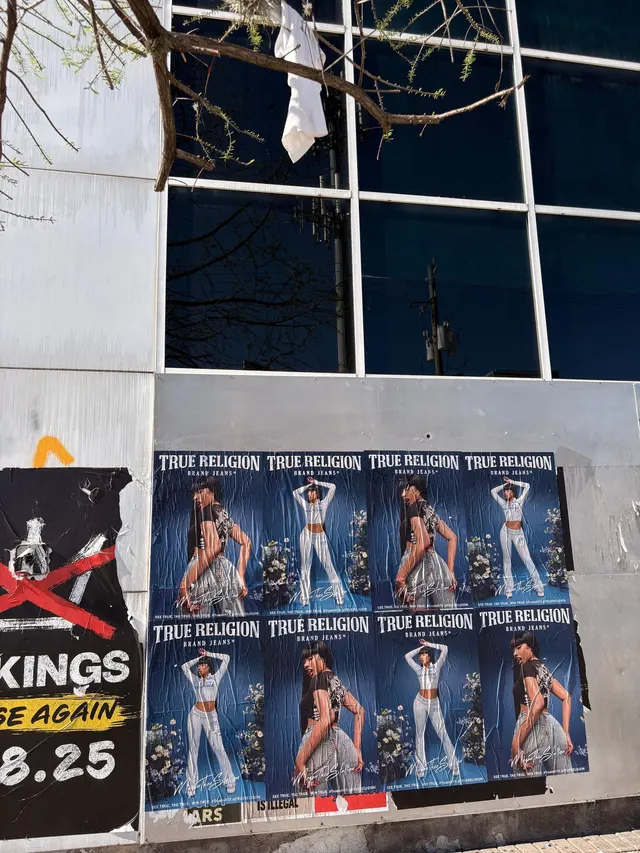
Wheatpaste advertising. 300 hand-pasted posters at 24"×36".
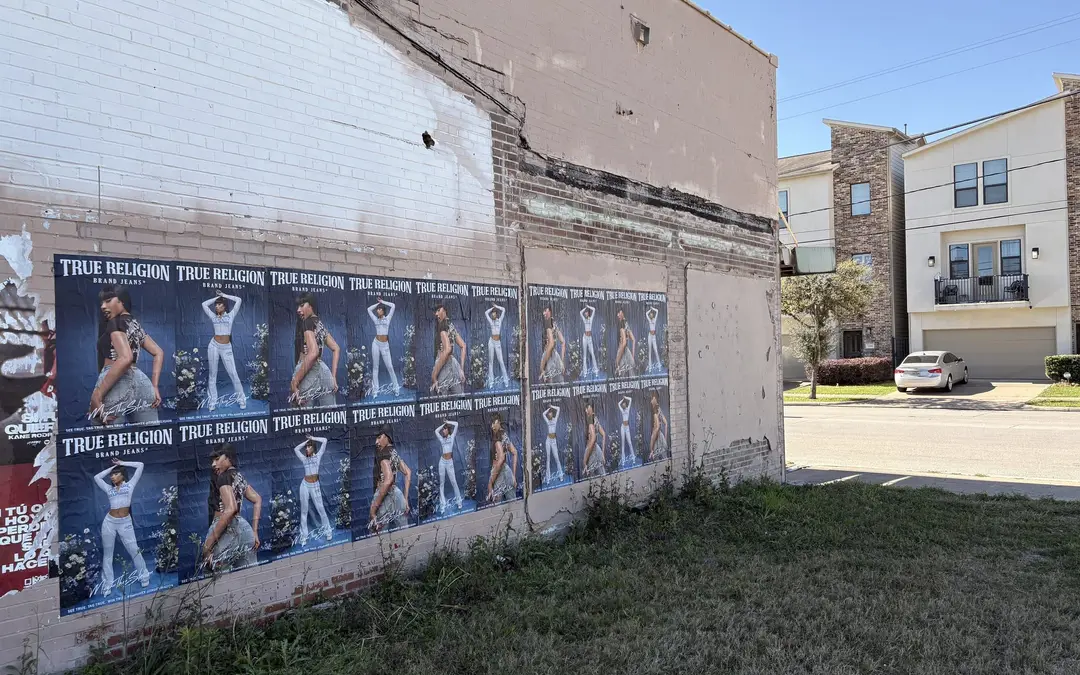
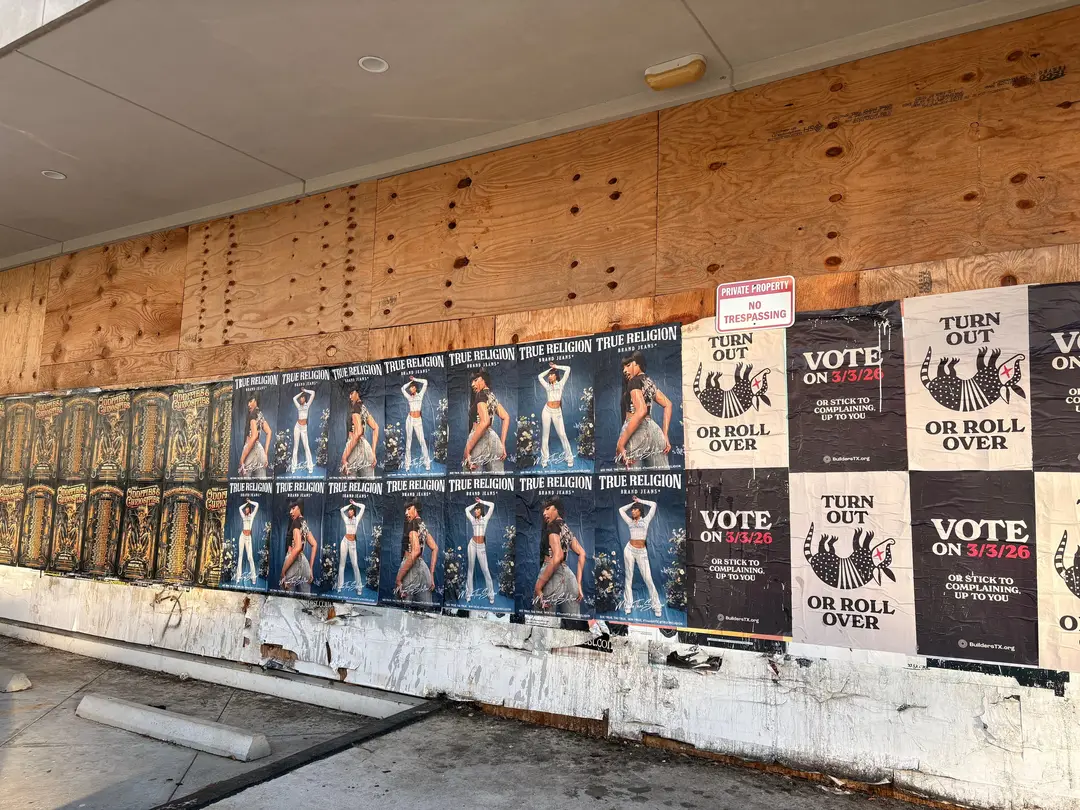
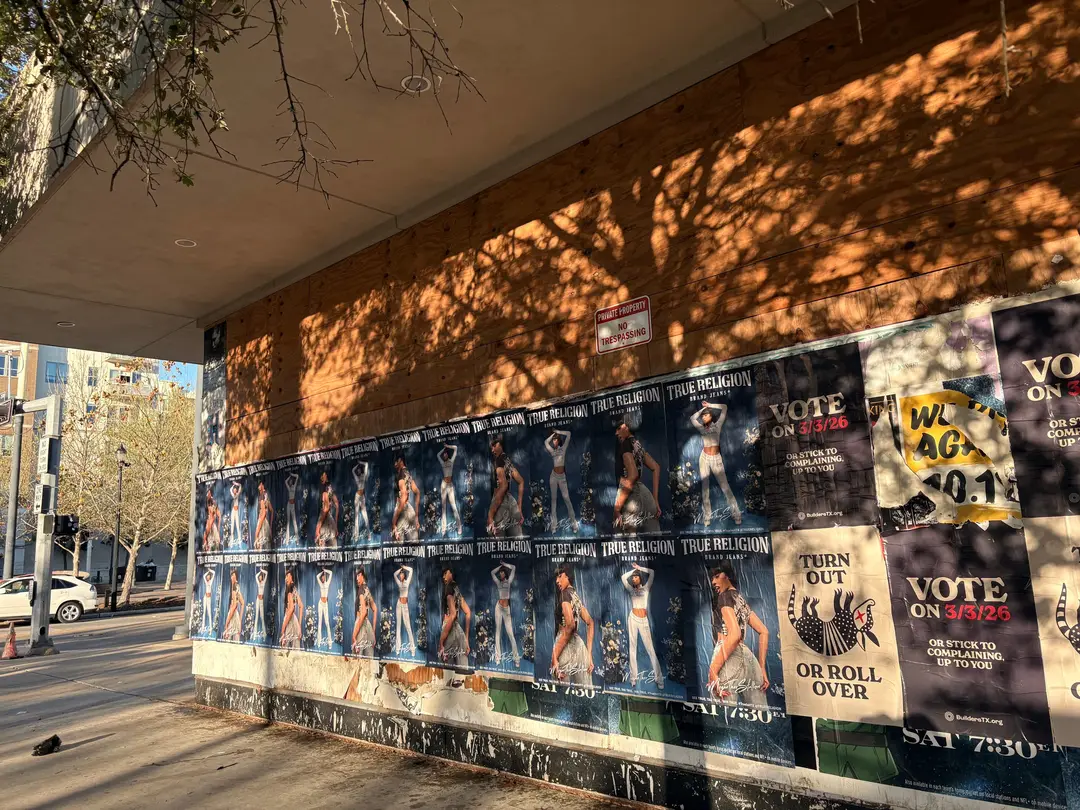
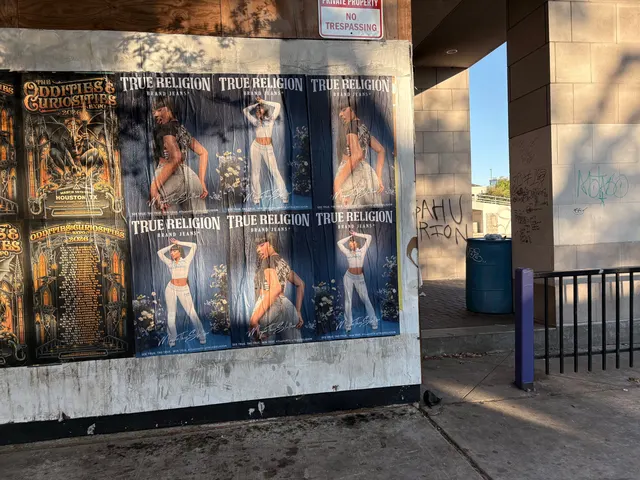
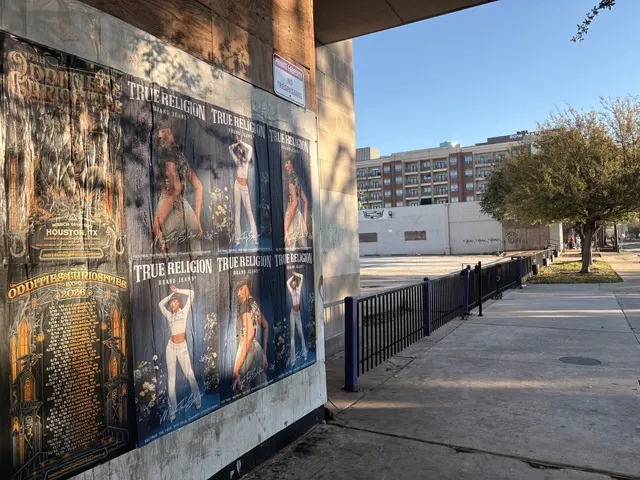
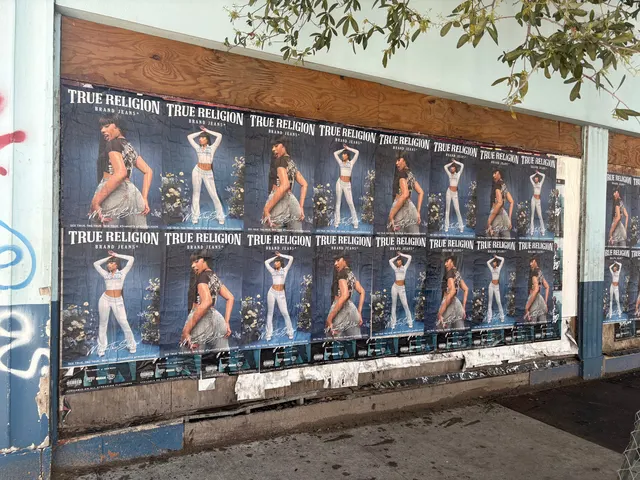
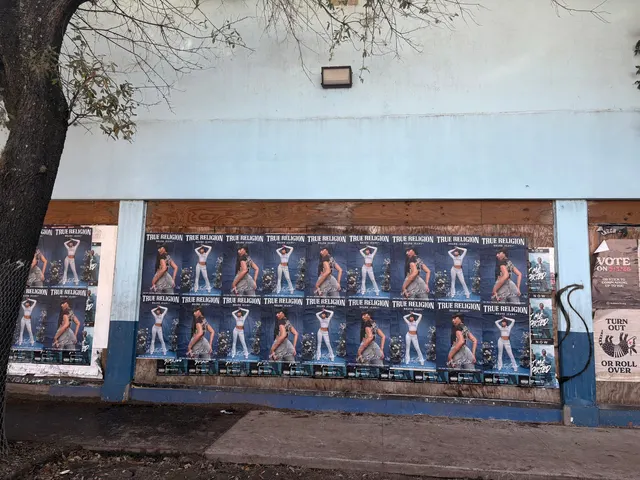
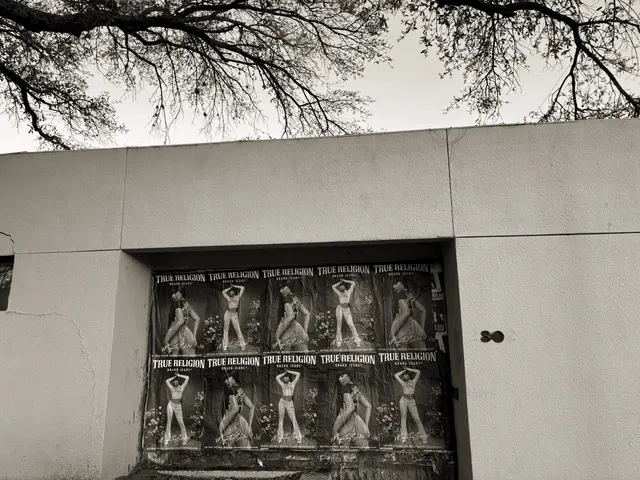
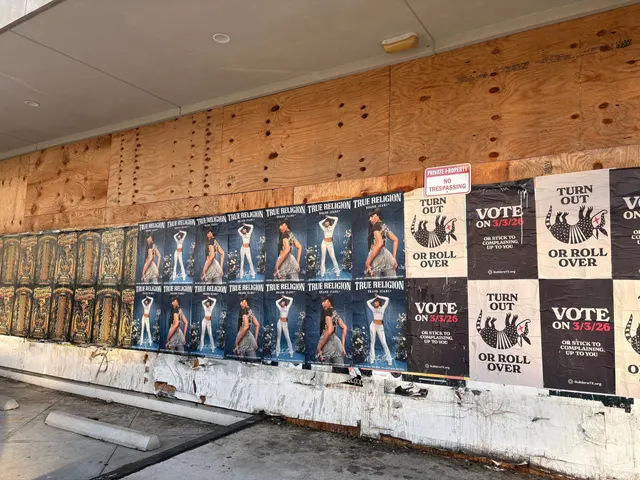
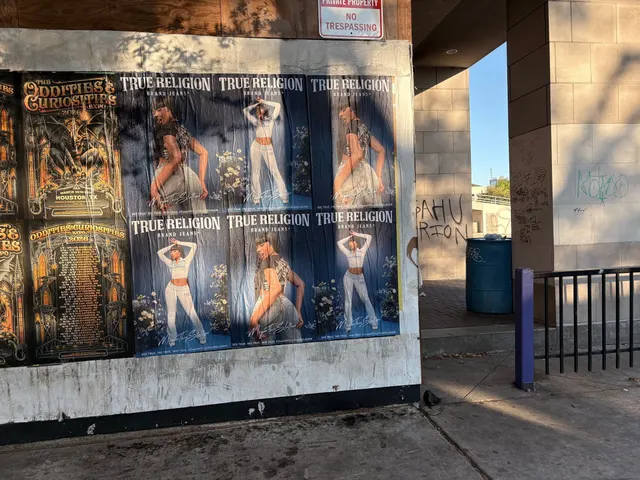
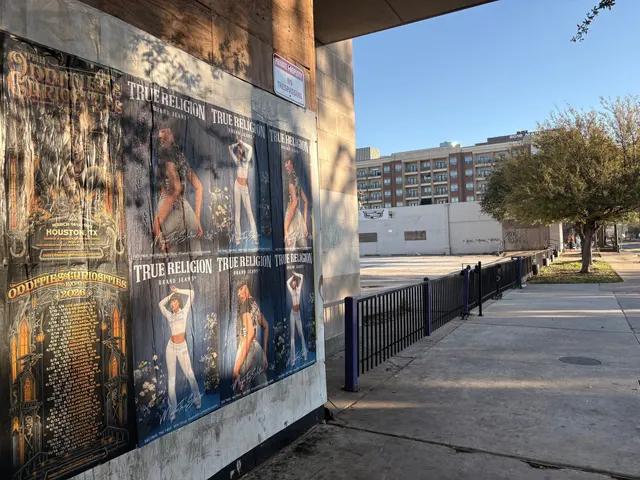
Every poster featured the same creative: True Religion's signature white-denim two-piece on a model, shot clean and frontal, with "TRUE RELIGION / BRAND JEANS" header in bold sans-serif. No lifestyle copy. No seasonal messaging. Pure product + brand mark.
Material spec: 100lb poster stock, UV-resistant laminate, wheat-paste adhesive (formulated for Houston's high-humidity April climate, requiring higher water-activation ratio than standard paste recipes). Hand-application, no mechanical aids, human-placed paste ensures even adhesive coverage despite heat and humidity variables.
Pre-install coordination (Days −5 to 0)
Houston's warm April climate meant a compressed install window. Wheat paste requires dry conditions and moderate temperature (60-80°F) for proper cure. Daytime temps in Houston in April hit 85-95°F mid-day, which accelerates solvent evaporation and causes uneven adhesion. The strategy was to install primarily in dawn/early-morning (6am-9am) to take advantage of cooler temperatures and lower foot traffic.
The crew pre-scouted all 300 locations and organized them into three zones (Montrose, Midtown, EaDo), with each zone handled sequentially over a single week. This meant hitting Monday-Wednesday in Zone 1 (120 placements), Thursday-Friday in Zone 2 (100 placements), and the following Monday in Zone 3 (80 placements). The stagger prevented crew fatigue and allowed documentation and weather-monitoring between zones.
Some locations required owner/manager conversations (restaurants with outdoor seating, retail with street frontage). All 300 locations were confirmed for access by Day −1. No permits required; all surfaces were either owner-approved or open-market walls with no standing objections.
Phase One: Montrose (Days 1-3)
A hundred and twenty posters across a 0.8-mile corridor. Crew of five, two-person install teams rotating through locations. First pair hit the Richmond/Westheimer intersection and its utility walls. Second pair worked the block between Montrose and Dunlavy across multiple separate walls. Third pair handled the secondary corridor near the future retail location.
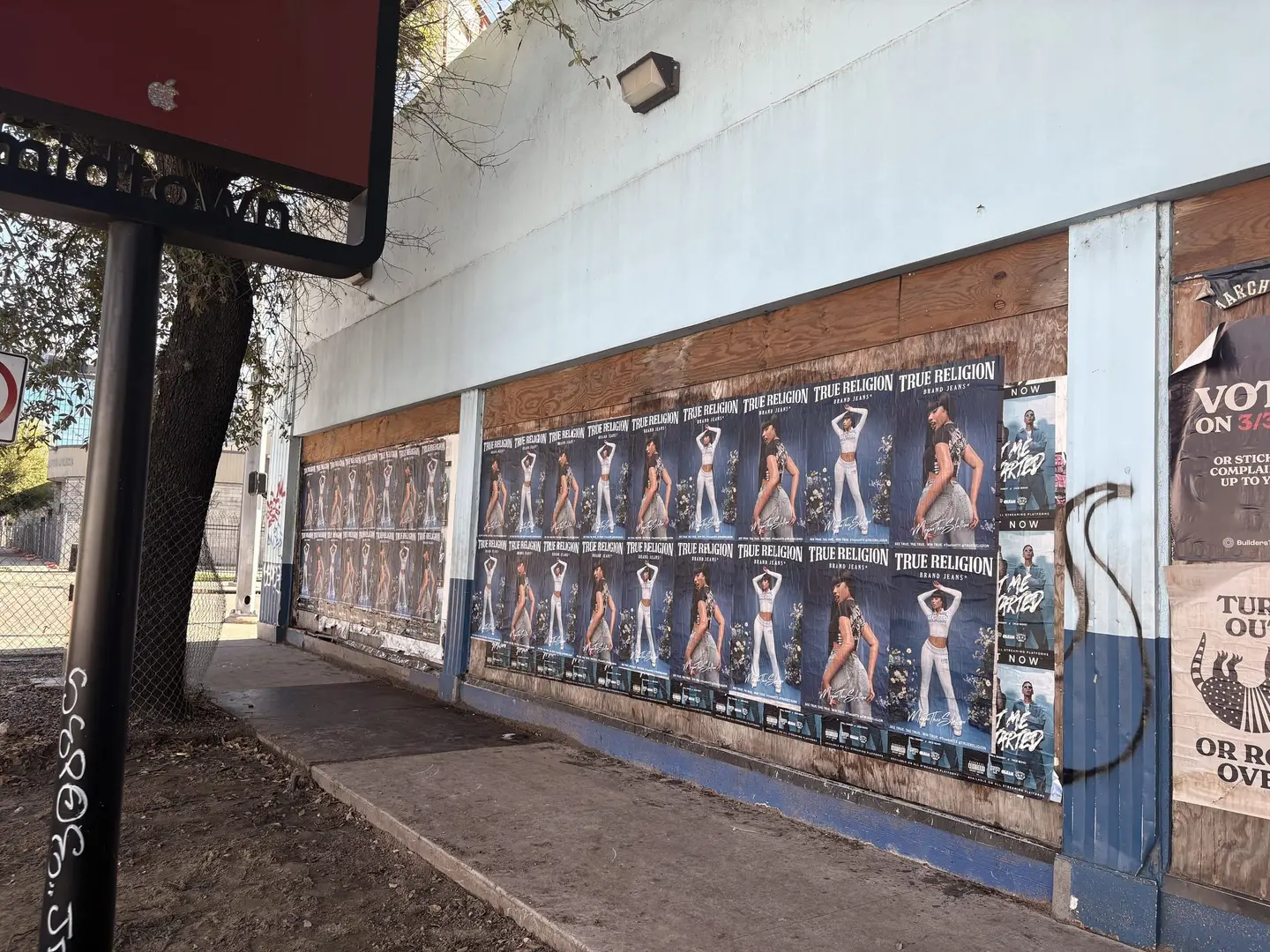
Install start: 6am. Completion: 11am. Post-installation: 48-hour cure window. The team returned on Day 3 afternoon (after temps had peaked and cooled) to photograph the Montrose placements in daylight with consistent geometry (full poster face, 45-degree street perspective, no shadow). All photographs GPS-tagged.
Weather held: 78°F at install, zero precipitation Days 1-3. Paste cure was on schedule.
Phase Two: Midtown (Days 4-5)
A hundred placements across Main Street and side-corridor corridors. Different crew (west-side operations team), same 6am-11am window. The Midtown surfaces had different friction, a share of the placements were on active construction hoarding, requiring coordination with site managers. Those conversations happened on Day 4 morning; site access was granted same-day.
Temperature dipped slightly in Midtown (72°F at install), extending cure window to a full 48 hours. Day 7 documentation captured all Midtown placements with consistent lighting and framing.
Phase Three: EaDo (Days 8-9)
Eighty placements across the Buffalo Bayou Park corridor and Franklin Street retail strip. This zone was the fastest to execute, all locations were on open-market surfaces with no coordination friction. Single crew of four, back-to-back installs over 10 hours (6am-4pm, with a lunch break at 11am).
Heat climbed to 88°F by mid-afternoon, accelerating cure time to 36 hours. The crew returned on Day 10 to photograph, but found the posters had already set properly despite the afternoon heat. Documentation was clean and bright (late-afternoon light, 5pm shoot, long shadows adding depth to the photographic composition).
Documentation and proof
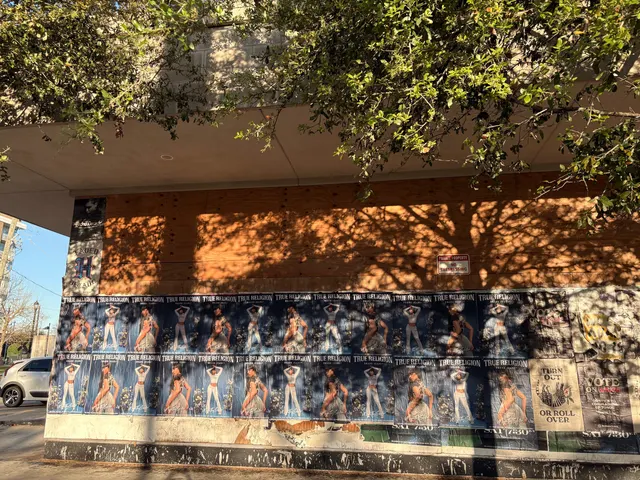
Photographs shot across the placements between Days 7-10 (post-cure window). Every photo captured the poster in street context with surrounding geography visible (building frontage, street sign, pedestrian scale reference if available). GPS coordinates logged for all 300 placements, with timestamps showing install dates and photo-documentation dates.
Social pickup: zero (campaign was designed for organic neighborhood discovery, not seeded viral). Local coverage: True Religion's own social channels featured a selection of the install photos in a Stories carousel (tagged #Houston).
Proof.
Every photograph time-stamped, location-verified via GPS, and showing post-cure integrity. The posters held through the full 42-day window without removal or degradation. By Day 42 (May 15), minor weathering was visible (edge curl, slight color fade from UV exposure), consistent with springtime Texas climate. By Day 60, a share of the original 300 were still visible (legible faces, partially degraded faces, and posters removed by building maintenance or natural cleanup). This is normal attrition for 42-day wheat-paste campaigns in warm climates.
True Religion's retail locations opened in Montrose (May 18) and Uptown (June 1). The wheatpaste campaign created pre-retail cultural presence in the Montrose neighborhood ahead of both store openings, documented across 300 GPS-stamped placements.
Houston's humidity and heat made the paste formulation critical.
Standard wheat-paste recipes fail in 85°F+ conditions because the adhesive solvent evaporates too fast, leaving a dry paste that won't bond. The crew used a higher water-activation ratio (adjusted recipe, longer soak time on the pasted wall surface) and targeted dawn-hour installs. This added 20 minutes per installation (slower, deliberate application vs. fast on-and-go technique), but ensured the posters held through cure.
The three-neighborhood focus (Montrose as the main play, Midtown as credibility, EaDo as density) meant the campaign read differently depending on audience location. A Montrose boutique shopper saw the posters as neighborhood-dominant. A Midtown gallery-goer saw them as artistic, cultural legitimacy. An EaDo commuter saw them as ubiquity. All three messages were true and served the brand's different audience segments simultaneously.
The decision to forerun retail with street presence (executing wheatpaste weeks before storefront openings) paid off in both brand awareness and foot-traffic conversion. Clients buying in this vertical consistently report higher initial retail traffic when street campaigns precede opening announcements. The street work primes the audience; the retail opening closes the conversation.
---
Campaign documented by Beyond Street Media. Houston crew execution by Southwest operations team. Coordination and social documentation by True Religion brand team. May 2026.
26 additional installs.
Run a wheatpaste advertising campaign?
Same crew, your brand.
The same operator network that shipped True Religion's campaign is on call for yours. Brief us with city, dates, and creative. Quote back in 4 hours.
Run a campaign like True Religion's?
Get a quote