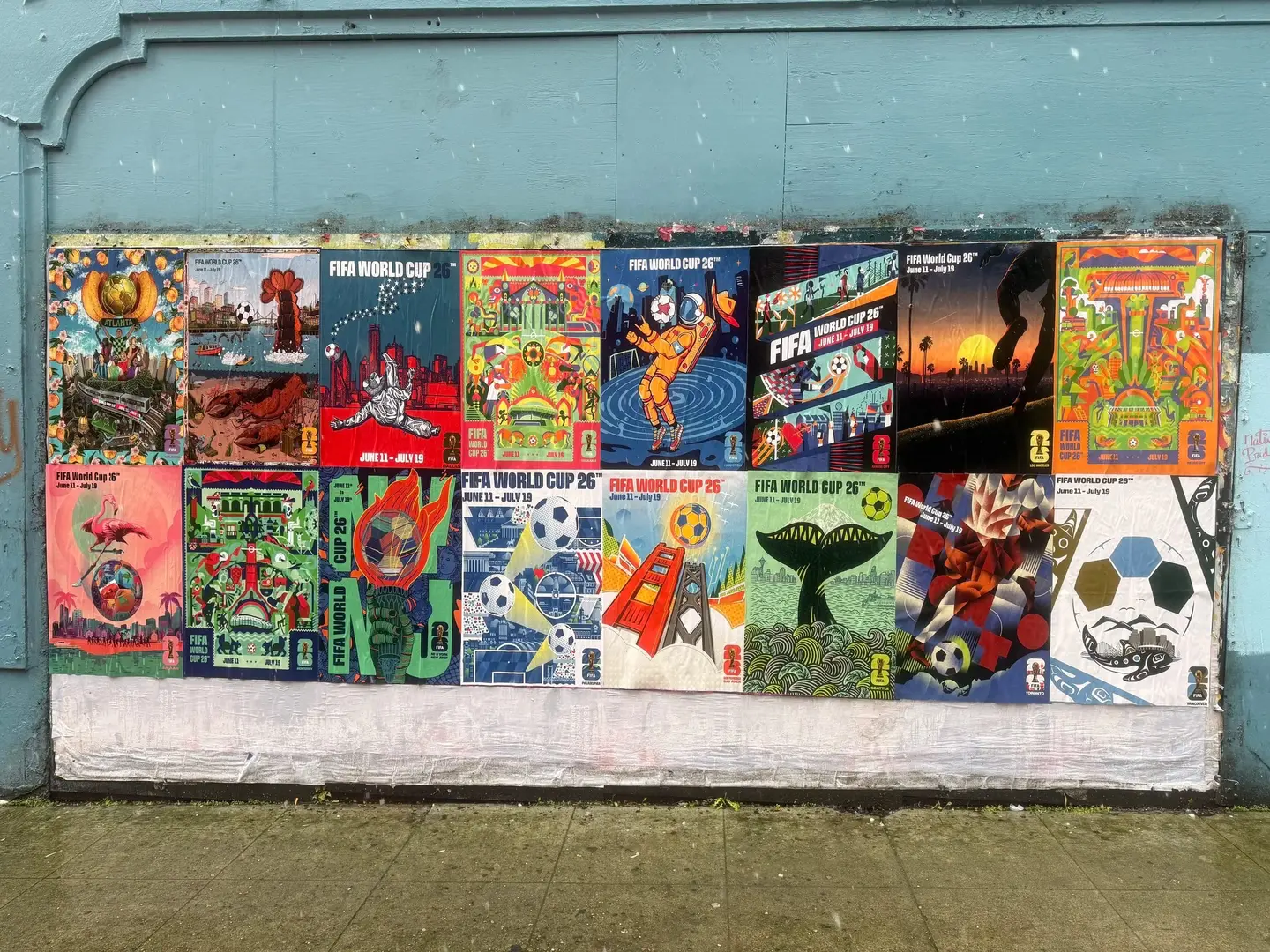
The physical work does not change at the border. Paper, paste, brush, wall. What changes is everything around it: which rulebook applies, who signs, how long approval takes, and what the weather will do to a campaign in February.
The rule is the same, the rulebook is not
Canada has no national poster statute, in the same way the United States has none. Legality comes down to the surface and the consent, and the enforceable detail lives in municipal bylaws.
That last part trips up US brands. American cities regulate posting through ordinances usually filed under handbills or bill posting. Canadian cities regulate it through sign bylaws, which are broader instruments covering everything from storefront fascia to election signage, with posters as one section inside them.
Toronto is the clearest example. Its rules sit in Municipal Code Chapter 693, Signs, Election and Temporary, and Article 5 is the poster article. Section 693-5.2 keeps posters off City property and the things standing on it: trees, street furniture, bus shelters, hydrants, traffic signs, litter containers, construction fencing. Section 693-5.3 is the carve-out. A poster may go on a kiosk, and a community poster on a public utility pole on a boulevard, if it is no larger than 22 by 28 centimetres, sits no higher than two metres, carries the date of posting and valid contact information, and comes down within 30 days. Contravening the chapter is an offence under section 693-7.1, carrying a fine of not less than $500 and not more than $100,000.
Provincial law sits above that, though not where most people look for it. The instrument that controls roadside display is the Public Transportation and Highway Improvement Act: section 38(2) bars any sign, notice or advertising device within 400 metres of the limit of a controlled-access highway without a permit from the Minister, and section 34(2) applies the same control along the King’s Highway. Federal law reaches the message rather than the surface, through the deceptive marketing provisions of the Competition Act and the Consumer Packaging and Labelling Act.
None of that makes a campaign harder to run. It makes it different to prepare.
What a documented Toronto run looked like
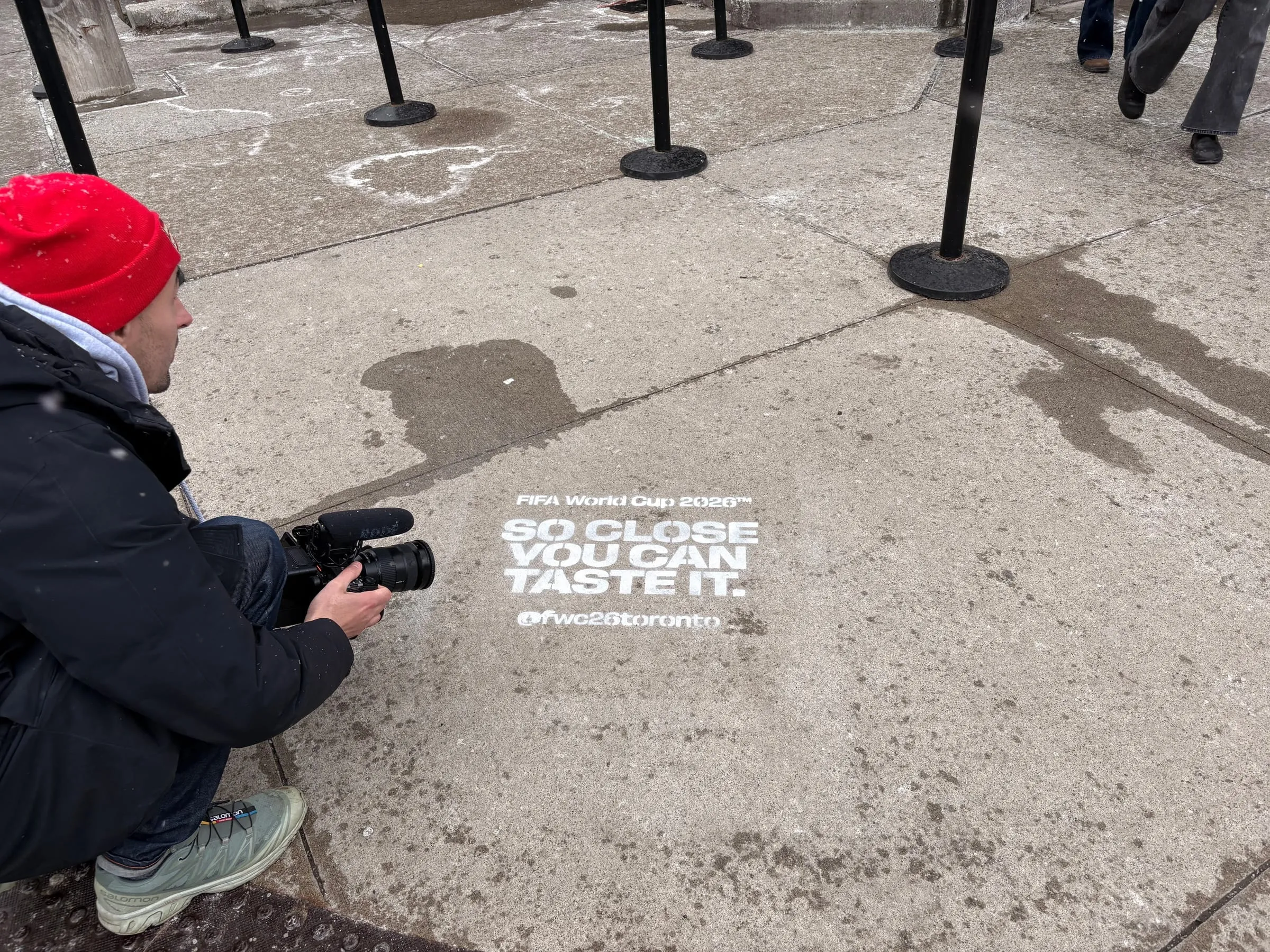
Our FIFA World Cup 2026 host-city work ran across two cities, Seattle and Toronto, with different creative in each. Toronto drew a sidewalk stencil assignment rather than a poster one, for a specific reason: the downtown core is a real walking grid, and the pedestrian there reads the pavement.
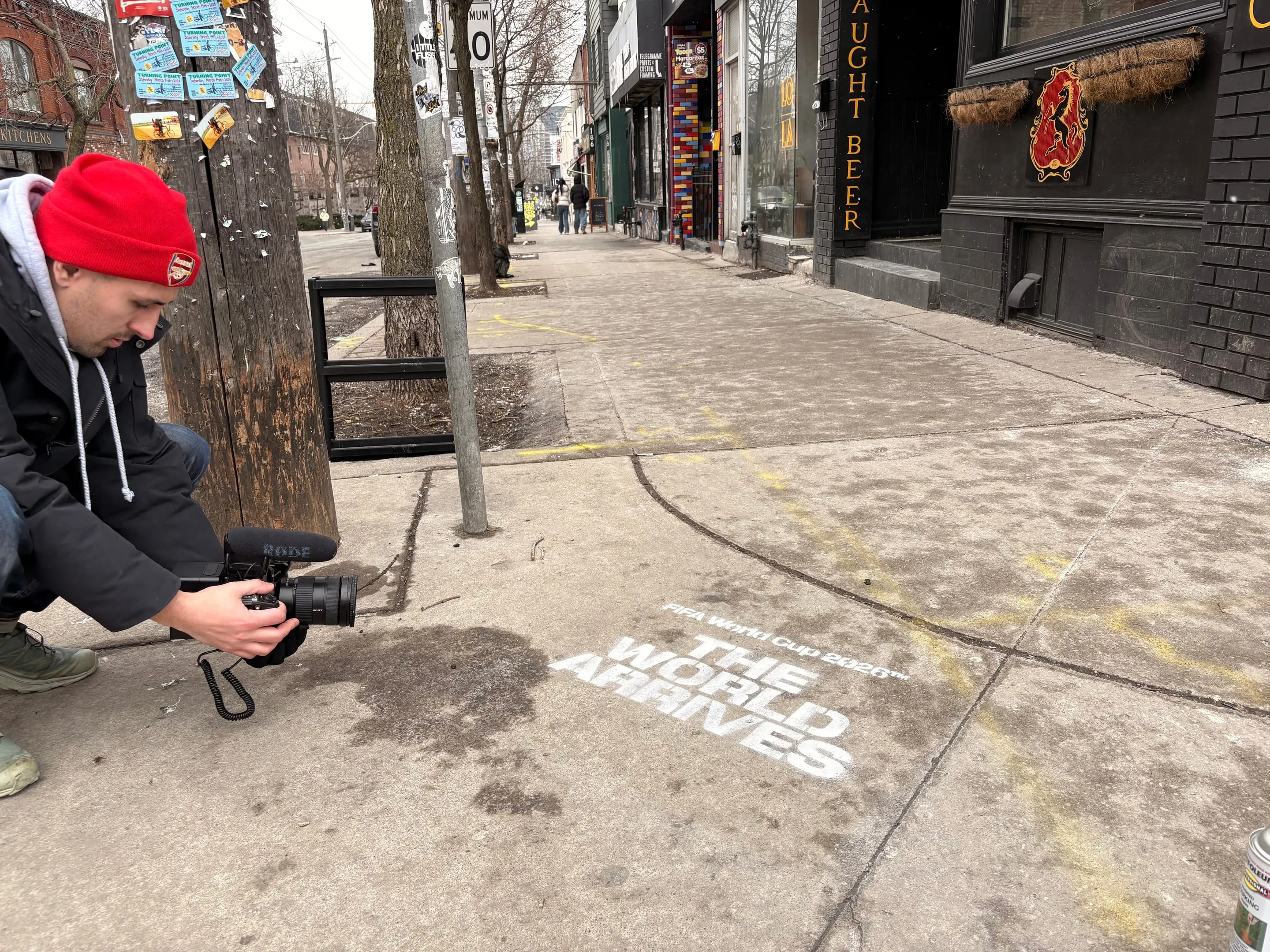
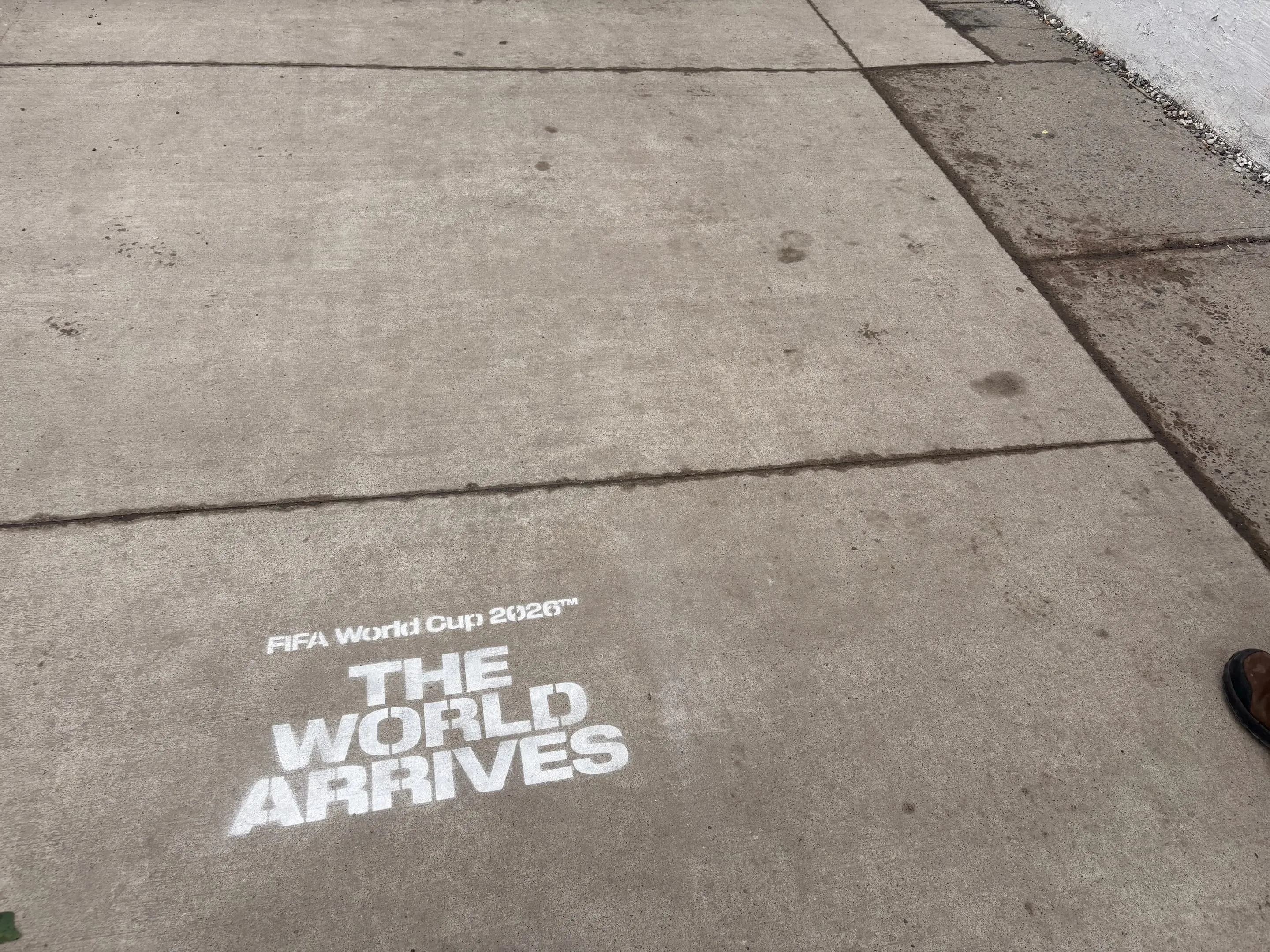
The run was 30 placements through the downtown core, concentrated on the foot-traffic feeds toward BMO Field, where Toronto hosts its matches. A separate crew worked dawn and early morning, when sidewalk traffic was lowest and the paint had time to cure. Every placement was mapped, timestamped and marked with coordinates before the crew moved to the next block.
One detail that only shows up in the field: Toronto stencils want light rain. Too dry and the stencil edges blur on application. Too wet and the paint pools. The install schedule tracked the forecast more closely than the calendar.
What to budget differently
Lead time, not install time. The install is the same day’s work it would be in Chicago. The owner and property-management conversation runs longer, because fewer Canadian building owners have done this before and the sign bylaw gives them more to read.
Print location. Shipping paper across the border adds customs handling and time. On anything print-heavy it is usually cheaper and faster to produce locally.
Season. Wheatpaste does not cure below freezing. That is a hard physical limit, not a preference, and it shortens the poster window in Canadian markets considerably. Stencils tolerate cold better but want the right moisture. A February brief in Toronto is a scheduling conversation before it is a pricing one.
Crew travel. A cross-border run carries travel cost that a domestic one does not, which is why multi-city tours amortise better than a single Canadian city on its own.
Toronto, Vancouver, Montreal
Toronto is where our own documented work sits, and it is also the easiest of the three to plan around: a dense walking core, an explicit poster provision in the bylaw, and a downtown grid that rewards ground-level formats.
Vancouver and Montreal both run their own sign bylaws with their own permitted surfaces and their own approval routes. We route briefs in those markets the way we route any market where we do not yet have a published case study: crews scout on foot, every surface is secured in writing, and we say so plainly rather than implying a case study we do not have. Montreal adds a language dimension. Section 58 of the Charter of the French Language requires public signs, posters and commercial advertising to be in French, and where another language runs alongside it, French must be markedly predominant. That is a creative-production question long before it is an install question.
The part that does not change
The thing worth carrying across the border is the discipline, not the paperwork. Private surface. Written consent. Every placement photographed with a location on install day. Removal at the end of the run.
That model is what makes a campaign defensible in Toronto for the same reason it does in Houston, and it is the honest answer to whether a US brand can run street media in Canada. It can. It just needs to be planned against the right bylaw.
For the underlying rule by surface, see is wheatpasting legal?. For the US state detail, wheatpaste laws, state by state. To run a cross-border brief, wheatpaste advertising and multi-city guerrilla tours are the two formats that travel best.
This describes how the rules work in practice, not legal advice. For a specific Canadian placement, read the city’s sign bylaw or ask us and we will tell you what the market allows.