The short answer
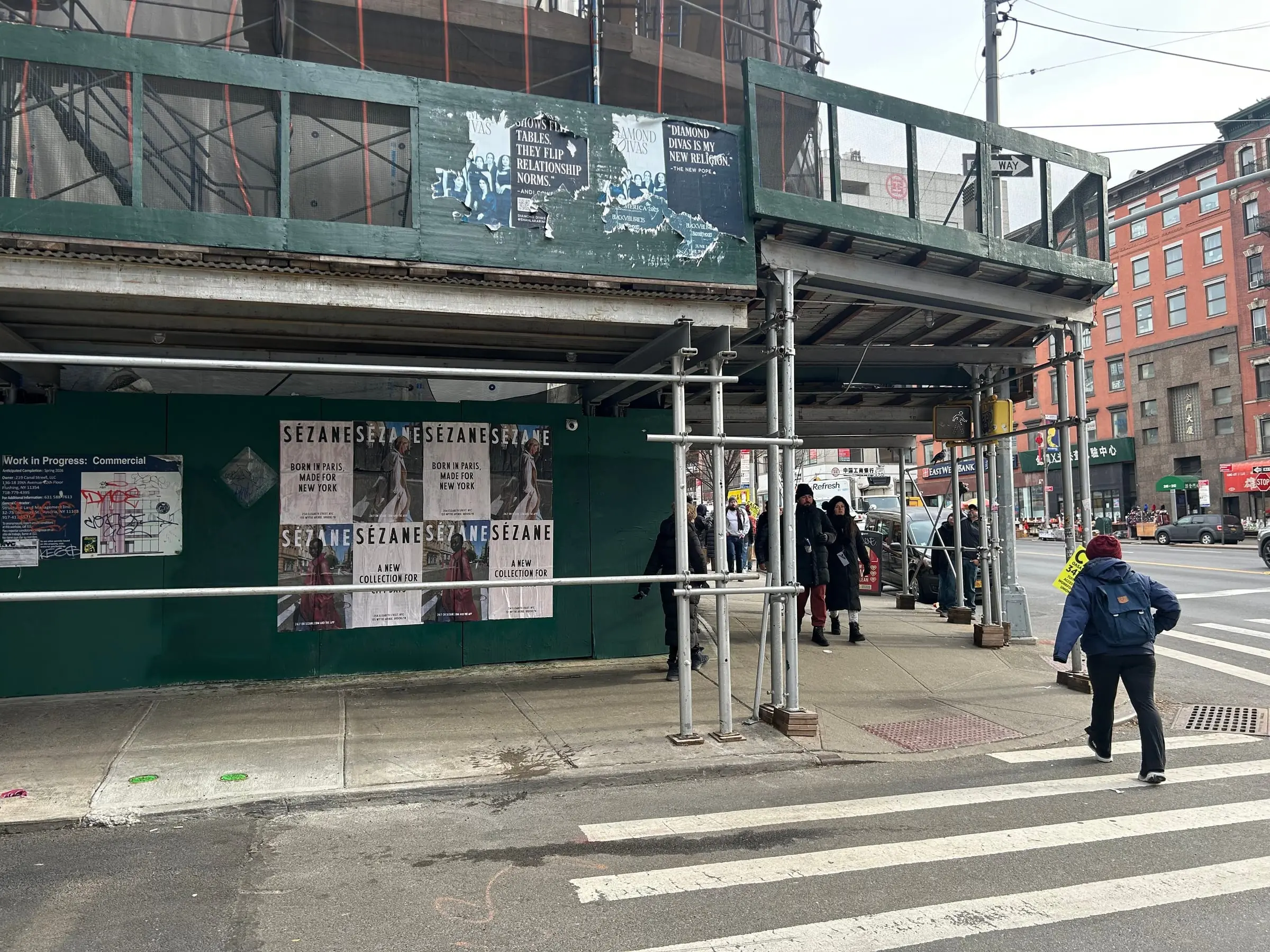
Wheatpasting is not illegal when the poster goes on private property with the owner’s written permission. It becomes an illegal-posting offense, usually a fine rather than a criminal charge, only when a poster lands on public property or on someone else’s wall without consent. So it is legal or illegal depending on one thing: the surface and the consent decide it, not the paste or the paper.
That one distinction settles most of what brands want to know before they book a campaign. The rest of this page is the detail behind it: what counts as permission, what a violation actually costs, who pays for it, and why a city can fine an unpermitted poster but cannot ban posters as a format.
The permission rule
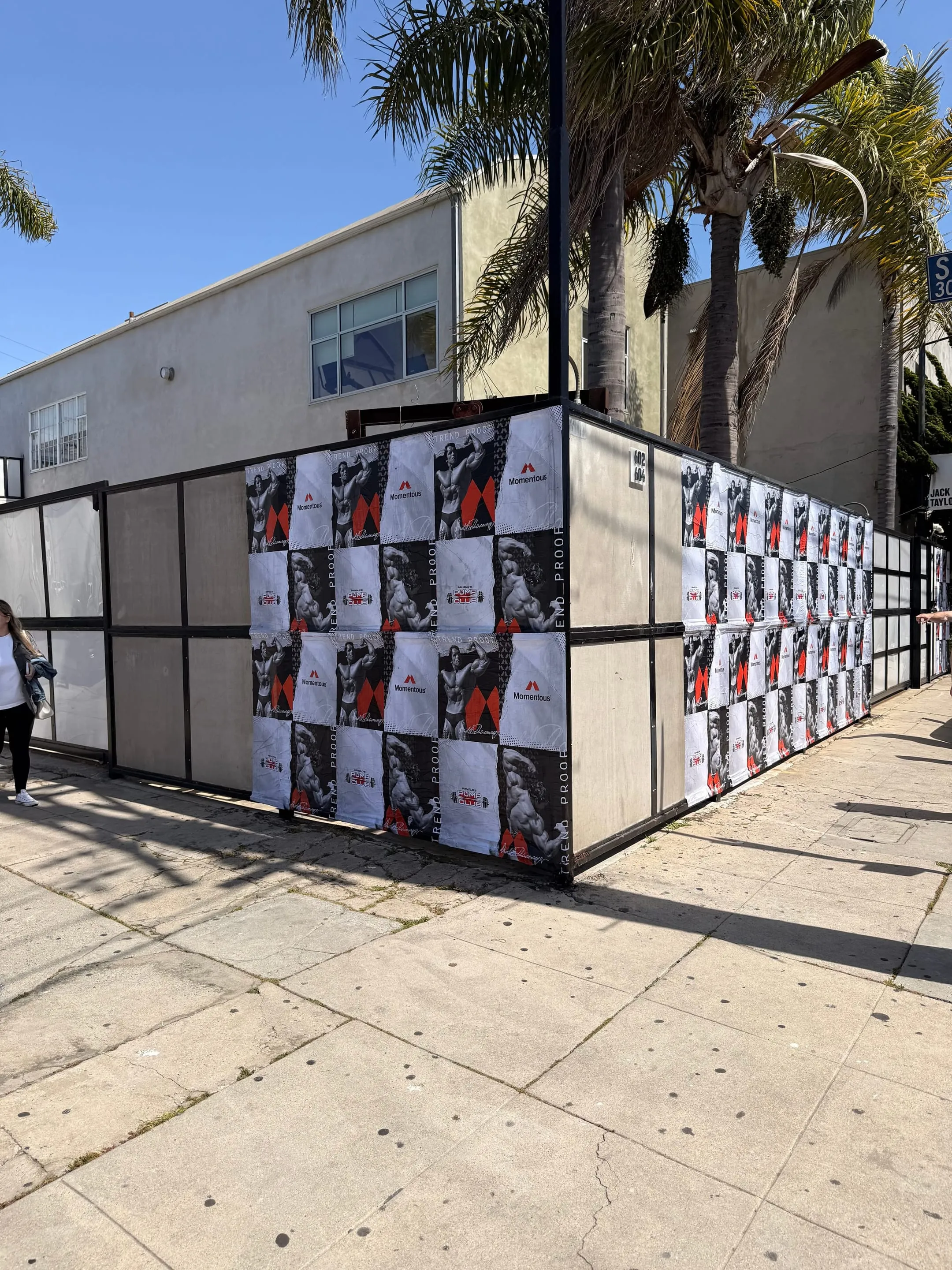
Every legal wheatpaste campaign rests on one arrangement: a private surface plus the owner’s consent, in writing. A property manager who signs off on a construction hoarding. A bar owner who wants the roll-up gate wrapped. A landlord renting a blank brick wall for the month. That signature turns the same poster from a violation into paid media, and it is the whole game. If you want the mechanics of securing it, we wrote them up in how to get legal wall access in 7 days.
Public infrastructure is the other side of the line, and it is consistent across the country. Utility poles, traffic-sign posts, government buildings, mailboxes, bus shelters, transit property. No city sells you consent to paste those, and every city keeps an ordinance against it. When people picture illegal wheatpasting, this is the picture: paper on public metal, put up by someone with no permission and no plan to take it down.
What “illegal” actually costs
Unpermitted posting is almost always a municipal code violation, not a crime. The city issues a fine per poster or per location, and the amount tracks the local ordinance. Some cities file it under litter. Others give bill posting its own section with a set penalty. A few add a cleanup charge or escalate for repeat offenders.
Two questions matter more than the dollar figure. The first is who is liable. Enforcement can reach the person who put the poster up and the party whose message it carries, so a brand’s name on the poster is the brand’s exposure, not just the installer’s problem. The second is whether anyone documented consent. A campaign with signed permission and a photo log is defensible. A campaign run off a group text is not.
Why a city can fine a poster but cannot ban posters
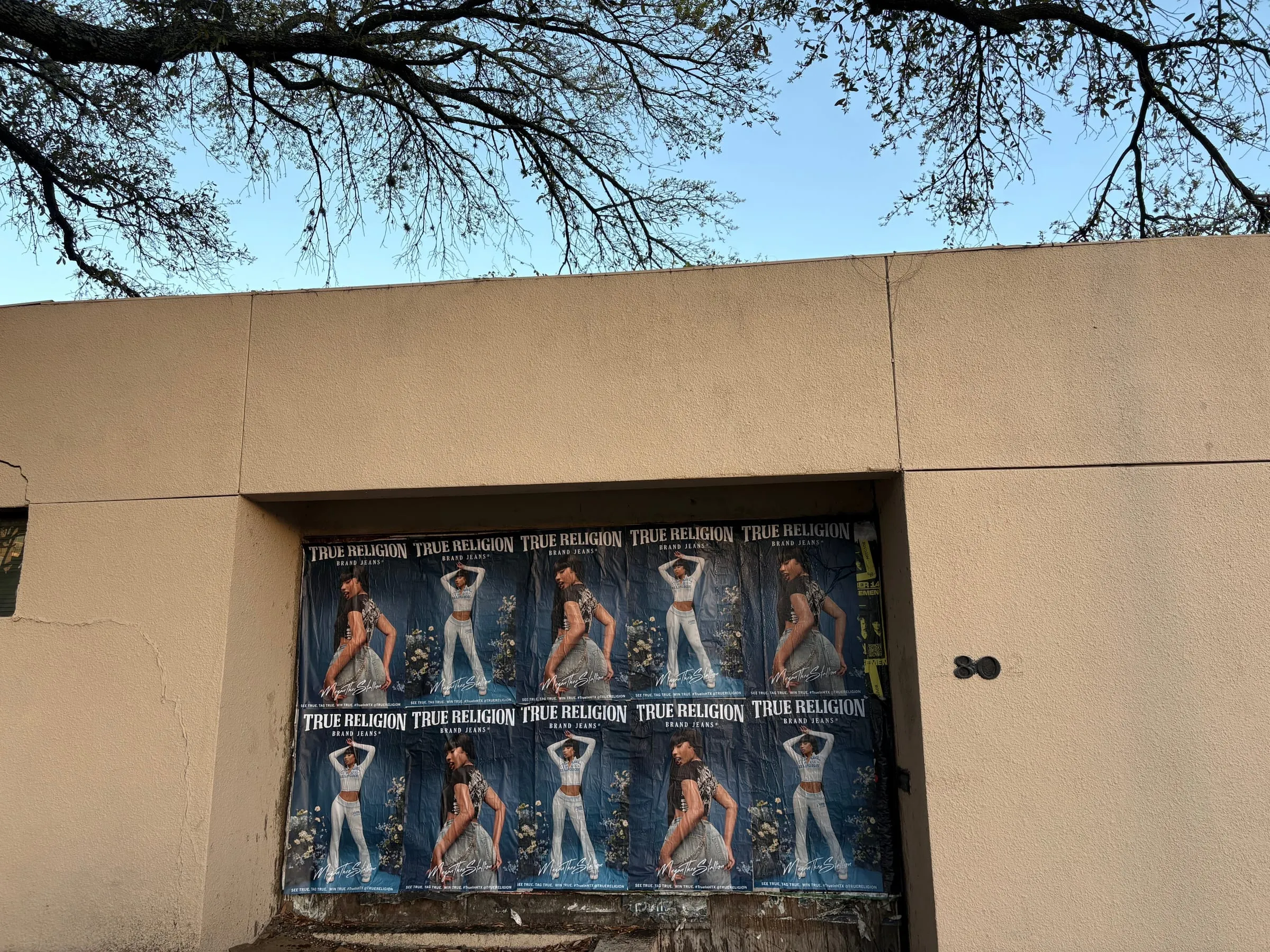
Brands sometimes assume a city could just outlaw the whole medium. The Supreme Court has already drawn that boundary. In Metromedia, Inc. v. City of San Diego (1981), the Court struck down a San Diego ordinance that banned most outdoor commercial signs while leaving other signs standing, because the rule swept too far into protected speech and let officials favor some messages over others.
The takeaway for a poster campaign is practical. Cities regulate where and how you post, and they enforce against posting on public property without consent. They do not get to ban the format because they dislike the message. That is why the permitted path is not a workaround. It is the durable, court-tested way to run street media. For the First Amendment background, the Free Speech Center’s write-up of the case is a clean primer.
It varies by city, not just by state
There is no single national wheatpasting statute. The rule lives in municipal code, so the specifics shift from city to city even inside the same state. Los Angeles writes it differently than San Diego. New York’s handbill rules read differently than Buffalo’s. When you need the exact language for a given city, the ordinance is public: most US cities host their code on the Municode library, usually filed under “posting,” “handbills,” or “bill posting.” Pull the real ordinance for the city you care about instead of trusting a number someone repeated online.
We keep the location detail where you can use it. The 50-state guide covers legality, permitted surfaces, and the governing statute state by state. For city worked examples, is wheatpasting legal in NYC runs one market end to end, and is sidewalk stenciling legal in LA does it for a related format. The coverage pages carry the local read for individual markets: California, New York, Texas, Illinois, Nevada, and Florida.
The practical answer for a brand
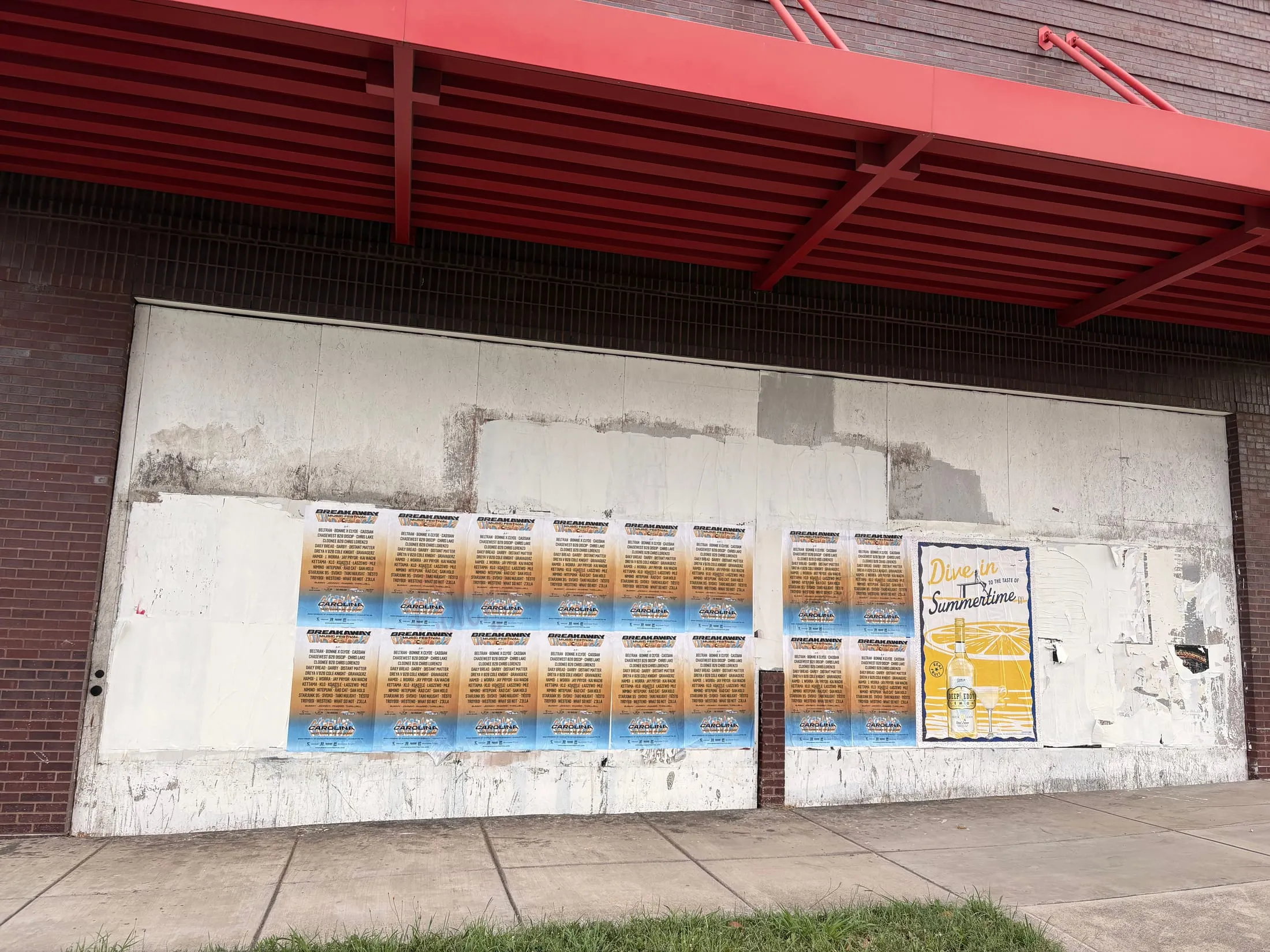
If you are reading this before booking, you are really asking one thing: how do I run a poster campaign without my brand catching a fine. The answer is unglamorous and it works. Put the posters on private surfaces. Get the owner’s permission in writing. Log every placement with a location and a photo. Keep a crew that knows the local ordinance and takes the paper down when the run ends.
That is the model we run. When you book a wheatpaste campaign with us, the permission and the documentation are part of the job, and every install ships with a GPS-tagged photo log. It is also the honest line between operators. Some agencies trim cost by skipping consent and betting the fine never reaches the client. We name which surfaces are permitted and handle the paperwork that keeps a campaign defensible. If you are comparing shops, that is the question to ask, and it is the one we answer in how we stack up against AGM and against wild-posting agencies.
Event and music teams ask about legality more than anyone, because the launch date is fixed and a fine makes a bad headline. If that is you, the events and festivals playbook is built around permitted placement on a deadline.
This is how the rules work in practice, not legal advice. For a specific placement, check the local ordinance or ask us and we will tell you what the market allows.