Sidewalk stencil advertising in Los Angeles.
Biodegradable, water-soluble chalk sprayed through a cut stencil onto LA sidewalks and plaza concrete. Ground-level, at commuter eye-down. Stencil cutting and install in-house, a GPS photo of every stencil, and nothing left on the municipal record.
From $2,500, stencil-cutting and install both included. 5-7 days from brief to first stencil.
500+ documented installs since 2019 · a GPS photo of every stencil · biodegradable chalk, cut and sprayed in-house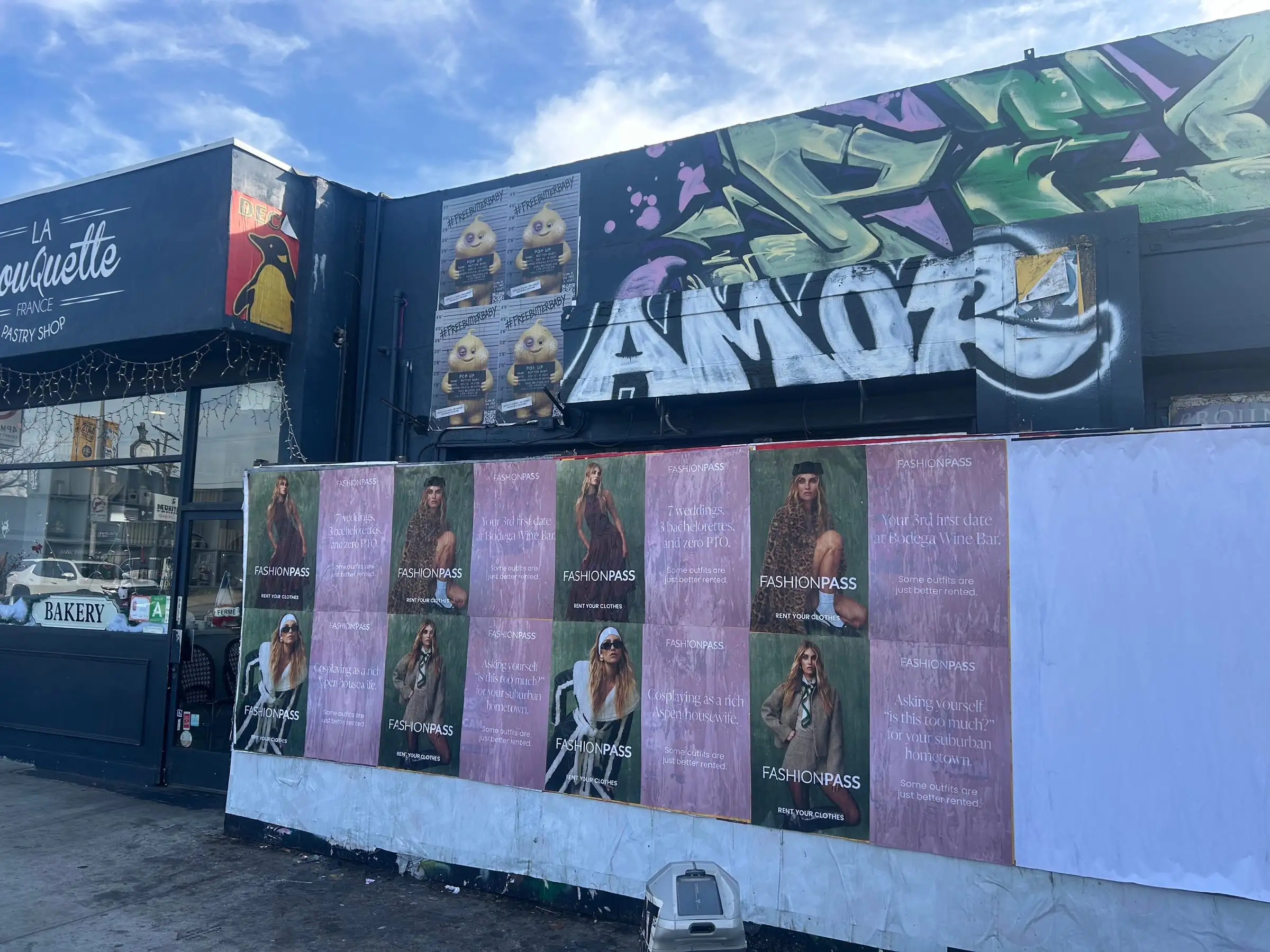
We delivered.




















Brand partners include: FIFA World Cup 2026, Palantir, Sézane, G-Shock, Mitchell & Ness, True Religion, Huda Beauty, Yonex, Relevance AI, Momentous, RYZE Coffee, Bloom Effects, Incrediwear, Brooklyn Museum, Sweat FC, HydroJug, Frameline, Alchemy, OneRepublic, Lone Fox, Vaura Pilates.
We cut it, spray it, and prove it.
Stencil-cutting and install under one roof — biodegradable chalk sprayed onto the pavement by a local crew, then a GPS photo of every stencil. Temporary by design, so it clears itself.
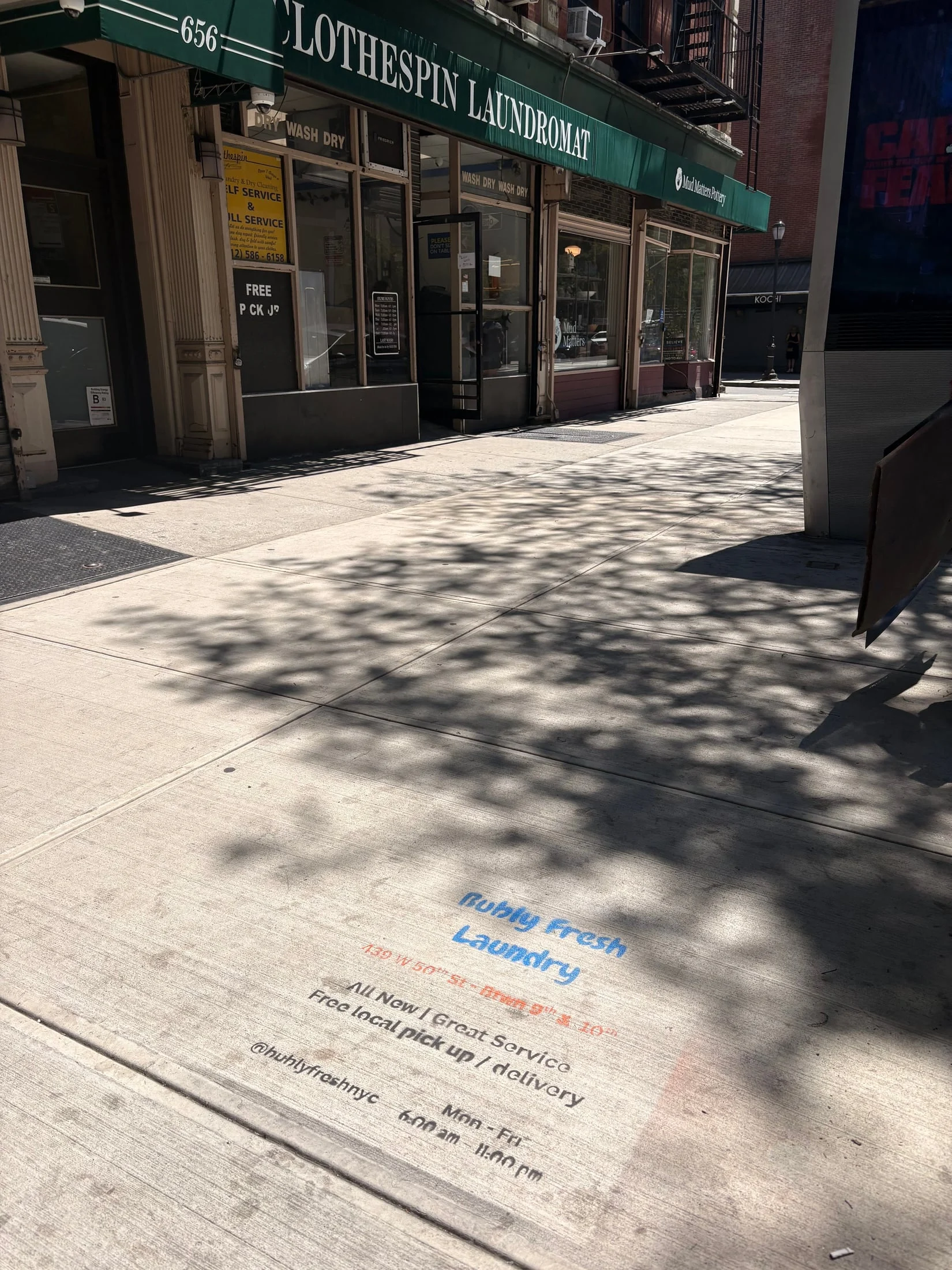
- Cut + spray, in-houseOne team, stencil to sidewalk — no broker, no markup
- Biodegradable chalkWater-soluble — clears with rain and foot traffic, no residue
- A GPS photo of every stencilWide · mid · detail, lat-long stamped on every hit
- Zero municipal removalsTemporary by design — nothing for a city to scrape off
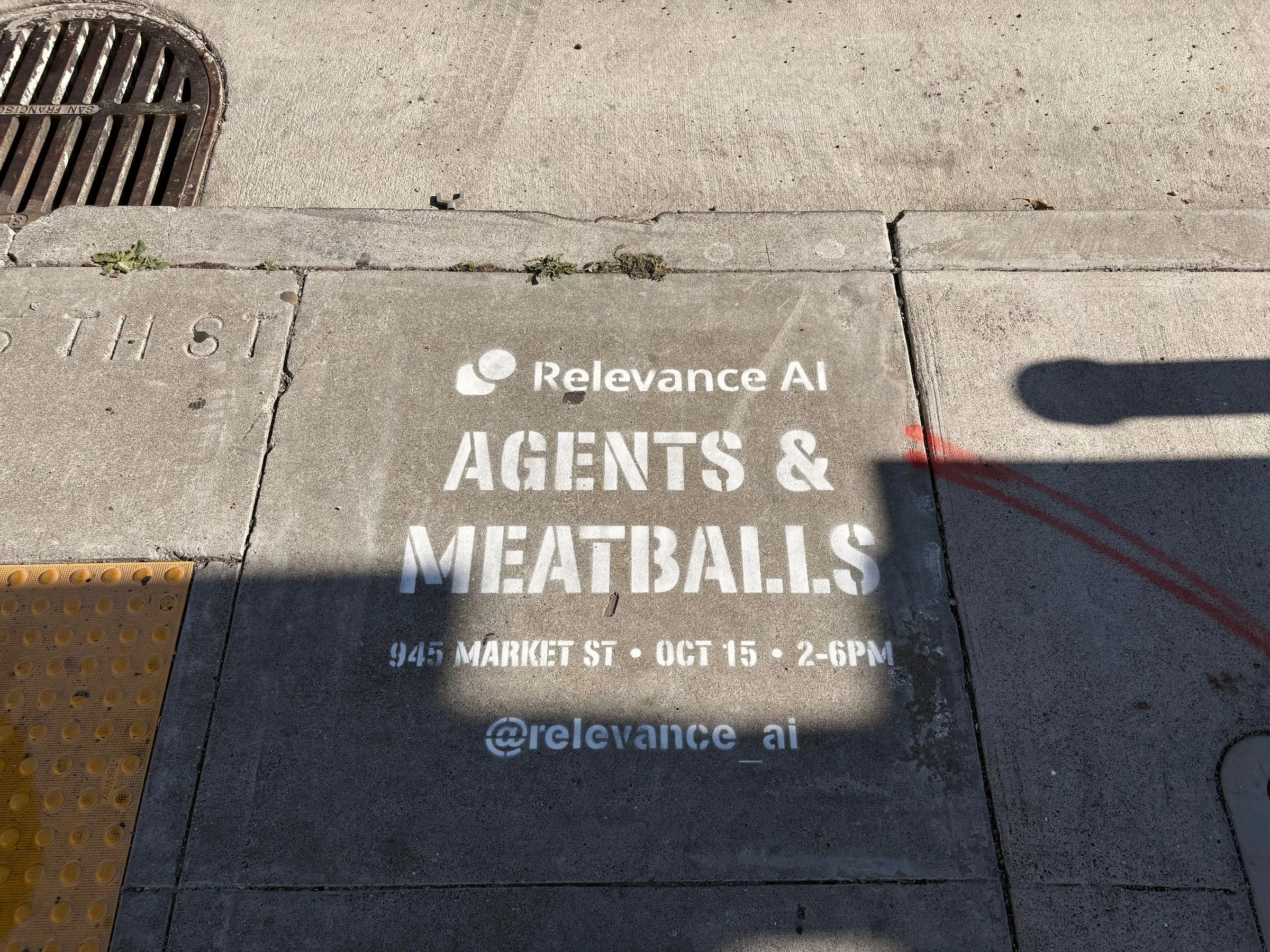
Cut clean, sprayed sharp on the pavement.
Where the city actually looks — down.
Corner after corner, Los Angeles-wide.
Brands run sidewalk stencils with us because pavement gets read at commuter pace — VAURA for a launch corridor, Relevance AI for an event, Bloom Effects for retail.
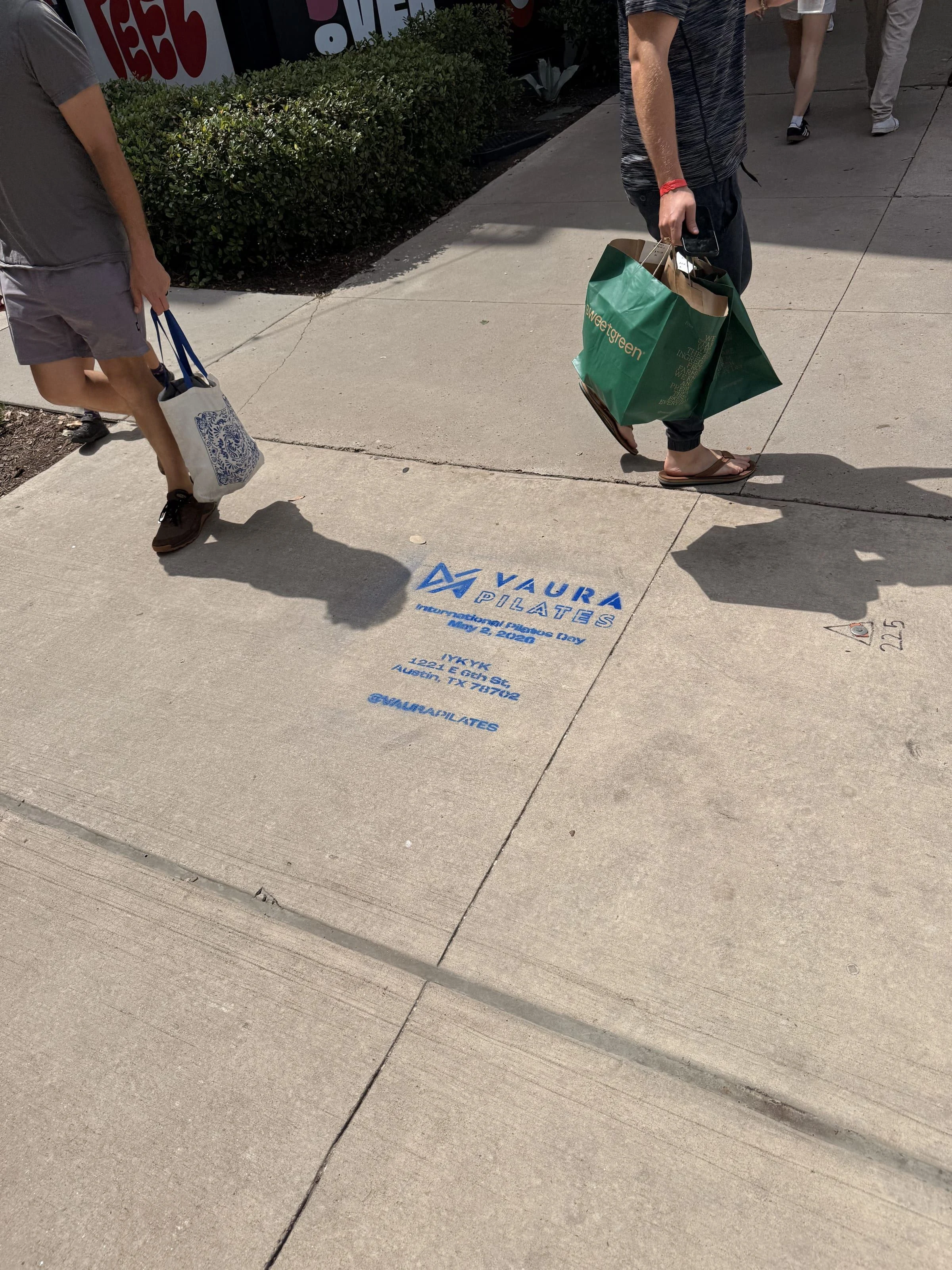
- 100chalk stencils · VAURA Pilates, Austin · East 6th
- 100stencils · Relevance AI, SF · downtown launch
- 25stencils · OneRepublic, NYC · album launch
500+ documented installs since 2019 · zero municipal removals on record · a GPS photo of every stencil
- From $2,500 Sidewalk stencils Biodegradable chalk · 5-7 days in Los Angeles
- From $3,500 Wheatpaste posters 36×48 sheets · hand-pasted
- From $3,000 Snipes + stickers Light-pole · utility-box · 5-10d
- From $18,000 Hand-painted murals Brush-painted · building scale
- Rush +80-150% Expedited campaigns 24-72hr brief-to-stencil

Los Angeles · Cut in-house · Sprayed by our crew
Got a sidewalk in Los Angeles?
Send the brand, the corridor, and your window. You get a real quote, line by line. From $2,500, cut and sprayed, documented on every stencil.
- Quote in under 24 hours
- No discovery call. The brief is the call.
- Printing & Installation under one roof
Brief us · 5-7 days to first stencil
Start your Los Angeles campaign.
LA lives at eye-down.
Los Angeles is a car city that walks in corridors. Abbot Kinney, Melrose, the Arts District, Sunset Junction, the Broadway core — the places with a real Walk Score are the places a chalk stencil earns its keep. Pavement at eye-down level catches the phone-down commuter and the storefront browser on the exact surface they are already looking at, block after block, at a fraction of the minimum spend DOOH or transit demands in this market.
Not paint. Not vinyl. Not a poster. A sidewalk stencil is biodegradable, water-soluble chalk sprayed through a cut stencil onto the sidewalk — temporary by design, so it clears with rain, street sweeping, and foot traffic and leaves zero municipal removals on record. Some LA runs use a reverse stencil instead — the clean shape is pressure-washed into grimy pavement, so the "ink" is the sidewalk's own contrast. Either way the surface is the media and the surface is free.
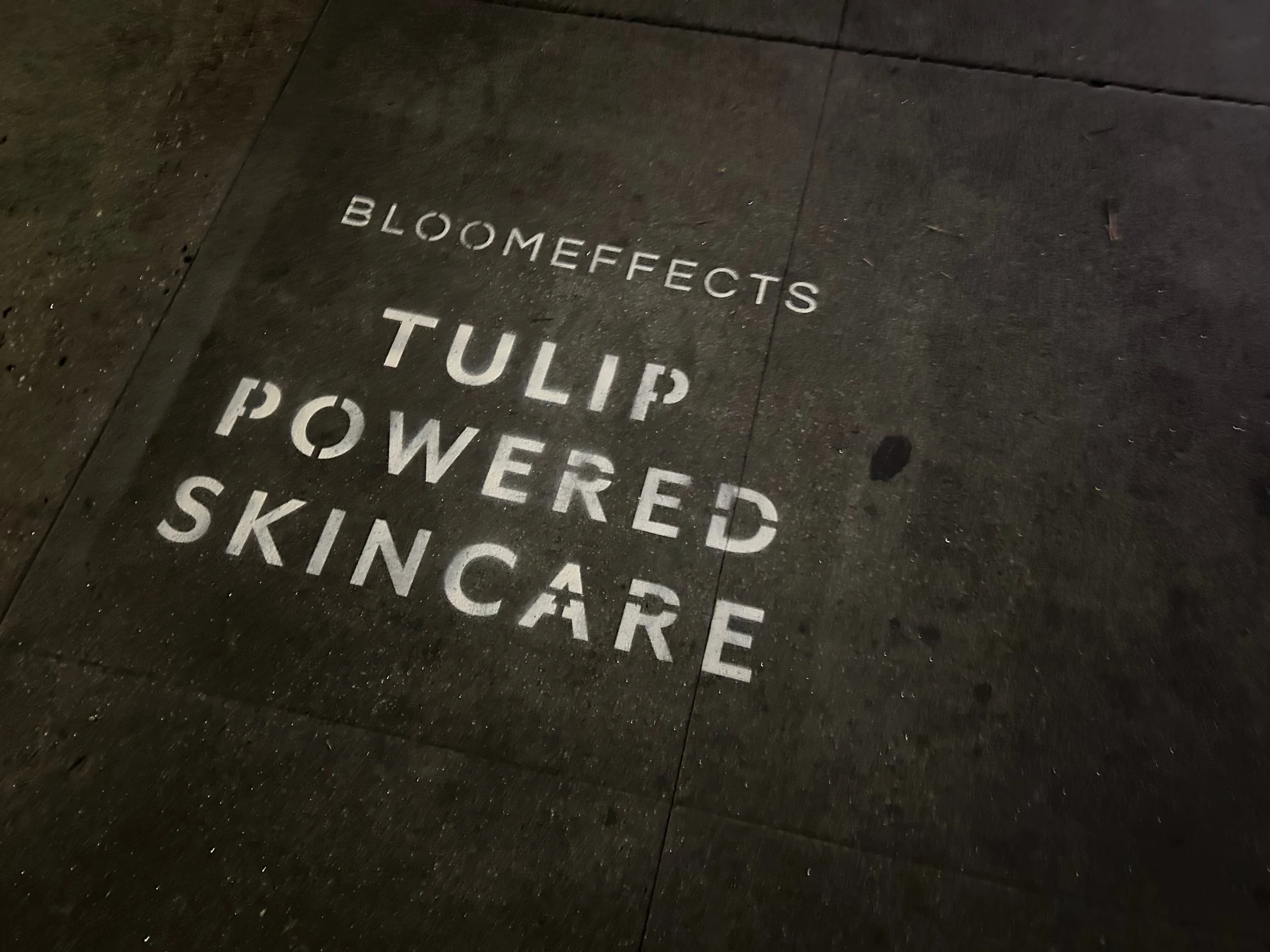
LA is an emerging stencil market for us, and we say so plainly. Our documented Los Angeles proof is the Bloom Effects run — the Dutch tulip-skincare brand's "This Way To" tulip wayfinding and "Tulip Powered Skincare" lockups stamped on LA sidewalks at night. That sits on top of 500+ documented installs since 2019 agency-wide. The neighborhoods below are where chalk reads and holds in this city — operational capability, mapped honestly, not a list of past placements.
Five corridors. Five pavements.
- Arts District aggregate concrete · 7-12 days
Warehouse district east of DTLA. Wide, weathered aggregate sidewalks and loading-dock concrete — grime-rich pavement that reads beautifully for a reverse stencil, where the clean shape is pressure-washed in. Gallery, studio, and cafe foot traffic on weekdays at lunch and all weekend. The creative-audience corridor and the strongest reverse-stencil register in the city.
- Melrose smooth retail concrete · 5-9 days
The Melrose Avenue retail run. Smoother, newer storefront concrete and threshold slabs at boutique doorways. Dense daytime fashion-and-retail pedestrian flow, which reads a forward chalk stencil clearly but also abrades it faster. The register for apparel, beauty, and DTC drops that want foot-level reach at the point of browse.
- Silver Lake weathered concrete · 7-11 days
Sunset Junction and the Sunset Boulevard indie corridor. Older, textured neighborhood concrete outside coffee shops, record stores, and independent retail. Steady coffee-culture pedestrian pace and a resident audience off the tourist track. Works for local launches, food-and-beverage, music, and lifestyle briefs reaching the eastside creative resident.
- Abbot Kinney boutique pavers + concrete · 5-9 days
Venice's boutique promenade. A mix of smooth concrete and set pavers with one of the highest weekend Walk Scores on the Westside. Beach-adjacent wellness, beauty, and premium-DTC foot traffic — the exact audience the Bloom Effects tulip-skincare register speaks to. Heavy weekend density and BID sweeping keep the hold on the shorter side.
- Downtown LA sealed plaza concrete · 4-8 days
The Broadway, Financial, and Historic Core grid. Sealed plaza concrete and crosswalk approaches with dense weekday commuter flow and transit-adjacent eye-down at station mouths and office thresholds. Best for B2B, tech, and product reveals timed to the workweek. Commuter abrasion and frequent municipal sweeps keep placements tight and refreshable.
Five stages. Chalk discipline.
Brief to clear-tracking. Every stage owned by an operator on the crew that runs LA. The night dispatch, the stencil cutting, the biodegradable chalk spec, the GPS log — that is the Los Angeles baseline, not an upsell.
- 01
Brief intake + corridor map
Send us creative, the corridors in play (Arts District, Melrose, Silver Lake, Abbot Kinney, DTLA), your dates, and budget. Within 48 hours you have a stencil count, a Walk-Score-weighted corridor map, and a per-stencil budget. We flag which corridors suit a forward chalk stencil and which suit a reverse pressure-wash stencil.
- 02
Stencil cut + chalk spec
Artwork is cut into a reusable stencil in-house — no outsourced brokers. Chalk is mixed to a biodegradable, water-soluble spec that sprays clean and reads at pavement contrast, tuned for the concrete in each corridor. Reverse-stencil runs get a pressure-wash test on a matched grime sample so the clean shape lands crisp.
- 03
Night dispatch + spray
Crews spray at low-traffic hours — night and pre-open — so the stencil sets clean and the corridor is clear of feet. Forward stencils are chalk-sprayed and lifted; reverse stencils are pressure-washed into the pavement. Arts District first for the reverse-stencil grime, then Melrose, Silver Lake, Abbot Kinney, and the DTLA core on a single dispatch loop.
- 04
Photo log + client portal
A GPS-stamped photo of every stencil — wide, mid, detail — with lat/long, timestamp, and installer ID captured in the field-log app. Portal updates within 4 hours of the dispatch loop. No invoicing until the photo bundle is signed off. This is the documentation trail that makes a temporary medium accountable.
- 05
Clear-tracking + optional refresh
Chalk is temporary by design. In LA's long dry season, foot traffic and municipal street sweeping are the main clearers rather than rain, so exposed high-traffic pavement fades first. We track hold at day 5 and day 10; any placement worth extending gets refreshed on the next loop. Nothing lands on the municipal removal record.
Temporary chalk. Zero removals.
Our LA compliance argument leads with documentation and a biodegradable-by-design medium — not "permitted only." Sidewalk chalk stencils are temporary and self-clearing, which is exactly why they leave nothing on the municipal record.
Los Angeles treats permanent sidewalk marking — paint, vinyl, adhesive — very differently from temporary, water-soluble chalk that clears with rain, sweeping, and foot traffic. A chalk stencil is designed to be impermanent, so it does not leave a removal, an abatement, or a repair on the city's books. That is the compliance thesis, and it is a property of the medium, not a permit we wave around.
Documentation over permission. Every LA stencil ships with a GPS-stamped photo record — lat/long, timestamp, installer ID — so if a placement is ever questioned, there is a clean, honest paper trail of what went down, where, and when. We run some placements with private-frontage and BID coordination and some without; we do not pretend every stencil is permitted, and we never claim a permit we did not pull.
Corridor coordination where it counts. On managed retail strips like Abbot Kinney and stretches of Melrose, and in the DTLA core, we coordinate with adjacent property and business-improvement-district contacts before a dispatch loop so the work reads as intentional, not as a problem. Lead time on those corridors runs a few days longer than the open Arts District pavement.
500+ documented installs since 2019. Zero municipal removals on record. Across every market we run, a chalk stencil has never generated a municipal removal, because the medium clears itself. The brand is never on the hook for a takedown, because there is nothing permanent to take down.
The Los Angeles stencil playbook Operator detail · surfaces, climate, timing
What sidewalk stencil advertising actually does in Los Angeles
Sidewalk stencil advertising in Los Angeles is biodegradable, water-soluble chalk sprayed through a cut stencil onto the pavement — a logo, a message, or a wayfinding mark placed on the exact surface a walking audience is already looking at. It converts on the geometry of a car city that still walks in dense pockets: Abbot Kinney on a Saturday, Melrose at midday, the Arts District at gallery hours, the Broadway core at the commute. In those corridors, ground-level chalk at eye-down catches the phone-down pedestrian at a cost per placement that DOOH and transit in this market cannot touch. The same stencil on a dead block reaches no one, so the whole discipline is choosing the pavement.
That is the LA operator problem in plain language. The walkable audience is not spread evenly across the basin — it clusters in a handful of high-Walk-Score corridors, and each of those corridors has its own concrete. Melrose is smooth retail slab; the Arts District is weathered aggregate; Abbot Kinney mixes pavers and concrete; DTLA is sealed plaza. The chalk behaves differently on each, and the right call is sometimes a forward stencil and sometimes a reverse one, where we pressure-wash the clean shape into grimy pavement so the sidewalk’s own dirt becomes the ink.
Los Angeles is an emerging stencil market for us, and we are not going to dress that up. The one documented LA run is Bloom Effects — the Dutch tulip-skincare brand’s “This Way To” tulip wayfinding and “Tulip Powered Skincare” lockups stamped on LA sidewalks at night. That is the local proof, and it sits on top of 500+ documented installs since 2019 across every market we run. The corridors in this playbook are mapped as capability — where chalk reads and how long it holds — not as a portfolio of placements we have not actually done here.
Why chalk is the compliance argument, not a liability
The reason a temporary medium is an advantage and not a compromise is the municipal record. Paint, vinyl, and adhesive create something a city has to remove, and that removal has a cost and a paper trail with the brand’s name near it. Chalk does not. It is impermanent by design, so it clears with rain, street sweeping, and foot traffic and leaves zero municipal removals on record. We lead with documentation — a GPS-stamped photo of every stencil — rather than with a claim that everything is permitted, because BSM runs some placements with private-frontage and BID coordination and some without, and we will never claim a permit we did not pull.
How the crew runs LA around the pavement and the sweep
Most operators treat a stencil like a poster and skip the parts that actually govern hold in this city. LA’s long dry season means rain is rarely the clearer — abrasion and the municipal street-sweeping schedule are. So the plan is built around them: night and pre-open dispatch so the chalk sets on clear pavement, the Arts District’s grime taken first for the reverse-stencil work, and hold tracked at day 5 and day 10 so anything worth extending gets refreshed before the sweep takes it. The stencil is cut in-house and the chalk mixed to spec per corridor, which is what keeps a five-to-seven-day lead honest.
Internal cross-links
Sidewalk stencils in LA work best briefed alongside the rest of the street toolkit. For the canonical service overview, see sidewalk stencil advertising. For wall-scale paper in the same corridors, see wheatpaste advertising, and for tactical light-pole and utility-box coverage, see pole sticker advertising. For the floor and the full rate card, see the pricing page, and to brief a Los Angeles campaign, head to contact. For the broader Los Angeles coverage hub, see Los Angeles street advertising.
Los Angeles questions.
The short version. The brief covers the rest.
Q · 01 Is sidewalk stencil advertising legal in Los Angeles?
The compliance case rests on the medium, not a permit. A sidewalk stencil is biodegradable, water-soluble chalk sprayed through a cut stencil — temporary by design, so it clears with rain, street sweeping, and foot traffic and leaves zero municipal removals on record. Los Angeles regulates permanent sidewalk marking (paint, vinyl, adhesive) very differently from impermanent chalk. We lead with documentation: a GPS-stamped photo of every stencil, with lat/long and timestamp, so any placement can be accounted for. We run some placements with private-frontage and BID coordination and some without, and we never claim a permit we did not pull. Zero municipal removals on record across 500+ documented installs since 2019.
Q · 02 How much does a stencil campaign cost in Los Angeles?
Sidewalk stencils in LA start at $2,500 per campaign with stencil cutting and install included. Multi-corridor programs across the Arts District, Melrose, Silver Lake, Abbot Kinney, and DTLA price up from that floor. The final number depends on turnaround, stencil size, and stencil count, and it tracks the cut and the dispatch loop — not the brand on the sidewalk. Reverse-stencil (pressure-wash) runs price a little differently because the labor sits in the wash. Rush windows carry an 80-150% premium. Final quote returns in 24-48 hours.
Q · 03 What is a chalk stencil, and what is a reverse stencil?
A forward chalk stencil is biodegradable, water-soluble chalk sprayed through a cut stencil onto the sidewalk, so your logo or message lands as clean chalk on pavement. A reverse stencil flips it — instead of adding chalk, we pressure-wash the clean shape into grimy pavement, so the "ink" is the contrast between clean and dirty concrete. Both are temporary and self-clearing. We pick per corridor — the Arts District's weathered, grime-rich pavement is ideal for reverse stencils, while smoother retail concrete on Melrose or Abbot Kinney reads a forward chalk stencil well.
Q · 04 Which LA neighborhoods do you cover for stencil campaigns?
We spec chalk stencils where LA actually walks: the Arts District (weathered aggregate, best for reverse stencils and the creative audience), Melrose (smooth retail concrete, fashion and beauty foot traffic), Silver Lake (Sunset Junction, eastside resident audience), Abbot Kinney in Venice (boutique pavers and one of the highest weekend Walk Scores on the Westside), and Downtown LA (sealed plaza concrete, weekday commuter eye-down). Each corridor has a different pavement and a different hold, and we map that as operational capability — where the chalk reads and lasts — not as a claim that a campaign already ran there.
Q · 05 How long does a chalk stencil last in Los Angeles?
Hold depends on the pavement and the feet on it. In LA's long dry season, rain barely factors, so foot-traffic abrasion and municipal street sweeping are the main clearers. Lower-traffic weathered pavement in the Arts District or Silver Lake tends to hold roughly 7-12 days; heavy retail and commuter corridors like Melrose, Abbot Kinney, and the DTLA core run shorter, roughly 4-9 days, because of denser foot traffic and more frequent sweeps. We track hold at day 5 and day 10 and can refresh any placement worth extending on the next dispatch loop.