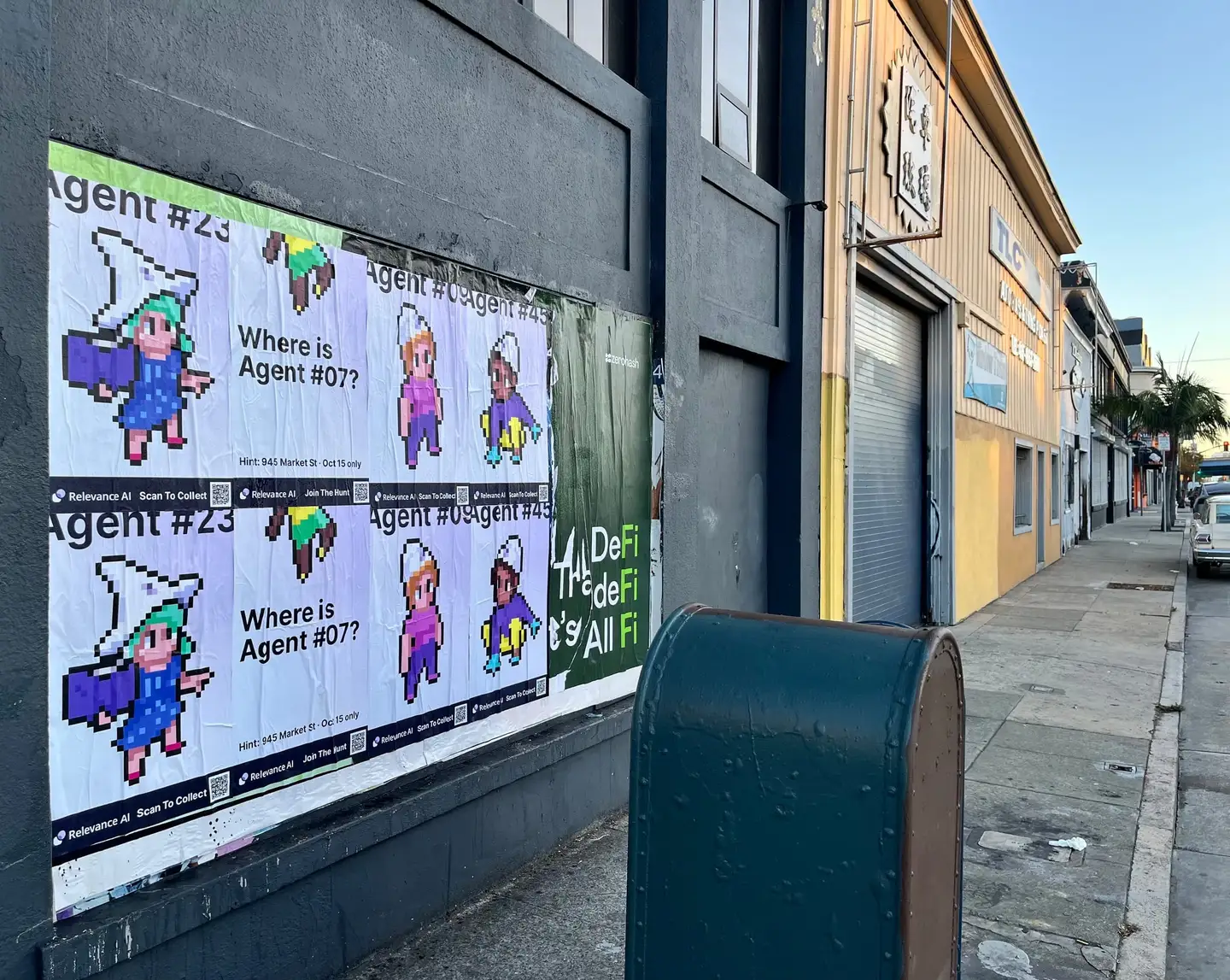
Relevance AI Two-Phase Campaign: San Francisco
AI platform launch: 500 wheatpaste posters (SoMa/Mission), then 100 sidewalk stencils (downtown event promotion). Pixel-art characters, 'Agent' mechanic, 600 placements, 28 days.
- Placements600
- Cities1
- Duration28d
- Documented27install photos on file
AI walks SF before the demo starts.
Relevance AI two-phase street campaign in San Francisco. 500 wheatpaste posters and 100 sidewalk stencils for the agent-launch product window. 600 placements.
Relevance AI, a B2B AI platform company, was launching a new foundation model in San Francisco and needed to generate street-level awareness among the tech and startup communities.
The audience was engineers, product managers, and technical founders, not a traditional consumer audience. The campaign needed to feel cryptic, technically playful, and event-driven, with enough cultural weight that tech-vertical media would pick it up as a story (not just noise).
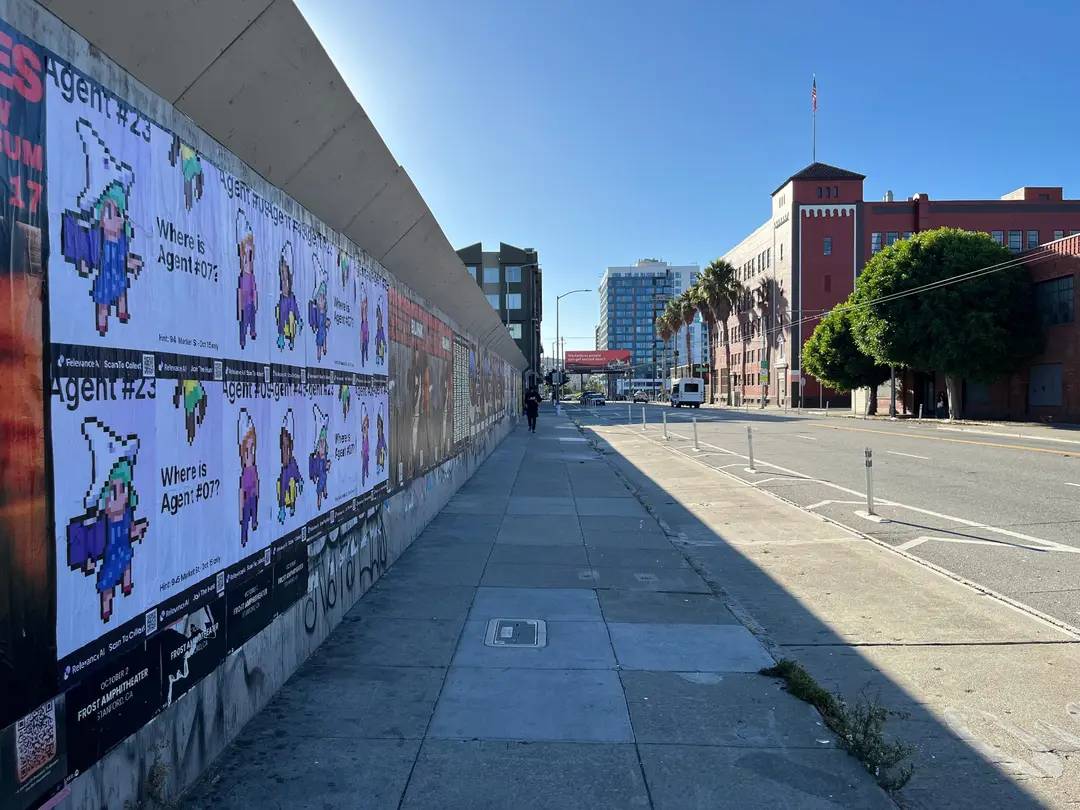
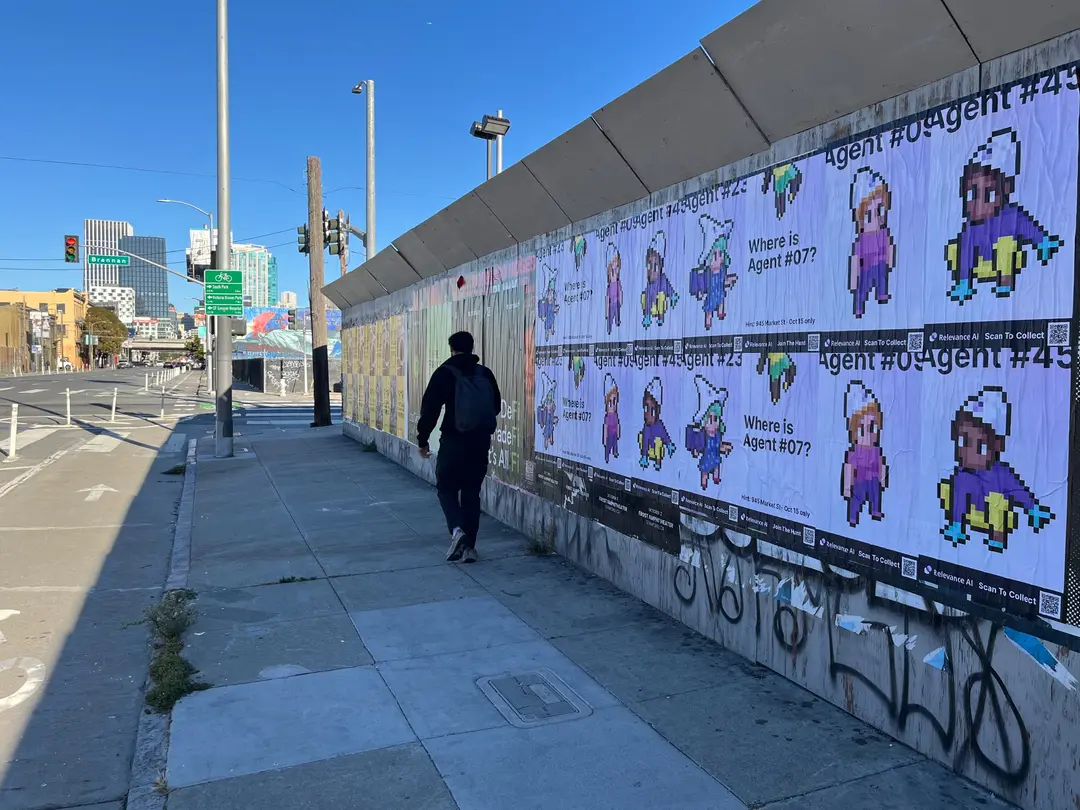
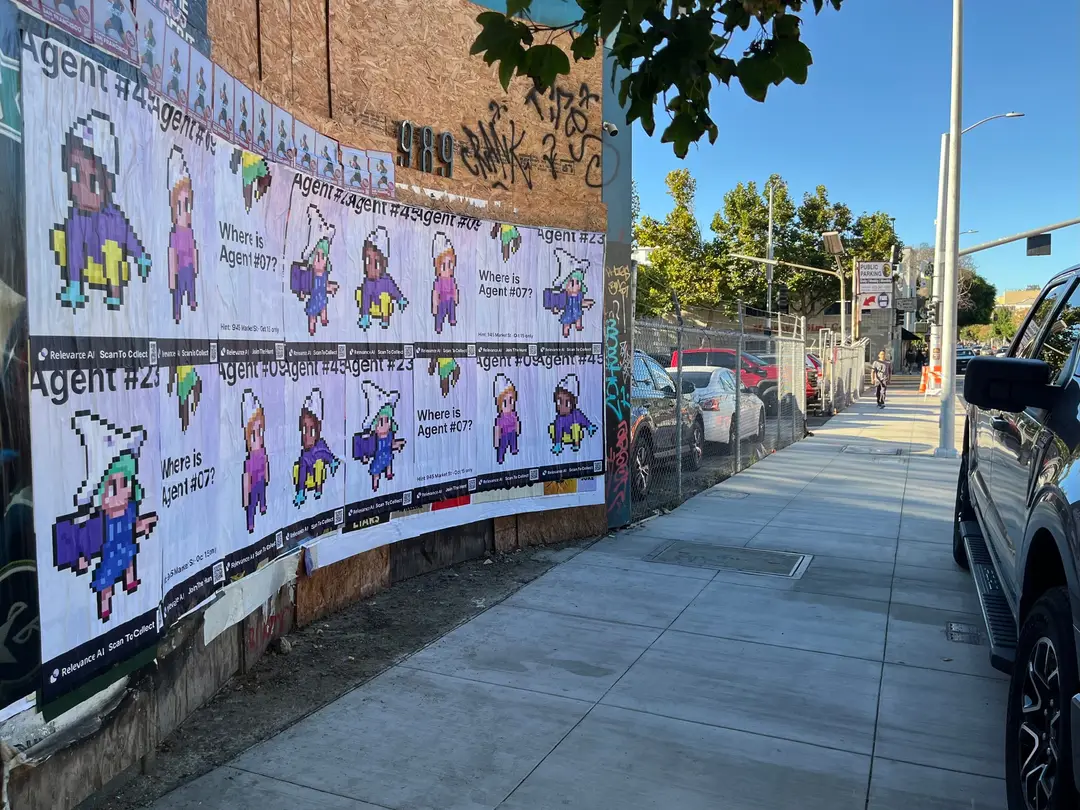
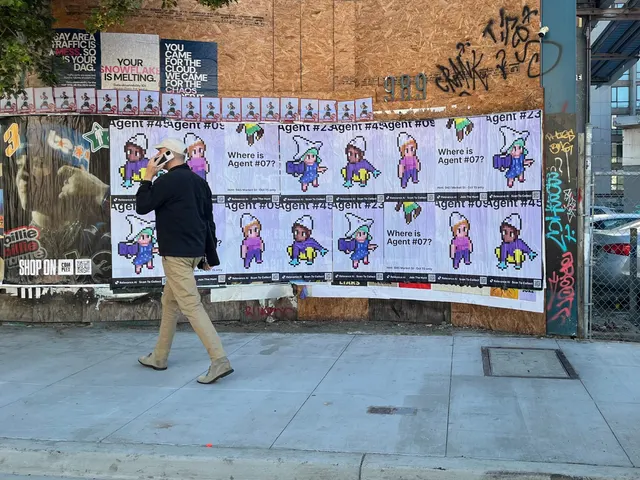
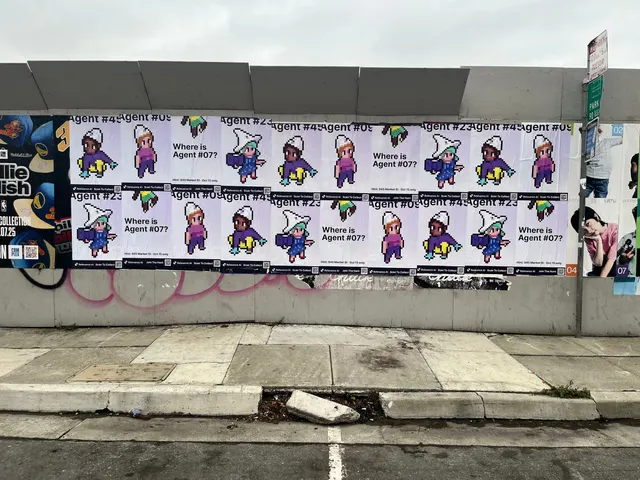
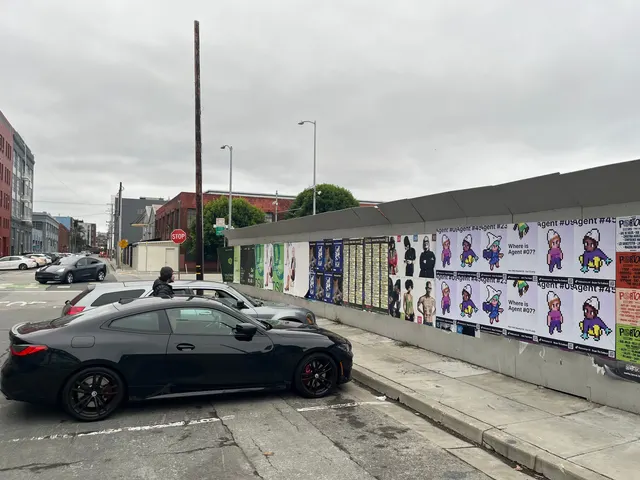
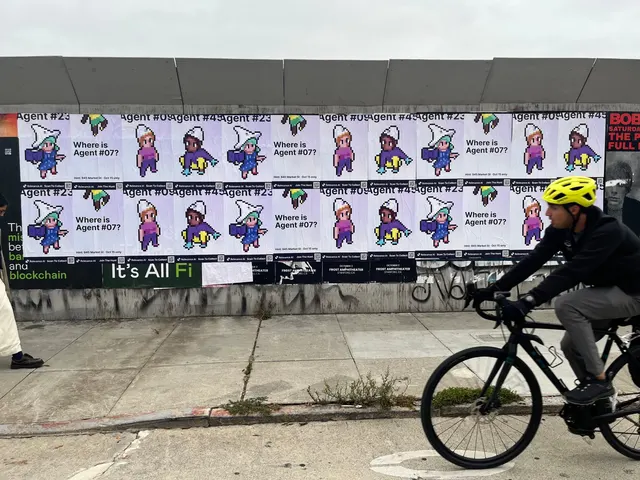
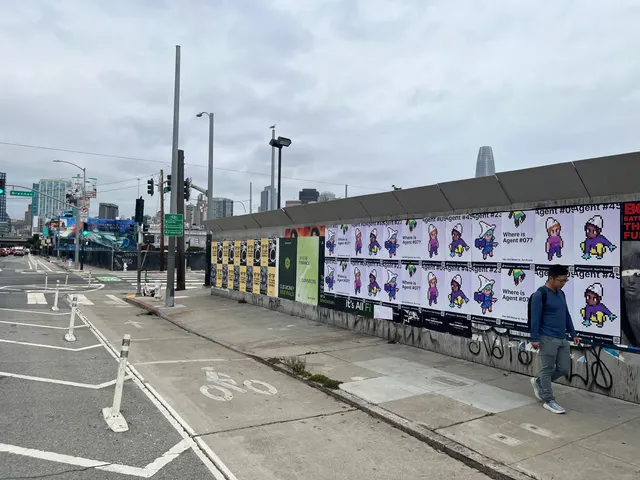
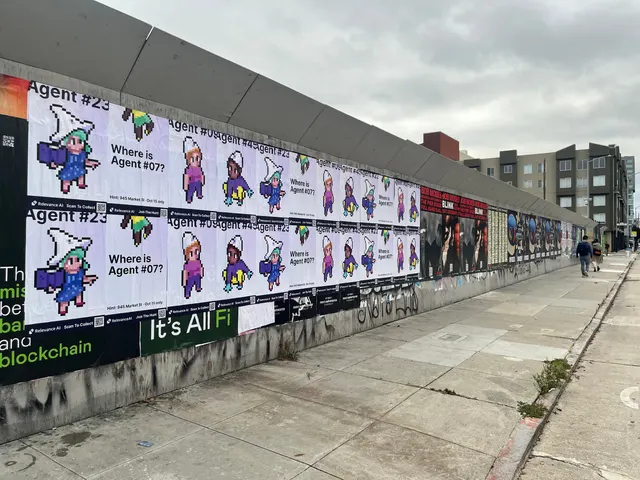
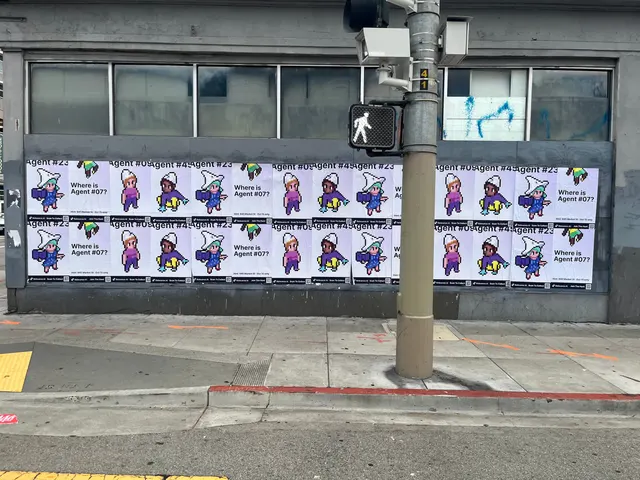
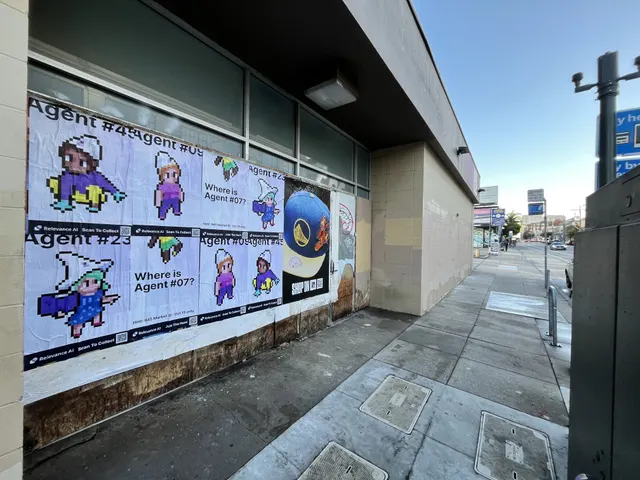
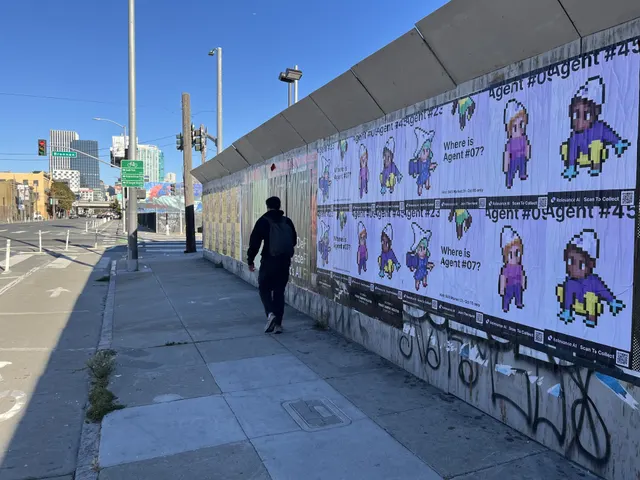
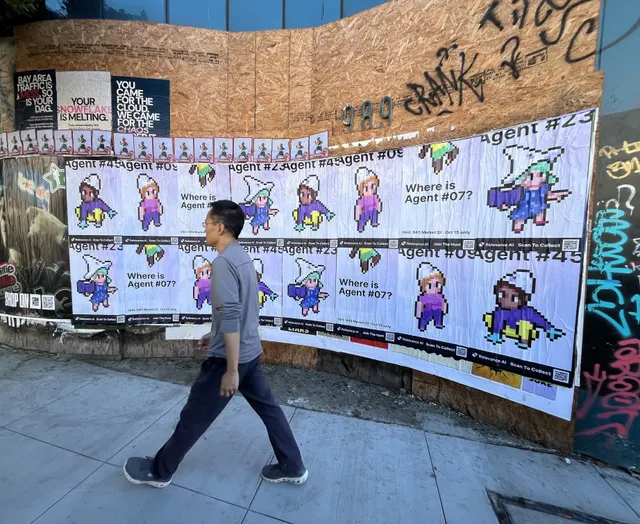
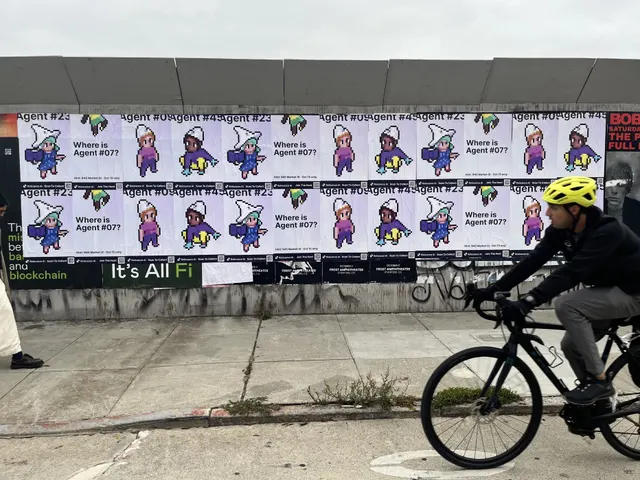
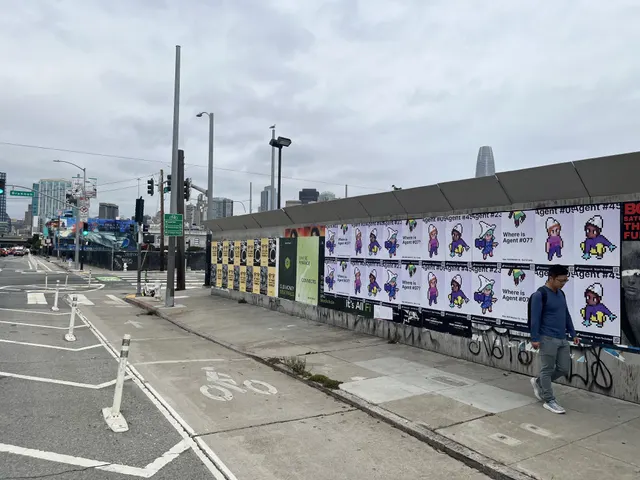
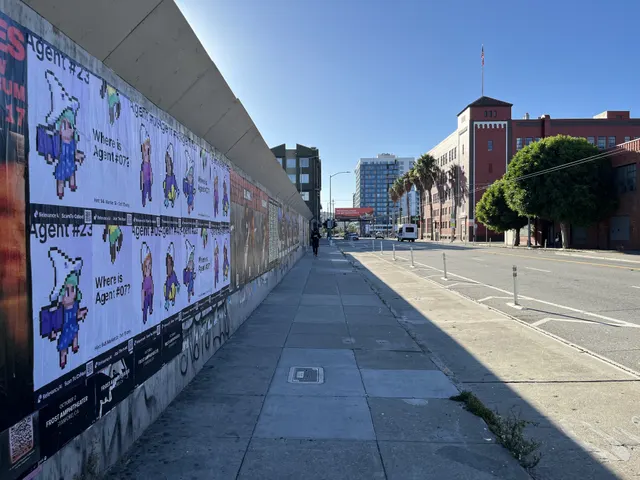
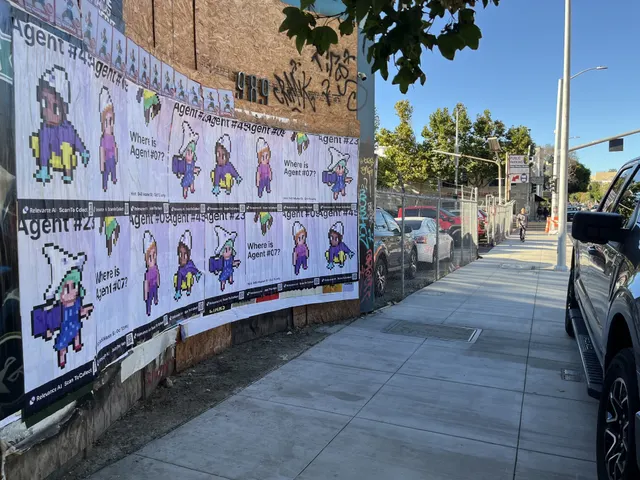
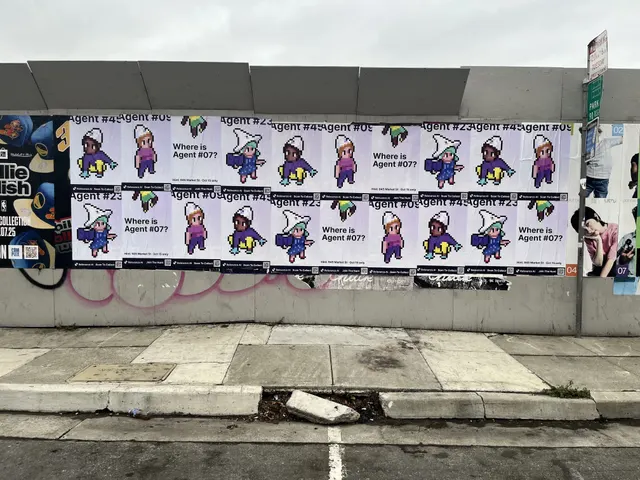
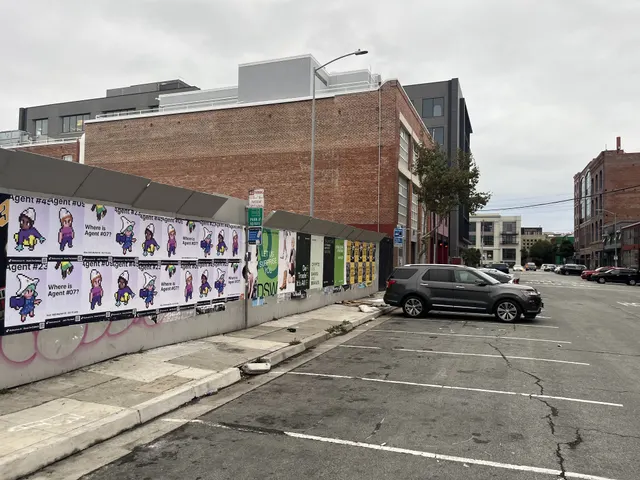
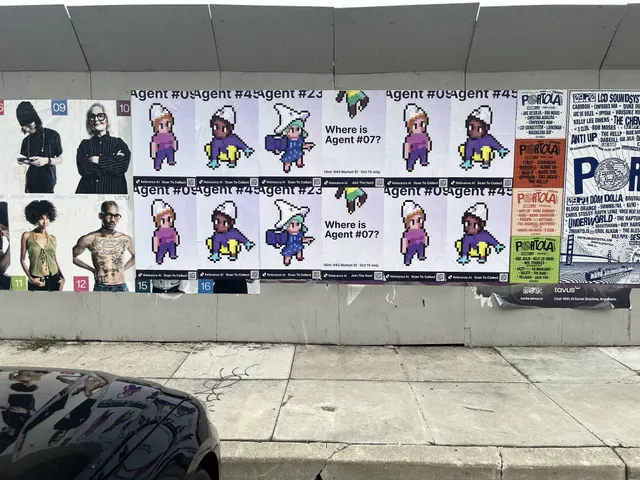
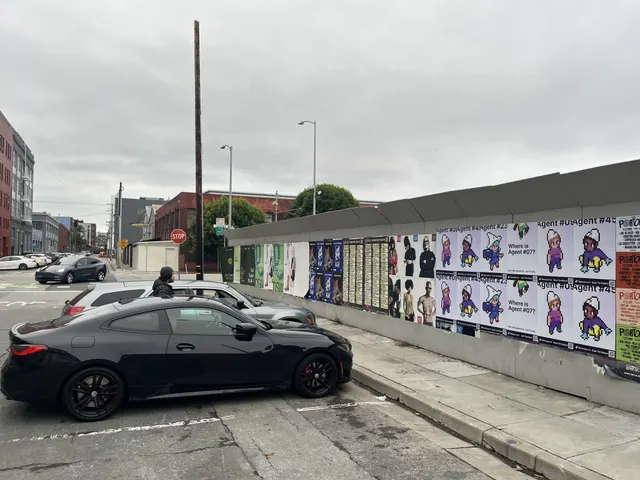
The creative mechanic: "Agent" characters, pixel-art styled autonomous agents numbered #07, #23, etc.. with copy like "Where is Agent #07?" and "Has Agent #23 left the office?" The posters created a distributed narrative mystery. Why are agents numbered? Where are they going? What are they doing? The answer lived at the October event: "Agents & Meatballs," a product-launch pop-up at 945 Market Street, featuring live agent demos and food pairings (the meatballs were literal, a nod to how AI systems learn from data, grounded and substantial).
Two-phase approach: Phase 1 (Days 1-7) was pure mystery. Wheatpaste the agent posters across SoMa and Mission District. Let the tech community discover and decode the visual. Phase 2 (Days 8-10, pre-event days) was reveal. Sidewalk stencils near the event venue stamped the date, time, location, and @relevance_ai handle, converting curiosity into registration.
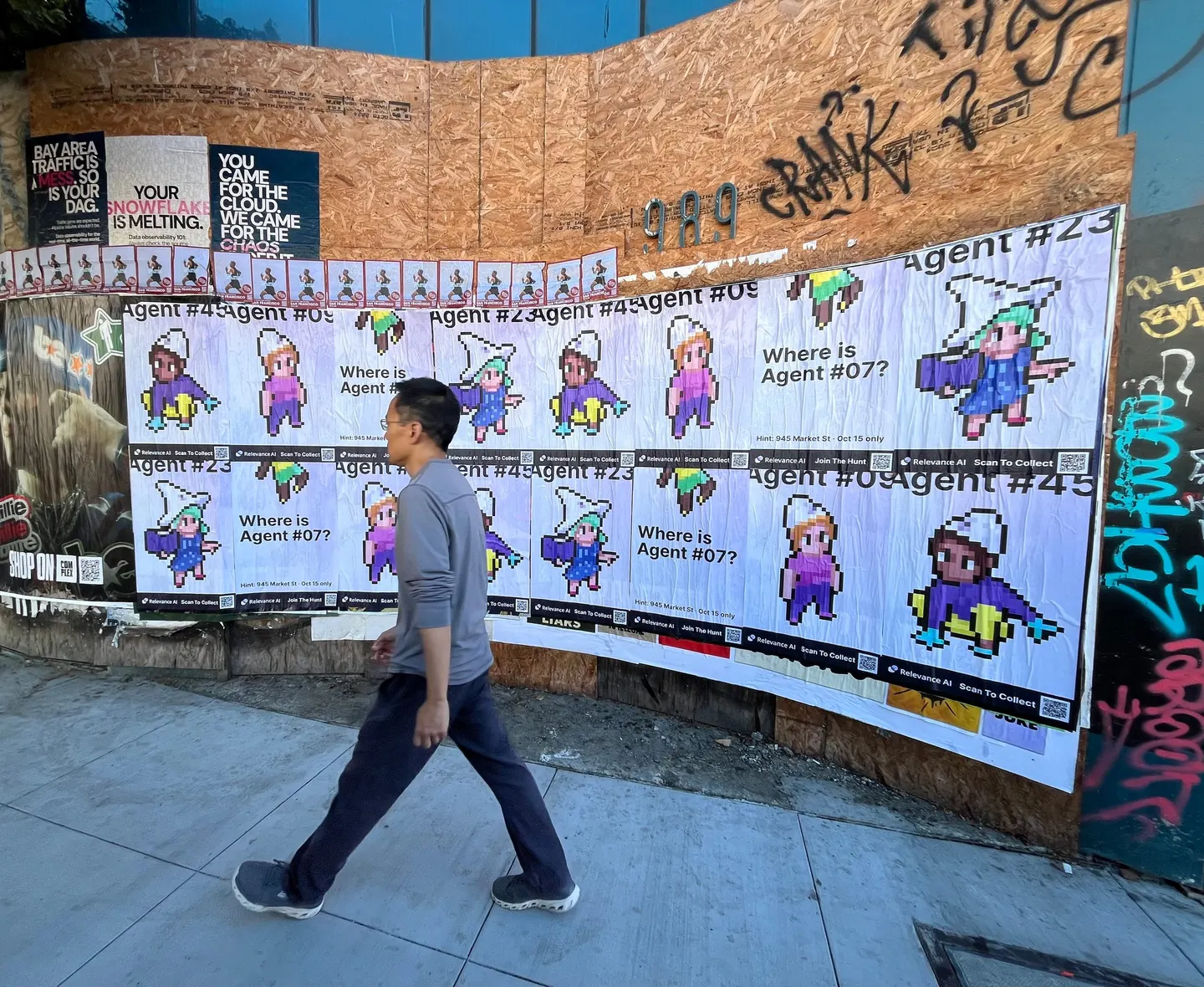
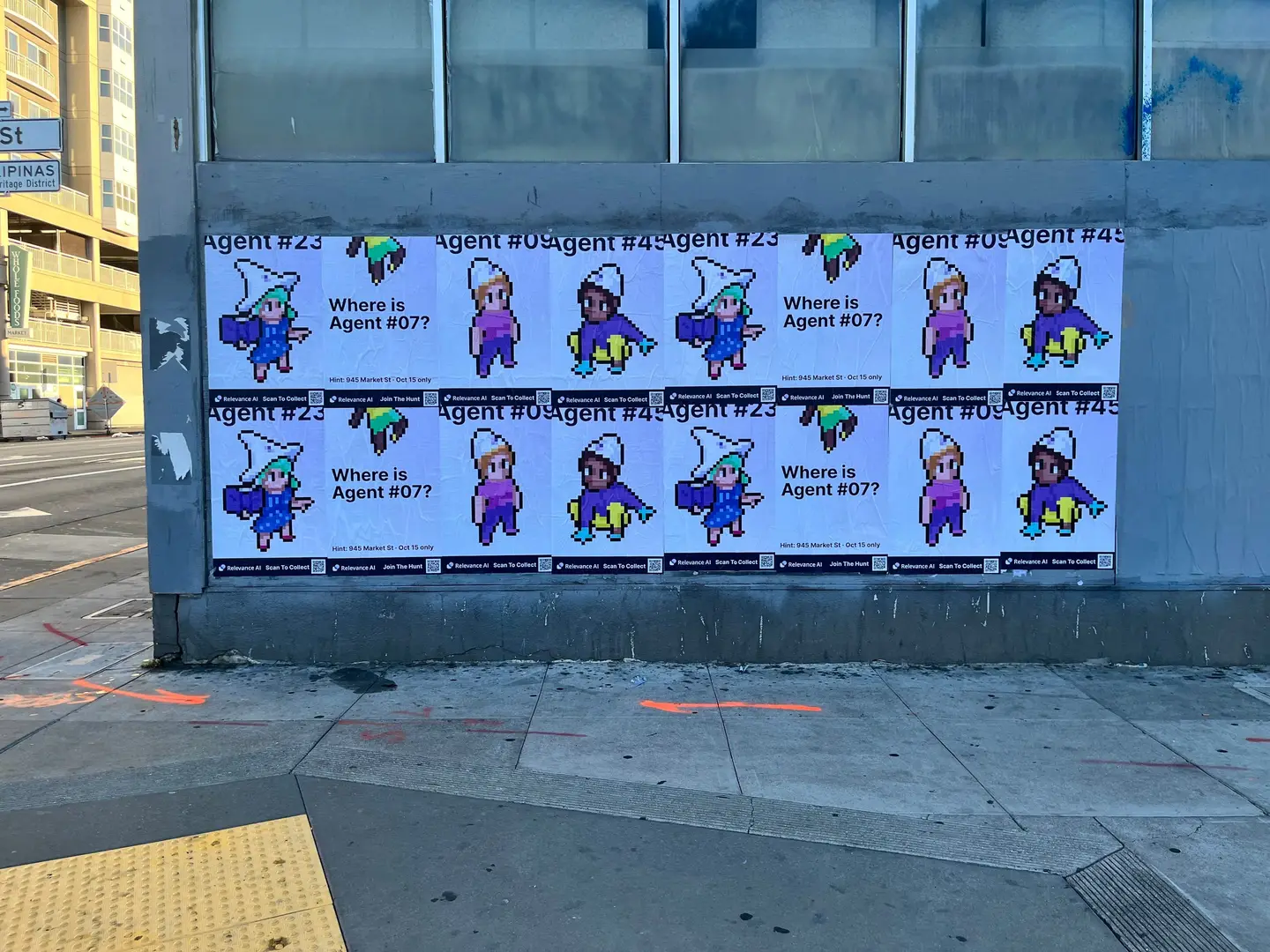
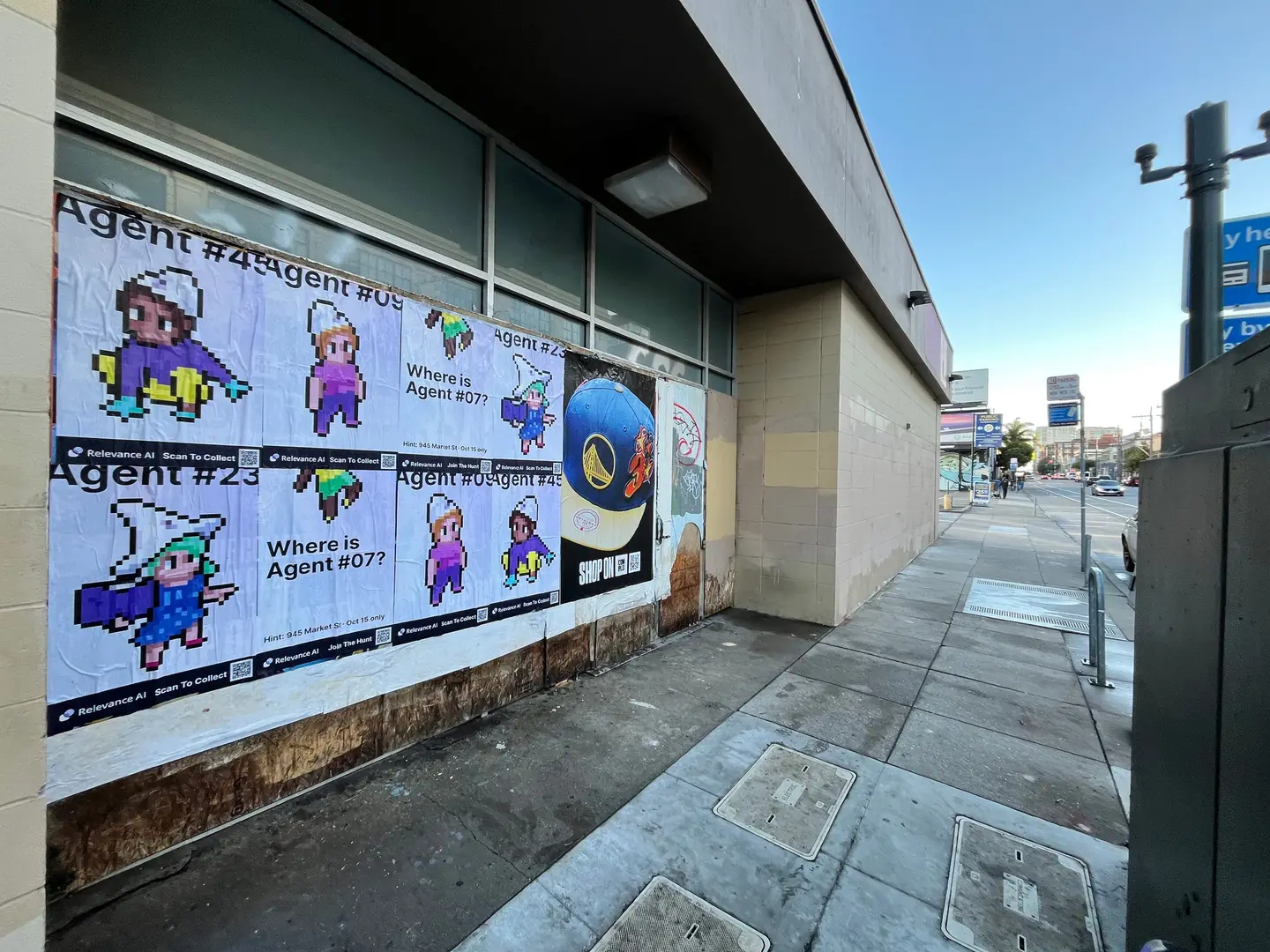
Phase One: Wheatpaste mystery layer (Days 1-7)
500 posters across two neighborhoods: SoMa (250 placements) and Mission District (250 placements). Both are high-concentration tech-worker neighborhoods in San Francisco. SoMa is the corporate headquarters hub (Salesforce, Slack, major VC offices). Mission District is the indie-startup, design-studio, and freelancer neighborhood.
SoMa placements (250 total): - Placements near Twitter/X headquarters on 1355 Market - Placements on the Valencia Street corridor (corner of 18th, corner of 22nd) - Placements in the SOMA Design District (near design studios and co-working spaces) - Placements on Bryant Street (commercial corridor, high lunch-hour foot traffic)
Daily foot traffic in SoMa ranges 180,000-250,000 depending on the specific block. Target time: weekday 12pm-2pm (lunch corridor, maximum tech-worker density). Weekday 5pm-7pm (after-work commute, catch the late-afternoon wanderers).
Mission District placements (250 total): - Placements on Valencia Street between 18th and 20th (core mission retail/nightlife) - Placements near the Mission Dolores BART station (commute hub) - Placements on the Mission/24th corridor (emerging startup cluster) - Placements near Zeitgeist beer garden (cultural anchor, design-community congregation space)
Daily foot traffic in Mission varies by block: 100,000-140,000 in the commercial core, lower in residential side streets. Target time: weekday 6pm-9pm (post-work, leisure foot traffic, higher density of tech workers grabbing dinner or drinks).
Phase Two: Sidewalk stencil event layer (Days 8-10, pre-event)
100 sidewalk stencil placements concentrated within a 4-block radius of the event venue (945 Market Street, downtown SF). Stencils placed on pavement directly adjacent to building entries, cross-walks, and pedestrian decision points.
- Stencils on Market Street itself (leading directly to the venue) - Stencils on the side-street approach (Geary, running perpendicular to Market) - Stencils on the cross-block corridor (Stockton to Kearny, foot-traffic feed) - Stencils near the BART/Muni junction (transit-distribution points)
Foot traffic in this zone is dense: 250,000+ daily during business hours, with an evening peak at 6pm-8pm. The stencil layer was purely functional, convert the posters' mystery into specific event information.
Phase One: Wheatpaste agent posters
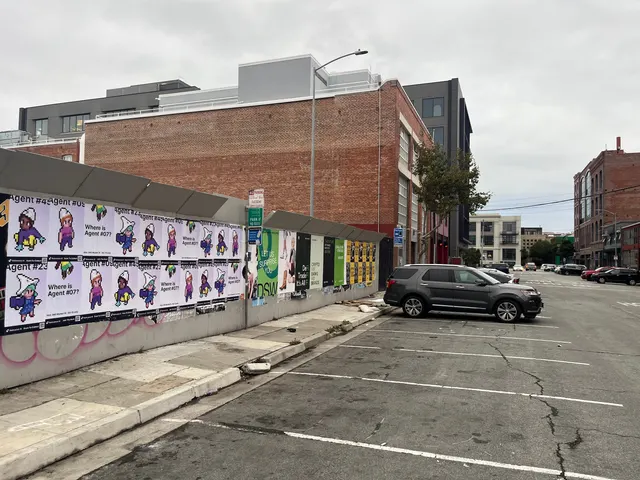
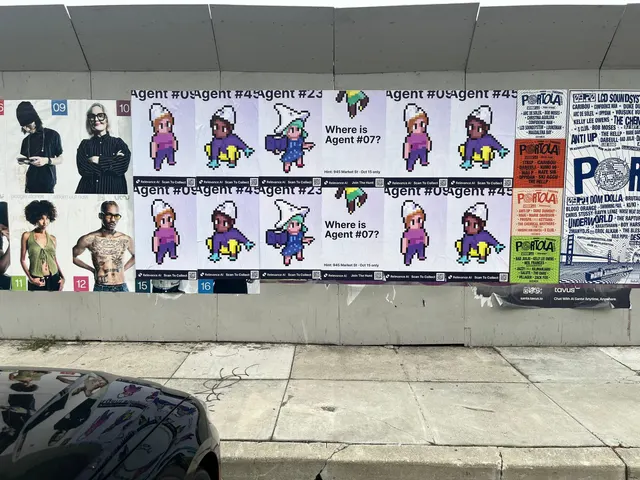
500 hand-pasted posters, 24"×36" format, full-color on premium poster stock. Creative: pixel-art style autonomous agents (inspired by retro video-game aesthetics, evoking computational simplicity but with modern clean typography). Each poster featured a different agent number (#07, #23, #41, etc.) with query-style copy: "Where is Agent #07?" / "Agent #23 is still learning" / "Has Agent #41 left yet?"
No tagline. No product description. No "Learn more at [URL]." The mystery was the message. The visual was enough. Tech-community audiences are trained to decode intentional obscurity; the posters used that cultural skill.
Material: 100lb poster stock, matte finish (gloss would've felt consumer-y, wrong for the audience), no lamination (matte finish holds paste better; laminate causes adhesive failure on paper-thin substrate). Wheat-paste adhesive, standard formulation (SF April climate is cool and moderate).
Phase Two: Sidewalk stencil event layer
100 sidewalk stencils, 36"×72" format (wide but shallow, optimized for pavement geometry). Single-color stencil (white paint on dark pavement for maximum contrast), 18-point sans-serif typography. Message: "AGENTS & MEATBALLS / 945 Market St / Oct 15, 2-6 PM / @relevance_ai"
No explanation of what "Agents & Meatballs" means. No "Product launch." No "AI event." The Phase 1 posters had primed the audience, they already knew agents were the subject. The stencil just closed the loop: here's where they gather.
Material: spray-on white paint (chalk-safe formula for easy removal post-event), standard stencil template applied by hand.
Phase One execution (Days 1-7)
SoMa installations happened on Day 1-2, during morning hours (7am-10am). The crew installed in pairs, moving sequentially through the designated locations. Each location took time for paste application, cure check, and surrounding-area cleanup (no spilled paste, no vandalism-adjacent messiness, respect the neighborhoods). All 250 SoMa posters were up and photographed by Day 2 at 11am.
Mission District installations happened on Days 3-4, in the 6pm-9pm window (catching the post-work foot-traffic density for maximum visibility while keeping install disruption low). The crew worked street by street, completing 250 posters across both evenings. Photography happened on Day 5 morning (daylight documentation, same framing standard as SoMa).
The mystery layer worked. By Day 4, posts on tech subreddits (r/sanfrancisco, r/startups) and Mastodon instances started speculating about the agents. "New game?" "ARG?" "AI startup?" The speculation validated the creative mechanic, the posters were intentionally cryptic enough to generate curiosity.
The mystery ran on zero paid amplification. The pull was the creative mechanic itself, cryptic enough that people online tried to solve it, guessing at an ARG, a game, or a stealth startup, before the brand confirmed anything.
Phase Two execution (Days 8-10)
3 days before the event, the crew deployed 100 sidewalk stencils across the downtown zone. Stencils needed to be placed when foot traffic was lowest, very early morning (5am-7am) to minimize pedestrian disruption and to allow paint to set before the morning commute.
Day 8: Market Street direct approach and side-street feed. Day 9: cross-block corridor. Day 10: BART/Muni junction. All 100 were cured and photographed by Day 10 at 9am.
The stencil layer was visible to people actively commuting to the venue or passing through downtown. Tech workers heading to BART to leave the city saw the stencils and made the connection: "Oh, that agent poster I saw in SoMa, here's where it leads." The reveal happened 3 days before the event, giving enough runway for social sharing ("I found it! Going to this" posts on Twitter/Mastodon) without the message decaying before October 15.
Documentation and proof
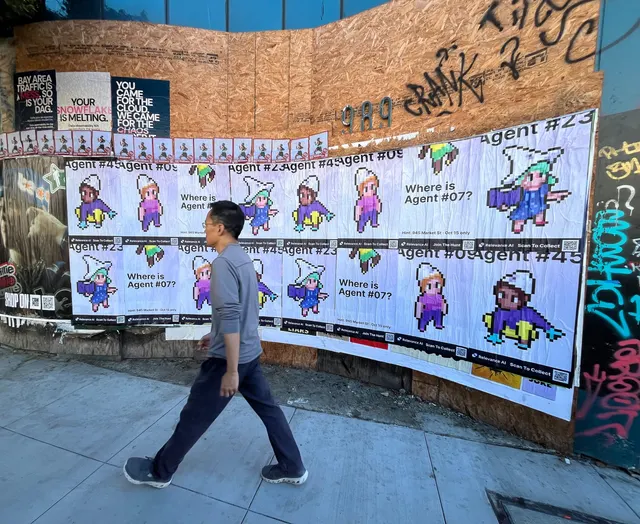
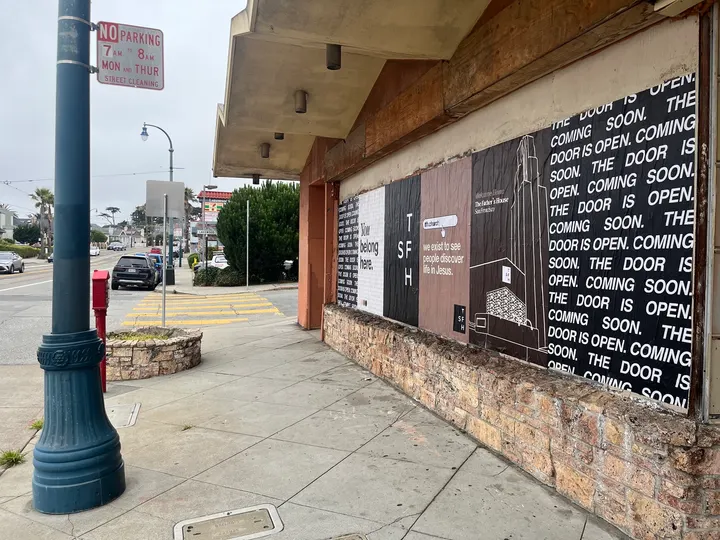
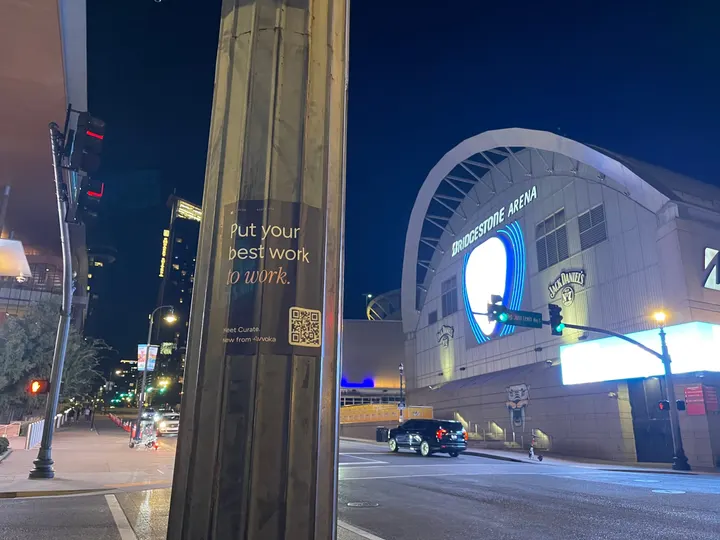
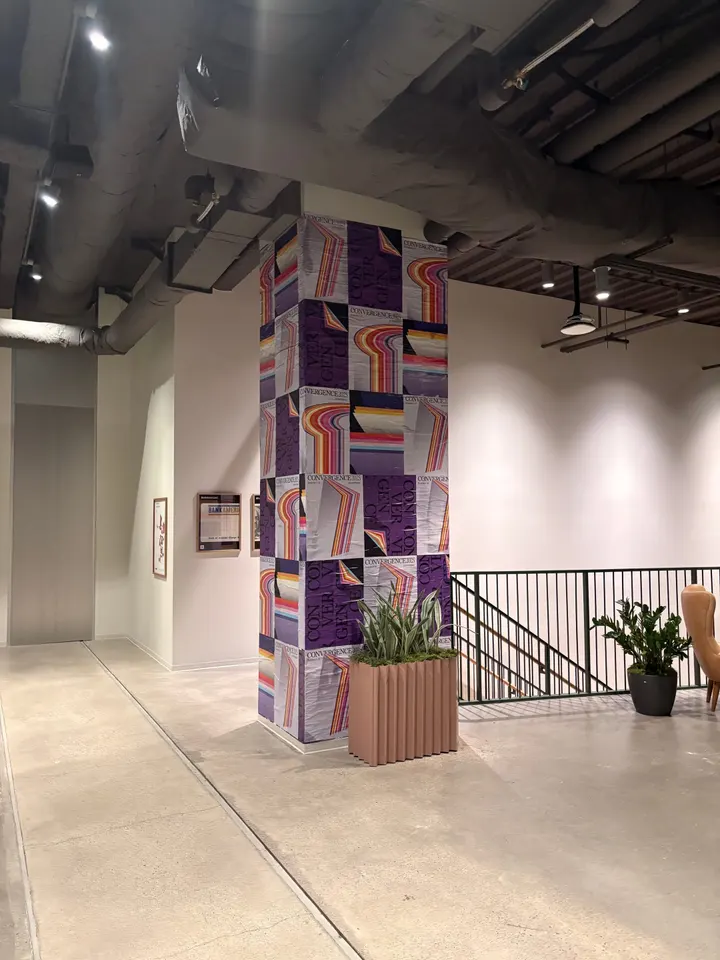
Phase 1: posters photographed across SoMa (Day 2) and Mission (Day 5), all shot in daylight, all showing full poster face with street context (building frontage, street sign, pedestrian density visible in background). GPS coordinates logged for all SoMa and Mission placements.
Phase 2: stencils photographed Day 10 morning before heavy foot traffic, showing full stencil on pavement with street-level context (cross-walks, building entries, pedestrian flow visible). GPS coordinates logged for all stencil placements.
Social pickup: Phase 1 posters generated organic discovery and online speculation, no paid media buy. Phase 2 stencils generated user-generated content (attendees posting "Found it!" shots on Mastodon and Twitter with #AgentsMeatballs hashtag).
The campaign drove awareness toward the October 15 event. Post-event, attendees cited the posters and stencils as an awareness vector alongside online word-of-mouth and direct referral.
Proof.
Phase 1 completed Days 1-5. Phase 2 completed Days 8-10. All placements photographed post-installation with GPS tagging. The campaign generated organic social discussion across tech platforms and a direct attribution vector to event registration.
Both phases held through their operational windows. The wheatpaste posters remained visible through October 15 and beyond (post-event, the posters became cultural artifacts, with some left in place by building owners who appreciated the design and audience response). The sidewalk stencils remained visible through the event and degraded naturally over the following 2 weeks (foot traffic and weather eroding the paint, as designed for impermanence).
Notes.
Tech communities are trained in cryptography, ARG patterns, and collaborative problem-solving. Leaving posters without immediate context isn't confusing, it's a cultural signal: "We think you're smart enough to figure this out." That sense of being trusted with a puzzle is what drives organic amplification.
The pixel-art creative direction (retro aesthetics) was intentional misdirection. It evoked 1980s video-game AI narratives, setting up an expectation. The reveal, a modern AI platform, subverted that expectation productively. It said: "AI is old. Agents are old. What we've built is the next step."
The "Agents & Meatballs" event name was self-aware absurdism. Agents are abstract; meatballs are concrete. The pairing said: "We take AI seriously, but we're not humorless about it." That tone attracted both technical founders (who appreciate the sophistication) and media (who appreciate the narrative). The event itself delivered on the promise, live agent demos, food (actual meatballs), and a product reveal. The campaign mechanics were fulfilled, not undermined.
Sidewalk stencils as reveal-layer tool was disciplined. They could have bloated Phase 2 with banner ads, projected images, or ambient noise. Instead: stencils. Low-tech. Ephemeral. Respectful of public space. The choice communicated values (respect for neighborhoods) while still serving the functional goal (convert curiosity to attendance).
Common questions.
Because this audience decodes things for a living. Phase one put 500 pixel-art agent posters across SoMa and the Mission carrying query copy and nothing else, and tech forums spent the week guessing at an ARG or a stealth startup. Phase two answered it in stencil form near the venue. Withholding the answer only works when the reveal is already scheduled and close behind it.
Does street work reach a technical B2B audience?
It reached this one by geography. Engineers, product managers and technical founders concentrate in SoMa and the Mission, so the poster layer went up where those people walk at lunch and after work rather than where a general audience would pass it. The discovery then moved online on its own, with no paid amplification behind any of it.
Can a campaign run in phases instead of going up all at once?
This one was built that way. Days one through seven were the poster layer across the two neighborhoods. Days eight through ten were 100 sidewalk stencils inside a four-block radius of 945 Market Street, carrying the date, time, address and handle. The full window ran 28 days. Phasing costs more coordination, and it buys a reveal that lands on a date you control.
What happens to the work after the event date passes?
The two layers age differently. The stencils used a chalk-safe white formula and eroded under foot traffic and weather across the following two weeks. The posters held past October 15, and some building owners left them on the wall rather than clearing them. Every placement in both phases was photographed and GPS-logged at install, so the record of the run outlasts the paper.
---
Campaign documentation by Beyond Street Media. Creative direction and phase coordination by Relevance AI brand team. Phase 1 execution (SoMa/Mission wheatpaste) by Bay Area operations, Days 1-5. Phase 2 execution (downtown stencils) by downtown crew, Days 8-10. October 2025 to May 2026 documentation and archival.
21 additional installs.
Run a wheatpaste advertising campaign?
Same crew, your brand.
The same operator network that shipped Relevance AI's campaign is on call for yours. Brief us with city, dates, and creative. Quote back in 4 hours.
Run a campaign like Relevance AI's?
Get a quote