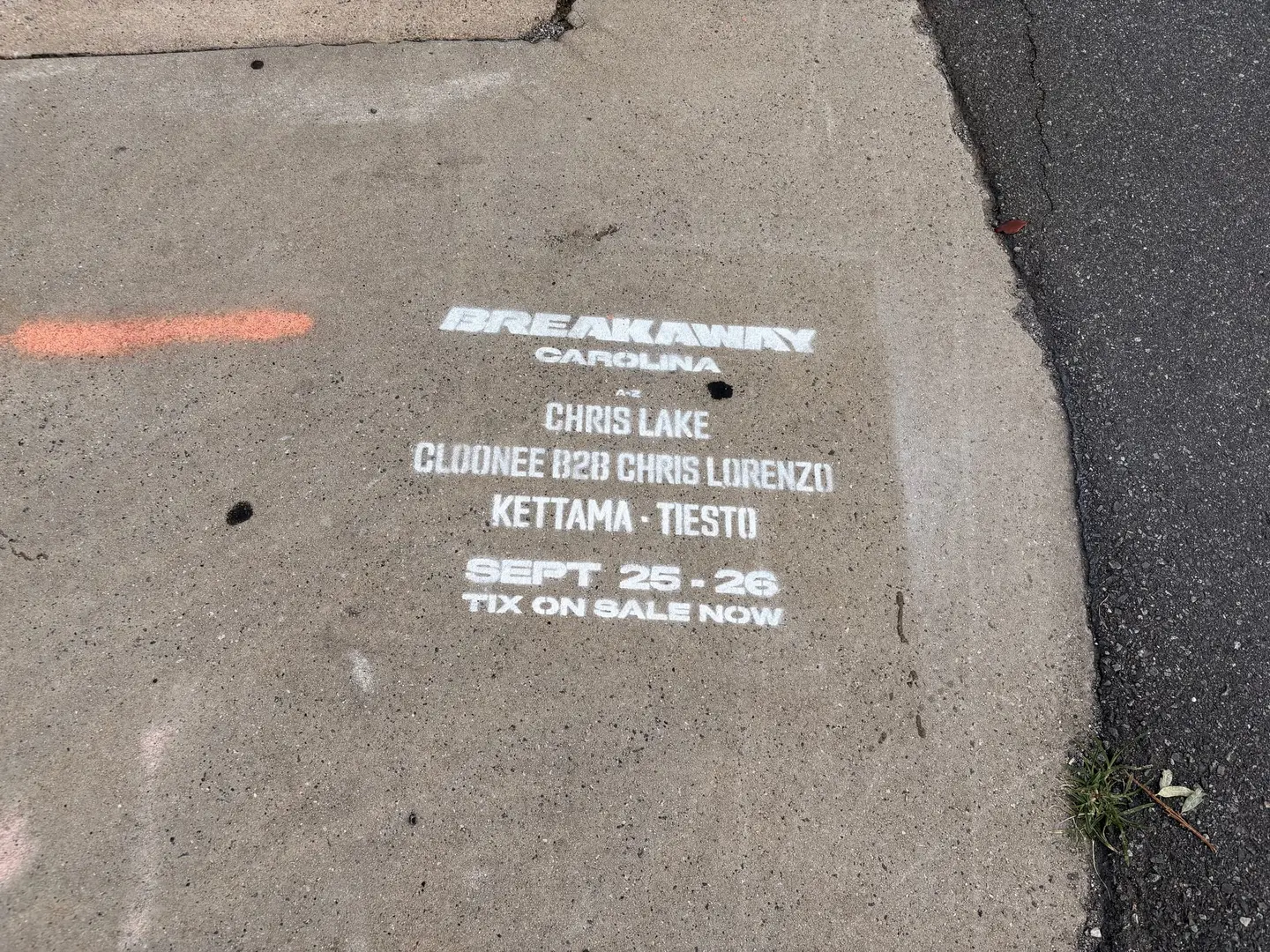
Estimated Reach: The Biggest Lie in Out-of-Home Advertising
Most guerrilla agencies sell campaigns on “estimated reach.” The pitch sounds like this:
“We’ll install 35 walls in Tribeca, SoHo, and the Lower East Side. The corridor sees 15,000 daily foot traffic. Thirty percent of foot traffic will notice a 4’x6’ wheatpaste. The campaign runs for 14 days. Engagement multiplier is 1.8x for high-traffic zones. Total estimated reach: 1,134,000 impressions. Cost: $45,000. Cost-per-impression: $0.04.”
Every number in that calculation is invented. The 15,000 daily foot traffic is a guess (not a traffic count). The 30% notice rate is an agency assumption (different for each observer). The 1.8x engagement multiplier is a firm preference. Standards for this channel do exist, and a house multiplier fails them: the MRC Out-of-Home Measurement Standards require every inference, estimate and adjustment made to measurement data to be fully described and supported by underlying empirical studies, and they require strong evidence of proof of play before gross impressions or audience can be reported at all. For printed inventory, those standards tell buyer and seller to agree on the proof method before the campaign starts. The math is multiplication of guesses.
When a DTC brand briefs a $45K campaign expecting 1.1M impressions and the campaign underperforms, the agency points to “foot traffic was lower than modeled” (unverifiable). The buyer has no recourse because the estimate was never transparent.
This is the standard in the industry. Every major guerrilla agency uses estimated reach. It’s the reason media planners distrust guerrilla as a channel, they’ve learned that the numbers are fiction.
Billboards and transit at least share a yardstick. Geopath, the audience measurement body for out-of-home, defines an impression as the number of people passing a display who are likely to notice the ad, and it pulls that notice rate from a published visibility study rather than from the seller’s opinion. Its own glossary says raw circulation, the traffic count on its own, is no longer a credible measure of audience. The OAAA impression measurement guidelines go further and ask for transparent published methodologies, viewsheds and source data behind every count. Guerrilla estimates borrow the vocabulary and skip both.
BSM operates differently. We don’t estimate. We document.
Photo Proof: The Only Honest Unit
Every BSM campaign returns with four things:
- GPS coordinates per install. Latitude/longitude captured at the moment of install, accurate to ±5 meters, which matches the open-sky figure on the U.S. government GPS accuracy page.
- Photo per install, post-cure. Wide shot (site context), medium shot (wall detail), close-up (surface texture and adhesion quality).
- Install timestamp + crew identifier. When the install happened and which crew executed it.
- Property-owner consent record. For any private property, the signed consent letter proving permission.
The brand receives this documentation within 4 hours of the last wall being photographed. No estimates. No guesses. Proof that the campaign ran where it was supposed to run.
None of this is exotic. Printed billboards have worked this way for decades. OAAA standard out-of-home business practices call for an installation photograph taken by the crew on completion of posting, unaltered beyond nominal cropping, sent to the client within five days, plus a completion report or proof-of-performance affidavit covering each unit in the buy. Guerrilla is the corner of the channel that quietly dropped the habit.
A procurement team can download the GPS log, plot the installs on a map, and verify they match the briefed neighborhoods. They can cross-check the photos against the GPS to confirm the coordinates are accurate. They can read the consent letters to confirm legal compliance. The campaign is auditable.
Estimated reach is:
“We think 1.1M people might have seen this.”
Photo proof is:
“Here are the 35 walls. Here’s where they are. Here’s what they look like. You can verify it yourself.”
The second is honest. The first is sales fiction.
The Documentation Workflow: What the Brand Gets
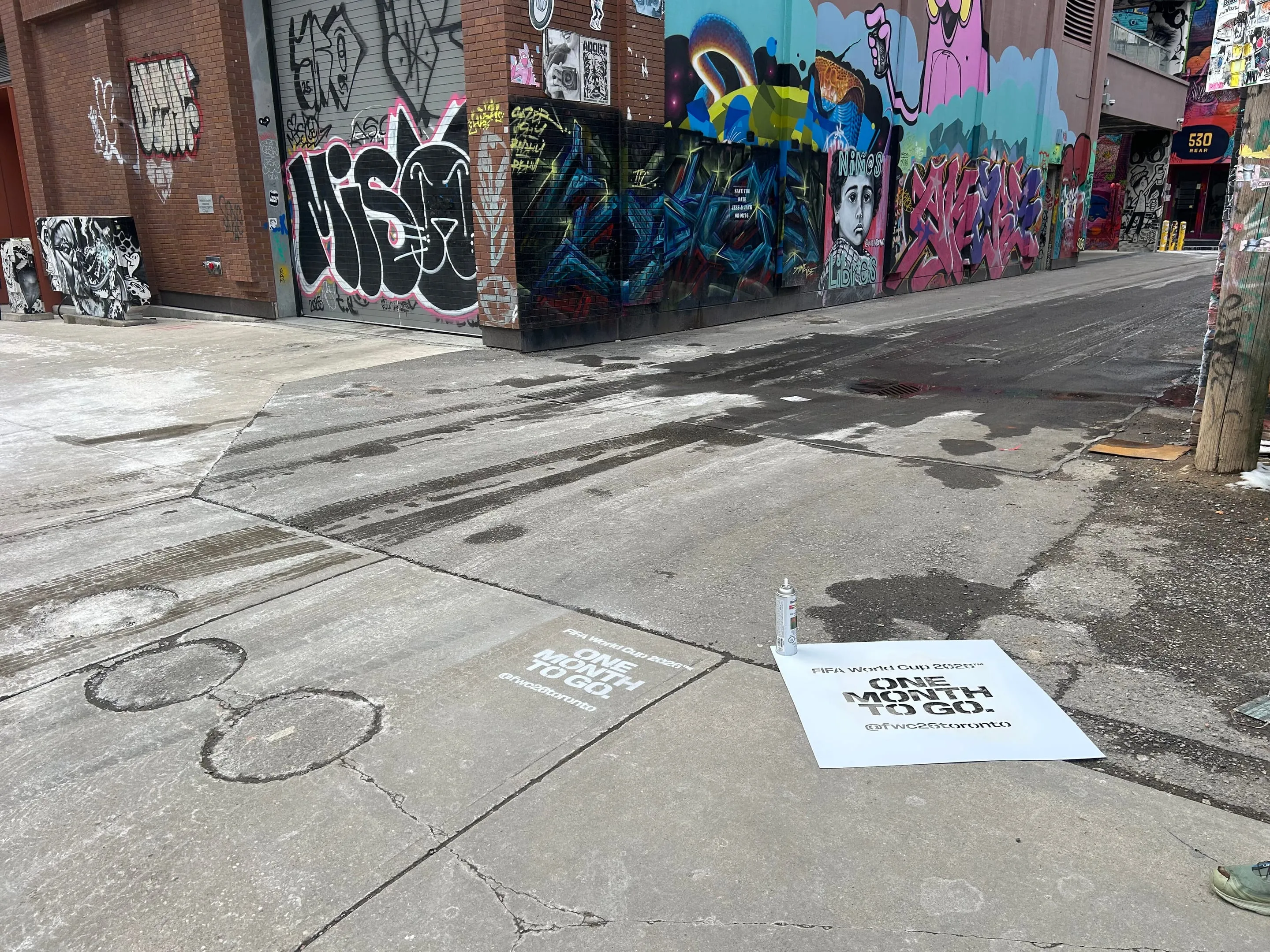
Every BSM campaign returns with six deliverables within 72 hours of campaign close:
1. GPS log (CSV): Address, latitude/longitude, neighborhood, neighborhood tier (primary/secondary), format type (wheatpaste/stencil/sticker), surface condition (texture, size), crew identifier, install timestamp.
2. Photo gallery per install: Three angles per wall, wide (context, surrounding signage, foot traffic), medium (surface framing, paste work detail), close-up (texture, adhesion quality). All photos shot at consistent times of day (morning light for consistency). Raw files, not edited (no color grading, no hero photography aesthetics). This is operator documentation, not marketing photography.
3. Install timeline (CSV): Each wall, install date, install start time, install end time, cure-complete timestamp, photo-captured timestamp. This lets brands correlate install timing against weather, public events, or campaign calendar milestones.
4. Property-owner consent records (PDF): For any install on private property (wheatpaste, sidewalk stencils), the signed consent letter from the property owner. For right-of-way installs (if a permit was obtained), the permit confirmation. The brand has the legal record. New York Penal Law 145.30 makes posting an advertisement on another person’s property an offense when the poster has no right to do so, and the consent letter is the document that answers it.
5. Surface audit (optional, included for campaigns over 14 days): A follow-up visit to each GPS coordinate on day 14 or day 21, photographing the wall in its current state. If the wall remains intact, it’s photographed and correlated to the install. If the wall has been removed, painted over, or altered, it’s documented with a photo of the altered surface. Brands see the campaign’s actual lifespan, not a theoretical lifespan.
6. Summary map and brief: A one-page map showing all install locations, neighborhood clustering, format distribution, and key metrics (total walls, total square footage, neighborhoods covered). This is the executive summary for internal stakeholder presentations.
The entire package ships as a ZIP file with a manifest and a README. A procurement team can extract the GPS log into ArcGIS or Google Earth, plot the installs, and verify them against the briefed scope in under 15 minutes.
Why Procurement Teams Demand Documentation
Procurement teams that have been burned by reach inflation actively seek documented campaigns. Three business consequences drive the preference:
Budget reconciliation becomes auditable. The finance department asks: “Did we get what we paid for?” With estimated reach, the answer is “we assume so.” With GPS photo proof, the answer is “yes, here are the coordinates and photos.” The invoice line item matches delivery. Accounting approves the spend faster. Future campaigns from documented operators get approved with less scrutiny.
Attribution becomes possible. If a DTC brand ran a documented wall campaign in Brooklyn and sales lifted 12% in Brooklyn during that week, the brand can now ask: “Which neighborhoods drove the lift?” The GPS log shows which walls were in which neighborhoods. Cross-reference that against the sales heatmap, and the brand identifies which micro-clusters performed best. That insight is impossible without GPS documentation, and it feeds into the next campaign’s neighborhood selection. The data gets better each round.
Operator accountability becomes enforceable. If a wall is supposed to run for 14 days and the surface audit on day 14 shows the wall was painted over on day 3, the brand has evidence. The operator didn’t deliver what was paid for. The contract specifies remediation or a credit. Without documentation, the brand has only the operator’s word (which is worthless if they benefited from the failure).
The procurement teams that value documentation are the ones that approve higher budgets for future campaigns, because they have data proving the previous campaigns worked.
Real Example: Palantir Multi-City 35-Wall Manifest
Palantir (data intelligence platform) ran a multi-city wheatpaste campaign across five US cities (San Diego, Seattle, Austin, DC, Boston) targeting tech-industry decision-makers, documented as a 35-wall manifest. The service starts at $3,500 (wheatpaste), priced as a multi-market program. Range varies by turnaround, size, location count, and combined service mix. Final quote returns inside 24 to 48 hours. Campaign timeline: 5 weeks of scouting, 2 weeks of installs (distributed across cities), 4 weeks of documentation and audits.
Documentation delivered:
- GPS log: 35 rows (city, neighborhood, GPS coords, wall size, surface type, crew, timestamp)
- Photo gallery: 105 photos (3 per wall)
- Install timeline: 35 entries (install date, start/end times, crew ID, cure-complete timestamp)
- Property-owner consent: 35 PDFs (one per wall, scanned signatures)
- Surface audits: Day-14 photos for all 35 walls, showing campaign status
- Summary map: One-page visual showing all 35 locations, color-coded by city
Procurement validation:
Palantir’s media buyer downloaded the GPS log, plotted all 35 coordinates on a map, and visually confirmed: 8 walls in San Diego downtown corridor, 7 in Seattle Capitol Hill, 8 in Austin East 6th Street, 6 in DC Dupont Circle, 6 in Boston Beacon Hill. All locations matched the briefed neighborhoods. The buyer spot-checked 5 random GPS coordinates against the photos and confirmed ±5 meter accuracy.
Finance sign-off:
The brand’s finance department received an invoice line item that matched delivery wall-for-wall against the documented manifest. Budget variance: zero. The campaign closed with zero disputes. The next quarter, Palantir approved a second round of the same campaign because the first round was documented and defensible.
Cost of documentation: roughly 4 percent of the campaign budget. Value of that 4 percent: the difference between finance approving the spend immediately vs. requiring weeks of debate and justification.
How Documentation Changes the Media Planning Conversation
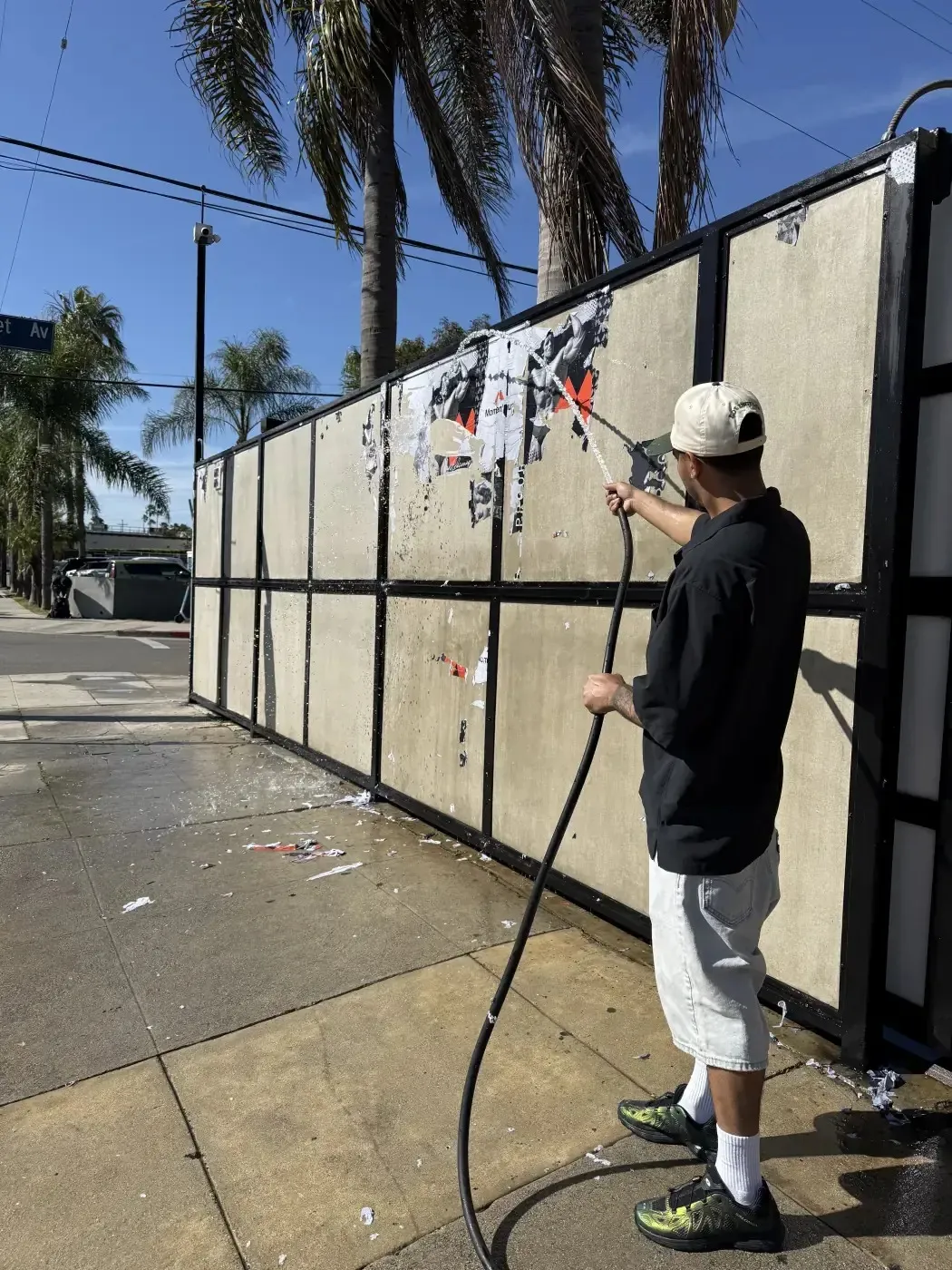
Old conversation (estimated reach model):
Brand manager to agency: “We want to reach 1M+ impressions in NYC. What’s the cost?” Agency: “We can do 35 walls in Tribeca and SoHo, estimated reach 1.1M impressions. Cost is $45K.” Brand manager to CMO: “We’re spending $45K on estimated 1.1M impressions in NYC. CPM is $41.” CMO: “How do we know the estimate is accurate?” Brand manager: “The agency says this is their standard model.” CMO: “That’s not good enough. Can we reduce the budget or do fewer walls?” Negotiation spirals. Campaign shrinks. The reach claim becomes irrelevant because it was never verifiable anyway.
New conversation (documented proof model):
Brand manager to agency: “We want to reach Tribeca and SoHo. What neighborhoods? How many walls? Can you document it?” Agency: “We’ll install 35 walls across Tribeca, SoHo, and the Lower East Side. Every wall comes with GPS coordinates, photos, and install timestamps. We’ll deliver the documentation within 72 hours of campaign close.” Brand manager to CMO: “We’re running a documented wall install across three NYC neighborhoods. We’ll have GPS proof of every install.” CMO: “Perfect. Let’s do it.” Campaign ships as briefed. Documentation arrives as promised. Finance approves without debate. The next campaign gets approved faster because this one was delivered with proof.
The documented conversation is shorter. The approval is faster. The dispute rate is lower. The budget approval rate is higher.
This is why procurement teams that have been burned by reach inflation demand documentation. It’s not about impression measurement; it’s about operational integrity.
What Documentation IS, and What It ISN’T
What it IS:
- Proof that the campaign ran where it was supposed to.
- Auditable evidence for finance and procurement teams.
- A record of campaign lifespan (surface audit over time).
- Legal protection (property-owner consent records, timestamps).
- Input for geo-correlation analysis (GPS + sales heatmap overlay).
What it is NOT:
- Marketing photography. The install photos are operator documentation (raw, consistent lighting, no editorial framing). Brands that want hero imagery for social use commission a separate creative-photography crew 1-4 days post-install.
- Impression measurement or reach validation. GPS documentation answers “did the campaign run?” It does not answer “how many people saw it?” Impression and recall measurement is a separate research layer (brand-lift study, pixel-on-OOH correlation, intercept survey).
- Guaranteed performance proof. Documentation proves the install happened. It does not prove the campaign drove sales, awareness, or behavior change. That requires measurement beyond documentation.
Documentation is the gate to having those conversations. Without it, you can’t verify anything. With it, you have the foundation to measure.
The Closing
If your brief says “we need to defend this internally” or “our CFO requires audit trail,” you know what to ask for: GPS coordinates, photos, and timestamps per install. Not estimated reach. Not impressions guesses. Proof.
Send a brief if you’re ready. Neighborhood targets, budget, campaign duration. We’ll install the campaign, deliver the GPS log and photos within 72 hours of campaign close, and stand behind every coordinate.
That’s not an add-on. That’s how we operate on every campaign.