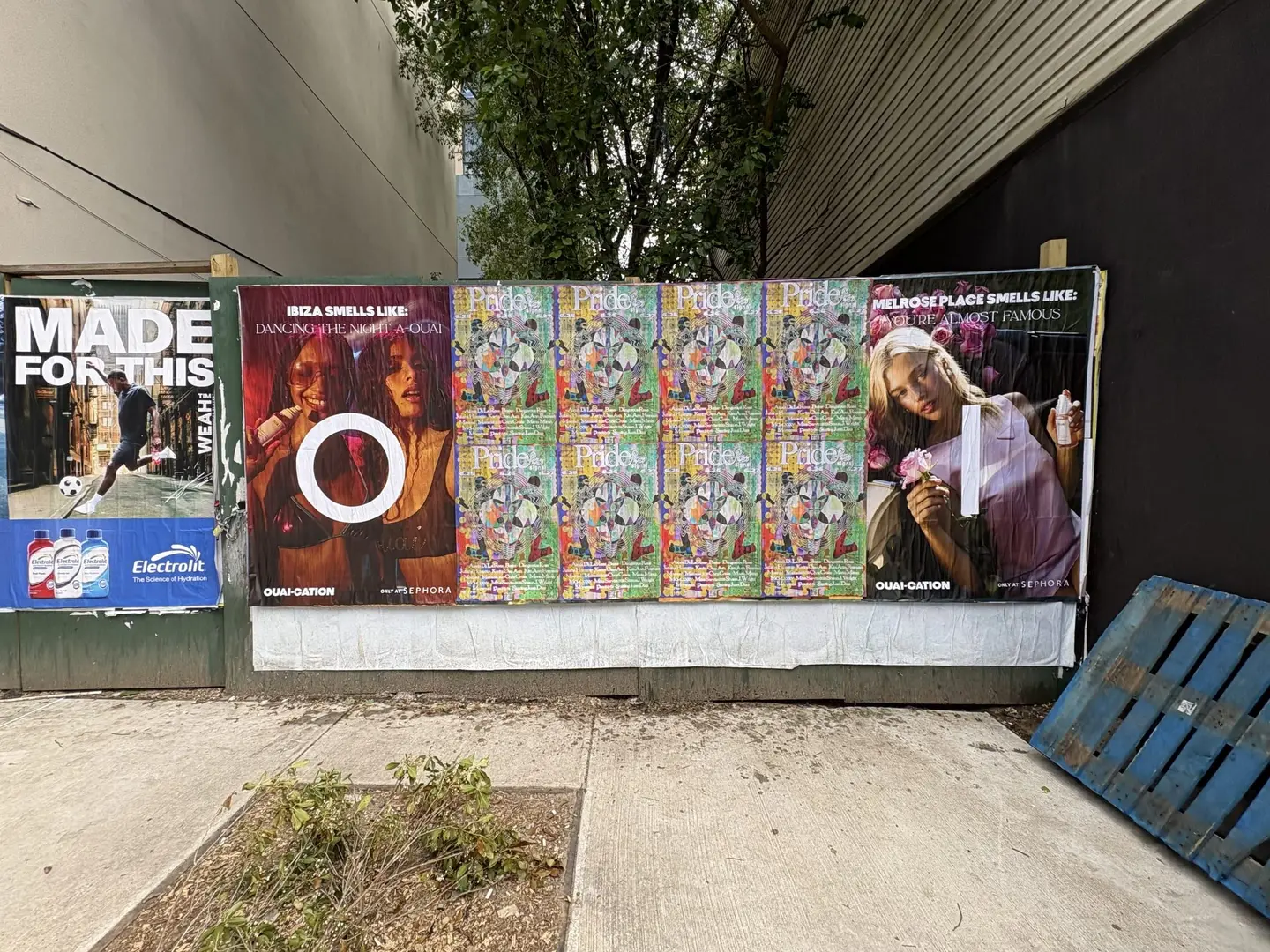
The short answer first. Wheatpaste advertising is legal in all 50 states when the poster lives on a private surface with documented property-owner consent. It is illegal in every state when posted on public infrastructure: utility poles, traffic signs, government buildings, mailboxes, transit property, public benches, parking meters. The medium is not the issue. The surface and the consent are.
That distinction is the entire legal universe of paste-up advertising in the United States. There is no federal wheatpaste statute. There is no single national permit. There is, in every state, a defacement, criminal mischief or unauthorized-posting law that applies to property the poster does not own. There is, in most cities, a sign code that regulates large-format private signage. Between those two layers sits a legal lane wide enough to run a national campaign through, provided every install carries a paper trail.
Beyond Street Media has run more than 500 documented installs. Zero municipal removals on record. The reason is not stealth. It is paperwork. Every wall has a written consent from the property owner, leaseholder, general contractor, or BID-authorized signage program before paste lands. That consent is the legal armature the campaign rests on.
This guide covers all 50 states. Each entry lists the controlling statute, how that statute grades an offense, the notable city-level rule where one applies, and the permitted-surface pathway available in that state. Every citation below was checked against the state’s own published code or the city’s own published ordinance. Where a code does not publish a per-poster dollar figure, none is given here: most states grade unauthorized property damage by the value of the damage, and the concrete dollar numbers that do exist come from municipal ordinances, not state statutes. Where an entry uses general-framework language, the state relies on a broader nuisance or defacement statute and counsel should be consulted for campaign-specific exposure. Nothing here is legal advice. It is an operational map.
The federal baseline
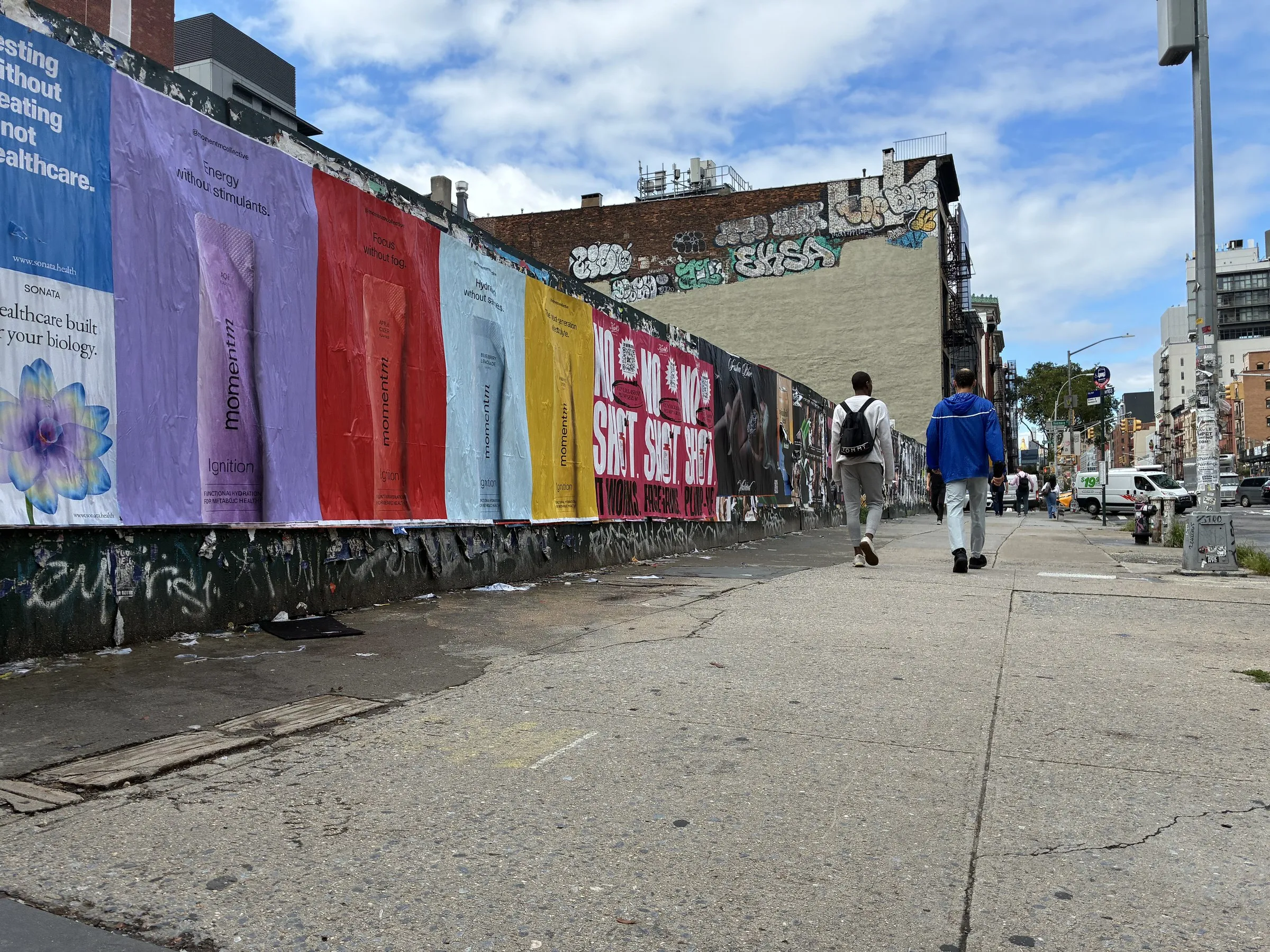
No federal statute governs wheatpaste advertising directly. The closest federal touch points are the FTC’s general advertising rules around deceptive claims (which apply to any commercial message, regardless of medium) and the FCC’s jurisdiction over broadcast and digital, which does not reach physical street posters. Outdoor advertising along federal highways is controlled under the Highway Beautification Act, codified at 23 U.S.C. §131, which reaches signs within 660 feet of the nearest edge of the right-of-way of the Interstate and primary systems and visible from the main traveled way. Wheatpaste sheets on private urban walls fall outside that scope.
Federal trademark and copyright law applies to the content of any poster. Posting a trademarked logo without authorization, defamatory content, or copyrighted artwork without license carries the same exposure paste or otherwise. That sits with the brand and the creative agency, not the installer.
Everything else is state and city level. The state statute sets the baseline offense for unauthorized posting on property the poster does not own. The city ordinance adds enforcement teeth, sets the sanitation-ticket process, and in larger metros adds a building-code layer for large-format private signage. The combination is what governs every active campaign.
Quick-reference table: all 50 states
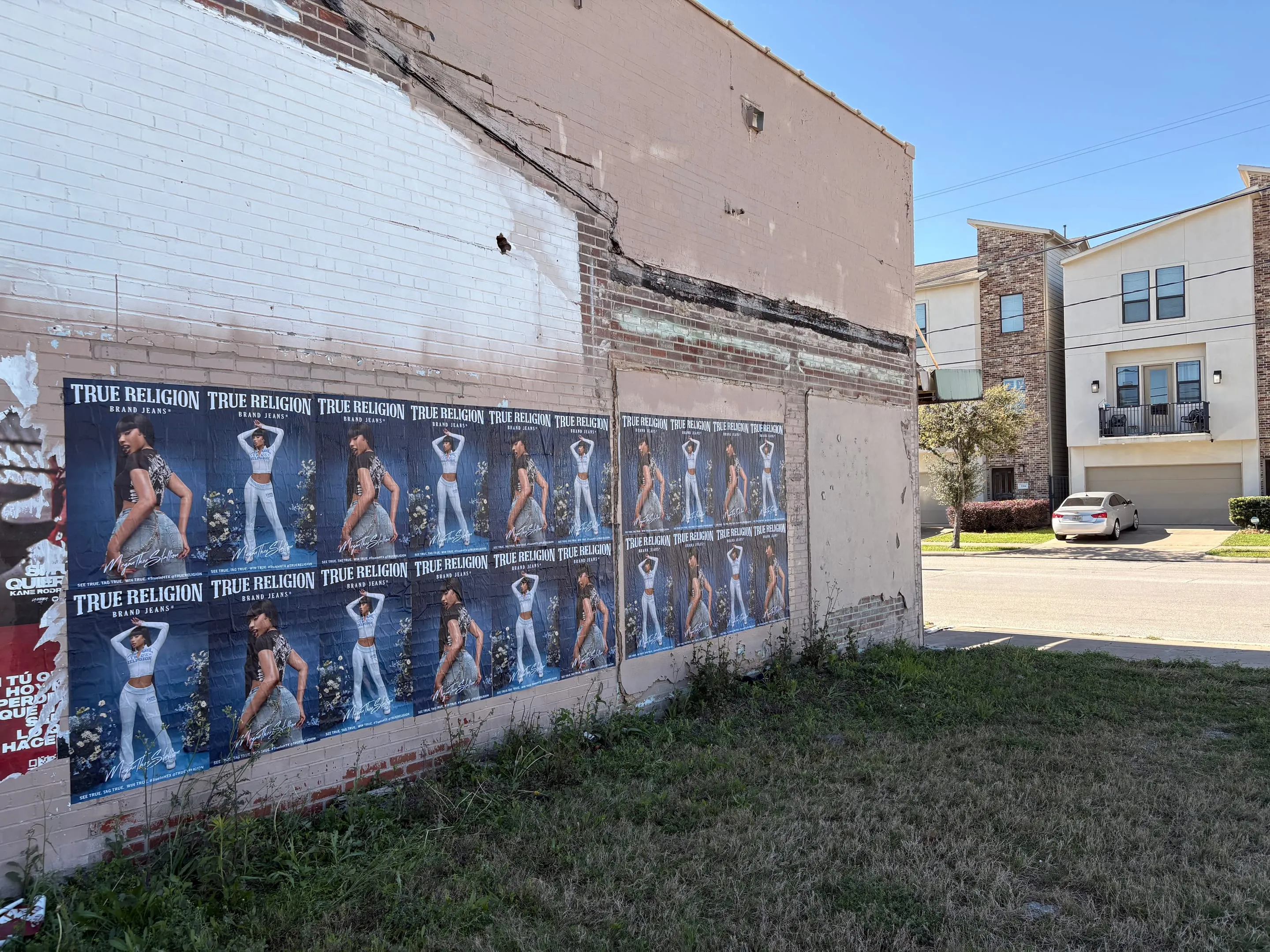
| State | Controlling statute | Public posting | Private surface | Notable city rule |
|---|---|---|---|---|
| Alabama | Ala. Code Title 13A (criminal mischief; criminal littering) | Prohibited | Legal with consent | Birmingham sign code |
| Alaska | Alaska Stat. §11.46.482 (criminal mischief) | Prohibited | Legal with consent | Anchorage land use code |
| Arizona | A.R.S. §13-1602 (criminal damage) | Prohibited | Legal with consent | Phoenix sign code |
| Arkansas | Ark. Code §5-38-204 (criminal mischief, 2nd degree) | Prohibited | Legal with consent | Little Rock sign code |
| California | Cal. Penal Code §594 (vandalism); §556 (advertising on public property) | Prohibited | Legal with consent | LAMC §28.04; SF Public Works Code §184.57 |
| Colorado | C.R.S. §18-4-501 (criminal mischief) | Prohibited | Legal with consent | Denver sign code |
| Connecticut | Conn. Gen. Stat. §§53a-115 to 53a-117 (criminal mischief) | Prohibited | Legal with consent | New Haven sign ord. |
| Delaware | 11 Del. C. §811 (criminal mischief) | Prohibited | Legal with consent | Wilmington sign code |
| Florida | Fla. Stat. §806.13 (criminal mischief) | Prohibited | Legal with consent | Miami-Dade and Miami sign codes; Wynwood BID overlay |
| Georgia | O.C.G.A. §16-7-23 (criminal damage to property, 2nd degree) | Prohibited | Legal with consent | Atlanta sign ordinance |
| Hawaii | Haw. Rev. Stat. §708-823 (criminal property damage, 4th degree) | Prohibited | Legal with consent | Honolulu land use ordinance |
| Idaho | Idaho Code §18-7001 (malicious injury to property) | Prohibited | Legal with consent | Boise sign code |
| Illinois | 720 ILCS 5/21-1.3 (criminal defacement) | Prohibited | Legal with consent | Chicago Muni Code §10-8-320 |
| Indiana | Ind. Code §35-43-1-2 (criminal mischief) | Prohibited | Legal with consent | Indianapolis sign reg. |
| Iowa | Iowa Code §716.1 (criminal mischief) | Prohibited | Legal with consent | Des Moines sign code |
| Kansas | K.S.A. §21-5813 (criminal damage to property) | Prohibited | Legal with consent | Wichita sign code |
| Kentucky | KRS §512.020 (criminal mischief, 1st degree) | Prohibited | Legal with consent | Louisville land development code |
| Louisiana | La. R.S. §14:56 (simple criminal damage) | Prohibited | Legal with consent | New Orleans zoning ordinance |
| Maine | 17-A M.R.S. §806 (criminal mischief) | Prohibited | Legal with consent | Portland sign ord. |
| Maryland | Md. Code, Crim. Law §6-301 (malicious destruction) | Prohibited | Legal with consent | Baltimore sign code |
| Massachusetts | MGL ch. 266 §126A (defacing real or personal property) | Prohibited | Legal with consent | Boston Muni Code §§16-23.1, 16-23.3 |
| Michigan | MCL §750.380 (malicious destruction of a building) | Prohibited | Legal with consent | Detroit sign ord. |
| Minnesota | Minn. Stat. §609.595 (damage to property) | Prohibited | Legal with consent | Minneapolis sign code |
| Mississippi | Miss. Code §97-17-39 (defacing public buildings) | Prohibited | Legal with consent | Jackson sign code |
| Missouri | Mo. Rev. Stat. §§569.100, 569.120 (property damage) | Prohibited | Legal with consent | St. Louis sign regulations |
| Montana | Mont. Code §45-6-101 (criminal mischief) | Prohibited | Legal with consent | Billings sign code |
| Nebraska | Neb. Rev. Stat. §28-519 (criminal mischief) | Prohibited | Legal with consent | Omaha sign reg. |
| Nevada | NRS §206.330 (placing graffiti or otherwise defacing property) | Prohibited | Legal with consent | Las Vegas sign code |
| New Hampshire | RSA §634:2 (criminal mischief) | Prohibited | Legal with consent | Manchester sign ord. |
| New Jersey | N.J.S.A. §2C:17-3 (criminal mischief) | Prohibited | Legal with consent | Newark, Jersey City sign codes |
| New Mexico | N.M.S.A. §30-15-1 (criminal damage to property) | Prohibited | Legal with consent | Albuquerque development ordinance |
| New York | NY Penal Law §145.60 (making graffiti); NYC Admin Code §10-119 / §10-121 | Prohibited | Legal with consent | NYC Sanitation enforcement |
| North Carolina | N.C.G.S. §14-127 (willful and wanton injury to real property) | Prohibited | Legal with consent | Charlotte UDO sign reg. |
| North Dakota | N.D.C.C. §12.1-21-05 (criminal mischief) | Prohibited | Legal with consent | Fargo sign code |
| Ohio | Ohio Rev. Code §2909.07 (criminal mischief) | Prohibited | Legal with consent | Cleveland, Columbus sign codes |
| Oklahoma | 21 Okla. Stat. §1760 (maliciously defacing property of another) | Prohibited | Legal with consent | OKC sign code |
| Oregon | ORS §164.345 (criminal mischief, 3rd degree) | Prohibited | Legal with consent | Portland sign code |
| Pennsylvania | 18 Pa.C.S. §3304 (criminal mischief) | Prohibited | Legal with consent | Philadelphia sign code |
| Rhode Island | R.I.G.L. §11-44-1 (vandalism) | Prohibited | Legal with consent | Providence sign ord. |
| South Carolina | S.C. Code §16-11-520 (malicious injury to house, fence or fixture) | Prohibited | Legal with consent | Charleston sign code |
| South Dakota | S.D.C.L. §22-34-1 (intentional damage to property) | Prohibited | Legal with consent | Sioux Falls sign code |
| Tennessee | T.C.A. §39-14-408 (vandalism) | Prohibited | Legal with consent | Nashville sign ord. |
| Texas | Tex. Penal Code §28.03 (criminal mischief); §28.08 (graffiti) | Prohibited | Legal with consent | Austin, Houston, Dallas sign codes |
| Utah | Utah Code §76-6-106.1 (property damage or destruction) | Prohibited | Legal with consent | Salt Lake City sign code |
| Vermont | 13 V.S.A. §3701 (unlawful mischief) | Prohibited | Legal with consent | Burlington sign ord. |
| Virginia | Va. Code §18.2-138 (damaging public buildings) | Prohibited | Legal with consent | Richmond, Norfolk sign codes |
| Washington | RCW §9A.48.090 (malicious mischief, 3rd degree) | Prohibited | Legal with consent | Seattle sign code |
| West Virginia | W. Va. Code §61-3-30 (destruction of property) | Prohibited | Legal with consent | Charleston sign code |
| Wisconsin | Wis. Stat. §943.01 (criminal damage to property) | Prohibited | Legal with consent | Milwaukee sign code |
| Wyoming | Wyo. Stat. §6-3-201 (property destruction and defacement) | Prohibited | Legal with consent | Cheyenne sign code |
The pattern is uniform on purpose. The same legal architecture applies in every state. The differences live in how the statute grades an offense, the city sign code, and the local enforcement intensity. The next section walks through each state with that context.
State-by-state guide
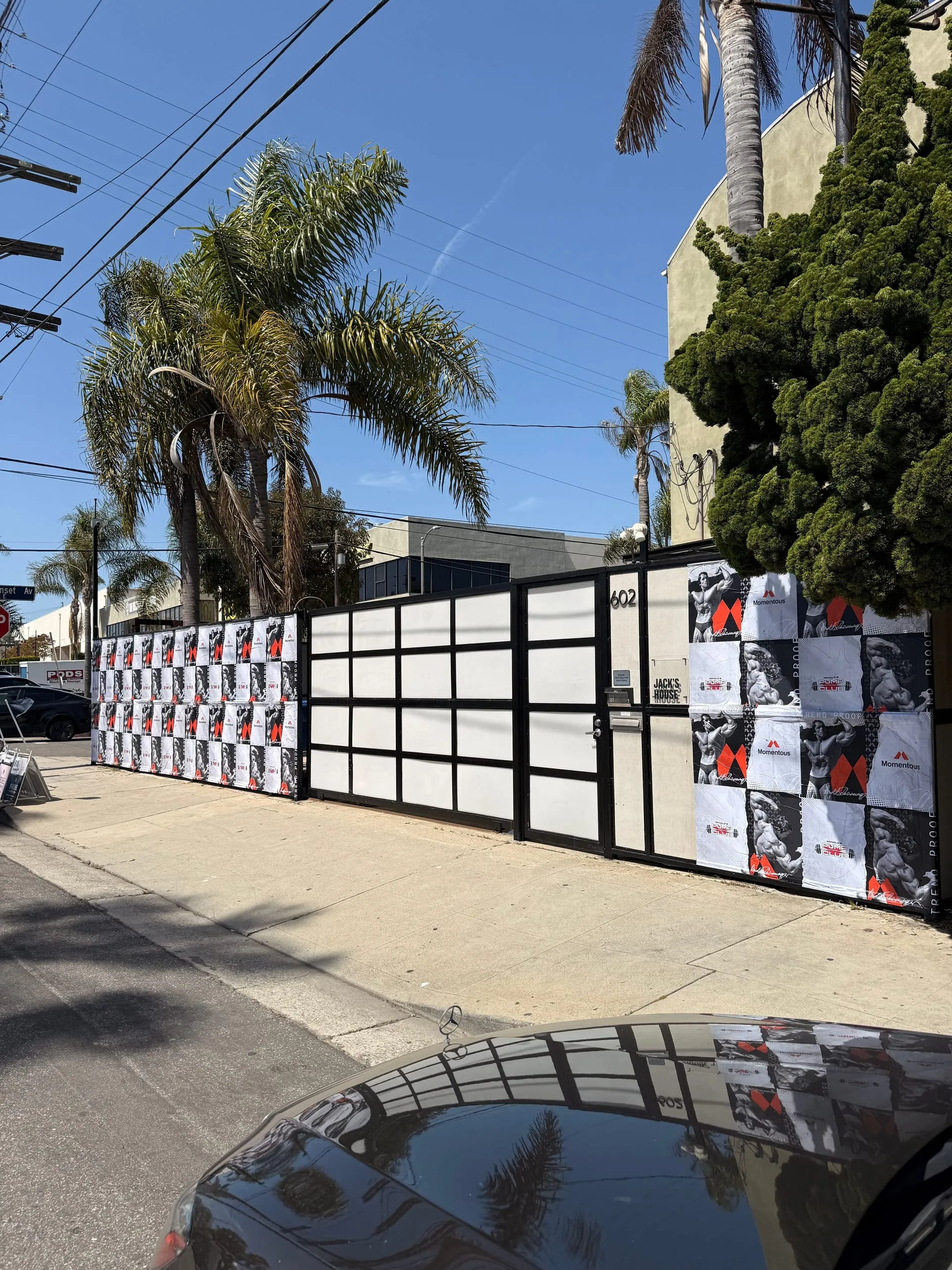
Alabama
Alabama has no posting-specific statute. Unauthorized posting on property the poster does not own is handled under the state’s general criminal mischief and criminal littering provisions in Title 13A of the Code of Alabama, which grade by the value of the damage rather than by a published per-poster figure. Birmingham and Mobile enforce local sign codes for private-property installs above standard signage thresholds. Permitted pathway: any private wall, fence, or hoarding with written owner consent. BSM has installed in Birmingham, Mobile, and Huntsville on private-property programs.
Alaska
Alaska Stat. §11.46.482 (criminal mischief) governs damaging the property of another without the right to do so, and it grades by the dollar value of the damage rather than publishing a per-poster fine. Anchorage’s land use code adds local signage rules for private installs. The permitted pathway is identical to the lower 48: written private-owner consent. Anchorage and Fairbanks are the practical markets for any state-level campaign.
Arizona
A.R.S. §13-1602 (criminal damage) is the controlling statute. Subsection A.5 reaches recklessly drawing or inscribing a message, slogan, sign or symbol on any public or private building, structure or surface without the owner’s permission, and the section is classified by the dollar amount of the damage. Phoenix and Tucson both enforce city sign codes for large-format private signage. Permitted pathway: private property with documented owner consent, with attention to Phoenix’s restrictions on signage in protected scenic corridors. Live market detail: wheatpaste advertising in Arizona.
Arkansas
Ark. Code §5-38-204 (criminal mischief in the second degree) is the controlling statute, and the Arkansas Sentencing Commission’s published seriousness reference grades it by the value of the damage. Little Rock and Fayetteville enforce local sign ordinances. Permitted pathway: written private-owner consent on commercial property. Limited tier-one metro density makes Arkansas a tier-two market for paste-up campaigns.
California
Cal. Penal Code §594 (vandalism) is the statewide statute. Cal. Penal Code §556 makes it a misdemeanor to place or maintain any sign, picture, transparency, advertisement or mechanical device used for advertising, without lawful permission, upon any property of the state, a city or a county. Local enforcement is the strictest in the country. Los Angeles Municipal Code §28.04 bars affixing any hand-bill or sign to a sidewalk, curb, street lamp post, hydrant, tree, utility pole, public bridge, street sign or traffic sign, and sets an administrative penalty not to exceed $100 for a first violation in a calendar year, $250 for a second, and $500 for a third, plus the cost the city incurs removing the sheet. More than three administrative fines in one calendar year results in the violation being charged as a misdemeanor. San Francisco prohibits affixing a sign to a lamp post, utility pole, traffic control sign, curbstone, bench, hydrant, wall, sidewalk, bridge, tree, fence, building or structure owned or controlled by the city under Public Works Code §184.57, with narrow exceptions for small lamp-post postings. Violation is an infraction carrying a fine of not less than $100 or more than $500 under §184.62, and the administrative fine under §184.63 steps $100, $200, then $500 inside a year. Oakland and San Diego enforce similar codes. Permitted pathway: private property with written owner consent, BID-cleared corridors (Downtown LA Alliance, Yerba Buena, Castro/Upper Market), and GC-authorized construction hoardings. California is BSM’s highest-volume paste-up market alongside New York. Current corridors, lead times, and pricing sit on the California wheatpaste page.
Colorado
C.R.S. §18-4-501 (criminal mischief) is the controlling statute. It covers knowingly damaging the real or personal property of another and grades from a petty offense below $300 up through felony classes as the aggregate damage rises. Denver and Boulder sign codes add local layers. Permitted pathway: written private-owner consent. RiNo and LoDo are active corridors for legal private-surface installs in Denver.
Connecticut
Conn. Gen. Stat. §53a-115 (criminal mischief in the first degree) applies when a person damages tangible property of another in an amount exceeding $1,500, and §§53a-116, 53a-117 and 53a-117a carry the lesser degrees down to a class C misdemeanor. New Haven and Hartford enforce local sign codes. Permitted pathway: private property with documented consent.
Delaware
11 Del. C. §811 (criminal mischief) governs intentionally or recklessly damaging the tangible property of another, with the classification set by the amount of pecuniary loss. Wilmington’s sign code applies to large-format private installs. Permitted pathway: written private-owner consent. Limited market depth; campaigns typically run through Philadelphia metro routing.
Florida
Florida Statute §806.13 (criminal mischief) is the controlling statute, with damage tiers that run from a second-degree misdemeanor at $200 or less, to a first-degree misdemeanor above $200 but under $1,000, to a third-degree felony once damage reaches $1,000. Miami-Dade County and the City of Miami enforce their own sign codes. Miami Beach has additional historic-district sign restrictions. The Wynwood BID overlay creates the cleanest legal pathway in the state for hand-painted murals and authorized large-format paste-ups. Orlando, Tampa, and Jacksonville enforce local sign codes. Permitted pathway: BID-cleared Wynwood corridors, private property with consent statewide, GC-authorized hoardings. Florida is one of BSM’s three highest-volume markets. We keep a dedicated Florida wheatpaste advertising page with the active corridors.
Georgia
O.C.G.A. §16-7-23 (criminal damage to property in the second degree) is the controlling statute for damaging the property of another without consent. O.C.G.A. §16-7-43 is Georgia’s litter statute, not a defacement statute, and it reaches dumping, depositing, throwing or leaving litter on public or private property without authorization. Atlanta’s sign ordinance regulates private signage in the city. Permitted pathway: private property with consent, with active corridors in Old Fourth Ward, West Midtown, and East Atlanta Village. The route map and published floor live on the Georgia wheatpaste page.
Hawaii
Haw. Rev. Stat. §708-823 (criminal property damage in the fourth degree) covers intentionally or knowingly damaging the property of another without consent and is a petty misdemeanor. Honolulu’s land use ordinance regulates private signage. Permitted pathway: written private-owner consent. Tourism-corridor signage in Waikiki has additional historic-district rules.
Idaho
Idaho Code §18-7001 (malicious injury to property) is the controlling statute. Maliciously injuring property that is not your own is a misdemeanor punishable by up to one year in county jail, a fine of not more than $1,000, or both. Boise’s sign code applies to private installs. Permitted pathway: written private-owner consent. Tier-two market for paste-up campaigns; limited dispatch frequency.
Illinois
720 ILCS 5/21-1.3 (criminal defacement of property) is the controlling Illinois statute, and it carries an express affirmative defense where the owner of the property consented to the damage. Chicago Municipal Code §10-8-320 prohibits posting commercial advertising matter on sidewalks, lampposts, poles, bridges, and bus shelters, with a fine of not less than $200 and not more than $1,000 for each offense plus liability for the cost of repairing the damage. Chicago is among the most aggressive enforcement environments outside NYC and LA. Permitted pathway: private property with consent, with active corridors in Wicker Park, Logan Square, Pilsen, West Loop, and the West Town BID. GC-authorized construction hoardings are a primary paste-up surface in the Loop and River North. For the live Illinois market, see wheatpaste advertising in Illinois.
Indiana
Ind. Code §35-43-1-2 (criminal mischief) governs recklessly, knowingly or intentionally damaging or defacing property of another without that person’s consent, with the offense class rising as the pecuniary loss rises. Indianapolis sign regulations apply to private installs. Permitted pathway: written private-owner consent. Mass Ave and Fountain Square are active corridors for legal private installs.
Iowa
Iowa Code §716.1 defines criminal mischief as any damage, defacing, alteration, or destruction of property done intentionally by one who has no right to so act, with the degree set by the value of the damage in the sections that follow. The Des Moines sign code applies to private installs. Permitted pathway: written private-owner consent. Tier-two market.
Kansas
K.S.A. §21-5813 (criminal damage to property) covers knowingly damaging, destroying, defacing or substantially impairing the use of property in which another has an interest without that person’s consent, graded by value. Wichita and Kansas City KS sign codes apply locally. Permitted pathway: written private-owner consent. Campaigns typically route through Kansas City MO metro.
Kentucky
KRS §512.020 (criminal mischief in the first degree) applies where a person intentionally or wantonly defaces, destroys or damages property causing pecuniary loss of $500 or more, and §512.030 and §512.040 carry the lesser degrees. Louisville’s land development code regulates private signage. Permitted pathway: written private-owner consent. NuLu and Bardstown Road corridors are active.
Louisiana
La. R.S. §14:56 (simple criminal damage to property) is the controlling statute: intentionally damaging property of another without the owner’s consent by means other than fire or explosion. Where the damage is less than $1,000, the offender shall be fined not more than $1,000 or imprisoned not more than six months, or both. The New Orleans zoning ordinance regulates private signage with significant historic-district restrictions in the French Quarter and Marigny. Permitted pathway: written private-owner consent, with extra attention to historic-district overlays. Live market detail: wheatpaste advertising in Louisiana.
Maine
17-A M.R.S. §806 (criminal mischief) covers intentionally, knowingly or recklessly damaging or destroying the property of another with no reasonable grounds to believe you have a right to do so. Portland and Bangor enforce local sign codes. Permitted pathway: written private-owner consent. Tier-two market with seasonal install windows.
Maryland
Md. Code, Crim. Law §6-301 (malicious destruction of property) bars willfully and maliciously destroying, injuring or defacing the real or personal property of another. Damage of less than $1,000 is a misdemeanor carrying up to 60 days or a fine not exceeding $500; damage of $1,000 or more carries up to three years or a fine not exceeding $2,500. Baltimore’s sign code regulates private signage. Permitted pathway: written private-owner consent. Federal Hill, Fells Point, and Hampden are active corridors for legal private installs.
Massachusetts
MGL ch. 266 §126A bars intentionally, willfully and maliciously or wantonly painting, marking, scratching, etching, marring or defacing the real or personal property of another, including a wall, fence, building or sign, with a fine of not more than $1,500 or up to three times the value of the property, plus responsibility for removal. Boston enforces through its own posting sections: Municipal Code §16-23.1 bars posting a notice, advertisement or bill on a post, pole, fence, wall or building without the prior consent of the person having possession of it, and §16-23.3 bars posting in a street or public place without the Mayor’s consent. The fine for either is $300 under §16-32.6. Cambridge and Somerville enforce similar codes. Permitted pathway: private property with consent, with active corridors in Allston, Cambridgeport, and the Seaport. Boston’s enforcement intensity sits just below NYC and LA. Current corridors, lead times, and pricing sit on the Massachusetts wheatpaste page.
Michigan
MCL §750.380 (malicious destruction of a building) covers willfully and maliciously destroying or injuring another person’s house, barn or other building or its appurtenances, and grades by the amount of the injury: under $200 is a misdemeanor punishable by up to 93 days or a fine of not more than $500 or three times the damage, whichever is greater. Detroit and Grand Rapids enforce local sign ordinances. Permitted pathway: written private-owner consent. Eastern Market, Corktown, and Midtown Detroit are active corridors.
Minnesota
Minn. Stat. §609.595 (damage to property) governs intentionally causing damage to the physical property of another without consent, in degrees set by the value of the damage and the circumstances. The Minneapolis sign code regulates private installs. Permitted pathway: written private-owner consent. North Loop and Northeast Minneapolis are active corridors.
Mississippi
Miss. Code §97-17-39 covers willfully or mischievously injuring or destroying the work, materials or furniture of any courthouse, jail, other public building, schoolhouse or church, or defacing any of the walls or other parts of them, or writing or making any drawing on or in the building or its walls. Damage valued at less than $500 carries a fine of not more than $1,000 or up to a year in the county jail. Section 97-17-67 (malicious mischief) covers private property. Jackson and Hattiesburg enforce local sign codes. Permitted pathway: written private-owner consent. Tier-two market with low dispatch frequency.
Missouri
Mo. Rev. Stat. §569.100 (property damage in the first degree) and §569.120 (property damage in the second degree) are the controlling statutes for knowingly damaging the property of another; §569.090 is tampering in the second degree, and institutional vandalism sits separately at §574.085. St. Louis and Kansas City regulate private signage through their own sign codes. Permitted pathway: written private-owner consent. The Loop in St. Louis and Crossroads in Kansas City are active corridors.
Montana
Mont. Code §45-6-101 (criminal mischief) covers knowingly or purposely injuring, damaging or destroying property of another, graded by the value of the loss. Billings, Missoula, and Bozeman enforce local sign codes. Permitted pathway: written private-owner consent. Tier-three market; campaigns typically route through Denver or Seattle for crew dispatch.
Nebraska
Neb. Rev. Stat. §28-519 (criminal mischief) is the controlling statute, covering damaging or tampering with property without lawful authority or express permission, graded by the value of the loss. Omaha and Lincoln enforce local sign codes. Permitted pathway: written private-owner consent. Omaha Old Market is an active corridor.
Nevada
NRS §206.330 (placing graffiti on or otherwise defacing property) governs unauthorized marks affixed to the property of another, and NRS §206.005 defines graffiti to exclude any item affixed to property that can be removed by hand, or with a common cleaning solvent, without defacing the property. Penalties grade by the value of the loss, and the property owner or governmental entity may also bring a civil action for up to treble damages. Las Vegas and Clark County add local signage rules with significant Strip-corridor restrictions. Permitted pathway: written private-owner consent, with attention to gaming-corridor and Strip overlay rules. Downtown Arts District is the cleanest pathway for paste-up programs.
New Hampshire
RSA §634:2 (criminal mischief) covers purposely or recklessly damaging the property of another, and causing permanent or temporary damage to public property, with the classification set by the amount of the loss. Manchester, Portsmouth, and Nashua enforce local sign codes. Permitted pathway: written private-owner consent. Tier-three market.
New Jersey
N.J.S.A. §2C:17-3 (criminal mischief) governs purposely or knowingly damaging the tangible property of another, with the grade escalating from a disorderly persons offense at the low end to a third-degree crime as the pecuniary loss rises. Newark, Jersey City, and Hoboken enforce local sign codes. Permitted pathway: written private-owner consent, with Newark Ironbound, Jersey City Heights, and Hoboken waterfront as active corridors. Campaigns often route as NYC-metro extensions.
New Mexico
N.M.S.A. §30-15-1 (criminal damage to property) consists of intentionally damaging any real or personal property of another without the consent of the owner. It is a petty misdemeanor at the low end and escalates to felony classification as the value of the damage rises. Albuquerque’s development ordinance and the Santa Fe sign code apply locally. Permitted pathway: written private-owner consent. Santa Fe historic-district rules are unusually strict; campaigns there require additional review.
New York
NY Penal Law §145.60 (making graffiti) makes it a class A misdemeanor to place a mark on public or private property with intent to damage it, without the express permission of the owner or operator, and NY Penal Law §145.00 (criminal mischief) sits alongside it. New York City enforces under Administrative Code §10-119, which makes it unlawful to paste, post, nail or affix any handbill, poster, notice, sign, advertisement or sticker to a lamppost, utility pole, mailbox, traffic sign, bus shelter, parking meter, bench or other city street furniture. Under Admin Code §10-121 the civil penalty is $75 to $150 for a first offense and $150 to $250 for each subsequent offense inside twelve months, plus the cost of removal, and every individual sheet is deemed a separate violation. Section 10-119 also authorizes the sanitation commissioner to subpoena telephone records to identify who posted. Large-format installs may also trigger Department of Buildings sign-permit review under the NYC Building Code. Permitted pathway: private property with written owner consent (the dominant pathway in the city), BID-cleared corridors (Times Square Alliance, Lower East Side BID, Downtown Brooklyn Partnership, among others), GC-authorized construction hoardings. NYC is BSM’s highest-volume paste-up market. We keep a dedicated New York wheatpaste advertising page with the active corridors.
North Carolina
N.C.G.S. §14-127 (willful and wanton injury to real property) makes it a Class 1 misdemeanor to willfully and wantonly damage, injure or destroy any real property, public or private. The Charlotte Unified Development Ordinance and the Raleigh sign code regulate private signage. Permitted pathway: written private-owner consent. NoDa, Plaza Midwood, and South End in Charlotte are active corridors. The route map and published floor live on the North Carolina wheatpaste page.
North Dakota
N.D.C.C. §12.1-21-05 (criminal mischief) covers willfully damaging tangible property of another, graded by the pecuniary loss caused. Fargo and Bismarck enforce local sign codes. Permitted pathway: written private-owner consent. Tier-three market with low dispatch frequency.
Ohio
Ohio Rev. Code §2909.07 (criminal mischief) bars knowingly moving, defacing, damaging, destroying or otherwise improperly tampering with the property of another without privilege to do so. Cleveland, Columbus, and Cincinnati enforce local sign codes. Permitted pathway: written private-owner consent, with Short North in Columbus, OTR in Cincinnati, and Tremont in Cleveland as active corridors.
Oklahoma
21 Okla. Stat. §1760 (maliciously defacing property of another) covers maliciously injuring, defacing or destroying real or personal property that is not your own. A loss of less than $1,000 is a misdemeanor, and the statute also makes the offender liable in treble damages in a civil action brought by the owner or the public officer in charge of the property. Oklahoma City and Tulsa regulate private signage through their own sign codes. Permitted pathway: written private-owner consent. Plaza District in OKC and Pearl District in Tulsa are active corridors.
Oregon
ORS §164.345 (criminal mischief in the third degree) and §164.354 (second degree) apply to damaging the property of another, and ORS §164.383 covers unlawfully applying graffiti. Portland’s sign regulations enforce locally with attention to historic and design districts. Permitted pathway: written private-owner consent, with Alberta, Mississippi, Hawthorne, and Central Eastside as active corridors. Portland is a tier-one paste-up market. For the live Oregon market, see wheatpaste advertising in Oregon.
Pennsylvania
18 Pa.C.S. §3304 (criminal mischief) covers intentionally damaging the real or personal property of another and, at subsection (a)(4), intentionally defacing public property or the property of another with graffiti. Grading runs from a summary offense at the low end to a third-degree felony above $5,000 in intentional loss. Section 3307 (institutional vandalism) applies to religious, educational, cemetery and community-center property specifically. Philadelphia’s sign code enforces locally, with significant historic-district rules in Old City and Society Hill. Pittsburgh’s sign code applies citywide. Permitted pathway: written private-owner consent. Northern Liberties, Fishtown, and South Philly are active Philadelphia corridors; Lawrenceville and Strip District in Pittsburgh. Live market detail: wheatpaste advertising in Pennsylvania.
Rhode Island
R.I.G.L. §11-44-1 (vandalism; obstruction of lawful pursuits) covers willfully and maliciously or mischievously injuring, destroying, writing upon, painting or otherwise defacing the property of another. The Providence sign ordinance applies to private installs. Permitted pathway: written private-owner consent. Federal Hill and West End are active Providence corridors.
South Carolina
S.C. Code §16-11-520 (malicious injury to tree, house, outside fence or fixture; trespass upon real property) is the section that reaches willfully and maliciously defacing or otherwise injuring a house, outside fence or fixture of another, graded by the value of the property loss. Section 16-11-510 covers personal property and §16-11-535 is limited to places of worship. Charleston’s sign code applies with significant historic-district restrictions. Greenville and Columbia enforce local sign codes. Permitted pathway: written private-owner consent, with attention to Charleston historic-overlay zones.
South Dakota
S.D.C.L. §22-34-1 (intentional damage to property) covers injuring, damaging or destroying public property without the lawful consent of the governing body, or private property without the consent of the person holding an interest in it. It is a Class 2 misdemeanor at $400 or less and grades upward from there. Sioux Falls and Rapid City enforce local sign codes. Permitted pathway: written private-owner consent. Tier-three market.
Tennessee
T.C.A. §39-14-408 (vandalism) is the controlling statute: knowingly causing damage to or destruction of any real or personal property of another, or of the state or a local government, without the owner’s effective consent. The offense is punished as theft after determining value, so there is no fixed per-poster fine. Nashville and Memphis regulate private signage through their own sign codes. Permitted pathway: written private-owner consent. East Nashville, the Gulch, and Cooper-Young in Memphis are active corridors. Current corridors, lead times, and pricing sit on the Tennessee wheatpaste page.
Texas
Tex. Penal Code §28.08 (graffiti) is narrower than the name suggests. It reaches markings made with paint, an indelible marker, or an etching or engraving device, so a pasted sheet is charged instead under §28.03 (criminal mischief), which covers damaging or tampering with tangible property and making markings on it without the owner’s effective consent. Both grade on pecuniary loss. Criminal mischief is a Class C misdemeanor where the loss is less than $100, a Class B misdemeanor at $100 or more but less than $750, a Class A misdemeanor at $750 or more but less than $2,500, and a state jail felony at $2,500 or more. Austin, Houston, Dallas, and San Antonio enforce local sign codes. Austin’s sign code is unusually strict in the central business district and along South Congress. Houston has no zoning code but enforces sign placement through its own city sign regulations. Permitted pathway: written private-owner consent, with East Austin, Heights in Houston, Deep Ellum in Dallas, and Pearl District in San Antonio as active corridors. Texas is one of BSM’s growing volume markets, especially around Austin music and Houston cultural programming. We keep a dedicated Texas wheatpaste advertising page with the active corridors.
Utah
Utah Code §76-6-106.1 (property damage or destruction) is the section that reaches intentionally damaging, defacing or destroying the property of another, graded from a class B misdemeanor under $500 up to a second-degree felony at $5,000 or more. Section 76-6-106 (criminal mischief) is narrower and covers tampering that recklessly endangers life, health or critical infrastructure. Salt Lake City’s sign code and the Park City historic-district overlay regulate private signage. Permitted pathway: written private-owner consent. 9th and 9th, Sugar House, and Central Ninth are active SLC corridors.
Vermont
13 V.S.A. §3701 (unlawful mischief) covers damaging property with intent and no right to do so, graded by the value of the damage. Burlington and Montpelier enforce local sign codes. Permitted pathway: written private-owner consent. Tier-three market with seasonal dispatch.
Virginia
Va. Code §18.2-138 (damaging public buildings, etc.; penalty) is the controlling statute for defacing public property, and §18.2-137 covers injuring the property of another. Richmond, Norfolk, and Virginia Beach enforce local sign codes. Permitted pathway: written private-owner consent. Scott’s Addition and Carytown in Richmond, NEON District in Norfolk are active corridors.
Washington
RCW §9A.48.090 (malicious mischief in the third degree) reaches writing, painting or drawing any inscription, figure or mark on any public or private building or structure without the express permission of the owner or operator, and is a gross misdemeanor. RCW §9A.48.080 (second degree) applies above $750 in damage. Seattle and Tacoma enforce their own sign codes. Permitted pathway: written private-owner consent, with Capitol Hill, Ballard, Pioneer Square, and Georgetown in Seattle as active corridors. Seattle is a tier-one paste-up market. The route map and published floor live on the Washington wheatpaste page.
West Virginia
W. Va. Code §61-3-30 (destruction of property) covers unlawfully destroying, injuring or defacing the real or personal property of another. Where the conduct is not felonious, it is a misdemeanor carrying a fine of not more than $500, up to one year in jail, or both; a loss in value of $2,500 or more makes it a felony. Charleston, Morgantown, and Huntington enforce local sign codes. Permitted pathway: written private-owner consent. Tier-three market.
Wisconsin
Wis. Stat. §943.01 (criminal damage to property) is the controlling statute, covering intentionally causing damage to the physical property of another without consent, graded by the value of the damage. Milwaukee and Madison regulate private signage through their own sign codes. Permitted pathway: written private-owner consent. Walker’s Point and Bay View in Milwaukee, Willy Street in Madison are active corridors. For the live Wisconsin market, see wheatpaste advertising in Wisconsin.
Wyoming
Wyo. Stat. §6-3-201 (property destruction and defacement) makes it an offense to knowingly deface, injure or destroy property of another without the owner’s consent. Below $1,000 in restoration cost it is a misdemeanor punishable by up to six months, a fine of not more than $750, or both; at $1,000 or more it is a felony. Cheyenne and Jackson enforce local sign codes. Jackson has unusually strict historic-overlay rules. Permitted pathway: written private-owner consent. Tier-three market with low dispatch frequency.
The compliance framework Beyond Street Media runs on every campaign
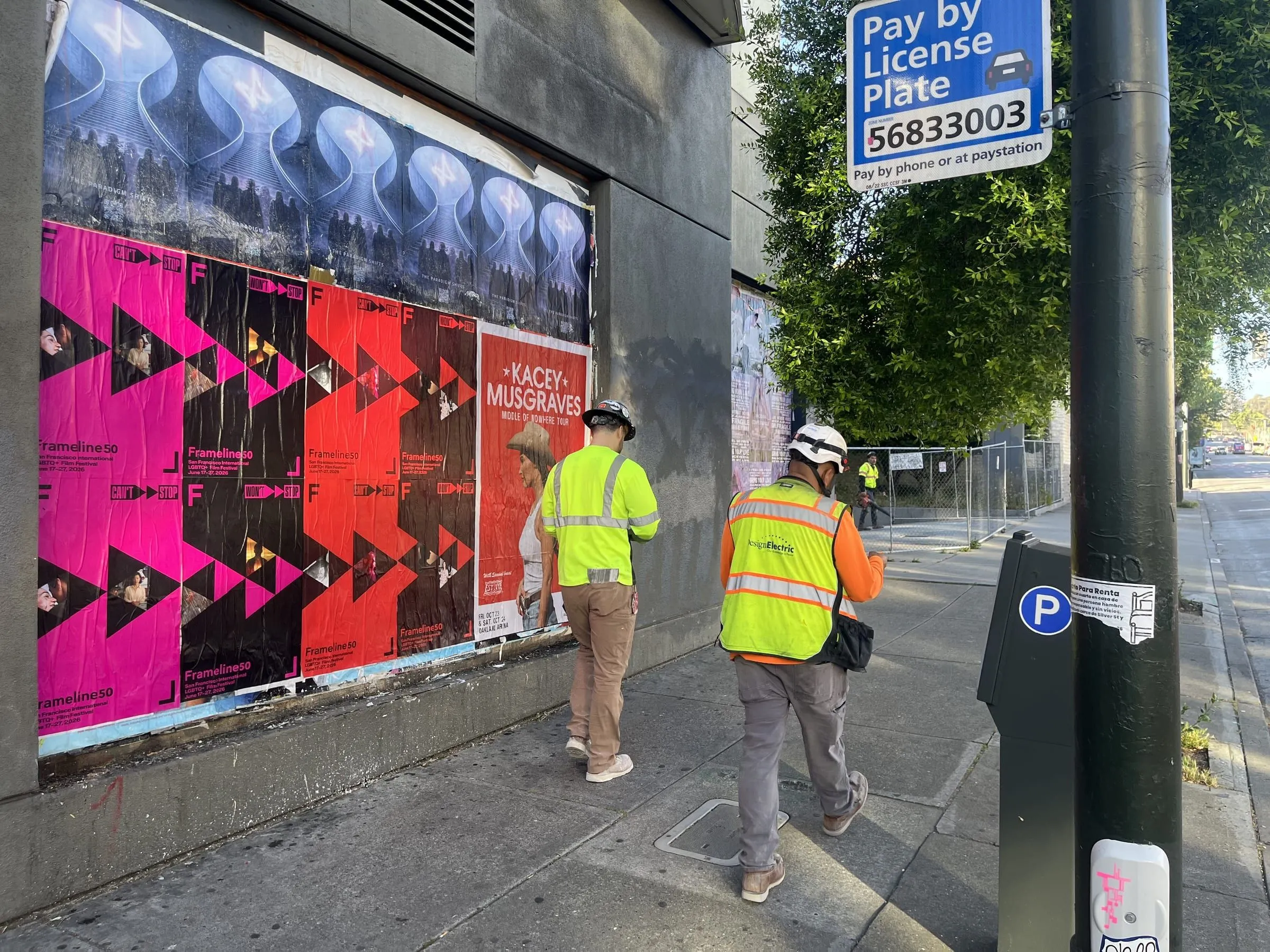
Every install BSM ships sits in one of three permitted lanes. There are no exceptions.
Lane 1: Private property with written owner consent. The dominant pathway, accounting for the majority of paste-up volume. A property owner, leaseholder, or authorized agent signs a consent form before paste lands. The consent specifies the surface, the install window, and the removal terms. The paper trail lives in the campaign file.
Lane 2: GC-authorized construction hoardings. The general contractor controls the hoarding during the build cycle. A signed authorization from the GC or developer covers the hoarding panels. This is one of the cleanest legal pathways for large-format paste-ups and a meaningful share of BSM’s volume in NYC, Chicago, and Miami.
Lane 3: BID-cleared corridors and sanctioned signage programs. Business Improvement Districts and city signage programs offer authorized pathways in active corridors. Wynwood BID (Miami), Times Square Alliance (NYC), Downtown LA Alliance, Yerba Buena (SF), West Town BID (Chicago) all run member-business signage programs that paste-up campaigns can route through.
No install lands on public infrastructure. No utility pole, no traffic sign, no mailbox, no transit property, no public bench. The legal lane is wide enough to run a national campaign. The campaigns that get pulled by sanitation are the ones that skipped the consent step. We do not skip it.
This compliance framework is the reason BSM has zero municipal removals on record across 500-plus documented installs. The framework is the moat. Every brief that comes in gets a permit-status review before the crew dispatches. Every install gets a photo log that the consent file is matched against.
If you are scoping a campaign and want a real read on the permit pathway in your target market, send the city, the surface type, and the install window to info@beyondstreetmedia.com. Quote and permit-status review back inside four business hours.
For deeper context on the operational side of permitted campaigns, see the wheatpaste advertising service page, transparent pricing rate card, or the NYC posting legality piece for a deeper read on the most-asked city.
Nothing in this article constitutes legal advice. Specific campaign exposure should be reviewed with counsel familiar with the target jurisdiction. The statute citations above reflect published code at the time of writing; state statutes are amended and municipal ordinances change. The framework, however, holds: private surface, documented consent, paper trail, zero removals.