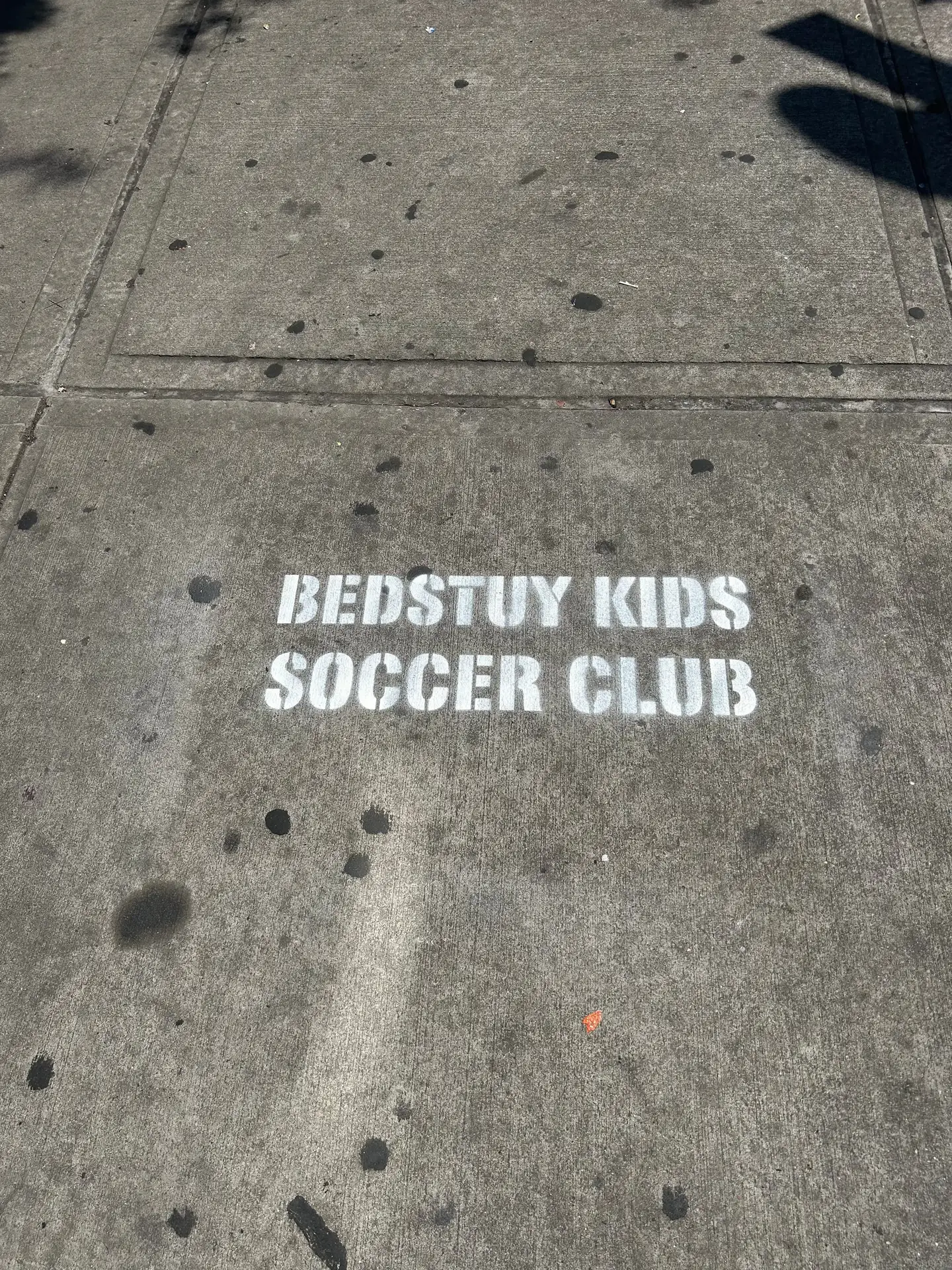
Bedstuy Kids Soccer Club: Sidewalk Stencil Activation
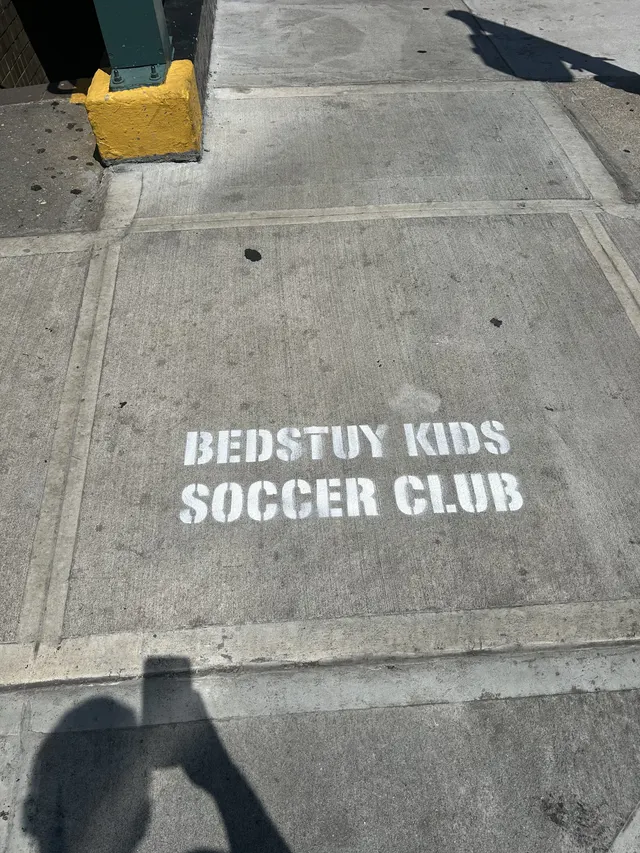
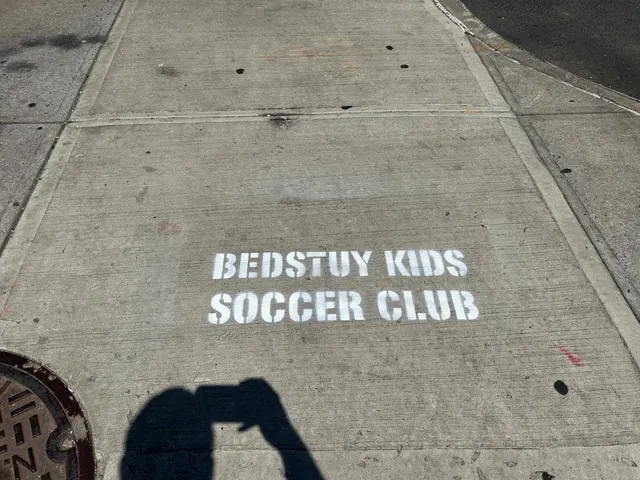
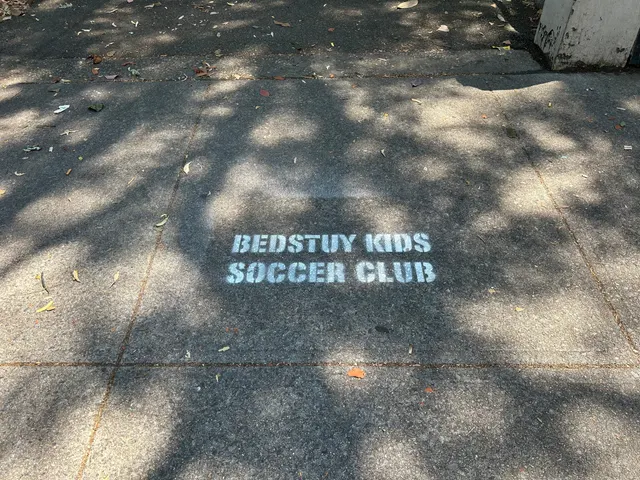
Five sidewalk stencils on the streets where Bed-Stuy kids walk to practice. A community soccer club printed its name into the neighborhood sidewalk-by-sidewalk.
- Placements5
- Cities1
- Duration14d
- Documented10install photos on file
A neighborhood club, claimed by its schoolyard.
A neighborhood soccer club doesn't need national reach. It needs the parent walking past on the way to school drop-off, the older sibling on the way to the deli, the auntie heading to the bodega, all reading the club's name on the sidewalk every day until the registration form starts to feel inevitable. Five clean white spray stencils on five Bed-Stuy sidewalks. The kind of work guerrilla marketing was built for: the coach with a registration deadline and a roster to fill.
Bedstuy Kids Soccer Club runs youth programs out of Bedford-Stuyvesant in central Brooklyn.
The club grows neighborhood by neighborhood. Kids hear about it from other kids, parents hear about it at the playground, registrations stack at the start of each season. Any community-scale nonprofit hits the same visibility-without-spend problem. Paid social to parents in a 2-mile radius is expensive per impression, flyers blow away, and Brooklyn's older buildings don't carry posters well.
Sidewalk stencils solved the geometry. White-spray chalk-mix stencils on concrete sidewalk sit at exactly the eye-line of the parent looking down for their kid's hand. They last 2 to 4 weeks under normal Brooklyn foot traffic and weather. They cost a fraction of paid media for the same neighborhood reach. They read as community ownership rather than commercial advertising, because the brand is a club rather than a corporation.
The ask: print "BEDSTUY KIDS SOCCER CLUB" on the sidewalks where the kids already walk. Five placements, school-route corridors, two-week visibility window aligned to the season's open-registration push.
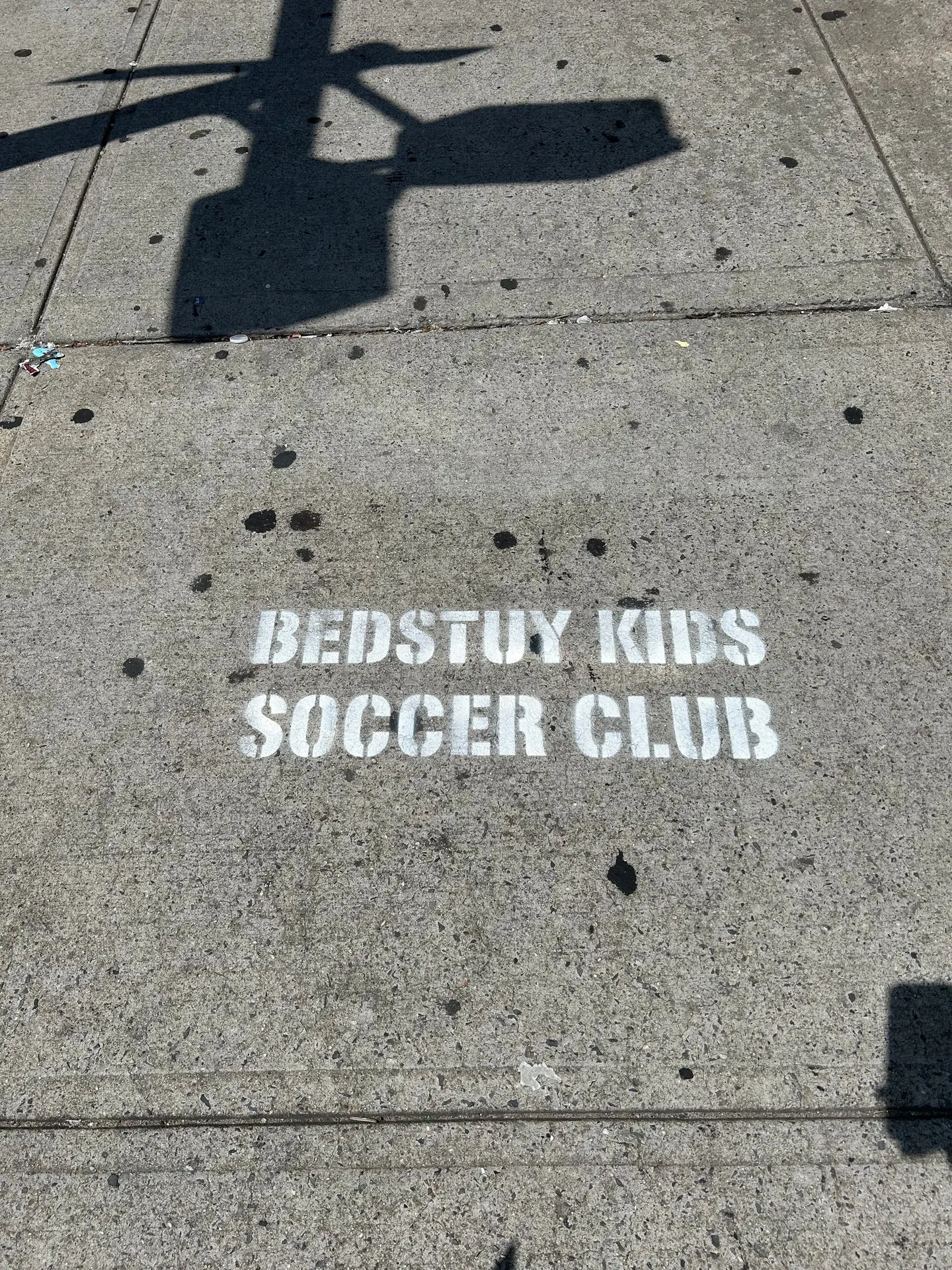
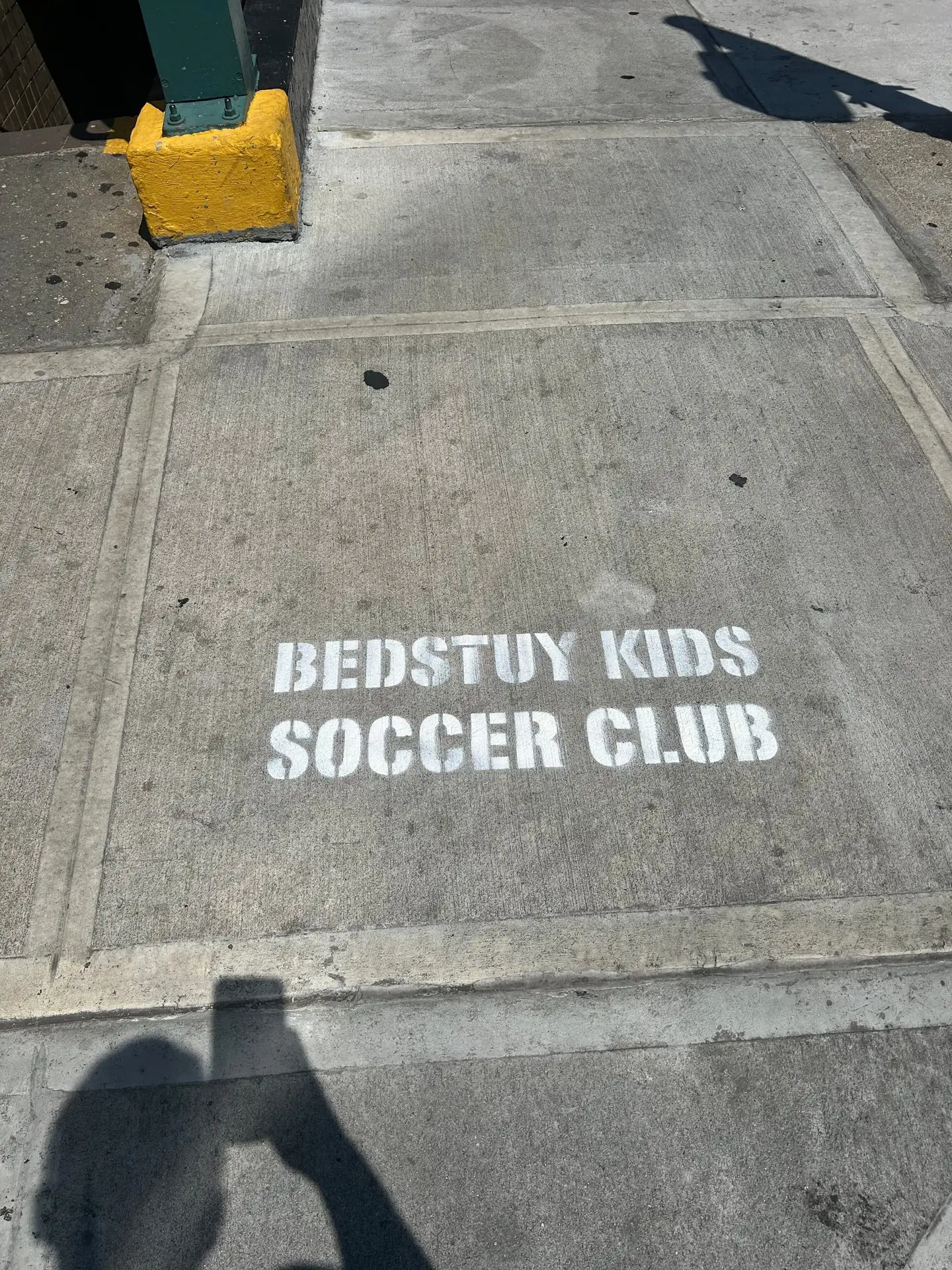
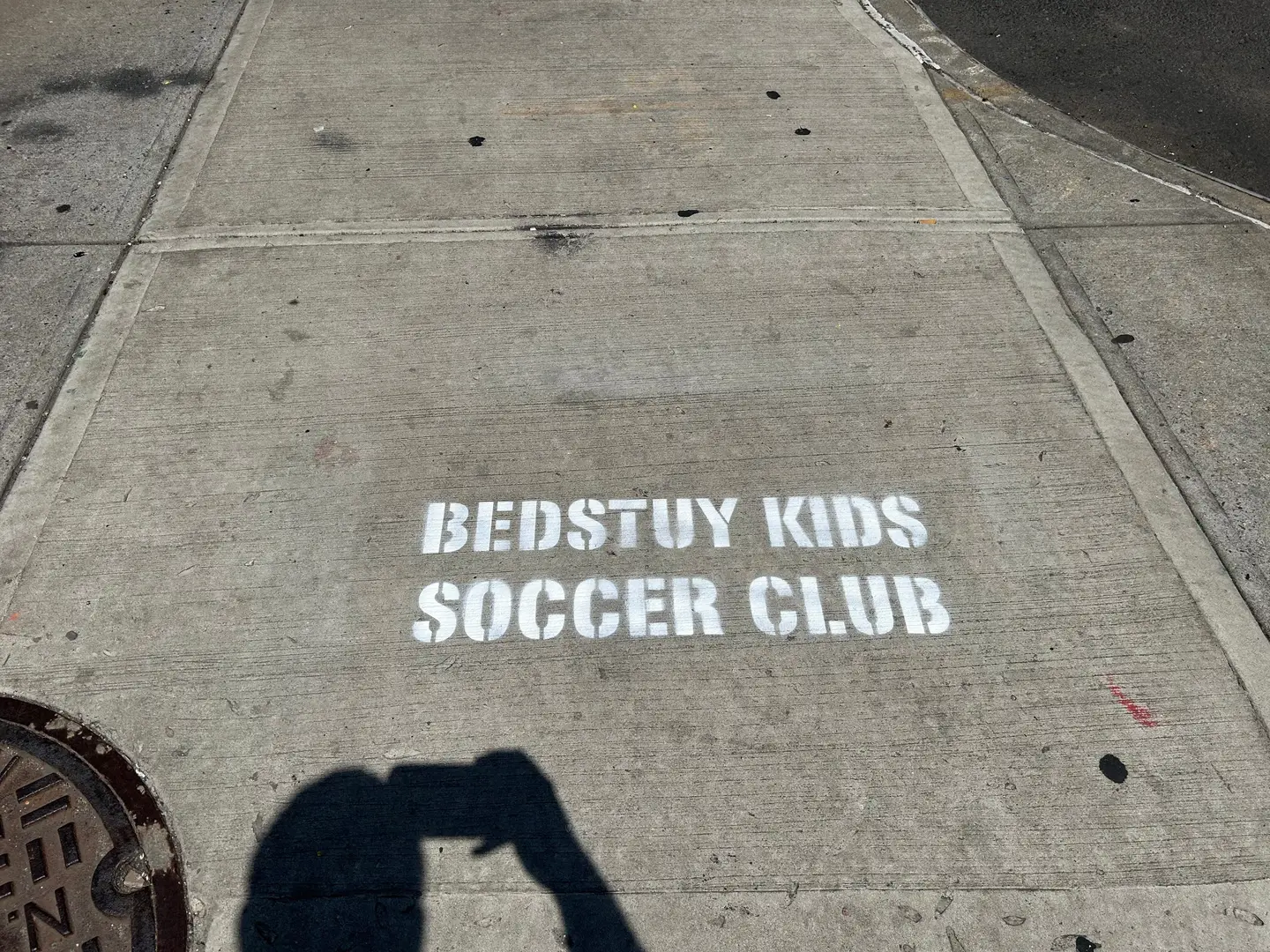
Bedford-Stuyvesant sits in central Brooklyn.
High foot traffic, dense residential blocks, a community with strong neighborhood identity and a deep youth-sports culture. The five placements landed on corridors that thread between elementary schools, the park where the club practices, and the commercial spine along Nostrand Avenue.
Foot-traffic logic: a kid walking from PS-something on Lexington to the practice field on Saratoga passes the stencil twice a day, five days a week. The parent picking up that kid sees it. The neighbor walking the same block sees it. Multiply by five blocks across the neighborhood and the club's name becomes part of the sidewalk vocabulary within 10 days.
The service: Sidewalk Stencil Advertising.
Single-color (white) chalk-mix sidewalk stencils, 18 × 24 in nominal size. The wordmark is simple typography (sans-serif, all caps, no logo lockup, no flourish). That was intentional. A community-scale brand shouldn't compete with brands trying to look like community brands. The stencil reads as the club itself rather than as a marketing artifact for the club.
Chalk-mix formulation rather than acrylic spray. The mix washes off naturally with weather within 14 to 28 days. No defacement liability. No permit ambiguity. New York's chalk-stencil case law treats this formulation as protected speech on private commercial frontage with property-owner consent, and Bed-Stuy property owners on the route were enthusiastic backers of the local club.
How it played.
The crew worked block-by-block: surface clear, stencil mask placed, white chalk spray applied through the mask, mask lifted, photo captured. 6 to 9 minutes per placement. Total install window was roughly 90 minutes including travel between corridors.
Saturday morning timing was deliberate. Foot traffic peaks Saturday: parents running errands with kids, weekend league practice at the park, neighborhood activity at its highest. By Saturday afternoon all five stencils were live and pedestrians were already reading them. The club's Instagram pickup started Sunday morning. Registrations opened the following Monday and ran above prior-season pace through the two-week visibility window.
The chalk mix held visible for 18 days on three corridors before normal foot-traffic wear and weekend rain reduced them to legible-but-fading. Two corridors held legible through 25 days. The sidewalk material on Quincy and Putnam takes paste and chalk especially well.
Proof.
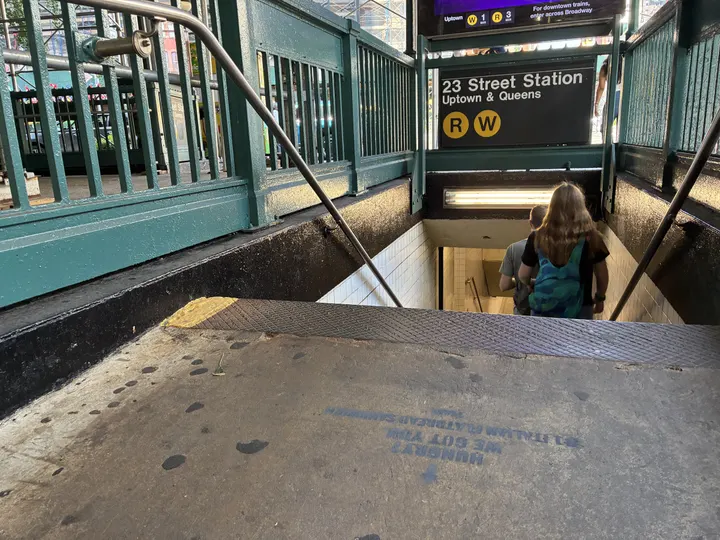
The club received a manifest the next day: latitude and longitude per stencil, neighborhood corridor, surface type, install crew log. The photo set captured the work in context (kids walking past, parents pushing strollers, the block itself as the proof of the install).
Documentation matters at the nonprofit scale. Board reporting, funder updates, season-recap deck. Every photo is reusable for next season's renewal pitch.
Community-scale execution is its own discipline.
A nonprofit can't run guerrilla street media the way a Tier-1 brand does. The budget is smaller, the audience is hyper-local, and the language has to read as ownership rather than acquisition. Five stencils in five blocks where the club already lives works. Fifty stencils across Brooklyn would feel like a chain.
The chalk-mix formulation matters here. Bed-Stuy is a neighborhood where street art is part of the culture and where defacement complaints to the city are tracked. Chalk is legal, washes off naturally, and reads as friendly speech rather than aggressive branding. That choice protected the club from any pushback.
Last note: youth-sports clubs across the country have the same problem. Visibility at the school-route corridor scale, on a community budget, with proof-of-work documentation that a parent-board can attach to a renewal report. The Bedstuy Kids Soccer Club model is the template. Five corridors, two weeks, chalk-mix.
Why install all five on a Saturday morning?
Bed-Stuy foot traffic peaks Saturday. Parents run errands with kids and weekend league practice fills the park, which puts these blocks at their busiest. The crew worked corridor by corridor at 6 to 9 minutes a placement, roughly 90 minutes including travel, so all five were live by that afternoon with pedestrians already reading them. The club's Instagram pickup started Sunday.
How long did the chalk mix hold on these five corridors?
The formulation washes off naturally with weather, which puts the working window at 14 to 28 days under normal Brooklyn foot traffic. Three corridors held visible for 18 days before wear and weekend rain faded them to legible-but-going. Two held legible through 25 days. Surface decides a lot of it, and the sidewalk material on Quincy and Putnam takes chalk especially well.
Do you need the property owner's permission for sidewalk stencils?
New York chalk-stencil case law treats this formulation as protected speech on private commercial frontage with property-owner consent, which is the frame the run was built inside. The Bed-Stuy property owners along the route were backers of the club rather than obstacles to it. The mix leaves nothing to remove either way. We also run work that is not consent-documented, and a client is told which kind they are buying.
Can a community organization afford street stencils?
Sidewalk stencil work starts at $2,500. Print and install are ours and included in that number, and we scope a quote inside 24 to 48 hours once placement count and corridors are set. What a board gets back is a manifest the next day: latitude and longitude per stencil, corridor, surface type, crew log and daylight photography that can be attached to a funder update or a season recap.
---
Campaign documentation by Beyond Street Media Brooklyn crew, spring season window.
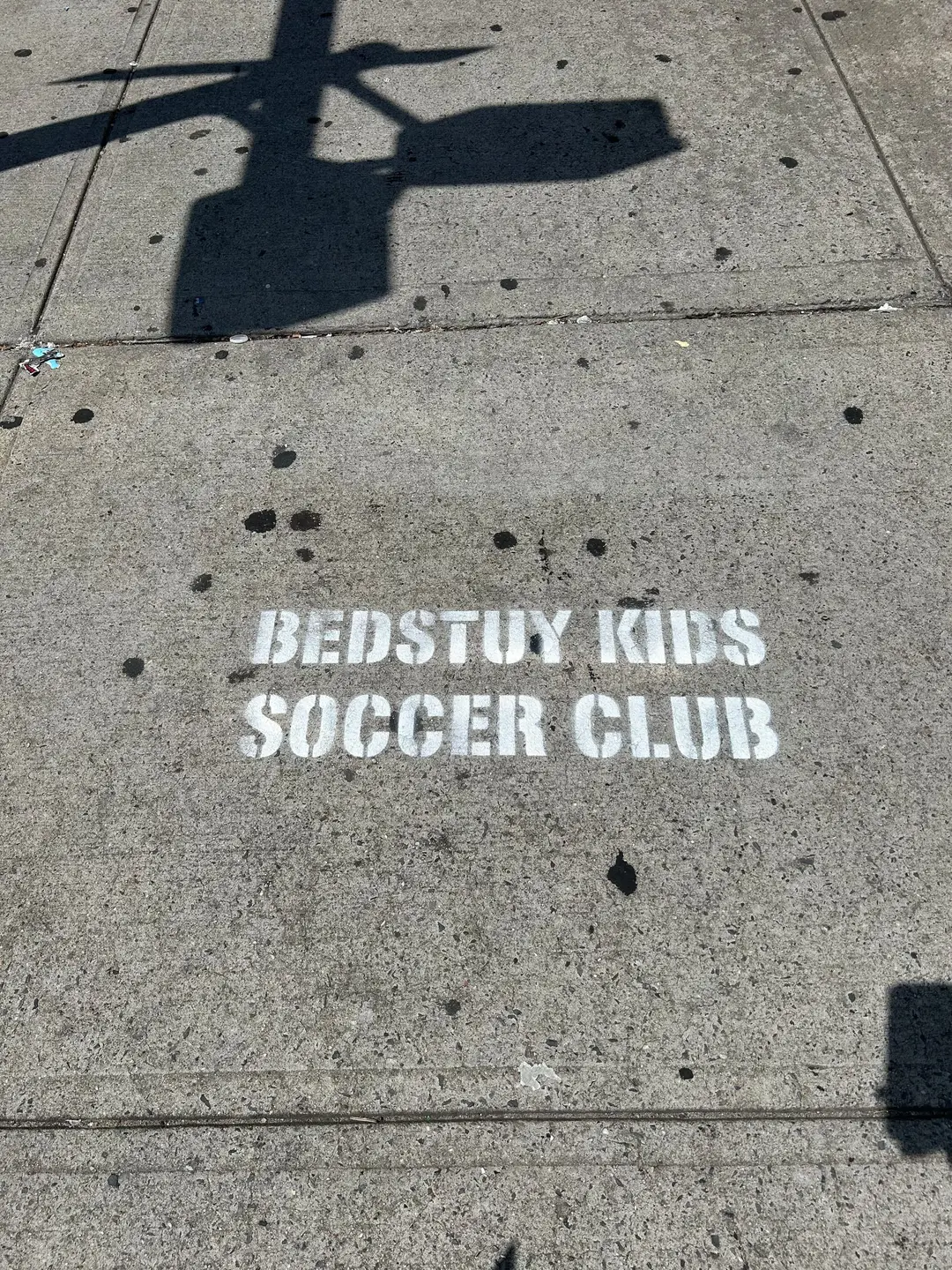
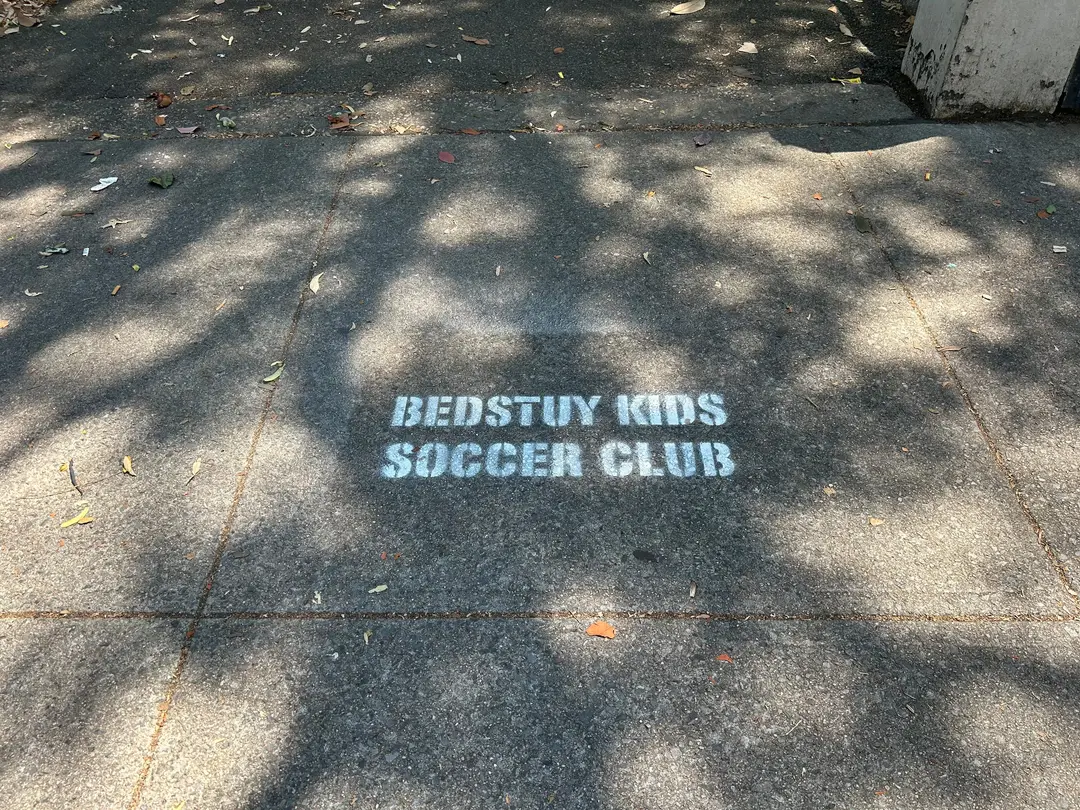
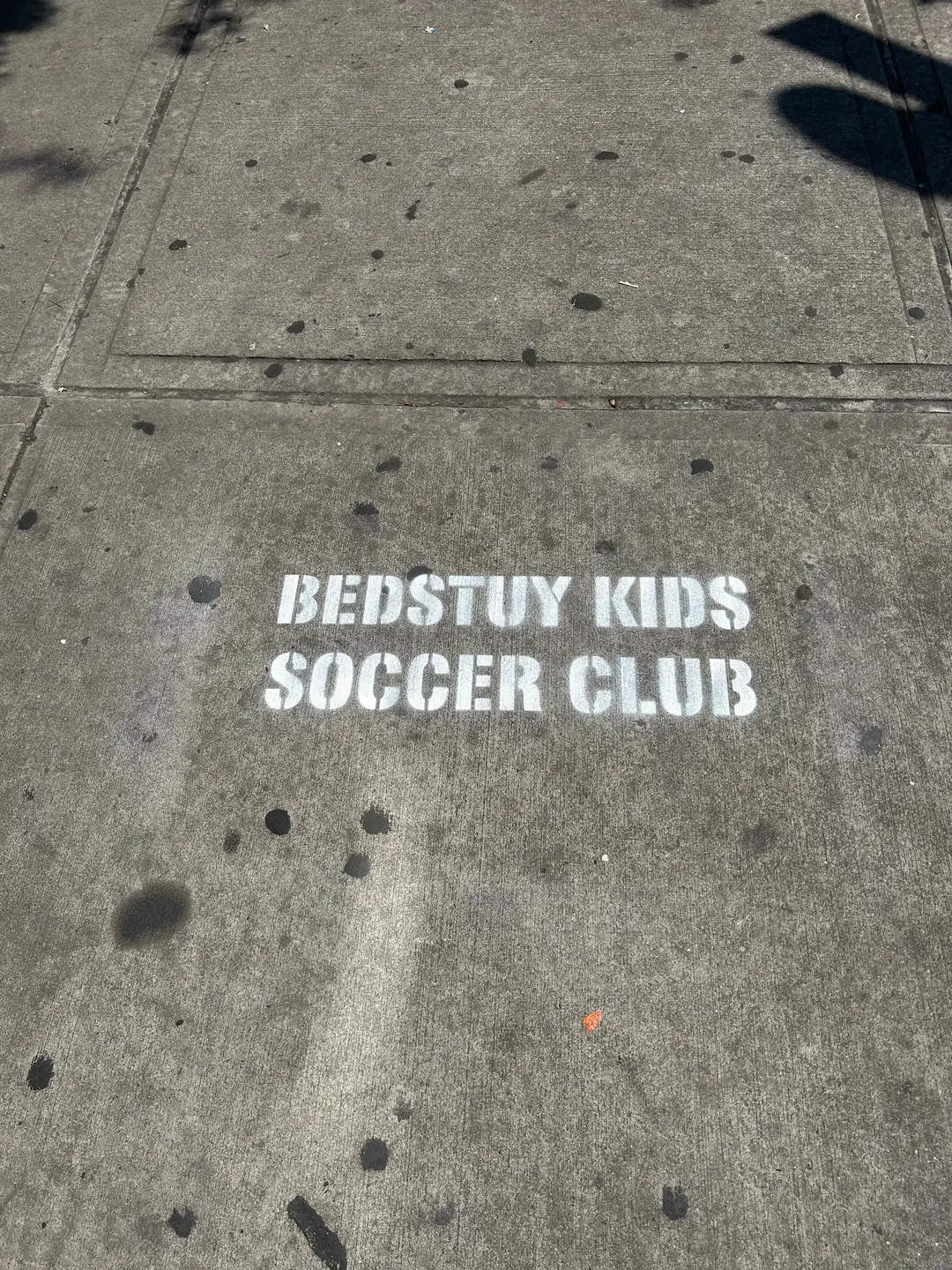
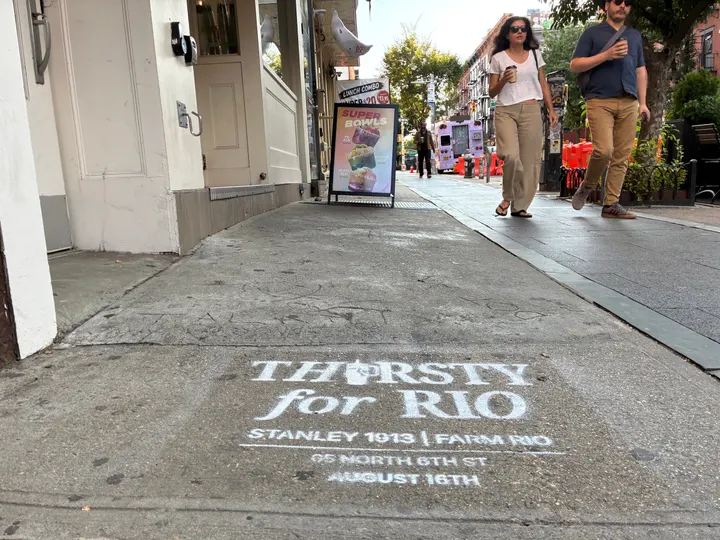
4 additional installs.
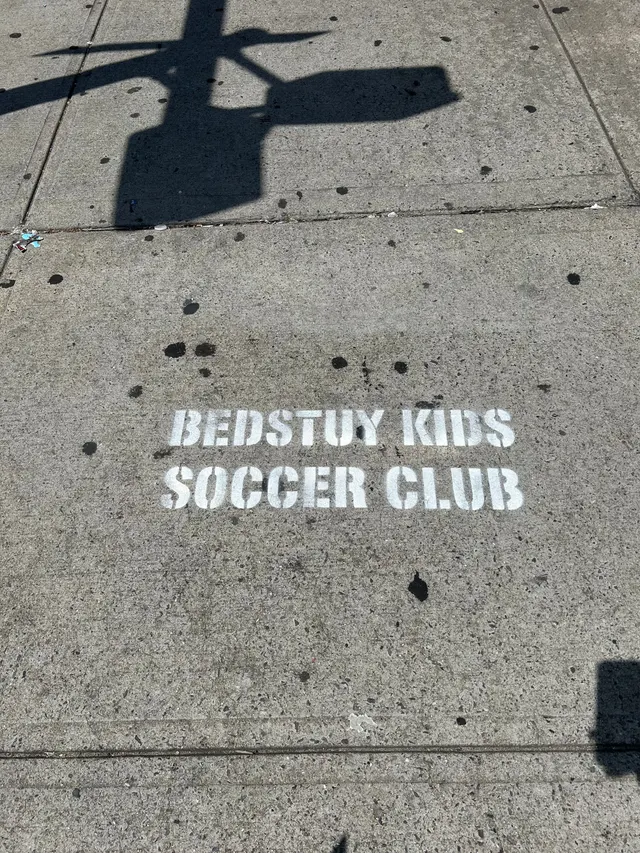
Run a sidewalk stencil advertising campaign?
Same crew, your brand.
The same operator network that shipped Bedstuy Kids Soccer Club's campaign is on call for yours. Brief us with city, dates, and creative. Quote back in 4 hours.
Run a campaign like Bedstuy Kids Soccer Club's?
Get a quote