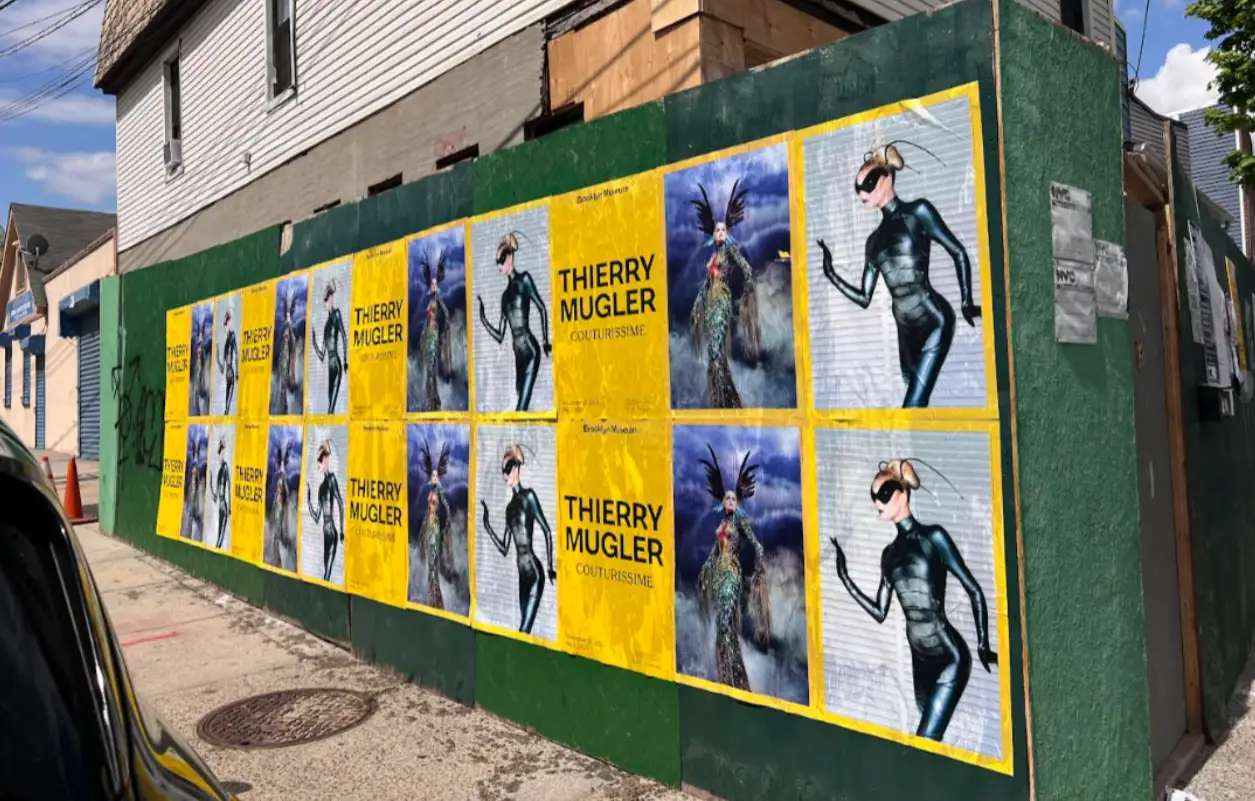
Museum wheatpaste
Three Brooklyn Museum exhibit campaigns across NYC. Mugler in SoHo, Pablo-Matic in Bushwick, Spike Lee tribute in Bed-Stuy and Fort Greene.
- Placements45
- Cities1
- Duration70d
- Documented4install photos on file
Three exhibits, one sustained noise.
Brooklyn Museum multi-exhibit wheatpaste across NYC. Mugler, Pablo-Matic, Spike Lee exhibits. 45 placements across SoHo, Bushwick, Bed-Stuy, Fort Greene.
The Brooklyn Museum is one of New York's flagship cultural institutions.
Across spring 2026, the museum ran three connected wheatpaste campaigns tied to three exhibits: the Thierry Mugler fashion retrospective, the Pablo-Matic exhibit, and the Spike Lee tribute. Three separate creative systems, one institutional client, one ten-week campaign window.
The brief for each was distinct, but the operating model was the same: street placement that reads as part of the city's cultural language rather than as an institutional ad. Brooklyn Museum's audience pays attention to the visual culture of the neighborhoods around it. The campaign needed to sit inside that culture, not interrupt it.
Where we ran it.
Three neighborhood clusters, one per exhibit:
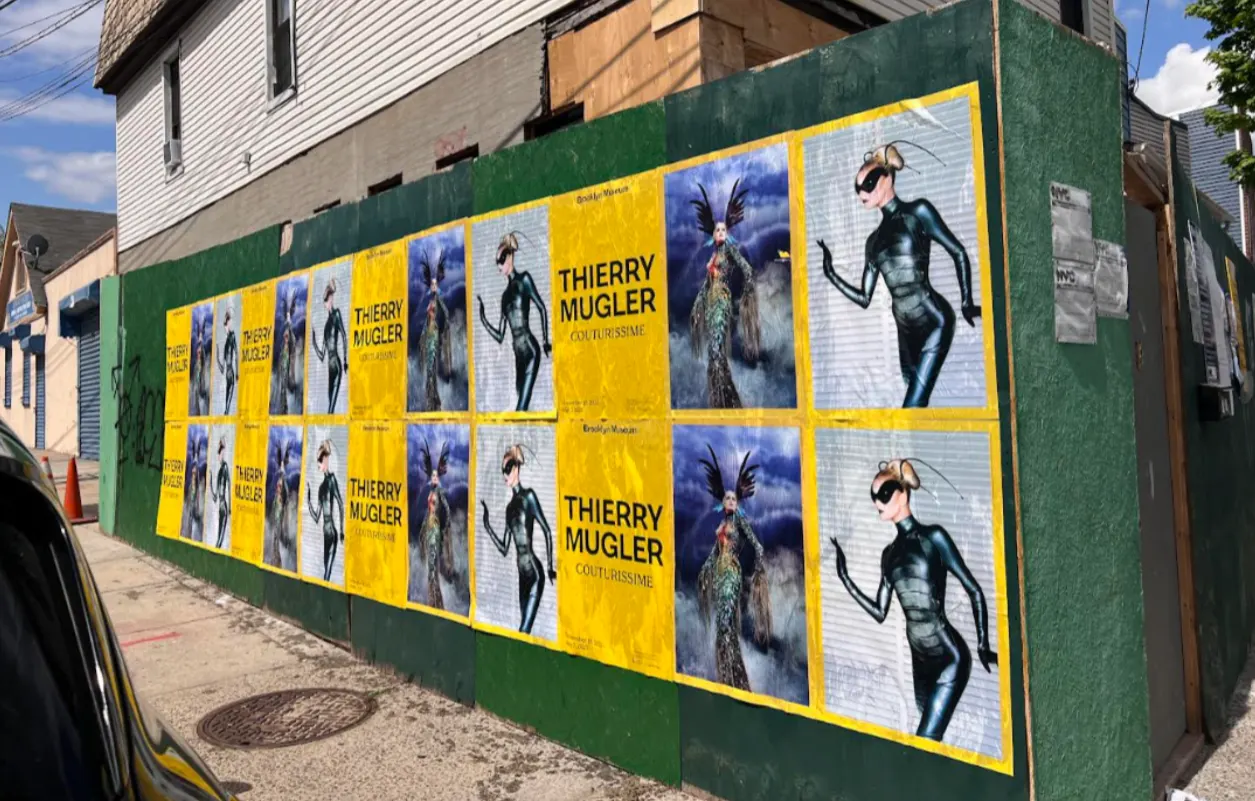
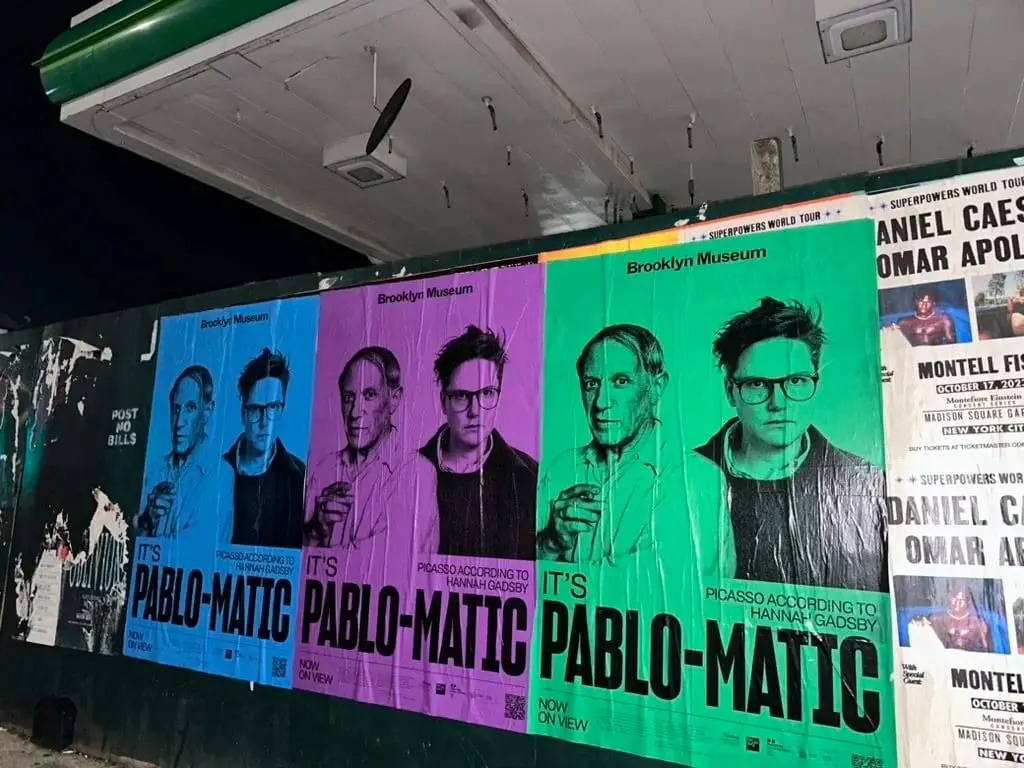
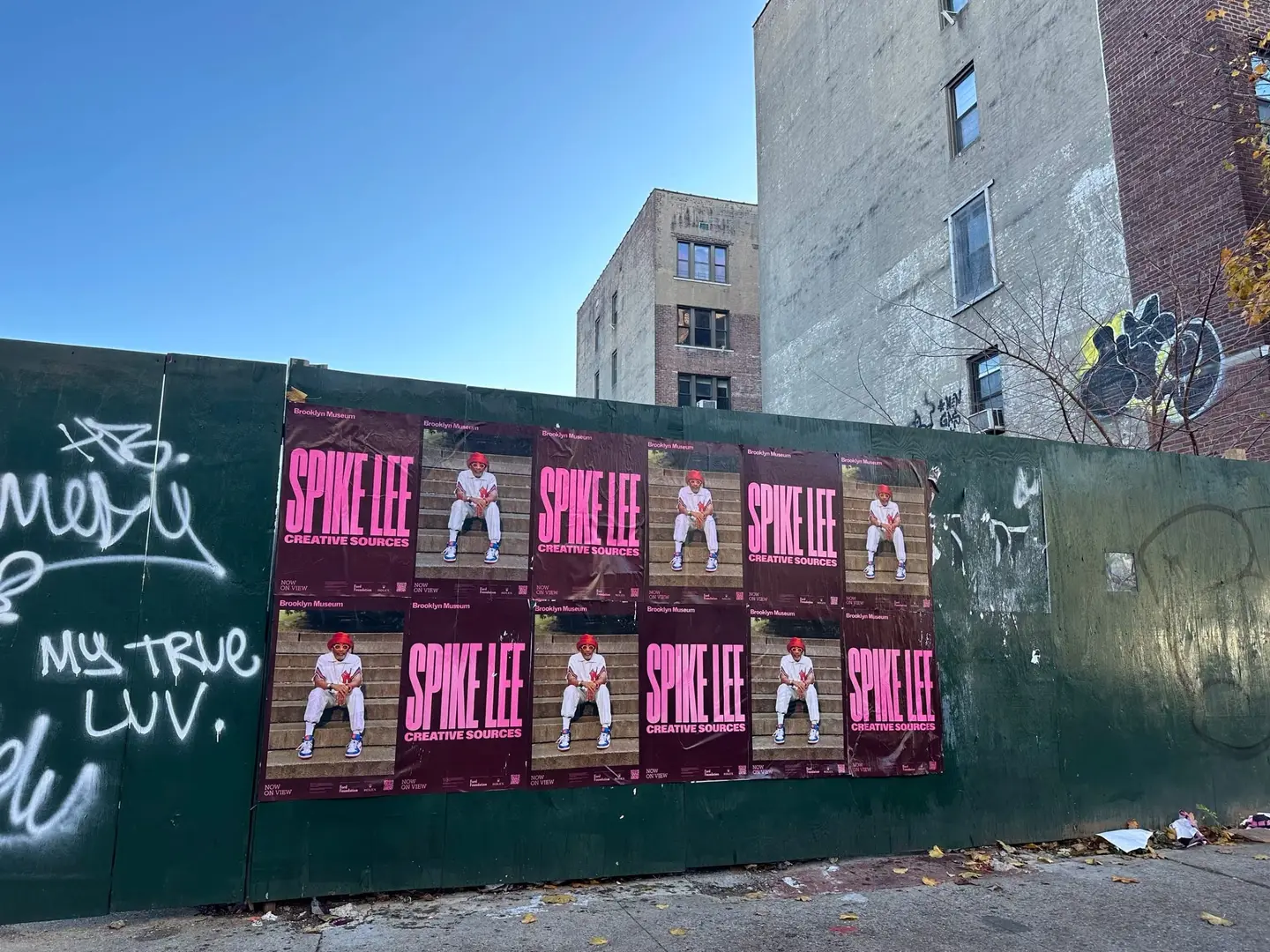
- Mugler exhibit. SoHo, Tribeca, Williamsburg. Fifteen placements across the fashion-vertical neighborhoods where the Mugler audience actually shops. SoHo cluster on Wooster, Greene, and the Broadway-south-of-Houston corridor. Tribeca anchored on Hudson Street and Franklin. Williamsburg ran along Bedford Avenue and the secondary cross-streets. - Pablo-Matic exhibit. Bushwick, LES, East Village. Eighteen placements across the art-vertical neighborhoods. Bushwick's Knickerbocker and Wyckoff Avenue corridors carried the highest density. LES placements concentrated on Houston and Ludlow. East Village ran across Avenue A and the cross-streets between St. Marks and 4th Street. - Spike Lee tribute. Bed-Stuy, Fort Greene, Brooklyn Heights. Twelve placements across the neighborhoods most tied to Spike Lee's body of work. Bed-Stuy anchored on Fulton Street and the side streets between Bedford and Nostrand. Fort Greene ran along DeKalb and the Lafayette corridor. Brooklyn Heights added two anchor placements on Atlantic Avenue.
What we ran.
Each exhibit used its own creative system:
- Mugler, fashion-photography-driven posters featuring archival Mugler campaign imagery with the exhibit title set in a Helvetica neue treatment. The poster reads more like an editorial fashion spread than an institutional ad. - Pablo-Matic, bright color-block compositions with type-led layouts. The exhibit's irreverent design language carried directly onto the wheatpaste, saturated grounds, oversized italic type, and an unusual non-rectangular crop pattern that played against the standard poster shape. - Spike Lee tribute, film-stills-driven compositions pulling from the visual canon of Lee's work. The Bed-Stuy placements specifically referenced "Do the Right Thing", pasted near the actual street corners that appear in the film. That continuity earned the campaign a layer of cultural permission the brief didn't ask for but the neighborhoods recognized immediately.
How it played.
Phase one. Mugler (weeks 1 through 4). Fifteen placements across SoHo, Tribeca, and Williamsburg. The SoHo cluster ran in week one with three crew runs of three placements each. Tribeca and Williamsburg distributed across weeks two and three. The Williamsburg Bedford Avenue scaffolding anchor, five posters in a single 18-foot wall span, went up as a 4am install at the start of week three and held through the full campaign window.
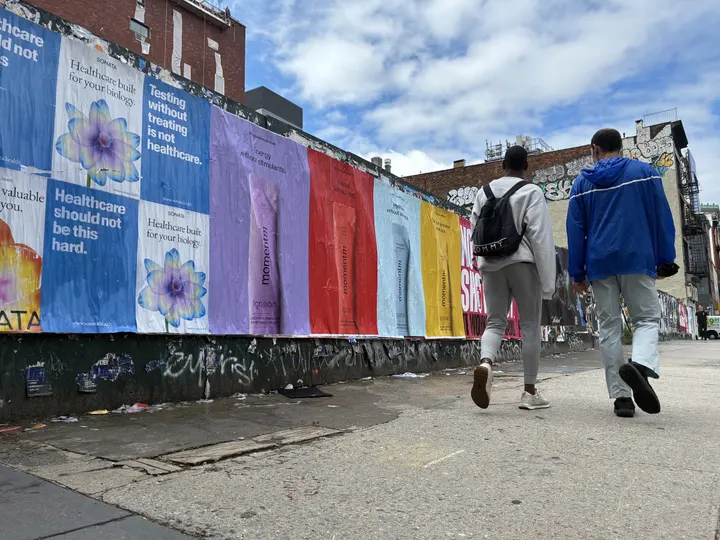
Phase two. Pablo-Matic (weeks 4 through 7). Eighteen placements with the heaviest density in Bushwick. Bushwick's Knickerbocker corridor carries a wall-paste culture density that meant the Brooklyn Museum work sat inside an existing visual ecosystem rather than competing with it. The exhibit-specific creative system, saturated grounds, oversized italic type, read against the corridor's graffiti language without conflicting with it.
Phase three. Spike Lee tribute (weeks 7 through 10). Twelve placements across Bed-Stuy, Fort Greene, and Brooklyn Heights. Bed-Stuy placement strategy was the most location-specific of the three exhibits, the crew worked with the museum's curatorial team to identify the exact street corners that appear in Lee's films, then secured property-owner permission for placements at those locations. The Bed-Stuy run also produced the highest community engagement of the three campaigns. Local residents documented the placements organically across social channels, with three local-press secondary mentions in Brooklyn-vertical media.
Forty-five placements documented across three Brooklyn Museum exhibits.
Photo sets archived under three separate folder paths:
- /assets/campaigns/wheatpaste/brooklyn-museum-mugler-nyc/ - /assets/campaigns/wheatpaste/brooklyn-museum-pablo-matic-nyc/ - /assets/campaigns/wheatpaste/brooklyn-museum-spike-lee-nyc/
Every poster GPS-stamped at install. Each exhibit's documentation log includes site survey notes, property owner contact records, post-cure photo confirmation per surface, and a final day-of-close set capturing each placement's weathering state.
Notes.
Three exhibits, three creative systems, ten weeks. The work earned its place in each neighborhood by speaking the neighborhood's visual language, fashion in SoHo, art in Bushwick, film in Bed-Stuy.
The Spike Lee tribute placements at the actual film locations is the kind of work that doesn't scale to programmatic media buying. It required curatorial input, location research, property-owner conversations, and a crew that understood why each corner mattered. The institutional client got a campaign that read as cultural participation rather than as advertising, which is the only way that kind of campaign can land for an institution like Brooklyn Museum.
The multi-exhibit format also turns out to be a strong fit for cultural calendars. Museums run on multi-month exhibition windows; wheatpaste campaigns run on multi-week placement cycles. The fit means the campaign program can scale with the museum's calendar without forcing the institution into a one-size media plan.
Common questions.
Each exhibit got its own creative system and its own neighborhoods. Mugler ran fashion-led posters through SoHo, Tribeca and Williamsburg. Pablo-Matic ran color-block type across Bushwick and the Lower East Side. The Spike Lee tribute ran film stills through Bed-Stuy and Fort Greene. The three phases overlapped at the edges inside one ten-week window, so the museum held street presence continuously and no two systems competed for the same block.
How do you place posters at specific addresses a curator picks out?
The Bed-Stuy run worked that way. The crew sat with the museum's curatorial team to identify the exact corners that appear in Lee's films, then went to the property owners at those locations for permission before anything went up. Owner contact records sit in the documentation log alongside the site survey notes. Address-specific placement takes longer to clear than corridor placement, so it gets scoped into the schedule up front.
What does a museum-scale wheatpaste program cost?
Wheatpaste poster campaigns start at $3,500. Where a program lands above that depends on placement count and how long the window runs. Printing and installation are in-house and included in the number. Send the exhibit calendar and the neighborhoods you want covered and a scoped quote comes back in 24 to 48 hours. New York runs on a 5 to 7 day build from approved creative.
How do you know a poster from week one is still up in week eight?
Every placement is GPS-stamped at install and re-checked across the window. For this program the documentation log also carries post-cure photo confirmation per surface and a close-out set showing each placement's weathering state at the end of the ten weeks. On a run that long the close-out frames matter more than the install frames, because they are what tells you which surfaces actually held.
---
Campaign documentation by Beyond Street Media. Brooklyn and Manhattan operations by East Coast crew. Spring 2026.
Run a wheatpaste advertising campaign?
Same crew, your brand.
The same operator network that shipped Brooklyn Museum's campaign is on call for yours. Brief us with city, dates, and creative. Quote back in 4 hours.
Run a campaign like Brooklyn Museum's?
Get a quote