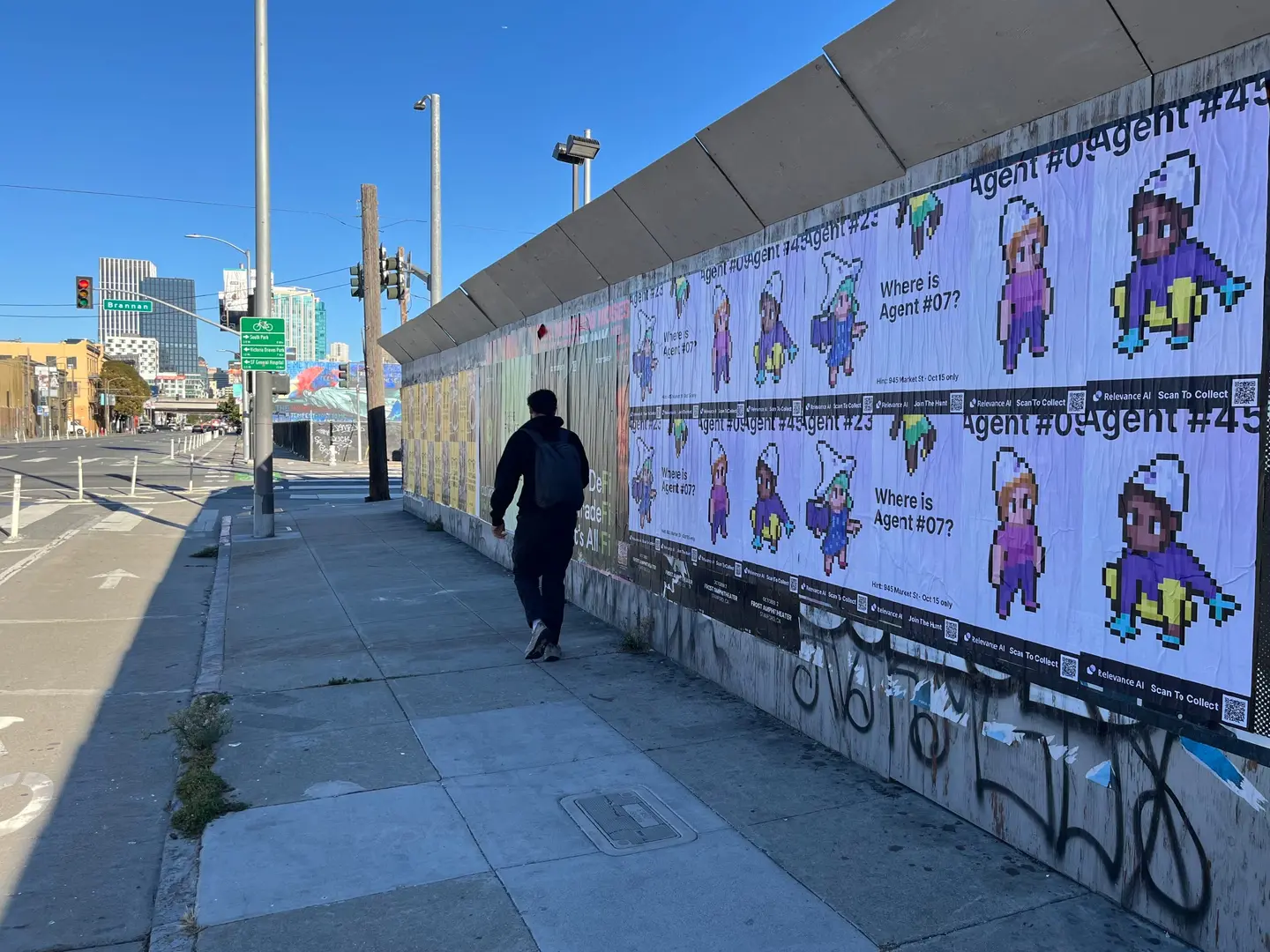
Wheatpaste campaigns start at $3,500, printing and installation included, and scale up based on turnaround, size, location count, and combined service mix. The price covers four things: print, install labor, wall rights secured in writing with permits passed through at cost, and a GPS-stamped photo of every placement. We publish floors rather than single fixed numbers, because the brief specifics move the quote.
Most quotes come back inside four business hours, and complex multi-city briefs inside 24 to 48 hours. The line items and the variables that move them are below.
If your brief calls the format wild posting rather than wheatpasting, the pricing below is the same work; the naming is unpacked in wild posting vs wheatpasting.
How much does a wild posting campaign cost?
The same as a wheatpaste campaign, because it is the same work under a different name. Buyers who learned the format through a media plan usually call it wild posting, while the trade calls it wheatpasting or flyposting. (Wild Posting® is a registered trademark of DASH TWO, Inc. It appears here the way buyers say it, as shorthand for the format.) Beyond Street Media prices the work from $3,500, printing and installation included, quoted inside four business hours on a single-market brief. Five variables move a quote above that floor: how many walls the run covers, how far apart the corridors sit, print size and paper stock, how fast the campaign has to launch, and whether the surfaces need scaffold or construction hoarding coordination. Expedited work, meaning 24 to 72 hours from brief to first wall, adds 80 to 150 percent. Hoarding placements hold 8 to 12 weeks. Every wall comes back photographed wide, mid and detail with GPS coordinates from install day, and the wrap deck lands within five business days.
The 30-second pricing summary
| Discipline | Floor | Notes |
|---|---|---|
| Wheatpaste posters | Starting at $3,500 | Single-market brief. Multi-market programs price differently. |
| Sidewalk stencils | Starting at $2,500 | Permit class varies by city. |
| Snipes + stickers | Starting at $3,000 | Cheapest path to neighborhood saturation. |
| Floor graphics | Starting at $4,000 | Outdoor and partner-venue surfaces. |
| Hand-painted murals | From $18,000 | Single-wall commission. 30-90 day window minimum. |
| Building-side murals | From $30,000 | Hand-painted or vinyl-applied large format. |
| Expedited Campaigns | +80% to +150%+ over standard | 24 to 72 hour brief-to-documented-install. Premium typically doubles the standard rate. |
These are published floors for the wheatpaste advertising, sidewalk stencil, snipe poster, floor graphics, hand-painted mural, and Expedited Campaigns services. Final number depends on the brief.
If you want a price tied to your brief, send it. A line-item quote comes back inside four business hours.
What you are actually paying for
A wheatpaste campaign budget has four real cost centers. Knowing the split explains why the floor sits where it does.
Out of home advertising set a record $9.46 billion in US revenue in 2025, the OAAA reported. That figure is spend on inventory somebody else owns and rents out by the cycle. A static billboard in a larger market starts around $14,000 a month, by Broadsign’s published cost guide. A wheatpaste budget carries no space rental, so the money lands on production, labor, documentation and consent instead.
1. Print production
Outdoor-grade paper, soy-based ink, large-format sheets, and a press run sized to your placement count plus a healthy overage. We never print to the exact placement count because weather and surface failures consume more sheets than the math suggests.
On our own jobs, a 200-sheet NYC run puts print at roughly 25 to 35 percent of the total budget. A 2,000-sheet multi-borough saturation drops print to 18 to 22 percent, because the press run amortizes.
2. Crew dispatch and install labor
This is the line that surprises buyers most. A two-person crew working a single NYC borough for a single night is 5 to 7 hours of paid time, plus paste, brushes, ladders, and the vehicle. In tier-2 markets where we do not keep permanent crew, dispatch adds travel, lodging and per diem on top of labor. Those pass through at cost, and the federal per diem rates GSA publishes city by city are a fair sanity check on that line in any vendor quote, ours included.
This is also why the published floor is $3,500. Below that number, you are paying a crew to dispatch for fewer sheets than the dispatch itself costs to mobilize.
3. Documentation
Every single placement gets photographed at the time of install, with GPS tagging where the device supports it. Daily install logs go out to the client while the campaign is live. A final wrap deck ships inside 48 hours of campaign completion: every photo, every neighborhood, every install date.
Documentation runs 8 to 12 percent of total budget on our campaigns. It is also the part of the invoice that outlives the campaign, since the wrap deck is what you put in front of a CMO six months later.
4. Compliance and property-owner consent
Before any paste lands, the surface has property-owner consent or the campaign does not run on it. That work is invisible but real: relationships with building owners and written authorizations, plus a city-specific compliance map for the markets where rules differ block by block.
Ownership is where the city draws its own line. New York’s 311 guidance says the Sanitation Department removes illegal postings from public and city-owned property, while on private property removal is the owner’s responsibility. Business Improvement District corridors sit on top of that. Seventy-eight BIDs operate in New York City, each funding its own cleaning and maintenance program on the blocks it covers, which is why one corridor can behave nothing like the corridor two streets over.
For the legal framework on private surfaces in New York specifically, see our NYC posting legality piece.
The five variables that move a quote up or down
These are the levers. Understanding them lets you write a tighter brief.
1. City tier. Tier-1 markets (NYC, LA, SF, Chicago, Miami, Atlanta, Seattle, Boston, DC, Austin) have permanent crew. Tier-2 markets price 15 to 25 percent higher because crew dispatch eats travel and lodging. Local rules add their own drag. San Francisco allows signs on city lamp posts and utility poles under 11 inches tall, with a legible posting date on the sign, and only for 70 days before somebody has to go back and take it down.
2. Sheet count. Print amortizes. The bigger the run, the more the per-surface cost drops as the press run and crew dispatch spread across more density. Larger campaigns earn a better rate; the final number returns inside the quote based on the brief’s specifics.
3. Install window. A 5-day standard install in a tier-1 city costs the same as a 14-day relaxed install. Anything faster than the standard window runs as an Expedited Campaign, which carries a premium of +15 to 200 percent over standard depending on how hard the timeline is compressed. A 24-to-72 hour brief-to-wall turn typically lands at +80 to 150 percent. The premium scales with urgency because crew gets rescheduled out of other work.
4. Creative status. Print-ready files (CMYK, correct dimensions, proper bleed) are free. Files that need production work on our end are billed as a separate art-prep line, quoted with the campaign. Files that arrive after the print deadline trigger reprint costs.
5. Format complexity. Standard wheatpaste sheets are the baseline. Pole stickers, sidewalk stencils, and hand-painted signs have different cost curves. Mixed-format campaigns price as a package, not a sum of the parts.
What is NOT included
Three line items that get added when applicable:
- City permit fees where required. These pass through at cost with no markup. In most of our tier-1 markets, paste-on-private-surface work runs on written property-owner consent rather than a city permit. A handful of cities are different, and we flag them in the quote.
- Custom paper stocks beyond outdoor-grade. If you want metallic, kraft, or specialty stock, the press run carries the cost difference.
- Same-day creative revisions after print release. If we have printed and your art director sends new files, the reprint is billed.
How our quote process works
Send: city, format, dates, creative status, budget ceiling. (Here is exactly what goes in a brief.)
You get back a line-item quote with print, crew, documentation and compliance broken out, a neighborhood-mapped install plan, and an install window with start and complete dates. You can approve it over email.
Most quotes return inside four business hours. Complex multi-city briefs take 24 to 48 hours, because we are routing the crew calendar across markets.
Where this pricing comes from
Every floor above is published on the rate card and quoted from the same sheet, whoever is asking. The $3,500 wheatpaste floor covers a single-market brief; multi-market programs price differently because they carry crew dispatch and travel. Photo proof runs on every campaign rather than sitting in a higher package tier, which the work case studies show.
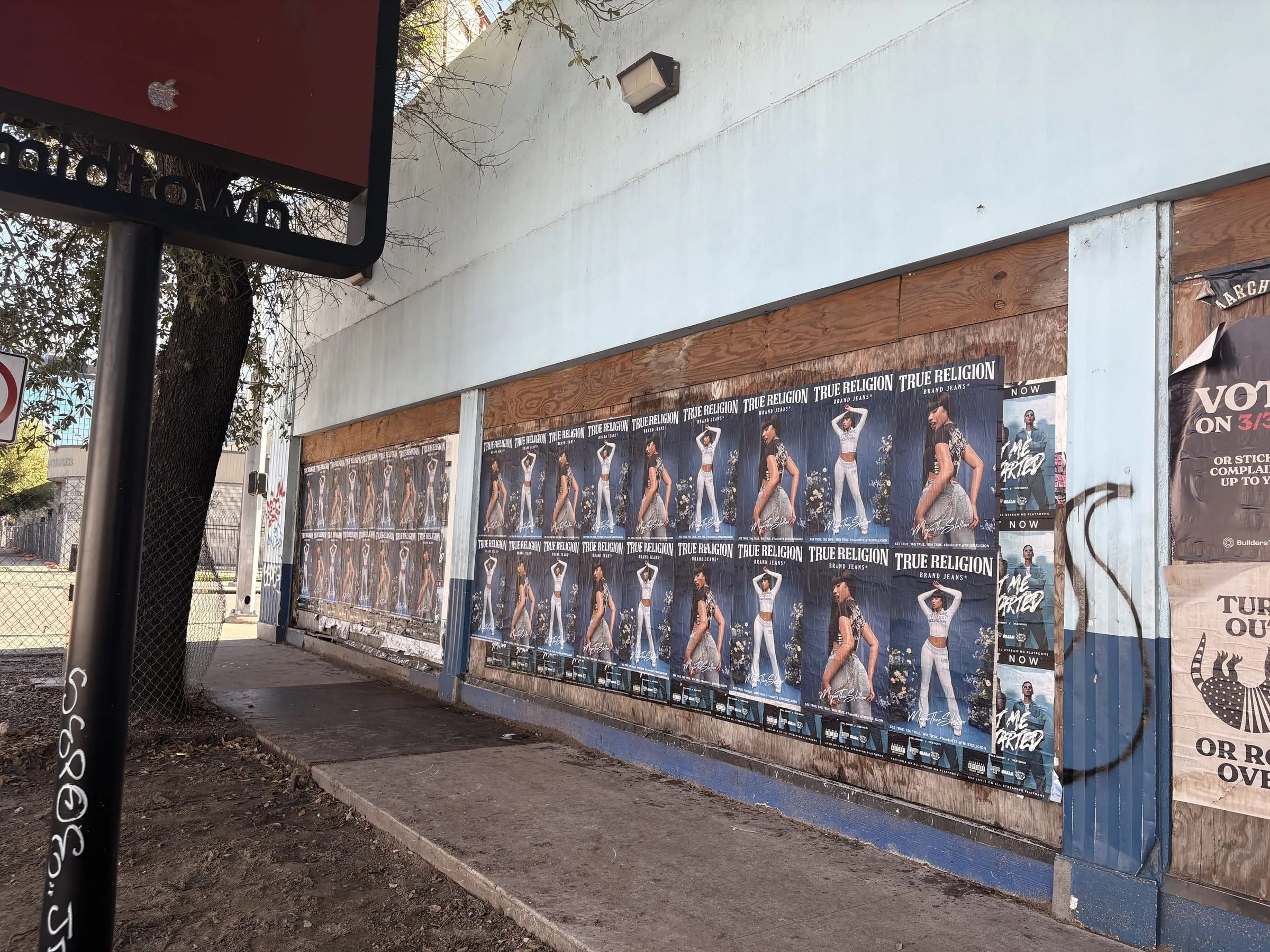
The percentages above come off our own invoices. So does the fastest turn we have shipped: True Religion x Megan Thee Stallion in Houston, March 2024, 300 posters at 24 by 36 inches printed overnight, installed across Montrose, Midtown and EaDo, and photographed the same night, 36 hours after the creative locked.
You can also read Beyond Street Media’s full service catalog for the pricing floor on each individual format, or jump straight to the coverage map to see whether your target city is on the tier-1 list.
Got a brief? Send it to info@beyondstreetmedia.com with the city, format, dates, and budget ceiling. Quote back in four business hours.