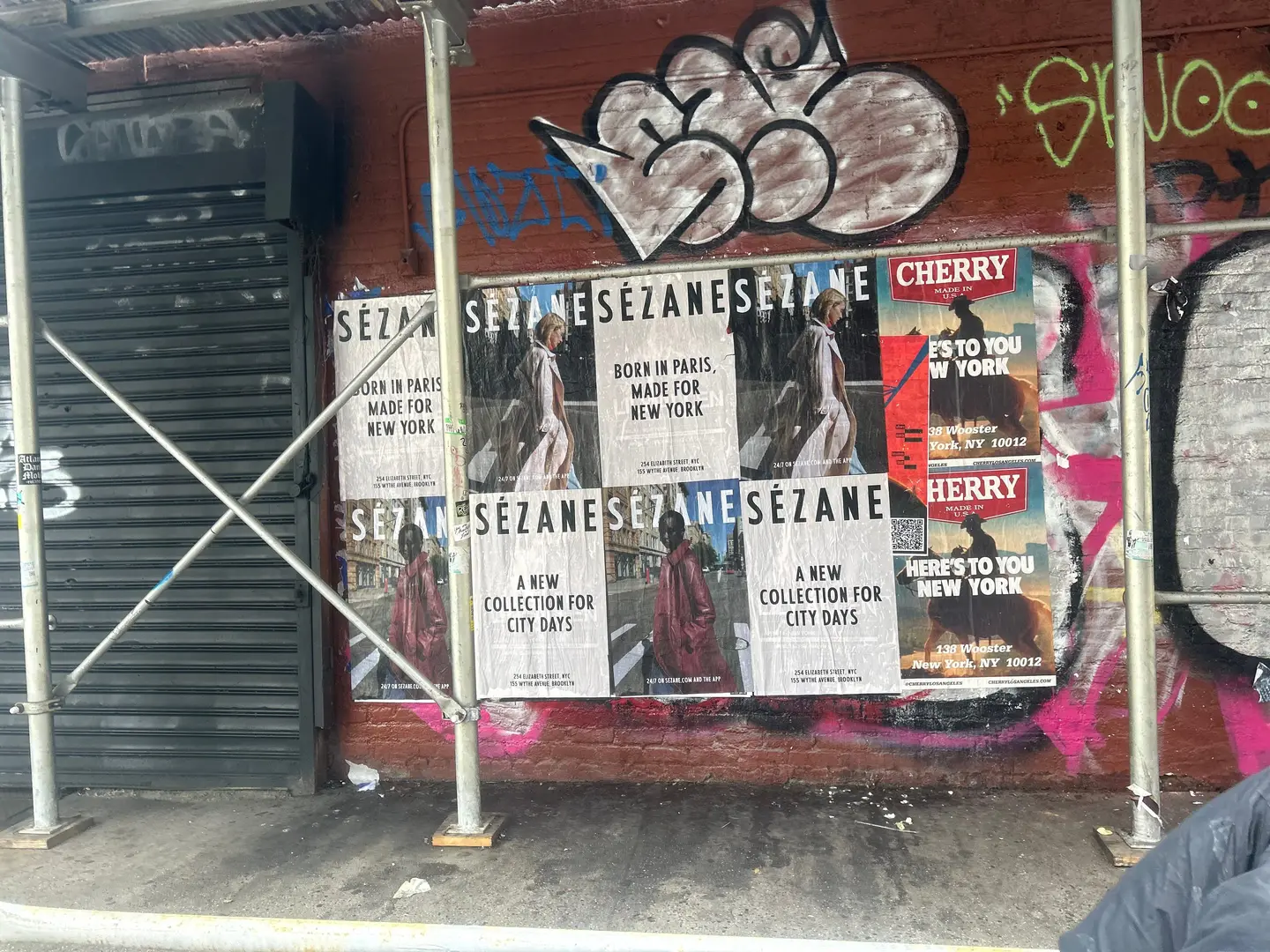
Manhattan has denser blocks and busier corners, but the twenty or so blocks south of Houston Street concentrate more of the audience brands actually want than anywhere else in the city. SoHo is where fashion, beauty and design retail sit on top of each other, on streets people walk rather than drive. This is what the corridor looks like from the install side, drawn from four campaigns we have run and documented there.
Why the neighbourhood works
Three things line up in SoHo that rarely line up together.
The retail density does the targeting for you. Art galleries, design studios, high-end beauty retailers and dermatology offices cluster on Prince, Spring and Broadway. A brand does not need to buy the whole city to reach a designer-educated buyer; it needs to be on four blocks.
The streets are genuinely walkable. Cobblestone, narrow sidewalks and no meaningful through-traffic keep the pace slow, and slow pedestrians read walls.
The surfaces cooperate. Cast-iron and brick frontage, constant construction hoarding as buildings turn over, roll-down shutters after hours, and sidewalk stone that takes a stencil cleanly.
The blocks, one by one
Broadway south of Houston. The volume corridor. Highest foot traffic in the neighbourhood and the widest audience mix, which makes it the right choice when reach matters more than register. Huda Beauty’s decal run treated Broadway from Tribeca up into SoHo as one continuous beauty-retail corridor.
Prince and Spring. The retail spine between Broadway and West Broadway. This is where the beauty and fashion buyer actually shops, and where Bloomeffects concentrated its SoHo placements.
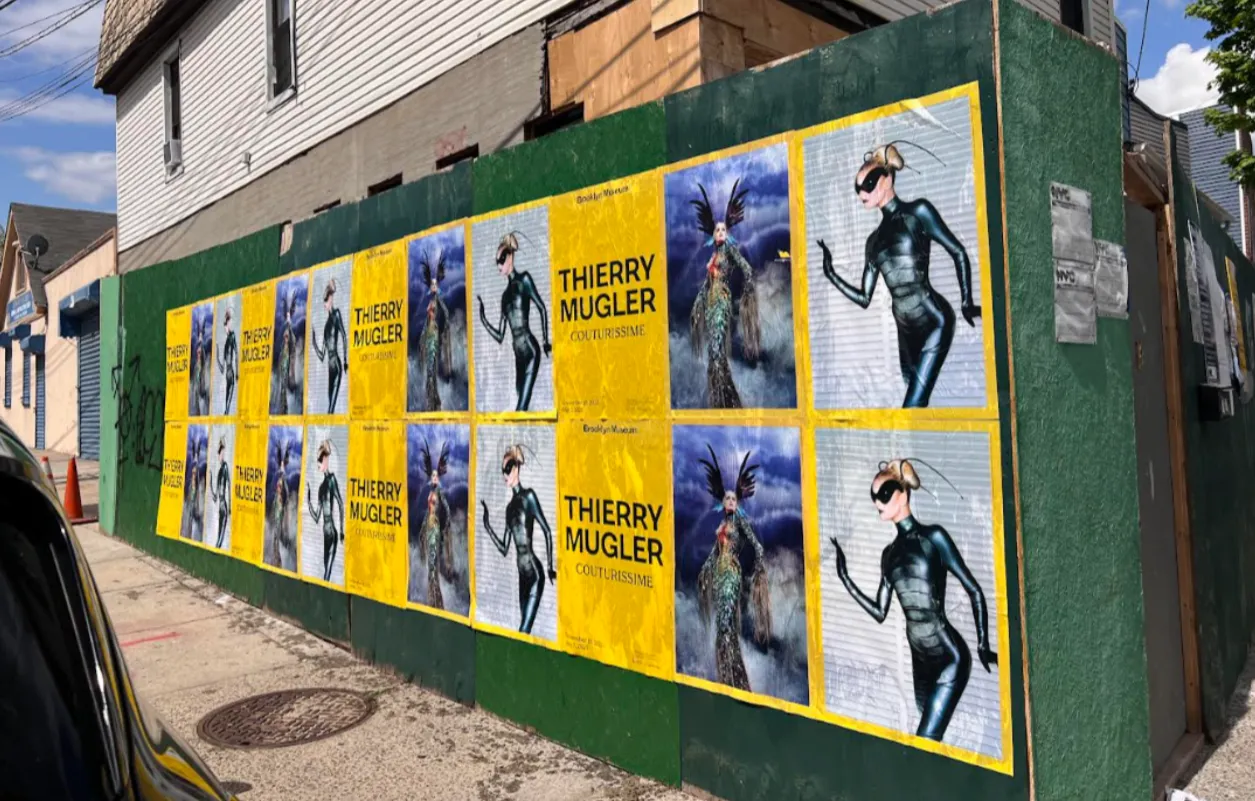
Wooster and Greene. Quieter, cobblestoned, more editorial. These blocks read as fashion and design rather than mass retail, which is why the Brooklyn Museum’s Mugler exhibition work clustered on Wooster, Greene and the Broadway-south-of-Houston corridor rather than on the busiest sidewalk.
What four documented campaigns looked like
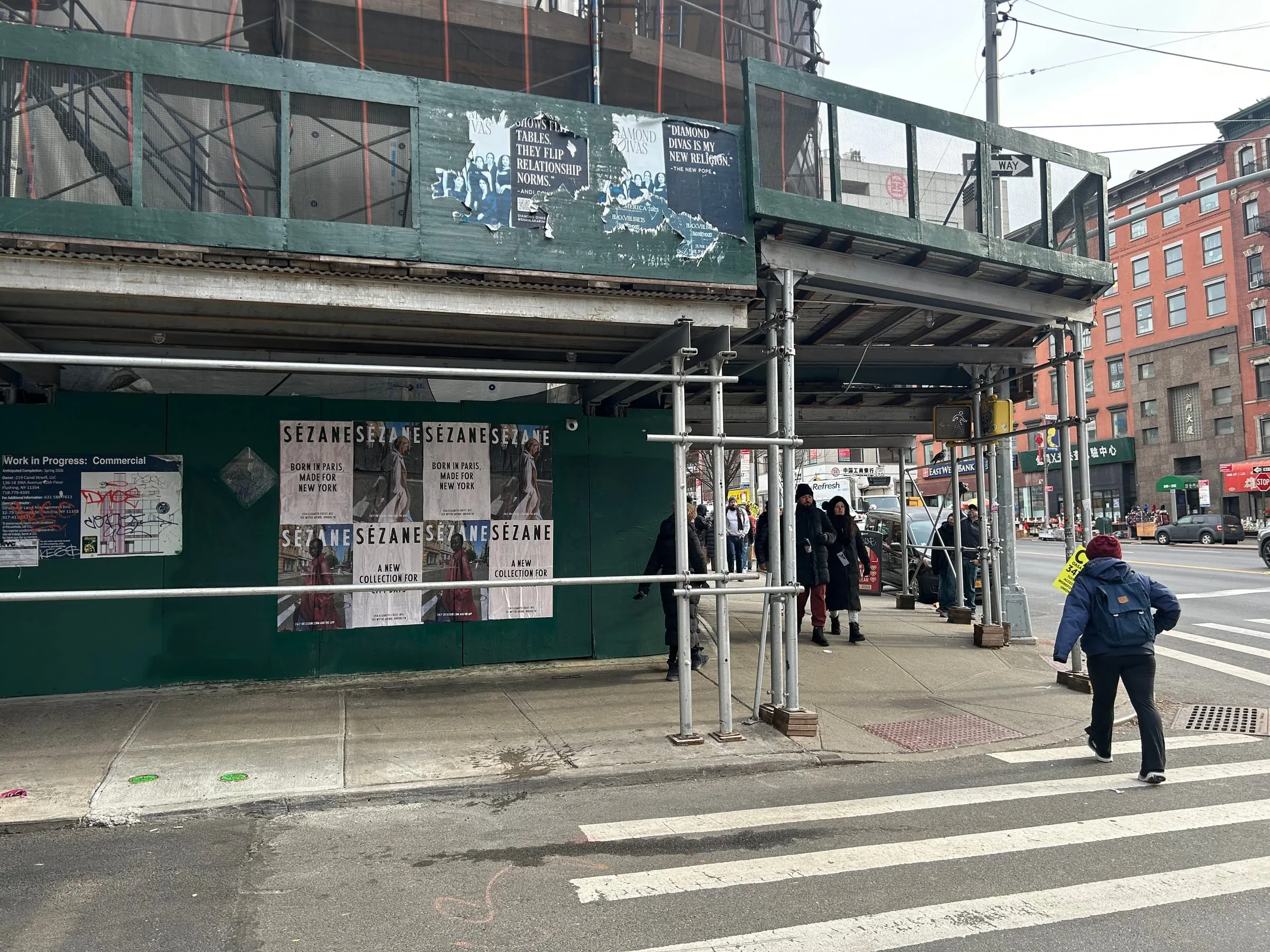
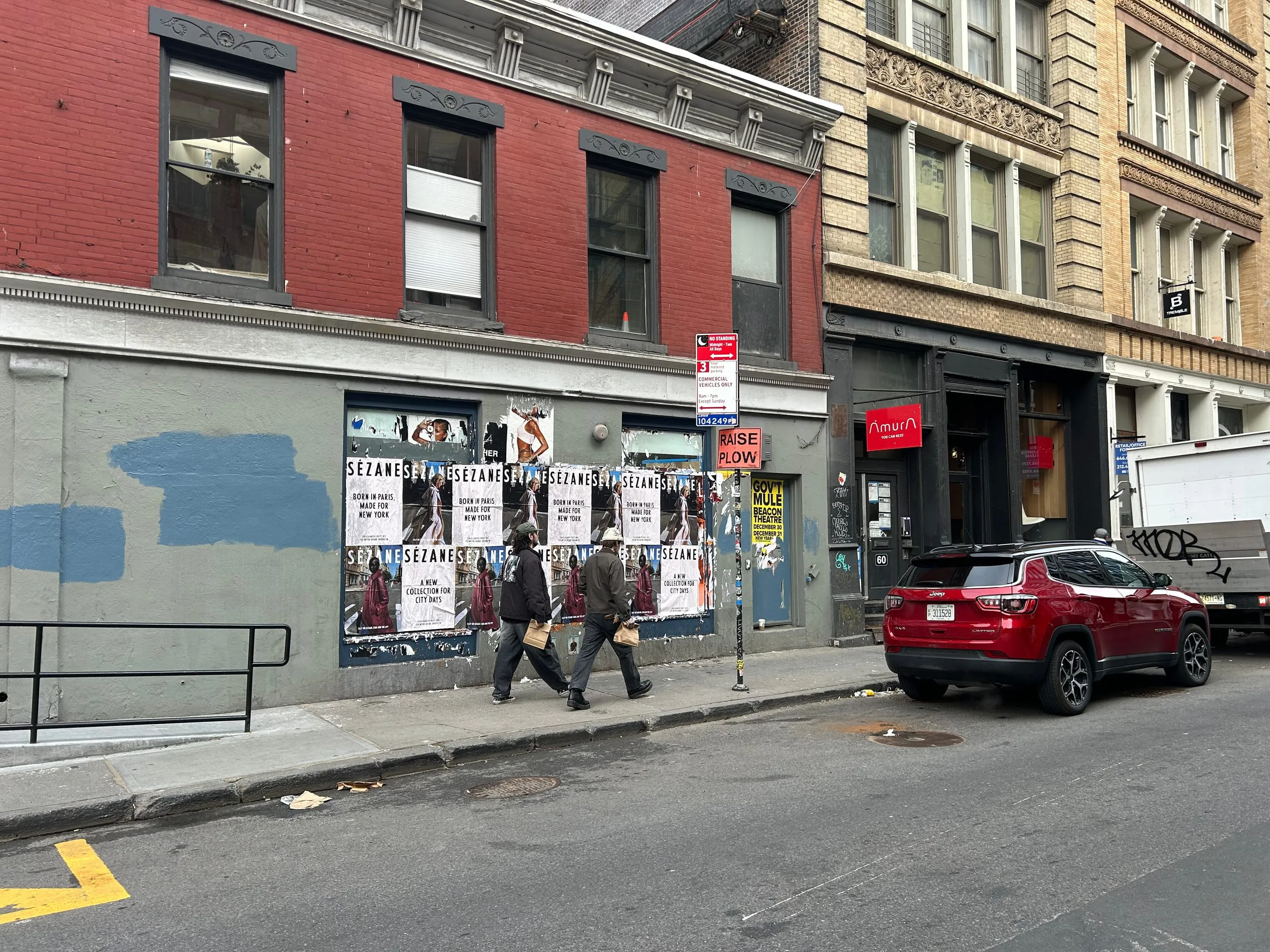
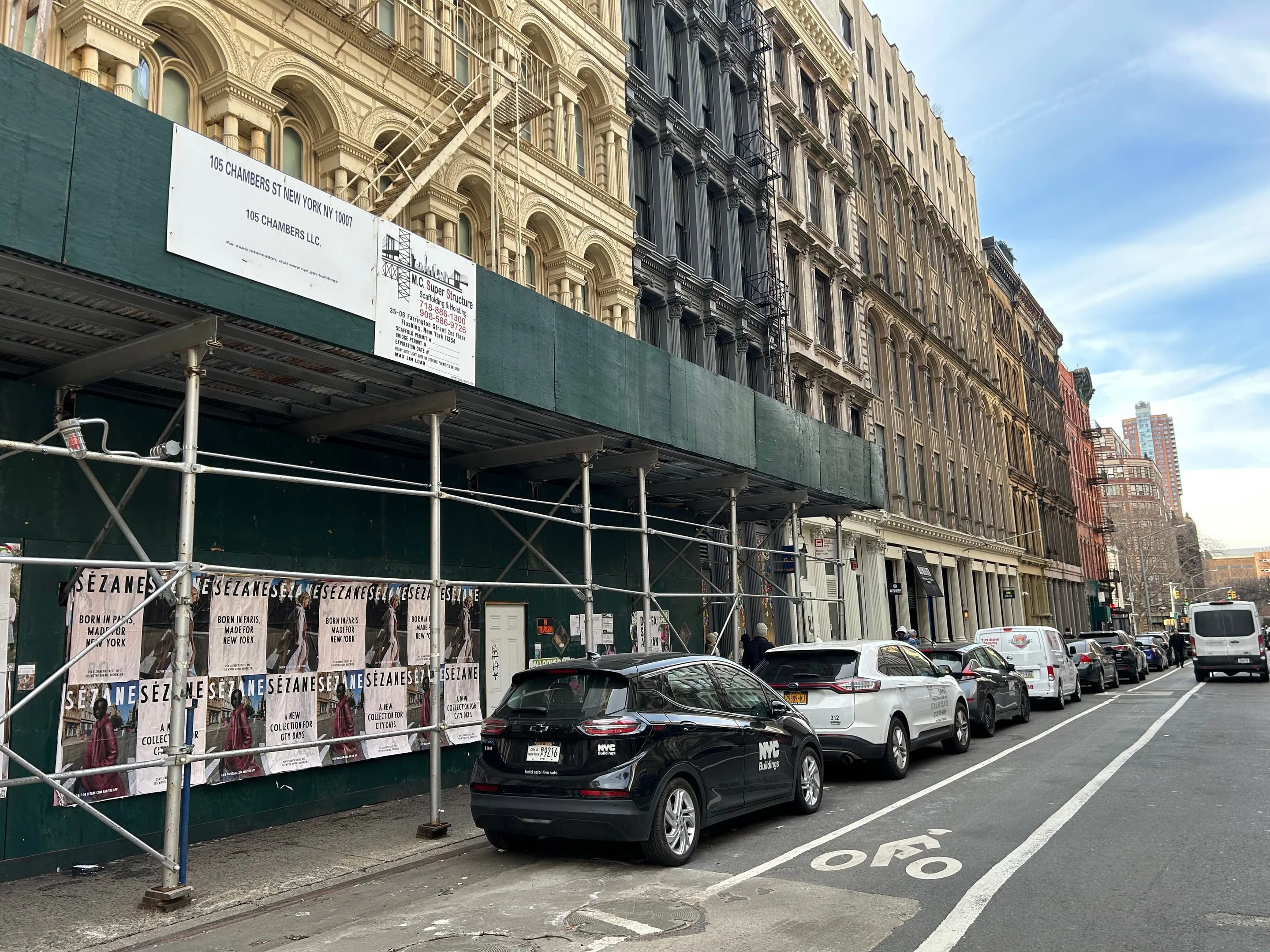
Sézane ran SoHo as one half of a two-city retail campaign, with the New York placements anchored around the blocks its own customer already shops. The measure the brand cared about was frequency rather than reach: a Sézane customer in SoHo or Tribeca passes the work twice a week minimum.
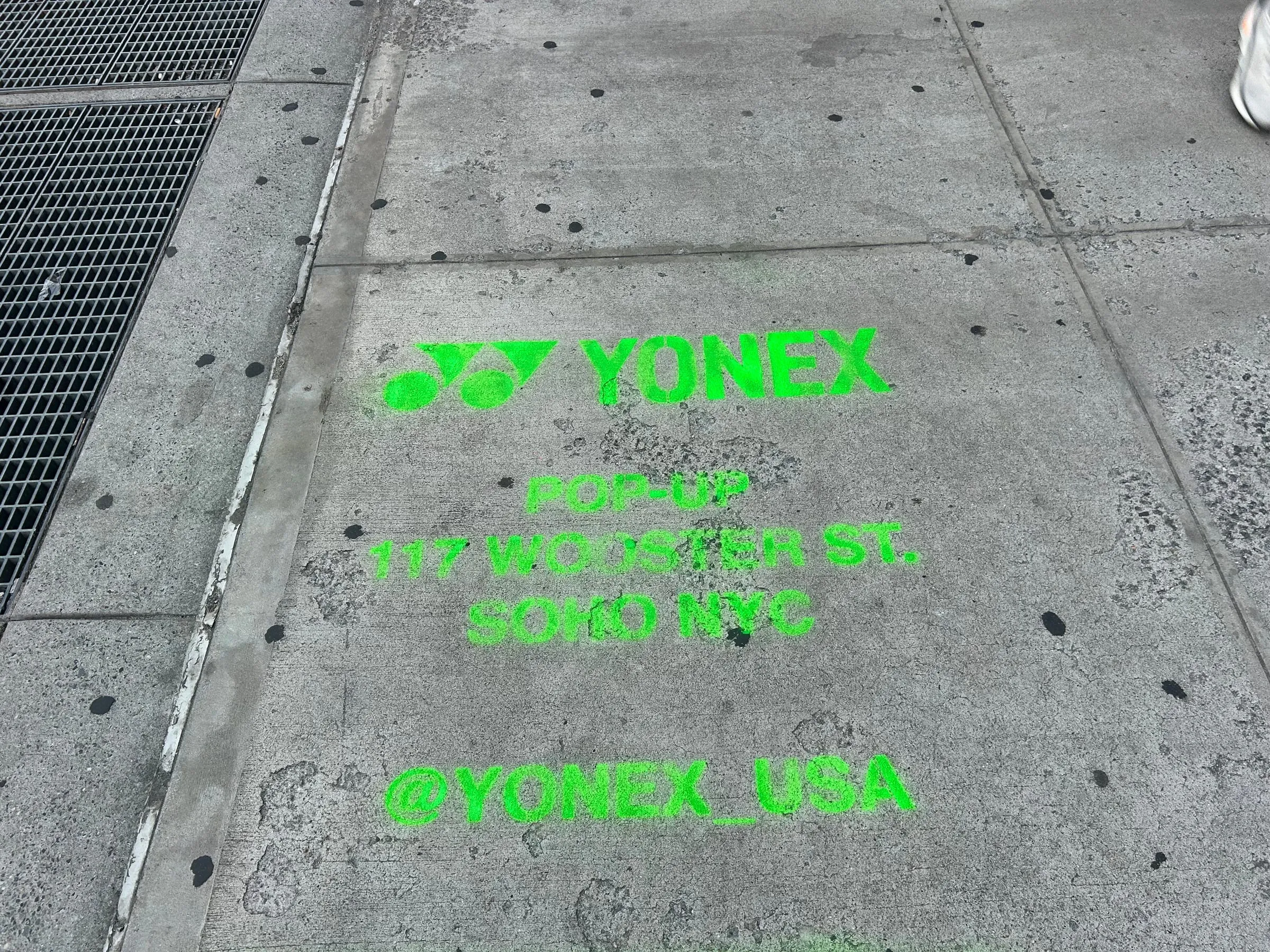
Yonex anchored six sidewalk stencil placements on 117 Wooster Street, the address of its pop-up. Neon-green spray stencils reading the brand, the pop-up and the address went on cobblestone-edged sidewalks, sewer-grate adjacents and the hydrant corner, turning the sidewalk itself into directional signage for a temporary retail location.
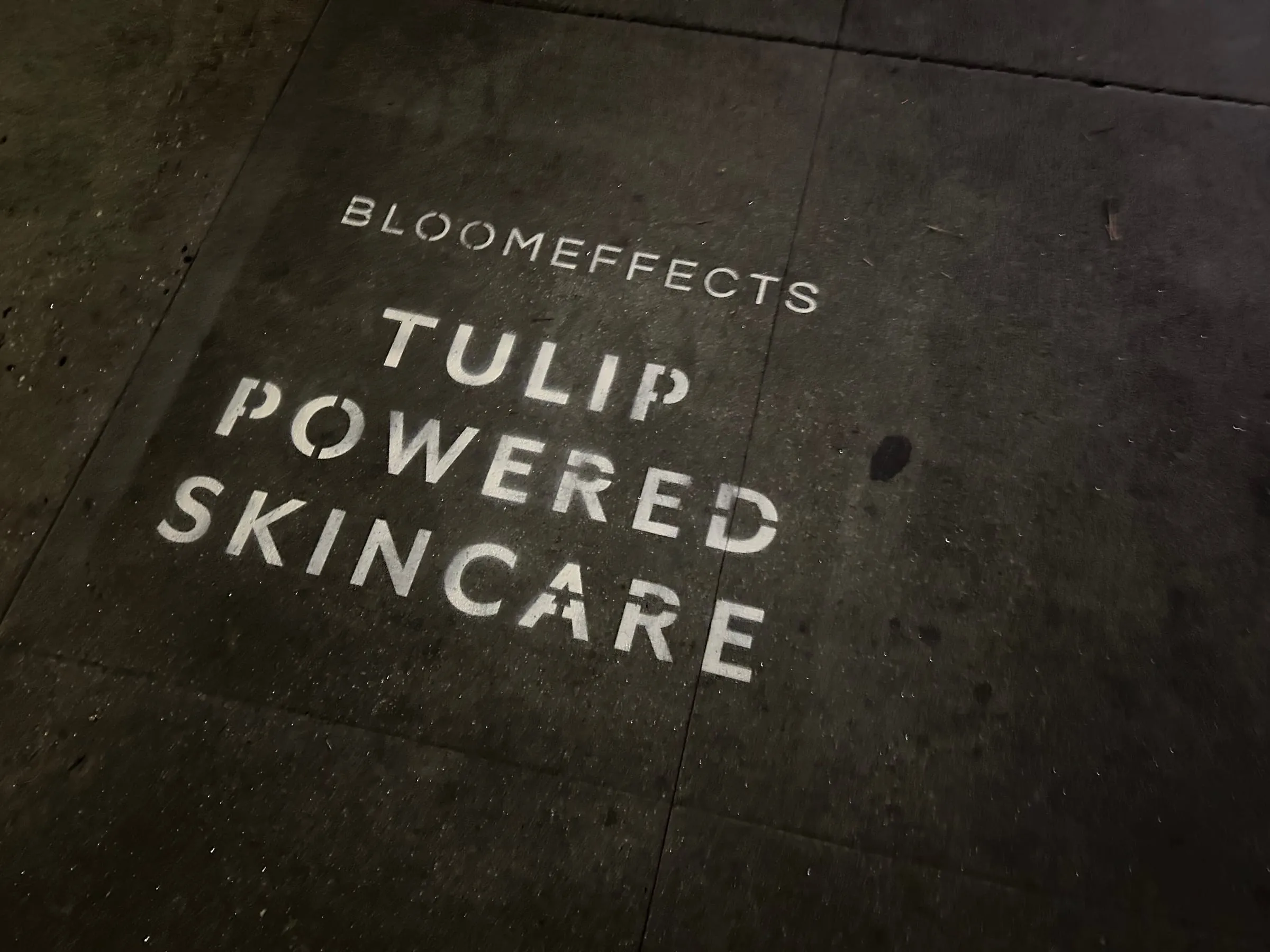
Bloomeffects used SoHo as one of three neighbourhoods in a seven-placement stencil run, choosing SoHo for its creative-class and designer-beauty buyer, the Lower East Side for early adopters, and Williamsburg for a younger fitness-aware audience. That run also produced a useful piece of wear data: stencils on the highest-traffic pedestrian blocks showed visible wear by day 21.
Brooklyn Museum ran SoHo as part of a multi-exhibit campaign across the city, with fifteen placements spread across SoHo, Tribeca and Williamsburg and the SoHo cluster sitting on Wooster, Greene and Broadway south of Houston.
Posters or stencils
The two formats do different jobs on these blocks.
Posters work when the brand needs to be read from across the street: hoarding runs, shutter work, and the repeating multi-sheet walls that make a campaign feel like it belongs to the neighbourhood. Hold windows on SoHo storefront surfaces run 12 to 20 days.
Stencils work when the brand needs the sidewalk itself, especially for a location. Yonex used them to point at an address. They also wear faster on the busiest blocks, which is a feature when a pop-up is only open for two weeks.
Most SoHo briefs we scope end up using both.
The legal position
The rule is the same across New York and it comes down to the surface. Private property with the owner’s written consent is advertising: Administrative Code § 10-117 makes the express permission of the owner or operator the whole test, and NY Penal Law § 145.30 makes unlawful posting a violation where that consent is missing.
Public infrastructure is not available at any price. § 10-119 bars pasting a poster or sticker on a lamppost, utility pole, bus shelter, traffic sign, hydrant, tree or curb, and it reaches the advertiser rather than only the installer: the section presumes that the person whose name, telephone number or other identifying information appears on the poster is the one who put it there, and the burden of rebutting that sits with them.
SoHo adds one wrinkle: most of it sits inside the SoHo-Cast Iron Historic District, where most exterior changes to the front and rear facades of a building require Landmarks Preservation Commission review, so owners and managing agents are more cautious about anything touching a facade. In practice that means longer owner conversations, not fewer options, and it is the main reason SoHo lead times run longer than other Manhattan corridors.
The full rule by surface is in is wheatpasting legal?, with the New York specifics in is wheatpasting legal in NYC. City ordinances are public: New York’s are in the New York City Administrative Code, and most other cities publish theirs on the Municode library.
Booking the corridor
Three weeks of lead time is comfortable. Wall inventory is confirmed in writing before print, and in a landmarked district the owner’s own approval chain is usually the long pole.
The rest of the city’s inventory, neighbourhood by neighbourhood with surfaces and hold windows, is on wheatpasting in New York City. For the full format mix across the market, see guerrilla marketing in New York City. Across the river, Brooklyn street advertising covers Williamsburg, Bushwick and Bed-Stuy the same way.
Hold windows and pricing reflect our published 2026 figures and the documented campaigns above. For a specific block, send the brief and a scoped quote comes back inside 24 hours.