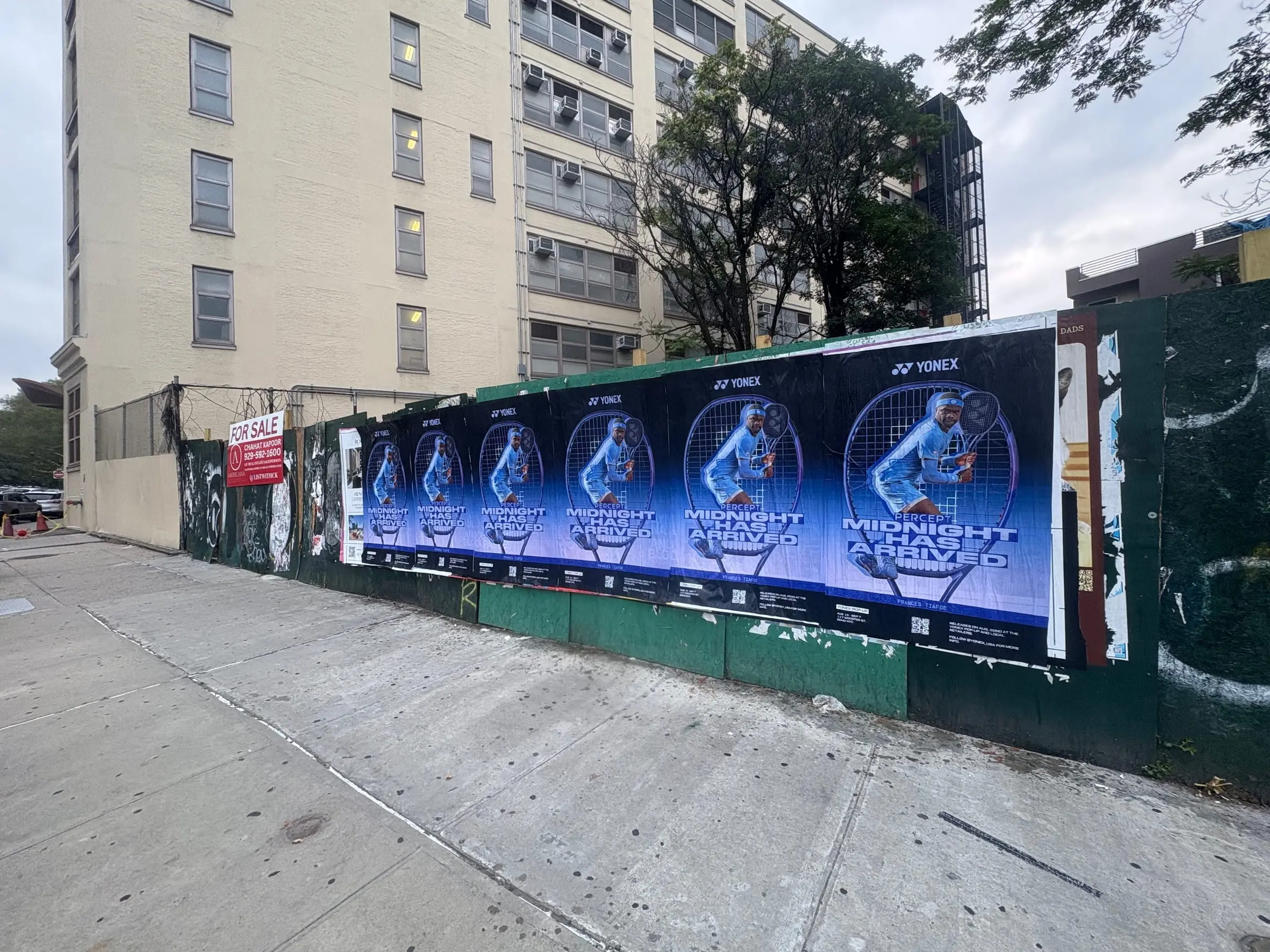
Wheatpaste advertising only works when the wall is in the right place. A poster pasted to raw brick on a corridor your buyer walks every day will outperform ten posters scattered across a city where they never set foot. So the question “where should we paste?” is really four questions stacked together: who walks here, what surfaces are available, what does the law allow, and how crowded are the walls already.
We have been installing paste-up campaigns, with GPS-stamped photo proof on every wall and zero municipal removals on record. This is our operator read on the twelve strongest US markets for wheatpaste, street poster, and paste-up campaigns in 2026. It is not a popularity list. It is a ranking by the four factors that actually decide whether paper on a wall earns its budget, plus the honest part most guides skip: how tough each market is to run, and what it costs you in refreshes and lead time.
The four factors
Foot traffic that walks. Wheatpaste is a pedestrian medium. It rewards cities where people move on foot through commercial corridors, not cities built around the car. Density and walkability are the first filter.
Neighborhood paste density. The format needs surfaces: raw brick, painted commercial walls, construction hoarding, scaffold. Cities with active arts districts and constant construction give a campaign somewhere to live. A city can have great foot traffic and still be thin on legal, paste-friendly walls.
Legal climate. Every market here supports paste-up on permitted private surfaces with written owner consent. What moves the ranking is enforcement posture and how much private wall inventory exists relative to public right-of-way that is off-limits.
Competition for the wall. This is the factor most guides ignore, and it changes the whole plan. In a saturated market your poster gets covered by the next crew within days, so you budget for refreshes to hold the spot. In an open market a clean wall holds for weeks and your dollar stretches further. We will call out the refresh reality city by city below.
The ranking
1. New York City
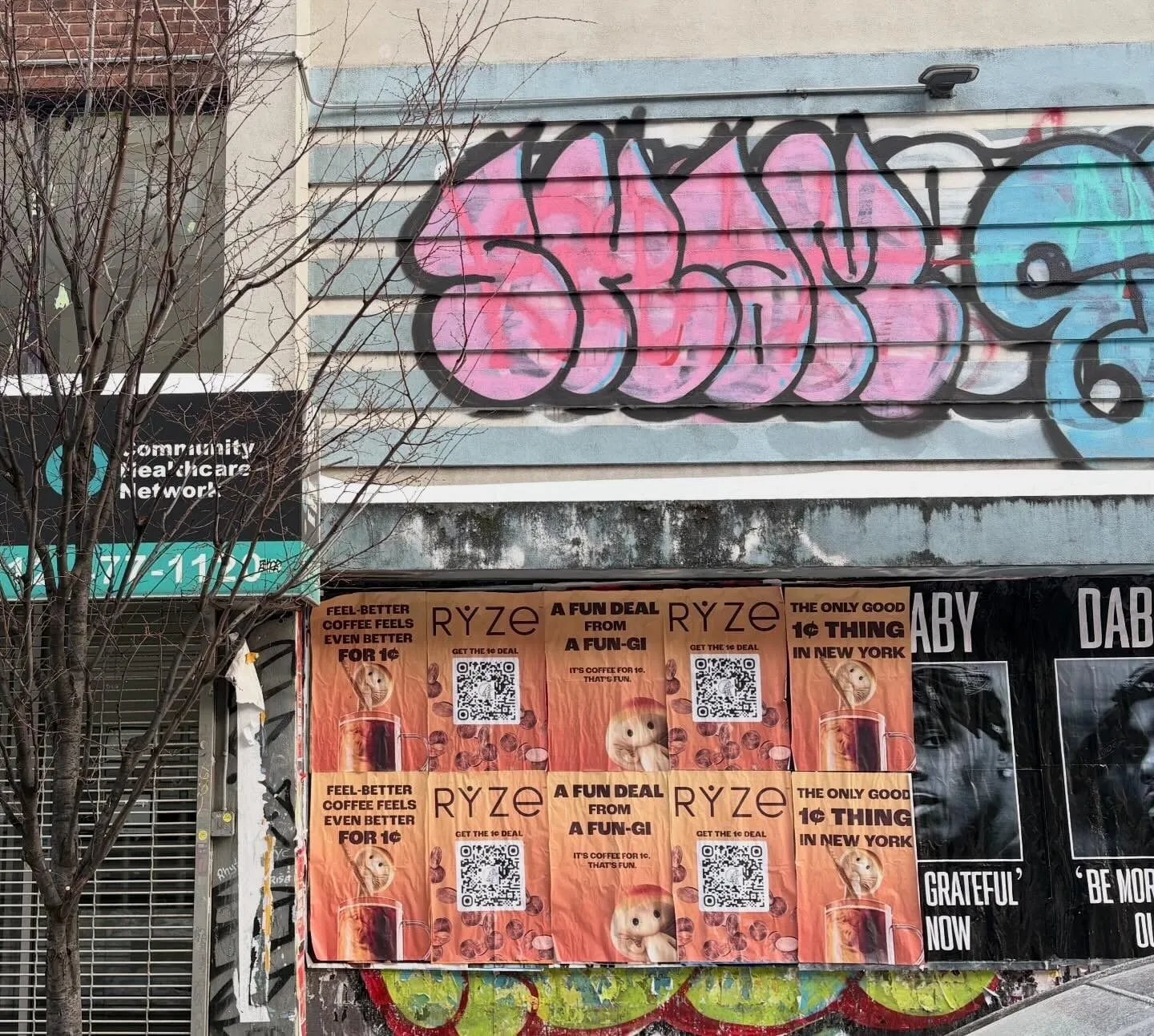
The deepest paste market in the country, and the toughest to hold. Brooklyn and Lower Manhattan run on foot, the surface inventory is enormous, and the audience reads street paper as part of the city. The catch is competition: the best walls in Bushwick, the Lower East Side, and SoHo are the most fought-over in America, and a popular spot gets pasted over within days. That is why a NYC campaign needs the most aggressive refresh cadence we run anywhere, usually every 7 to 10 days, to keep your paper on top through the buy. It is the highest-reach market and the highest-maintenance one. Plan for the refreshes and it pays back; skip them and your campaign disappears under someone else’s. See wheatpaste advertising in New York City.
2. Los Angeles
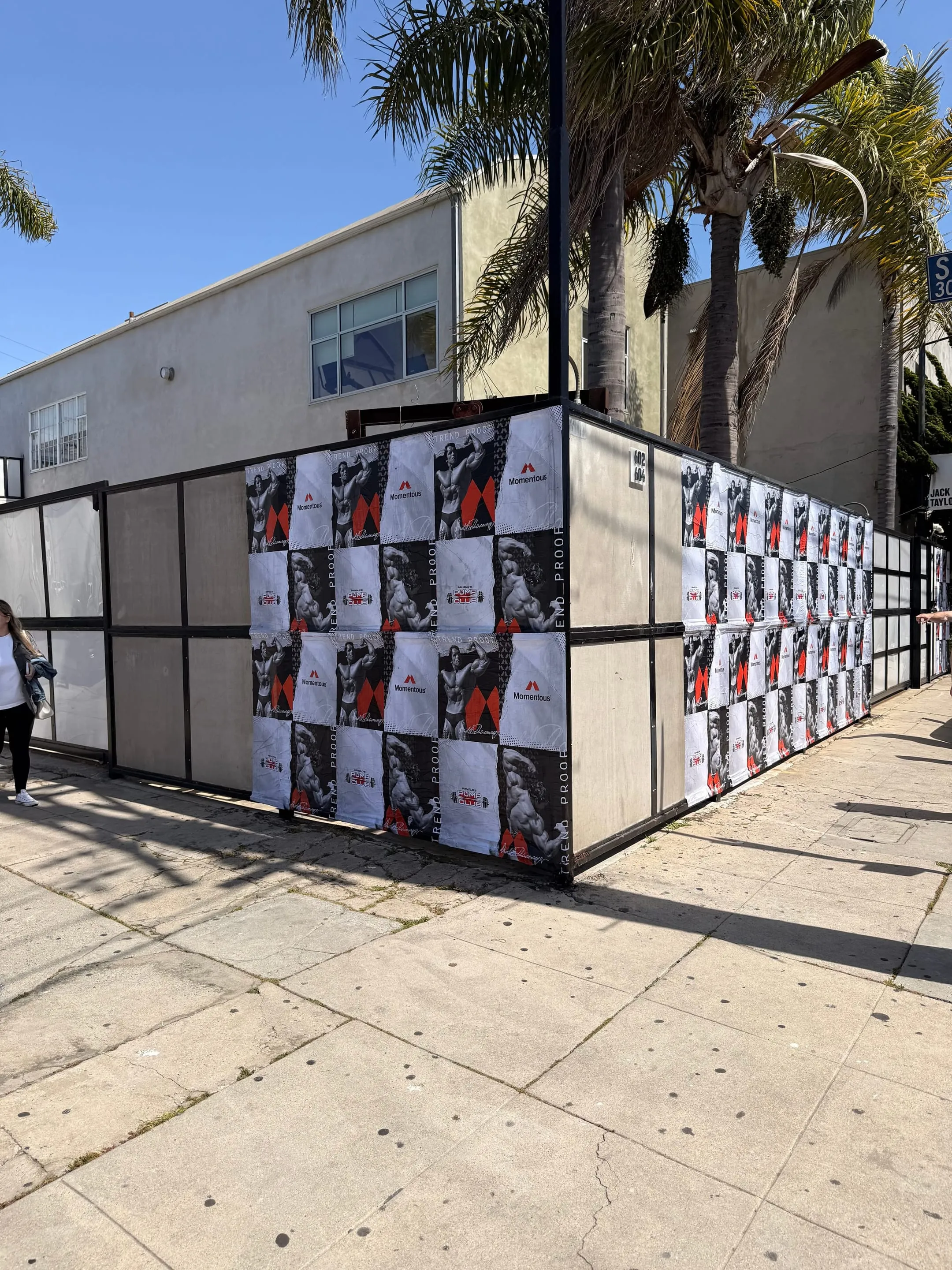
The entertainment and fashion capital, and a much more relaxed run than New York. The challenge in LA is not competition for walls, it is the sprawl: your audience is spread across Melrose, Fairfax, the Arts District, and Echo Park, so the win is choosing the three corridors where they actually walk instead of trying to blanket the basin. The upside is that walls hold longer than they do in NYC, so refreshes are less frequent and the same budget covers more ground. For film, music, and streetwear briefs that want cultural adjacency without the Manhattan grind, LA is the easy yes. See wheatpaste advertising in Los Angeles.
3. Miami
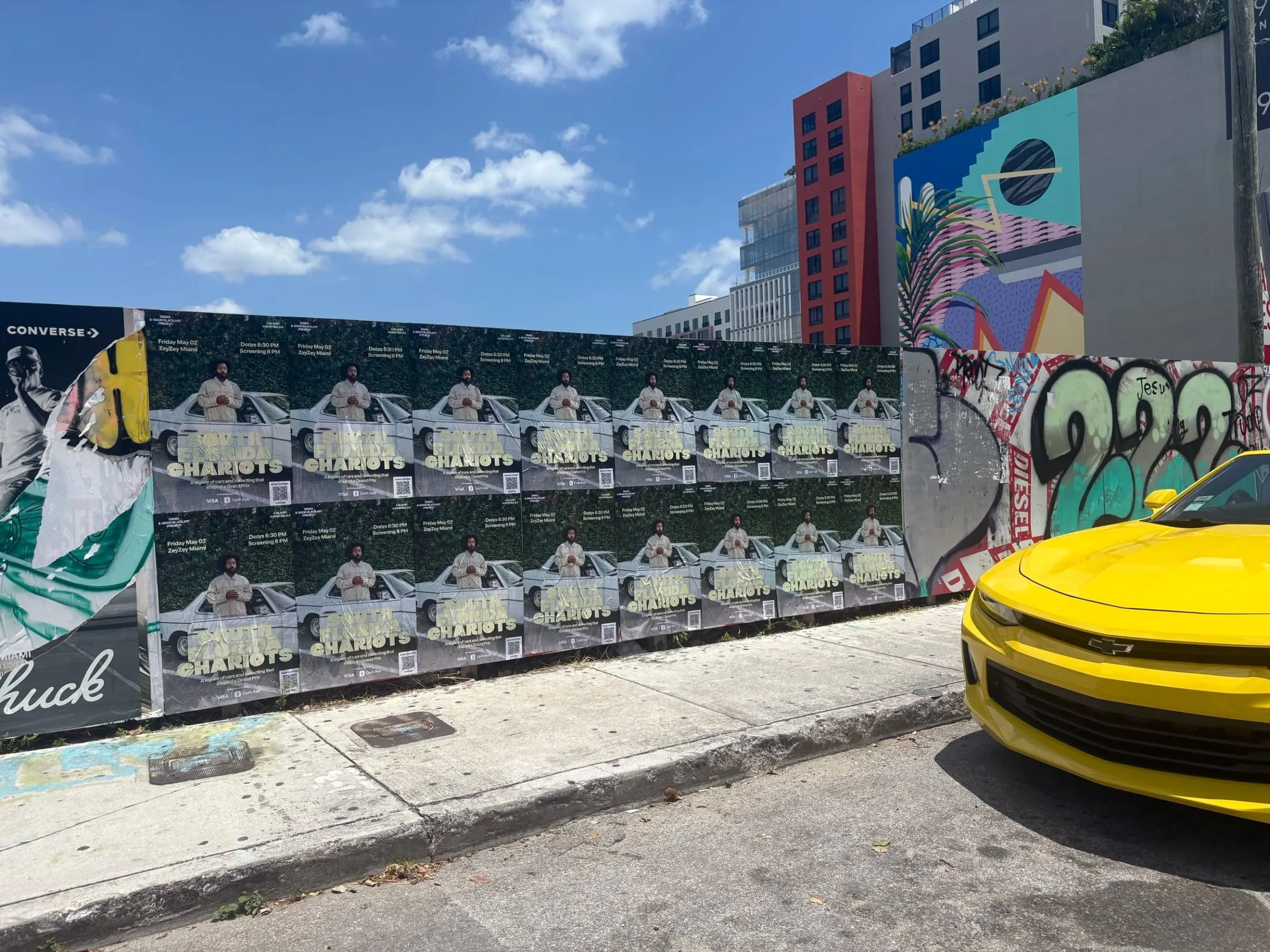
The strongest event-timed market on the list, and the one where the calendar does the work. Wynwood holds the highest density of paste-friendly brick in Florida, but it gets competitive in one specific window: Art Basel in early December, when every brand wants the same walls. Time your run to Basel and the audience is global; run off-season and the walls are open and cheap. The honest caveat here is the weather, not the competition: Miami humidity is hard on adhesive, so we mix the paste thicker and audit more often. Our Miami case study, the South Florida Chariots Wynwood run, shows two well-placed walls doing the work of ten. See wheatpaste advertising in Miami.
4. Chicago
An underrated paste market with serious pedestrian density in Wicker Park, Logan Square, Pilsen, and the West Loop, and far less wall competition than either coast. A clean surface in Chicago costs less to earn and holds longer, so your refresh budget shrinks. The real caveat is the weather window: winter compresses the install calendar and surface temperatures matter for adhesion, so timing beats everything here. Run it in the warm months and Chicago is one of the best value markets in the country. See wheatpaste advertising in Chicago.
5. San Francisco
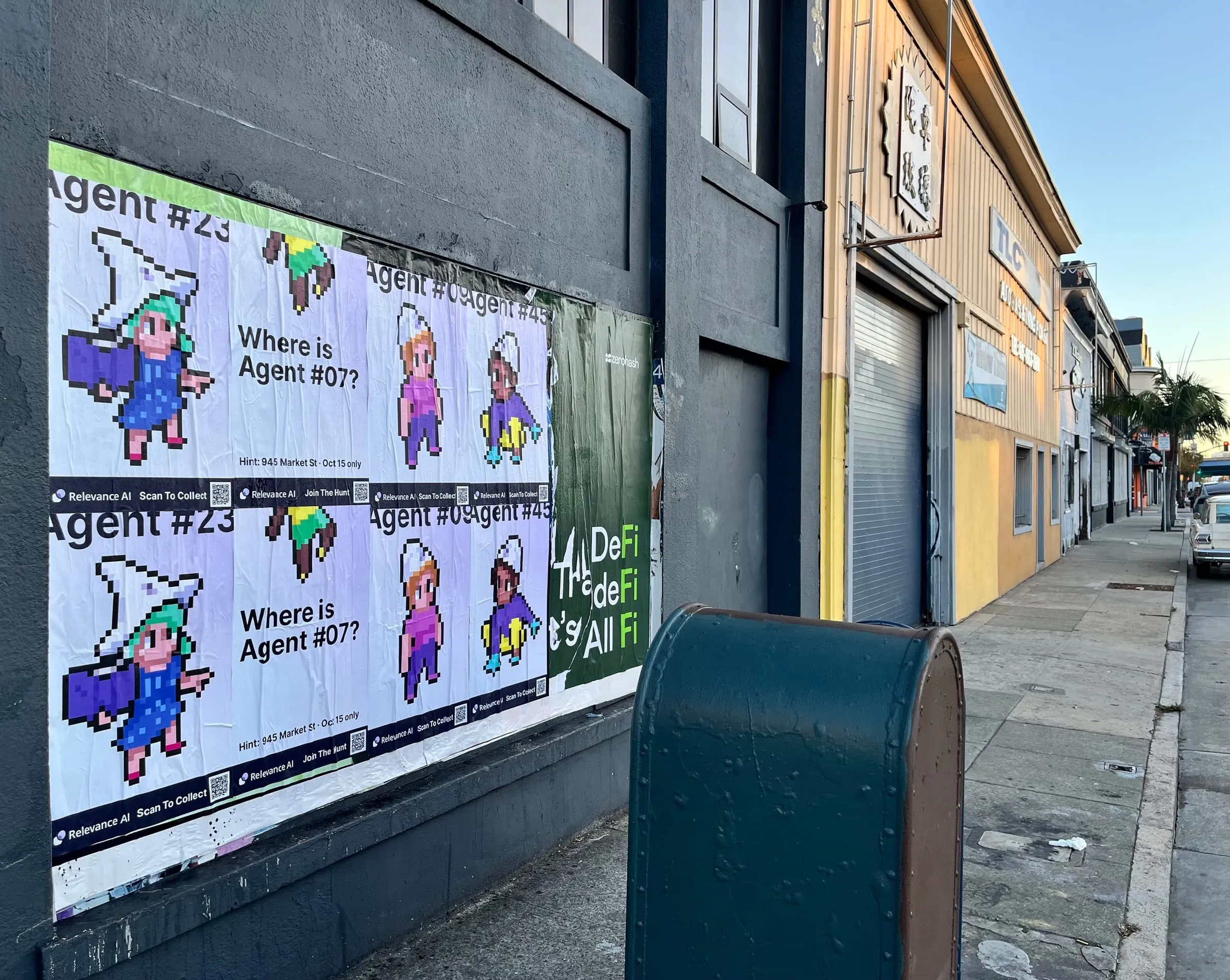
Small, dense, and walkable, which is exactly what paste-up wants. A handful of walls in the Mission, the Haight, and SoMa covers a real share of the city’s foot traffic, so a tech or consumer brand can reach a concentrated audience without a large poster count. The Mission gets competitive, but nothing like New York, so refreshes stay manageable. The one caveat is the marine layer: SF fog cures paste slower, so we build a little extra time into the install. Compact geography is the advantage; it is the cheapest dense market to cover end to end. See wheatpaste advertising in San Francisco.
6. Austin
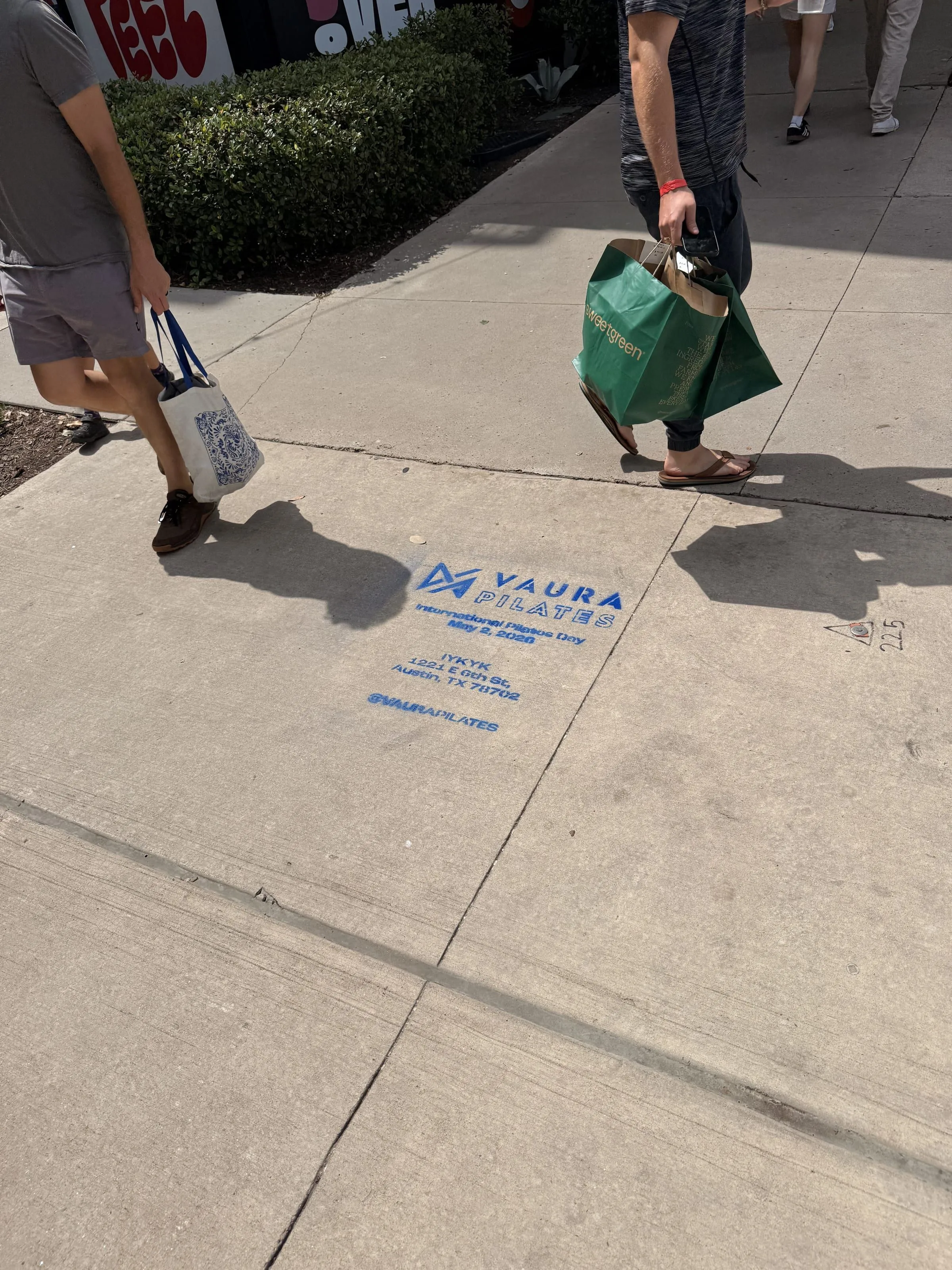
The best mid-size market for music, tech, and launch briefs, and an early-mover’s market on walls. East Austin and the South Congress corridor carry walkable foot traffic, and because the city is nowhere near as saturated as the coasts, you get clean surfaces that hold. The calendar is the lever: SXSW and ACL turn paste-up into a timed reach play, and walls book up fast in those windows. The caveat is Texas heat, which means pre-dawn installs so the paste sets before the sun hits it. Get in before the rest of the market catches on and Austin is a steal. See wheatpaste advertising in Austin.
7. Atlanta
The cultural engine of the South, strong for music and entertainment work, with almost no competition for walls. The BeltLine, Old Fourth Ward, and West Midtown concentrate a young, on-foot audience along corridors that did not exist a decade ago. Atlanta is car-heavy overall, so the caveat is discipline: you run the walkable pockets, not the metro at large, and you ignore the highway-adjacent inventory that looks tempting on a map but reaches no one on foot. Pick the right corridors and your paper holds for weeks. See wheatpaste advertising in Atlanta.
8. Philadelphia
A dense, walkable East Coast market with a deep arts culture and a fraction of New York’s wall competition or pricing. Fishtown, South Philly, and the corridors around Center City carry brick and hoarding, and the audience is accustomed to street art, so paper reads as part of the neighborhood. The caveat is simply selection: Philly rewards picking the genuinely dense corridors over the quieter blocks. For a brand that wants Northeast reach without Manhattan competition or cost, Philadelphia is the value pick of the list. See wheatpaste advertising in Philadelphia.
9. Nashville
The fastest-growing market on the list and a magnet for music and hospitality briefs. The corridors around East Nashville, the Gulch, and Broadway carry constant foot traffic and constant construction, which means a steady supply of fresh hoarding to paste and very little competition for it. The caveat is the flip side of the growth: the market is changing fast, so the open-wall advantage will not last forever. This is the get-in-early market, where today’s clean surfaces are tomorrow’s contested ones. See wheatpaste advertising in Nashville.
10. Boston
A compact, student-dense market where a small campaign reaches a young, walkable audience. Allston, Cambridge, and the corridors around the universities turn over every September, which makes timing the single biggest lever: a back-to-school run lands on a brand-new audience. Wall inventory is tighter than the bigger markets, so the caveat is that neighborhood selection does more of the work here than in a sprawling city. Competition is low; the constraint is supply, not rivals. See wheatpaste advertising in Boston.
11. Seattle
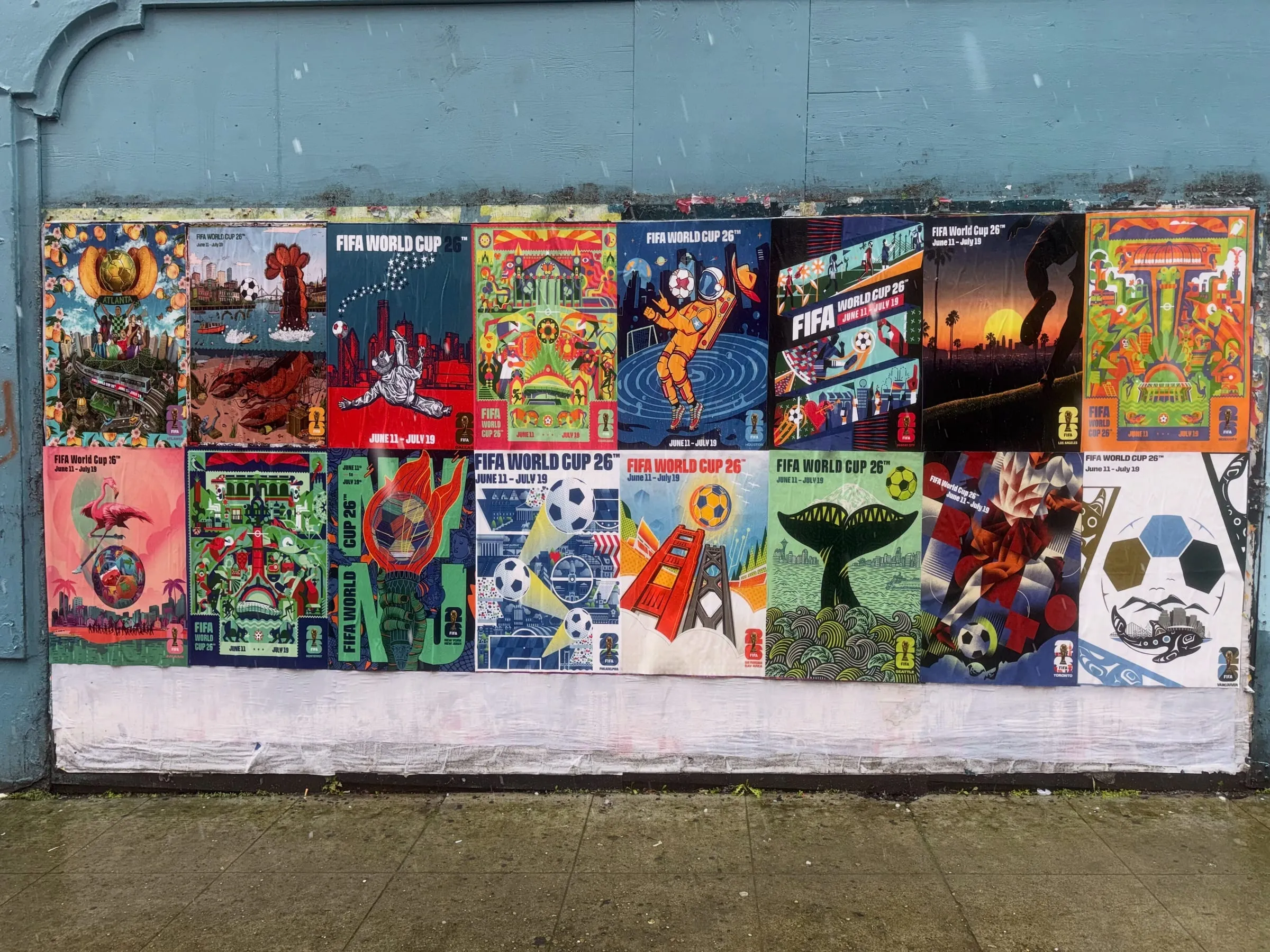
A walkable, design-literate market strong for tech and outdoor brands. Capitol Hill, Ballard, and Fremont carry the foot traffic and the arts adjacency, with little wall competition. The defining caveat is the rain: Seattle’s wet season shortens wall life, so we run thicker paste and a tighter audit cadence to make sure your paper survives the buy. Budget for a slightly higher refresh rate than a dry market and Seattle delivers a concentrated Pacific Northwest audience that is hard to reach any other way. See wheatpaste advertising in Seattle.
12. Washington, DC
A real market, ranked last for an honest reason: more of the city’s prime surface is public or federal, which narrows the legal private-wall inventory compared with every market above. That is the caveat that defines DC. It is not that paste-up does not work here, it is that running clean takes more careful surface selection to stay on permitted private walls. The walkable corridors in Shaw, U Street, and around the H Street stretch still support it, and for political, advocacy, and cultural briefs the audience is uniquely concentrated. Wall competition is low; the legal map is the thing to respect. See wheatpaste advertising in Washington, DC.
Beyond the twelve
The ranking covers the deepest paste markets, and it is not the whole route map. Charlotte pairs NoDa’s gallery walls with the Rail Trail’s foot traffic, and it just carried a full festival takeover. Houston runs on Montrose and EaDo brick with almost no wall competition. Portland treats posters as native culture, so paste-up reads as local before it reads as media. Phoenix crews paste pre-dawn ahead of the desert heat, New Orleans rewards crews that know the Vieux Carré paperwork, and Orlando and Milwaukee give event and regional briefs clean surfaces at the same published floor. Every market we paste, with per-city neighborhoods, permit lead times, and pricing, lives in the wheatpasting locations directory.
How to choose
If you are running a single market, pick the city where your buyer lives a walkable life, not the city with the biggest population. A fitness brand reaching young professionals does better on a tight Capitol Hill or Mission run than on a scattered campaign across a larger, car-dependent metro. And weigh the competition honestly: if you want New York’s reach, budget for the refreshes it takes to hold the walls; if you want efficiency, a market like Chicago, Philadelphia, or Nashville gives you clean surfaces that stay up longer for less. If you are launching nationally or moving with a tour, a coordinated multi-city paste-up program puts paper on the wall in several markets inside one window. Either way, the cost starts at the same $3,500 floor, and the wheatpaste campaign cost guide breaks down where the budget goes.
Two things hold across all twelve cities. Paste-up only runs on private surfaces with written owner consent, which is why our permits and wall-access guide and the state-by-state legality breakdown matter before a single sheet ships. And every wall comes back documented: three GPS-stamped photos, an install log, and a survival audit. That is the difference between a campaign you can report on and paper you hope is still up.
Ready to scope a market? Send a brief and we will come back with a wall count, a refresh plan, and a quote in 24 to 48 hours.