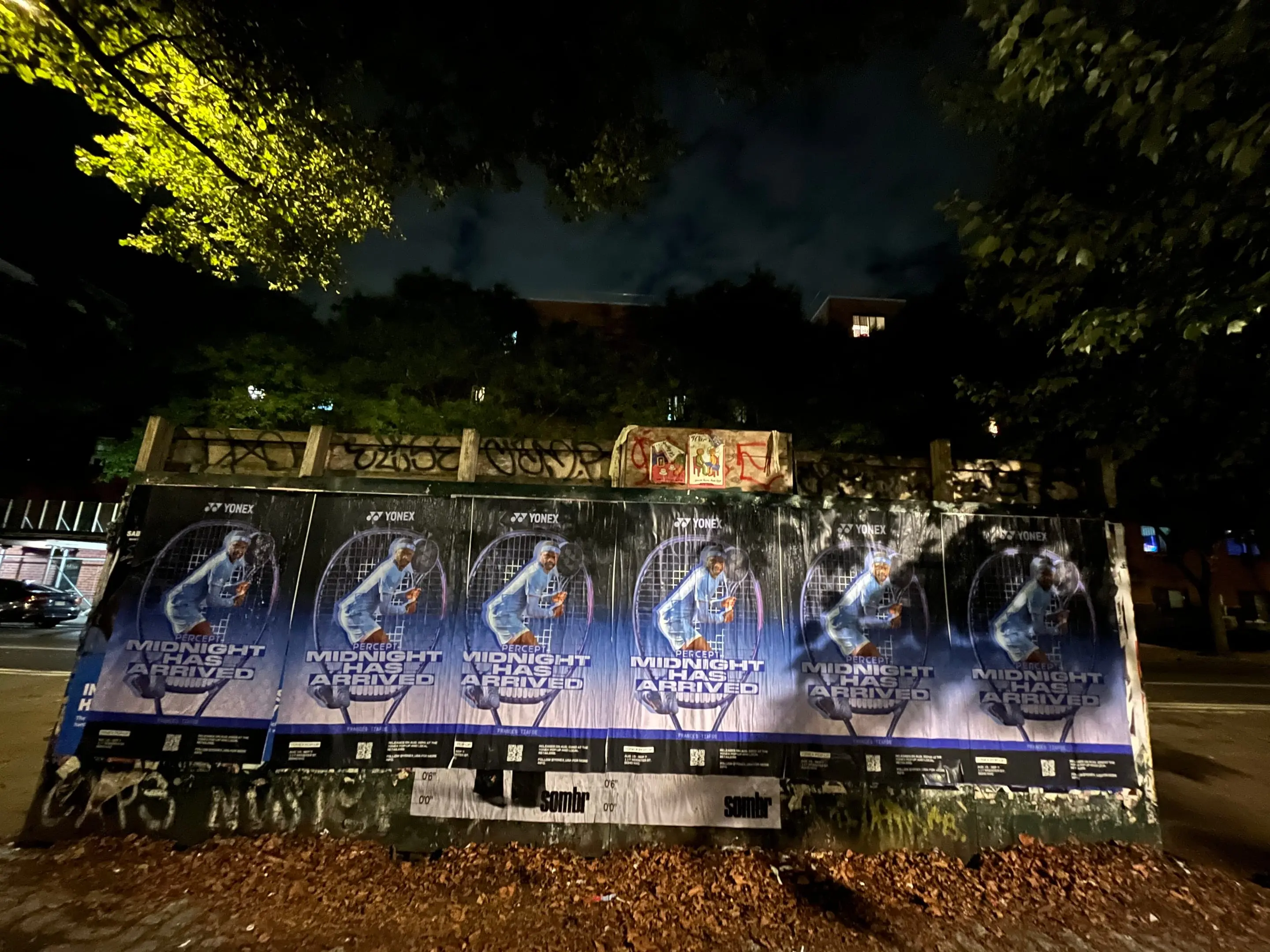
Wheatpasting is putting up paper posters with glue made of flour and water.
That is the whole thing. You cook flour into a smooth gel, brush a coat onto the wall, lay the sheet, then brush a second coat across its face. The paper darkens, goes translucent, and dries flat and sealed. It is the oldest advertising install method still in commercial use, and it has outlived every adhesive that was supposed to replace it — because paste is cheap, grips almost anything, and comes off with warm water.
The recipe
Wheat or rye flour, water, heat. Some crews add a little sugar or cornstarch for tack. It dries clear, holds on masonry, plywood, painted metal, and construction hoarding, and it releases without solvents. That last property is why property owners say yes to paste where they would refuse adhesive vinyl.
How a commercial campaign runs it
The difference between wheatpasting as a practice and wheatpaste advertising as a service is consent and documentation.
We survey the wall and confirm it is private and permitted. Print goes in-house on outdoor-grade stock. The crew installs, and every placement is photographed with coordinates logged, so the campaign closes as a map rather than an impressions estimate. Floors start at $3,500 per city — the full breakdown is in the campaign cost guide.
How long it lasts
Two to six weeks outdoors is the honest working range. Sun and freeze-thaw shorten it; a sheltered wall pushes past a month. Longer bookings are scheduled with refresh passes built in.
What it is not
Not snipe posters — those are small-format panels run in high repetition along a corridor, bought for frequency rather than for one dominant surface. Not wild posting, which is a Pearl Media trademark rather than a category. Not flyposting, the British term that usually implies the unauthorised version.
The glossary sorts the rest of the vocabulary, and is wheatpasting legal covers the permission rule market by market.