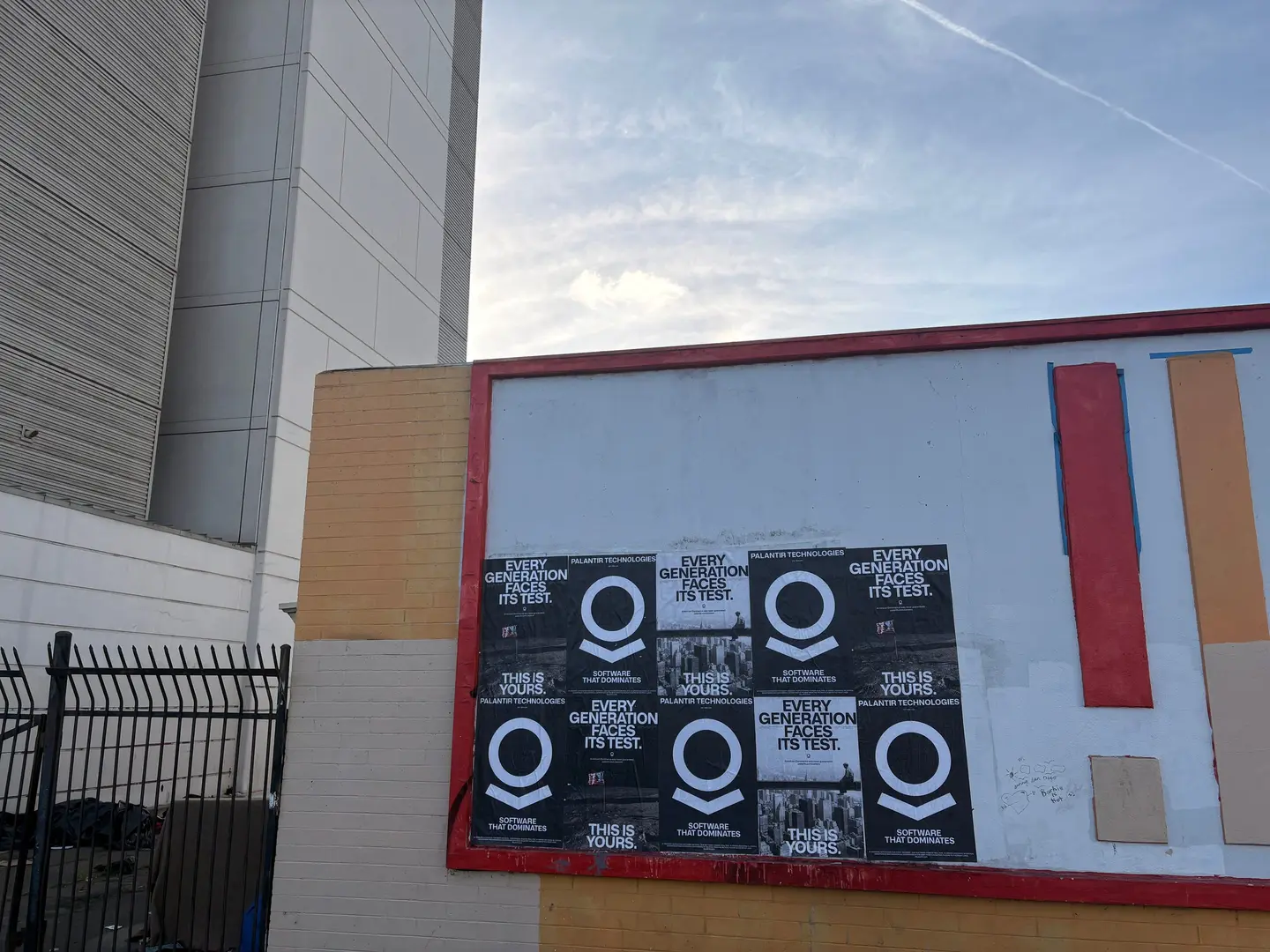
The short answer: wheatpasting on private property with the documented written consent of the property owner is lawful in New York City. Posting on city-owned infrastructure is not. Everything else is detail.
This piece walks through how that framework actually works, what NYC’s Administrative Code restricts, what Beyond Street Media does to keep brand campaigns on the lawful side of that line, and what your liability is if you (or another vendor) ignore the rules.
This is not legal advice. We are operators, not counsel. For binding interpretation of NYC code as it applies to your creative, talk to a lawyer.
The framework in one sentence
In NYC, the wall, fence, hoarding, or column you are pasting on either has the owner’s documented permission or it does not. If it does, the campaign is lawful on that surface. If it does not, you are on a surface nobody authorized. On city property and street fixtures that is a violation of NYC Administrative Code § 10-119, and the brand named on the paper is presumed to be the party who put it there. On a private wall it is the owner’s property you used without permission, and the owner’s remedies are the exposure.
That is the entire framework. The complexity is in execution.
Private surfaces with consent: the lawful path
A property owner in NYC can authorize a third party to post advertising on their building, fence, or hoarding. That authorization is the controlling document. With it on file, the surface is fair game for paste-up advertising under most circumstances.
What the consent has to cover:
- The specific surface. A general “you can post on my buildings” letter does not cover an individual address. Consent attaches to a defined location.
- The campaign window. Consent for a 14-day campaign does not cover a 60-day extension. Re-paste = re-consent.
- The advertiser. Consent for one brand does not transfer to another brand later. New advertiser = new consent.
- Documented in writing. Verbal consent is not defensible. Written, dated, signed.
Once those four conditions are met, the surface is part of a lawful campaign. This is the entire engine behind every BSM paste run in New York.
City-owned infrastructure: the prohibited path
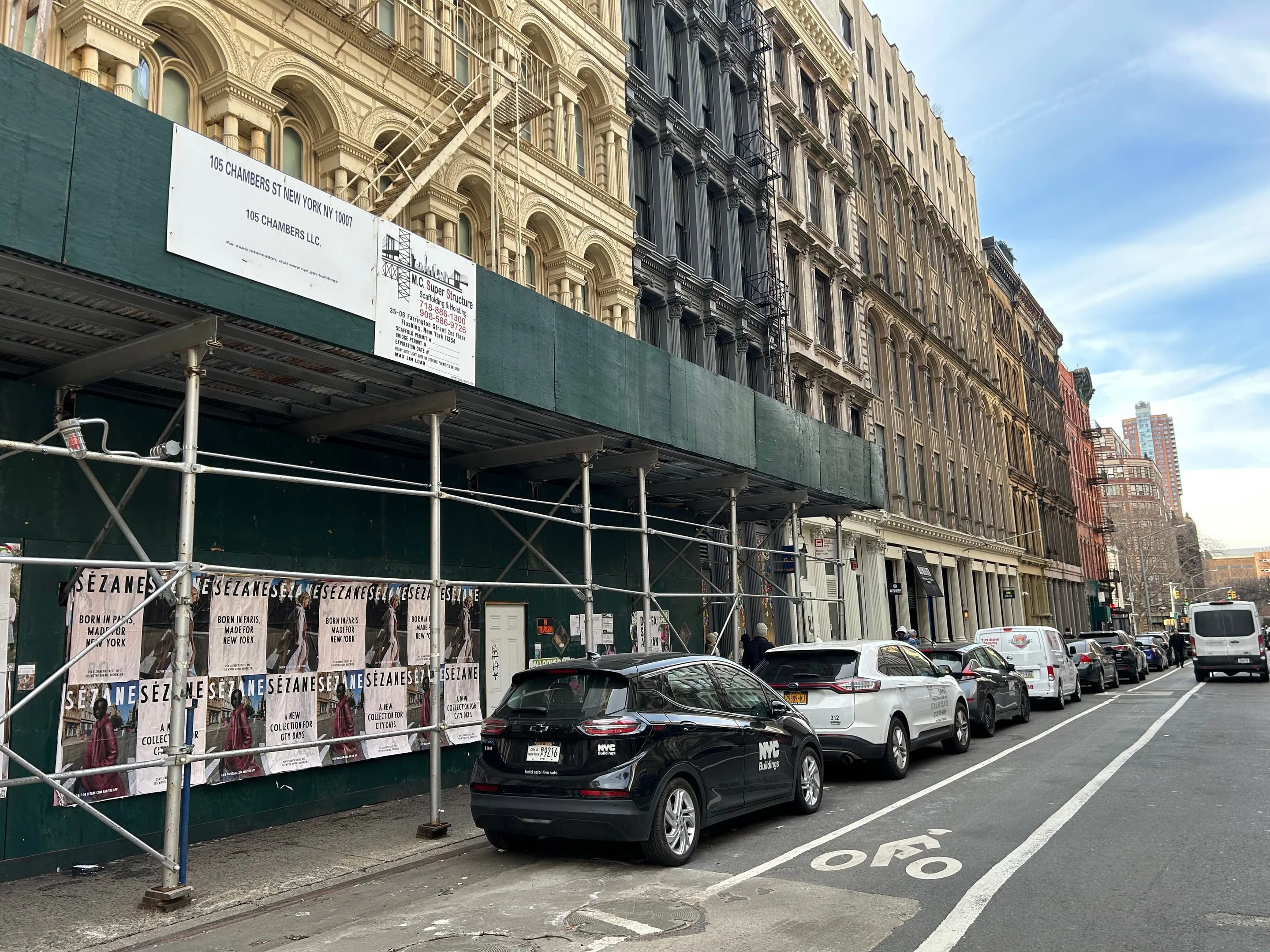
NYC Administrative Code § 10-119 prohibits posting on a long list of public-facing fixtures. The statute itself names lampposts, utility poles, traffic signs and control devices, bus shelters, mailboxes, street trees and tree pits, benches, hydrants, parking meters, highway fencing, bridges, and elevated train structures. In working terms:
- Lamp posts and utility poles
- Traffic signs and traffic signals
- MTA assets (subway entrances, bus shelters, transit walls)
- City-owned walls, fences, and barriers
- Mailboxes and city utility boxes
- Trees, planters, and street furniture
The reasoning is the same across categories: that surface belongs to the city, the MTA, or another public entity, and no third party can consent to advertising on it. Posting there is unauthorized regardless of how creative the placement is.
We do not post on any of the above. Full stop. A campaign that breaks this rule is not a guerrilla campaign; it is a violation waiting to happen.
What enforcement actually looks like
NYC posts have been a moving enforcement priority for years. The current pattern, as we observe it in the field:
- Cleanup-first response. Most unauthorized posters are removed by sanitation or the property’s owner without a citation attached. The poster is gone; no one calls anyone.
- Citations follow brand identification. When the creative names a specific brand and an enforcement officer or BID street team identifies it, the violation can attach to that brand. The mechanism is § 10-119(b), a rebuttable presumption that the person whose name, telephone number, or other identifying information appears on the poster is the one who posted it. It is rebuttable, and § 10-121 keeps it out of criminal prosecutions, but on the civil side it is the brand’s job to disprove. That same section makes the civil penalty joint and several with a company’s officers, principals, and anyone holding more than ten percent of its voting stock.
- Repeat patterns escalate, and the code is what escalates them. § 10-121 moves the civil penalty from a $75-to-$150 band on a first offense to $150 to $250 for the second and each later offense inside twelve months, and its subdivision (g) makes every handbill or poster a separate violation. A single rogue install is one outcome. A 200-sheet unauthorized blitz across SoHo is 200 violations, especially when a BID is the complainant.
The takeaway for a brand manager: if a vendor is posting your brand on unauthorized surfaces, the liability flows to you. The agency may be the executor, but the named advertiser is the recoverable party.
This is why “yes our vendor handles permits” without documentation is not an answer. Ask to see the consent file. If a vendor cannot produce one, they are exposing your brand to violations they cannot defend.
What our compliance process looks like
Every BSM NYC campaign runs the same five-step compliance check before crew dispatches:
- Neighborhood map. We define the install zone block by block. BID-restricted blocks, commercially-restricted zones, and enforcement-active corridors are flagged.
- Surface inventory. Inside the install zone, we identify specific buildings, hoardings, scaffolding, and authorized walls. Each has an owner relationship or a route to one.
- Consent acquisition. Written, dated, signed authorization for the specific surface, the specific campaign window, and the specific advertiser. On file before paste hits the wall.
- Crew briefing. The crew gets the address list, the consent file, the BID notes, and the “do-not-post” zones. The brief is precise; there is no operator improvisation on the question of which wall.
- Install documentation. Every placement is photographed at the time of install. Address, date, and GPS coordinate where the device supports it. The file is the compliance trail.
The result: every paste on a BSM campaign in New York traces to a consent document and a photograph. That is what defensible compliance looks like. It is also what most agencies skip.
What changes for nonprofit, political, or editorial creative
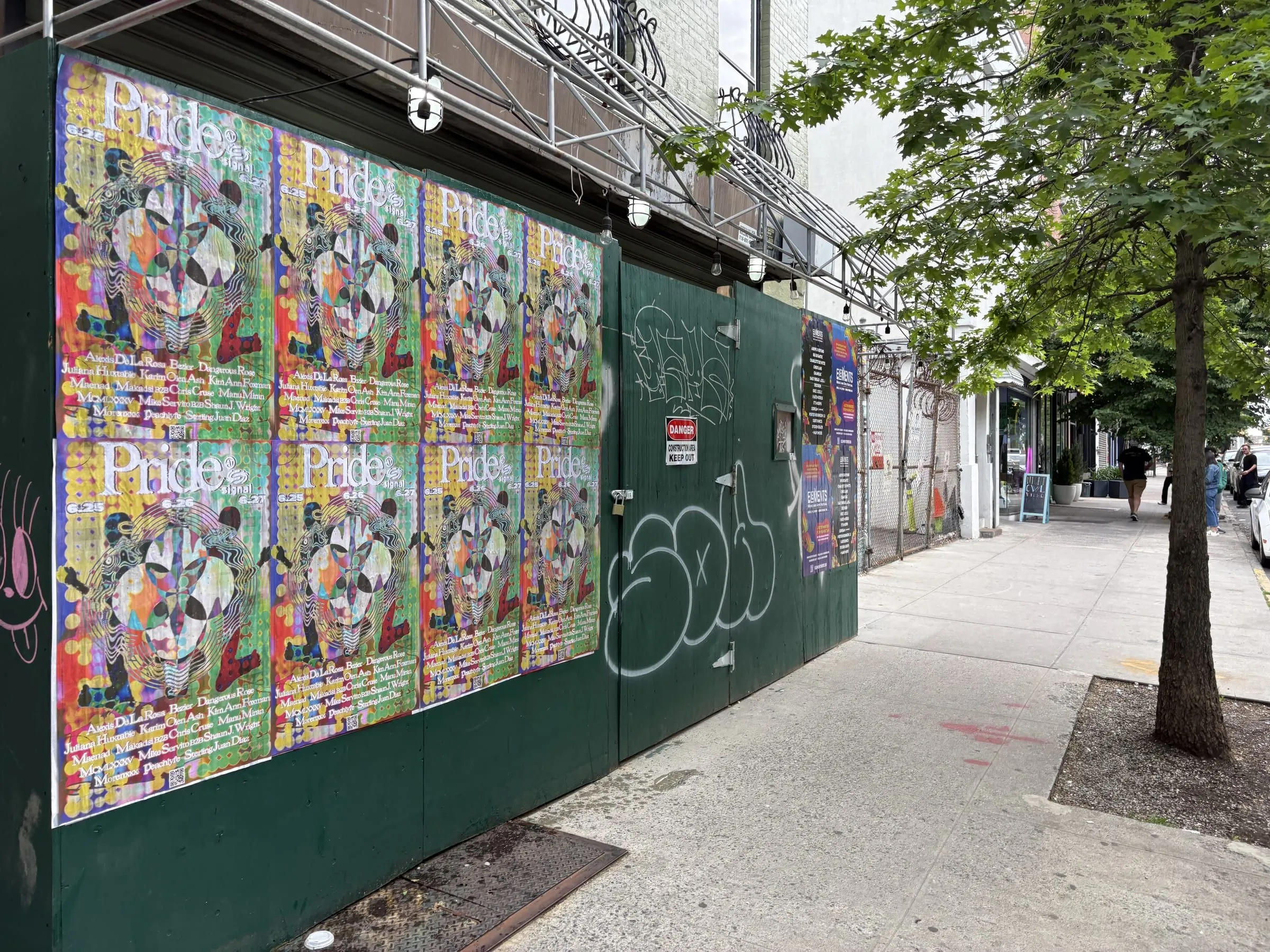
The framework above describes commercial advertising. NYC code treats certain non-commercial speech differently, including political speech, nonprofit advocacy, and certain editorial categories. Specific restrictions vary; some categories have stronger protections, some have additional restrictions (electioneering rules near polling places, for example).
We have run nonprofit campaigns in NYC under the same private-surface-with-consent framework, which is the safest path regardless of category. If your creative is political or advocacy-oriented and you want to understand whether additional rules apply, that is a question for counsel.
What this means for your campaign
If you are a brand considering a NYC wheatpaste campaign:
- Ask any vendor to describe their consent process. A vendor who cannot is a liability.
- Get the consent file before the campaign goes live. Every campaign. Every surface.
- Stay off city-owned infrastructure. No exceptions, no shortcuts.
- Document every install with a photograph. That photograph is the proof that the campaign existed where it was supposed to exist.
This is how lawful guerrilla advertising works in New York. There is no version of it that involves posting wherever the crew feels like and hoping no one notices.
Where this comes from
The framework above traces to NYC Administrative Code § 10-119, which prohibits the posting, and § 10-121, which sets the penalties, both enforced by the Department of Sanitation, applied through Beyond Street Media’s operating playbook for wheatpaste campaigns and paste-up poster campaigns in the five boroughs.
The most reliable primary source is the New York City Administrative Code itself on the city’s official code portal, linked above. Read § 10-119 and § 10-121 together, because one names the surfaces and the other carries the money. For binding application to your creative, ask a lawyer.
For everything else, running an actual campaign that ships in 5 to 7 days with full consent documentation, send us the brief.
Need a compliant NYC campaign? Send the brief: surfaces, neighborhoods, dates, creative status. We respond in under four business hours with a neighborhood-mapped install plan and the consent path on each surface.