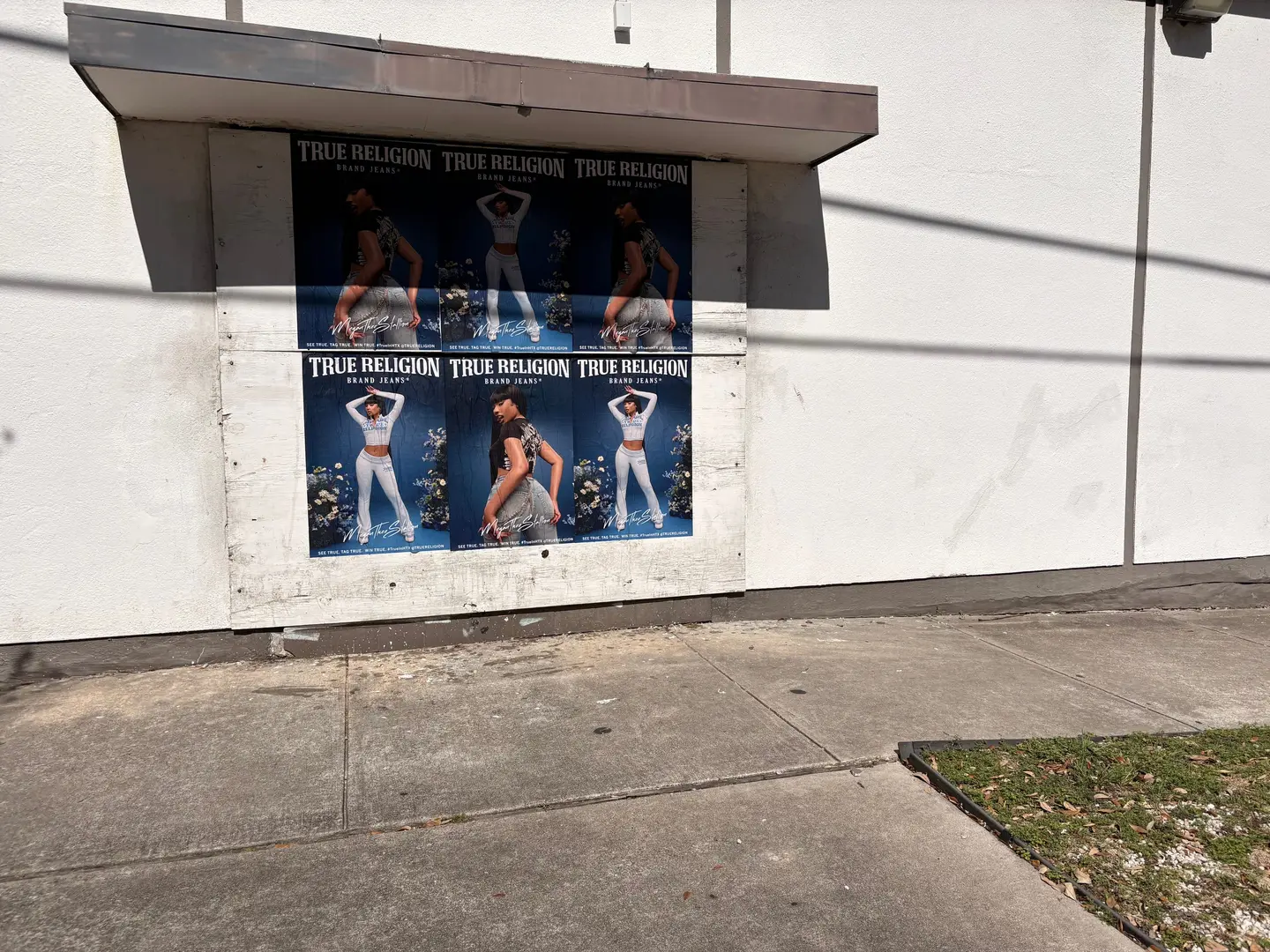
Two words show up in the same brief and buyers assume they are choosing between formats. They are not. Wild posting and wheatpasting describe the same campaign from two different angles, and knowing which angle each one covers makes the quotes you receive easier to read.
The short answer
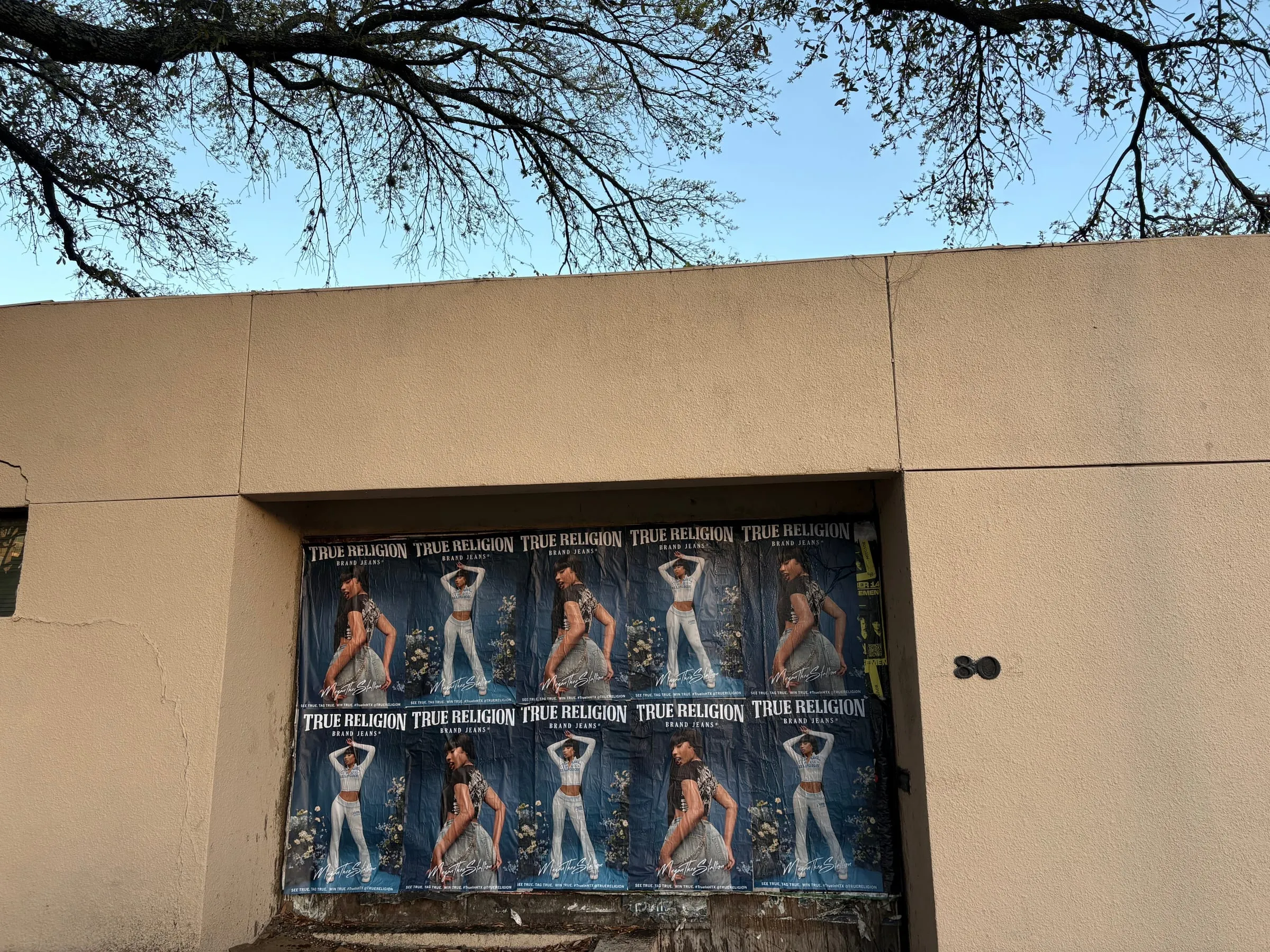
Wild posting names the media pattern. Repeated large-format posters across a walkable corridor, sold on saturation rather than on a single guaranteed impression.
Wheatpasting names the installation method. Wheat paste, a flour-and-water gel, brushed onto a surface to fix paper flat so it dries hard and weathers well.
One is what the buy looks like from a media plan. The other is what the crew does at six in the morning. A wild posting campaign is almost always installed by wheatpasting, which is why the words get used interchangeably and why nobody corrects it.
Where each word comes from
Wheatpasting is named after the adhesive and the name is literal. Flour or starch cooked with water into a smooth gel, brushed on wet, dried hard. The method predates advertising as an industry, and the vocabulary comes from the billsticking trade that produced the post no bills stencils still on hoardings today.
Wild posting is a media-buying coinage. The wild describes what the format was before anyone systematized it: posters going up across a neighbourhood with no audited impression counts and no guarantee any particular sheet would still be there on Friday. The word survived even as the format was permitted, documented, and sold with a photo record. Wild Posting is also a registered trademark held by an outdoor media company, which is why most agencies describe the format instead of branding a service with the phrase. You can confirm the current registration yourself through the USPTO trademark search.
The British equivalent, flyposting, carries the unauthorized implication that neither American term does.
What a campaign actually looks like
Whatever it is called, the shape is consistent.
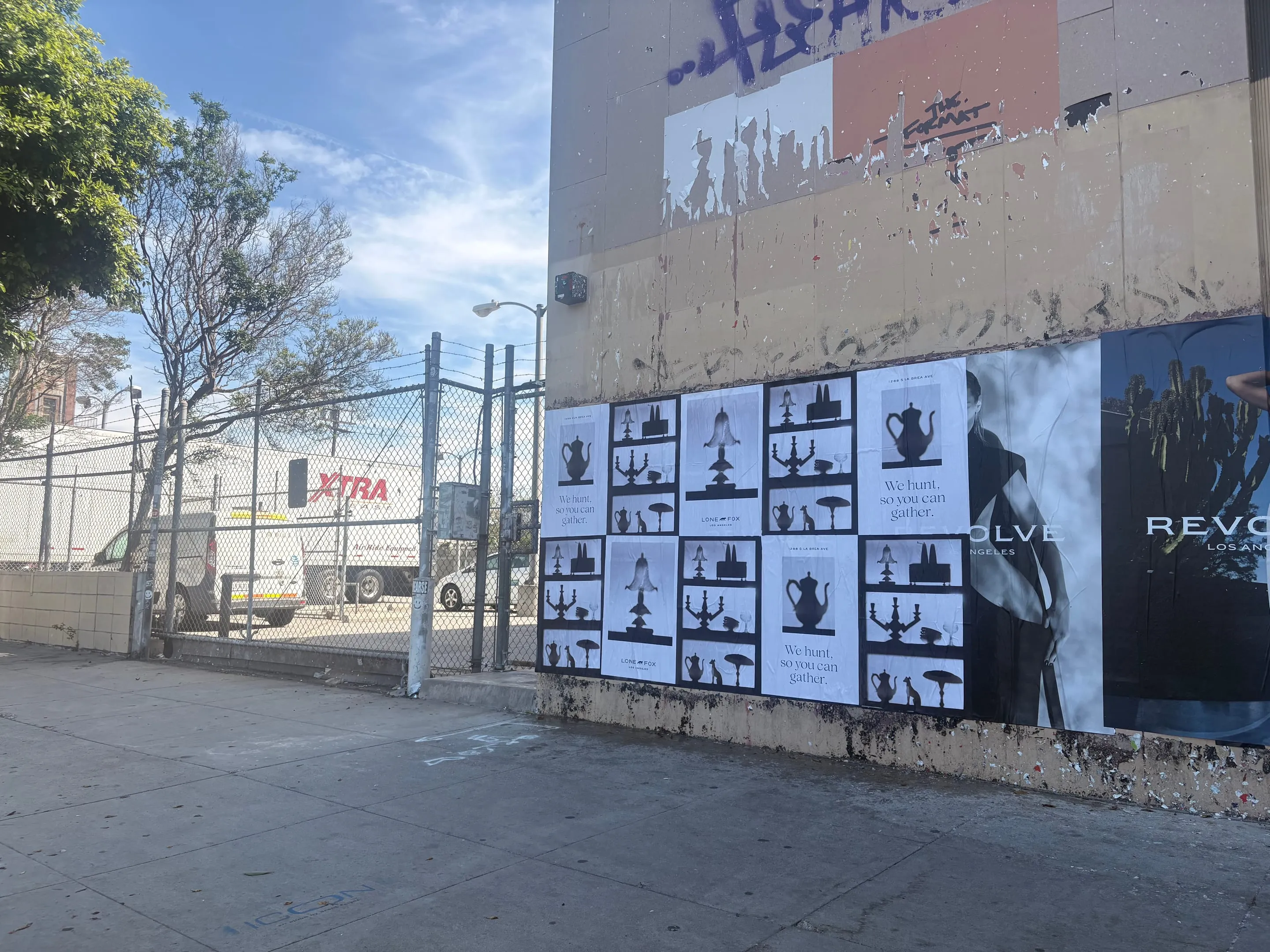
A corridor gets picked, not a city. Placement follows foot traffic on specific blocks, because a poster four blocks off the walking route is a poster nobody reads. The Lone Fox run in Los Angeles worked exactly that way: 204 placements over 28 days concentrated in Silver Lake, Echo Park, and the Highland Park stretch of York Boulevard, because that is where the audience for that brand actually walks.
Repetition does the work. A single poster is decoration. The same image appearing on the fourth wall of a ten-minute walk is a campaign, and it is the repetition that produces the recall the format is bought for.
Surfaces are secured before anything is printed. Hoardings from the developer, scaffold boards through the scaffolding company, shutters and blank walls from the property owner, each in writing.
The run gets documented. Every placement photographed with its location on install day, which is what turns a poster campaign into something a brand can report on internally.
What it costs
Published floors, printing and installation included:
- Wheatpaste poster campaign: from $3,500
- Snipe poster campaign: from $3,000
- Sidewalk stencils: from $2,500
- Floor graphics and decals: from $4,000
We publish floors rather than a single fixed number because the brief moves the quote. What moves it is placement count, how many neighbourhoods the run covers, and hold length. Expedited turnarounds add 80 to 150 percent, because a compressed schedule means overtime crews and rushed print.
What should never be a line item is the consent work. If a quote comes in materially below these floors, the saving is usually the permission and the documentation, which transfers the risk to the brand at no charge and no disclosure. The full breakdown is in how much a wheatpaste campaign costs.
Poster sizes and the texture question
The street standard is 24 by 36 inches for a single sheet. Multi-sheet builds tile several panels into one large piece for a hero wall, which is how a full brick facade gets covered without a printer capable of a single sheet that size.
The texture people ask about is a consequence of the method. Paper laid wet takes the surface underneath it, so mortar lines telegraph through, edges lift a little as the paste cures, and layers build where a wall has been re-postered over a season. Brands sometimes ask to eliminate it. Most, once they see the wall, want it kept, because that handmade read is the entire reason the format lands differently than a printed vinyl banner.
Which word should you use
Use whichever your team already uses. If you are briefing a media agency, wild posting will be understood as the media line. If you are briefing the crew who will install it, wheatpasting describes what they are actually doing.
What matters more than the vocabulary is the question underneath it: which surfaces are permitted, who signed, and will you get a photo of every placement. That question separates operators regardless of what the format is called on the invoice.
For the legal detail, is wheatpasting legal? covers the rule by surface, and wheatpaste laws, state by state covers the statute detail. City ordinances are public, and most are published on the Municode library if you want to read the one governing your market. New York shows the usual split: Administrative Code 10-119 for city property and street furniture, and Penal Law 145.30 for posting on property belonging to someone else. To run one, see wheatpaste advertising.
Pricing reflects our published 2026 floors. For a specific brief, send it over and a scoped quote comes back inside 24 hours.