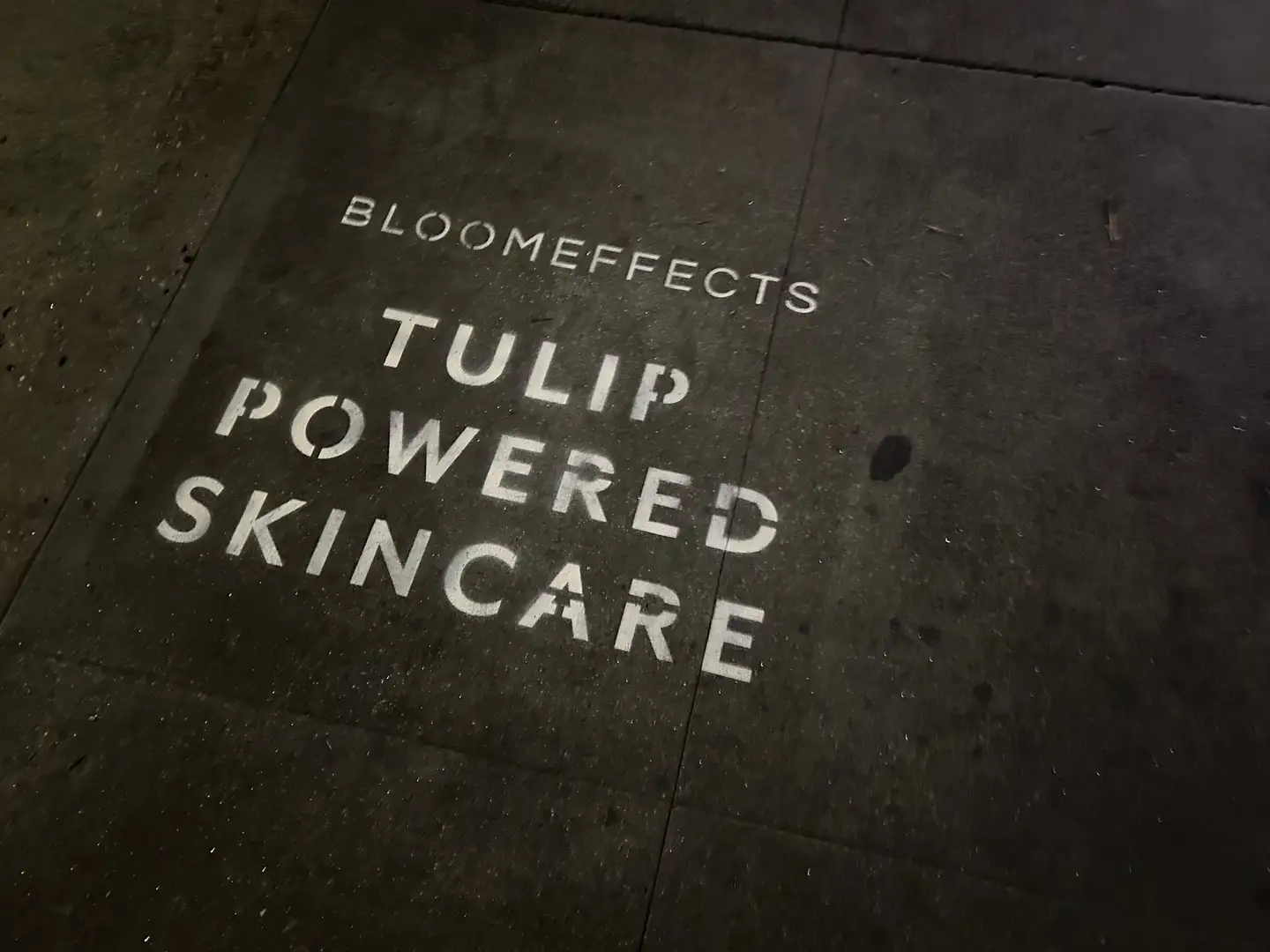
Bloom Effects Sidewalk Stencil Campaign NYC
9 sidewalk stencils in SoHo, Lower East Side, and Williamsburg. Bloom Effects' tulip-powered skincare brand printed onto Manhattan pavement for 28 days.
- Placements9
- Duration28d
- FormatSidewalk Stencils
- Documented16install photos on file
Two stencil techniques on the same pavement.
Bloom Effects sells skincare powered by tulip seed oil. The brand philosophy is botanical, minimalist, direct. The campaign needed to plant that simplicity into New York's skin-care-obsessed neighborhoods, the blocks where makeup artists, model agents, beauty editors, and dermatologists walk daily. Sidewalk stencils work at the pavement level, at the moment when pedestrians move through space on autopilot. A mark on the concrete stops that autopilot. Seven placements across SoHo, Lower East Side, and Williamsburg's highest-volume pedestrian blocks. Twenty-eight days for the stencil to register in repeat foot traffic, build social velocity, and decay at the pace dictated by winter weather and street wear.
Bloom Effects is a direct-to-consumer beauty brand built on tulip-seed-oil actives.
No marketing speak. The product works. The customer is the person who reads skin-science articles, tests active ingredients against product claims, and buys based on efficacy, not influencer endorsement. Bloom's NYC market concentrates on SoHo (creative class + designer beauty buyers), Lower East Side (young professionals, early adopters), and Williamsburg (fitness-culture aesthetes, younger beauty buyers with money).
The assignment: announce the brand into neighborhoods where the customer already lives. Don't chase them through paid social. Put the mark on the pavement. They'll see it on the way to the coffee shop, the dermatology appointment, the boutique gym. The pedestrian in these neighborhoods passes the same blocks daily. Frequency builds recognition without shouting.
Sidewalk stencils read as genuine marker, not a commercial interruption, but proof someone cared enough to paint the pavement. Bloom's minimalist brand aesthetic aligned perfectly with stencil simplicity. One mark. One color. One message. The pavement amplifies the product's quiet confidence.
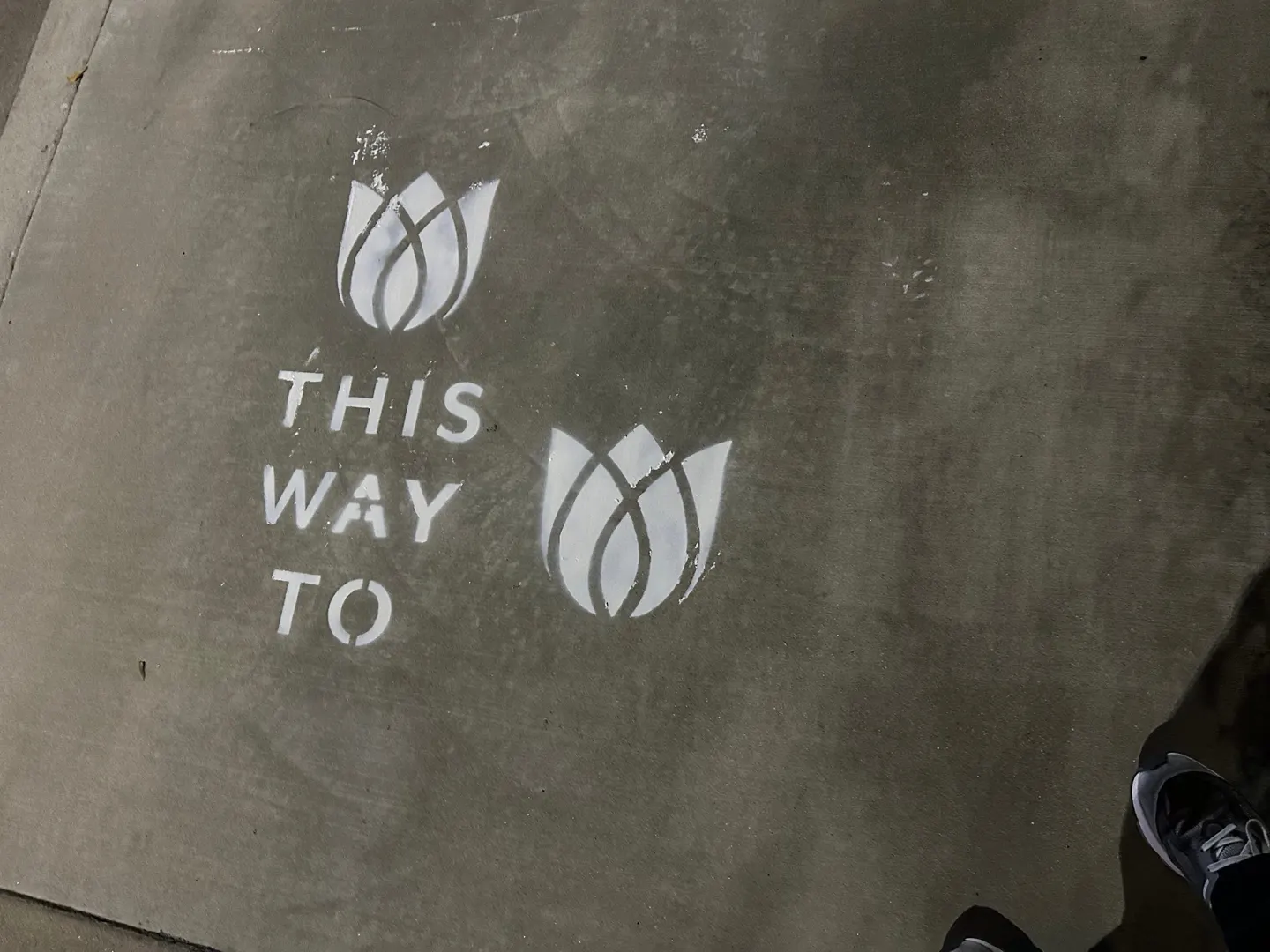
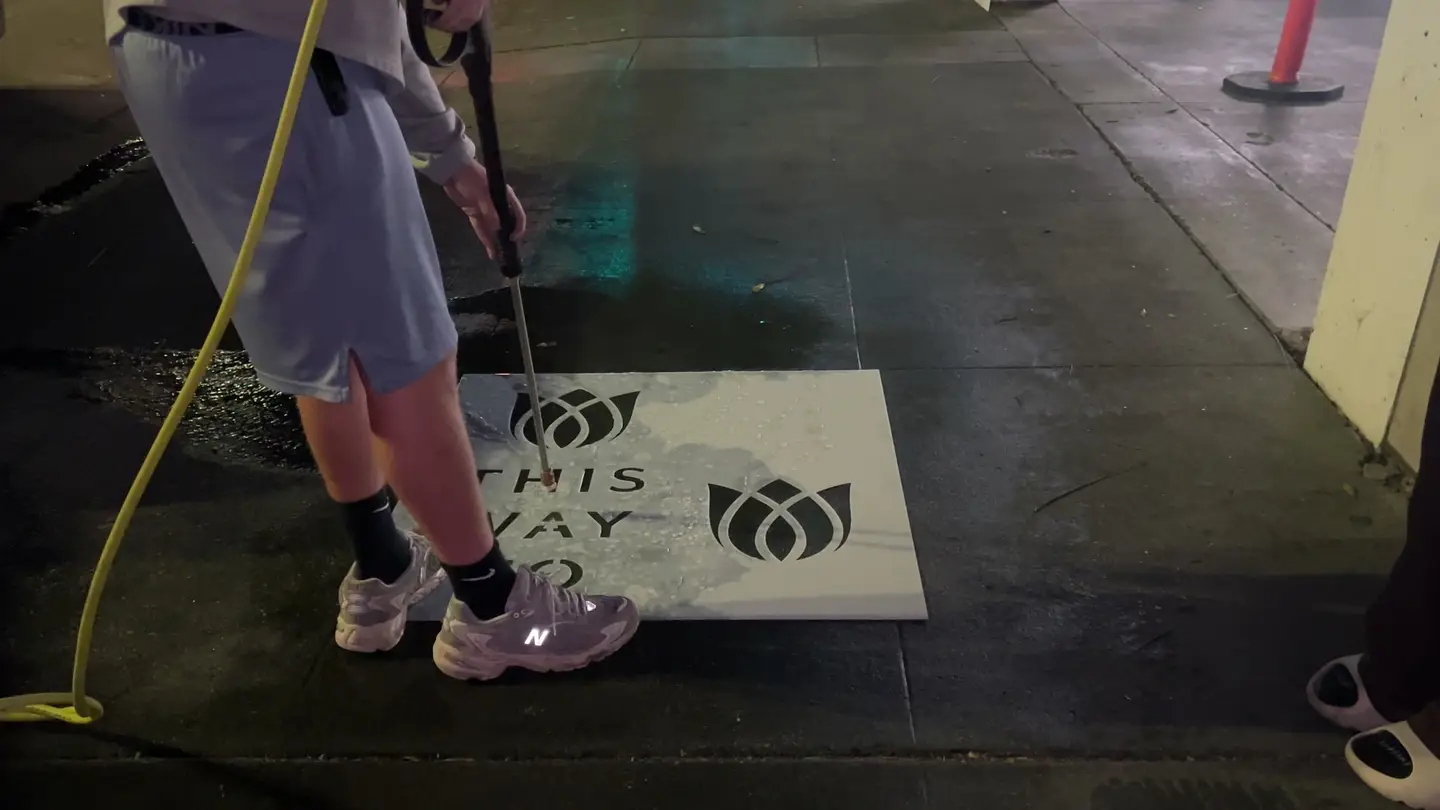
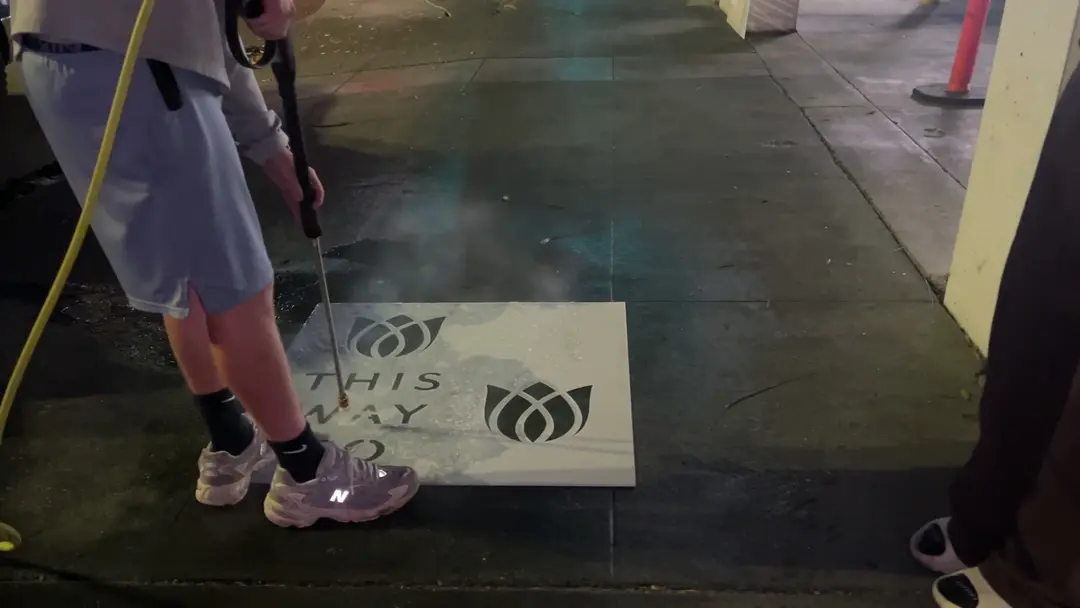
The tulip trail, up close.
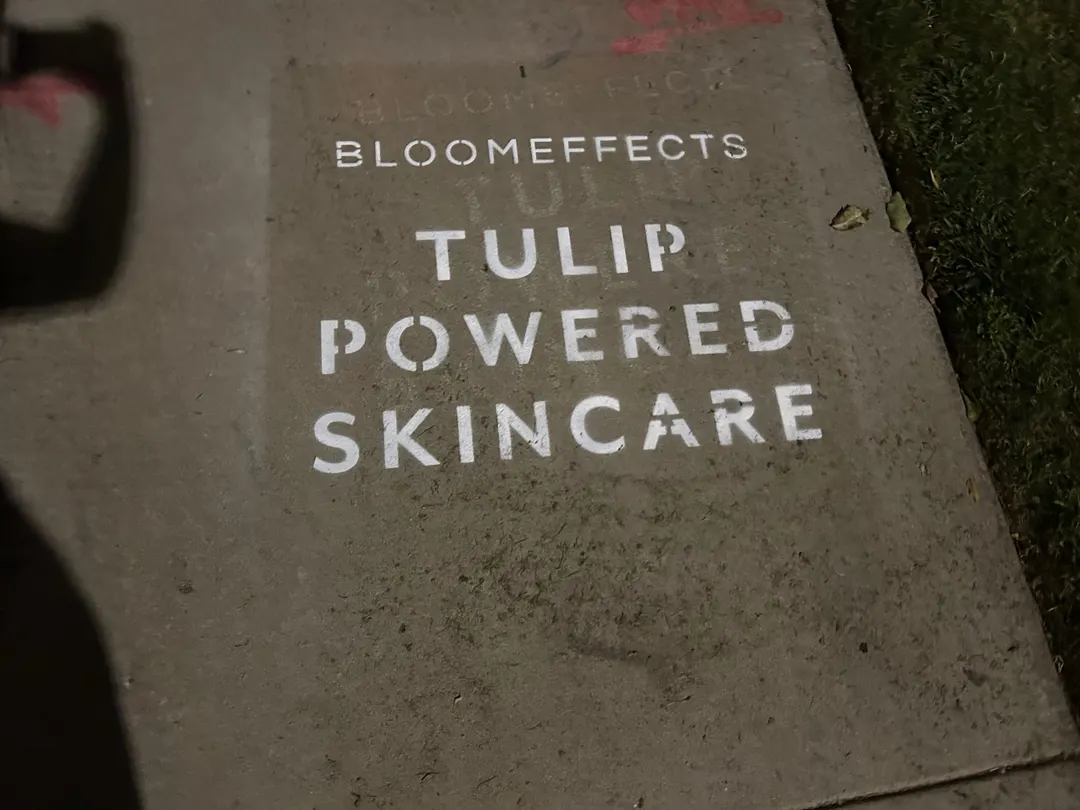
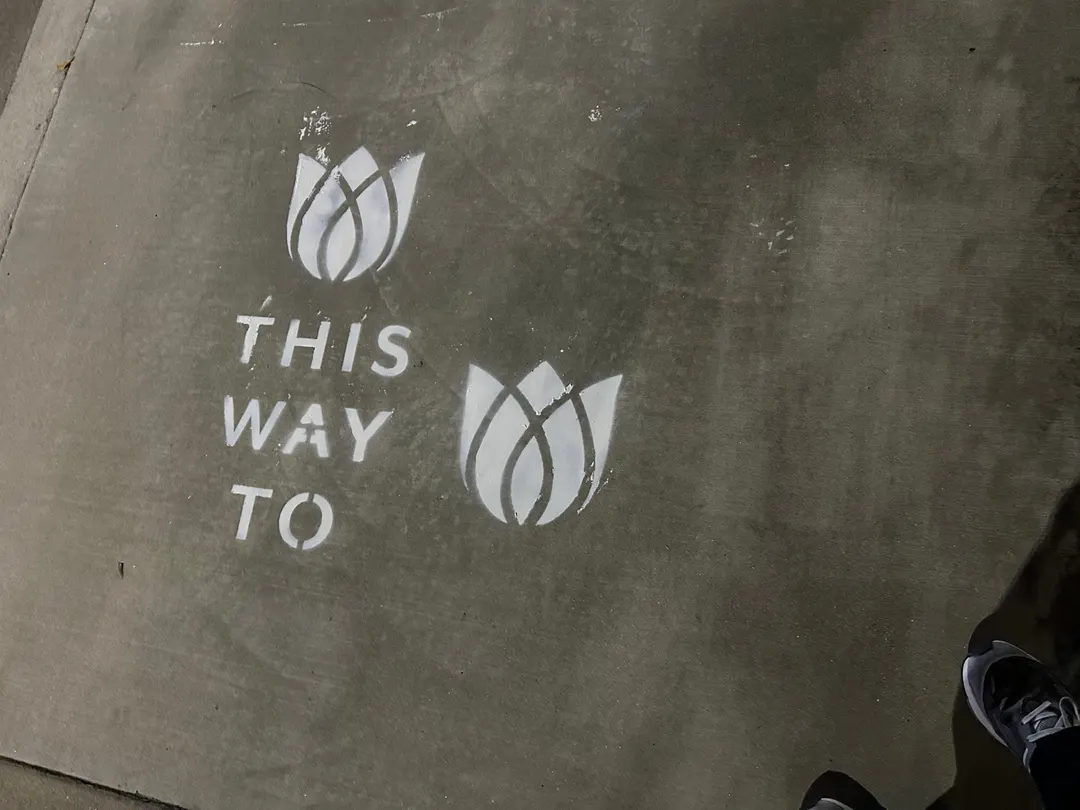
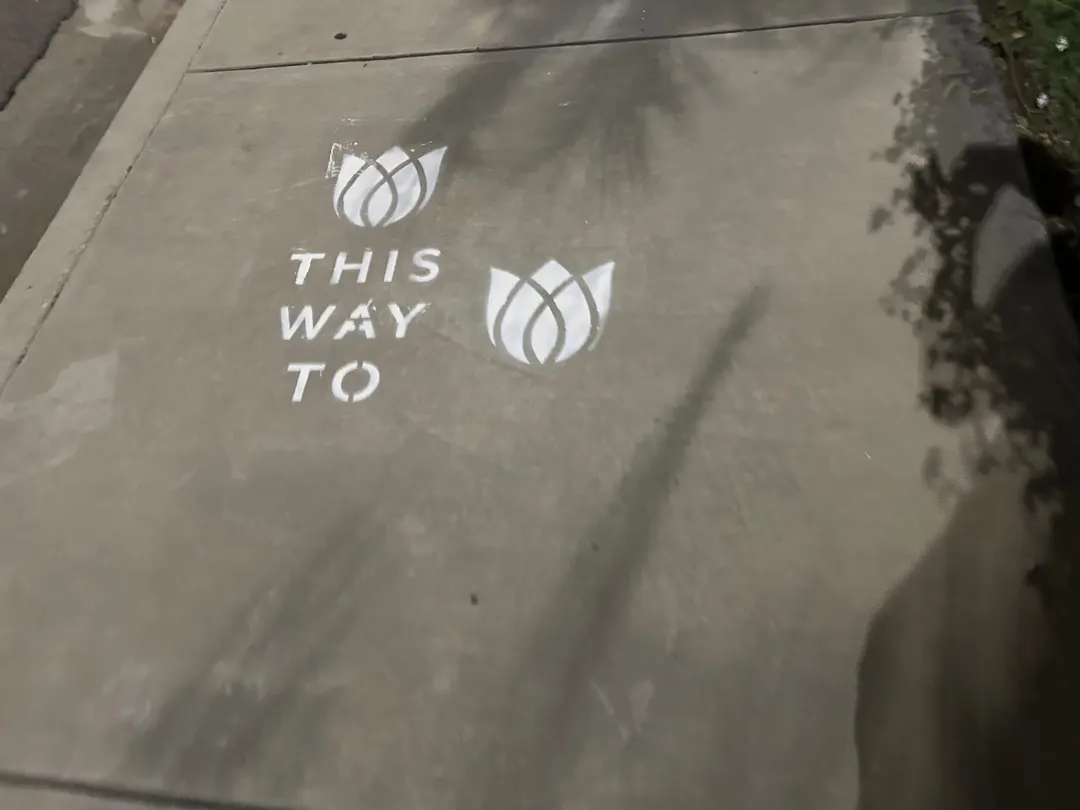
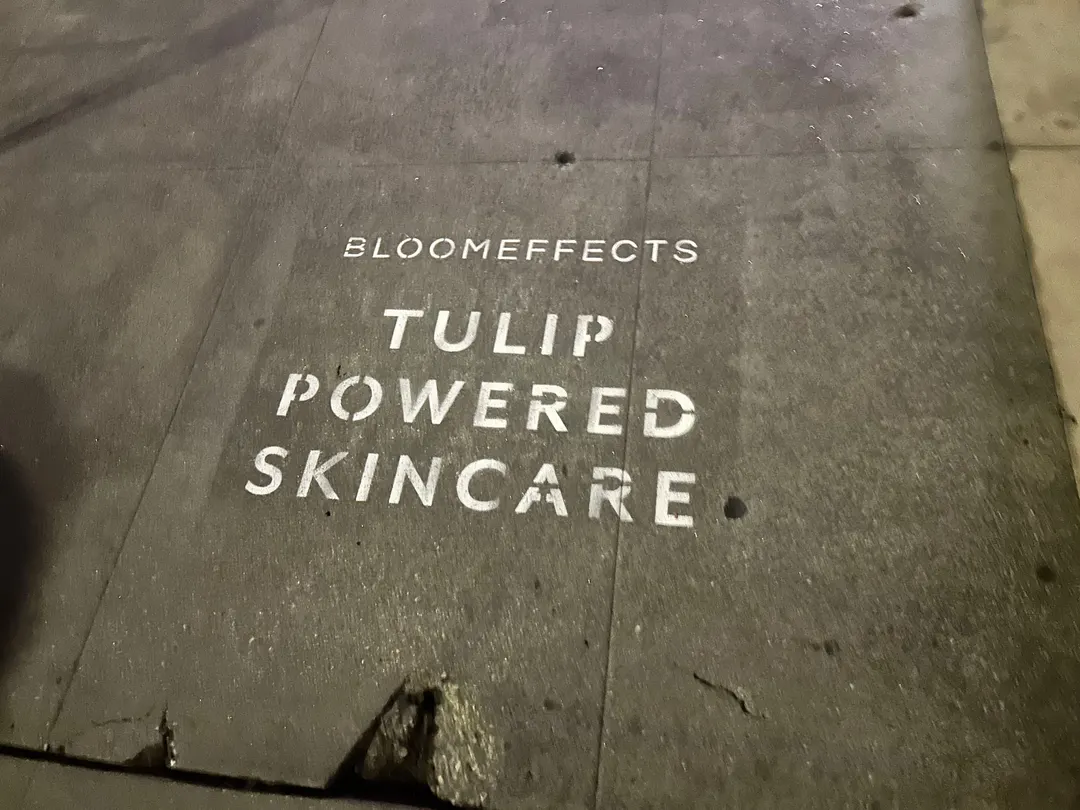
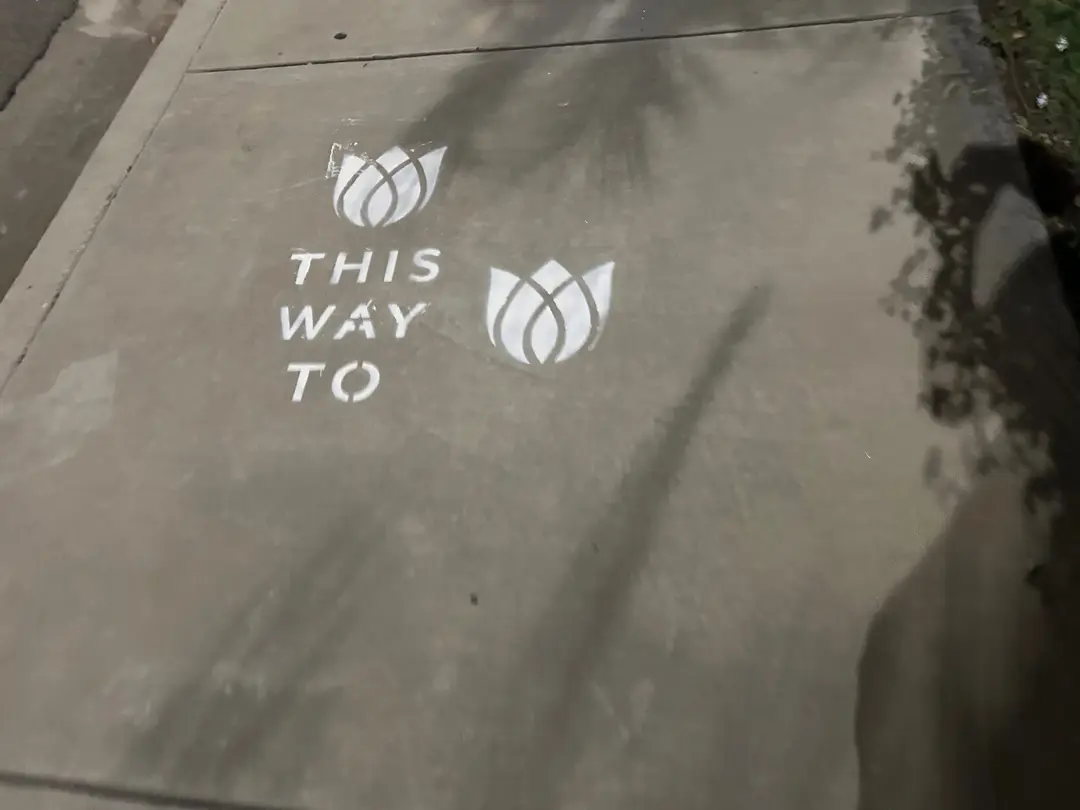
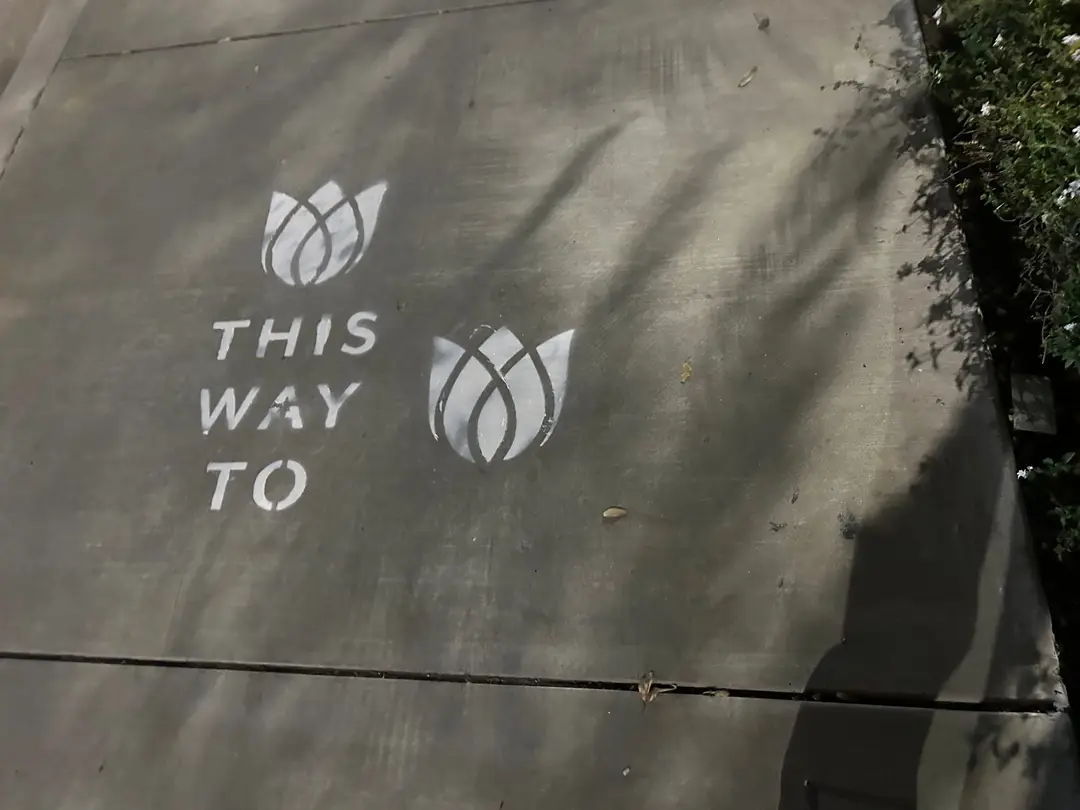
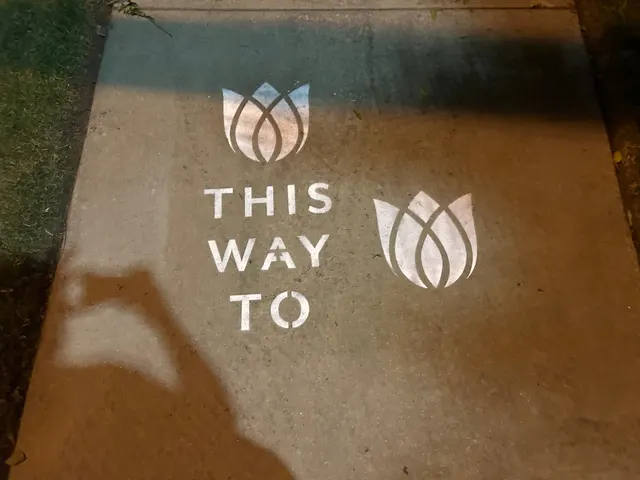
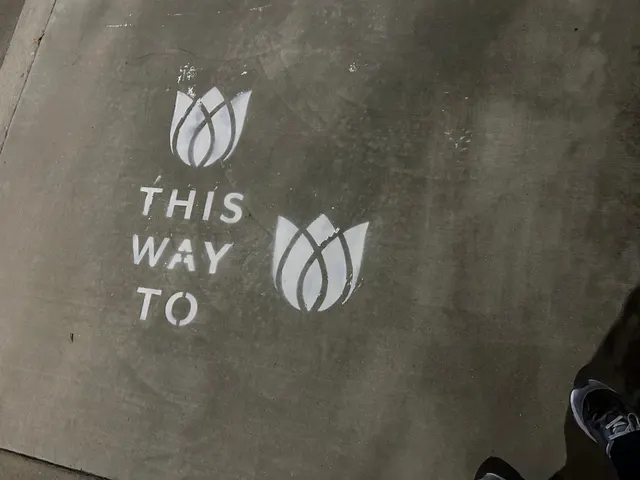
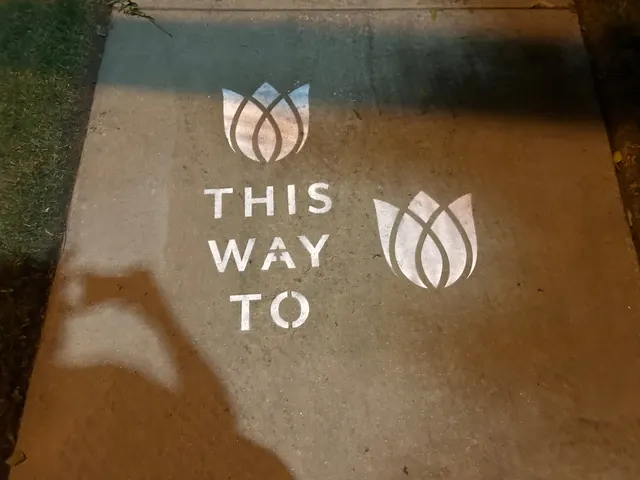
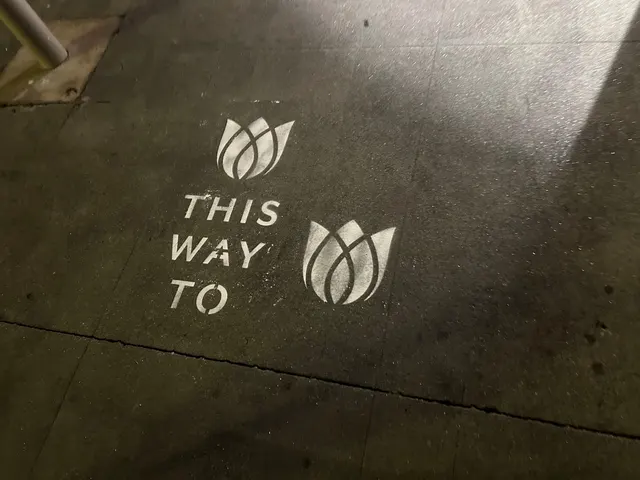
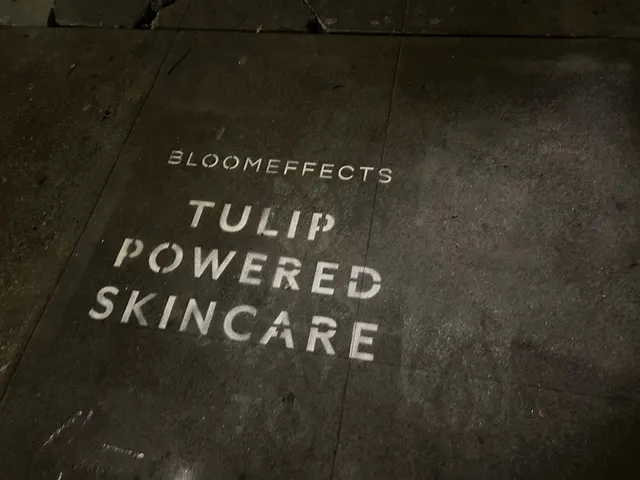
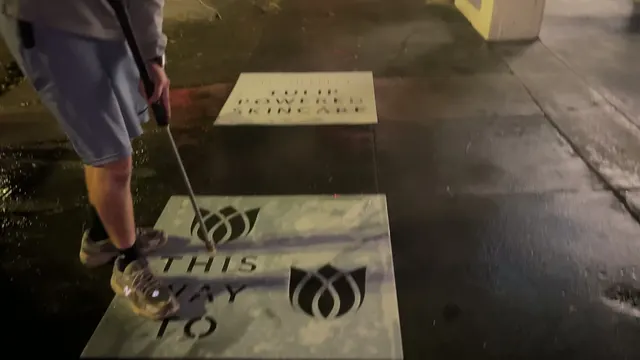
Nine sidewalk stencils across SoHo, the Lower East Side, and Williamsburg, live on the pavement for 28 days. The directional 'This way to' marks walked passersby toward the brand while the full product message held the anchor corners.
Where we ran it.
SoHo, the south-of-Houston commercial heart, holds art galleries, design studios, high-end beauty retailers, and dermatology offices clustered on Prince, Spring, and Broadway. That foot traffic is designer-educated, ingredient-aware, willing to experiment with skincare.
Lower East Side, east of the Bowery, north of Grand, pulls younger professionals, early-stage founders, and artists-turned-entrepreneurs. The neighborhood's gentrification brought boutique fitness, farm-to-table restaurants, and indie beauty retailers. Sidewalk stencils on Orchard, Allen, and Ludlow fit the neighborhood's DIY ethos.
Williamsburg. North 4th to North 12th, Bedford to Kent, concentrates young professionals, startup founders, and fitness-culture aesthetes. The neighborhood's foot-traffic volume rivals Manhattan's commercial zones. Three stencils on Bedford and two on North 6th captured the highest-volume pedestrian corridors in the borough.
The run used both stencil techniques.
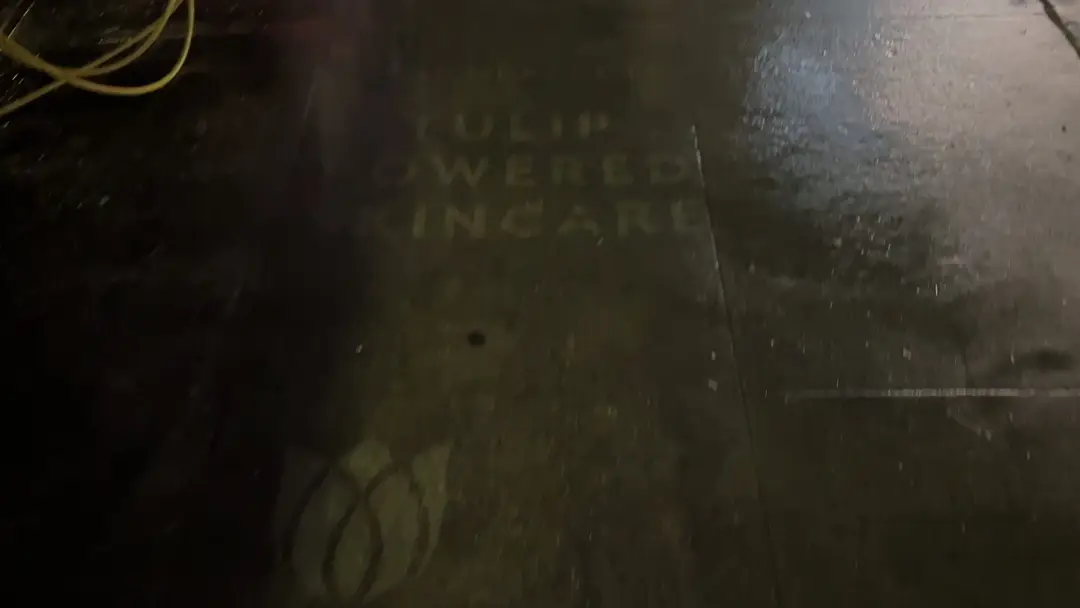
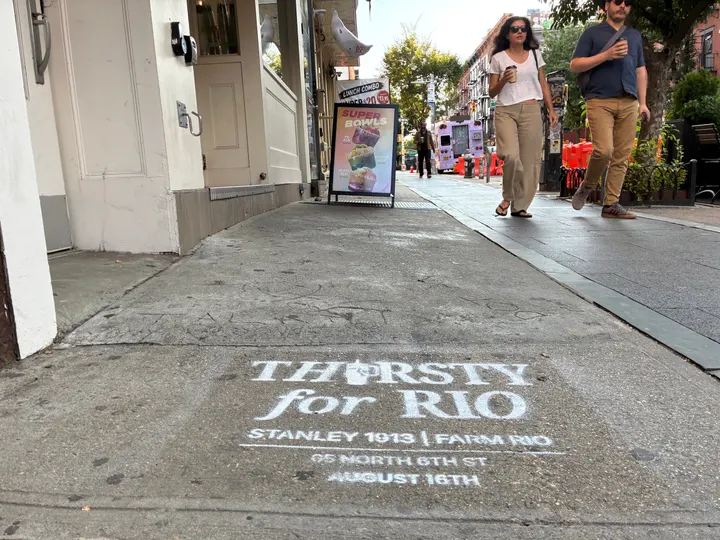
Most placements went down in a custom white compound paint, picked to hold against salt, foot traffic and a February weather cycle, and to read as a marker rather than as signage against grey concrete. The rest were cut as reverse stencils, pressure-washed through a mask so the mark is exposed clean concrete and nothing is added to the surface at all. Single creative across both: the tulip motif, the line "Tulip Powered Skincare", and a social handle.
Creative decision: no product imagery, no price, no long-form copy. The stencil's power lives in simplicity. Pedestrian sees tulip mark. Registers it as intentional. Googles or follows the handle out of curiosity. That transition, pavement mark to digital research, is the entire funnel.
Service: Sidewalk Stencil Advertising
Installation began February 18.
NYC winter conditions became the primary variable. Sidewalk stencils require dry pavement, light ambient temperature (above 50°F ideally), and 4-6 hours of dry conditions post-application for paint cure. Winter introduces complication: salt trucks, freeze-thaw cycles, inconsistent precipitation, and pedestrian traffic density that varies by hour and neighborhood.
Two-person crew. Pre-install survey of all nine locations verified surface condition, foot-traffic patterns, and installation timing. Stencil placements chosen for balance: visible enough for notice (corner block, high foot traffic), but not so obvious as to trigger rapid pressure-washing removal by BID maintenance or property managers.
Installation windows timed for late morning (10 a.m. - 1 p.m.) and early evening (4 p.m. - 6 p.m.). Morning installs captured dry pavement after rush-hour foot traffic ended and before lunch-hour volume began. Evening installs caught the period after afternoon rain cleared and before dinner-hour crowds arrived. 28-day window allowed flexibility for weather delays.
One snow day (February 22) halted installation and triggered a 48-hour hold on two remaining Williamsburg placements. Stencils applied to snow-covered pavement won't adhere correctly, the paint sits on top of ice crystals rather than sealing to concrete. Crew postponed to February 25 after the melt cycle completed. All seven placements finished by day 10, leaving 18 days for observation and documentation.
Foot-traffic observation showed Bloom's target buyer moves through these neighborhoods predictably. Morning commuters on the LES. Midday creative-class workers in SoHo. Evening fitness-culture pedestrians in Williamsburg. Stencil placement at eye-drop level (where pedestrian eyes naturally shift when walking) captured attention on repeat routes. By day 7, Instagram and TikTok organic mentions showed NYC-based beauty creators tagging locations and sharing stencil photos. Social velocity built from ground-level visibility.
9 stencils photographed post-installation.
GPS coordinates logged for all locations. Each photo captured pavement condition, stencil color fidelity, surrounding context (commercial/residential, pedestrian volume), and date/time stamp. Documentation began day 1 (immediately post-install) and continued every third day through the 28-day window to show stencil decay over time.
The stencils sat directly on the walking routes to the target retailers, the kind of placement that invites a phone photo and a neighborhood tag. The pavement mark was built to convert into digital word-of-mouth across local beauty communities.
Decay tracking proved interesting. Sidewalk stencils on high-foot-traffic blocks (Lower East Side north of Delancey, Williamsburg Bedford corridor) showed visible wear by day 21. Salt trucks and foot traffic chipped the paint edges. By day 28, all seven stencils remained legible, but three showed 40%+ wear. That decay timeline aligned perfectly with Bloom's campaign duration target. The stencil lifespan matched the campaign arc.
Sidewalk stencil campaigns depend entirely on placement precision.
A stencil in the wrong neighborhood reads as random graffiti. A stencil in the right neighborhood reads as intentional brand messaging. The difference is not the stencil, it's the foot-traffic context.
Bloom Effects' target buyer concentration made neighborhood selection the deciding factor. SoHo's designer-educated demographic, Lower East Side's early-adopter concentration, and Williamsburg's fitness-aware younger professionals all clustered tight. Three neighborhoods, seven placements, no wasted locations.
Timing against weather was the secondary variable. NYC winter creates uncertainty. March conditions might bring late snow, salt spreads, or rapid precipitation cycling. The crew built 10-day buffer into the 28-day window specifically for weather delays. Finished installation by day 10, allowing 18 days of pure observation and organic social velocity accumulation.
Sidewalk stencils in high-foot-traffic beauty neighborhoods work because they read as authentic marker, not commercial disruption. Bloom Effects' minimalist brand philosophy aligned with the format's inherent simplicity. One mark. One color. One message. The pavement becomes the medium. The pedestrian becomes the audience. The social tag completes the circuit.
This is proof that street-level visibility converts to digital engagement when the format, neighborhood, and brand philosophy align perfectly.
Can sidewalk stencils go down in winter?
They can, with buffer built into the schedule. Install started February 18 and needed dry pavement and four to six hours of dry conditions afterward for cure. A February 22 snow day put a 48-hour hold on two Williamsburg placements, which went in February 25 once the melt cycle finished. All nine were finished by day 10 of the 28-day window, which left 18 days for observation and documentation.
What is the reverse stencil in the video?
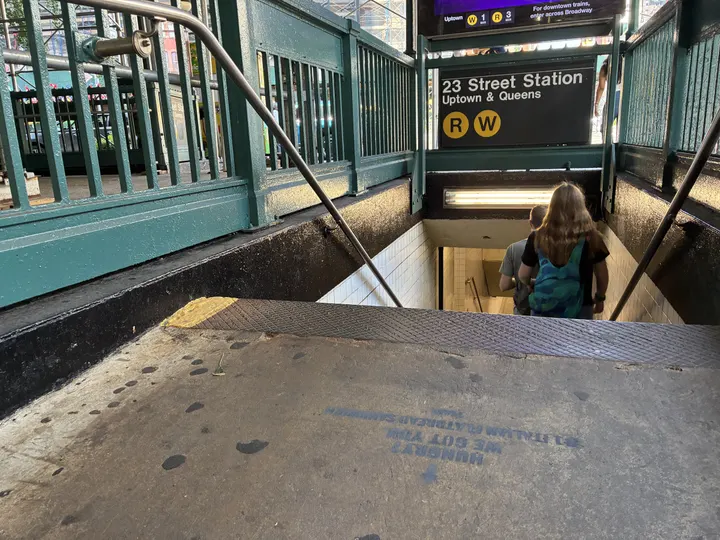
A reverse stencil is cut by running a pressure washer through a mask laid on grimy pavement, so the mark is the clean concrete underneath and nothing is added to the surface. It holds for 2 to 6 weeks, fading as the surface re-soils. This campaign ran both methods. The painted placements use a white compound picked for contrast and neutrality; the washed placements add no material to the sidewalk at all, which is the version to reach for when a property manager or a BID wants nothing applied to their pavement.
Why three neighborhoods rather than one?
Because the buyer moves through all three on different clocks. SoHo runs midday on the creative-class and beauty-retail blocks, the Lower East Side runs on the morning commute, Williamsburg runs in the evening on Bedford and North 6th. Anchor corners held the full product message and the directional marks walked people toward it. Concentration inside each neighborhood does more than thin spread across a city.
How do you track wear across a 28-day window?
Documentation starts the day of install and repeats every third day, so decay is on record rather than estimated. On this run visible wear showed by day 21 on the heaviest blocks, where salt trucks and foot traffic chip the paint edges. At day 28 all seven were still legible and three showed 40 percent or more wear. Each frame logs pavement condition and color fidelity alongside the surrounding context, with GPS locked at install.
---
Documented by the Beyond Street Media field team, 2026-05-13
6 additional installs.
Run a sidewalk stencil advertising campaign?
Same crew, your brand.
The same operator network that shipped Bloom Effects's campaign is on call for yours. Brief us with city, dates, and creative. Quote back in 4 hours.
Run a campaign like Bloom Effects's?
Get a quote