You see it stencilled in white on the plywood around every construction site: POST NO BILLS. It means what it says. No posters on this surface.
The odd word is bill. It comes from the Latin bulla, a sealed document, and by the 1500s an English bill was any printed public notice pinned up in a town square. The people who pasted them up were billposters, and billposting became the first outdoor advertising industry in Britain and America. The word survives in billboard, and in this sign, long after anyone stopped calling a poster a bill.
Does the sign carry legal weight?
Not by itself. This is the part most people get wrong.
The sign is not a law. What makes posting illegal is the property right or the municipal code underneath it. On private property, the stencil is the owner withdrawing permission, which puts posting into trespass or local vandalism ordinance. On city-owned infrastructure — utility poles, signal boxes, transit property — the prohibition already exists in code whether or not anyone painted anything.
So the sign announces a rule that lives somewhere else. Ignoring it still carries consequences; the words just are not the source of them. We cover how that plays out market by market in is wheatpasting legal and the state-by-state breakdown.
What it means if you are the advertiser
A wall that says POST NO BILLS is not off-limits to you. It is off-limits to strangers.
The owner who put up that sign can grant a specific yes to a specific advertiser, and that is precisely how legitimate construction hoarding campaigns and scaffold wraps run. Written consent, a scheduled install, a documented placement. The sign and the campaign are not in conflict; one is a default and the other is an exception the owner chose.
What you cannot do is read weak enforcement as permission. Every campaign we run carries the owner’s written consent before anything is mixed, which is the whole reason we have zero municipal removals on record since 2019.
Why the sign mostly does not work
Walk any arts district and you will find POST NO BILLS buried under six layers of paper.
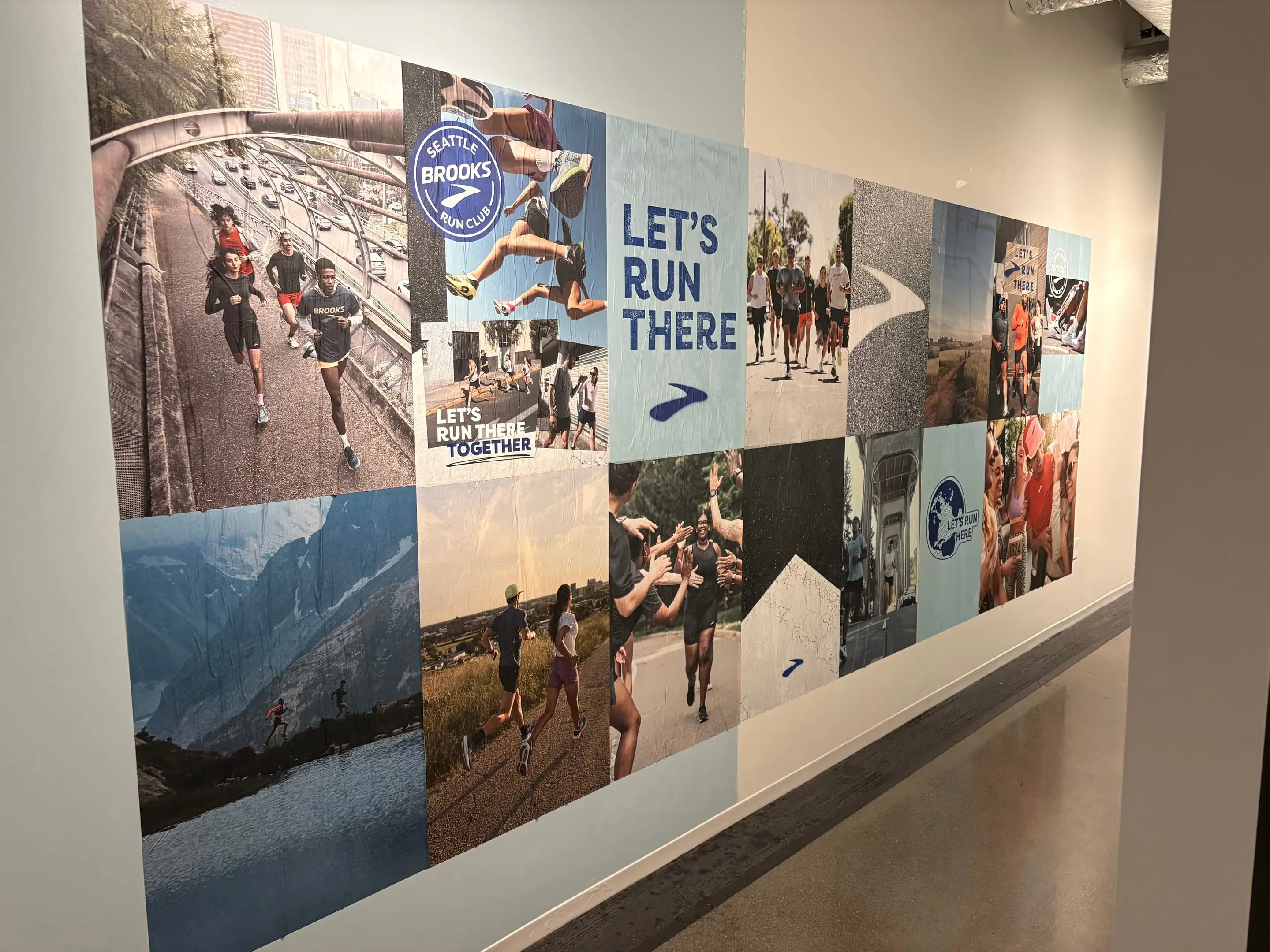
A blank or boarded wall reads as available no matter what is stencilled on it. Paint does not change that; occupancy does. A surface covered edge to edge in a brand’s own artwork, visibly maintained, stops attracting strays — we watched exactly that happen on a San Francisco frontage that had been a default posting spot for years, documented in the case study.
That is the useful insight buried in a piece of 19th-century signage: the way to control a wall is to use it.
Related reading
The street advertising glossary defines the rest of the vocabulary — flyposting, snipes, paste-up, wild posting. What is wheatpasting covers the method itself.