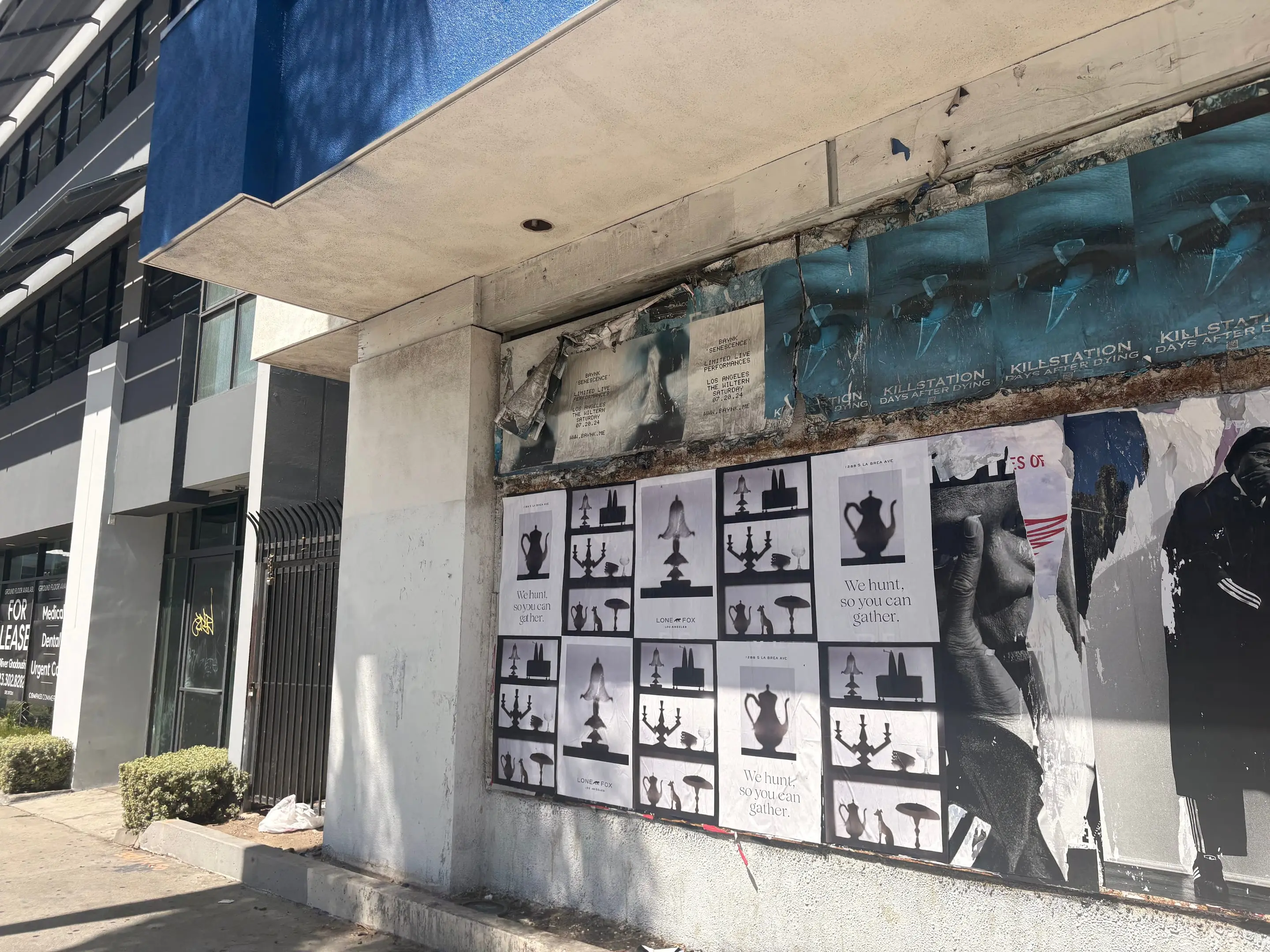
Flyposting is the British word for putting posters up on street surfaces. Same act as American wheatpasting; different word, and a different implication.
The connotation is the whole difference
In UK usage, flyposting generally means posters put up without permission — the classic gig-poster and club-night flood on hoarding and shutters, done at night, nobody asked. The American term, wheatpasting, names the flour-and-water adhesive instead, so it describes a method rather than an attitude.
The word itself carries the meaning: fly in the old sense of “on the fly,” done fast and without stopping. Same root as fly-tipping for illegal dumping.
Is it illegal?
Unauthorised flyposting in the UK is an offence under the Town and Country Planning Act 1990, and councils treat it as environmental nuisance with fixed penalty notices attached.
But note precisely what makes it an offence: the absence of consent, not the paper. A poster on a private surface with the owner’s written permission is ordinary advertising in Britain exactly as it is in the United States. The legality question is identical on both sides of the Atlantic even though the vocabulary differs — we cover the American version in is wheatpasting legal.
If your brief says flyposting
You are looking for wheatpaste advertising. Same discipline, run with documented owner consent, GPS-stamped photos on every placement, and no public infrastructure touched.
The glossary sorts the rest of the terminology, including snipes, paste-up, and why “wild posting” is a trademark rather than a category.