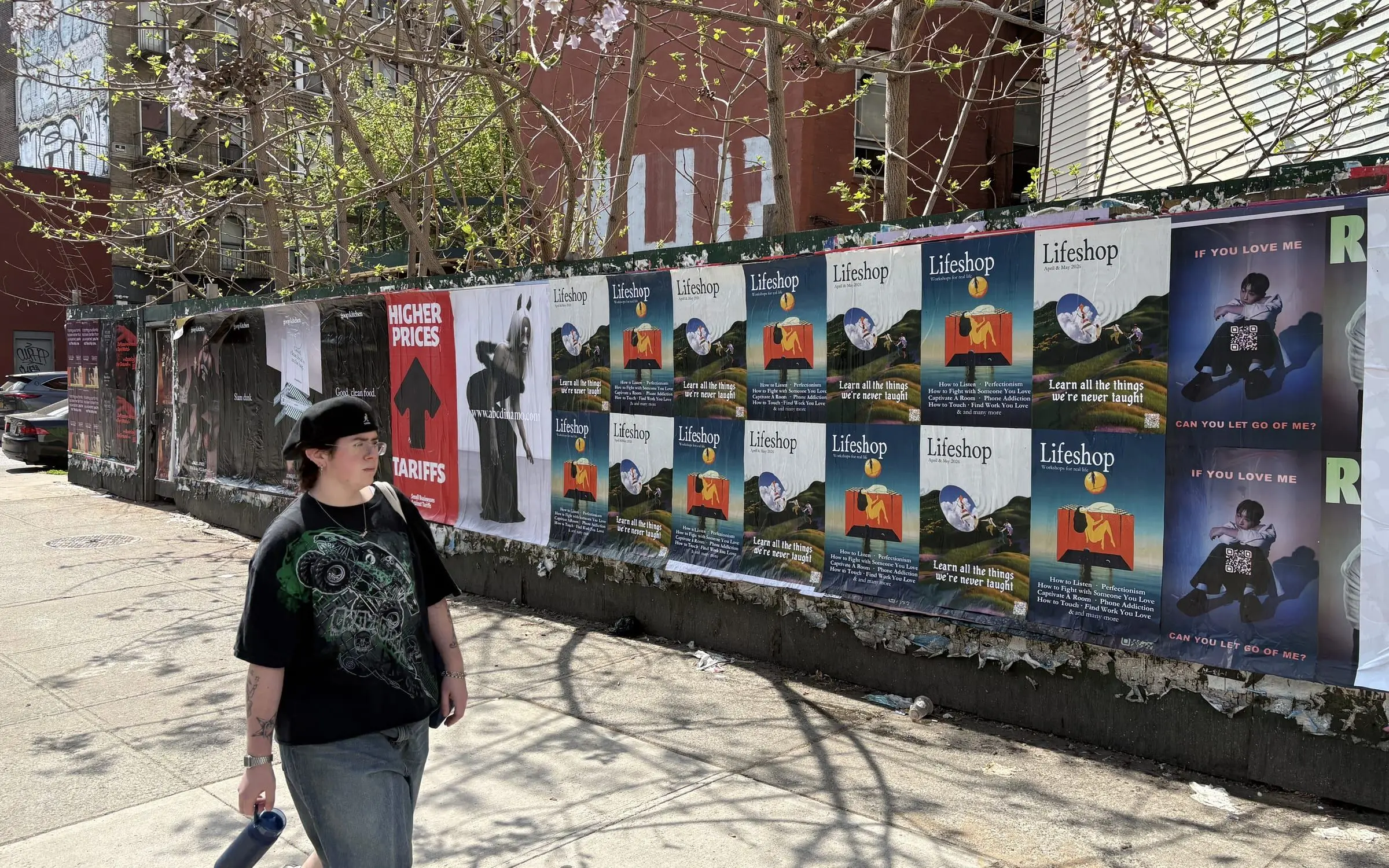
A snipe poster is a small weatherproof poster — usually 9x12 or 11x14 inches — posted in high repetition along a corridor.
You have walked past a hundred of them. Poles, barriers, construction fencing, scaffolding: the same image six times in three blocks, on the approach to a venue or down a retail strip. That repetition is not sloppiness. It is the format.
Small on purpose
A snipe has about two seconds of attention as someone passes a pole. So the creative is one image and one line, not a layout. The stock is water-resistant so the panel survives weather without lamination, and the small footprint is what makes volume affordable — you are buying twenty placements, not one.
Frequency instead of scale
This is the real distinction from wheatpaste advertising.
A wheatpaste campaign buys one dominant surface: a large wall, sheets pasted flat, seen once but seen big. Snipe advertising buys a route: small panels in volume so the audience meets the message repeatedly on a single walk. Different mechanics, different briefs.
Venue approaches, festival routes, product launches in a walkable district, and the blocks around a construction site are where snipes outperform. Campaigns often run both — snipes to build the approach, a paste-up wall to land it.
What it costs
Snipe campaigns open at $3,000 with printing and installation included, covering a defined corridor in one market. Route length, poster count, and refresh cadence move it. The full rate card is public, and the cost guide breaks down what drives the number.
Adjacent formats worth knowing: pole stickers work the same corridor logic at the walk-signal wait, and the glossary defines the rest of the vocabulary.