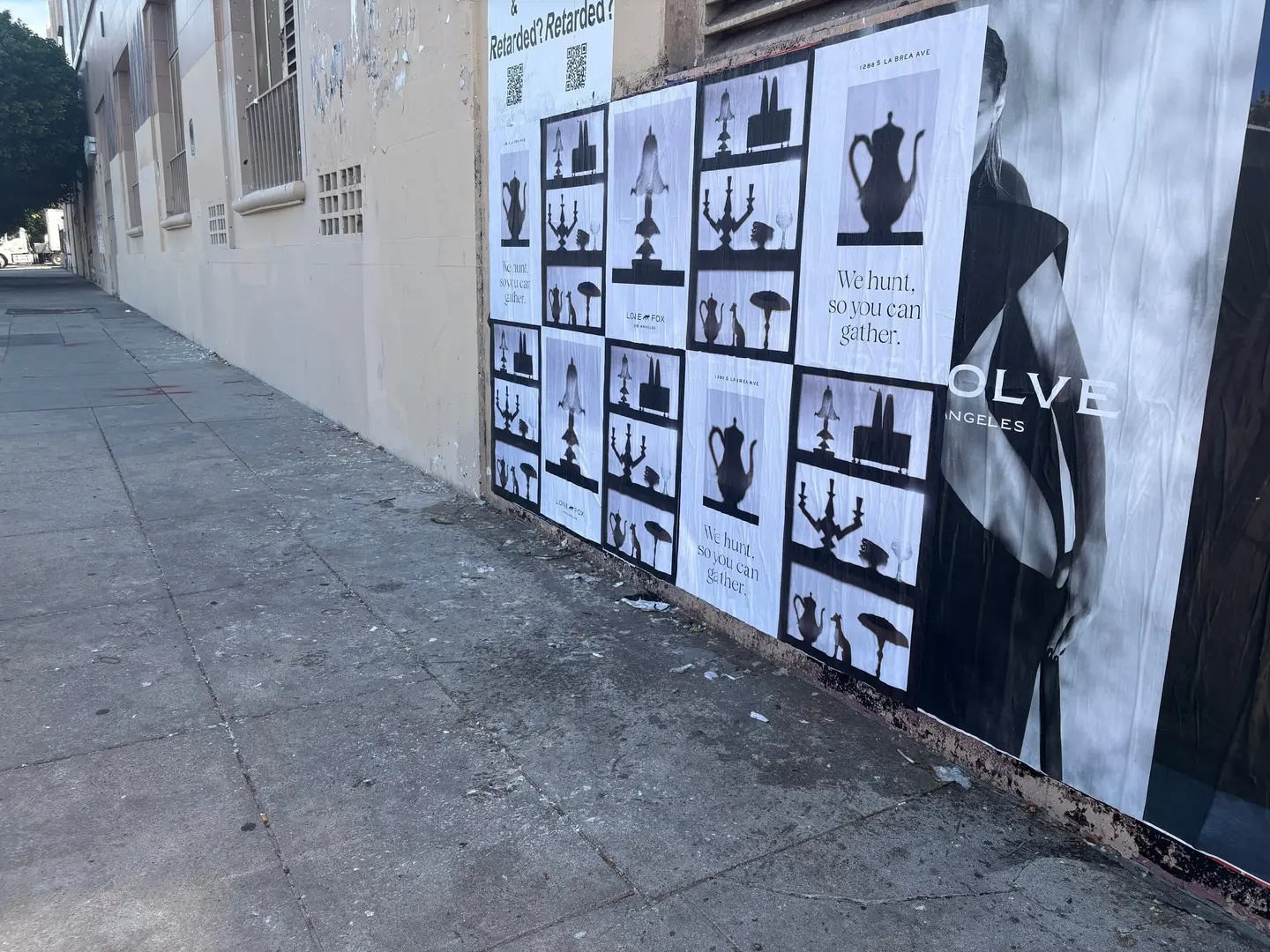
Los Angeles is a car city with a handful of exceptions, and two of them sit next to each other on the Eastside. Silver Lake and Echo Park carry the kind of continuous foot traffic that makes a poster worth pasting, on building stock old enough to hold paper properly. This is what those corridors look like from the installer’s side.
Why these two corridors
Placement in Los Angeles is a corridor decision, not a city decision. Buying walls across the county spreads a campaign so thin that nobody sees the same poster twice, and repetition is the entire mechanism the format runs on.
Silver Lake and Echo Park solve that because they are walkable end to end. Sunset Boulevard through Sunset Junction runs east toward the Reservoir with storefronts on both sides. Echo Park Avenue and the Sunset corner by the lake carry their own steady flow. Someone who lives, eats, and shops in either neighbourhood passes the same blocks several times a week, which is what turns four exposures into recall.
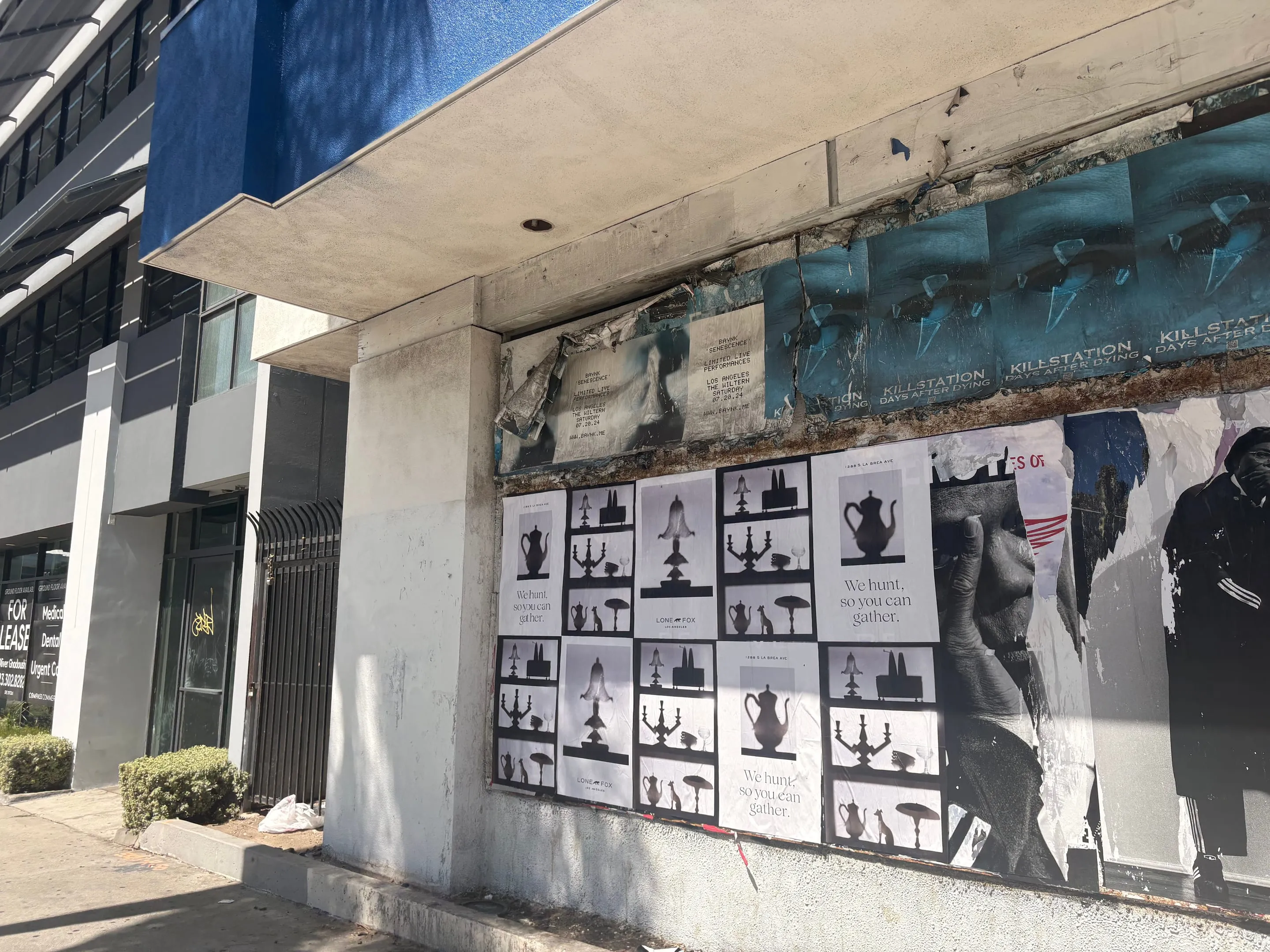
The surfaces cooperate too. Brick between Sunset and Silver Lake Boulevard, painted storefront frontage along the commercial stretches. Both take wheat paste cleanly and release cleanly.
The corridors, block by block
Silver Lake, Sunset Junction east toward the Reservoir. The commercial spine. Brick walls between Sunset and Silver Lake Boulevard carry the bulk of the inventory, and the audience is the design-conscious buyer who notices a printed wall before an ad in a feed. Our published hold window here is 12 to 20 days on painted storefront.
Echo Park, Echo Park Avenue and the Sunset corner. Denser near the lake, and the audience overlaps Silver Lake while skewing younger and more art-vertical. Install timing matters more here: crews work Tuesday and Wednesday mornings ahead of the lunch peak, because the sidewalk gets busy early.
Highland Park and Eagle Rock, along York Boulevard and Figueroa. Not adjacent, but the natural third leg of an Eastside run. York Boulevard has the cleanest wall inventory of the three, the antique and design retail suits brands that fit Silver Lake, and on our own run those walls held longest.
What a real run looked like
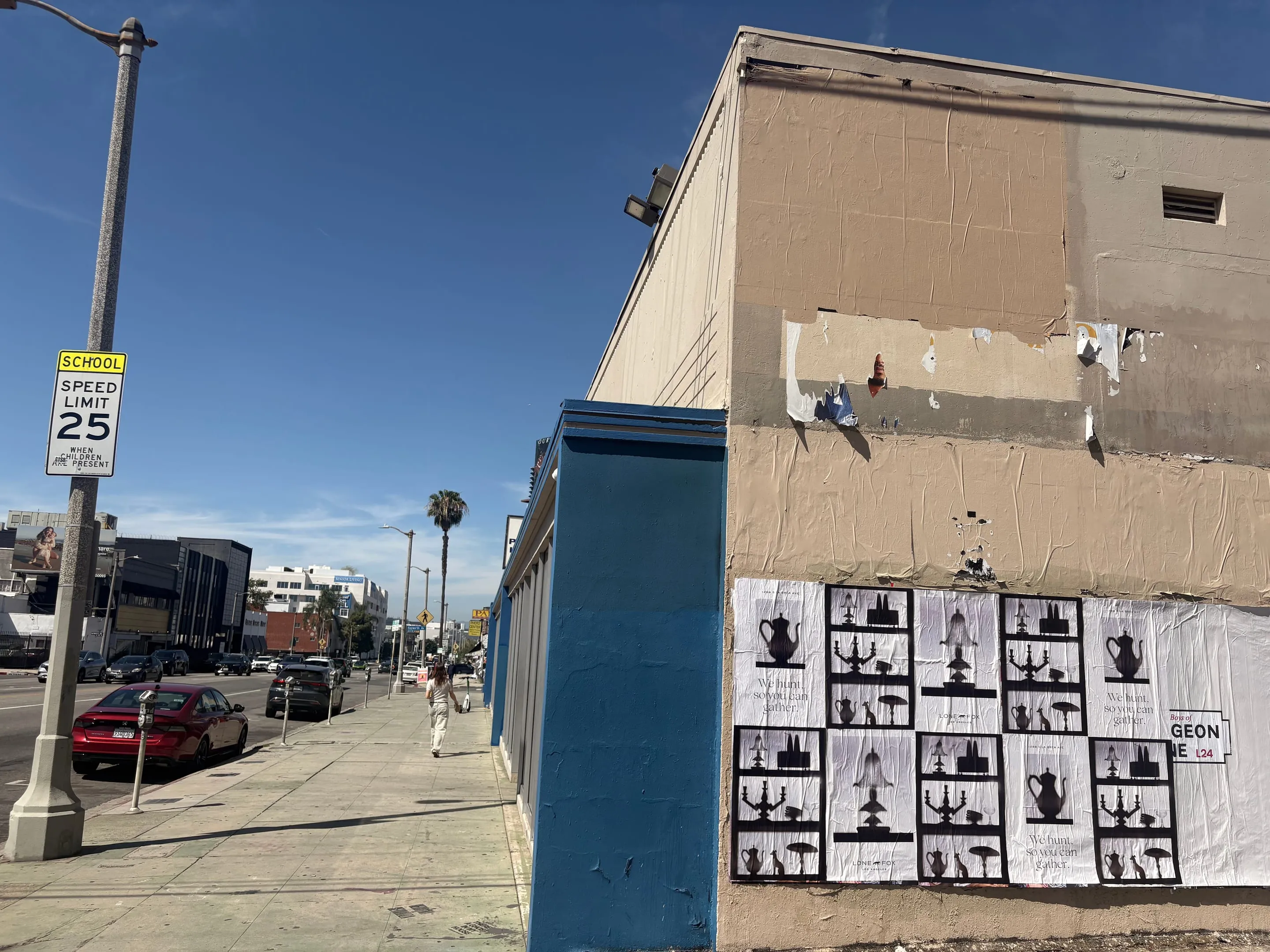
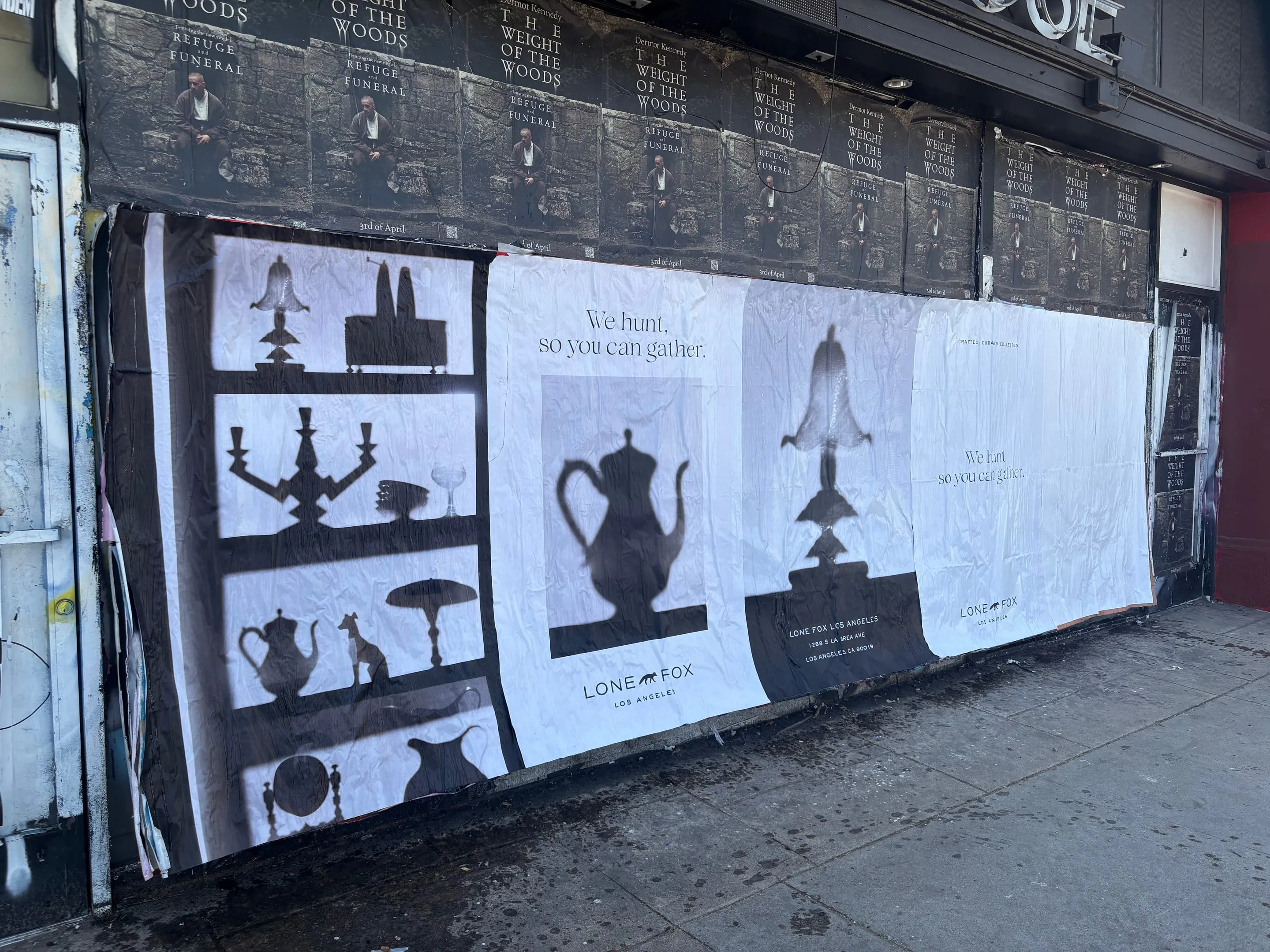
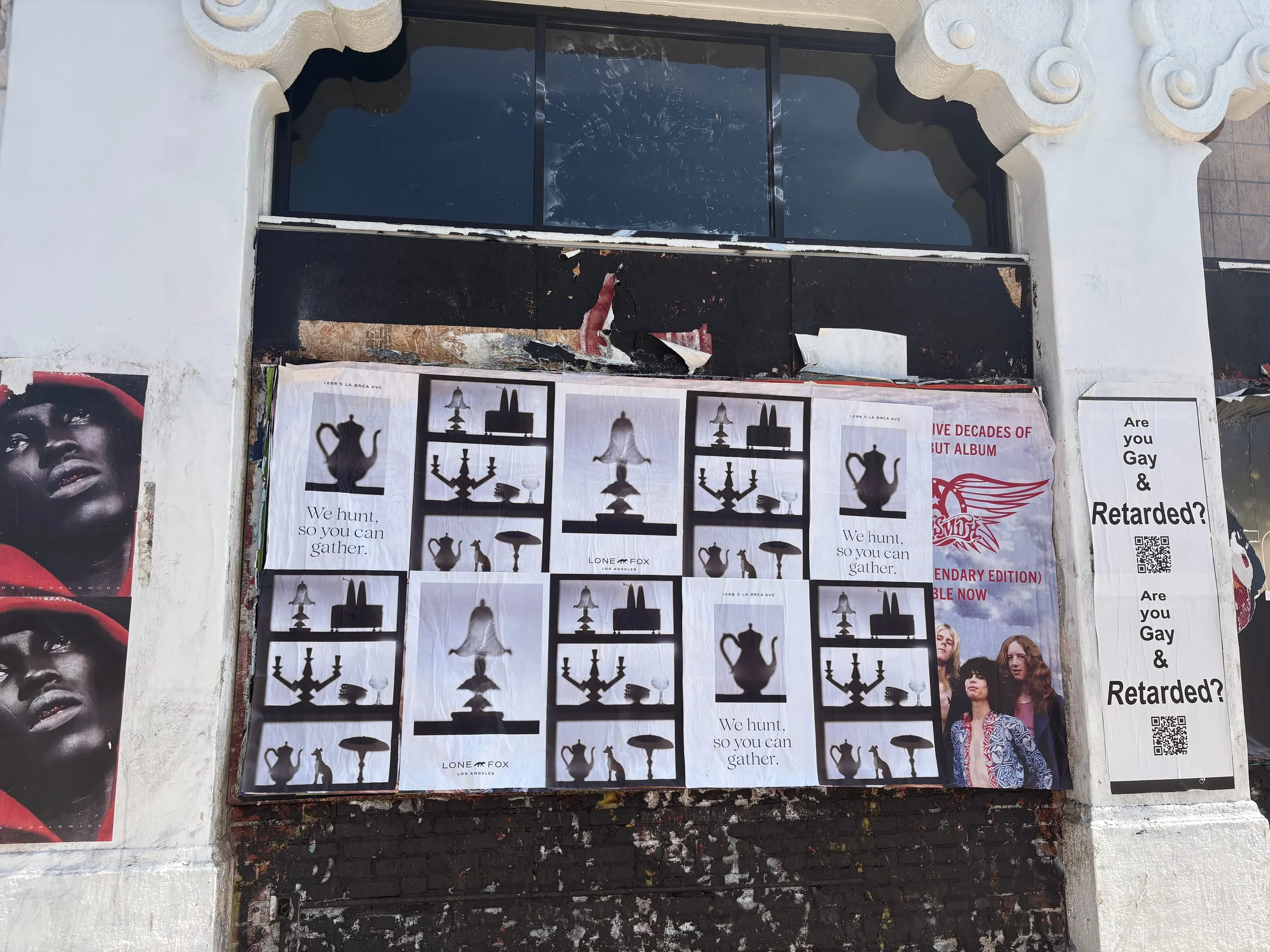
Lone Fox, a home-decor brand, ran 204 hand-pasted posters across those three neighbourhoods over 28 days, timed to a store launch.
The build was 200 sheets at 24 by 36 inches with four large-format panels at 48 by 72 anchoring the highest-traffic walls. Every placement sat on brick with property-owner permission secured before print.
Phasing followed the corridors. Silver Lake ran first, with early walls in week one and the rest filling through week two. Echo Park ran across weeks two and three. Highland Park took weeks three and four, the longest crew run by distance and the cleanest inventory.
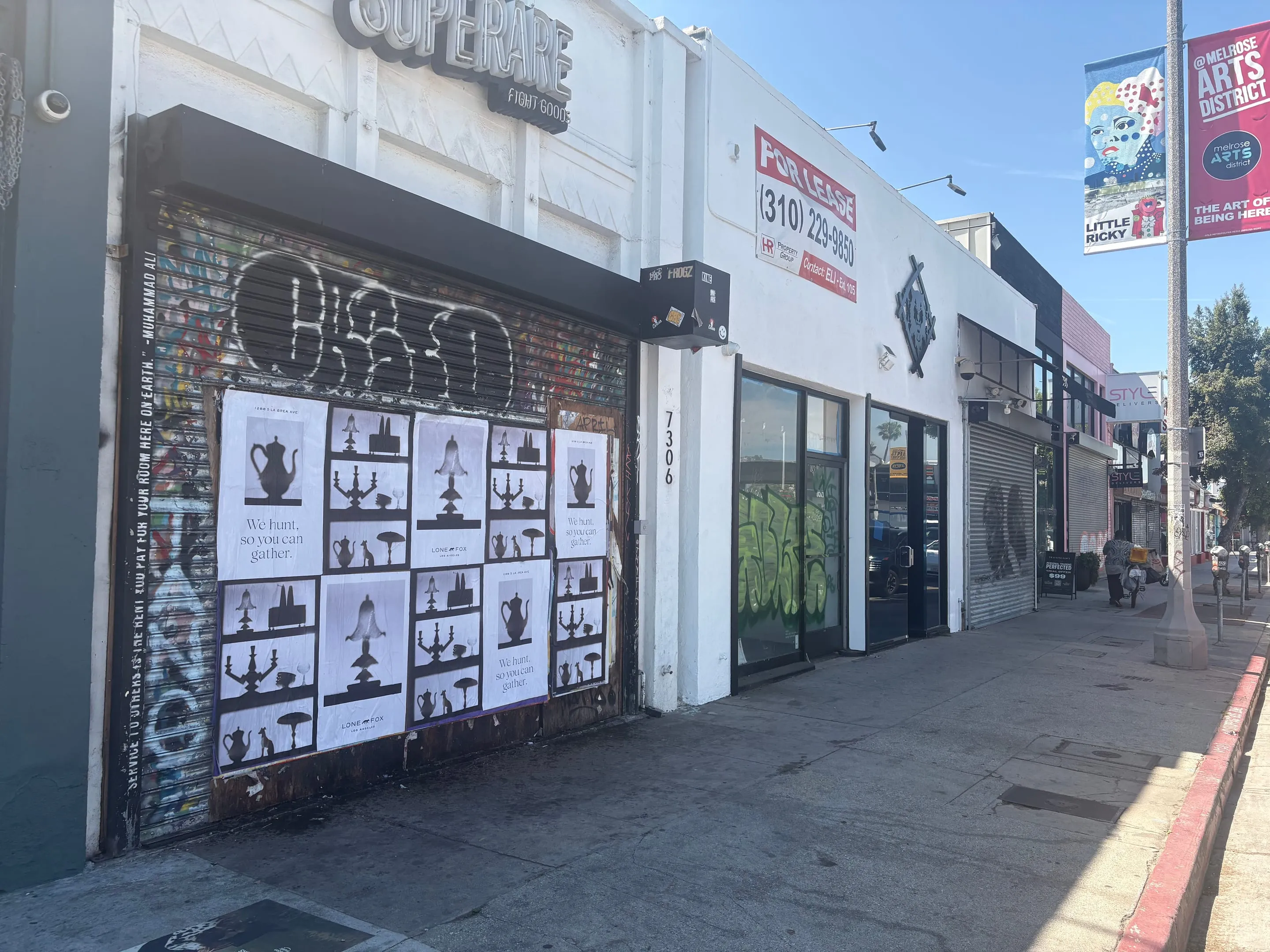
Documentation ran on a fixed protocol: every poster photographed within 24 hours of install once cured, then again at day 7, day 14, and day 28. The day 28 set showed slight edge curl and no centre fade, which confirmed the paste formulation held through LA spring conditions. No refresh wave was needed and nothing came down early.
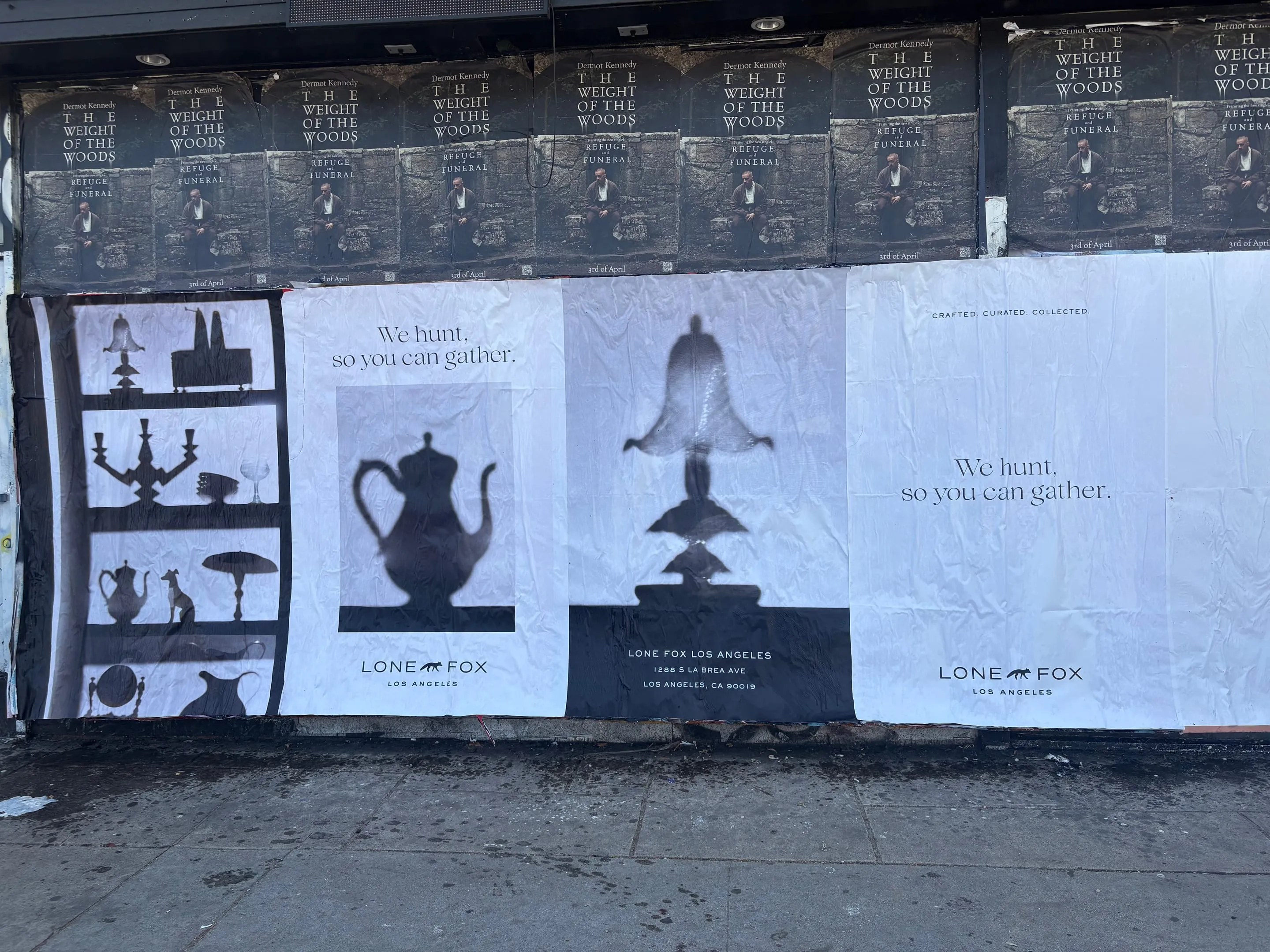
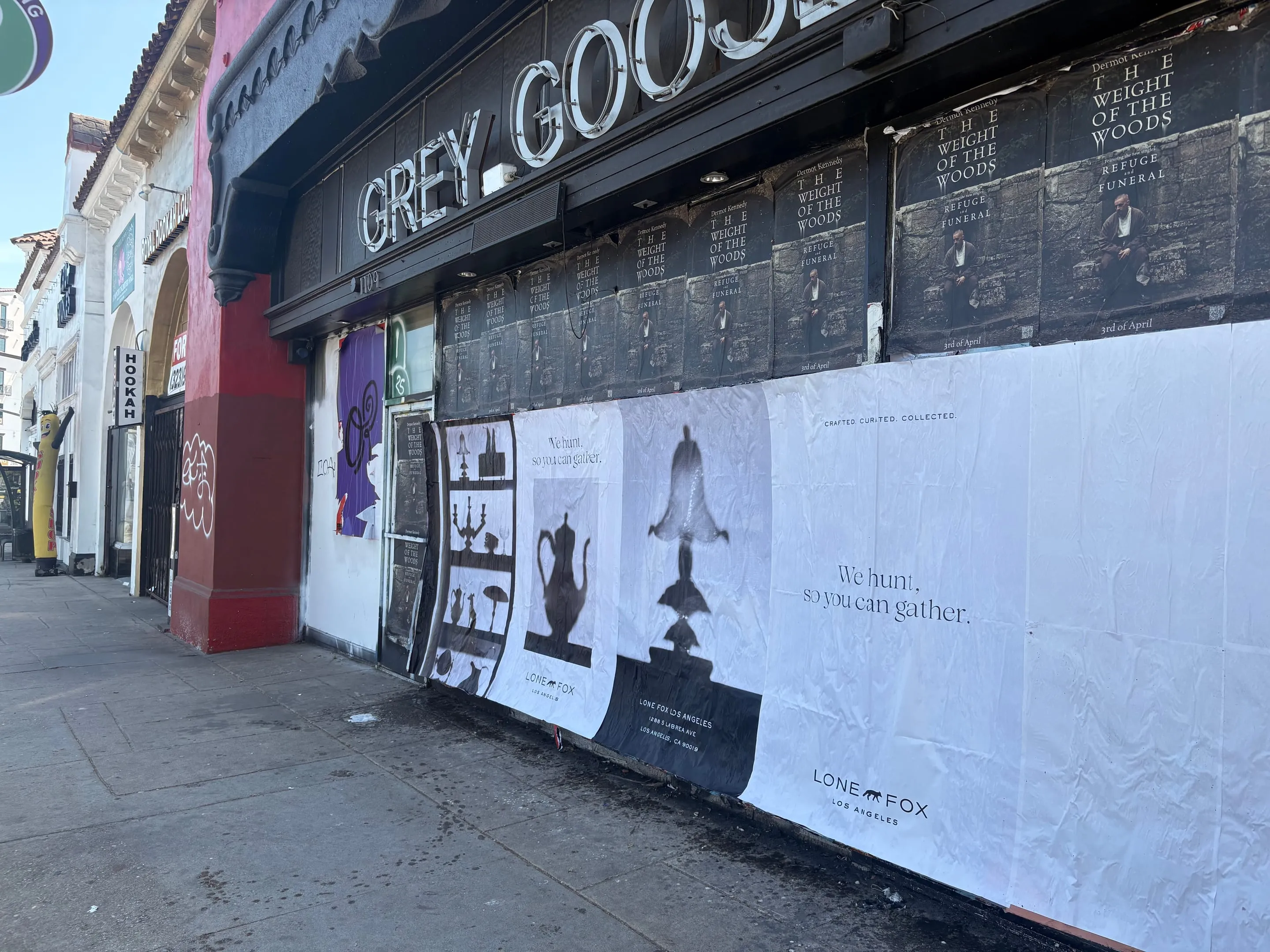
Two things happened that a media plan cannot forecast. A property owner across the street watched the first Silver Lake installs go up clean and called the crew to ask about his own wall. And three home-decor accounts reposted install photos inside the first week, with one LA design publication picking the campaign up as a short notes item. Neither was bought. Both are common when the work is placed carefully and installed cleanly.
The legal position on these blocks
Same rule as the rest of the city, and it comes down to the surface. Private property with the owner’s written consent is advertising: LAMC § 28.03 bars posting or affixing a hand-bill or sign to any building, wall or private property without the consent of the owner, agent or occupant. Written consent is how you satisfy that section, which is why the wall list gets locked before print.
Public objects are off the table, and § 28.04 names them one by one: sidewalks, crosswalks, curbs, street lamp posts, hydrants, trees and tree guards, utility, telephone and trolley poles, street signs and traffic signs. No advertising permit opens any of it up. The carve-outs written into that section are for city safety signage, terrazzo sidewalk work, curb house numbers and Board of Public Works commemorative plaques, not for brand campaigns.
The penalty scales with repetition. A first violation in a calendar year carries an administrative penalty of up to $100, the second up to $250 and the third $500, each on top of the city’s verified cost of removing the posting, and more than three in a single calendar year is charged as a misdemeanour in Superior Court. It reaches the advertiser as well as the installer: the section presumes the person whose name, telephone number or address appears on a posted sign is responsible for posting it, rebuttable only by a sworn declaration.
Los Angeles publishes its municipal code publicly through the American Legal code library, and most other US cities host theirs on the Municode library, if you want to read the governing text rather than take an installer’s word for it. The full rule, by surface, is in is wheatpasting legal?; the LA-specific read for a related format is in is sidewalk stenciling legal in Los Angeles.
Booking the corridors
Two to three weeks of lead time is comfortable. Owner response sets the schedule far more than crew availability, so the wall list gets locked in writing before anything goes to print.
The rest of the city’s inventory, neighbourhood by neighbourhood with surfaces and hold windows, is on wheatpasting in Los Angeles. For the wider format mix across the market, see guerrilla marketing in Los Angeles.
Hold windows and pricing reflect our published 2026 figures and the documented Lone Fox run. For a specific corridor, send the brief and a scoped quote comes back inside 24 hours.