Most guerrilla marketing agencies hide pricing behind a Request for Proposal. The stated reason is that every campaign is unique. The simpler explanation is that opacity is a sales tool. When a client doesn’t know the baseline cost, the agency quotes whatever that particular project will bear.
Street-level advertising sits inside a category that keeps growing. The OAAA reported that out-of-home revenue reached a record $9.46 billion in 2025, up 3.6% year over year. Billboards and transit inside that number are bought against rate cards. Street posters, stencils, and stickers are still mostly quoted on request.
BSM publishes campaign floors because the operator cost is fixed. Print, paste, permits, crew, and documentation are all predictable. Publishing them is a claim about operational efficiency, and one a client can hold us to.
The RFP gatekeeping model
The cycle usually runs like this. A brand reaches out with a brief. The agency sends an RFP template. The brand fills it out. Two weeks pass. A quote comes back as a range with language about market variables. The brand questions the range. A second quote appears. Eventually a number sticks, the contract is signed, and the campaign ships weeks after the brand first made contact.
The instrument itself is legitimate in its home context. In federal procurement, the FAR describes requests for proposals as the way an agency communicates its requirements to prospective contractors and solicits proposals, with structured evaluation criteria behind it. That machinery exists because the scope of a competitively bid contract genuinely has to be discovered. A 20-wall poster run in SoHo is a different kind of purchase.
Borrowed into street media, the gatekeeping does two things:
-
Price discrimination. Big-budget clients get quoted higher, small-budget clients lower, against the same operator cost. The long cycle helps: by the time the quote arrives, the brand has sunk weeks into the process, and backing out feels wasteful.
-
Premium positioning. Opacity reads as sophistication. A published floor can read as commodity to a buyer who equates hidden complexity with quality.
Neither is an operational necessity.
Why the “every brief is unique” claim doesn’t hold
Every campaign is unique. A unique brief does not mean an unpredictable operator cost.
A 20-wall wheatpaste run in SoHo and a 20-wall run in the Mission are operationally close to identical. Same crew structure, same print spec, same paste and labor. The uniqueness lives in the creative and the audience, not in what it costs to put paper on brick.
When an agency says pricing is variable because the brief is variable, two separate things are being folded together:
- Creative scope. Design, messaging, audience. Genuinely varies per campaign.
- Operator cost. Print, paste, crew, permits, documentation. Consistent.
An agency could publish the operator cost and quote creative scope on top of it. Most don’t, because opacity pays better.
Opacity in media buying is not a theory. The ANA’s 2016 study with K2 Intelligence found non-transparent practices across digital, print, out-of-home, and television, including agencies buying media as principal and reselling it to the client at a markup the client never saw. That study examined large media agencies rather than street crews. The incentive it describes travels down-market intact.
The fixed cost model: what actually goes into a wall
A wheatpaste campaign is built from a nameable cost stack. Every campaign carries the same line items.
Materials are poster print on full-bleed stock, wheat paste mixed per batch at a 70/30 paste-to-PVA ratio calibrated for 30-day adhesion, and surface-specific adhesive for brick versus painted wall. Labor covers surface prep, application, and documentation, with two installers per crew working a 02:00 to 05:30 window at loaded city rates.
Property permission runs in parallel: owner agreements, negotiation, approval, and written permission, carried across the walls on each property. Scaffold and hoarding surfaces add a layer, because those structures are themselves permitted work. In New York, an initial sidewalk shed permit is generally valid for one year or until the contractor’s insurance expires, so the owner and the contractor both have to be in the conversation before anything goes up on the mesh.
Dispatch carries crew transportation, fuel, and van across the walls a crew covers in a night. Documentation closes the stack: lat/long, timestamp, and installer ID on every wall, three photographs per wall (wide, mid, detail), and the wrap deck at the end of the run.
Published BSM wheatpaste pricing starts from $3,500 per campaign. Range varies by turnaround, size, location count, and combined service mix. Final quote returns inside 24 to 48 hours. The floor covers the stack above plus a defined margin, and the margin isn’t hidden. It pays for overhead and insurance, crew training and retention, client service, and profit. It gets earned through execution, not buried in an RFP.
Why volume doesn’t change the math the way buyers expect
The standard RFP negotiation is a client asking for five times the walls and a lower per-wall rate, and an agency agreeing to it. The operator cost didn’t move. The agency cut its own margin to close the deal, which is a discount, not an efficiency.
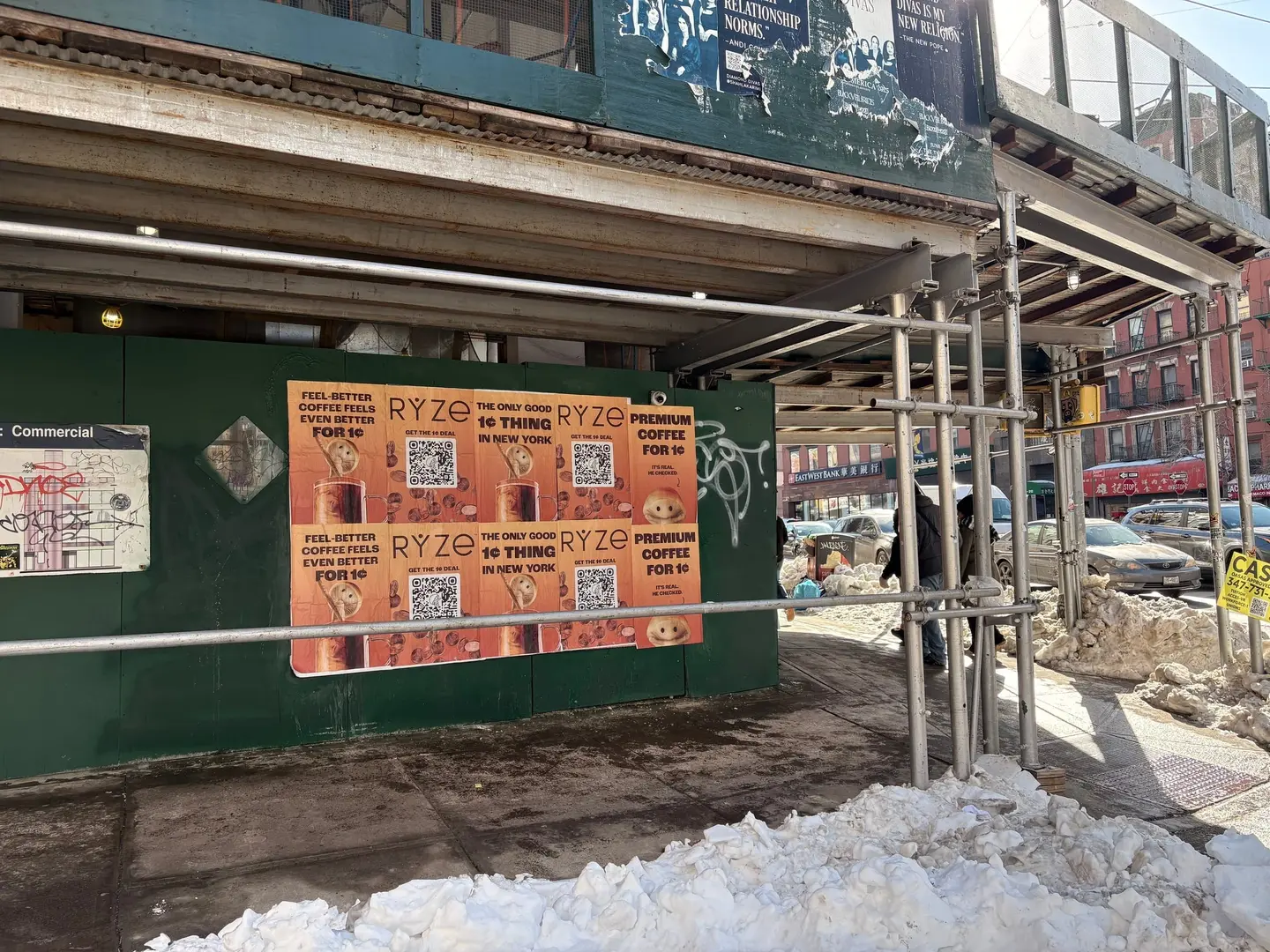
Real efficiency comes from density. On the RYZE Coffee campaign in NYC, 500 posters went up across SoHo, Williamsburg, and Bushwick inside a 21-day window, with one crew working five nights in-field, clearing one neighborhood before moving to the next. Booking walls in tight corridors on the same nights is what lowers cost per placement:
- Crew scheduling tightens, so more walls land per night with less dead transit between them.
- Property coordination and documentation both consolidate when walls cluster across fewer owners and fewer nights.
Those gains get passed through as a lower effective cost on larger runs without cutting below the operator cost. Range varies by turnaround, size, location count, and combined service mix. Final quote returns inside 24 to 48 hours.
Speed is the actual advantage
A brand sends markets, window, and creative direction. We quote from the published floor against the real placement count and get a scoped number back inside 24 to 48 hours. They book or they don’t.
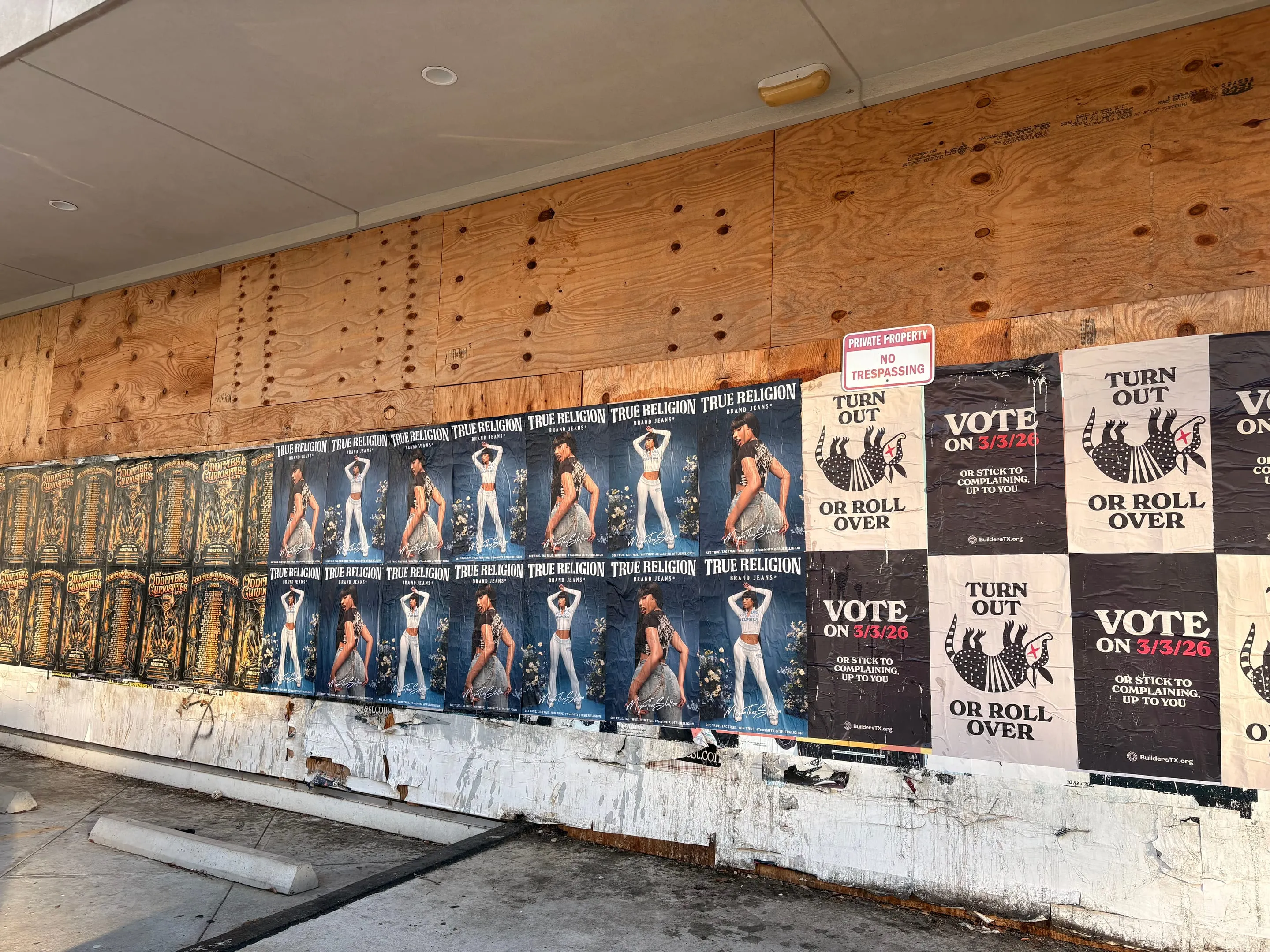
That clock matters when a cultural moment has a shelf life. On the True Religion campaign in Houston, the brand locked a partnership with Megan Thee Stallion three days before launch, the shoot wrapped on a Friday, and the posters had to be live before the weekend shopping cycle so the moment landed inside her hometown news window. From approved creative to documented install took 36 hours. That turn is possible because nobody had to invent a price first. Expedited work carries its own premium (24 to 72 hour turns run +80% to +150%), and the premium is published too.
Transparent pricing also changes who calls. The clients who stay are evaluating whether the price is worth it against their own goals. The ones who disappear were shopping for a number they could talk down.
What a published floor does not buy
It doesn’t buy attribution. BSM documents placements: coordinates, timestamps, installer ID, and three photographs per wall delivered to the client portal within four hours of install night, plus day 14, 21, and 30 adhesion checks with any lost wall refreshed on the next paste night.
Impression estimates for out-of-home come from measurement organizations. Geopath describes itself as the OOH industry standard for audience location measurement, and that is a separate discipline from installation. Lift, traffic, and conversion belong in the client’s own analytics, matched against the install dates and coordinates we hand over. An installer quoting you a foot-traffic number is selling you a model.
Why competitors don’t publish
Two explanations cover most of it.
-
Margin exposure. A published rate lets anyone benchmark you, including competitors who can then tell whether your number reflects efficiency or overhead. Opacity hides both.
-
Overhead structure. An agency carrying a national sales team and account-management layers has a high cost per deal, and a long RFP cycle is how that cost gets justified. A lean operation can publish, because the cost of quoting is low.
The second is the harder one to unwind. An organization that needs opacity to hit its margin targets has to restructure sales before it can publish anything. Repeating “every campaign is unique” is cheaper than that.
What we actually quote
Wheatpaste and posters: campaigns start from $3,500, with larger runs and multi-neighborhood saturation scaling up from the floor.
Pole stickers: campaigns start from $3,000, with multi-corridor runs scaling from the floor.
Sidewalk stencils: campaigns start from $2,500, with multi-neighborhood runs scaling from the floor.
Range varies by turnaround, size, location count, and combined service mix. Final quote returns inside 24 to 48 hours. Full pricing is at /pricing/, broken out by service and scope.
When an RFP is the right tool
Two situations earn the paperwork.
- Genuinely uncertain scope. Campaigns spanning multiple cities with custom surface types (scaffold wraps, full building murals, large-format multi-panel builds), where the spec has to be discovered before anyone can price it.
- Procurement or compliance requirements. Enterprise contracts with volume commitments often require formal solicitation documentation to clear procurement. Political work carries its own rules: the FEC requires disclaimers on public communications including outdoor advertising facilities, and notes that state and local laws governing where signs go on roads are not superseded by federal law. Getting that documented upfront is worth a formal process.
A single-market product launch doesn’t need it. A fashion brand taking 20 walls in SoHo can work off the published rate and a scoped quote.
The trust signal
Publishing rates says we know our costs, we know our quality, and we aren’t pricing against your budget. That reads as a weaker negotiating position only if the goal was to extract the maximum from each client.
A client who felt ground down in an RFP tends to treat the next brief as a rematch. A client who saw the number upfront tends to spend the conversation on the work instead.
See the full pricing breakdown. Pick your service and your scope, get a scoped number inside 24 to 48 hours, and decide. The street is the campaign.