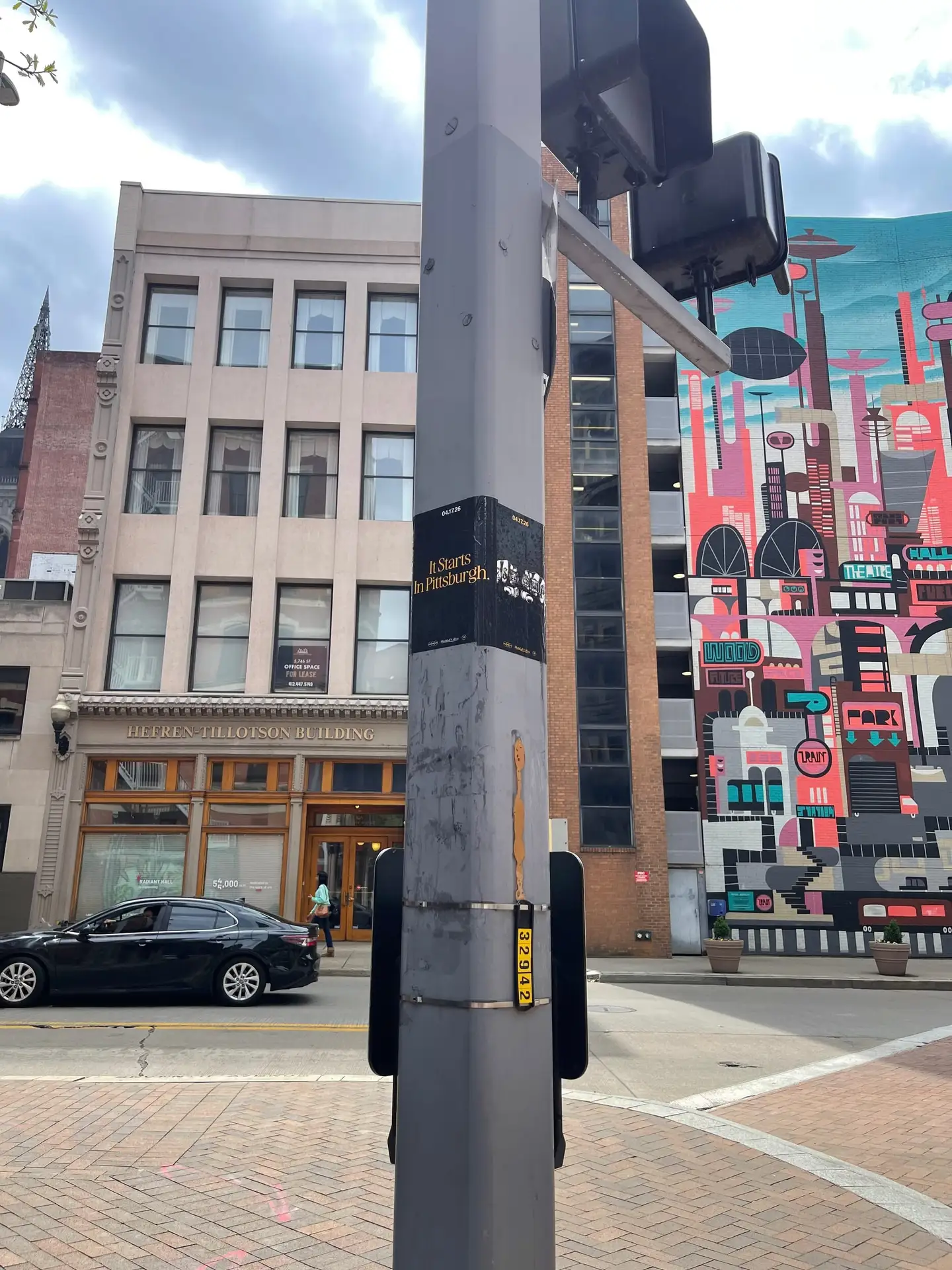
It Starts In Pittsburgh: Civic Pole-Sticker Campaign
33 pole stickers across Pittsburgh's civic core. A grassroots message landed on utility poles, parking signs, and lamp posts, proof a city-scale activation doesn't need a billboard budget.
- Placements33
- Cities1
- Duration7d
- Documented46install photos on file
Pittsburgh corridors, pole by pole.
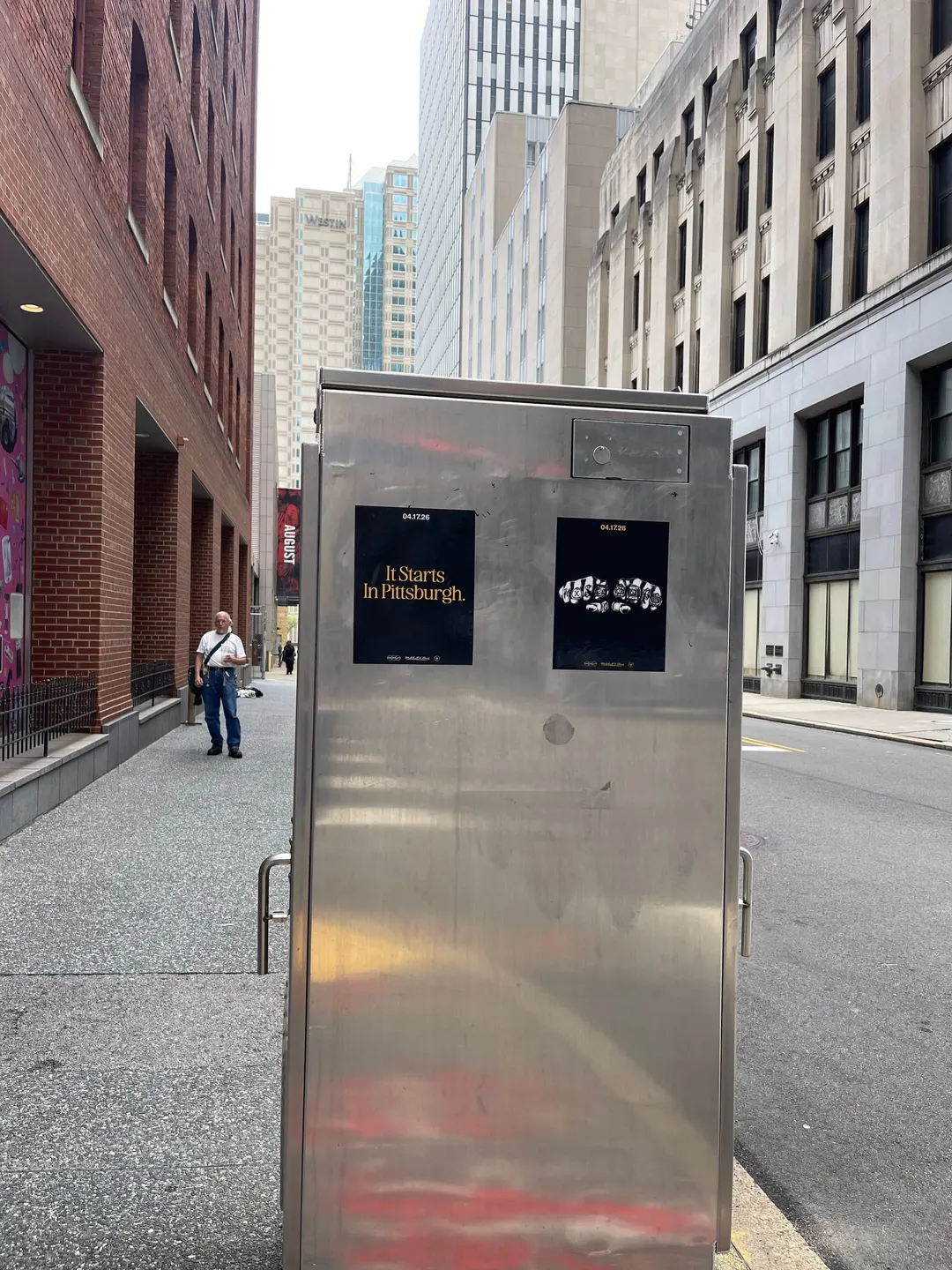
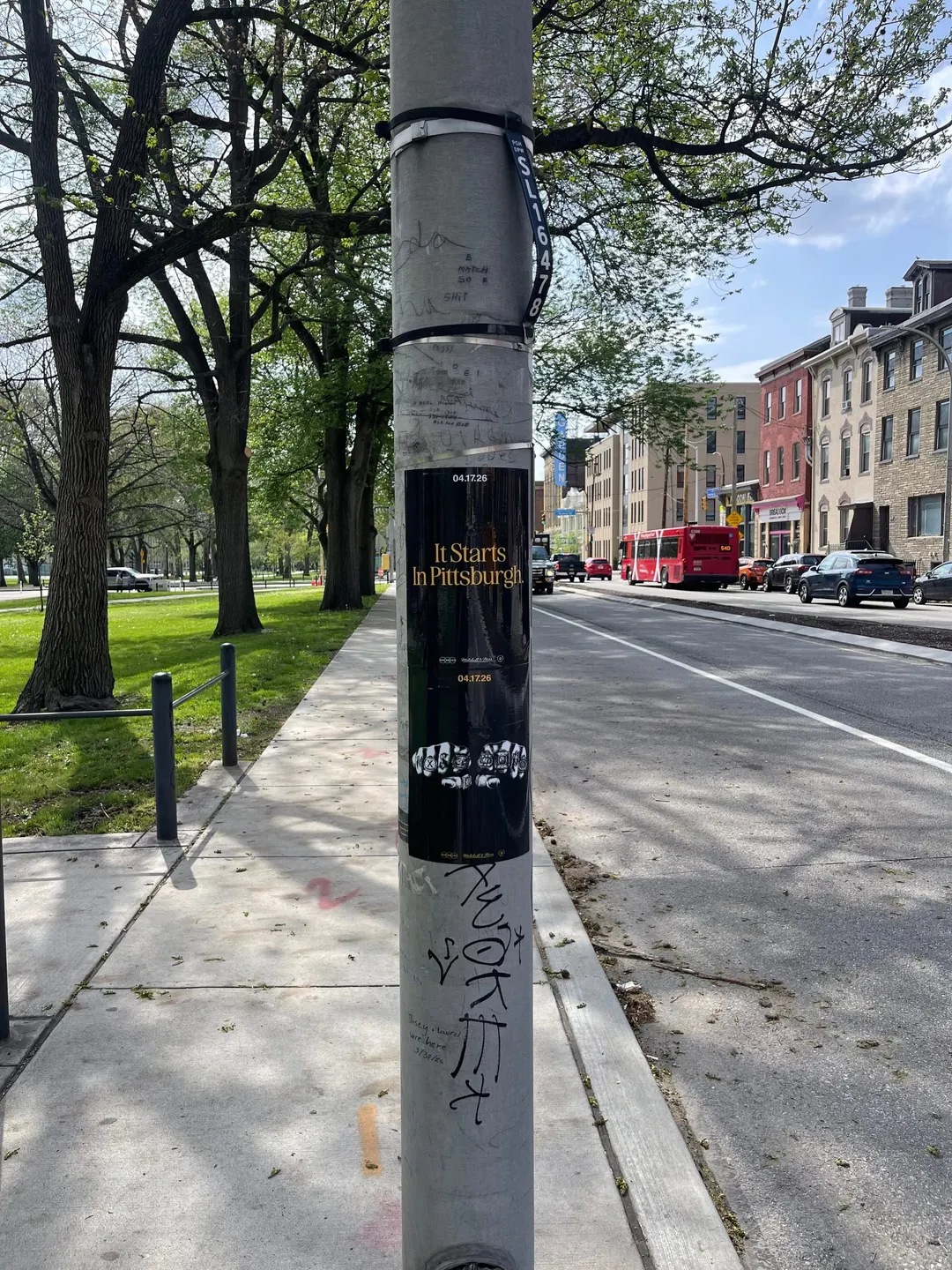
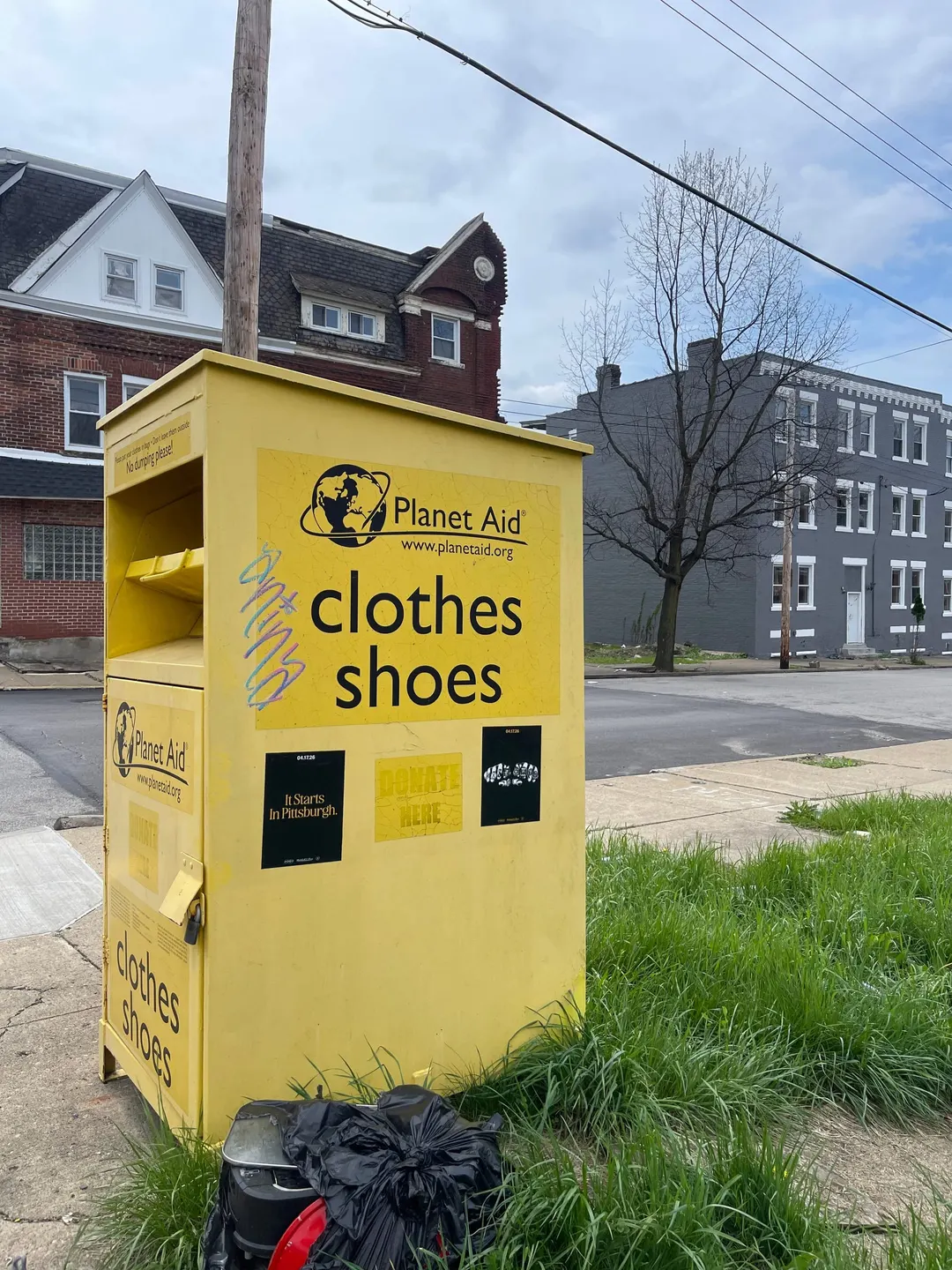
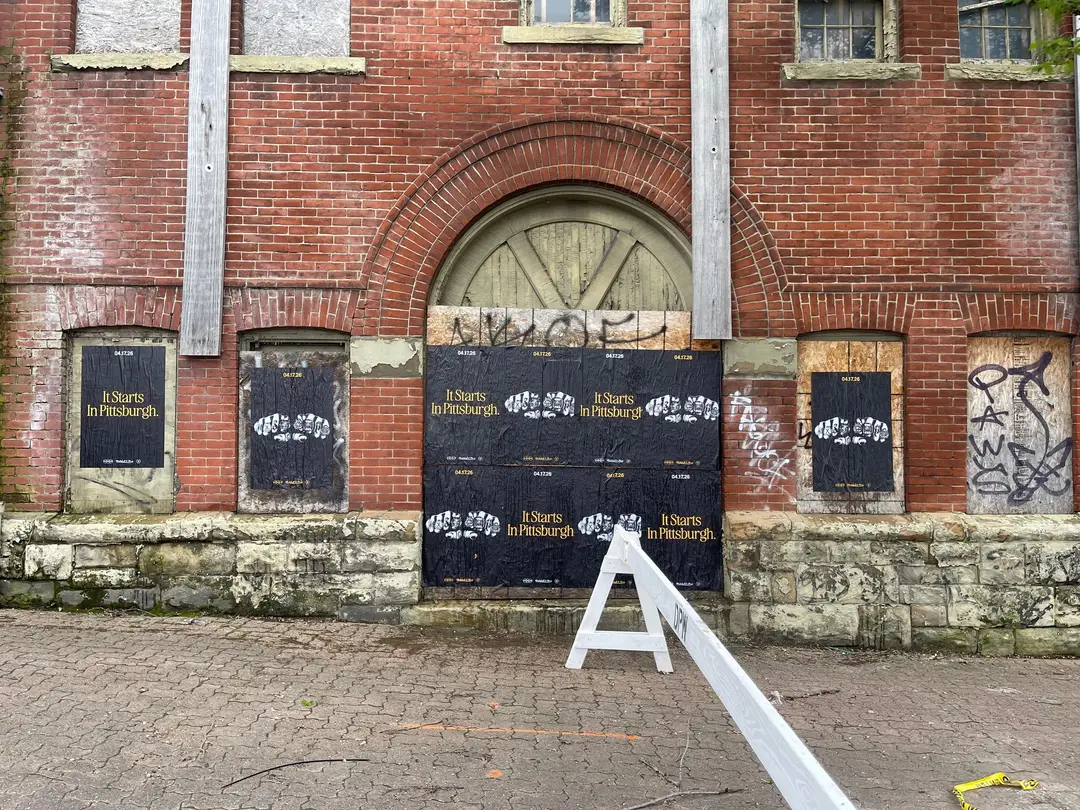
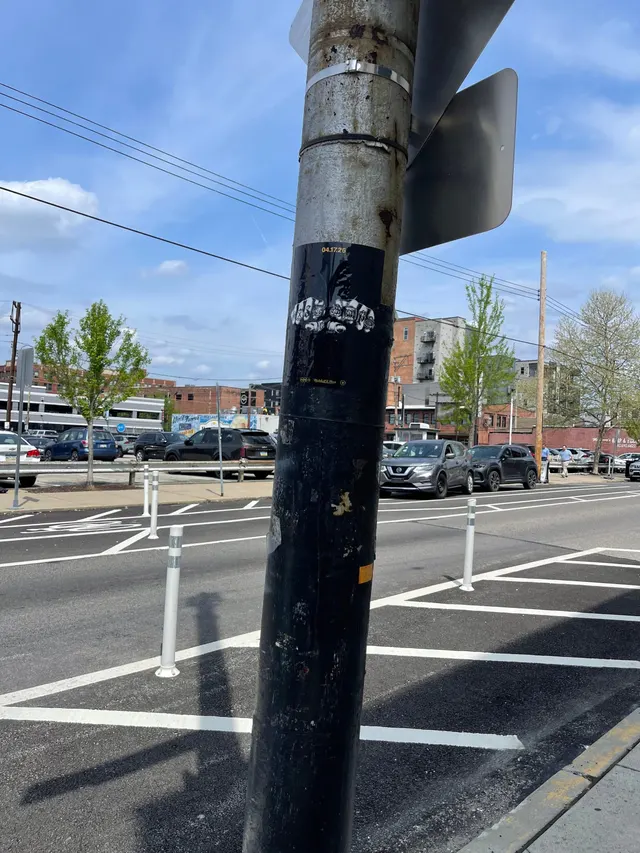
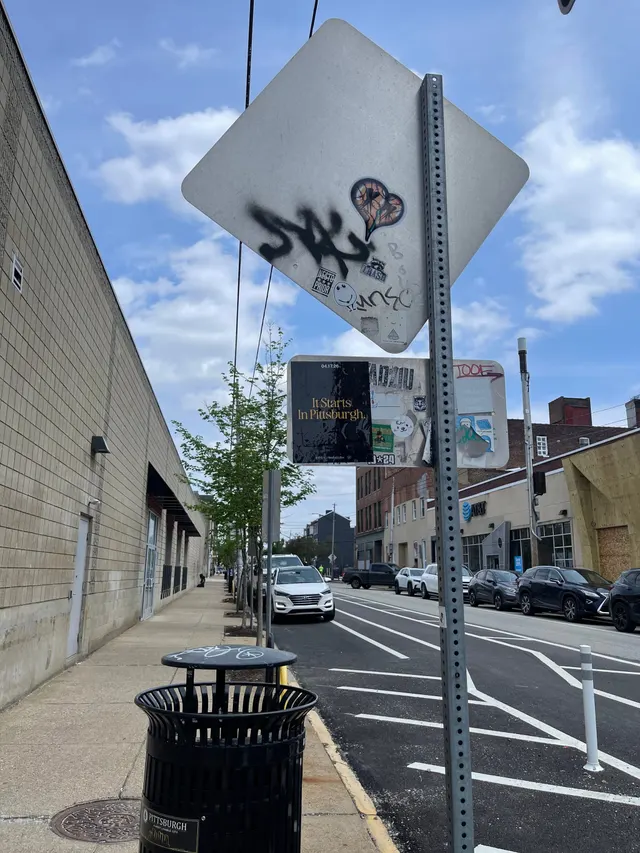
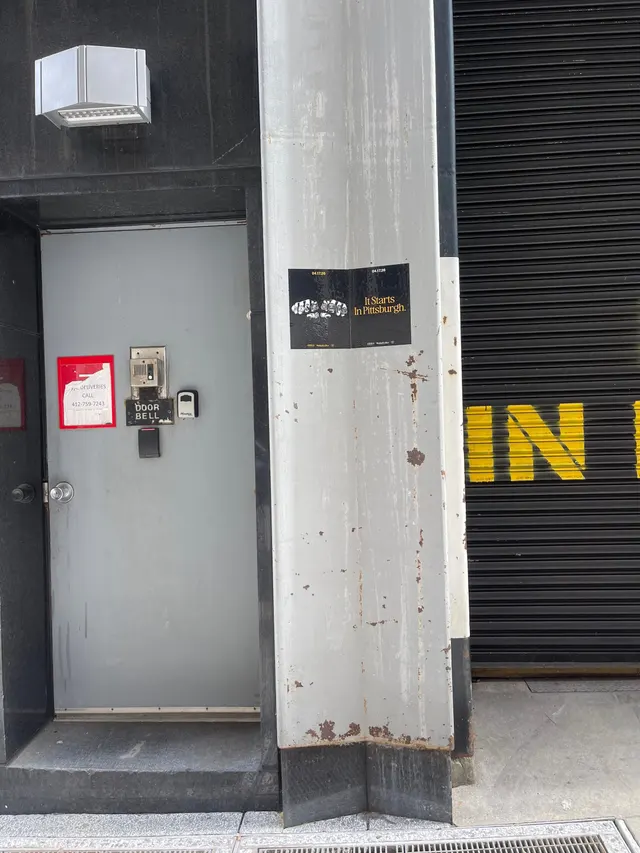
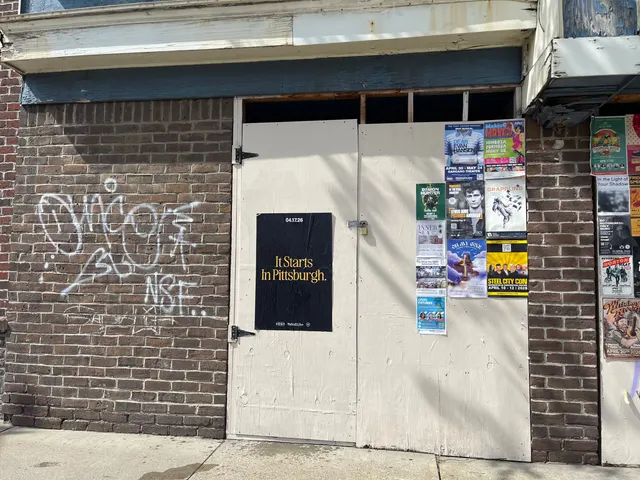
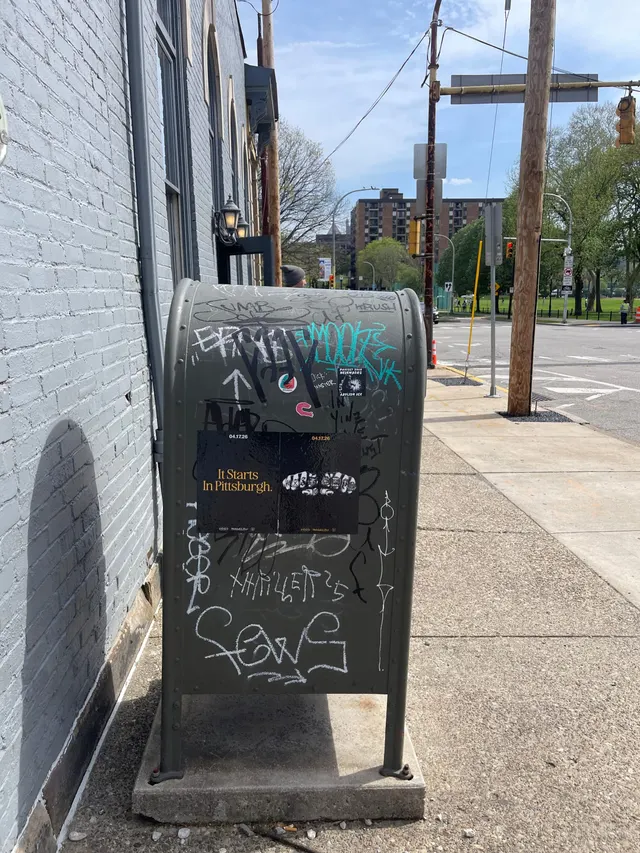
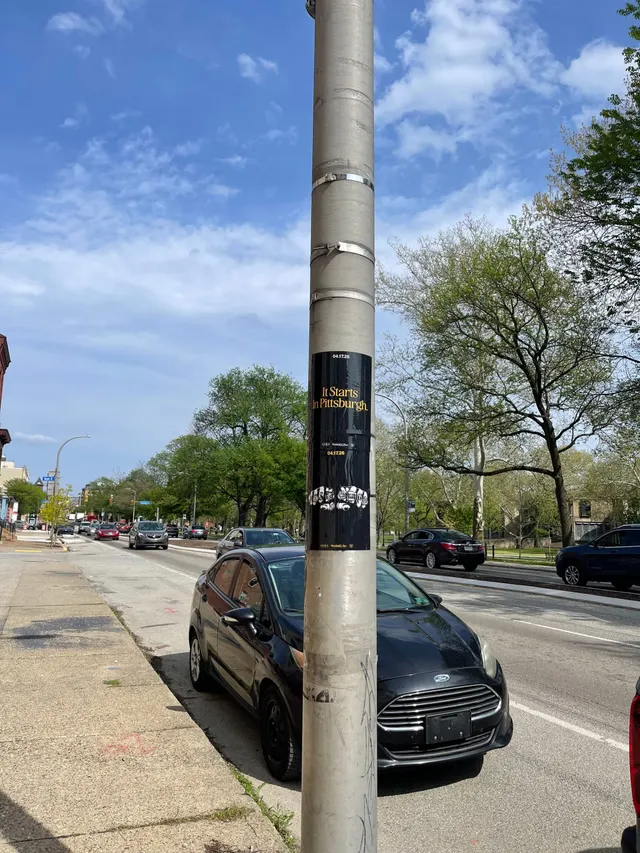
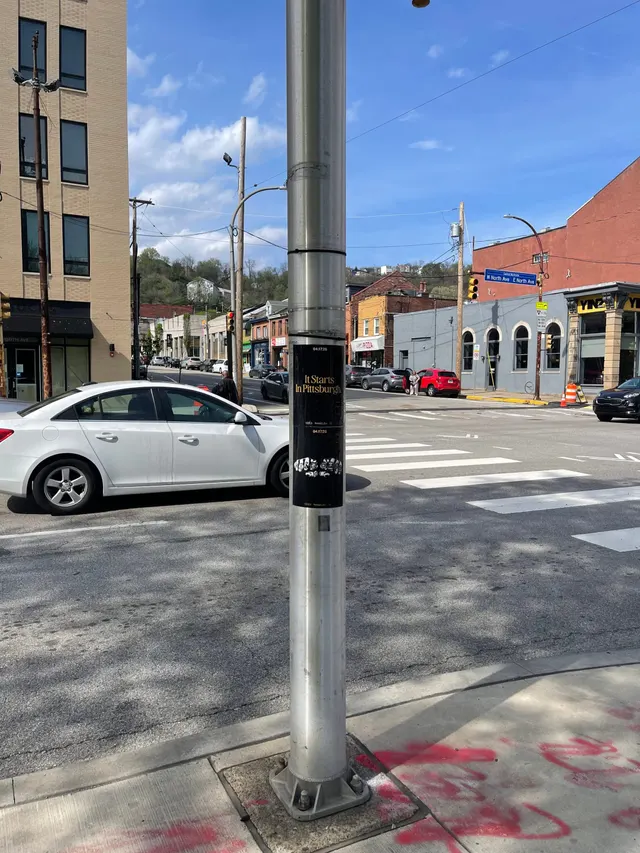
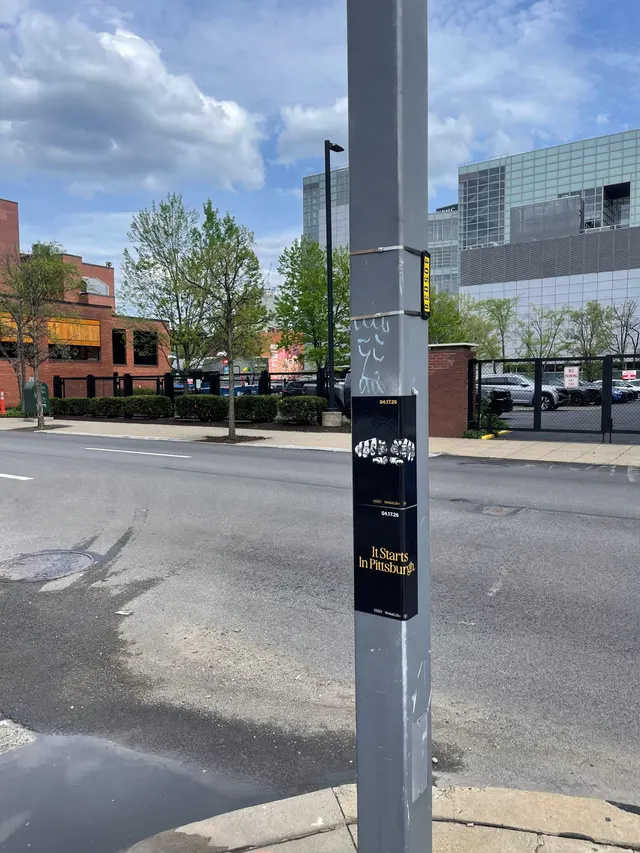
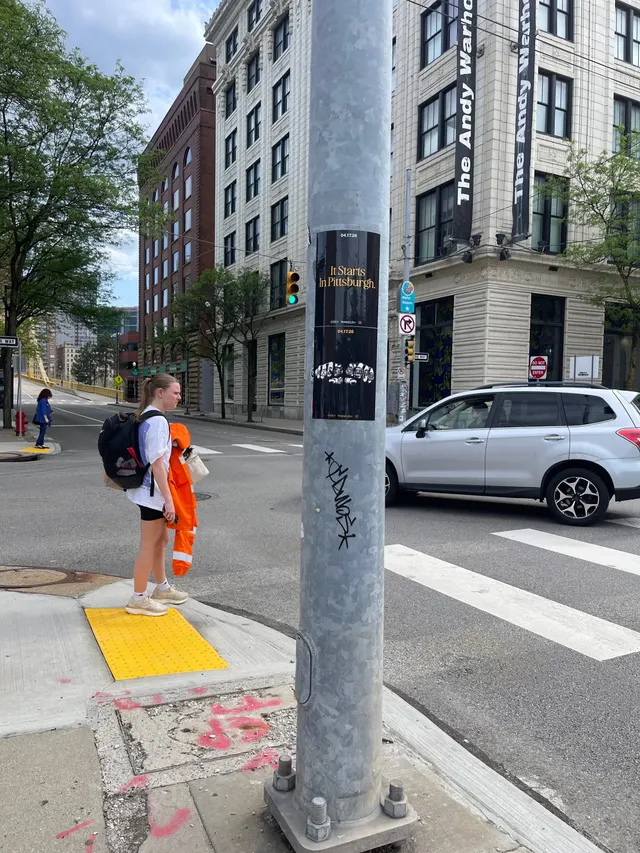
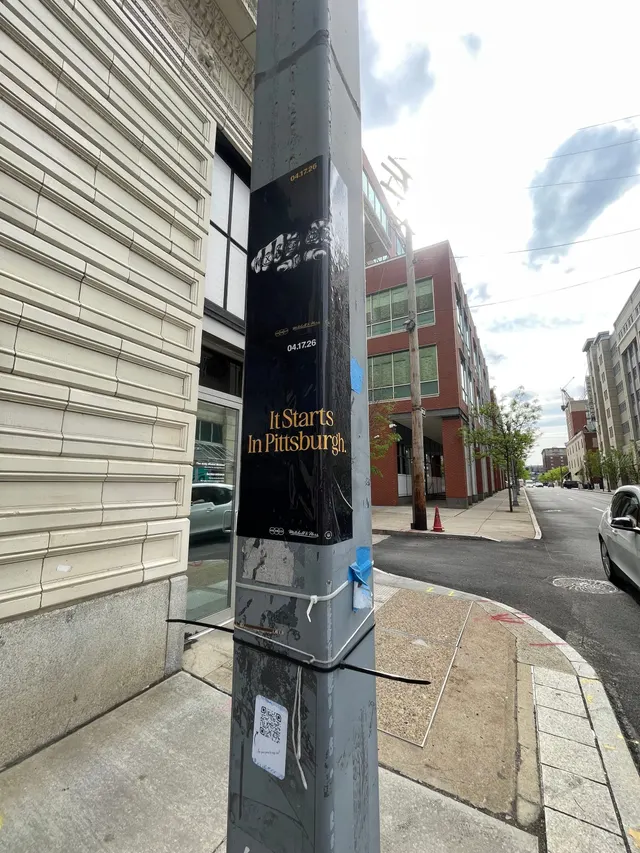
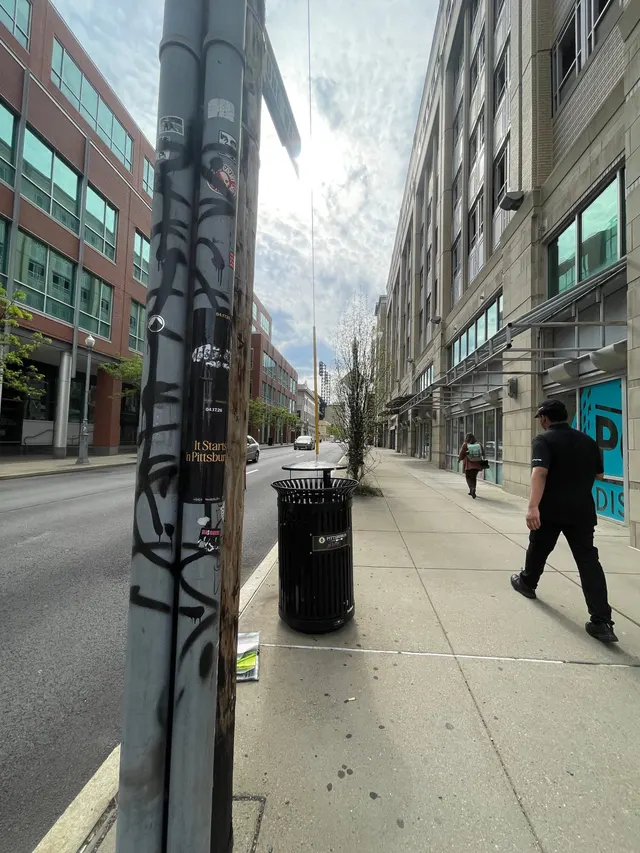
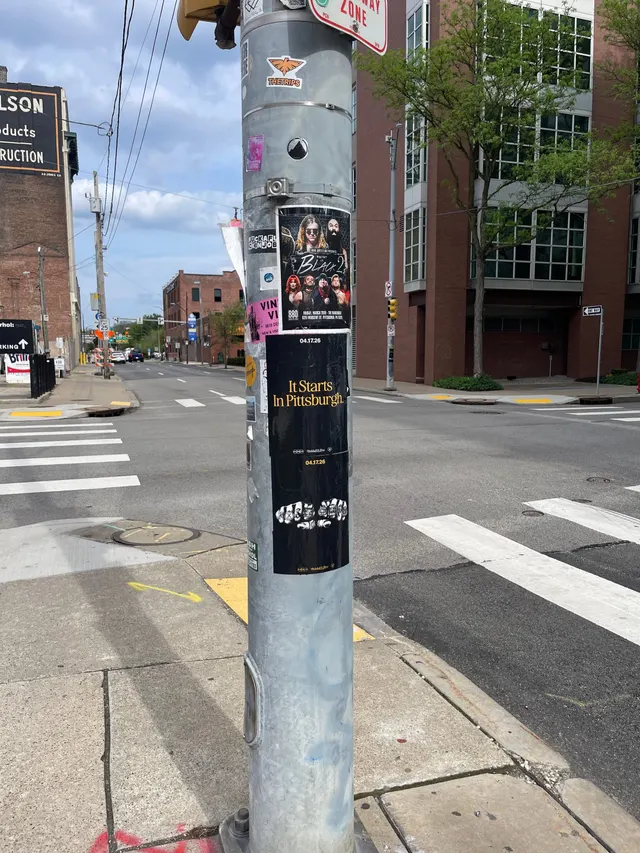
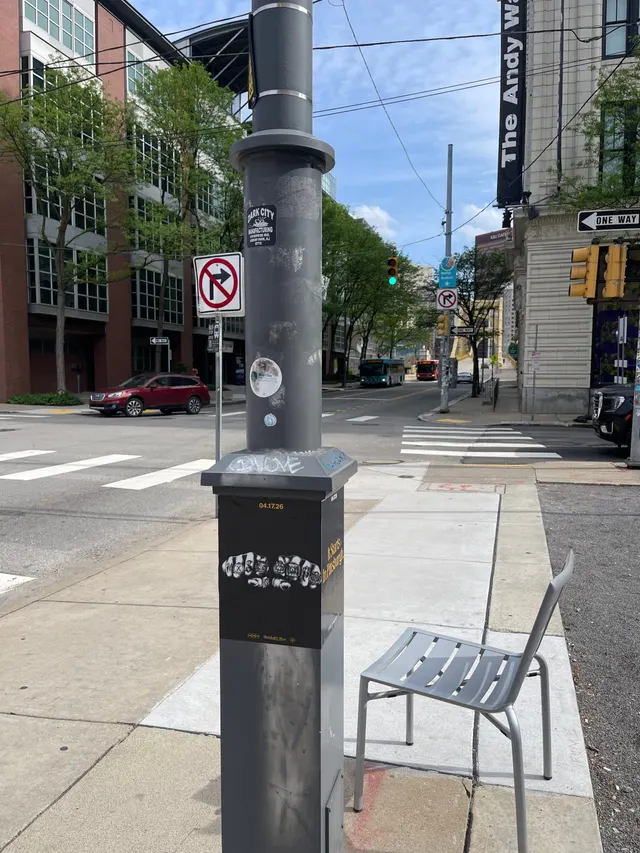
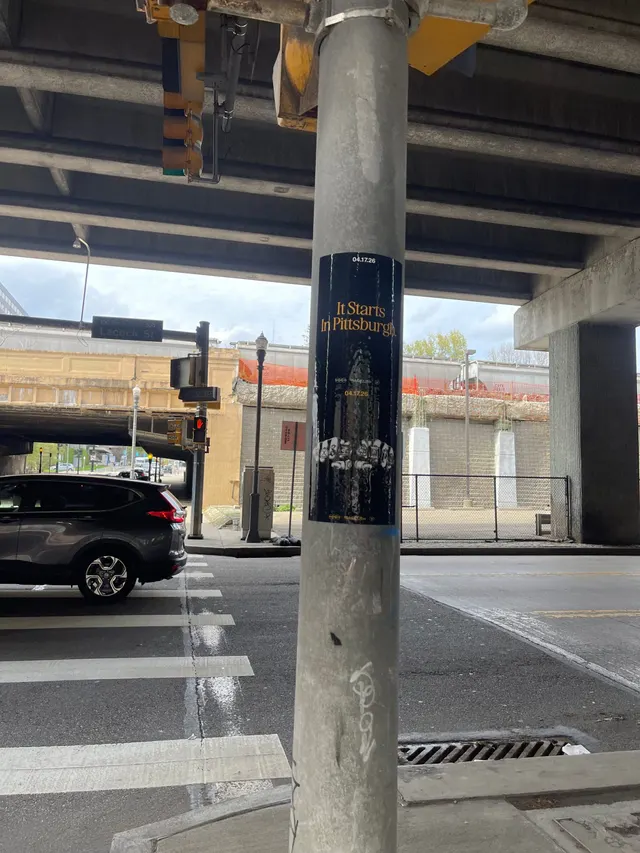
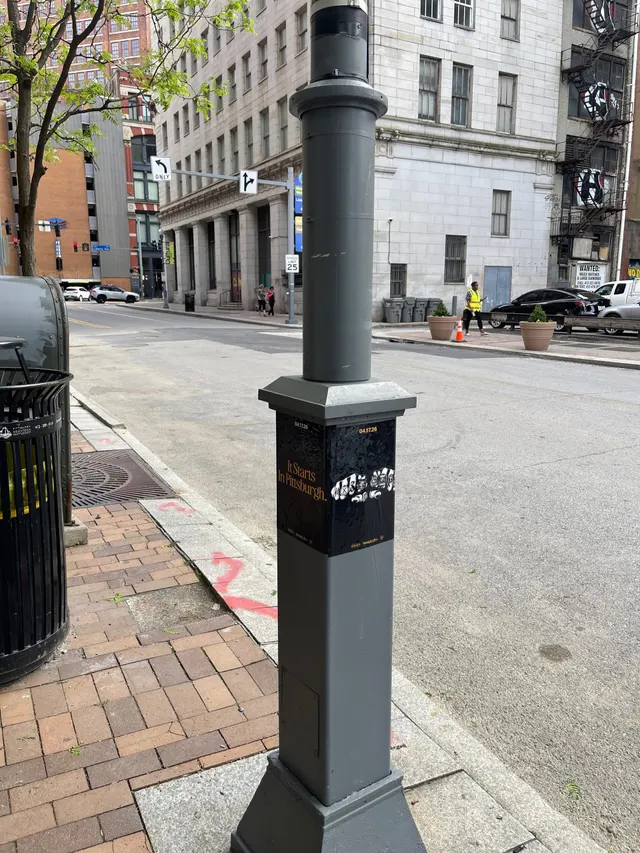
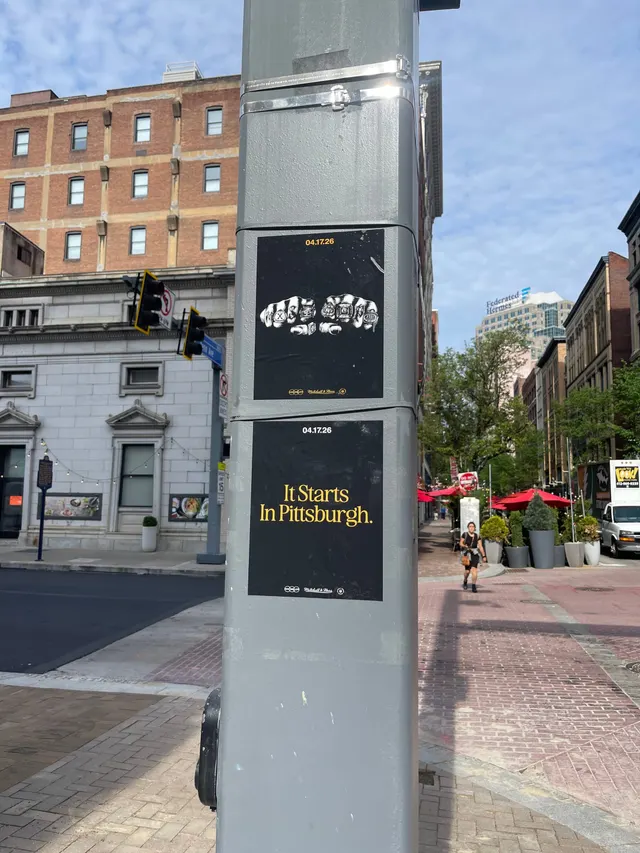
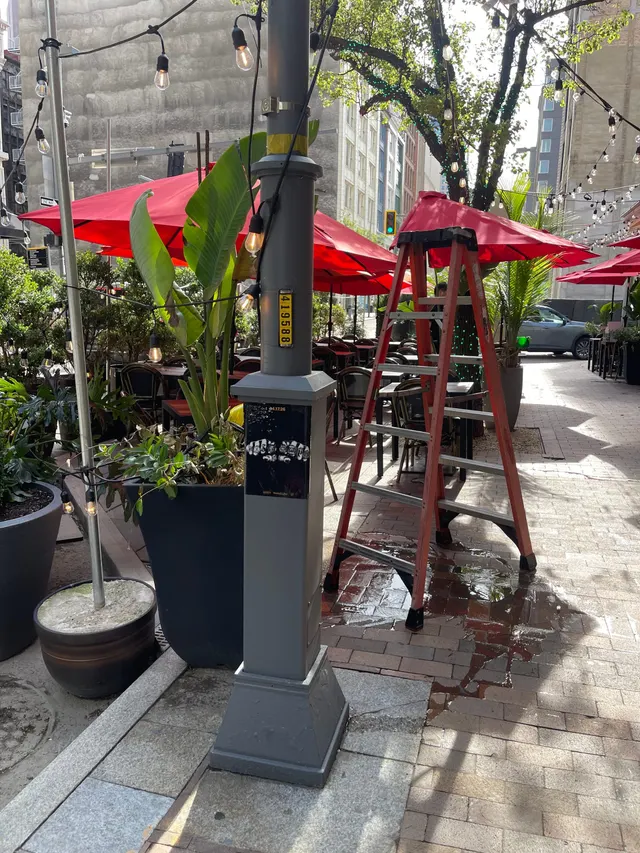
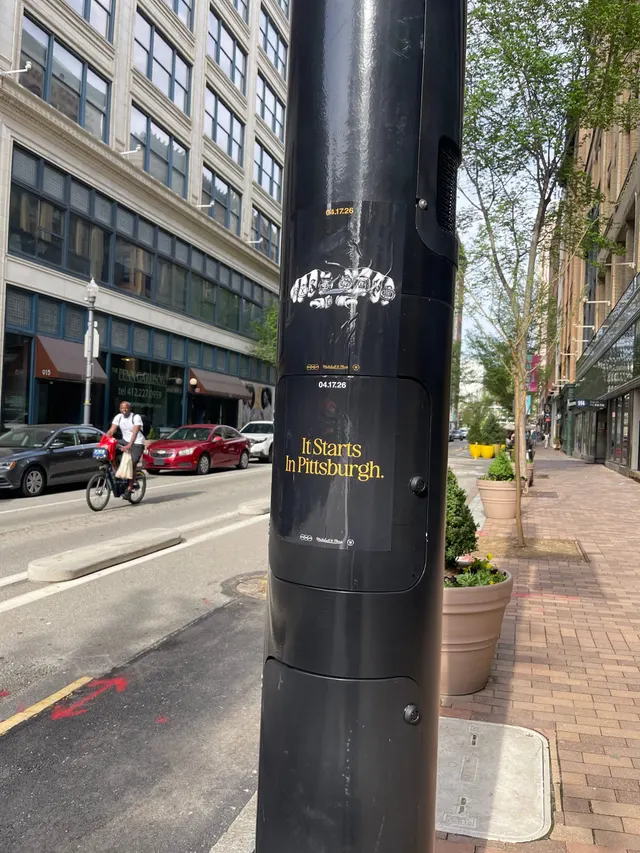
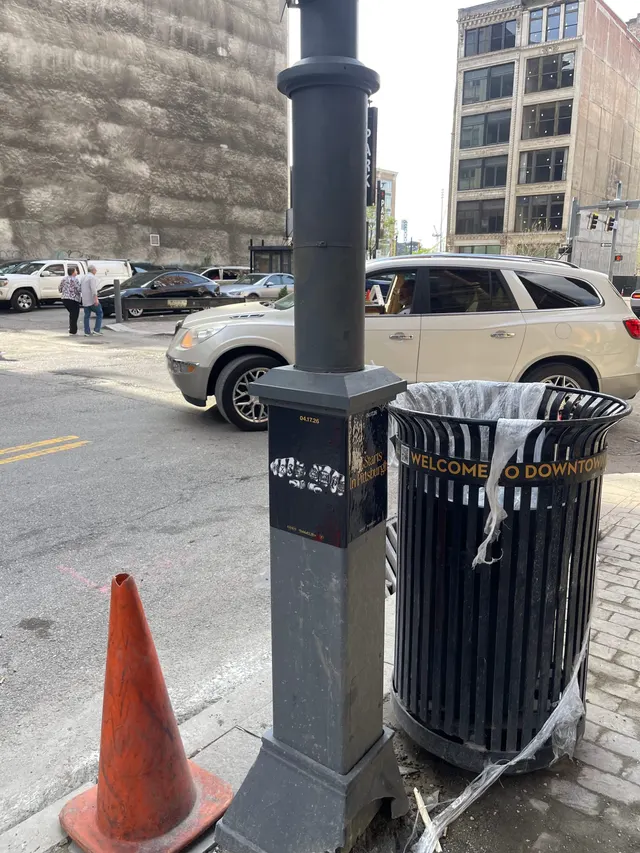
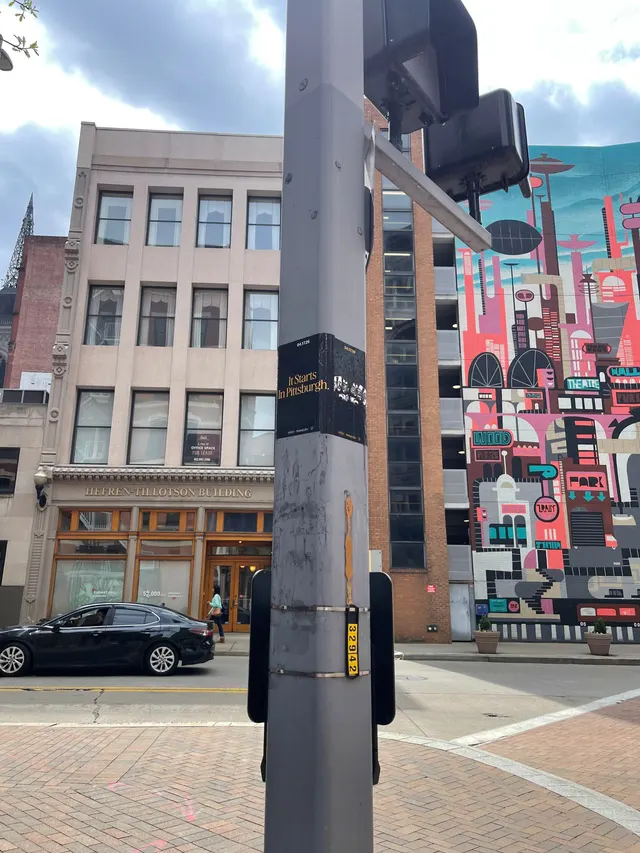
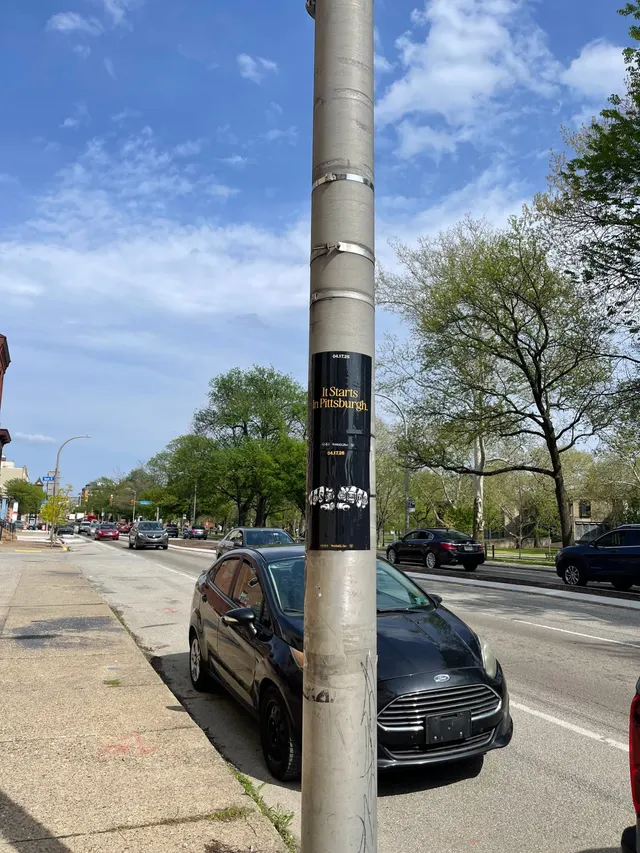
Thirty-three poles, each carrying a black sticker with small gold text and a single mark. The Andy Warhol Museum sits in the background of one of the install photos, not by accident: the route runs the streets that hold Pittsburgh's civic identity. "It Starts In Pittsburgh" reads as a claim rather than an ad. The city becomes the canvas at pedestrian eye-line, on the metal posts that anchor every Pittsburgh sidewalk.
Civic-awareness campaigns face a specific problem.
There is no product to sell, and the audience is a citizen rather than a consumer. Conversion means recognition, then conversation, then participation, none of which a click can stand in for. Paid social can't manufacture that funnel cleanly, broadcast OOH is too expensive for a grassroots budget, and traditional yard-sign tactics read as electoral rather than civic.
Pole stickers slot well into civic-scale messaging. They sit on existing infrastructure the city already maintains: utility poles, parking signs, lamp posts. At pedestrian eye-line they feel less commercial than a billboard and less electoral than a yard sign, and they outlast a flyer. "It Starts In Pittsburgh" needed to live where Pittsburgh actually walks (Downtown, Lawrenceville, Strip District), and the brief mapped a 33-placement route across those corridors.
The black-and-gold palette comes straight from Pittsburgh civic identity. The Penguins, the Pirates, the Steelers, the City of Pittsburgh flag. Black and gold is the visual vocabulary the city already speaks. A sticker in those colors reads as belonging before it reads as advertising.
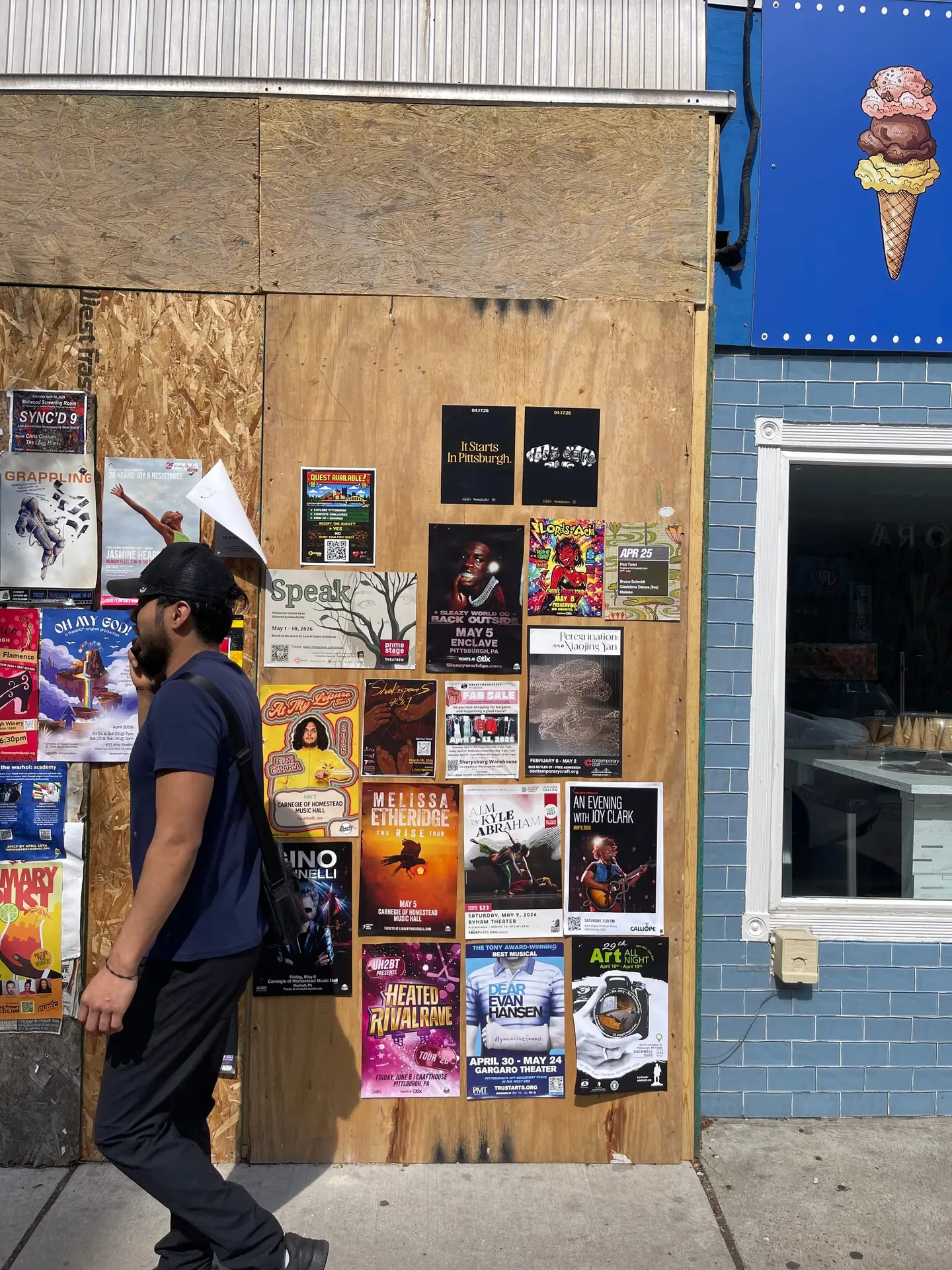
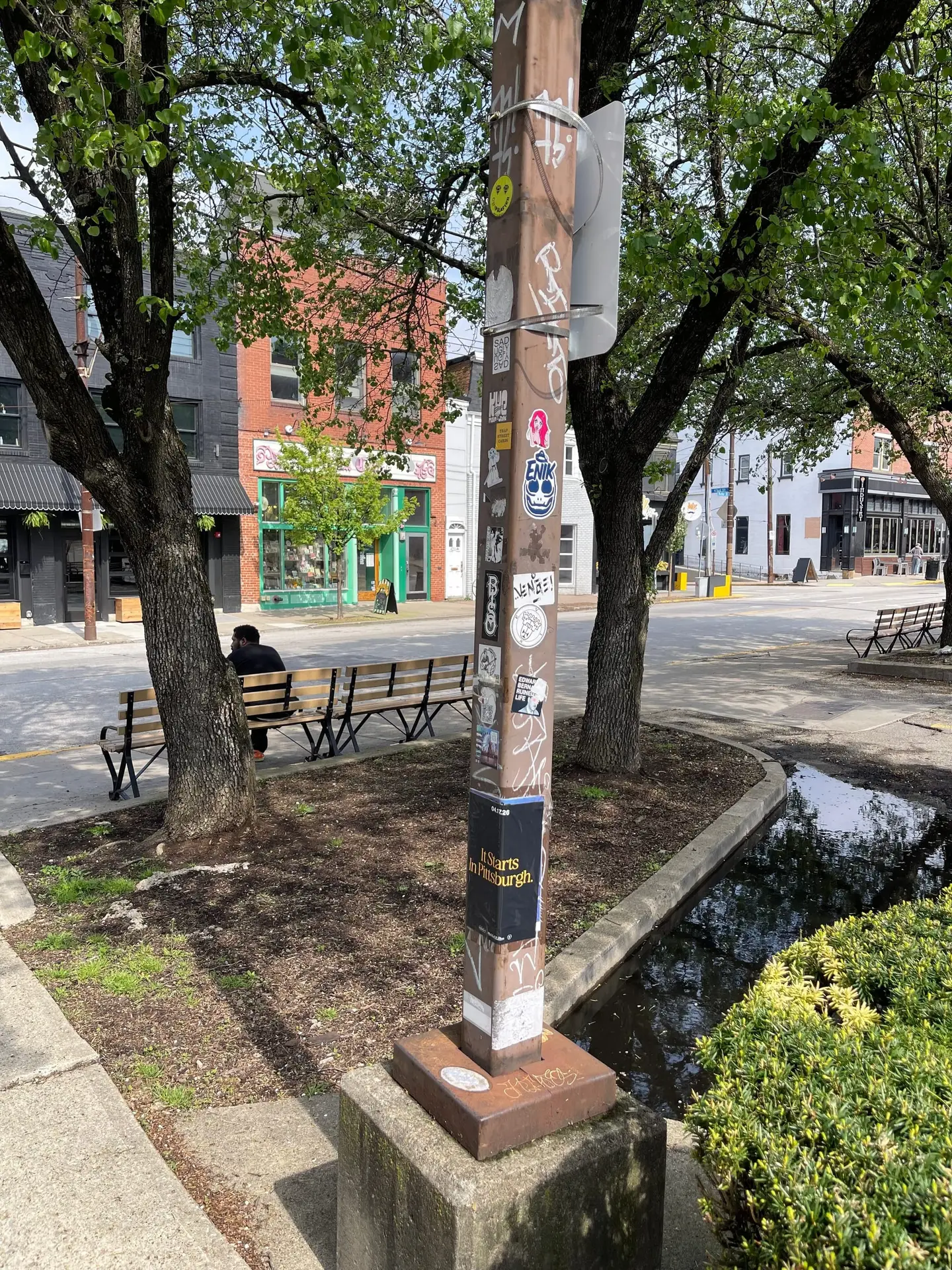
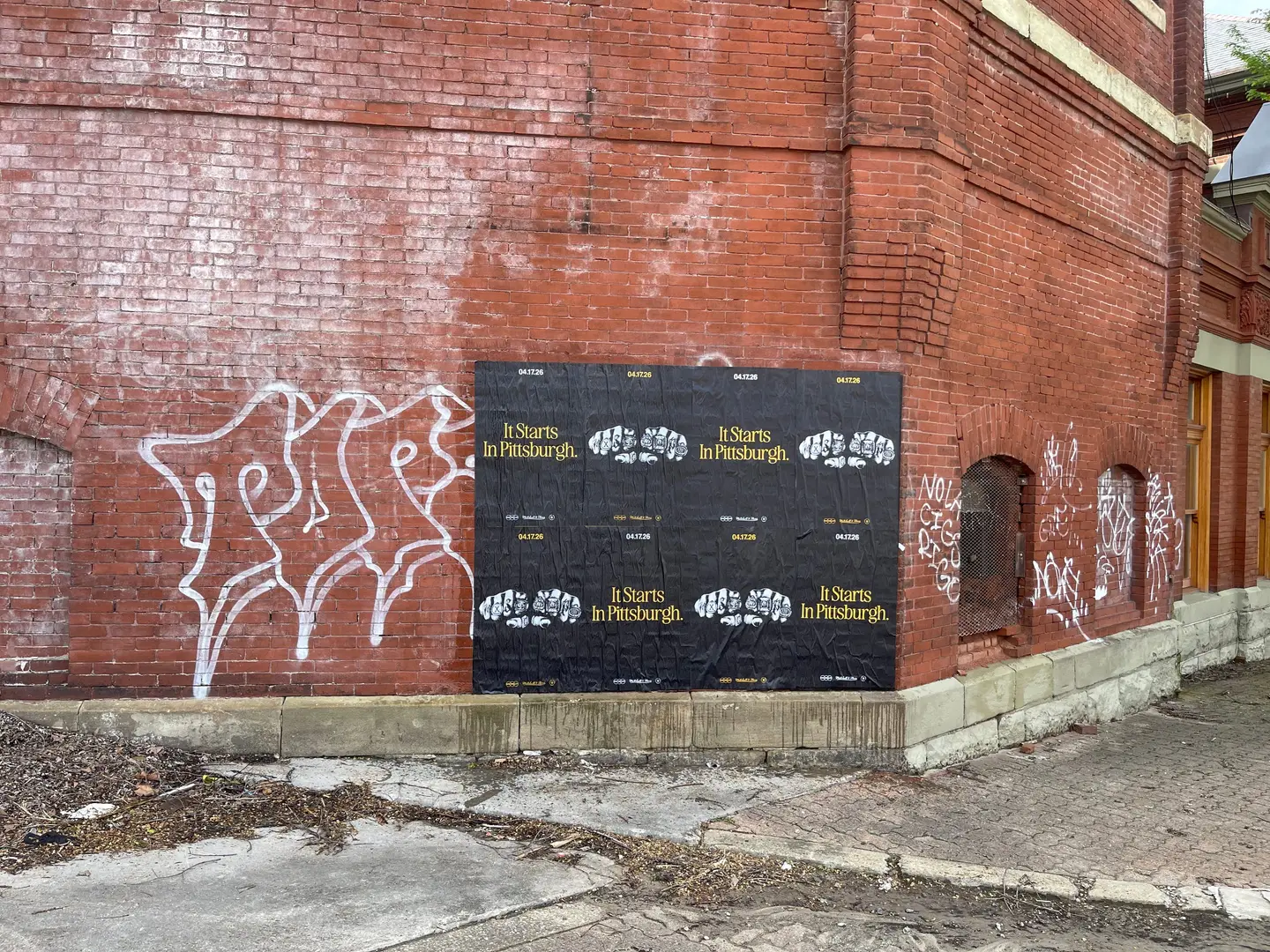
The civic core, up close.
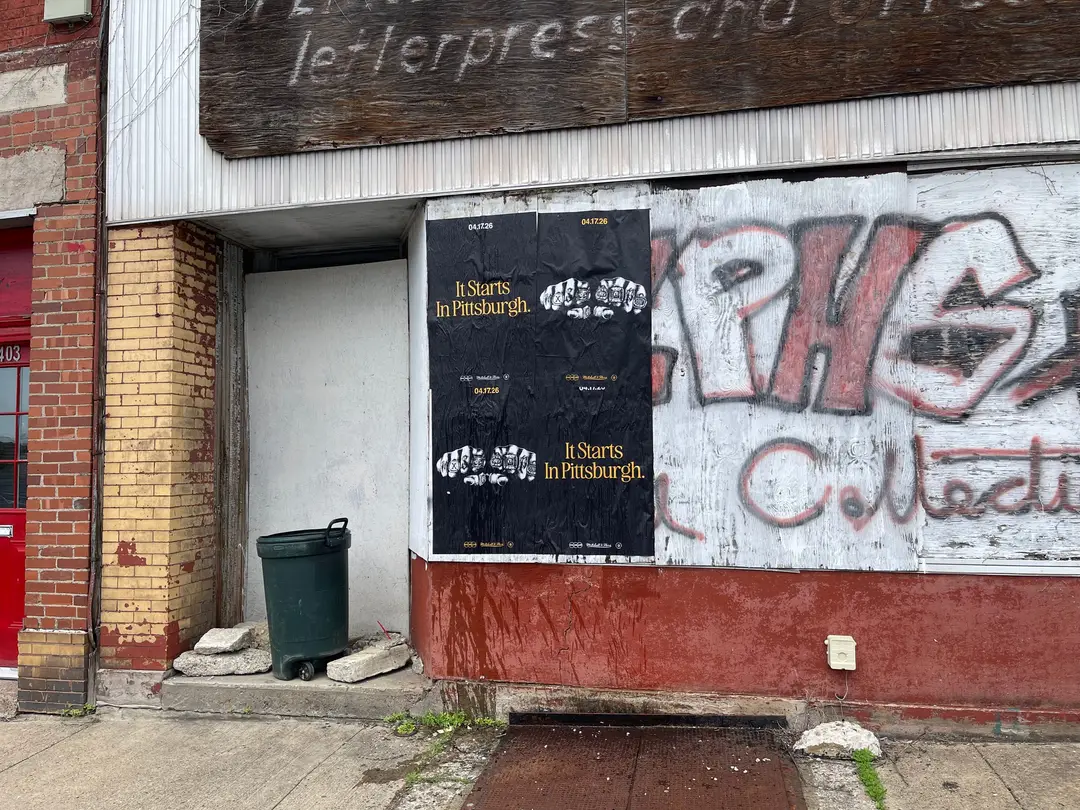
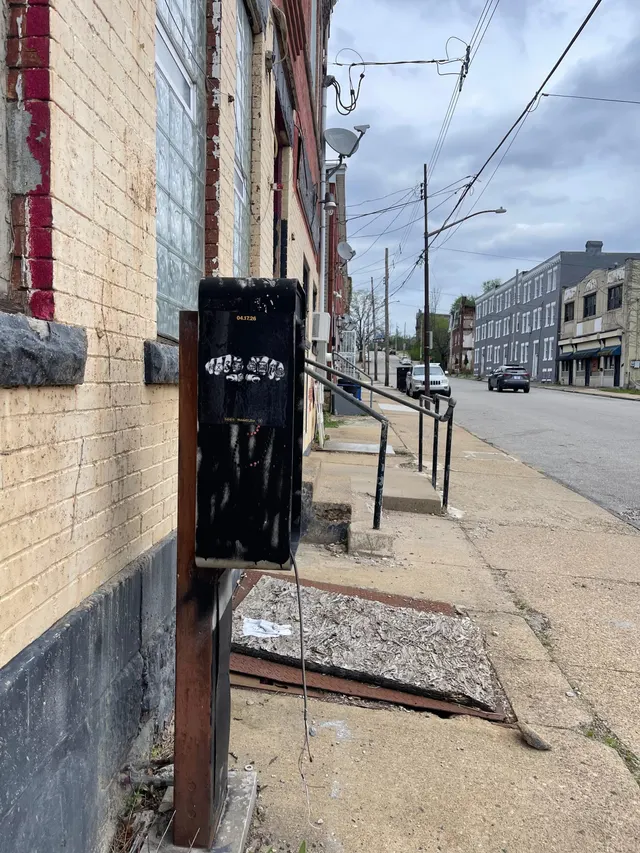
33 stickers across Downtown, Lawrenceville, and the Strip District: utility poles, parking signs, and cabinets carrying a grassroots message on a budget no billboard could touch. Each placement photographed with coordinates.
Where we ran it.
The campaign route concentrated on three neighborhoods that anchor Pittsburgh's daily civic life:
- Downtown / Cultural District. Government buildings, theaters, the Warhol Museum on the North Shore, Heinz Hall, the federal courthouse corridor. - Lawrenceville. Butler Street commercial spine, dense residential, high-foot-traffic dining and boutique retail. - Strip District. Penn Avenue corridor, the Saturday-morning farmer's market traffic, the historic warehouse-conversion zone.
These three neighborhoods carry Pittsburgh's civic identity at different registers: Downtown's institutional weight, Lawrenceville's young-professional residency, Strip District's weekend-leisure traffic. A single message threaded across all three reaches every demographic the campaign needed to touch.
What we ran.
Black-background vinyl pole stickers, 4 × 6 in nominal. Gold typography (the wordmark and a small graphic element), high-tack marine-grade adhesive (steel post-friendly, 6-month minimum durability). The creative is minimal: the mark, the text, a small icon. No URL, no QR. The campaign is awareness-first; conversion happens through the conversation the sticker provokes, not through a digital funnel.
Pole stickers on Pittsburgh infrastructure require a specific substrate. Pittsburgh winters drop below freezing for 60+ days a year, and the freeze-thaw cycle peels standard vinyl off metal posts within 30 days. The marine-grade adhesive selected for this campaign (same formulation we use for coastal markets) bonds at sub-freezing temperatures and holds through the freeze-thaw cycle. Civic-campaign messaging needs to last past the install date. Cheap adhesive defeats the strategy.
Install ran across a 7-day window.
Days 1 to 3 covered Downtown placements, working block-by-block from the Cultural District through the Boulevard of the Allies corridor. Days 4 to 5 covered Lawrenceville, anchored on Butler Street between 35th and 45th. Days 6 to 7 covered Strip District, working Penn Avenue between 16th and 28th.
The Lawrenceville crew worked early morning to avoid pedestrian peak. Butler Street's coffee-and-brunch foot traffic stacks fast after 9am. Strip District placements went up Friday afternoon and Saturday morning before the weekend market opened, so the maximum-traffic window saw fresh stickers rather than installs in progress.
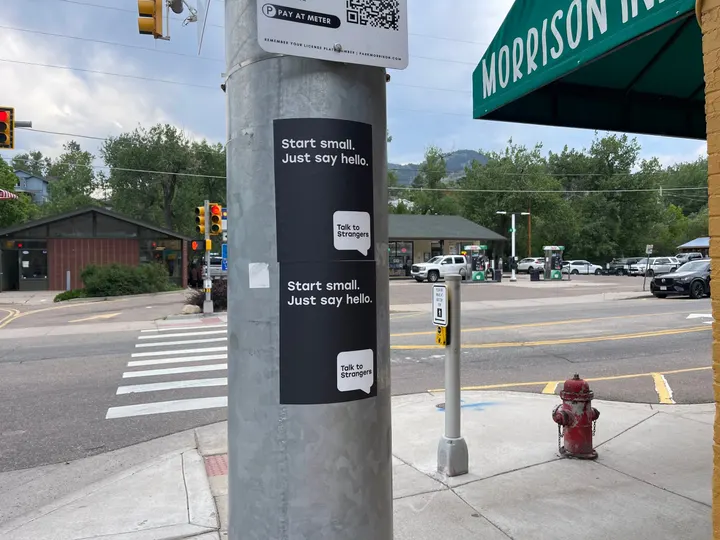
Every placement photographed in context: the sticker on the pole, the surrounding street geometry, a Pittsburgh landmark in the background where possible. The Warhol Museum visible behind one of the Downtown placements wasn't staged. It's where the post sits relative to the museum entrance, and the photographer captured both.
Proof.
The client received a route manifest the day after install closure.
Durability monitoring: at 60 days, 30 of 33 stickers held visible. At 120 days (through the worst of Pittsburgh's winter freeze-thaw cycle), 26 of 33 still legible. The campaign's intended visibility window was 90 days. Actual visibility exceeded that on roughly 80% of placements. Marine-grade adhesive earned its cost difference.
Civic-awareness campaigns reward different metrics than commercial campaigns.
The Pittsburgh placements didn't drive a measurable digital conversion because the message wasn't built for one. What the campaign drove instead: local press pickup, Reddit thread activity (r/pittsburgh registered three different conversations about the sticker placements during the install window), and on-the-ground neighborhood conversations that the client's organizing team documented through community feedback channels.
The black-and-gold palette tested a hypothesis the crew now considers proven. In cities with strong civic-color identity (Pittsburgh, Boston, Philadelphia, Atlanta in different palettes), street-media campaigns benefit from matching the city's existing visual vocabulary. The sticker reads as belonging before it reads as advertising, which is exactly what civic messaging requires.
Strip District timing also confirmed an operational rule: install before the high-traffic window, never during it. A pedestrian who sees fresh sticker placement reads it as official infrastructure. A pedestrian who sees install-in-progress reads it as ephemeral marketing. Civic-scale work needs to feel installed rather than in-progress.
Thirty-three poles across three neighborhoods in seven days, a city-scale message executed for a fraction of what billboard-equivalent reach would cost.
Is this format workable on a grassroots budget?
It is part of why the format got picked. Broadcast OOH prices out a civic budget and yard-sign tactics read as electoral. Snipes and stickers start at $3,000 on our published floors, with printing and installation in house and inside that number, and this route covered 33 placements across three neighborhoods in seven days. Scoping a quote takes 24 to 48 hours.
How do the stickers hold up through a Pittsburgh winter?
This campaign used a marine-grade adhesive that bonds below freezing, the same formulation we run in coastal markets. Standard vinyl peels off metal posts inside 30 days once the freeze-thaw cycle starts. At 60 days, 30 of the 33 placements were still visible. At 120 days, through the worst of the winter, 26 were still legible against a 90-day intended window.
How do you measure a campaign that is not selling a product?
This run carried no URL and no QR code, so there was no digital funnel attached to it. What the client tracked instead was local press pickup, three separate r/pittsburgh conversations about the placements during the install window, and feedback their organizing team collected through community channels. Delivery itself is proved by the route manifest, which landed the day after install closed.
Does install timing matter for pole stickers?
It changed the routing here. Crews worked Lawrenceville early morning, before Butler Street's coffee traffic stacks up after 9am, and put Strip District placements up Friday afternoon and Saturday morning ahead of the weekend market. A pedestrian who sees a fresh sticker reads it as part of the street. A pedestrian who walks past an install in progress reads it as temporary.
---
Civic campaign documentation by Beyond Street Media Pittsburgh crew, Tri-State window.
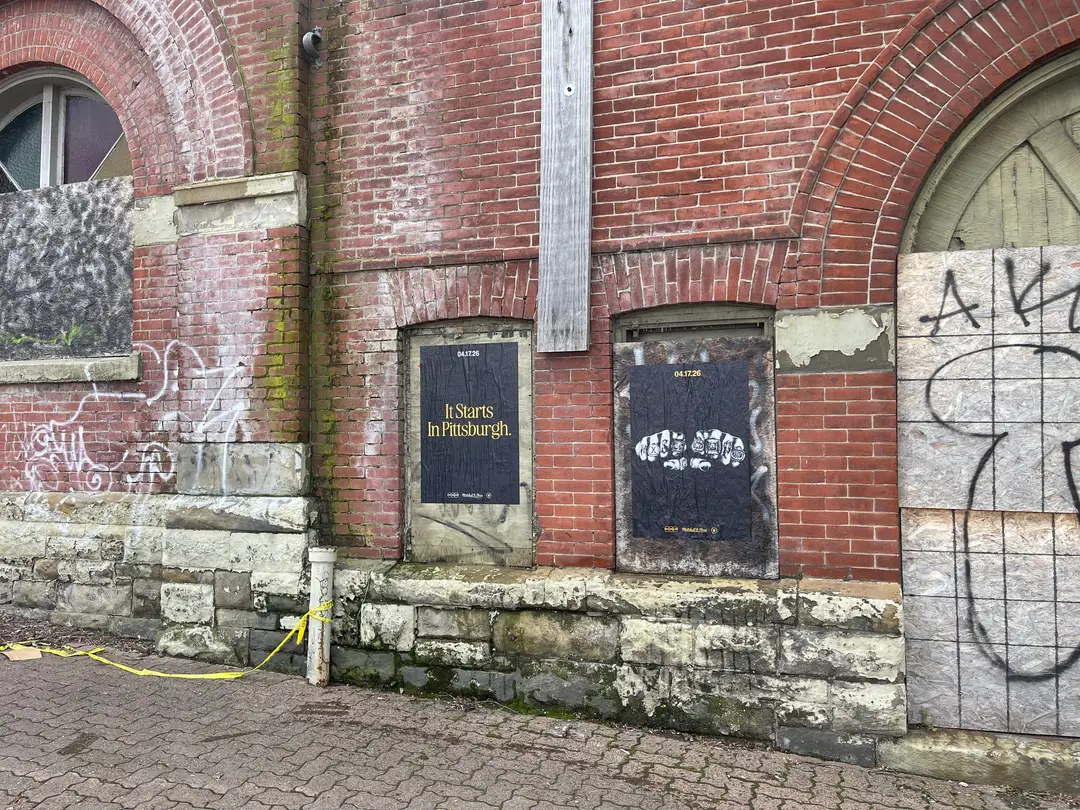
22 additional installs.
Run a pole sticker advertising campaign?
Same crew, your brand.
The same operator network that shipped It Starts In Pittsburgh's campaign is on call for yours. Brief us with city, dates, and creative. Quote back in 4 hours.
Run a campaign like It Starts In Pittsburgh's?
Get a quote