A tour activation is a compressed campaign with one fixed point: the show date. The venue is booked, so the deadline cannot move. The working window is the four to six weeks before doors, the photo assets need to be with the artist’s team before the final pre-show push, and everything else schedules backward from there.
The tail end of that window carries more weight than it used to. Eventbrite data released at the NIVA ‘24 conference and reported by Pollstar found 57 percent of US music tickets sold a week or less before the show, with the average gap between purchase and show date down 26 percent between 2022 and 2024. A campaign that peaks a month out is talking to a buying window that has already moved.
What follows is the sequence we scope a multi-market tour against, with the parts we have actually run marked as documented work.
Tour Structure and City Sequencing
The shape we scope against is six to eight cities across eight to twelve weeks, shows on Friday or Saturday, five to seven days apart to absorb travel and load-in.
Week one is the brief. The label locks its operator, confirms the tour cities, and answers a brief template covering artist name, tour name, estimated show dates per city, brand palette and target audience. Week two is the label’s turn: final dates, venue addresses, approved creative direction. Scouting on the first city starts while that comes back.
Week three, City A gets scouted and property consent locked, and the city-specific creative goes in for approval. Week four, City A creative clears, print runs, and the install lands three to five days before the show, so a Saturday show installs Tuesday or Wednesday. Scouting on City B starts the same week. Week five, City A photos deliver to the label while City B creative goes in and City B print begins. From week six the pattern repeats, each city’s scouting overlapping the previous city’s install and each install overlapping the next city’s creative review.
That overlap is what keeps the calendar honest. A tour run strictly in series, finishing City A before starting City B, misses its install date by the third market.
City Selection and Corridor Strategy
The target corridor depends on where the audience for the record spends a Friday evening, which is rarely the block the venue sits on.
New York splits across two boroughs before you start. Madison Square Garden sits in Midtown above Penn Station and Barclays Center is at 620 Atlantic Avenue in Brooklyn. The corridor that carries weekend foot traffic for most touring acts is Williamsburg into Bushwick. Plan fifteen to twenty wall positions across Bedford Avenue between South 1st and South 9th and the Metropolitan Avenue stretch.
Nashville is the market where the venue map is most often misread. Marathon Music Works sits in Marathon Village northwest of downtown, and Acme Feed and Seed is on Lower Broadway itself. The pre-show crowd is on Broadway between 3rd and 5th, in the honky-tonks and dinner spots, so plan twelve to fifteen wall positions along that stretch.
Philadelphia is the market where a venue already sits close to the fan corridor. The Fillmore Philadelphia is at 29 East Allen Street, on the Northern Liberties edge just below Fishtown, while Union Transfer sits up on Spring Garden Street. Frankford Avenue north of Girard carries the foot traffic. Plan twelve to fifteen wall positions across Frankford Avenue and Old City’s 2nd Street blocks around Market.
Atlanta splits the same way New York does. State Farm Arena is downtown, and The Eastern opened in Reynoldstown inside the Atlanta Dairies development on Memorial Drive. The audience corridors are Little Five Points along Moreland Avenue and the Old Fourth Ward around Boulevard. Plan ten to twelve wall positions per corridor.
Austin keeps its venues downtown, with Stubb’s on Red River and ACL Live at the Moody Theater. The audience is east and south of that. Plan eight to ten wall positions each along the East 6th Street corridor and on South Congress.
Los Angeles spreads further than any other tour market. Crypto.com Arena is downtown and the Kia Forum is out in Inglewood. Split eight to ten wall positions each across Echo Park, Silver Lake and the Arts District, because a single-neighborhood install reads thin against that geography.
The principle is to install where the audience already walks on a Friday, then document what went up. Whether a corridor moved ticket sales shows up in the label’s ticketing reports. We photograph placements and log coordinates; attribution belongs to whoever owns the analytics.
Property Scouting and Consent (2 Weeks Per City)
Scouting a city runs about two weeks, most of it spent getting consent rather than finding walls.
The first week walks the corridors. Identify twenty to twenty-five candidate surfaces (building frontages and construction hoarding), photograph each one with GPS coordinates, and pin them in a shared map document. Then filter on two questions: whether the surface holds paper, and whether the person who controls it can be reached.
Private frontage and public infrastructure are different categories, and cities treat them differently. In New York, the Department of Sanitation removes illegal postings from public and City-owned property such as bus shelters, street lights and utility poles, and states that removal from private buildings is the property owner’s responsibility. That is the whole reason the work sits on private walls with paperwork behind it. California writes the consent requirement into statute: Penal Code 556.1 makes it a misdemeanor to place advertising on property you have no right of possession in without the consent of the owner or lawful occupant, obtained before the material goes up.
So the scouting filter is owner reachability and surface quality. Building frontages with a reachable owner or manager beat higher-traffic walls that belong to a chain with a national real estate desk. Skip transit infrastructure and government property. Log surface condition on every candidate: clean or dirty, existing damage, texture, adhesion likelihood.
The second week is outreach. Contact twelve to fifteen owners from the candidate list with a note covering artist name, campaign concept, install window with specific dates, format, removal timeline, and a request for a consent letter. Most owners do not answer the first ask, so budget two or three rounds of follow-up. By the end of week two you want binding consent on eight to ten properties.
Response time varies by market, and the pattern below is our own outreach experience rather than a benchmark. New York and Los Angeles tend to run five to seven business days, because the answer usually has to clear a management company. In Nashville, Philadelphia, Atlanta and Austin the owner is more often the person answering the email, and the reply comes back faster.
If scouting slips past two weeks, the install compresses toward the show date and the campaign loses the days on the wall that let a repeated route cross the same paper more than once.
Creative Development and Approval (3 Weeks Per City)
Creative is the gating constraint on a tour, because the label’s marketing team is moving fast and makes late changes.
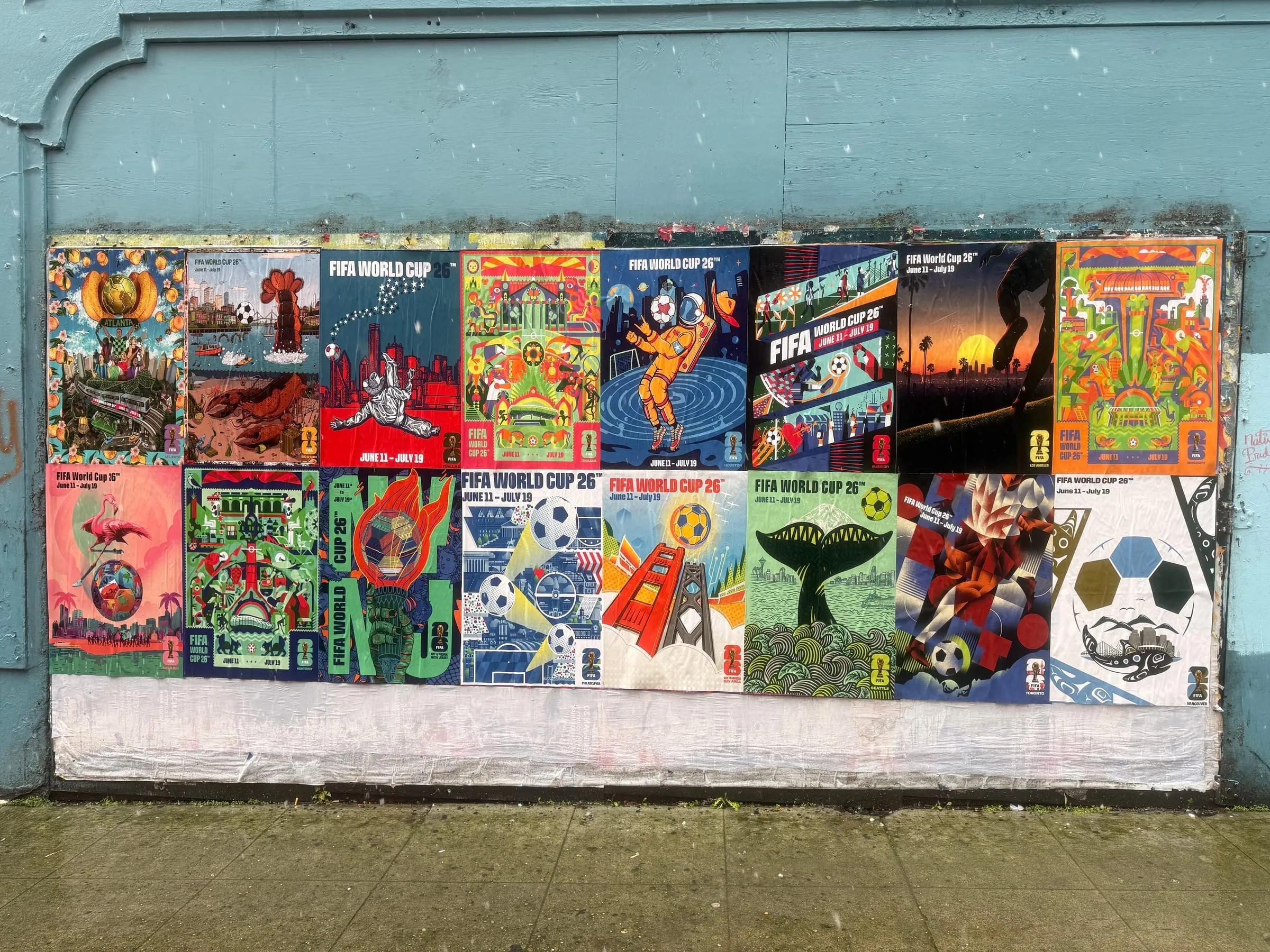
The city-specific file goes to the label’s approval contact, usually the tour marketing manager or the artist’s management. It carries artist name and logo, tour name, the city and venue and date line, the tour’s color treatment, and a ticket QR code if the label wants one. Most labels come back with one or two quick changes: type size for read distance, or a color adjustment once the proof looks different from what they expected in CMYK. Those revisions turn in a day or two.
Approved files go to print. Standard lead time runs five to seven days from approved creative in tier-1 markets, and printed stock should reach the crew three to five days before the install date.
When approval slips, the schedule does not forgive it. Expedited work goes up in 24 to 72 hours at 80 to 150 percent above standard, which is published on our pricing page rather than quoted case by case. Start each city’s creative round the day the label confirms that city, and overlap it with the previous city’s install instead of waiting for all six dates to lock.
Install Timing and Crew Logistics (3-5 Days Per City)
Install lands three to five days before the show in the standard case. A Saturday show installs Tuesday or Wednesday; a Friday show installs Sunday or Monday. The documented range on our side is wider than that, in both directions.
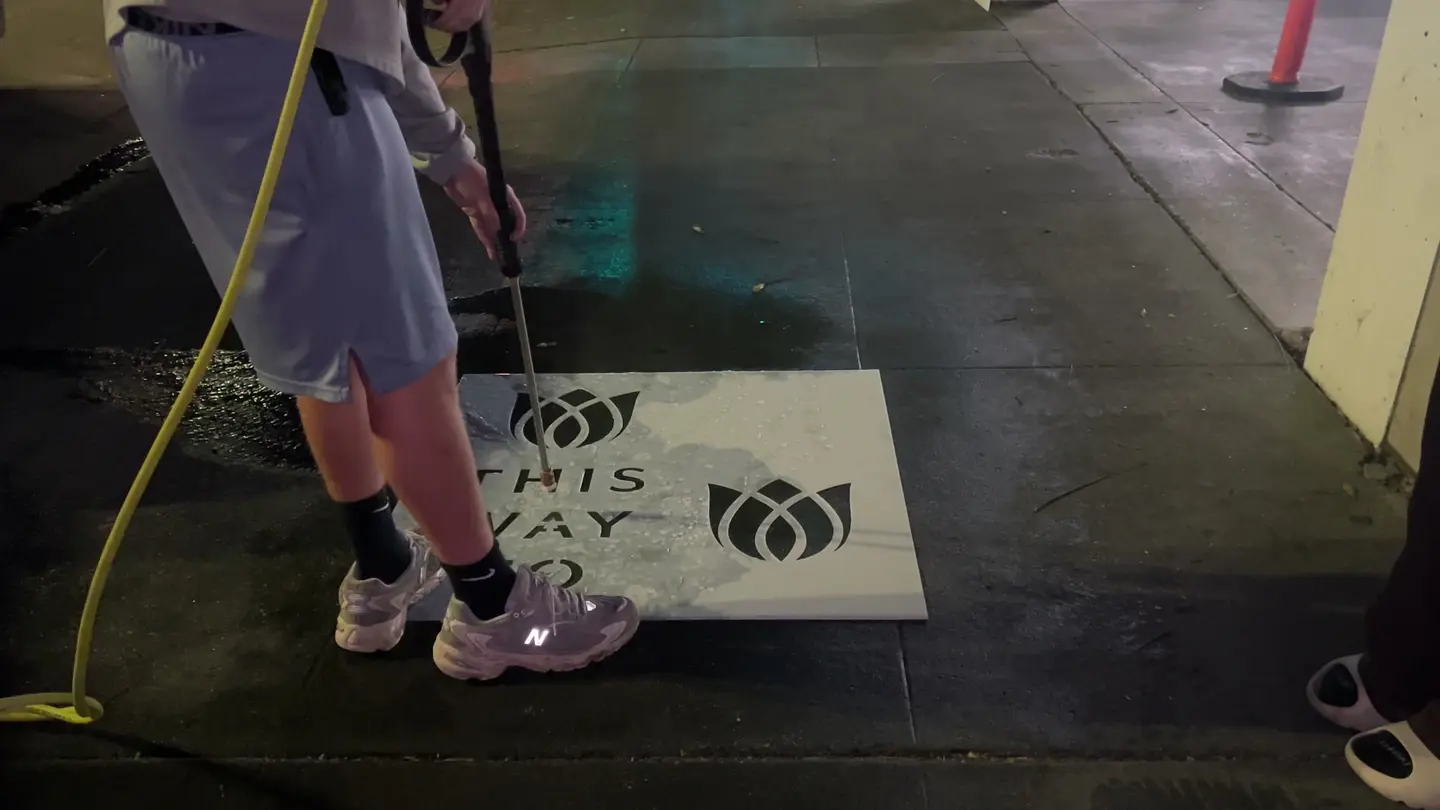
Johnny Blue Skies went up on a Saturday night into Sunday morning for a Tuesday arena date, two days out, at 350 placements in a single overnight window: 150 wheatpaste posters at 24 by 36 and 200 pole snipes at 8.5 by 11 across six downtown Phoenix corridors, booked by AEG Presents and Goldenvoice. The Red Clay Strays run for the same promoter went the other way, up ten days ahead of a September 17 date at Desert Diamond Arena, 200 sheets across nine walls in seven downtown corridors on a single Monday morning install. Breakaway Carolina took Charlotte in one overnight sweep, 100 posters across nine wall clusters plus 40 chalk sidewalk stencils running from Uptown down the Rail Trail out to University City.
What those runs have in common is a crew that already knew the frontages. The two Phoenix campaigns went up in the same week for the same promoter, and three of the frontages carried both. A market with a resident crew absorbs a two-day window. A market you are seeing for the first time wants the full three to five days, because wheatpaste cures in 24 to 36 hours and a failed surface needs a night in hand for touch-up before photo day.
Crew logistics per city come down to vehicle access. In dense neighborhoods like Williamsburg or Echo Park, parking and load-out add twenty to thirty minutes per property. In spread corridors like East Austin or South Congress, travel between properties adds forty-five to sixty. Schedule 1.5 to 2 hours per wall rather than the nominal 30 to 45 minutes, and a two-person crew working a six to eight hour night covers three to four walls. On a traveling tour, that crew moves markets on Sunday or Monday with lodging and per diem inside the tour budget.
Venue Proximity
Do not work from a published distance. We have not found an advertising ordinance that sets a setback specifically for event venues, so when a promoter or a venue quotes you a number in feet, treat it as a house rule rather than a code citation.
What governs the ground around a venue is ordinary property law. Posting without the owner’s consent is prohibited and enforced locally, and the block in front of a venue tends to be the most contested block in the market. The venue’s lease, its event permit and the promoter’s agreements usually cover that frontage, and security clears it on show day regardless of what any ordinance says.
The workable approach:
- Identify the primary entrance and the load-in door.
- Keep campaign elements off the venue’s own frontage and out of the load-in path.
- Clear placement with the venue’s building manager and the label’s tour promoter on the first city call. They know what their landlord and their security will tolerate.
- Get written owner consent on every surface you do use, the same as anywhere else in the market.
In practice this rules out a small share of the candidate surfaces, and the corridors where the audience actually gathers sit well outside the contested zone anyway. Consent is what removes enforcement risk, not distance.
Photo Asset Delivery and Social Amplification (48-72 Hours Post-Install)
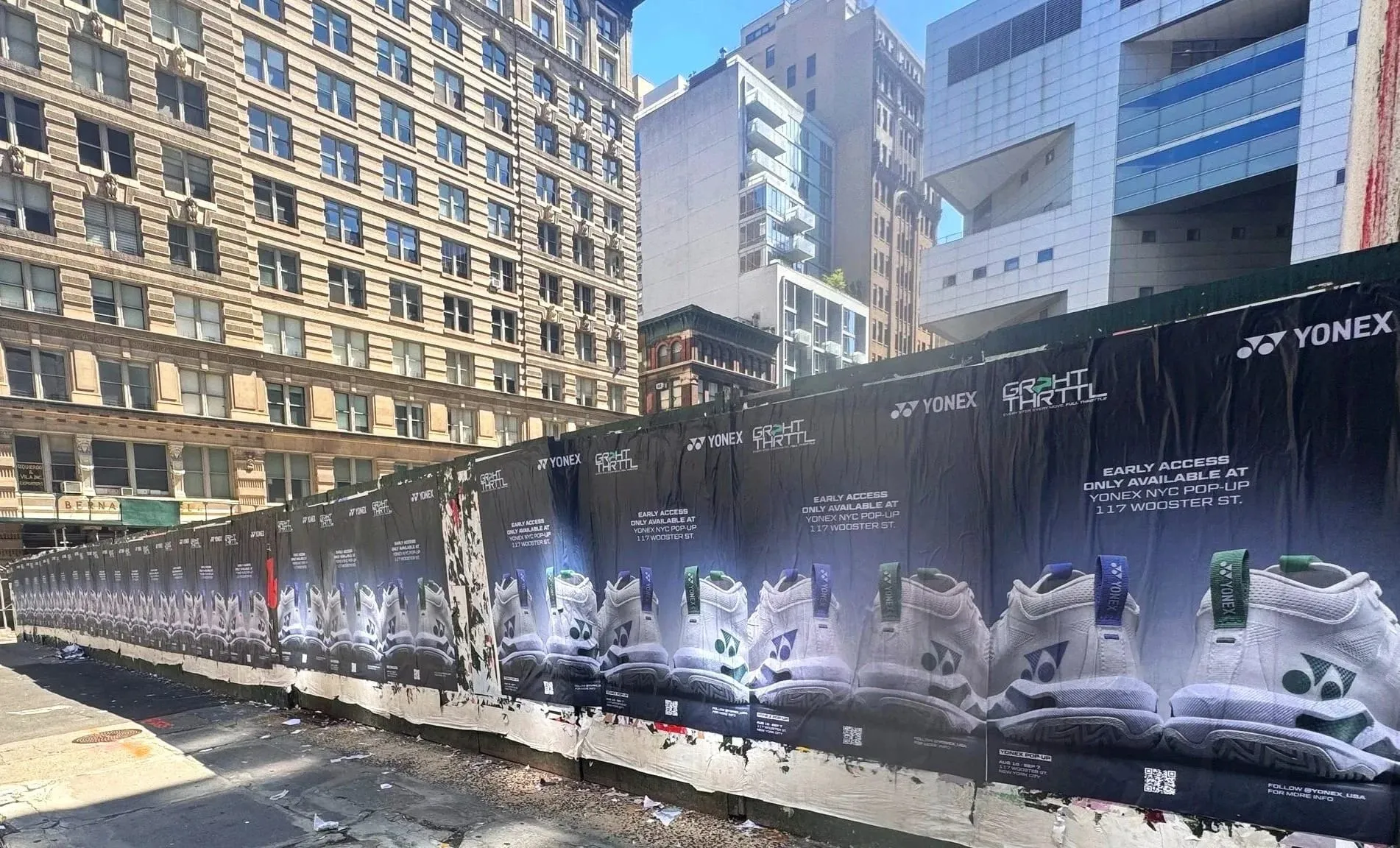
Photo assets are the bridge between the street campaign and the artist’s channels. They are also the only part of the campaign we can prove, which is why the documentation standard does not flex.
The Johnny Blue Skies set came back at 135 frames, 103 of pole snipes and 32 of posters, most of them holding the placement in its street context rather than cropping tight to the paper, and every frame carrying GPS coordinates from install day. That is the shape of the deliverable on any tour city:
- A primary hero frame per wall, horizontal, at human-eye scale, with the street reading as populated rather than empty. Morning light between 8 and 10 AM gives you pedestrian flow without the afternoon haze.
- A detail frame per wall showing surface texture, paste adhesion and branding clarity.
- Coordinates, install timestamp and surface address logged per wall, plus a pinned map the artist’s team can post from.
The delivery clock runs from the install, not from the shoot. Install Tuesday or Wednesday night, cure through Thursday morning, photograph Thursday or Friday depending on weather and light, process and deliver by Friday evening, label review that night, artist deploy over the weekend before a Monday or Tuesday show.
Past 72 hours the gallery arrives after the label’s final push and becomes archive material rather than promotion. Given how much of the buying now happens inside the last week, that final wave is the one the photography is built for. How the artist’s team uses the gallery, a single post or a story kept up through show week, is the label’s call rather than ours.
Hashtag and Fan-Photo Strategy
The label usually runs a tour-specific hashtag. Agree on it with the tour marketing manager before creative is finalized, because it has to live on the sheet.
If the label wants fan-generated content, the hashtag goes on the campaign design itself, usually as the only small-point element on the sheet, which means it has to stay legible at walking distance. Agree with the label on who monitors it, and settle that before install rather than after.
Venue coordination helps here. Ask the promoter’s marketing contact whether they will watch the hashtag the day before and day of show and re-post fan photos. Some will and some will not, and it is worth knowing which before the sheet goes to print.
Typical Multi-City Tour Budget
A tour quote is built per market against published floors rather than from a flat weekly rate. Wheatpaste posters start at $3,500 and snipes at $3,000 on the pricing page, which is the number a two-format buy gets quoted against in each city. Send the market list and a scoped quote comes back inside 24 to 48 hours.
Inside a per-city number, install labor is the largest line and print is second, with documentation, delivery and consent work behind them. Wall counts scale with how spread the audience is rather than with venue size, so a compact corridor costs less than a market where the audience splits across two neighborhoods.
Two structural savings are worth naming. One traveling crew across six to eight markets costs less in logistics than dispatching a new crew per city. In a market where we keep a resident crew, scheduling is looser and billing is simpler. Working against those, expedited work goes up in 24 to 72 hours at 80 to 150 percent above standard, and a late label approval in one market pushes the install window in the next.
How an eight-market leg is usually sequenced
Beyond Street Media has not published a documented eight-city tour activation, so treat the shape below as the planning model we scope against rather than a campaign write-up. The documented music work on file is the OneRepublic Artificial Paradise sidewalk stencil run in New York City, 25 placements across Manhattan and Brooklyn commute corridors, alongside the Phoenix and Charlotte runs above.
The sequencing that holds up:
- One market per week, with the install landing three to five days before the show, which gives the campaign a pre-show window without letting it weather out before the audience arrives.
- Wall counts scale with how spread the audience is, not with venue size.
- Core design stays constant across markets. Only the lockup changes, carrying city, venue and date.
- Print runs stagger behind scouting rather than shipping all at once, so a corridor that scouts badly does not leave paid stock unused.
A traveling crew plus staggered scouting holds down both cost and risk, and a market a week keeps the campaign tight to the show calendar. Running faster than that needs an experienced crew and a production vendor who can hold the schedule. Running slower stretches the campaign past the buying window the show is selling into.
Send a tour brief if you want to activate 6-8 markets. Artist, tour name, tentative show dates per city, and the label’s primary contact. We’ll send a scouting plan and a timeline by the next business day.