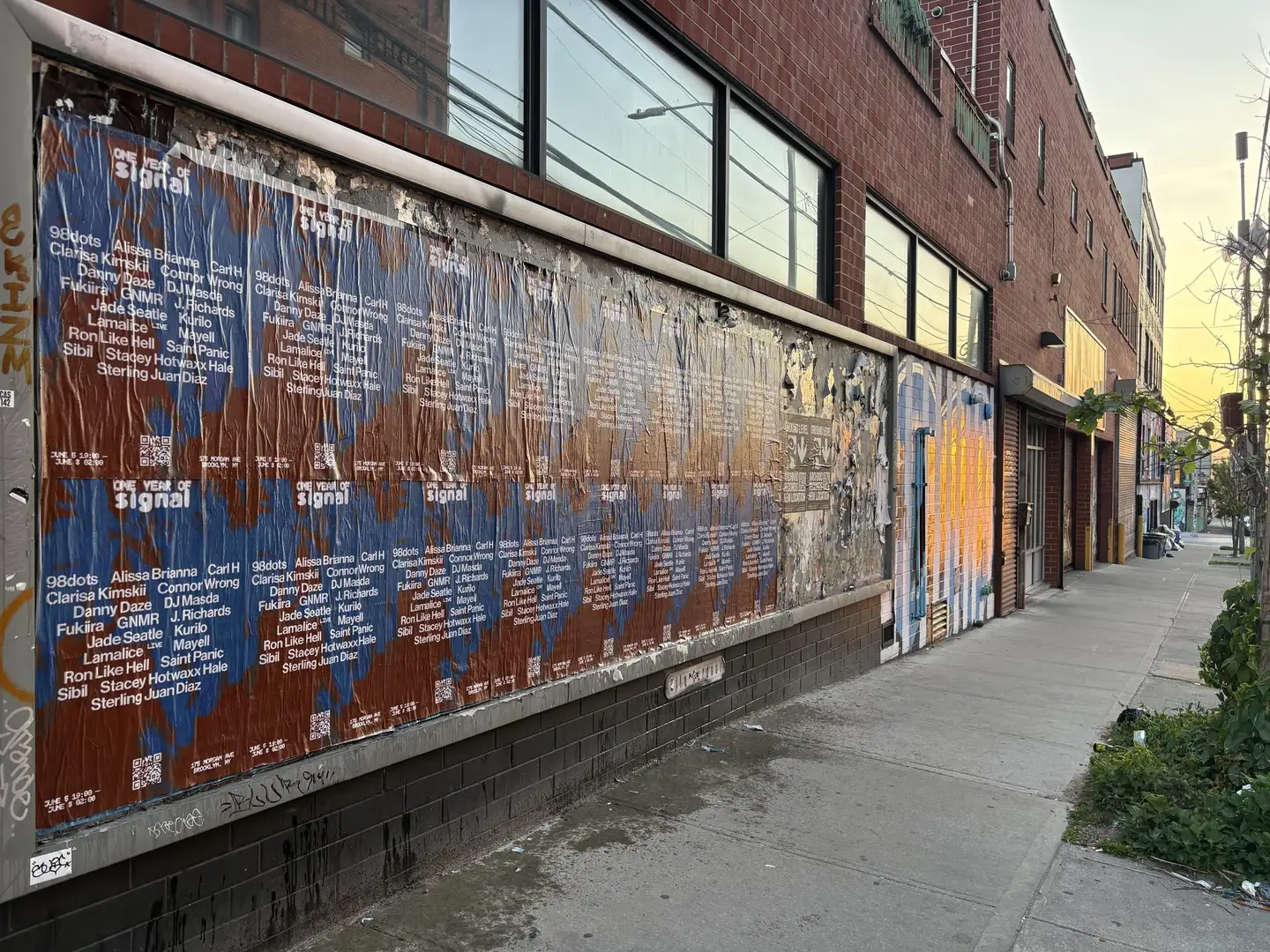
A year of nights, named on one wall.
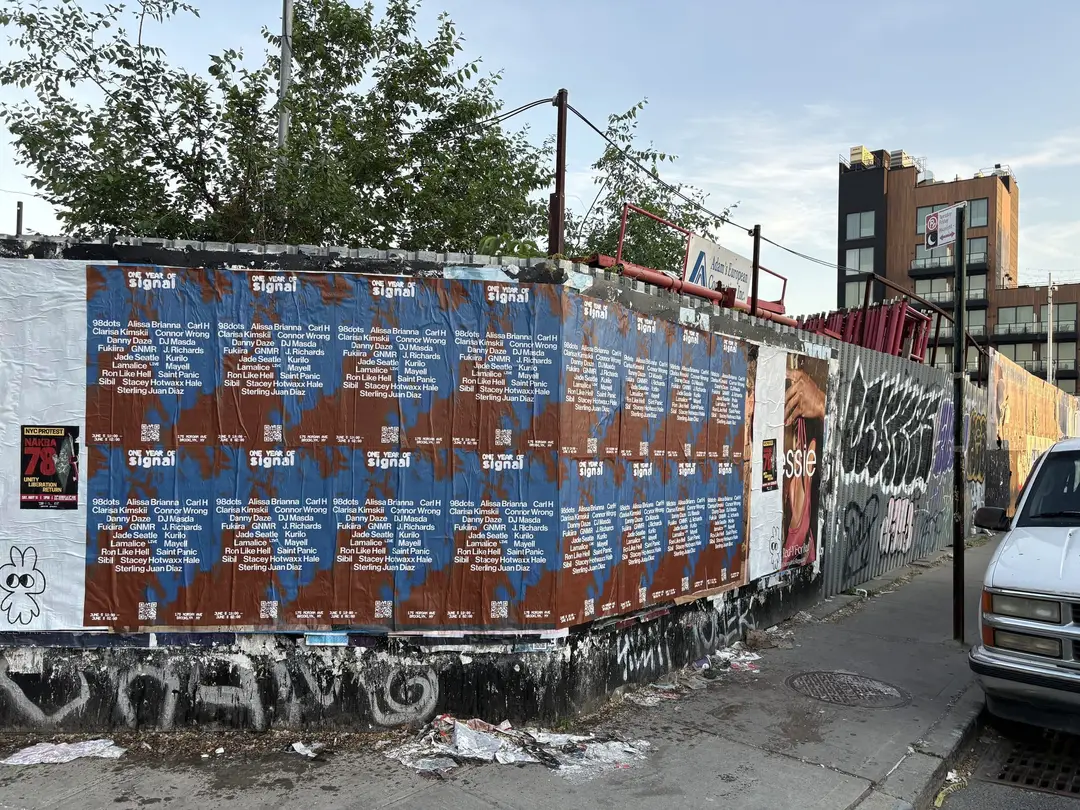
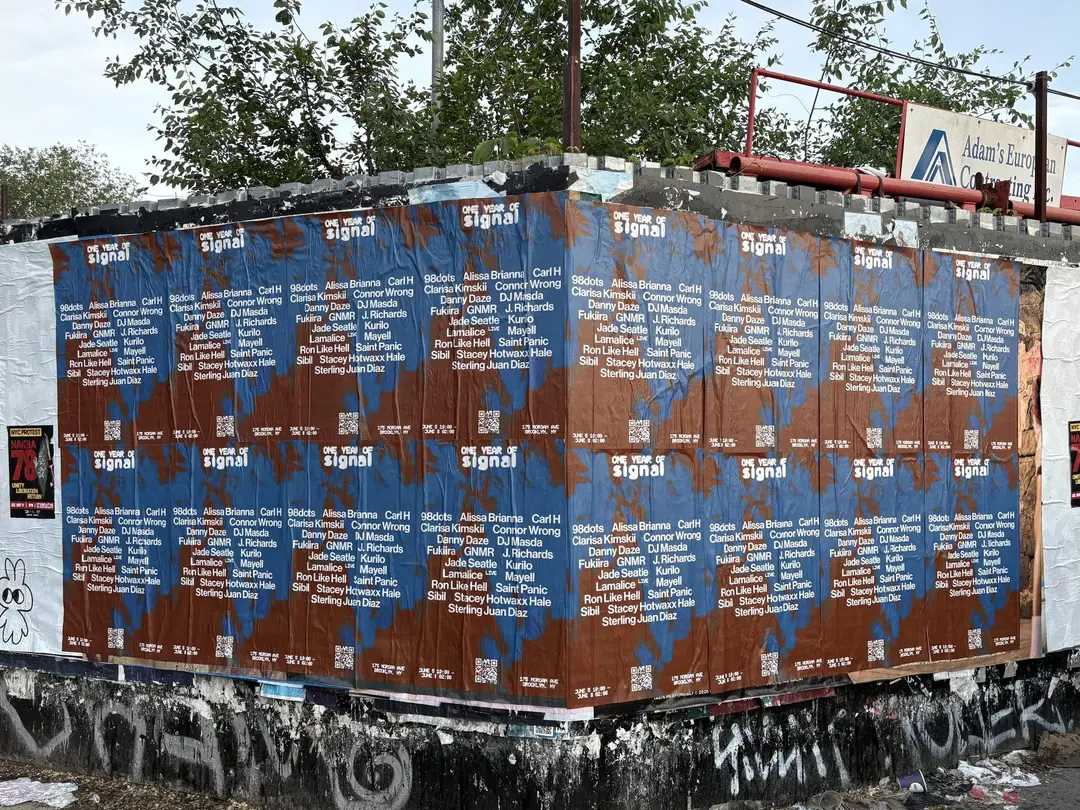
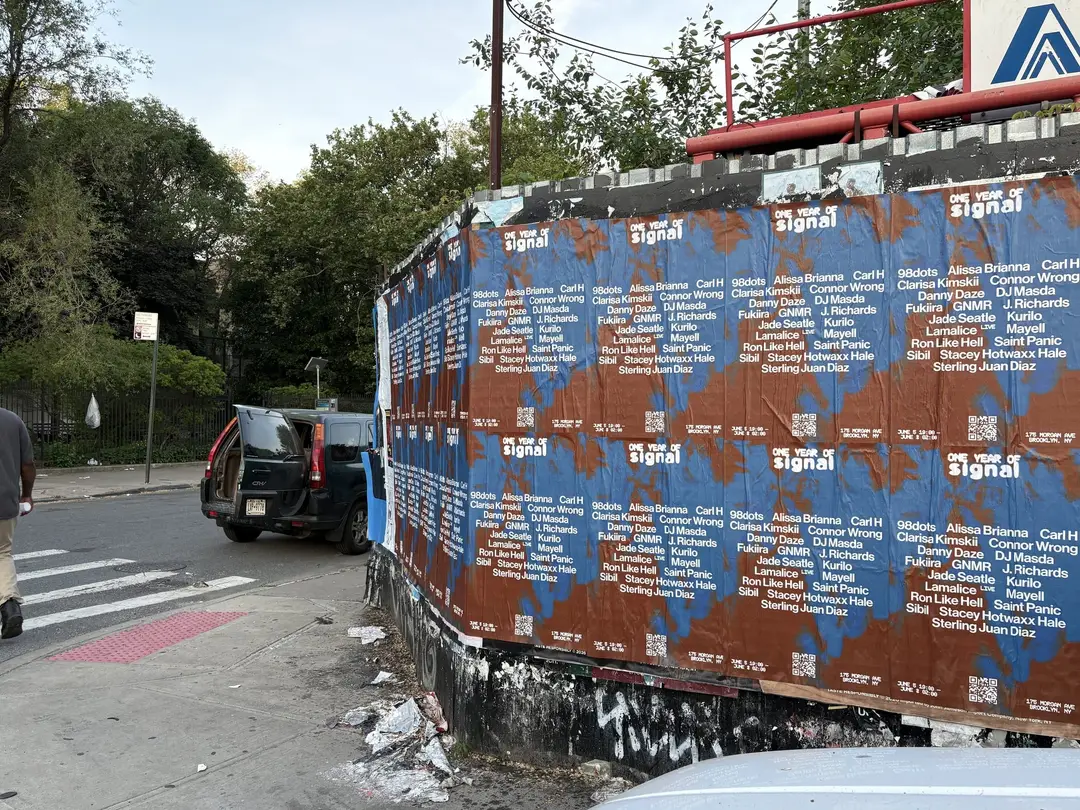
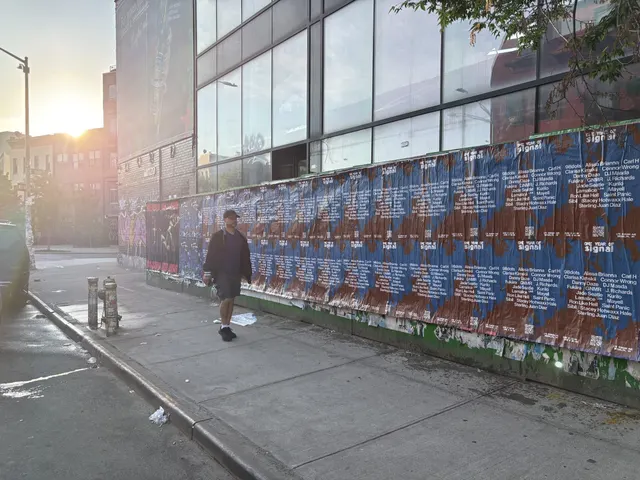
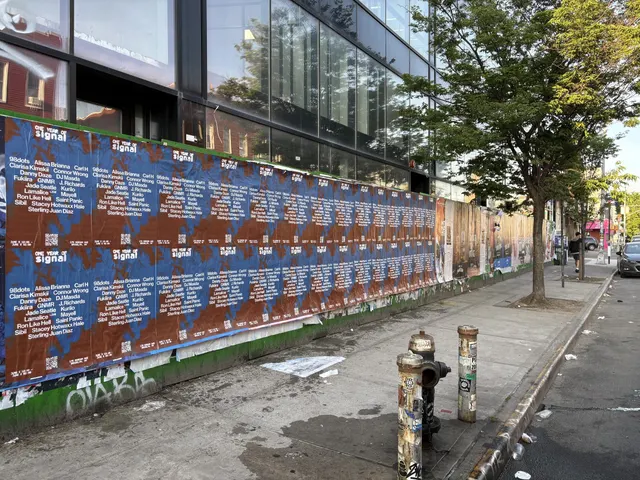
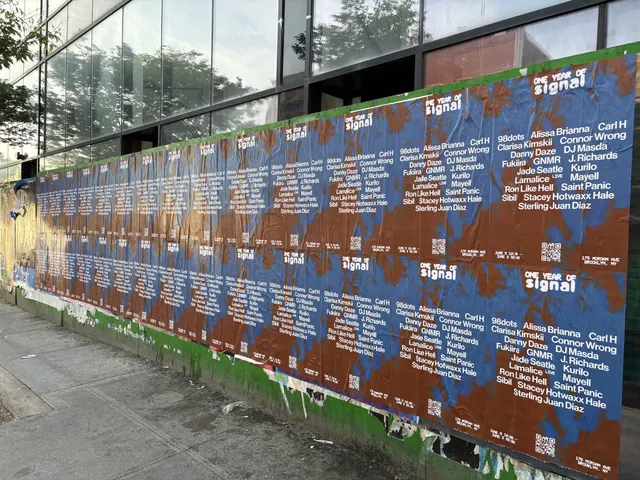
A block-long wheatpaste wall in East Williamsburg listing every artist who played Signal's first year. 100 posters turned a brick wall near the club into a year of receipts for a no-phones room.
- Placements100
- Cities1
- FormatMulti-format
- Documented10install photos on file
Turn a club's first year into receipts on a wall.
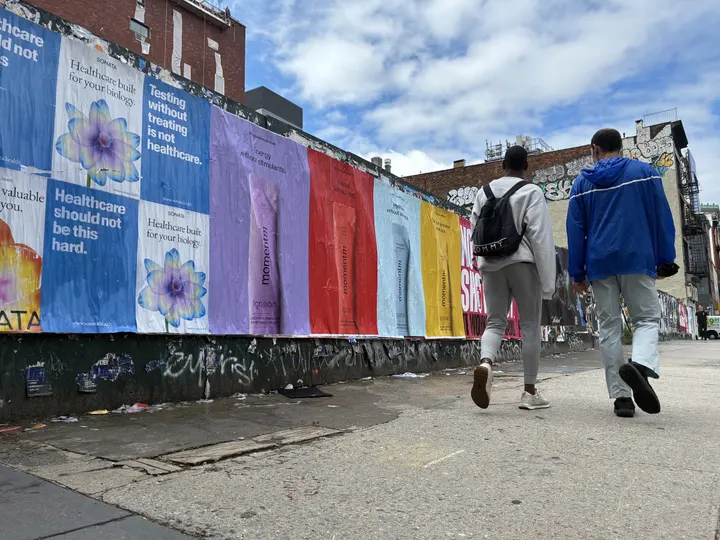
A block-long wheatpaste wall in East Williamsburg listing every artist who played Signal's first year. "One Year of Signal," names gridded across brick, a few minutes' walk from the club's own door at 175 Morgan Avenue. For a room that bans phones on the dance floor, the anniversary went up as the thing a phone cannot scroll past: a physical, un-deletable record of a year of nights.
Signal opened May 10, 2025, a 210-capacity nightclub and event space in East Williamsburg, Brooklyn, founded by Joshua Buhler, Leonard Fink, and Nicholas Spector of the Golden Record NYC series.
One year in, the brief was an anniversary that matched the room's identity. Not a paid digital push, not a content moment, but something on the street with the weight of a year behind it. The answer was the roster itself: every artist who played the first year, named on a wall. 100 posters, 24"×36".
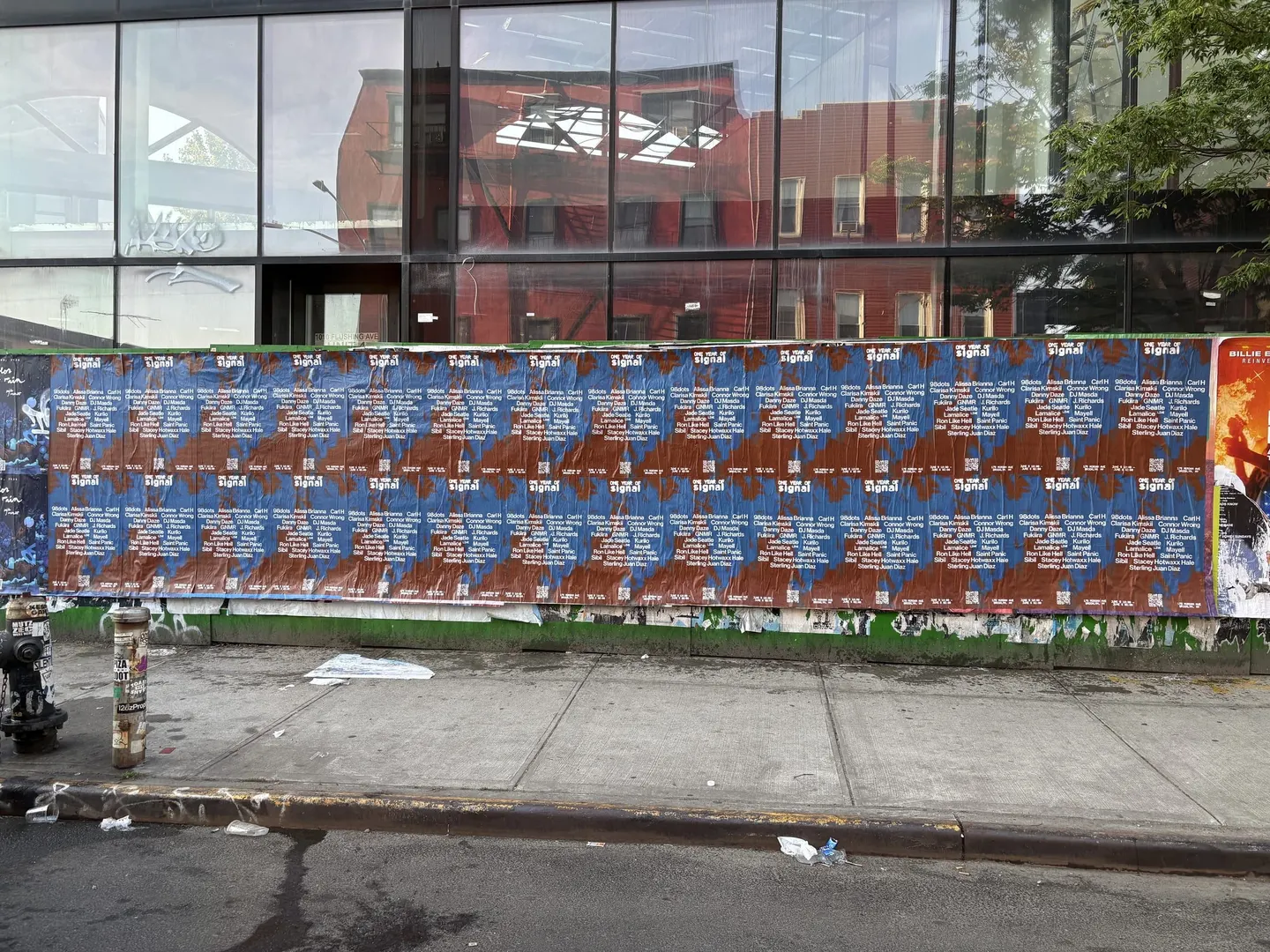
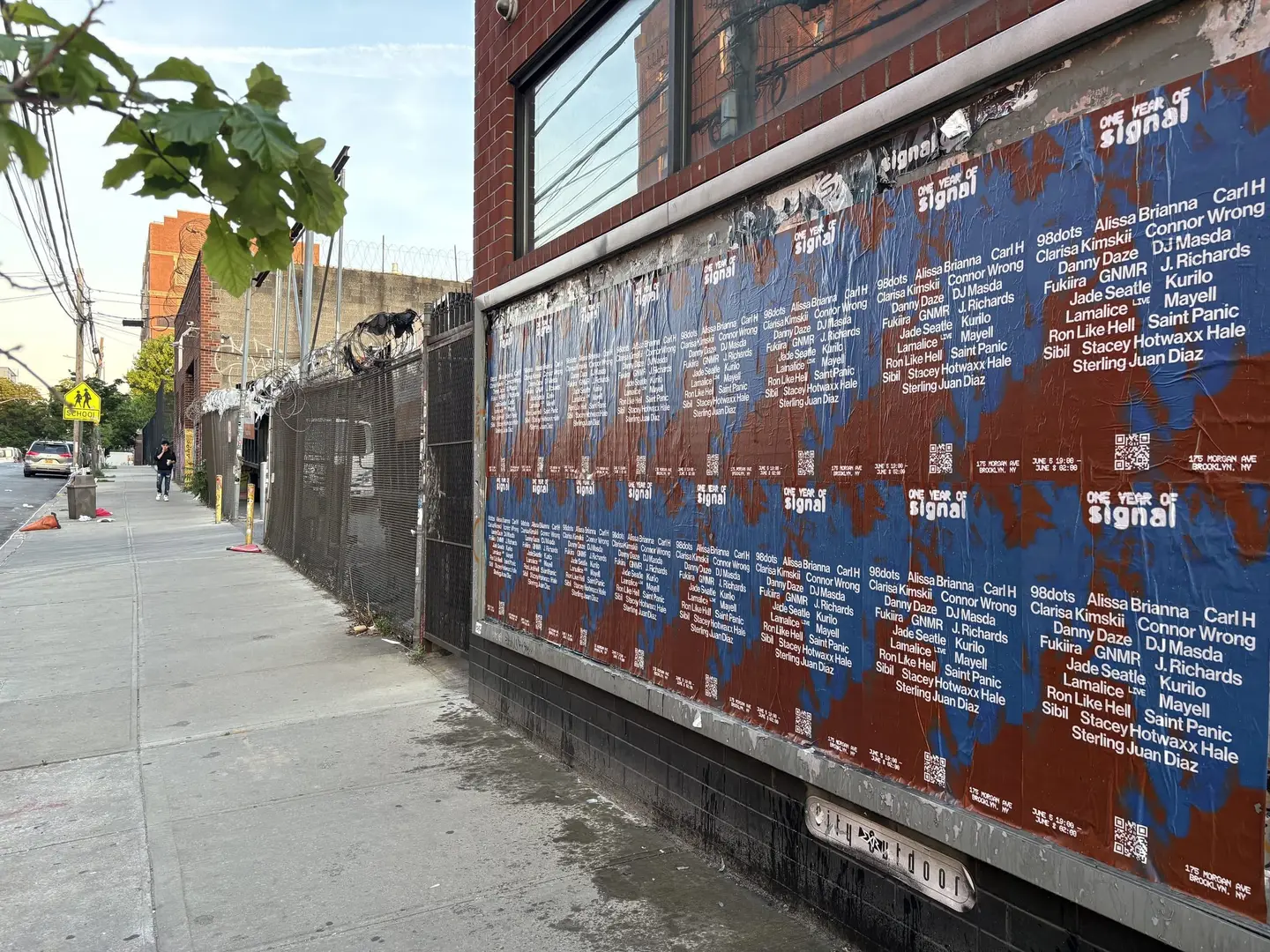
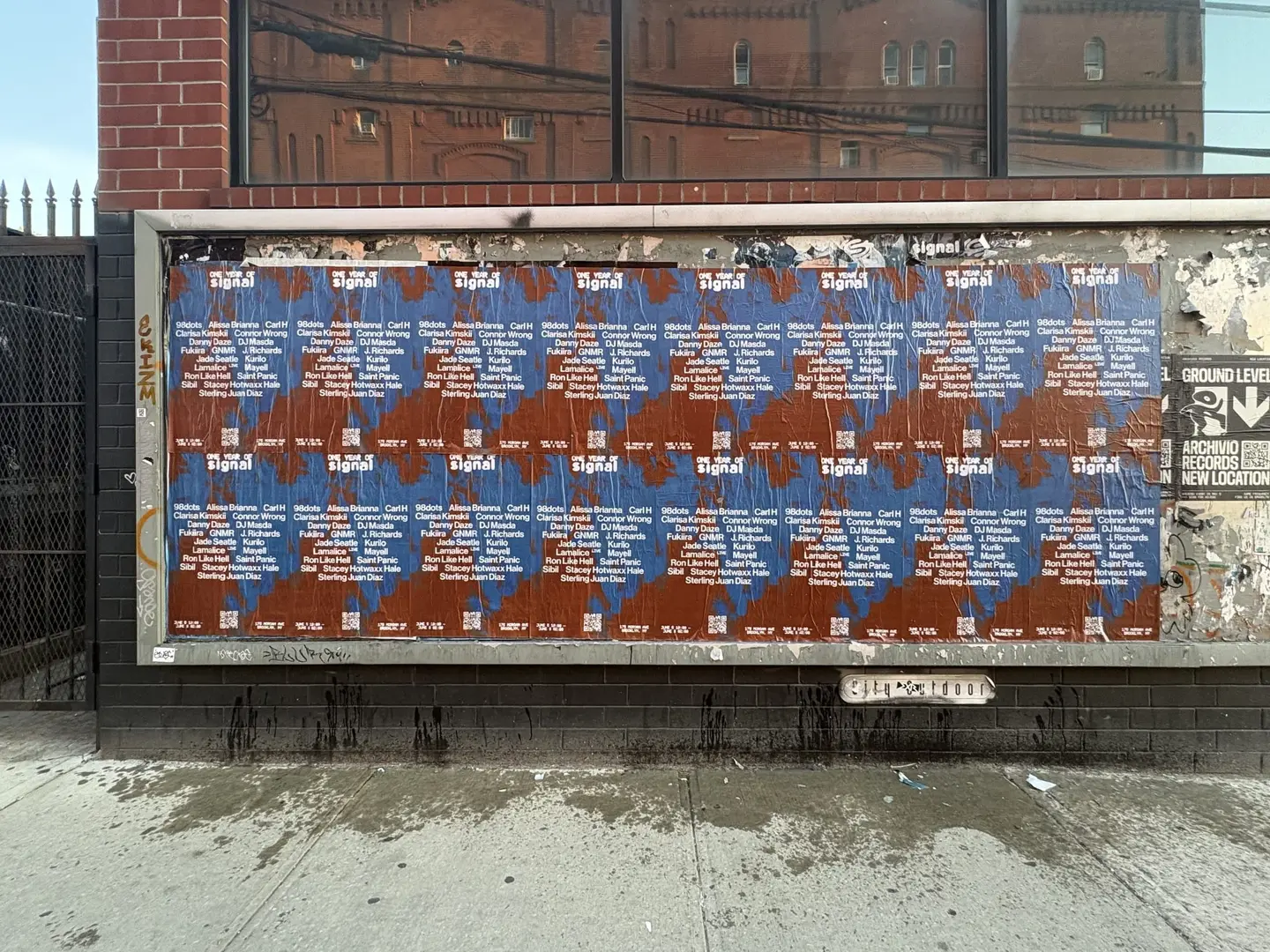
What we ran.
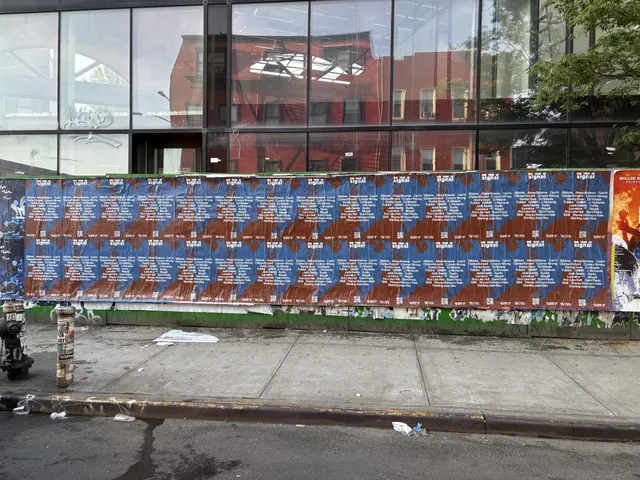
One creative repeated and sequenced so the wall scans as one piece, not a hundred flyers. A lineup wall is the oldest credibility move in music, and it works because every name on it is a receipt.
Where we ran it.
The neighborhood feeds off the Bedford Avenue L station, which carried 8.76 million riders in 2024, the busiest in Brooklyn outside Downtown. Music Hall of Williamsburg sits a few blocks west; the warehouse clubs House of Yes and Elsewhere anchor the Bushwick end of the same belt. A wall here is read by the exact crowd that was in the room for the nights it lists.
Why a names-wall, and why consent.
Naming every artist from a year turns marketing into proof: these people played here, on this floor, and the wall says so in public. It is also a gift to the scene, every DJ on it can find their own name a block from the venue.
The legal frame is the same as any New York paste-up. Administrative Code §10-119 prohibits posting on public street infrastructure and presumes the named party liable for an unauthorized posting, so the wall went up on consented private brick with signed property-owner authorization, not on poles or barriers. A venue's own anniversary is no place to risk a citation under its own name.
How it played.
The result is a piece of street that doubles as a monument: tall enough to read from across the street, dense enough to reward a walk along it to find a name.
Proof.
The deliverable is the located record and the surface, not an impressions number. What we stand behind is the wall itself: a year of Signal's programming, named in public, on consented brick within walking distance of the room it celebrates.
The best nightlife marketing is the scene recognizing itself.
A lineup wall does not sell the club to strangers so much as it tells the regulars their year mattered, in a medium they cannot swipe away. For a no-phones room betting on presence, an un-scrollable wall is the on-brand monument. The receipts were already real. We just put them where the neighborhood could read them.
Common questions.
New York Administrative Code 10-119 prohibits posting on public street infrastructure and presumes the named party liable for an unauthorized posting. This wall went up on private brick with signed property-owner authorization, so nothing touched a pole or a barrier. We secure and document that agreement before the first poster is pasted, and the paperwork goes over with the campaign.
How many posters does it take to fill a wall this size?
This one took 100 posters at 24 by 36 inches, sequenced so the lineup reads left to right as a single piece instead of a hundred separate flyers. The count follows the wall. We measure the surface first, then set the grid and the poster count so the headline is readable from across the street and the names reward a walk along it.
Does the wall have to be near the venue?
For this one it did. The wall sat in East Williamsburg on the club's home turf, a few minutes' walk from the door at 175 Morgan Avenue, so the people who were in the room for those nights pass their own names on the way in. Proximity is what turns a lineup into recognition instead of a poster count.
Why does a club that bans phones on the floor run a street campaign?
Because the anniversary had to survive without a feed. Signal's room is no-phones, so a content moment would have contradicted the place it was celebrating. A wall of names a few minutes from the door works the other way. Every artist who played the first year can walk over and find themselves on it, and nobody can swipe it away.
---
Campaign documented by Beyond Street Media. Brooklyn field execution and on-day photo documentation by the BSM crew. Venue and neighborhood context sourced and linked inline. May 2026.
4 additional installs.
Run a wheatpaste advertising campaign?
Same crew, your brand.
The same operator network that shipped Signal's campaign is on call for yours. Brief us with city, dates, and creative. Quote back in 4 hours.
Run a campaign like Signal's?
Get a quote